
Review · HIROSHIMA PEACE MEMORIAL TOURS
Hiroshima:Guided Virtual Tour/PEACE PARK TOUR VR
VR in Peace Park changes how you see it. This guided Hiroshima Peace Park VR tour pairs a real walk with time-shift VR and a local English-speaking guide in Hiroshima, using survivor testimony and historical photos to frame what you are standing beside. It is the only VR experience set up for this specific Peace Park area, so you get context in the exact place where history happened.
My favorite part is how the guide keeps you thinking, not just watching. You stop at key spots, put on the headset, and the tour turns into short fieldwork moments with guided questions. The main drawback to consider is that timing and weather matter, since a late arrival can mean you miss the tour, and heavy rain can reduce the VR portion.
In This Review
- Key things that make this VR Peace Park tour worth your time
- Why this Peace Park VR tour feels different from regular sightseeing
- Meeting at the Hiroshima City Peace Memorial Park Rest House, and what the 80 minutes really feels like
- Stop 1 at the Rest House: start with a survivor story, then get ready to look
- Atomic Bomb Dome: the city before, the blast aftermath, and what rebuilt looks like
- Aioi Bridge (T-Bridge): where the guide’s questions turn viewing into understanding
- Motoyasu Bridge: recovery, memory, and the chance to reflect with others
- The role of hibakusha testimony and why VR still has value here
- Price and value: what $32 buys you in real terms
- Who should book this VR Peace Park tour, and who might prefer something else
- Practical tips to make the tour work smoothly
- Should you book Hiroshima Peace Park Guided VR?
- FAQ
- Where do I meet the guide?
- How long is the tour?
- Is the tour in English?
- How big is the group?
- What is included in the price?
- Is transportation or meals included?
- What should I do if it rains?
- Can I store luggage at the Rest House?
- What if I arrive late?
- Is there a cancellation refund?
Key things that make this VR Peace Park tour worth your time
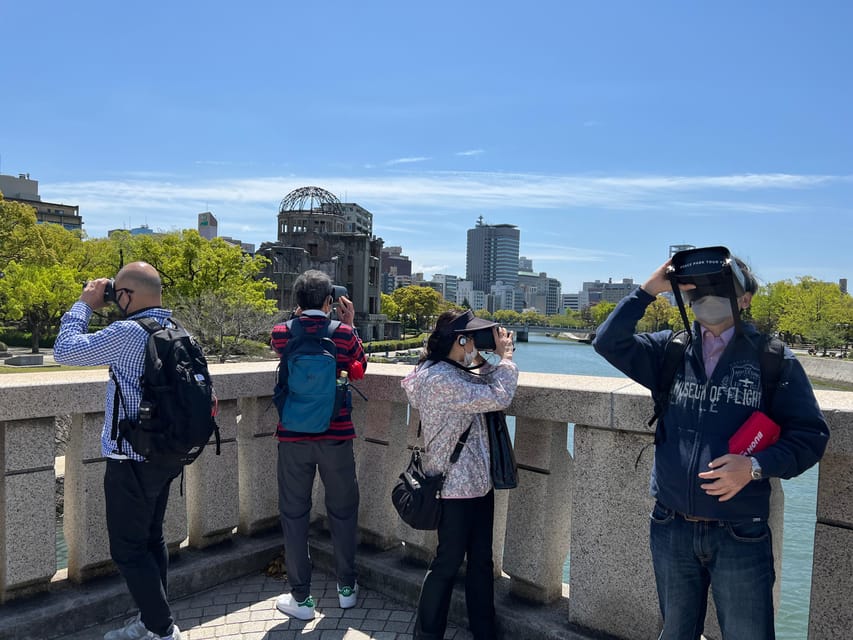
- Local guide guidance during the walk with real dialogue, not just headsets turned on and off
- VR built around survivor testimony, plus photos that anchor what you see
- Perfect pacing for an 80-minute experience with headset stops at meaningful points
- Peace Park landmarks in the right order, from the Rest House area to the bridges
- Small group size (up to 6) so you can ask questions and hear answers
- Rain plan that keeps the tour going, including a short VR option at the Rest House
Why this Peace Park VR tour feels different from regular sightseeing
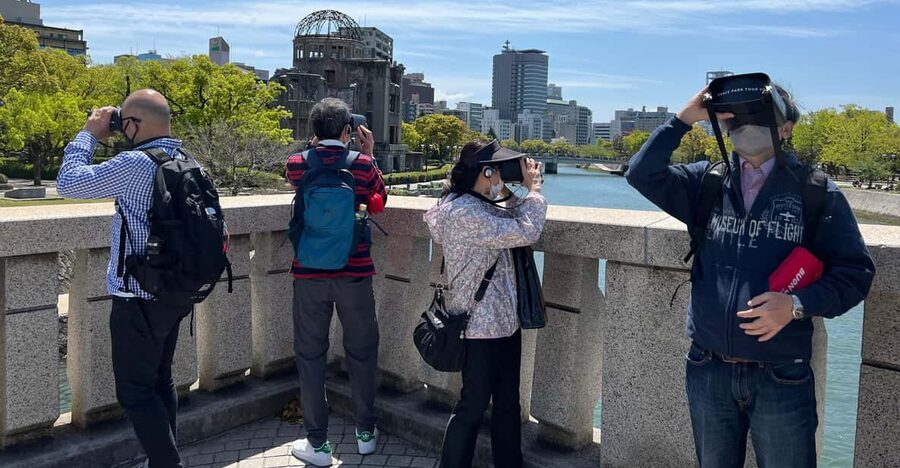
Hiroshima Peace Park can hit you hard even on a calm day. What makes this experience stand out is that it does not rely only on signs and distance. Instead, it uses VR to show you what the area looked like before August 6, then what the burned plain looked like, and finally how the city rebuilt. You are still walking on the ground, but the guide helps you connect that ground to the story in front of you.
I also like that the tour does not treat VR as entertainment. It is paired with listening and conversation. Guides ask questions, invite reactions, and guide the group through what you are seeing. That matters because VR can be visually powerful, but understanding comes from words, context, and the chance to ask, Why this place, Why this moment, and What did it mean for daily life.
Finally, the tour’s format is practical. You are not stuck with a headset for the whole time. You put it on at set points, then walk and talk. That keeps the experience grounded and gives you time to look up at the real structures after seeing the reconstructed scenes.
Other Hiroshima Peace Memorial tours worth a look in Hiroshima:
- Hiroshima: Miyajima Peace Memorial Icons of Peace and Beauty
★ 4.9 · 361 reviews - Hiroshima/Guided Virtual Tour of Peace Park/PEACE PARK TOUR VR
★ 5.0 · 157 reviews - Hiroshima: Peace Memorial Park and Atomic Bomb Dome Tour
★ 4.9 · 91 reviews
Meeting at the Hiroshima City Peace Memorial Park Rest House, and what the 80 minutes really feels like
The tour starts at the Hiroshima City Peace Memorial Park Rest House. A guide is waiting at the tourist information counter on the 1st floor. Plan to arrive a bit early, at least 5 minutes ahead, so you are not rushing when it is time to group up and begin.
The total time is about 80 minutes, and the route is designed as short walks between meaningful stops. You are not covering a huge distance, but you are moving often enough to stay alert and absorb things in layers. If you are late past the start window, the tour may be unable to include you, and if there is a delay they may shorten the experience. So treat this like a time-sensitive appointment, not a casual stroll.
One more practical note: the Rest House does not provide luggage storage inside the building. If you are coming from elsewhere with a larger bag, you will want to manage it yourself. This matters more than you might think, because VR headsets add gear on top of whatever you already carry.
Stop 1 at the Rest House: start with a survivor story, then get ready to look
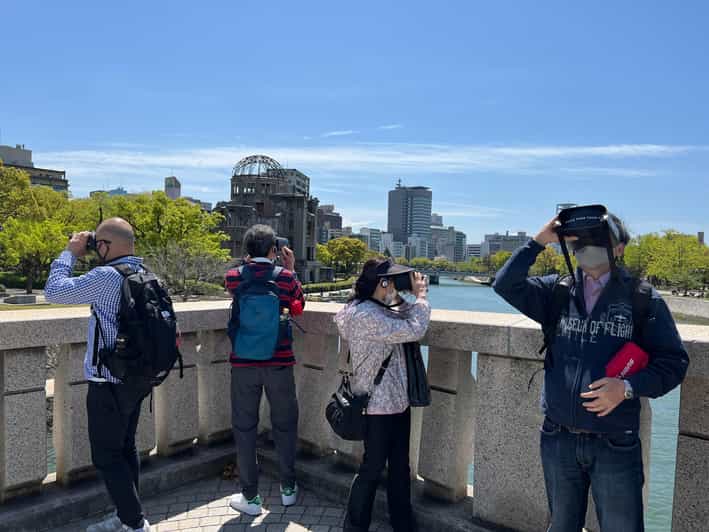
Your first stop is the Hiroshima Peace Park Rest House area. This part is guided walking time, around 20 minutes, and it sets the tone. The guide starts by giving background and a human entry point into the day’s events.
In at least some sessions, the guide begins with the story of Eizo Nomura, an A-bomb survivor who was about 170 meters from the hypocenter. That kind of specific detail helps you later when you see the Atomic Bomb Dome area or the bridges. Suddenly, these are not just famous landmarks. They connect to real people, real distances, and real disruption.
This is also where you learn how the tour will work. You will do a pattern of field stops and VR moments. The guide is not just showing you places, they are facilitating discussion as you go. That makes the start feel like preparation rather than waiting for the headset.
Atomic Bomb Dome: the city before, the blast aftermath, and what rebuilt looks like
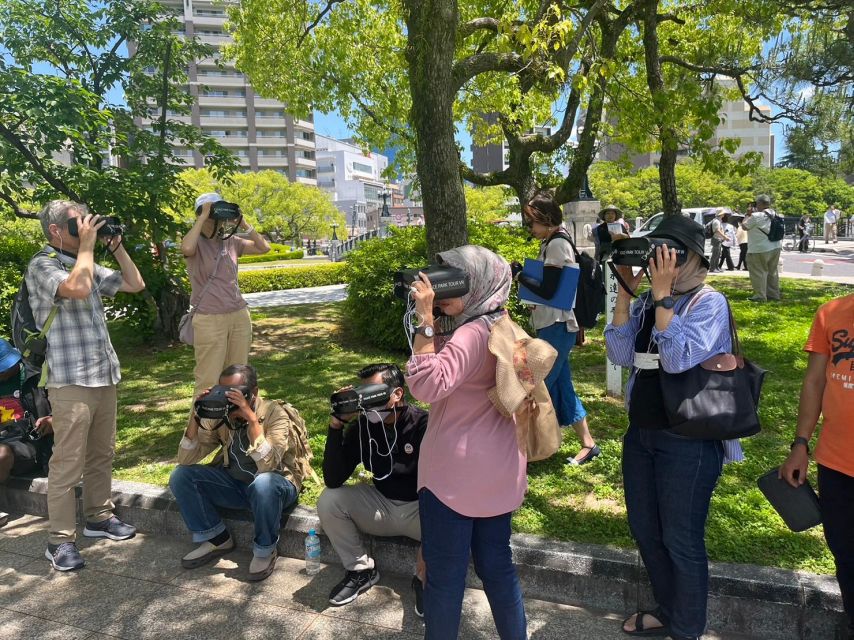
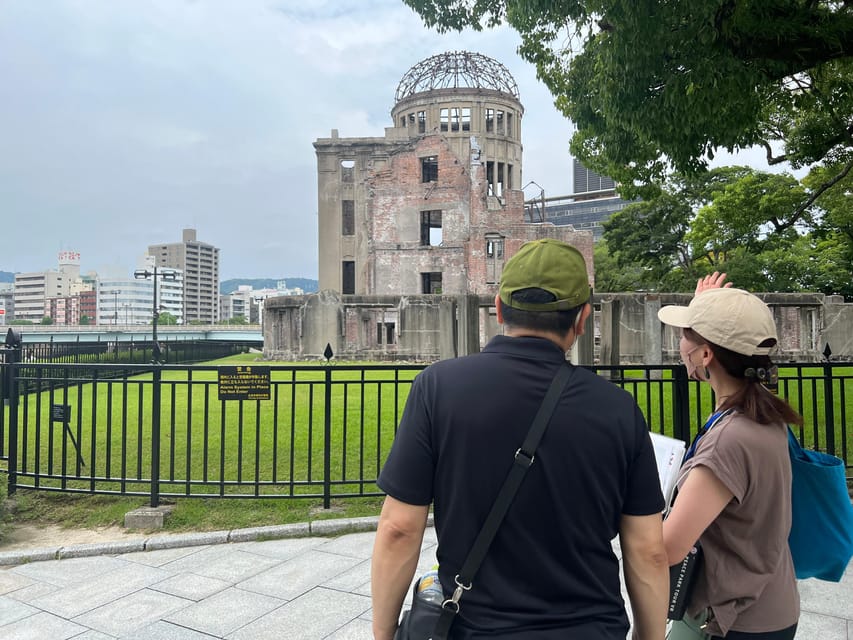
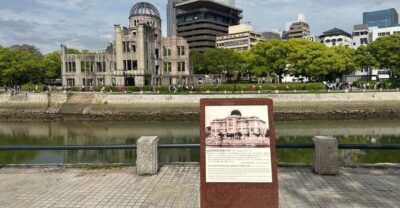
Next you head to the Atomic Bomb Dome area for another guided stretch of about 20 minutes. This stop is the emotional anchor for most people. The Dome is visually striking in the present, but VR changes the question from what you see now to what the place was then.
The VR portion uses a blend of survivor testimony and time-based renderings. You are shown Hiroshima’s cityscape before the bombing, then the burnt plain of August 6, and then the recovery that followed. When you take the headset off, you can look at the real Dome again with a different mental map. You start noticing things like perspective and placement. You also start thinking about how long-term damage sits alongside long-term rebuilding, sometimes right in the same view line.
A practical consideration here is emotional intensity. VR can feel immediate, and pairing it with an iconic site makes it heavier. If you prefer a lighter approach to history, this might be more than you want in one sitting. On the other hand, if you want the story explained clearly while you stand in the real location, this stop is where the tour earns its value.
A few more Hiroshima days to weigh up
- Peaceful Hiroshima & Miyajima UNESCO 1 Day Bus Tour
★ 5.0 · 5,309 reviews - Hiroshima: Hiroshima and Miyajima UNESCO Sites 1-Day Tour
★ 4.9 · 2,330 reviews - Hiroshima / Miyajima Full-day Private Tour with Government Licensed Guide
★ 5.0 · 1,298 reviews - Hiroshima Historical Walking Tour – Why A-Bomb was Dropped
★ 4.8 · 893 reviews
Aioi Bridge (T-Bridge): where the guide’s questions turn viewing into understanding
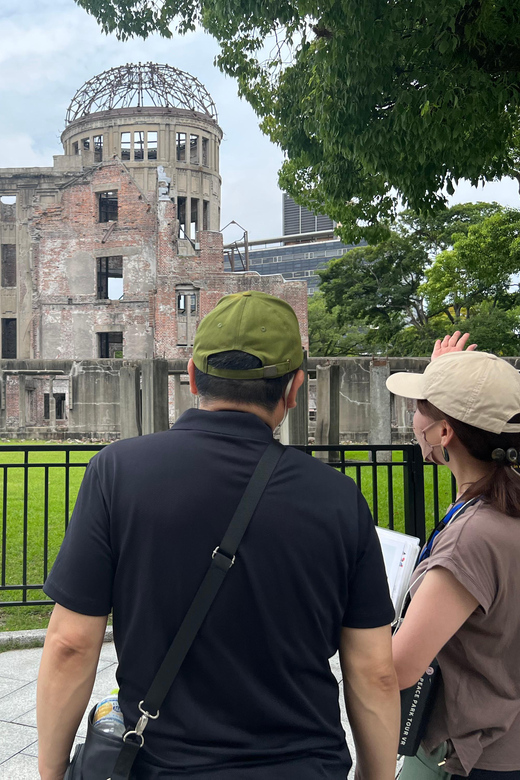
You then walk to Aioi Bridge, also known as the T-Bridge, for about 15 minutes of guided sightseeing. This is where the tour shifts from landmark viewing into something more like active listening.
Even if you are looking at a bridge, the VR moment and the guide’s prompts help you think beyond the structure. Bridges are crossings. They are routes people might take in daily life. They are also moments of movement during a crisis. The guide’s facilitation is key here, because it keeps the group from drifting into only general impressions. You are nudged to think about daily life and what survivorship and community impact look like in practice.
This is also a good place for questions. The tour runs with a small group, limited to 6 participants. That smaller size matters because the guide can address your specific reaction instead of letting it dissolve into a crowd.
If you like learning through dialogue, you will appreciate the way the guide keeps conversation going at each stop rather than saving everything for the end.
Motoyasu Bridge: recovery, memory, and the chance to reflect with others
The tour continues to Motoyasu Bridge for another guided segment of about 15 minutes, then returns back to the Hiroshima Peace Park Rest House. This is the final walking stop, and it is often where reflection kicks in.
The VR narrative includes the city’s recovery, and this last stop is where you can mentally connect that recovery to the physical space you are walking through. You are not just hearing that Hiroshima rebuilt. You are walking among the results of that rebuilding and being guided toward what it means for the present.
A nice touch of the experience is that the tour ends with a conversation style check-in. The guide discusses what you thought of each other, which signals that this is partly about shared processing. That matters because this topic affects people differently. Some will be very quiet. Others will want to ask direct questions. Either way, the format encourages a respectful exchange instead of forcing everyone into the same emotional lane.
The role of hibakusha testimony and why VR still has value here
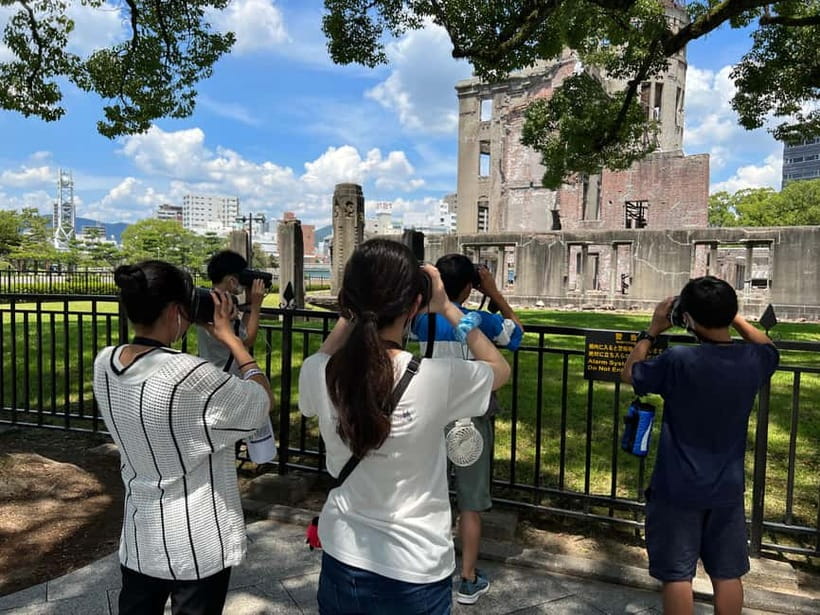
One of the most sobering points from the tour’s framing is the reality that the number of hibakusha, A-bomb survivors, has been gradually decreasing over the nearly 80 years since the war. That is one reason the tour leans so heavily on testimony and photos.
VR can feel risky when it is used to dramatize history. Here, the structure is meant to support testimony, not replace it. You are transported back in time based on survivor accounts and historical imagery, then brought back to the present to compare what you saw with what is still here. The guide also field-questions along the way, which helps you keep your feet on the ground emotionally and intellectually.
If you are someone who learns best through a mix of story and place, you will likely find this approach effective. The tour does not ask you to accept a vague feeling. It gives you a sequence: before, after, recovery. And then it invites you to talk about what the sequence means.
Price and value: what $32 buys you in real terms
At $32 per person for about 80 minutes, this is not a budget attraction, but it is also not trying to be a full-day program. The value comes from three specific things that you cannot easily replicate on your own:
- A guide who lives in Hiroshima and can answer in English. You get explanations tied to what you are seeing, plus the chance to ask follow-up questions during the walk.
- VR goggles included, which matters because the headset rental is part of the tour price.
- Time-efficient structure, with headset moments tied to the Peace Park’s key points rather than general museum-style narration.
You are also getting a small group experience, limited to 6 participants. That is part of the value. If you have ever tried to ask questions while touring in a big group, you know how quickly your questions disappear.
On the flip side, if you are looking for a wide variety of stops or a long sightseeing loop, this is not that kind of tour. It is focused, and it stays within the Peace Park area.
Who should book this VR Peace Park tour, and who might prefer something else
I think this tour is best for you if you want more than walking and reading. If you are the kind of person who asks, What was daily life like, How did people experience this in real space, and What happened after, the guide-led dialogue plus testimony-based VR is a strong match.
It is also a good choice if you travel with someone who appreciates thoughtful pacing. With up to 6 participants, you can share reactions without feeling like you are talking over a crowd.
You might want to skip it, or pair it with a lighter activity the same day, if you know you are easily overwhelmed by emotionally intense content. This experience is designed to be sobering. Even in a relaxed setting, you are seeing the impact of the atomic bombing through VR and listening to survivor-centered storytelling.
Practical tips to make the tour work smoothly
A few small habits make a big difference:
- Wear comfortable walking shoes. The route includes several short walks between stops.
- Arrive early at the 1st floor tourist information counter at the Rest House, so you can settle before starting.
- Plan for weather. The tour runs rain or shine. If rain is heavy, VR may be shortened, with a short VR viewing at the Rest House for 5 minutes after fieldwork in the Peace Park.
- Think about your luggage. The Rest House building cannot store luggage, so manage your bags yourself.
- Come ready to ask questions. The guide is there for dialogue, not monologues.
One more tip: since you are not getting food included, you may want to plan meals around the tour time. This is not a meal break, it is part of your learning day.
Should you book Hiroshima Peace Park Guided VR?
If your goal is to understand Hiroshima’s bombing and recovery through place-based storytelling, I’d say yes. This tour has a rare combination of VR that is tied to survivor testimony, and a real guide who helps you interpret what you are seeing while you walk between key Peace Park spots.
Book it if you want structure, time efficiency, and a small-group setting where questions are welcome. Also book it if you appreciate the idea that VR is not only a visual effect here, it is a guided tool for thinking and discussing.
Just go in with clear expectations. You will be spending 80 minutes absorbing a difficult subject, and the VR portion can be shorter in heavy rain. If you can handle that, this is one of the most practical ways to deepen your understanding while staying in the Peace Park area itself.
FAQ
Where do I meet the guide?
You meet at the Hiroshima City Peace Memorial Park Rest House. A guide waits at the tourist information counter on the 1st floor.
How long is the tour?
The tour lasts about 80 minutes.
Is the tour in English?
Yes. The tour is in English, with an English audio guide included.
How big is the group?
It is a small group limited to 6 participants.
What is included in the price?
The price includes the VR goggles rental fee and an English-speaking guide.
Is transportation or meals included?
No. Transportation to the meeting place and food and drinks are not included.
What should I do if it rains?
The tour runs rain or shine. If it is raining heavily, you will be able to watch a short version of the VR for 5 minutes at the Rest House after fieldwork in the Peace Park.
Can I store luggage at the Rest House?
No. You cannot store luggage inside the Hiroshima City Peace Memorial Park Rest House building, so you will need to manage your own bags.
What if I arrive late?
Please come at least 5 minutes before your reservation time. If you do not arrive 10 minutes after the start time, you will not be able to participate. If there is a delay, they may provide a shortened version.
Is there a cancellation refund?
Yes. You can cancel up to 24 hours in advance for a full refund.
Newly listed around Hiroshima
- Hiroshima/Miyajima Private Custom Tour with Local Guide★ 5.0 · 134 reviews
- Hiroshima: Tour of Atomic Bomb Dome & Peace Memorial Museum★ 5.0 · 20 reviews
- Hiroshima: Miyajima Private Cultural Tour by Ferry★ 4.9 · 72 reviews
- Hiroshima: Private Walking Tour with a Local★ 4.6 · 70 reviews
- Hiroshima: Peace Walking Tour of World Heritage Sites★ 4.9 · 190 reviews
- Hiroshima Private Day Tour★ 4.8 · 6 reviews
- Hiroshima: Peace Park, Castle, and Mitaki Temple E-Bike Tour★ 4.8 · 11 reviews
- Hiroshima Peace Memorial Park: A Guided Tour★ 4.9 · 16 reviews
Hiroshima Peace Memorial Tours, compared.
Miyajima Peace Memorial Icons of Peace and Beauty
Read our review →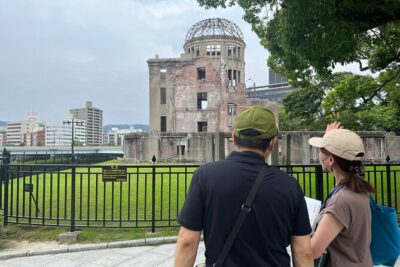
Hiroshima/Guided Virtual Tour of Peace Park/PEACE PARK TOUR VR
Read our review →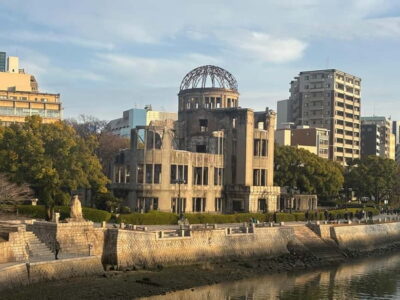
Hiroshima; Hiroshima Peace Memorial Museum and Castle Tour
Read our review →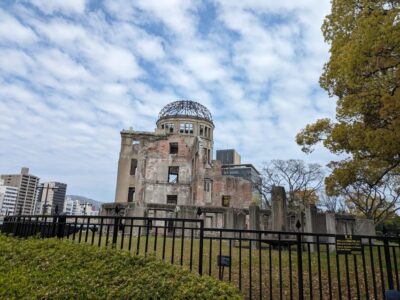
Peace Memorial and Atomic Bomb Dome Private Tour
Read our review →
Hiroshima History Tour : A-Bomb Dome, Peace Memorial & City
Read our review →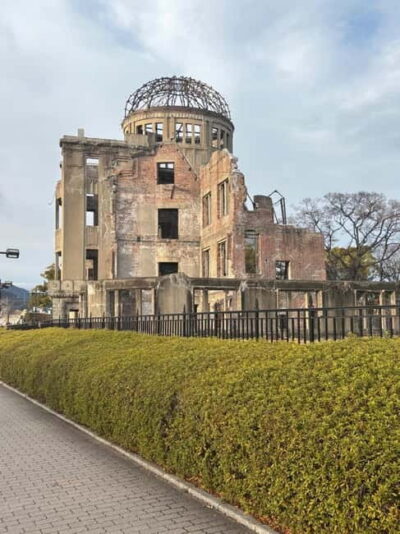
Hiroshima Peace Park & Atomic Bomb Dome Guided Walk
Read our review →
Tour of Atomic Bomb Dome & Peace Memorial Museum
Read our review →Browse the lists this tour appears in