
Review · HIROSHIMA PEACE MEMORIAL TOURS
Hiroshima Peace Memorial Park: A Guided Tour
Hiroshima Peace Park is heavy, but it’s worth it. This guided walk helps you make sense of the Aug 6, 1945 story through the sites themselves, and I like how the English small-group format keeps the pace humane. I also like the guide, Shera Alvi, for giving clear directions and thoughtful context at each stop. The main drawback is the walking through memorial grounds, so it may not feel right if you have heart issues or you’re traveling with young kids under 6.
You’ll start right at the Atomic Bomb Dome area and move through a tight circuit: the museum, multiple cenotaphs, the Peace Flame, and memorials tied to children, mobilized students, and Korean Atomic Bomb victims. It’s not a sightseeing-only tour. It’s a remembrance tour, with time to look and reflect without feeling rushed.
At $19 per person for about 2 hours, it’s solid value if you want more than a quick self-guided loop. You’ll cover a lot of key points while an English-speaking guide helps you understand what you’re seeing and why it matters.
In This Review
- Key moments that make this tour special
- Entering Hiroshima Peace Memorial Park without getting lost
- Atomic Bomb Dome and Peace Park landmarks in the right order
- Korean Atomic Bomb Victims Cenotaph: remembering beyond one story
- Children’s Peace Monument and the Peace Flame, hope that isn’t fluff
- Hiroshima National Peace Memorial Hall and the emotion of multiple memorials
- Peace Memorial Museum: the place where August 6 becomes understandable
- Clockwork reflection: Prayer Fountain, Gates of Peace, and wrap-up
- Price and timing: what $19 buys you in real-world value
- Walking pace, what to bring, and how to plan your day
- Accessibility and who this tour may not suit
- About the guide: why Shera Alvi’s style is a standout
- Should you book this Hiroshima Peace Memorial Park guided tour?
- FAQ
- Where is the meeting point?
- How long is the tour?
- What does the tour cost?
- Is the tour offered in English?
- Is the tour wheelchair accessible?
- Is photography allowed, and is food permitted?
- Is the tour suitable for children or for people with health concerns?
Key moments that make this tour special
- Shera Alvi’s on-the-ground guidance: easy meeting point arrival and directions once you’re walking
- A tight stop sequence: from Atomic Bomb Dome to the Peace Flame in about 2 hours
- The Peace Memorial Museum visit: deeper context on what happened and the aftermath
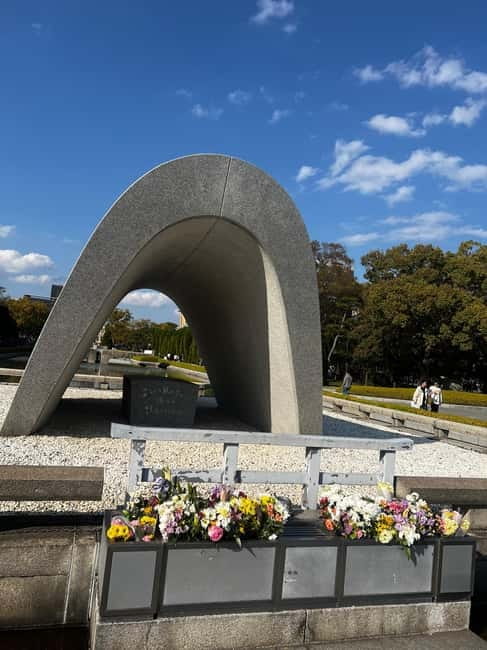
- Reflection time at memorials: Cenotaph for the A-bomb Victims, Peace Flame, and more
- Children’s Peace Monument focus: a dedicated stop for the young victims
- Small group size (10 people max): a calmer pace and more room for questions
Entering Hiroshima Peace Memorial Park without getting lost
The first thing you’ll notice is that this place has a rhythm. The park layout is spread out enough that you can walk past important sites if you don’t know what to look for. With this tour, you get a simple plan, and the guide keeps the flow moving so you’re not zigzagging and second-guessing yourself.
I also appreciate the meeting point clarity. You meet at the Atomic Bomb Dome, with coordinates listed for 34.395483, 132.453592. That matters because getting oriented in a memorial space should be stress-free, not a frantic search for the right gate.
One practical note: this is a walking tour through memorial grounds. Plan on comfortable shoes and a steady pace. And since it’s all about respect, you’ll want to keep your phone use and camera use tasteful, not like you’re at an amusement park.
Other Hiroshima Peace Memorial tours worth a look in Hiroshima:
- Hiroshima: Miyajima Peace Memorial Icons of Peace and Beauty
★ 4.9 · 361 reviews - Hiroshima/Guided Virtual Tour of Peace Park/PEACE PARK TOUR VR
★ 5.0 · 157 reviews - Hiroshima: Peace Memorial Park and Atomic Bomb Dome Tour
★ 4.9 · 91 reviews
Atomic Bomb Dome and Peace Park landmarks in the right order
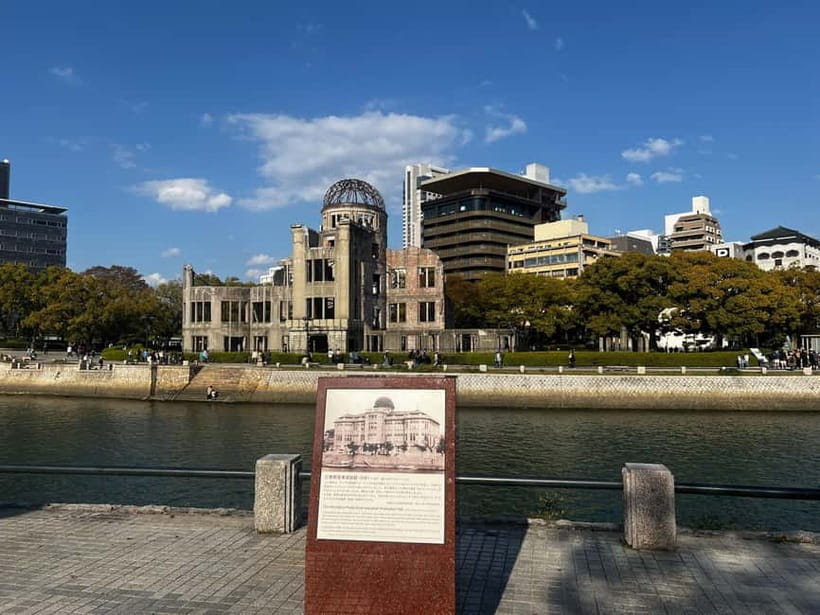
Most people come to Hiroshima for the iconic sights, and the tour starts with the biggest one. You’ll begin at the Atomic Bomb Dome and spend about 20 minutes there with a guided explanation. The Dome is described as a haunting reminder, and that word is not just marketing. The guide helps you understand the significance of the building and what it represents before you move on.
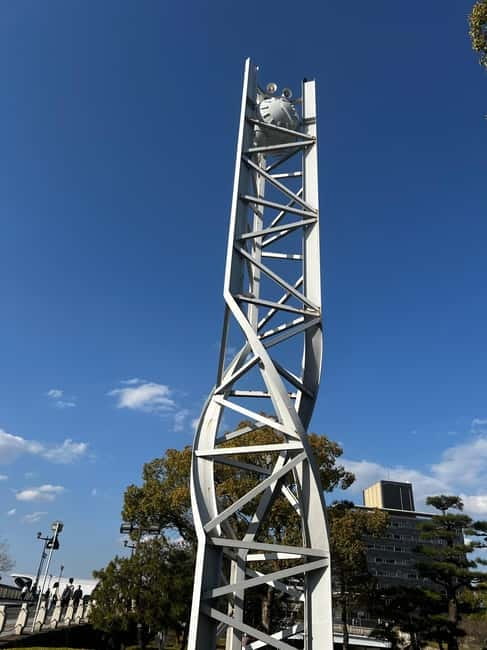
From there, you keep building the story through nearby memorial landmarks. You’ll visit the Clock Tower of Peace (about 10 minutes) and then the Bell of Peace, Hiroshima (about 10 minutes). These stops are short, but that’s the point. They’re quick anchors that help you connect the visual symbols to the emotional message of the park.
In a self-guided visit, it’s easy to speed past these details because you’re already emotionally loaded from the first stop. A guide helps you slow down at the right moments so you actually absorb what each landmark is trying to say.
Korean Atomic Bomb Victims Cenotaph: remembering beyond one story
One of the most important elements of this tour is that it doesn’t treat Hiroshima as a single, simple narrative. You’ll stop at the Korean Atomic Bomb Victims Cenotaph for about 10 minutes. The tour framing emphasizes resilience and remembrance, and it’s a chance to broaden your understanding of how the impact of the bombing reached people beyond Hiroshima residents.
That matters because Hiroshima can become a place people visit with one mental image. This stop pushes you to think more clearly about who was affected, and how remembrance can be shaped by different communities.
Children’s Peace Monument and the Peace Flame, hope that isn’t fluff
If you want a moment that hits differently, the Children’s Peace Monument is it. You’ll spend about 10 minutes here, and it’s dedicated to the young victims. It’s not presented as a background detail. It’s a focused stop, which helps you recognize the human cost in a way statistics can’t.
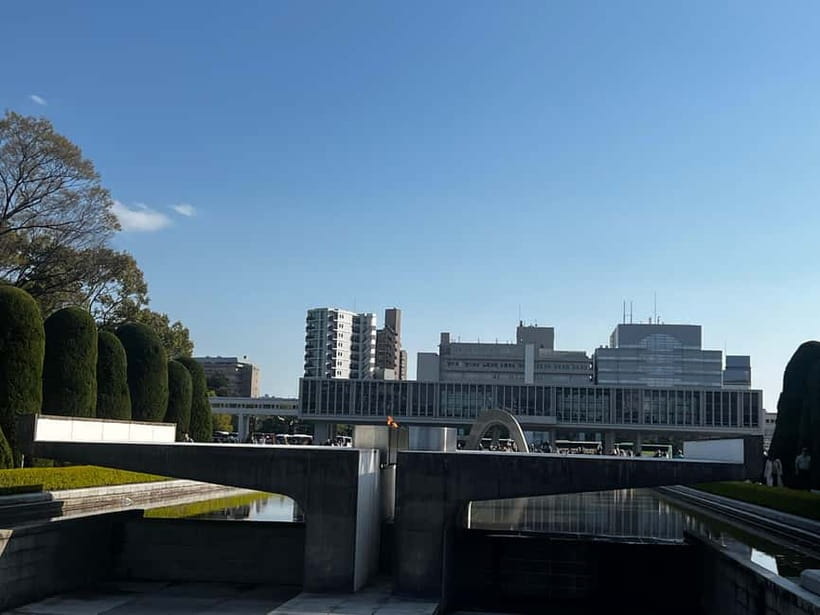
Right after that, you’ll move toward the Peace Flame, another highlight of the route. The tour describes it as a symbol of hope for a nuclear-free world. That’s the kind of message you might hear in a slogan, but at the park it takes on a grounded feel because you’ve already been walking through the concrete reminders of what happened.
I like that the tour connects grief to purpose. You’re not only looking back. You’re also being guided to notice the park’s forward-looking message.
A few more Hiroshima days to weigh up
- Peaceful Hiroshima & Miyajima UNESCO 1 Day Bus Tour
★ 5.0 · 5,309 reviews - Hiroshima: Hiroshima and Miyajima UNESCO Sites 1-Day Tour
★ 4.9 · 2,330 reviews - Hiroshima / Miyajima Full-day Private Tour with Government Licensed Guide
★ 5.0 · 1,298 reviews - Hiroshima Historical Walking Tour – Why A-Bomb was Dropped
★ 4.8 · 893 reviews
Hiroshima National Peace Memorial Hall and the emotion of multiple memorials
Next you’ll visit the Hiroshima National Peace Memorial Hall for about 20 minutes. This is where the visit becomes more educational in a structured way. You’ll also stop at the Hiroshima Victims Memorial Cenotaph (about 10 minutes) and then continue through the sequence without feeling like you’re repeating the same idea.
The key for me is how the tour balances different types of remembrance. Cenotaphs and memorials tend to feel more immediate and personal, while hall-based stops often give you a broader context. You get both, in the same 2-hour loop.
If you’re the type who wants to understand what you’re seeing, this pacing works well. It gives you enough time to notice the memorial design and still get to the Peace Memorial Museum for deeper context.
Peace Memorial Museum: the place where August 6 becomes understandable
The Hiroshima Peace Memorial Museum is part of the tour, and it’s one of the biggest reasons this experience feels more complete than a quick walk-through. You’ll have time here as part of the route, and the tour is geared toward helping you understand August 6, 1945 and the aftermath.
In my view, this museum stop is the backbone. Without it, the memorials can feel like powerful images with unclear context. With it, you start to connect objects, names, and messages into something you can actually carry with you after you leave.
You’ll also notice how the guide’s approach matters here. The reviews highlight how Shera Alvi gives a good amount of information and then allows space to absorb it. That’s the ideal balance for a museum, because too much talking can feel overwhelming when the subject is so heavy.
Clockwork reflection: Prayer Fountain, Gates of Peace, and wrap-up
As the tour nears the end, the stops become more about reflection than interpretation. You’ll visit the Prayer Fountain (about 10 minutes) and then the Gates of Peace, finishing there after your guided circuit.
These are the kinds of places where you’ll benefit from a quiet minute. The guide’s job is to orient you, explain what you’re looking at, and then let you do the thinking. By the time you reach the final gates, you’ll likely feel the shift from learning mode to reflection mode.
And that’s a good sign. A memorial park visit should not only inform you. It should also change how you look at the world for a while.
Price and timing: what $19 buys you in real-world value
At $19 per person for about 2 hours, this isn’t a long tour, but it’s not light on stops either. You’re looking at a packed sequence, with guided time ranging from 10 minutes at smaller sites to about 20 minutes at the Dome and the memorial hall.
That’s why the small group matters. With a maximum of 10 people, you’re less likely to feel like you’re being herded. You get a pace that’s described as easy, with time to absorb. In memorial spaces, pace is more important than speed.
Also, the guide is English-speaking, so you’re not stuck relying on signage alone. For many visitors, that turns the whole park from a list of places into a connected experience.
Walking pace, what to bring, and how to plan your day
This tour is a 2-hour walk. You should plan for steady walking through the park. Bring comfortable shoes and a water bottle. Photography is allowed, and the guide helps with orientation, but you should still expect to keep movement respectful and quiet at key memorial moments.
Food is not allowed during the tour. So if you’re hungry, plan a meal before you meet, or have a snack after you finish. It’s best to avoid distractions so you can focus on the material being shared.
You might also consider timing if you’re sensitive to crowds. The tour is a small group, but the park is still a major destination. If you want a calmer visit, aim for a time when you can walk comfortably without rushing.
Accessibility and who this tour may not suit
This experience is listed as wheelchair accessible, which is a big plus if you’re traveling with mobility needs. The route still involves walking through the park, so it’s worth thinking about how long you can comfortably spend on your feet, even with guided stops.
It’s also listed as not suitable for children under 6 years and people with heart problems. That’s not just a legal checkbox here. The sites are solemn, and the walking load plus emotional weight can be a lot for people who need a more limited physical or mental load.
About the guide: why Shera Alvi’s style is a standout
The name you’ll see tied to this tour is Shera Alvi. The reviews emphasize that Shera gives clear directions to meet at the start point, and that he sets up a strong introduction before you start walking. You can feel the difference between a guide who simply points and a guide who gets you ready to look.
Another highly praised theme is pacing. Shera is described as attentive and interactive, with a good balance of information and space to absorb it. That approach fits memorial tourism well. You want context, but you also want time to feel the place without being rushed through it.
There’s also praise for Shera mastering the locations, including the idea that you’ll reach places you might not find on your own. That’s exactly what you want in a park like this, where key memorials can be easy to overlook if you’re only scanning for the famous landmarks.
Should you book this Hiroshima Peace Memorial Park guided tour?
Book it if you want a guided, English-speaking walkthrough of the park that links the major sites into a clear, respectful narrative. This is especially worth it if you care about understanding August 6, 1945 and the aftermath, not just taking photos.
Skip it, or at least think carefully, if you can’t manage a walking tour or if you fall into the listed not suitable categories. Also, if you prefer total silence and zero explanation, this may feel too talk-driven for your style. But if you want structure, context, and a steady pace, this one is built for that.
In short: for $19 and about 2 hours, you get a guided circuit through the Dome, museum, memorials for victims including children and Korean Atomic Bomb victims, and ending at Gates of Peace. It’s a focused way to experience one of Japan’s most important memory spaces.
FAQ
Where is the meeting point?
The meeting point is at the Atomic Bomb Dome. Coordinates are 34.395483, 132.453592.
How long is the tour?
The tour duration is 2 hours.
What does the tour cost?
The price is $19 per person.
Is the tour offered in English?
Yes. The live tour guide language is English.
Is the tour wheelchair accessible?
The tour is listed as wheelchair accessible.
Is photography allowed, and is food permitted?
Photography is allowed. Food is not allowed during the tour.
Is the tour suitable for children or for people with health concerns?
It is not suitable for children under 6 years. It is also not suitable for people with heart problems.
Newly listed around Hiroshima
- Hiroshima/Miyajima Private Custom Tour with Local Guide★ 5.0 · 134 reviews
- Hiroshima: Tour of Atomic Bomb Dome & Peace Memorial Museum★ 5.0 · 20 reviews
- Hiroshima:Guided Virtual Tour/PEACE PARK TOUR VR★ 5.0 · 29 reviews
- Hiroshima: Miyajima Private Cultural Tour by Ferry★ 4.9 · 72 reviews
- Hiroshima: Private Walking Tour with a Local★ 4.6 · 70 reviews
- Hiroshima: Peace Walking Tour of World Heritage Sites★ 4.9 · 190 reviews
- Hiroshima Private Day Tour★ 4.8 · 6 reviews
- Hiroshima: Peace Park, Castle, and Mitaki Temple E-Bike Tour★ 4.8 · 11 reviews
Hiroshima Peace Memorial Tours, compared.
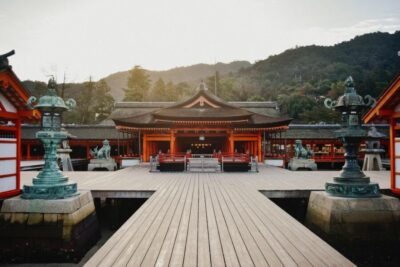
Miyajima Peace Memorial Icons of Peace and Beauty
Read our review →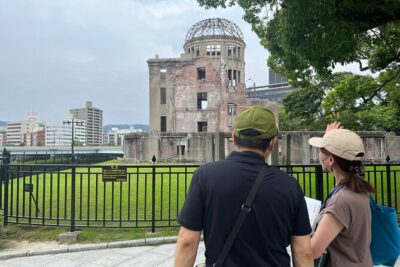
Hiroshima/Guided Virtual Tour of Peace Park/PEACE PARK TOUR VR
Read our review →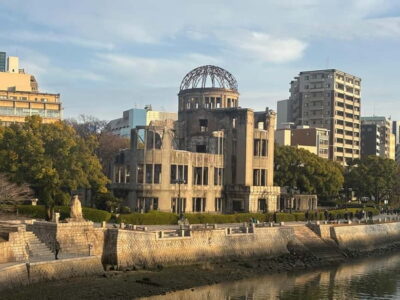
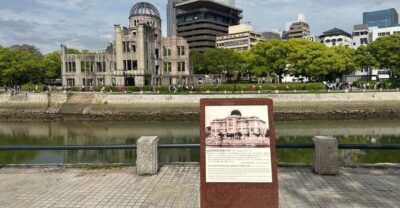
Hiroshima; Hiroshima Peace Memorial Museum and Castle Tour
Read our review →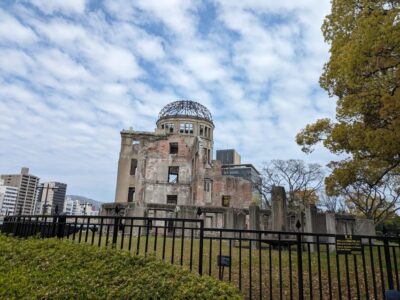
Peace Memorial and Atomic Bomb Dome Private Tour
Read our review →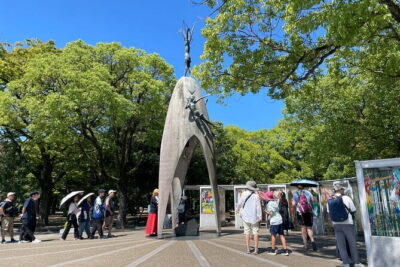
Hiroshima History Tour : A-Bomb Dome, Peace Memorial & City
Read our review →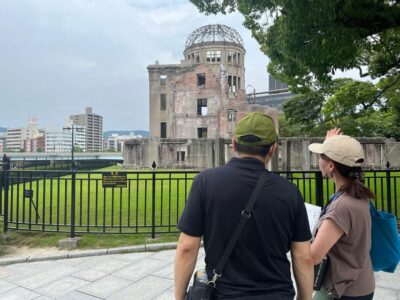
Hiroshima:Guided Virtual Tour/PEACE PARK TOUR VR
Read our review →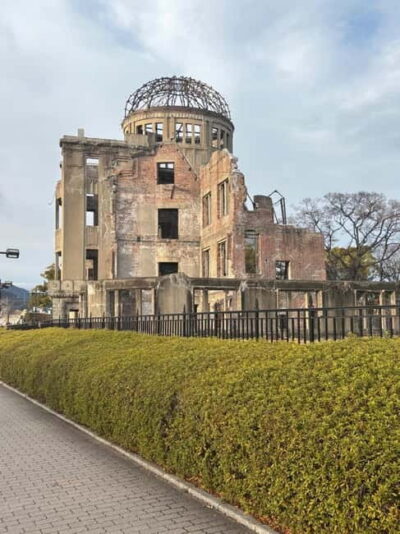
Hiroshima Peace Park & Atomic Bomb Dome Guided Walk
Read our review →Browse the lists this tour appears in