
Review · WALKING TOURS
Koyasan: Mt. Koya Guided Private Walking Day Tour
Mt. Koya asks you to slow down, and a private guided walk makes the temple grounds feel understandable, even if you are new to Buddhism. You are not just moving between sights, you are learning why this place matters to Shingon Buddhism and how the pilgrimage works in practice.
I also like the clean, efficient route that hits the must-see stops in the right order, starting with Daimon Gate and then moving to Kongobuji. That means you spend your energy on the parts that truly change your perspective, not on aimless wandering.
The main drawback is physical. This is a walking tour rain or shine, and it is not suitable for wheelchair users, pregnant women, or people with high blood pressure.
In This Review
- Key Highlights to Know Before You Go
- Why Mt. Koya Feels Different When You Do It With a Guide
- Meeting at Koyasan Station and Passing Under Daimon Gate
- Kongobuji and Danjo Garan, Where Shingon Starts to Make Sense
- Reaching Okunoin, Kobo Daishi’s Mausoleum in the Forest
- A Private Guide Changes the Whole Day
- Lunch, Timing, and What to Bring for a Comfortable 6.5 Hours
- Price and Value: Is $239 Worth a Private Tour Here?
- Who This Mt. Koya Walking Day Tour Suits Best
- Should You Book This Tour?
- FAQ
- What does the tour include for temple entrance fees?
- Is lunch included in the price?
- Where do I meet the guide?
- How long is the private tour?
- Does the tour run in bad weather?
- Is this tour wheelchair accessible?
Key Highlights to Know Before You Go
- Private, customizable route from Koyasan Station with an English guide
- Daimon Gate at 21.5 meters gives you an instant sense of scale
- Kongobuji and Danjo Garan entry included so you can focus on the experience
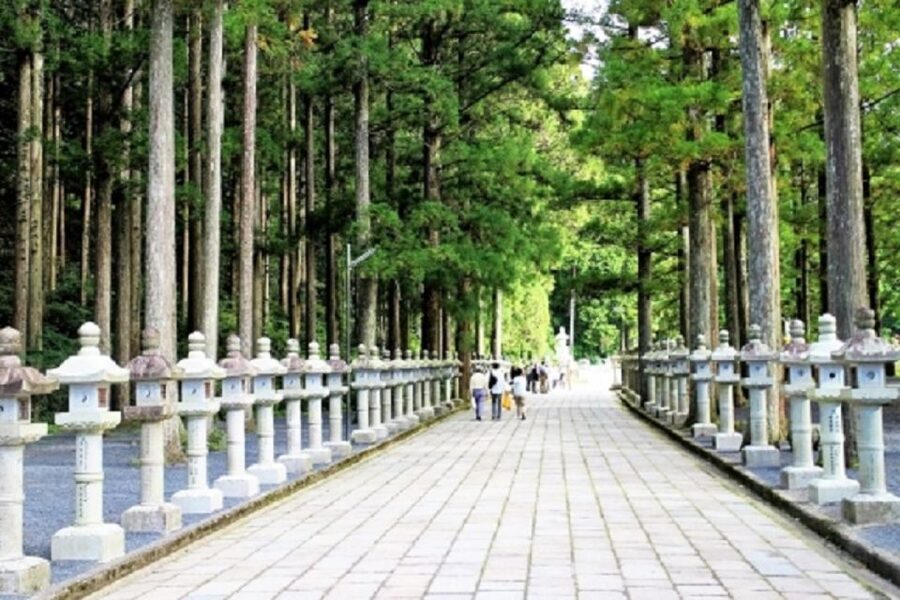
- Okunoin’s quiet forest paths and Kobo Daishi’s mausoleum area
- Bottled water included, but plan your own lunch and drinks
- Guide focus on real stories, including Shingon Buddhism history since 805 A.D.
Why Mt. Koya Feels Different When You Do It With a Guide
Mt. Koya is one of those places where the scenery is only half the story. The other half is the religious meaning, and that meaning can be hard to piece together if you are going on your own.
This tour is built for that exact problem. You start with a walk from Koyasan Station and head up into the mountaintop temple town, led by an English guide who can connect what you see to why it exists. It is especially helpful for Shingon Buddhism, which was introduced to Japan in 805 A.D. by Kobo Daishi, also known as Kukai.
The value here is not speed. It is clarity. When a guide can explain the temples while you are standing in front of them, you end up remembering details instead of just photos.
A few more Japan days to weigh up
- Kyoto Geisha Walking Tour: Gion District & Hidden Gems
★ 4.7 · 3,273 reviews - Tokyo Tsukiji Fish Market Food and Culture Walking Tour
★ 5.0 · 3,184 reviews - Kyoto: Gion Geisha District Walking Tour – Stories of Geisha
★ 4.7 · 2,187 reviews
Meeting at Koyasan Station and Passing Under Daimon Gate
You begin right where most people want to start, at Koyasan Station. Your guide waits in front of the ticket gate, holding a H.I.S. welcome board, and then you move together into the wooded area toward the sacred core of the pilgrimage site.
The first big milestone is the approach to Daimon, the sacred gate. It is a structure that reaches 21.5 meters, and that number matters because it helps you understand that this is not a small local shrine. It is an entrance into a world shaped by centuries of practice.
This is a good moment for you to mentally reset. The gate is basically a checkpoint between everyday Japan and a spiritual landscape built for reflection. Even if you only know a little about Shingon, the physical scale makes it obvious this place was designed to inspire awe and calm.
Practical tip: wear shoes you can walk in all day. The tour is focused on walking, and you will be on foot more than you expect for 6.5 hours.
Kongobuji and Danjo Garan, Where Shingon Starts to Make Sense
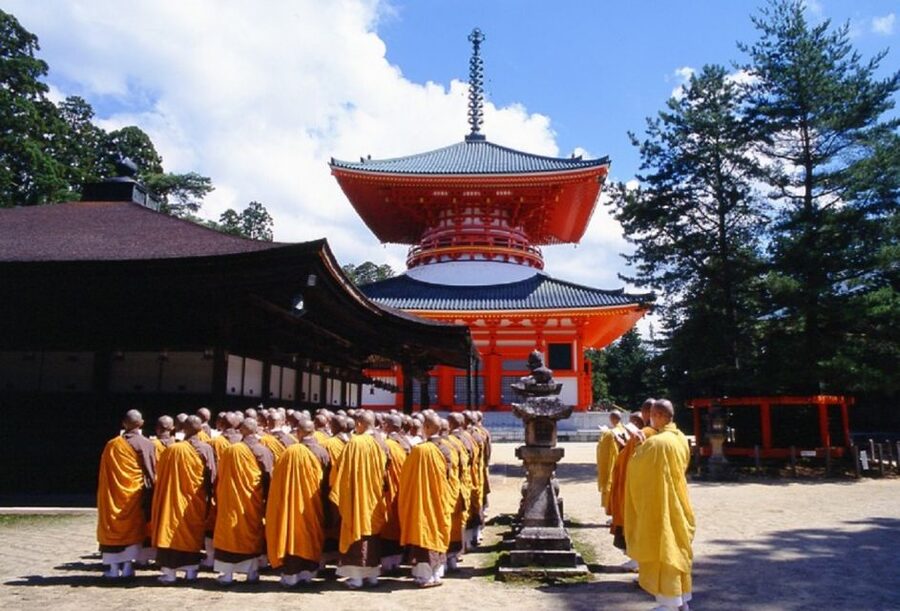
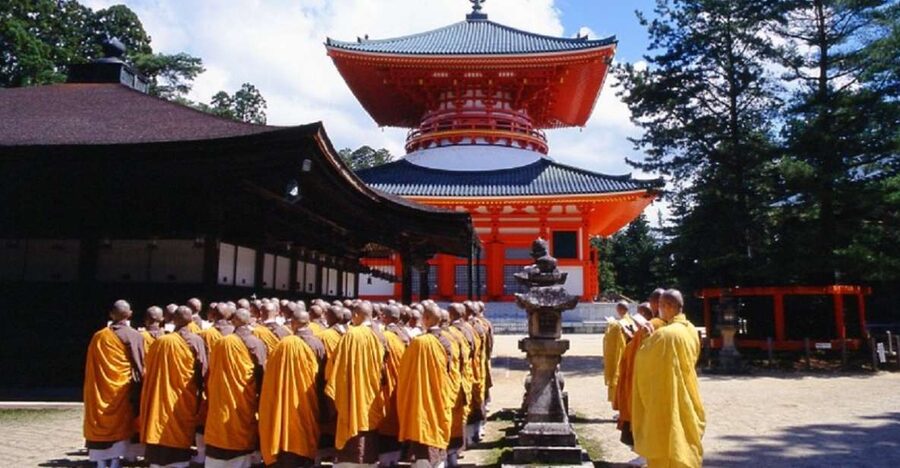
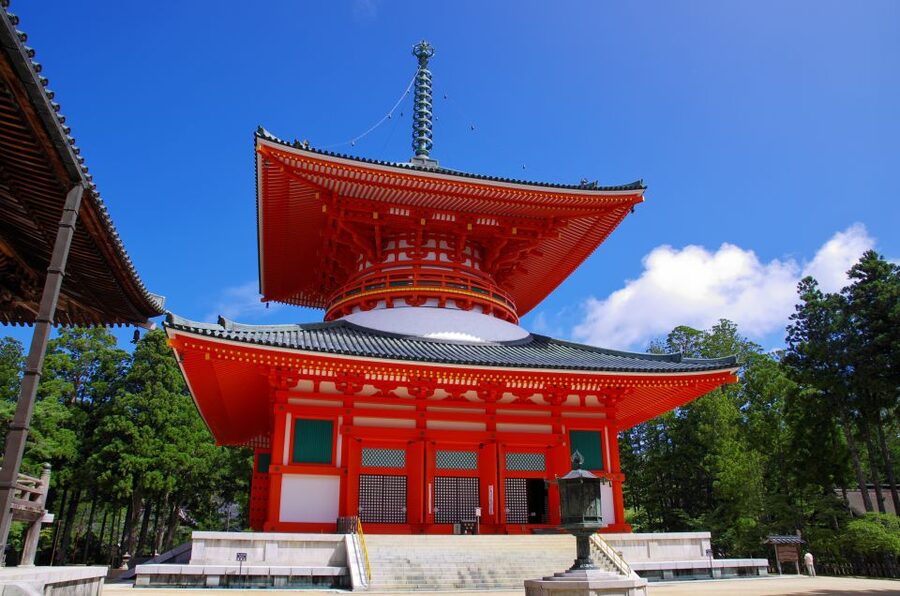
Next comes the head temple area, Kongobuji, and it is one of the most meaningful stops on Mt. Koya. This is tied to Kobo Daishi and the founding of the temple complex culture that shaped Shingon Buddhism on the mountain.
Kobo Daishi began construction on the original Garan temple complex in 826 A.D. That detail is the kind of thing that can blur in a guidebook, but it lands differently when someone points out how the temple area developed across time.
Then the story shifts to politics and power, because in 1593, Toyotomi Hideyoshi built a structure to commemorate the death of his mother. Later, the temple was merged with the Shingon sect. That tells you something important: religion here was never isolated from the rest of Japan. It grew, adapted, and was supported by leaders who understood its influence.
This tour includes the entrance fee of Kongo-Fuji and Danjo Garan, so you can spend your energy on the experience instead of managing tickets and logistics mid-walk. And because it is private, the guide can adjust the pace if you want more explanation on one area, or if you would rather move quickly to the next stop.
What I like about Kongobuji on this kind of guided route is that it gives you a framework. You leave with a sense of how Shingon Buddhism became established on Mt. Koya, and you can then read the next temples more intelligently.
Reaching Okunoin, Kobo Daishi’s Mausoleum in the Forest
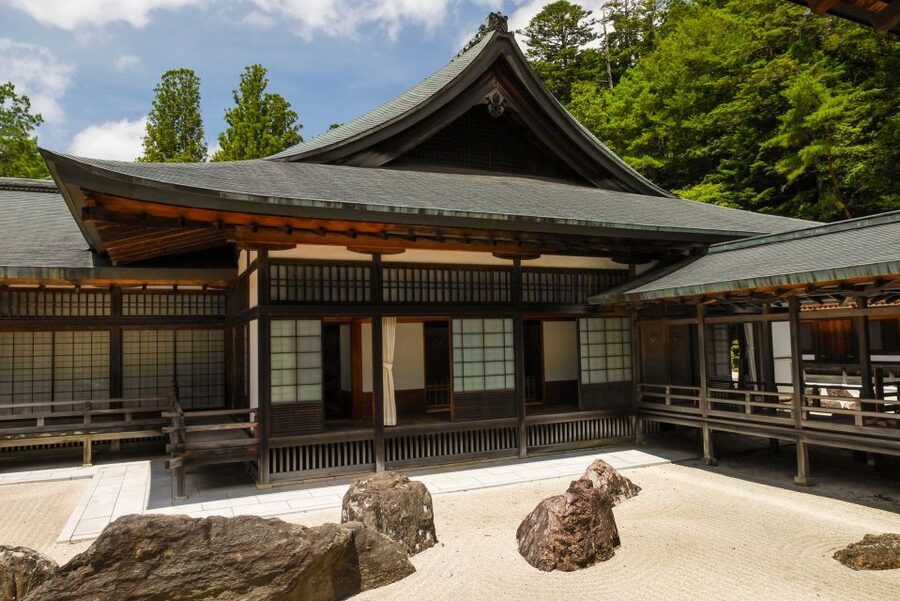
After Kongobuji, you continue through the temple town streets and then into the quiet area connected with Okunoin. This part of the tour is often where people feel the emotional change, because the route becomes slower, calmer, and more centered on reflection.
Okunoin is the site of Kobo Daishi’s mausoleum. That simple fact pulls a lot of meaning into place. It is not just a historical stop. It is tied to a continuing pilgrimage tradition, and your guide helps connect the spiritual purpose to what you see around you.
You will walk through paths described as quiet and surrounded by forest greenery. The practical takeaway is that it feels like you are leaving the main town atmosphere behind and stepping into a more contemplative rhythm.
One useful detail for planning: the tour notes that Okunoin is free of charge, while Kongobuji and Danjo Garan entry are covered. That can help you understand why the timing and attention shift once you reach Okunoin.
Also, because this portion is on foot and outdoors, the rain or shine note matters. If the weather is bad, the forest paths can still be walked, but you will want dry clothing and traction in your footwear.
A different sort of day in Japan:
- Mt Fuji and Hakone 1-Day Bus Tour Return by Bullet Train
★ 5.0 · 26,383 reviews - 1-Day Tokyo Bus Tour
★ 5.0 · 14,250 reviews - PERFECT KYOTO 1-Day Bus Tour
★ 5.0 · 13,518 reviews - Tokyo: TOKYO SKYTREE® Admission ticket
★ 4.5 · 11,192 reviews
A Private Guide Changes the Whole Day
The reviews strongly point to one thing: the guide is the product. And when the guide is excellent, the entire day becomes more than a checklist.
One guide name that comes up again and again is Kaori. People describe her as enthusiastic, patient, and able to answer questions with a kind of professionalism that makes you feel comfortable asking things you did not know you should ask.
That matters on Mt. Koya. Shingon Buddhism is not plug and play. Terms and traditions can feel abstract until someone explains them in plain language while you are standing in the right spot. Kaori is specifically praised for bringing the spirit of Koyasan to life and for keeping in contact beforehand so the visiting time and the meeting point worked smoothly.
There is also a practical side to great guiding. One of the best compliments is that she can make suggestions for things to do before and after the tour. That is valuable because Mt. Koya is a place where timing can make your day easier, especially if you are coordinating with arrival plans.
Since this is a private group experience, you can personalize it. The tour can be customized to your preferences, which means you can steer slightly toward more temple detail or more walking pace, depending on what you feel like that day.
Lunch, Timing, and What to Bring for a Comfortable 6.5 Hours
Lunch is not included. That is normal for a lot of private cultural walks, but it changes your planning. You can either prepare lunch before the tour or buy food during the tour.
Because you are walking on a mountaintop and stopping at key temple areas, I suggest treating lunch as fuel, not as a long sit-down meal. The tour runs about 6.5 hours, so aim for something you can eat without turning your schedule into a slowdown.
What to bring is straightforward:
- Comfortable shoes
- Food and drinks (the tour includes bottled water, but it does not replace a full meal plan)
The bottled water included is a small detail that helps, especially in humid or changeable mountain weather. Still, you should bring whatever you personally need for comfort and hydration.
Also note that the tour is rain or shine. That means you should plan for weather reality. Pack a light rain layer if you have one, and bring a backup plan for staying comfortable.
Finally, it is not recommended for everyone:
- not suitable for wheelchair users
- not suitable for pregnant women
- not suitable for people with high blood pressure
If any of those apply, you should look for another style of visit. Mt. Koya is meaningful, but it is also a walking-focused day.
Price and Value: Is $239 Worth a Private Tour Here?
At $239 per person, this is not the cheapest way to visit Mt. Koya. But it is also not trying to be. The question is whether you are paying for something you can feel during the day.
Here is where the value comes from.
First, you get an English guide for a private group, which is a big difference in a place where religious context is the point. Without a guide, you can still visit temples, but you will miss the why behind the what. This tour is designed to give you that why.
Second, some admissions are included. The tour lists entrance fees for Kongobuji and Danjo Garan as part of the package, while Okunoin is free of charge. That does not make the tour inexpensive, but it removes a chunk of spending and coordination.
Third, you get bottled water and a route built for the core highlights. The day is long enough to be meaningful, but still focused. You are not likely to feel like you are paying for a vague tour where you do not know what you got.
So who is it best for? If you like asking questions, if you want a guide who can explain Shingon Buddhism clearly, and if you want to see both Kongobuji and Okunoin without getting lost in temple details, the price starts to look fair.
If you mainly want photos and a quick checklist, you can probably build a cheaper self-guided day. But if you want understanding, the guide time is where the money goes.
Who This Mt. Koya Walking Day Tour Suits Best
This tour fits travelers who want more than a scenic stroll. You will probably enjoy it most if you:
- care about religious history and want it explained at temple level
- like a guided structure instead of choosing stops on the fly
- want a private setting where you can ask questions and adjust the pace
- prefer a walk that hits key pilgrimage sites without rushing
It may not fit if you:
- need step-free routes or wheelchair access
- need to avoid long walking days
- have health limitations that make mountain walking hard, especially given it is not suitable for high blood pressure
If you are traveling with family, note that the tour is private, so you can customize, but the physical requirements still matter.
Should You Book This Tour?
Book it if you want a guided day that connects Mt. Koya’s sacred sights to Shingon Buddhism in plain language, and you value having time to ask questions while you stand in the temple grounds. The strong praise for guides like Kaori, plus the private flexibility, is a sign the experience is meant to feel personal, not generic.
Skip it if you are only after a quick temple photo tour and plan to read everything yourself. Also skip it if your mobility or health situation falls into the tour’s not-suitable categories.
If you decide to go, do yourself one favor: plan your lunch, wear your best walking shoes, and bring the kind of curiosity that makes temple stories worthwhile. On Mt. Koya, that is usually what turns a visit into a memory.
FAQ
What does the tour include for temple entrance fees?
The tour includes entrance fees for Kongobuji and Danjo Garan. Okunoin is free of charge.
Is lunch included in the price?
No, lunch is not included. You can either prepare food before the tour or buy it during the tour.
Where do I meet the guide?
You meet the guide in front of the ticket gate at Koyasan Station. The guide will wait holding a H.I.S. welcome board.
How long is the private tour?
The duration is 6.5 hours. Starting times depend on availability.
Does the tour run in bad weather?
Yes. The tour takes place rain or shine.
Is this tour wheelchair accessible?
No. It is not suitable for wheelchair users.
Newly listed around Japan
- Hiroshima and Miyajima 1 Day Walking Tour★ 5.0 · 43 reviews
- Hiroshima and Miyajima 1 Day Cruise Tour★ 5.0 · 24 reviews
- Hiroshima & Miyajima: UNESCO A-Bomb Dome & Itsukushima with Local★ 5.0 · 25 reviews
- Hiroshima & Miyajima: Private Full-Day Tour with a Local Guide★ 5.0 · 39 reviews
- Hiroshima 5k Running Tour of Hijiyama Park★ 5.0 · 7 reviews
- Hiroshima and Miyajima Bus Tour with Indian Lunch★ 5.0 · 10 reviews
- Hiroshima and Miyajima 1 Day Bus Tour★ 4.5 · 145 reviews
- Hiroshima Peace Memorial and Atomic Bomb Dome Private Tour★ 5.0 · 37 reviews
Walking Tours, compared.
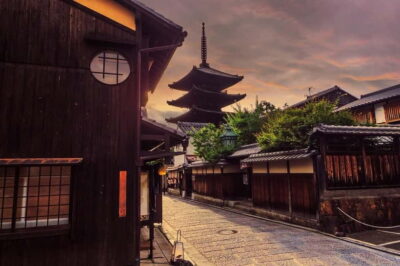
Kyoto Geisha Walking Tour: Gion District & Hidden Gems
Read our review →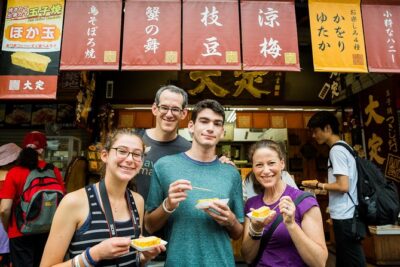
Tokyo Tsukiji Fish Market Food and Culture Walking Tour
Read our review →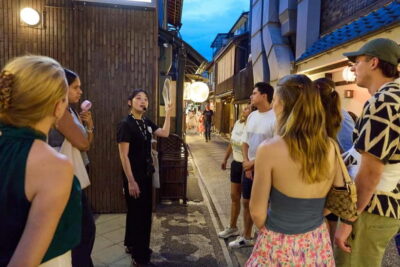
Gion Geisha District Walking Tour – Stories of Geisha
Read our review →
Shinjuku Local Bar and Izakaya Guided Walking Tour
Read our review →
Asakusa Walking Tour with Sensoji Temple Visit
Read our review →
Kyoto Gion Geisha District Walking Tour – The Stories of Geisha
Read our review →Browse the lists this tour appears in