
Review · NARA DEER PARK TRIPS
Nara: UNESCO Heritage Sites & Deer Park Tour with Pro guide
Deer, lanterns, and Buddha in three hours is a smart way to see Nara’s UNESCO sights fast, with Nara Park deer feeding and Todai-ji Temple as the big bookends. This small-group, local-guided route also makes the religion and art click, not just the photos. I like how the day moves from playful Shinto-linked deer to the quiet power of Kasuga Taisha’s forest shrine, then on to Todai-ji’s towering Buddha hall.
I love the private local guide level of attention, especially the way guides like Goku can explain the meaning behind what you’re seeing while keeping the pacing comfortable. I also like the practical details, like learning how to feed the deer with the included shika-senbei crackers and getting help with the busy parts at Todai-ji. One drawback to plan for: there’s no hotel pickup, so you’ll need to get yourself to the red torii gate of Himuro Shrine.
In This Review
- Key points worth caring about
- A Three-Hour Nara Plan That Actually Fits Japan
- Where You Meet: Himuro Shrine’s Red Torii Gate
- Nara Park Deer Feeding With Shika-Senbei
- Kasuga Taisha Shrine and the Ancient Forest Feel
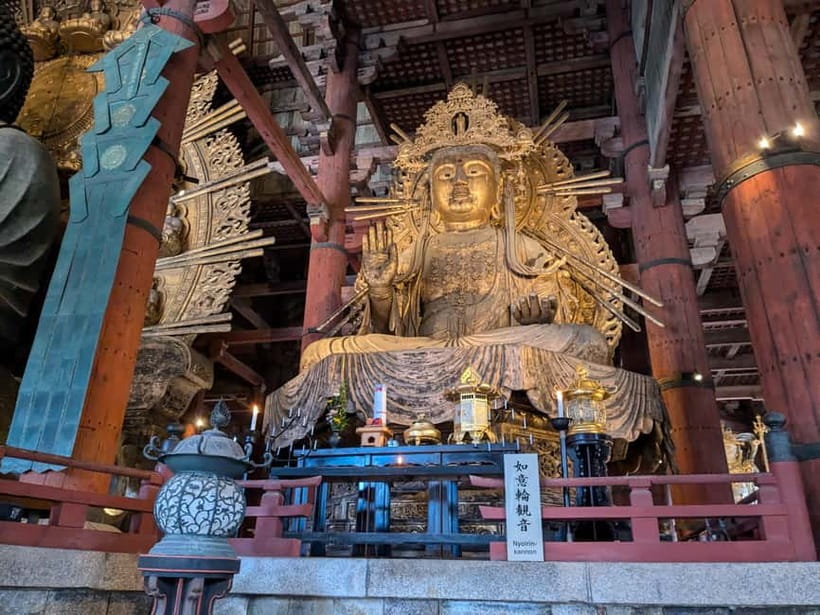
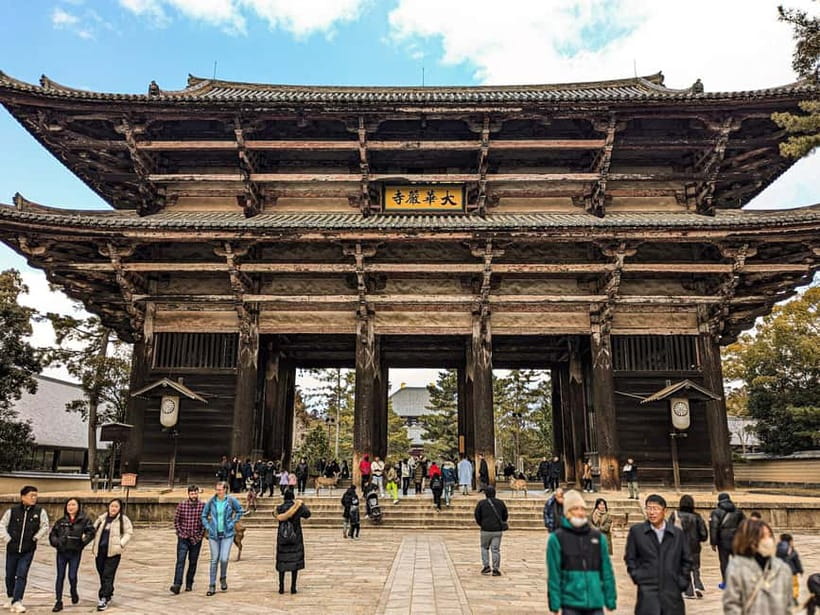
- Todai-ji Temple, the Giant Bronze Buddha, and the Big Hall
- Why the Guide Makes This Feel Like a Real Nara Day
- Price and Value: What $83 Includes and What You Still Need
- Practical Stuff You Should Pack (and One Rule to Remember)
- Who This Tour Suits Best (and Who Might Want Another Plan)
- Should You Book This Nara UNESCO and Deer Park Tour?
- FAQ
- Where is the meeting point for the tour?
- How long is the Nara tour?
- What is included in the tour price?
- Is hotel pickup or drop-off included?
- Are meals included in the tour?
- Can I use flash photography during the tour?
- What languages are available for the live guide?
- Is the tour wheelchair accessible or suitable for back problems?
Key points worth caring about
- Shika-senbei deer feeding at the start, with instructions so you can enjoy it respectfully
- Kasuga Taisha’s lanterns and the ancient forest setting that supports the shrine’s spiritual feel
- Todai-ji’s giant bronze Buddha inside a massive wooden hall, explained in plain language
- Small group up to 10, so questions and conversation stay easy
- A guide who helps with more than sightseeing, including queue navigation and sometimes planning the next meal stop
- Flash photography is off-limits, so come ready to shoot without it
A Three-Hour Nara Plan That Actually Fits Japan
Nara can overwhelm you in the best way. You see deer, you hear temple bells, and suddenly you’re trying to connect Shinto shrines to Buddhist temples in your head. This tour is built to solve that problem in about three hours, not an all-day marathon.
You’ll start in Nara Park, then head to Kasuga Taisha Shrine, and finish at Todai-ji Temple. That order works because it shifts the mood: open-air deer time, then shaded forest quiet, then the grand monument scale of Todai-ji. If you’re short on time in Kansai, this is a very efficient way to hit the must-sees without feeling like you’re sprinting through signs.
The best part is the context. Instead of treating everything like a checklist, the guide explains why these places matter to Japanese religion and culture, and how the shrine-and-temple world connects. Even if you’re not a deep history person, you’ll leave with a clearer sense of what you saw and what you’re looking at when you come back for a second glance.
More History Tours in Nara
- World Heritage Kyoto & Nara Uji Authentic Matcha Experience
★ 5.0 · 1,573 reviews - Nara: Half-Day UNESCO Heritage & Local Culture Walking Tour
★ 4.8 · 250 reviews - Nara: Bike Tour in Ancient Capital UNESCO World Heritage
★ 5.0 · 43 reviews
Where You Meet: Himuro Shrine’s Red Torii Gate
You meet at the red gate called the torii of Himuro Shrine. There’s no hotel pickup or drop-off, so plan to arrive a bit early and get your bearings before the tour begins.
This sounds simple, but it affects the whole day. If you rely on someone else to fetch you, you’ll be disappointed. If you’re the type who likes to start on your own and then hand off the explaining to a local guide, this setup is a plus. Comfortable shoes help here, too. You’re on your feet for part of the day, and the tour is designed as a walking experience.
If you’re traveling between Kyoto and Nara, you’ll probably already be using transit and walking. This meeting point fits that flow well, as long as you build a little buffer so you don’t start stressed.
Nara Park Deer Feeding With Shika-Senbei
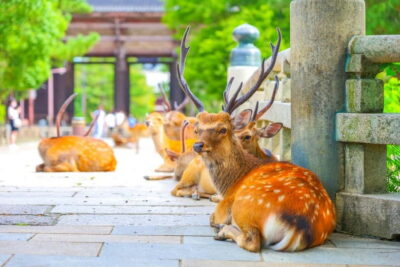
Your tour begins in Nara Park, home to the deer that roam freely. The experience isn’t just “spot and feed.” You’ll get crackers called shika-senbei, and your guide will explain how the deer connect to Shinto beliefs.
This part is popular for a reason. The deer are calm, curious, and genuinely part of the park’s character. Feeding them with guidance keeps it enjoyable and respectful. The tour also sets expectations up front: the deer are sacred, and you’re meant to follow the guide’s instructions.
A practical tip: you’ll want to have your camera ready, but don’t expect a free-for-all. The tour says flash photography isn’t allowed, and temple rules tend to be strict on lighting and manners, so it’s best to keep your photo settings ready from the start.
Also, bring water. Even in comfortable weather, a short walking tour plus deer time can make you thirsty fast. Sunscreen is smart too, because parts of the day are outdoors.
Kasuga Taisha Shrine and the Ancient Forest Feel
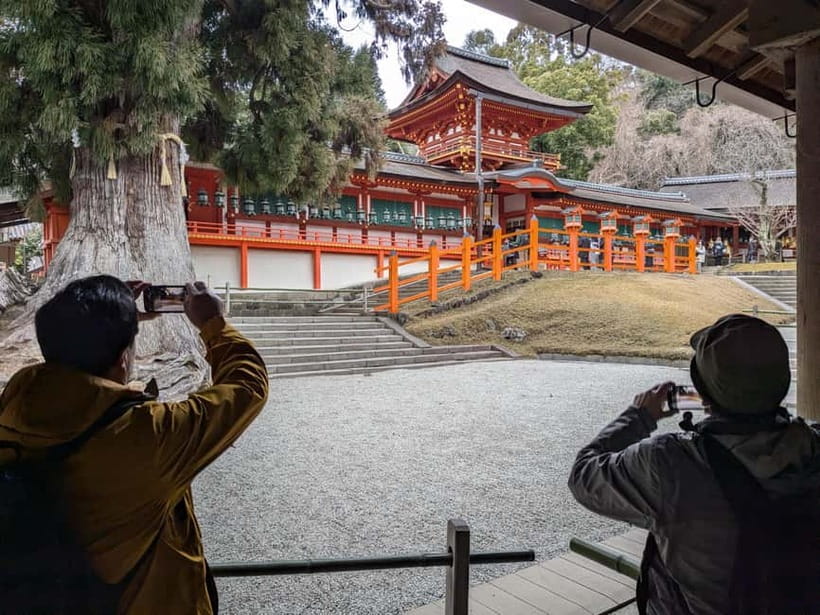
Next comes Kasuga Taisha Shrine, known for its spiritual importance and its iconic lanterns. What makes this stop special is the setting: you’re surrounded by an ancient forest that has stayed largely untouched for centuries.
That forest matters. It changes how the shrine reads on the ground. It’s not just a building with decorations, it’s a place where nature and worship work together. The guide walks you through the shrine’s role in Japan’s religious traditions and helps you understand what you’re seeing beyond the obvious lantern patterns.
Kasuga Taisha is one of those places where a guide improves everything. Without context, you might notice lanterns, steps, gates, and signs. With context, you start noticing how the atmosphere supports the belief system. The tour makes that shift, so you’re not just collecting images. You’re making meaning.
There’s also a good “pace reset” here. After the lively park deer time, the shrine grounds give you a quieter moment to slow down, look closely, and take a breath. Just remember: this is still walking, so keep your shoes comfortable.
A few more Nara Deer Park trips around Nara:
- Kyoto/Osaka: Kinkakuji, Bamboo Forest, and Nara Deer Park
★ 4.4 · 265 reviews - E-Bike Nara Highlights – Todaiji, Knives, Deer, Shrine
★ 4.8 · 186 reviews - Nara: Great Buddha, Kasuga Shrine & Deer Park Tour
★ 4.8 · 62 reviews - E-Bike Nara Highlights – Todaiji, Knives, Deer, Shrine, and Gems
★ 4.5 · 34 reviews
Todai-ji Temple, the Giant Bronze Buddha, and the Big Hall
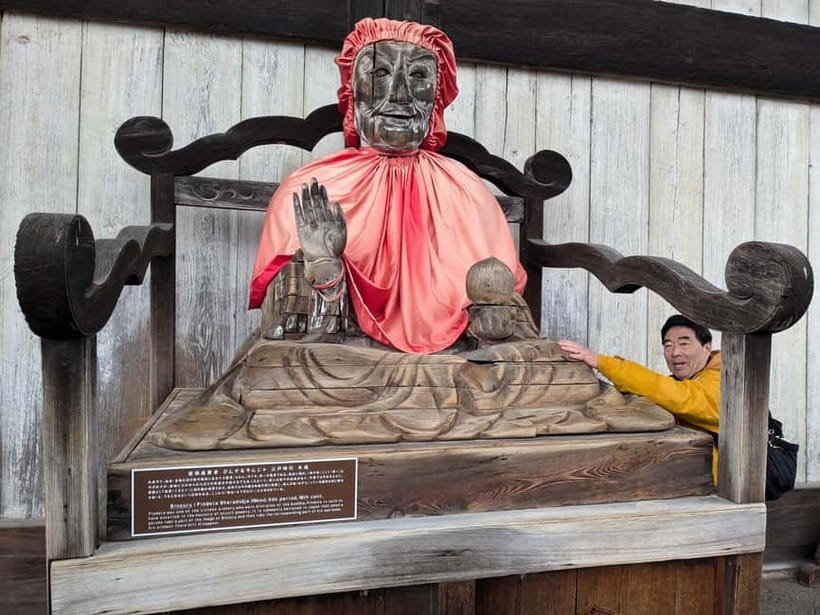
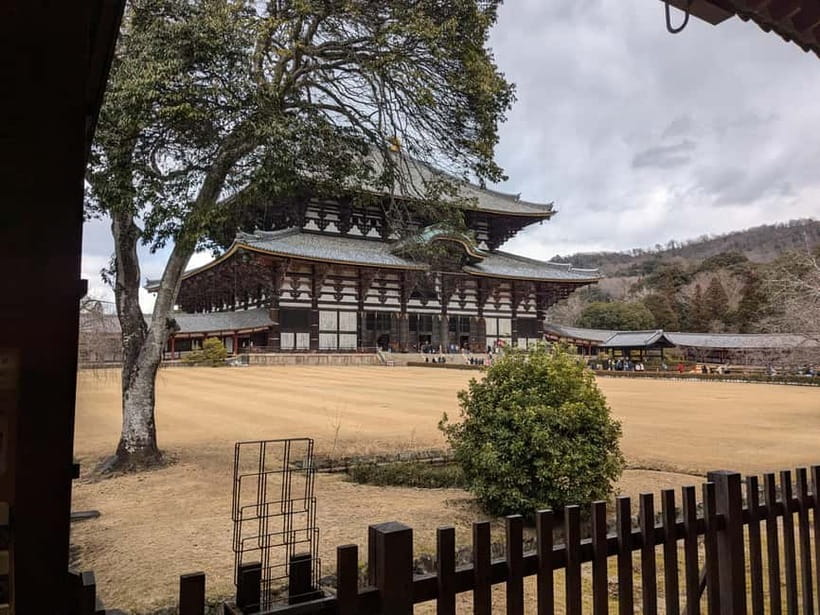
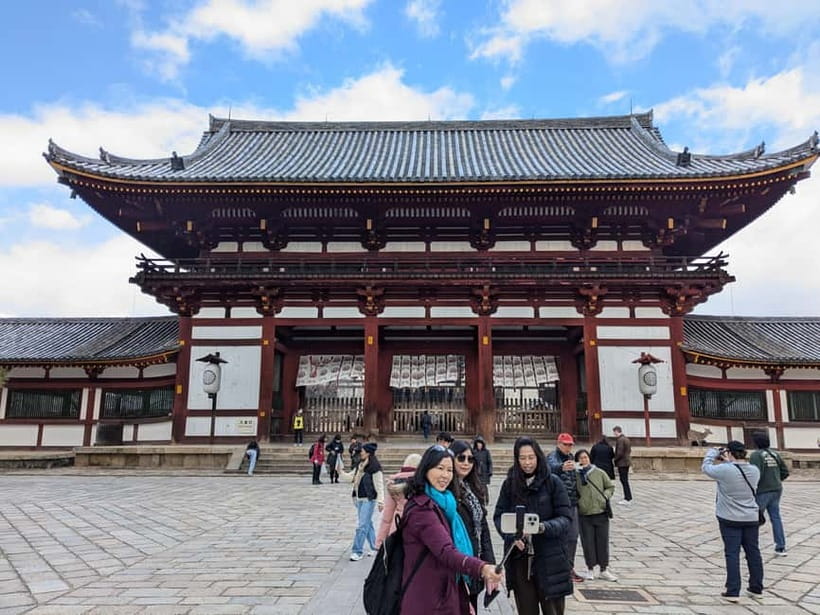
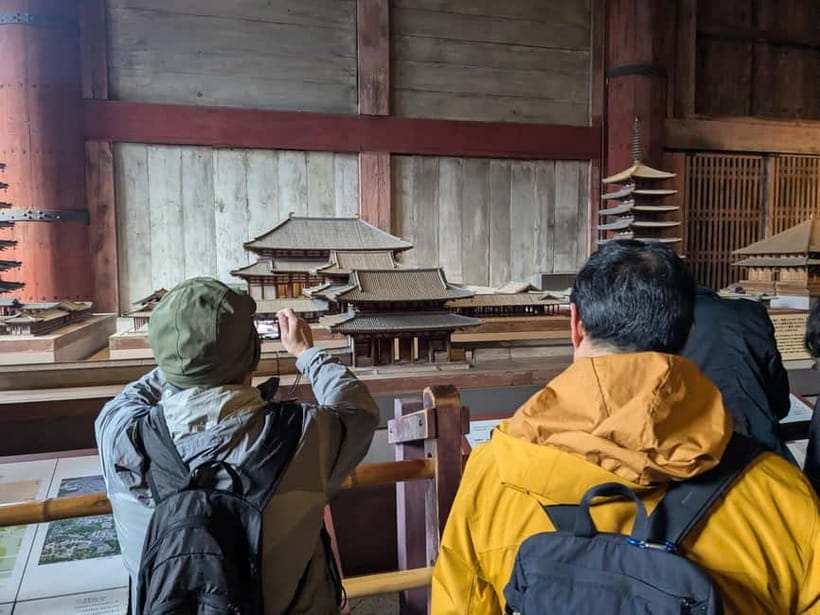
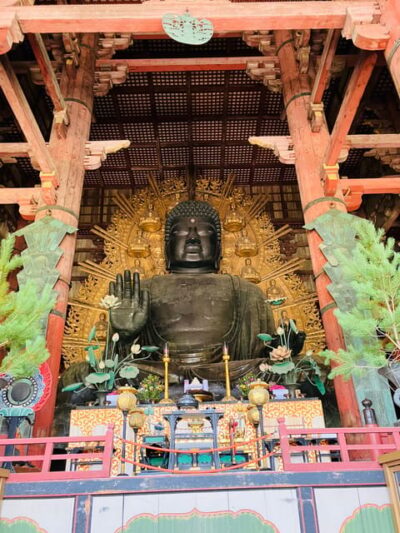
You finish at Todai-ji Temple, one of Japan’s most important cultural landmarks. The headline is the world’s largest bronze Buddha statue, housed inside one of the world’s largest wooden buildings.
Even if you’ve seen photos, the scale hits in person. The guide helps you place the statue historically and explains its influence on Japanese Buddhism. That part is key. You’ll see the monument, but you’ll also understand why it mattered, and what that says about Buddhism in Japan.
One of the most praised practical points from the tour is how guides handle the busy areas. In particular, the guide Goku is noted for helping groups skip long queues at the Buddhist temple and navigating the site smoothly. That doesn’t mean you should assume everything will be instantly effortless, since crowds change day to day. But it does mean you’re in hands that know where time gets eaten and how to keep things moving.
Also note the photo rule again: no flash photography. If you want night-like shots or dramatic lighting, you’ll have to work with the daylight and interior light, not flash.
If you want to soak in what you’ve seen, Todai-ji is a strong finale. It’s a finish that feels like a payoff, not a rushed stamp.
Why the Guide Makes This Feel Like a Real Nara Day
A big reason this tour scores well is the way the guide talks to you. The experience is designed around a local expert from the Kansai region, and that shows in the explanations. You’re not just getting facts. You’re getting cultural translation.
The guide can speak to Japanese religion and history in a way that connects to how people live and think. The tour info also mentions that the guide brings in Japanese culture beyond temples, including music and subcultures. That’s great for travelers who don’t want a lecture, but still want substance.
Language options are solid too. The live guide can be Japanese, English, Russian, Spanish, French, or Portuguese. If you’ve ever tried to “DIY” your way through a shrine or temple with a shaky understanding, you’ll appreciate being able to ask a question and get a clear answer.
Two additional “small but important” guide strengths show up repeatedly in guide feedback:
- Enthusiasm and clear explanations that make the sites easier to understand fast
- Help with next steps, where Goku in at least one case helped plan a recommended ramen stop and even assisted with ordering while respecting dietary needs
That last point matters more than you’d think. After you leave a major temple complex, decision fatigue hits. Having a guide who can point you toward a good, practical meal can turn the day from “ended” into “rounded off.”
Price and Value: What $83 Includes and What You Still Need
At $83 per person for a 3-hour tour, you’re paying for several things that usually cost extra when you DIY:
- a private local guide
- entrance fees to all sites
- shika-senbei crackers for feeding the deer
You’re also not paying for hotel pickup, because it’s not part of the package. Meals are also not included, so you’ll need to plan lunch or a snack before or after.
Here’s how I think about the value. Three UNESCO-style stops can be expensive and time-consuming to arrange on your own. Bundling the entrance fees and having a guide do the navigation and explanations reduces both cost surprises and mental load. And because the group is limited to 10 participants, you’re more likely to get real attention instead of being herded through the day.
If you like temples, shrines, and nature, the included structure is what makes the price feel reasonable. If you’re the type who just wants to wander and take photos with zero talking, then you might not get full value. But for most people trying to connect the dots in Nara, this is a strong use of time.
Practical Stuff You Should Pack (and One Rule to Remember)
This is a walking tour, and it happens mostly in outdoor and sacred spaces. Pack like you mean it.
Bring:
- comfortable shoes
- a camera
- sunscreen
- water
Not allowed:
- flash photography
Also, check weather conditions before you go. If it’s hot and sunny, sunscreen and water become non-negotiable. If it’s rainy, choose shoes that can handle wet stone and paths.
Accessibility is limited. It’s not suitable for wheelchair users and it’s not suitable for people with back problems. That doesn’t just mean long distances. Sacred sites often involve uneven ground and lots of steps, so mobility matters here.
Finally, the deer part has a simple theme: be respectful and follow the guide’s instructions. That keeps the experience enjoyable for you and for the animals.
Who This Tour Suits Best (and Who Might Want Another Plan)
This tour is a great fit if you:
- want UNESCO highlights in Nara without spending the whole day
- care about understanding Shinto and Buddhist connections, not just taking pictures
- enjoy nature, especially the deer at Nara Park
- like learning from a guide who can answer questions and connect the sites to wider Japanese culture
You might want a different plan if you:
- need a fully accessible route
- struggle with back pain from walking or uneven ground
- want long, unstructured shopping time after temples, since this is designed around a tight 3-hour flow
Should You Book This Nara UNESCO and Deer Park Tour?
If you want a clear, guided path through Nara’s most famous spiritual sites, I’d book it. The value comes from three places at sensible timing, with entrance fees included and the guide doing the heavy lifting on context. The deer feeding is fun, and Kasuga Taisha plus Todai-ji give you the big “Japan feels like Japan” contrast in one afternoon.
The only real reason to hesitate is the lack of hotel pickup, since you’ll need to handle getting to the meeting point at the torii of Himuro Shrine on your own. If you can do that, this is a smart use of limited time in Kansai, and the kind of tour that makes Nara feel less like a photo dump and more like a story you understand.
FAQ
Where is the meeting point for the tour?
You meet at the red torii gate of Himuro Shrine.
How long is the Nara tour?
The tour lasts 3 hours.
What is included in the tour price?
The package includes a private local tour guide, entrance fees to all sites, and special shika-senbei crackers for feeding the deer.
Is hotel pickup or drop-off included?
No, hotel pickup and drop-off are not included.
Are meals included in the tour?
No, meals are not included.
Can I use flash photography during the tour?
No, flash photography is not allowed.
What languages are available for the live guide?
The live guide is available in Japanese, English, Russian, Spanish, French, and Portuguese.
Is the tour wheelchair accessible or suitable for back problems?
No. It is not suitable for wheelchair users and it is also not suitable for people with back problems.
More Historical Tours in Nara
- Kyoto/Osaka: Kyoto and Nara Sites & History Day Trip
★ 4.5 · 32 reviews - World Heritage Shirakawa-go and Experience Tours from Kanazawa
★ 5.0 · 4,049 reviews - Kanazawa: World Heritage Shirakawa-go Morning Guided Tour
★ 4.9 · 988 reviews - Tokyo: Imperial Palace Japanese History Walking Tour
★ 4.9 · 987 reviews
Newly listed around Nara
- Nara:5 Type of Tea Tasting & Mindful Tea Ceremony★ 5.0 · 28 reviews
- Nara:Authentic Tea Ceremony(Max 5 ppl) -Master Matcha Making★ 5.0 · 119 reviews
- Nara: Todai-ji y parque de Nara (Spanish Guide)★ 5.0 · 16 reviews
- Nara: Sake Tasting Tour at the Birthplace of Japanese Sake★ 4.9 · 8 reviews
- Nara: Private City Tour With A Local Guide★ 4.2 · 8 reviews
- Nara: Private Tour with Private Guide★ 4.8 · 66 reviews
- Nara Like a Local: Customized Guided Tour★ 4.2 · 36 reviews
- Nara Early Bird Tour (Kyoto Departure Option Available)★ 4.9 · 142 reviews
Nara Deer Park Trips, compared.
Kyoto/Osaka: Kinkakuji, Bamboo Forest, and Nara Deer Park
Read our review →
E-Bike Nara Highlights – Todaiji, Knives, Deer, Shrine
Read our review →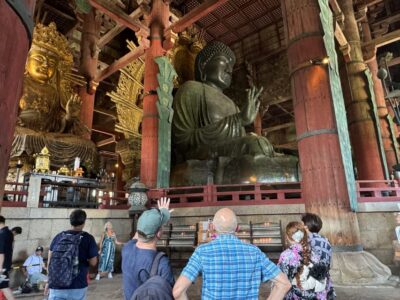
E-Bike Nara Highlights – Todaiji, Knives, Deer, Shrine, and Gems
Read our review →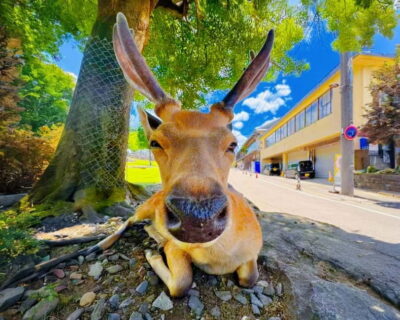
Essential Private Tour with Deer Park and Temples
Read our review →
Nara Deer Park, Uji Matcha, & Hot Spring Full-Day Tour from Osaka
Read our review →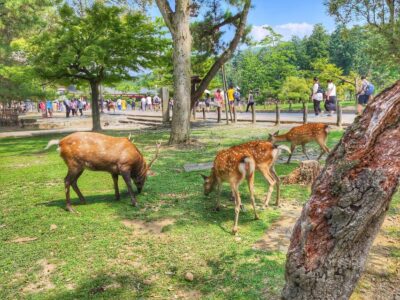
Nara, Todaiji, Kasuga Taisha Shrine Private Full Day
Read our review →Browse the lists this tour appears in