
Review · HISTORICAL TOURS
Nikko World Heritage 1 Day Tour
Gold, monkeys, waterfalls, all in one day.
This Nikko World Heritage 1 Day Tour is a full outing that trades Tokyo subway lines for a guided day in the Nikko area, with major sights in a tight, well-defined route. You’ll see the kind of details that make Japan’s shrine culture feel both artistic and strangely precise, then step into mountain scenery with big water power.
I love that Toshogu Shrine gets real time (about 2 hours), so you are not just rushing past the famous bits. I also like the way the day is supported by a comfortable air-conditioned vehicle and a lunch option, so you can focus on the sights instead of logistics. Depending on the day, groups can be small, and reviews often mention guides like Yumi, Hide, Harry, and Kaori for clear, energetic explanations.
My main consideration is weather and walking. Nikko can be cold, and if rain hits you should plan for a slippery shrine approach with lots of steps (and limited protection from the elements), plus the reality that there is no restroom on board.
In This Review
- Key highlights from this Nikko day trip
- Getting to Nikko from Shinjuku is the easy part
- Toshogu Shrine: gold details, Three Wise Monkeys, and Tokugawa Ieyasu
- Kegon Falls: how to handle the 100-meter wow moment
- Lake Chuzenji: a classic mountain pause under Mt. Nantai
- Lunch and comfort: what is included, what isn’t
- How the day pacing really works (and where it can wobble)
- Who should book this Nikko World Heritage tour?
- Should you book this Nikko World Heritage 1 Day Tour?
- FAQ
- What are the main stops on the Nikko tour?
- How long is the tour?
- Where do I meet the tour bus in Tokyo?
- Is lunch included?
- Is there a restroom on the bus?
- What should I wear for this day trip?
- Will the tour run in bad weather?
- Can I change the return location after the tour?
- Is cancellation free?
Key highlights from this Nikko day trip
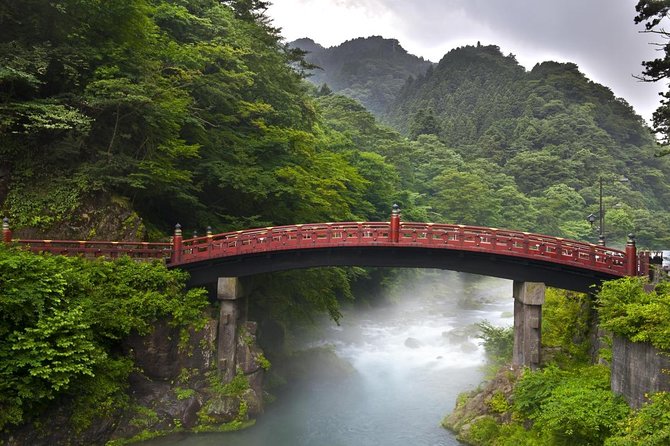
- Toshogu Shrine time that actually adds up, including the Three Wise Monkeys and Tokugawa Ieyasu’s tomb
- Kegon Falls at 100 meters, one of Japan’s headline waterfalls, with quick, high-impact photo time
- Lake Chuzenji on the Mt. Nantai side, a classic stop that balances temples with mountain air
- Comfort and structure, air-conditioned bus, a set departure from Shinjuku, and included admission where it matters
- Guide-led storytelling, with multiple praised guides named in feedback, like Yumi and Hide
- No onboard restroom, so you will rely on scheduled breaks and your own planning
Getting to Nikko from Shinjuku is the easy part
Your day starts in Shinjuku at the Robert Indiana sculpture called Love, at 6-chōme-5-1 Nishishinjuku. The departure time is 8:30 am, and the tour runs about 10 hours 30 minutes total, returning to a different end location you cannot change after booking.
Once you’re on the bus, the trip has a “sit back and watch the scenery” rhythm. It is air-conditioned, and the tour is designed to keep things moving even when the roads get busy. Reviews also describe short rest stops on the way to and from Nikko for bathroom breaks and snacks, which is a practical lifesaver on a long day.
One logistics detail to treat seriously: Japan law requires you to wear your seat belt on the tour bus. It’s usually a simple rule, but it can become annoying if you forget right away.
Also note the timing reality. The tour departs regardless of weather or traffic conditions unless the operator notifies you otherwise. If delays happen, sightseeing time can shrink, and outlet shopping time can get cut. That is not a reason to avoid the tour, but it is a reason to pack flexibility into your expectations.
More History Tours in Tokyo
- Tokyo: Imperial Palace Japanese History Walking Tour
★ 4.9 · 987 reviews - Yanaka Walking Tour: Historic and Traditional District of Tokyo
★ 5.0 · 530 reviews - Tokyo: Shinjuku Historical Walking Tour & Secret Backstreets
★ 5.0 · 530 reviews
Toshogu Shrine: gold details, Three Wise Monkeys, and Tokugawa Ieyasu
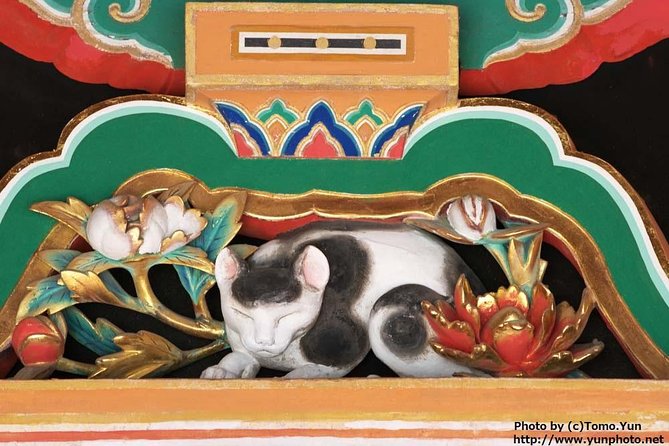
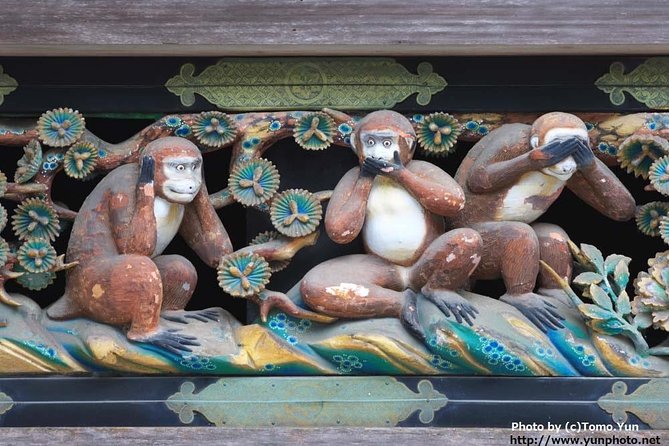
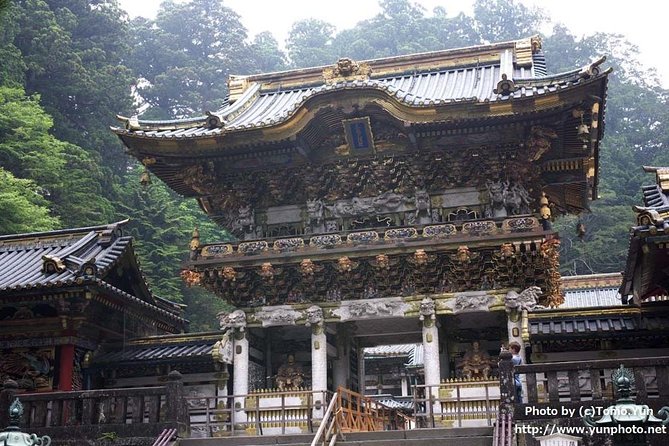
The star stop is Nikko Toshogu Shrine, and it’s the kind of place where the famous details are famous for a reason. Expect rich gold-leaf decorations, carved animal figures, and the tomb of Tokugawa Ieyasu, the shogun whose legacy still shapes Japanese history.
What I like about having about 2 hours here is that it gives you breathing room. You can do the wide-view circuit first, then slow down for the carvings and the areas people tend to photograph. If you rush, you miss the craftsmanship. If you slow down too much, you still risk feeling time pressure before the next stops. The tour’s schedule lands closer to the sweet spot than many “quick-hit” day tours.
You should also go in knowing Toshogu is visually intense, but it also involves real walking. Shoes that let you move comfortably on uneven surfaces matter. If you’re visiting in colder months, Nikko can feel colder than Tokyo, so bring winter gear rather than assuming your Tokyo jacket is enough.
Weather can also change the experience fast. In heavy rain, you may end up dealing with puddles and slick steps on the way to and around the shrine areas. That doesn’t mean you should cancel every rainy forecast, but it does mean you should wear grippy shoes and keep your rain plan simple.
Kegon Falls: how to handle the 100-meter wow moment
Next up is Kegon Falls, a roughly 20-minute stop with admission free. The big headline is height: the waterfall drops about 100 meters, and it’s regularly listed among Japan’s top waterfalls.
For a sight like this, the practical value of the short stop is focus. You will not feel dragged into a long walk with no payoff. Instead, you get enough time to reach your viewing area, take photos, and then reset your legs before the next part of the day.
That said, the stop is short. If you want the best photos, you should move quickly but not panicked, and you should be ready for crowds. Rain can also make viewing and walking slower, so treat the 20 minutes as “plan for it to take longer if needed.”
If you care about photos, a small tip: keep your hands free. Umbrellas and slow-moving crowds can block views in bad weather, and you’ll enjoy the waterfall more if you can reposition with ease.
Lake Chuzenji: a classic mountain pause under Mt. Nantai
Lake Chuzenji is your break stop, about 20 minutes with admission free. You’ll see the lake at the foot of Mt. Nantai, which is a key part of why this region looks the way it does.
This is not the stop you spend most time at, but it works as a reset. After shrine walking and then the waterfall viewing, you get a calmer moment to breathe, stretch your legs a bit, and take in the scenery.
One reason I think this stop is valuable is that it balances the day. Toshogu gives you human-made artistry. Kegon gives you raw nature power. Chuzenji gives you the in-between feeling, lakeside and volcanic-mountain energy.
Just keep expectations realistic. The stop is short, so it’s more about a scenic pause than a deep exploration. If you want time for a longer lakeside walk, you can always add free time in Nikko later, but within this tour, Chuzenji is a “see it, enjoy it, move on” stop.
A few more Tokyo days to weigh up
- Mt. Fuji Heritage Tour: Traditional Villages, Lakes & Shrine
★ 4.5 · 509 reviews - From Tokyo: Nikko World Heritage Site Private Full-Day Trip
★ 4.9 · 243 reviews - Tokyo: The Best of Izakaya in Shinjuku Food & Cultural Tour
★ 4.9 · 221 reviews - Asakusa: 1400-year history exploration
★ 5.0 · 155 reviews
Lunch and comfort: what is included, what isn’t
Lunch is included only if you choose the +Lunch option. If you do, it’s a Japanese-style lunch, and it’s part of the tour’s effort to keep you from having to hunt food during tight timing.
If you skip the lunch option, you’ll need to plan your own meal timing. On a day that runs past 10 hours, that can be fine, but you should have a basic snack strategy so you do not end up eating at the least convenient place.
Comfort-wise, the tour provides an air-conditioned bus, which is a big deal in winter cold and summer heat. Still, one item stands out: there is no restroom on board. So even if the bus feels smooth, you should treat restroom breaks during scheduled stops as essential, not optional.
One small but real value point is that the trip is guided. Multiple named guides in feedback, including Harry, Kaori, and Cozumi, are praised for explaining what you’re seeing, which can make a short stop feel longer and more satisfying. When the guide is good at keeping the story clear, you stop thinking about the clock and start noticing the details.
How the day pacing really works (and where it can wobble)
The tour is built around three major sites, with a total day length of about 10.5 hours. That structure usually helps. You know where you’re going, you get tickets included where it matters, and you get a guided route without needing to transfer trains.
The potential wobble points are also predictable:
- Traffic can change how much time you get at each stop.
- Weather can slow walking and reduce comfort at the shrine.
- If delays happen, shopping time can be cut short to keep the day on track.
This is where the tour feels different from do-it-yourself travel. On your own, you can stretch a day when crowds spike or when you want one more photo angle. On a tour, you have a fixed flow. It’s still flexible in small ways, but you cannot “escape” the schedule.
I also recommend you bring patience for crowd dynamics. Toshogu and Kegon can get busy, and in rain conditions umbrellas can make movement more annoying. If you’re traveling with someone who hates crowds, go early in the day mentally, not just on the bus.
If your main goal is to maximize comfort while hitting the big three sights, this pacing will feel efficient. If your main goal is wandering slowly with no time pressure, you might want to plan a longer stay in Nikko on your own.
Who should book this Nikko World Heritage tour?
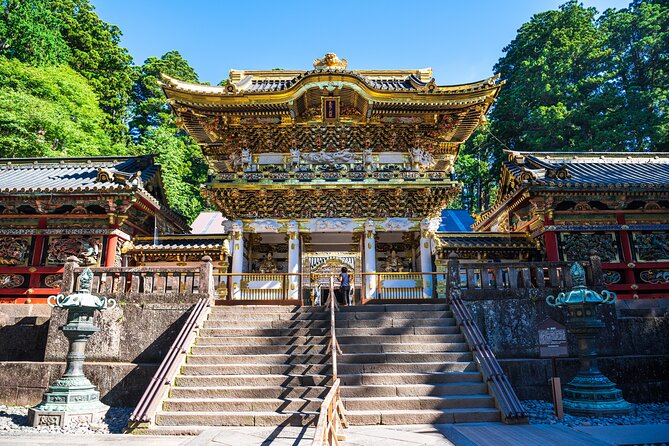
This is a strong match if you want:
- A one-day hit list of Nikko’s best-known highlights
- Guide-led context, so you understand why the carvings and mausoleum matter
- A low-stress departure from Tokyo with a structured plan
- A day trip that includes admission for the key shrine stop and a waterfall viewing
It’s also good for first-timers who do not want to spend time figuring out train schedules, station transfers, and ticket lines.
It may be less ideal if you:
- Want a slow, unstructured day
- Have limited tolerance for steps and uneven surfaces
- Are traveling during heavy rain and hate the idea of slick shrine paths
One practical note for planning your return: the tour ends in a different location, and you cannot change it afterward. If you want to extend your trip by staying in Nikko, you can ask the guide to let you get off in front of Tobu Nikko Station at the end of the tour, with no effect on the tour price.
Should you book this Nikko World Heritage 1 Day Tour?
If your priority is seeing Toshogu Shrine, Kegon Falls, and Lake Chuzenji in one day with clear guidance, I think this tour is worth serious consideration. The price is about $118.36 per person, and for a structured day that includes key admissions plus a comfortable ride, it compares well to the cost of piecing it together yourself, especially when you factor in time saved and guided explanations.
My decision rule is simple: if you can handle some walking and you’ll dress for cold or rain, book it. If you strongly dislike slippery steps, or you’re traveling with mobility limitations, I’d think harder about either a different tour format or adding a separate day in Nikko so you can move at your own speed.
You’ll come away with the kind of Japan that feels handcrafted and cinematic, gold details beside water power, all without turning your day into a transportation puzzle.
FAQ
What are the main stops on the Nikko tour?
The tour visits Nikko Toshogu Shrine, Kegon Falls, and Lake Chuzenji. Admission is included for Toshogu Shrine, and admission is free for both Kegon Falls and Lake Chuzenji.
How long is the tour?
The duration is about 10 hours 30 minutes.
Where do I meet the tour bus in Tokyo?
You meet at the Robert Indiana sculpture called Love in Nishishinjuku, Shinjuku City. The start time is 8:30 am.
Is lunch included?
Lunch is included only if you select the +Lunch option. It is a Japanese-style lunch when included.
Is there a restroom on the bus?
No. Restroom on board is not included.
What should I wear for this day trip?
Wear shoes that make it easy to walk smoothly, because there are steps and walking involved. If it is colder season, bring winter clothes since Nikko can be colder than Tokyo.
Will the tour run in bad weather?
The tour is scheduled to depart regardless of weather or traffic conditions unless you are notified otherwise by the local operator.
Can I change the return location after the tour?
No. You cannot change the scheduled return location after the tour.
Is cancellation free?
Yes, you can cancel for a full refund up to 24 hours before the experience start time.
Newly listed around Tokyo
- 1 Day Nikko Walking Tour, Toshogu and Kanmangafuchi from Tokyo★ 5.0 · 12 reviews
- Nikko Private Tour by public transportation★ 4.0 · 7 reviews
- Nikko Private Tour from Tokyo with Licensed Guide and Vehicle★ 4.5 · 15 reviews
- Nikko one day trip GREEN NUMBER PLATES★ 4.5 · 47 reviews
- Nikko Toshogu, Kegon waterfall, Lake Chuzenji One Day Pvt. Tour★ 5.0 · 22 reviews
- Nikko Full day private experience with English speaking Driver★ 5.0 · 14 reviews
- Nikko Day Tour Private with English Speaking Driver★ 4.5 · 12 reviews
- Nikko Private Day Tour with Guide by Car (from Tokyo)★ 4.0 · 16 reviews
Historical Tours, compared.
World Heritage Shirakawa-go and Experience Tours from Kanazawa
Read our review →
World Heritage Kyoto & Nara Uji Authentic Matcha Experience
Read our review →
World Heritage Shirakawa-go Morning Guided Tour
Read our review →
Hiroshima Historical Walking Tour – Why A-Bomb was Dropped
Read our review →
Hiroshima Peace (Heiwa) Walking Tour at World Heritage Sites
Read our review →
Yanaka Walking Tour: Historic and Traditional District of Tokyo
Read our review →
Shinjuku Historical Walking Tour & Secret Backstreets
Read our review →Browse the lists this tour appears in