
Review · HISTORICAL TOURS
Asakusa: 1400-year history exploration
Gates, incense, and snacks in one walk. This half-day Asakusa tour is built around Sensō-ji and the 1,400-year story behind it, plus Nakamise-dori where you can sample classic sweets along the way. My favorite part is how the route turns big landmarks into a simple, follow-along story, but the one watch-out is that the temple area gets very crowded and loud, so you’ll want your headset on.
What makes it work well is the format: a max group size of 8, guided in English, with an earphone system so you do not have to fight for every word. At $91.17 for about 3.5 hours, you are paying less for ticketed sights (most entrances here are free) and more for guide context, snack stops, and a smart walking order that keeps you from wandering in circles.
You start mid-afternoon, 1:30 pm, and you end back at the original meeting point. That is handy if you want an easy dinner plan right after, and it also gives the guide time to point you toward where to eat, drink, and shop in Rokku.
In This Review
- Key points that make this tour worth your time
- Sumida River start: Skytree views and Asahi’s golden flame
- The Asakusa Culture Tourist Information Center: a useful reset stop
- Kaminarimon to Nakamise-dori: the Thunder Gate and your snack runway
- How to shop without getting overwhelmed
- Hōzōmon and Sensō-ji: the gate story gets real
- A note on crowds and hearing the guide
- Asakusa Shrine: Buddhism and Shinto in one space
- Denboin Street and Rokku: Meiji-era entertainment to today
- How the guides shape the experience (and what to watch for)
- A fair warning about pace and audio
- Price and value: what you pay for at $91.17
- Timing, logistics, and comfort tips for an afternoon walk
- Should you book this Asakusa 1400-year history tour?
- FAQ
- How long is the Asakusa 1400-year history exploration tour?
- What is included in the tour price?
- Where do I meet the guide?
- Is food and drink included?
- How big is the group?
- Does the tour run in bad weather?
Key points that make this tour worth your time
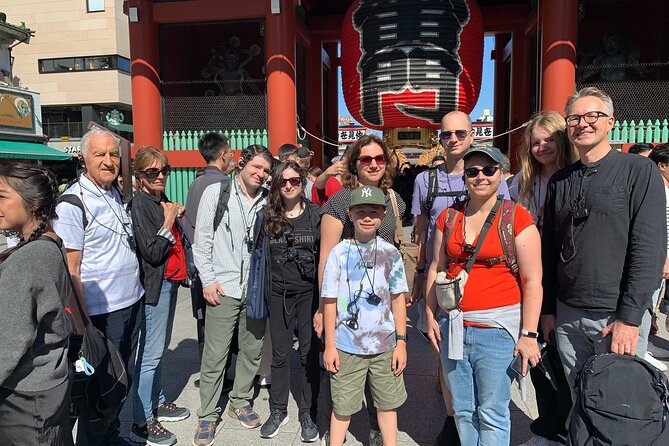
- Small group (8 max), designed for questions and an easier pace than the usual mass-market temple crush
- Headset/earphone guidance helps you hear history explanations even when streets get loud
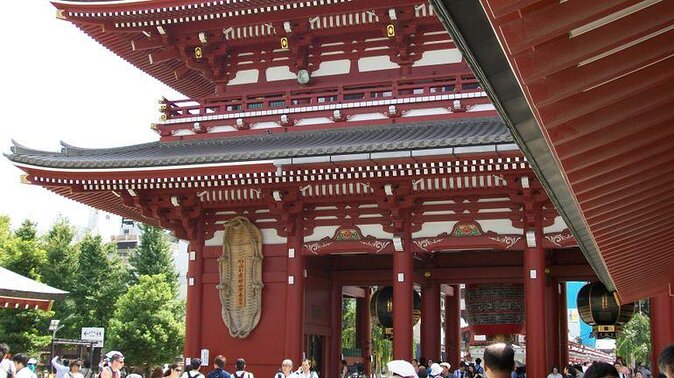
- Temple gate-to-gate flow takes you through Kaminarimon, Hōzōmon, and inside Sensō-ji without feeling like random sightseeing
- Nakamise-dori food sampling includes Japanese sweet snacks like melon pan and sweet puffed rice
- Rokku (Denboin Street) after the temples so you see an entertainment district with an old-to-new feel
- Guide variety shows up in the experience, with names like Amy, Emiko, Sachi, Aki, Yasu, Taka, and Yoko being praised for friendliness and explanations
Sumida River start: Skytree views and Asahi’s golden flame
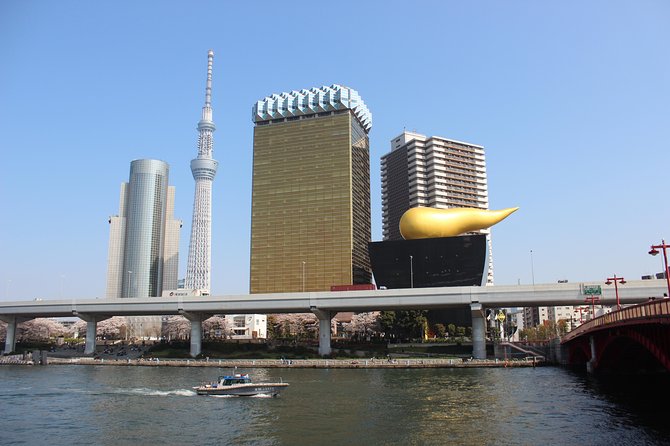
The tour kicks off at the Sumida River by Azumabashi Bridge. This is a smart warm-up because it reminds you that Asakusa’s story is tied to the river routes that made the area important in the first place.
Right after you start, you look toward Tokyo Sky Tree, and you also catch the Asahi Breweries headquarters, including its famous golden flame object. It is not the kind of detail you would always notice while doing a self-guided walk, and it gives you a quick sense of how modern Tokyo sits right next to old neighborhoods.
One practical note: it is an afternoon start, so you might hit peak sunlight on the riverside. I recommend planning for a hat and water, especially in summer. Bottled water is recommended, and vending machines are available, but you will feel happier if you grab something before you get deep into the crowds.
More History Tours in Tokyo
- Tokyo: Imperial Palace Japanese History Walking Tour
★ 4.9 · 987 reviews - Yanaka Walking Tour: Historic and Traditional District of Tokyo
★ 5.0 · 530 reviews - Tokyo: Shinjuku Historical Walking Tour & Secret Backstreets
★ 5.0 · 530 reviews
The Asakusa Culture Tourist Information Center: a useful reset stop
From the river, you stroll to the Asakusa Culture Tourist Information Center. This is one of Asakusa’s newer sightseeing stops, and it is an eight-story building. Think of it as a reset button in the middle of your walk, when your guide can give you a clearer picture of what you are about to see next.
Even if you are not the type to read every display, this stop helps you orient yourself. It also sets up the rest of the day so the temples and shopping street feel connected, not like you are just hopping between separate dots on a map.
Kaminarimon to Nakamise-dori: the Thunder Gate and your snack runway
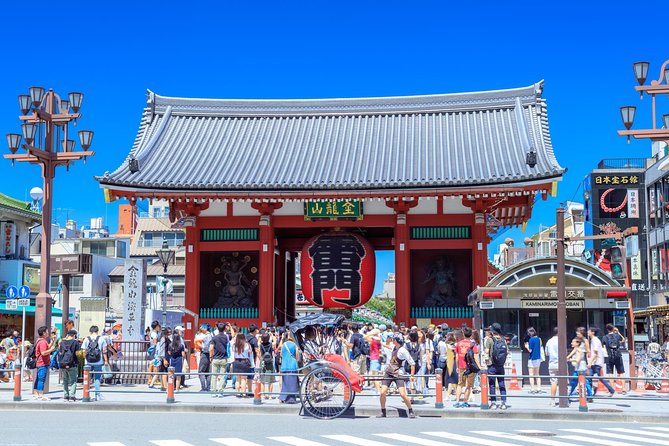
The big entrance moment arrives at Asakusa Kaminarimon Gate, also called the Thunder Gate. The huge red lantern and the statues are exactly the kind of landmark that looks good in photos, but your guide’s job is to make it more than a backdrop.
From Kaminarimon, you walk into Nakamise Shopping Street, the 250-meter approach that links the gate to Sensō-ji’s main gate. This is where the tour shifts from pure sightseeing into a sensory experience. You get to browse souvenir shops, street stalls, and the classic temple-shopping atmosphere.
The most valuable part here is that you do not just walk past snacks, you get sample tastings. Included sweet snacks can include melon pan, rice dumpling, rice cracker, and sweet puffed rice. Even if you do not plan to buy anything, tasting helps you understand what is local here and what is more aimed at tourists.
How to shop without getting overwhelmed
Nakamise is packed. I suggest treating it like a buffet, not a scavenger hunt:
- Decide early if you want edible souvenirs or small gifts first.
- If something catches your eye, grab it when you see it. It is harder to circle back when the flow of people is pushing you forward.
A few more Tokyo days to weigh up
- Mt. Fuji Heritage Tour: Traditional Villages, Lakes & Shrine
★ 4.5 · 509 reviews - From Tokyo: Nikko World Heritage Site Private Full-Day Trip
★ 4.9 · 243 reviews - Tokyo: The Best of Izakaya in Shinjuku Food & Cultural Tour
★ 4.9 · 221 reviews - Tokyo: Nikko World Heritage Private Day Trip Hotel Pick-up
★ 4.8 · 145 reviews
Hōzōmon and Sensō-ji: the gate story gets real
Next comes Hōzōmon, the Treasure-House Gate, the inner gateway leading to Sensō-ji. If Kaminarimon is the loud opener, Hōzōmon is the quieter “you’re nearly there” step, with the classic two-story gate design.
Then you enter Sensō-ji Temple and spend the biggest chunk of your time here. The tour focuses on what you see between the Hōzōmon gate and the main hall. One standout detail is the Five-storied Pagoda, described as the second highest pagoda in Japan at 53 meters, built in 942. It is also linked to the temple’s Buddha-ash tradition, which your guide will connect to the meaning of the site.
Another key story angle is the temple’s origin. You hear how it was founded by two fisherman brothers, and how that legend shaped what Asakusa became as Japan moved toward modernization. This is one reason a guided walk helps: without context, you might just enjoy the visuals and miss the why.
A note on crowds and hearing the guide
Sensō-ji is a magnet. The upside is that the energy feels real. The downside is noise. The tour uses an earphone guide system for a reason, and it helps most when you stay with your group and keep your headset on properly.
If you step back to rest, you may notice the audio is less clear. That is not a tour failure, it is just how distant signals work when the group changes positions. If you want the history parts fully, stay close enough to hear consistently.
Asakusa Shrine: Buddhism and Shinto in one space
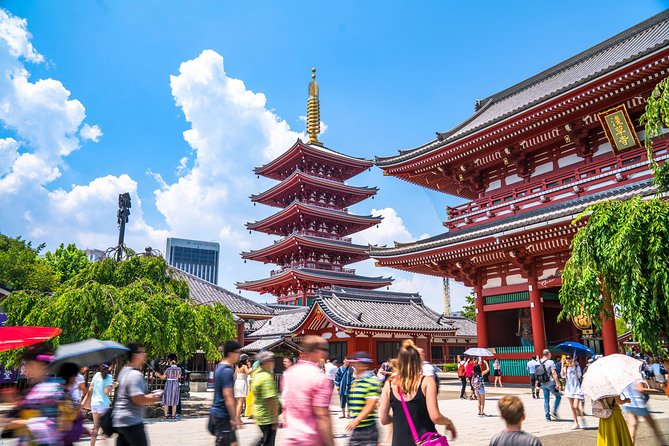
After Sensō-ji, you visit Asakusa Shrine. This is where the tour gets especially interesting if you like cultural context.
The shrine is presented as a place where Buddhism and Shinto coexist within the same premises, with shared roots and worshipers. In Japan, that kind of overlap can be confusing at first if you are expecting one religion in one box. Here, it is part of the lived reality of the neighborhood.
This stop is usually quick, but it adds a major layer. By the time you leave the temple grounds, you see that Asakusa is not only about one faith tradition. It is about how people have practiced, adapted, and shared sacred space over time.
Denboin Street and Rokku: Meiji-era entertainment to today
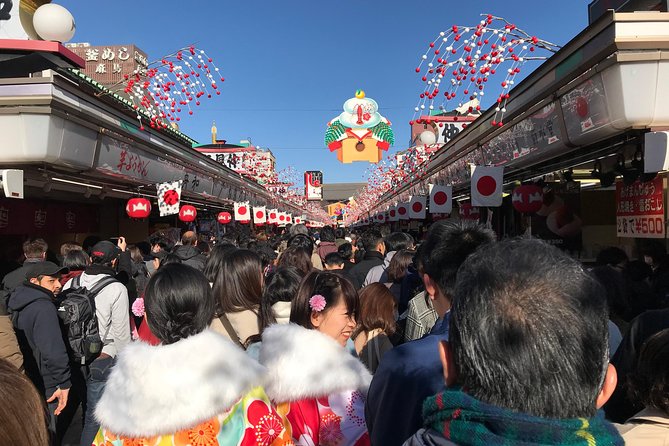
Now the tour breaks from the temple loop and heads into the Rokku area, specifically Denboin Street. This is Asakusa’s traditional entertainment district, described as always lively yet not like the temple street chaos.
The guiding idea is historical progression. You walk through an area that connects the Meiji period to the present day, with stops along the way that keep you from feeling like you are just passing storefronts.
This segment is valuable because it changes the tone. You go from incense and gates into a neighborhood that feels more like everyday Tokyo culture, where you can picture locals and visitors moving through streets for food, shows, and casual nights out.
Also, you do not just stroll. Your guide is there to point you toward places to eat, drink, and shop in Rokku. That practical guidance is one of the reasons I like tours that include a neighborhood ending, not just a temple finish.
How the guides shape the experience (and what to watch for)
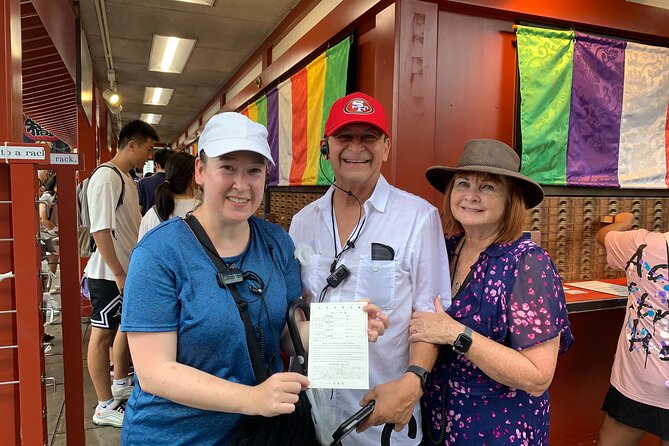
The tour’s success rides heavily on the guide. The good news is that many guides connected to this experience are praised for turning facts into conversations.
Names that show up in guide feedback include Amy, Emiko, Sachi, Aki, Yasu, Taka, and Yoko. The recurring strengths are friendliness, patience with questions, and explanations that blend temple history with modern customs.
One example of what that can look like: guide Taka’s described guest interactions included topics such as differences between Buddhism and Shinto, how garbage disposal works, and why Japan has high security despite lots of foreign visitors. That same style also included food treats, such as Ningyo-yaki and yuzu drinks, during at least one run.
A fair warning about pace and audio
There are also a few complaints that matter to you:
- Some people felt it was too long for the amount of sighting time, especially if you prefer a faster walk.
- If your group is separated or you are stepping away from the main cluster, it can be harder to hear at certain moments.
- A couple of comments mentioned delivery that was either too soft or too focused on details that might not match your interest level.
None of that means you should not book. It means you should go in with the right expectations: this is a history-and-culture walking tour, not a quick photo sprint.
Price and value: what you pay for at $91.17
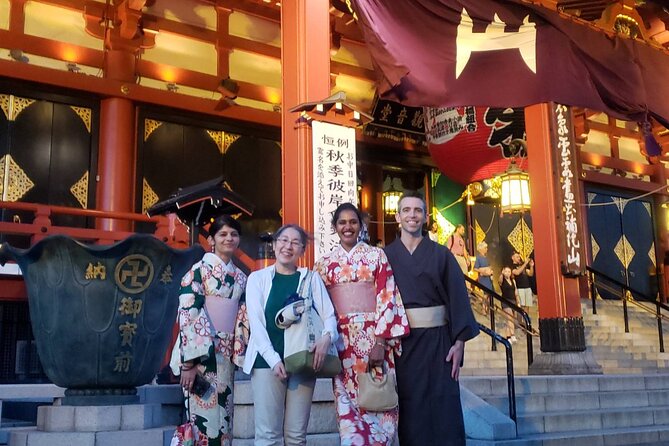
At $91.17 per person for about 3 hours 30 minutes, the cost can feel high until you break down what you actually receive.
Here’s what you are buying:
- A guided route that stitches together Sumida River, key gates, temple grounds, and Rokku without you guessing the order
- English-speaking guidance with an earphone system
- Snack sampling as part of the experience, not just optional purchases
- Group control through a small size (8 max), which matters when you want questions answered
Many of the main stops are free to enter, so you are not paying for admission tickets. Instead, you are paying for interpretation and convenience, plus the included treats. If you would otherwise wander alone with a guidebook and end up buying random snacks anyway, this format can feel like good value.
If you are very budget-minded, you can also do Asakusa independently. But you would be giving up the structured flow and the cultural explanations that make the gates and streets feel connected.
Timing, logistics, and comfort tips for an afternoon walk
This tour starts at 1:30 pm and ends back at the meeting point. That timing is useful because it avoids early morning, but it still hits peak crowds around the temple, especially on busier days.
Expect moderate walking. Wear shoes you can stand in for a while, because you will move between river views, gates, temple grounds, shopping street, and the shift into Denboin Street.
Bring or plan for water. Bottled water is recommended, and vending machines exist. Also consider checking the weather and dressing appropriately since the tour operates in all weather conditions.
The meeting point is Burger King Asakusa Azumabashi in Taito City, near Kaminarimon. It is an easy landmark to find, and because the tour ends where it starts, you do not have to worry about ending up far from where you planned dinner.
Should you book this Asakusa 1400-year history tour?
Book it if you want:
- A structured walk through Sensō-ji and its gates, with clear context for what you are seeing
- Included Nakamise snacks plus practical guidance for what to do in Rokku
- A small group setup (8 max) that makes questions actually possible
Skip it or choose a shorter alternative if:
- You hate crowds and prefer quieter sightseeing, because the temple approach and shopping street can be loud
- You want a super fast, mostly photo-based route. This is built for history and culture, so you should expect time in explanations
If your idea of a great Tokyo afternoon includes temples, street food, and neighborhood history, this one is a solid match.
FAQ
How long is the Asakusa 1400-year history exploration tour?
It runs for about 3 hours 30 minutes.
What is included in the tour price?
You get an English-speaking guide, a selection of Japanese sweet snacks (such as melon pan, rice dumpling, rice cracker, and sweet puffed rice), and an earphone guide system.
Where do I meet the guide?
You meet at Burger King Asakusa Azumabashi, 111-0034 Tokyo, Taito City, Kaminarimon, 2-chōme 206 クロスビルロイヤルパレス.
Is food and drink included?
Only the specified snacks are included. Food and drinks are otherwise not included.
How big is the group?
The maximum group size is 8 people.
Does the tour run in bad weather?
Yes, it operates in all weather conditions. Dress appropriately, and plan for some walking.
Newly listed around Tokyo
- Enjoy Mt. Fuji View and free time shopping at Gotemba Outlets!★ 4.0 · 15 reviews
- the SUMO show with Dinner★ 5.0 · 38 reviews
- Asakusa: 2-hour history exploration★ 5.0 · 32 reviews
- Bullet Train Experience & Mishima Shrine Private Tour from Tokyo★ 5.0 · 9 reviews
- Let’s experience calligraphy in YANAKA, Taito-ku, TOKYO !!★ 5.0 · 127 reviews
- Calligraphy Experience at Tokyo Ginza and Tsukiji Area★ 5.0 · 17 reviews
- Ninja Lesson in Tokyo – 1 Hour Hands-On with Japanese Master★ 5.0 · 52 reviews
- 10-Day Private Tour with more than 60 Attractions in Japan★ 5.0 · 6 reviews
Historical Tours, compared.
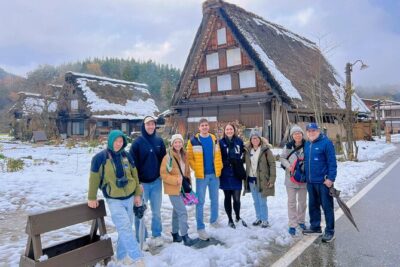
World Heritage Shirakawa-go and Experience Tours from Kanazawa
Read our review →
World Heritage Kyoto & Nara Uji Authentic Matcha Experience
Read our review →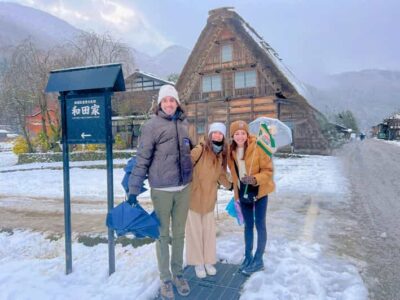
World Heritage Shirakawa-go Morning Guided Tour
Read our review →
Hiroshima Historical Walking Tour – Why A-Bomb was Dropped
Read our review →
Hiroshima Peace (Heiwa) Walking Tour at World Heritage Sites
Read our review →
Yanaka Walking Tour: Historic and Traditional District of Tokyo
Read our review →
Shinjuku Historical Walking Tour & Secret Backstreets
Read our review →Browse the lists this tour appears in