
Review · MOUNT FUJI DAY TRIPS
Mt. Fuji Heritage Tour: Traditional Villages, Lakes & Shrine
Chase Fuji views across five iconic stops. I like this day trip because it mixes Saiko Iyashi no Sato Nenba thatched rooftops with classic photo framing, and it runs with the kind of tight, friendly guidance you hear about from guides like Sia and Kazi. You also get a strong shot at Mt. Fuji at multiple viewpoints, not just one lucky stop.
One caution: Mt. Fuji visibility depends on the day, and lunch is not included, so you’ll need to plan food breaks yourself.
In This Review
- Key highlights you should care about
- Why this Mt. Fuji heritage loop feels efficient
- The Tokyo bus ride: long, but it sets your day up right
- Saiko Iyashi no Sato Nenba: thatched village photos that actually feel local
- Oishi Park and the Maple Corridor: seasonal colors, plus one schedule rule
- Oishi Park for summer lavender vibes
- Maple Corridor for peak fall framing
- Arakurayama Sengen Park and the Chureito Pagoda: classic Fuji framing, plus a climb
- Lake Kawaguchi between stops: where the mountain mood changes
- Local restaurant break: plan for your own lunch budget
- Oshino Hakkai: calm ponds and water that looks unreal
- Weather reality: how to protect your day when Fuji hides
- Price and value: what your $50 buys you
- Who this tour suits best, and who should skip it
- Should you book this Mt. Fuji Heritage Tour?
- FAQ
- How long is the Mt. Fuji Heritage Tour?
- Where are the pickup and drop-off locations?
- What is included in the price?
- Is lunch included?
- What languages are offered for the tour guide?
- Do I need to bring cash?
- What should I bring for the day?
- Will I definitely see Mt. Fuji clearly?
- When is peak foliage for the Maple Corridor?
- Is the tour wheelchair accessible?
Key highlights you should care about
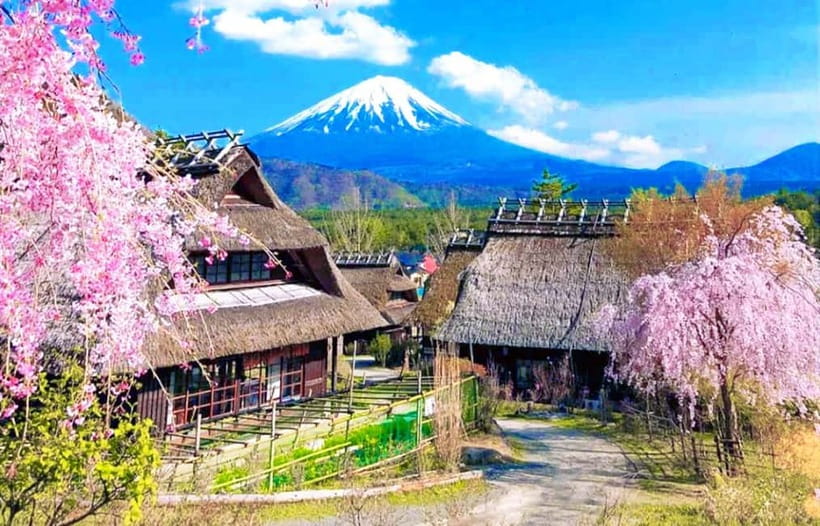
- Saiko Iyashi-no-Sato Nenba thatched village views, plus snacks right at the entrance
- Oishi Park and the Maple Corridor timed to seasonal color, with a key October-to-November swap rule
- Arakurayama Sengen Park and the Chureito Pagoda photo spot, including the shrine approach
- Oshino Hakkai eight spring ponds fed by Mt. Fuji meltwater, calm and photogenic year-round
- English, Japanese, Traditional Chinese live guiding plus clear group instructions for photo timing
- $50-ish value for a full 10-hour loop with guide, driver, pickup, drop-off, and one included admission
Why this Mt. Fuji heritage loop feels efficient

Mt. Fuji days can turn into a grab-bag of tickets and taxi lines. This format is different. You start in Tokyo, ride out with a guide who keeps everyone moving, then hit several Fuji-area icons in one long, well-paced day.
I like that you are not stuck watching the mountain from only one viewpoint. You get multiple chances through the day: lakeside parks, the famous shrine-pagoda panorama, then the quiet pond reflections at Oshino Hakkai. And because it’s a shared group tour, the guide helps you find the right spots and timing for photos, not just where to stand.
The day is still a commitment. It’s about 10 hours, with roughly 2.5 hours each way by bus/coach. If you hate long travel days, or you want a slow, flexible itinerary, this may feel like “go-go-go.”
More History Tours in Tokyo
- Tokyo: Imperial Palace Japanese History Walking Tour
★ 4.9 · 987 reviews - Yanaka Walking Tour: Historic and Traditional District of Tokyo
★ 5.0 · 530 reviews - Tokyo: Shinjuku Historical Walking Tour & Secret Backstreets
★ 5.0 · 530 reviews
The Tokyo bus ride: long, but it sets your day up right
You’ll typically meet at one of the two designated Tokyo meeting options, including the Tokyo MODE Gakuen area in Marunouchi. Expect a long coach drive out to the Mt. Fuji region, then shorter transfers between stops.
In practice, this is the part of the day where you can do two useful things:
- Use the time to prep for photo angles and the weather mood of the day.
- Listen to the guide’s run-up explanations so you understand what you are seeing before you step out.
Most visitors treat the bus like dead time. I think that’s a mistake. If Mt. Fuji is clear early, the guide can point out likely photo moments as you travel, and if clouds roll in, you’ll still get value from the cultural stops and lake-area scenery.
Saiko Iyashi no Sato Nenba: thatched village photos that actually feel local
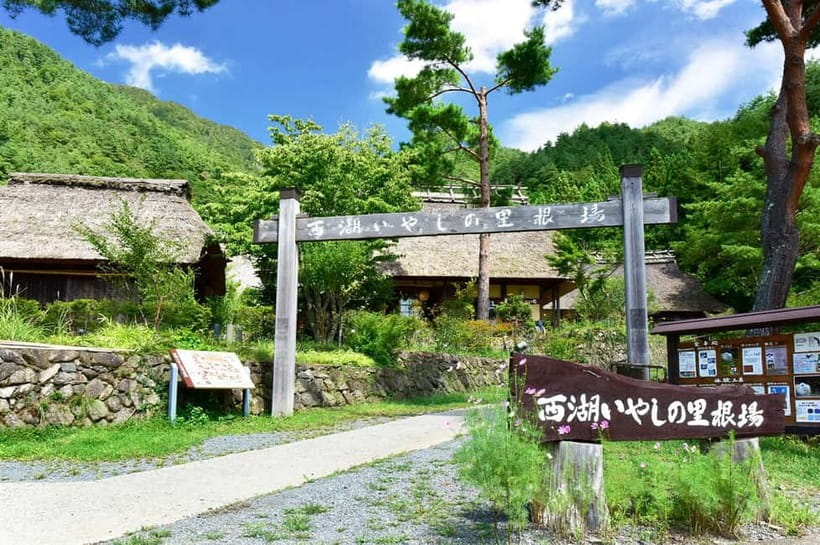
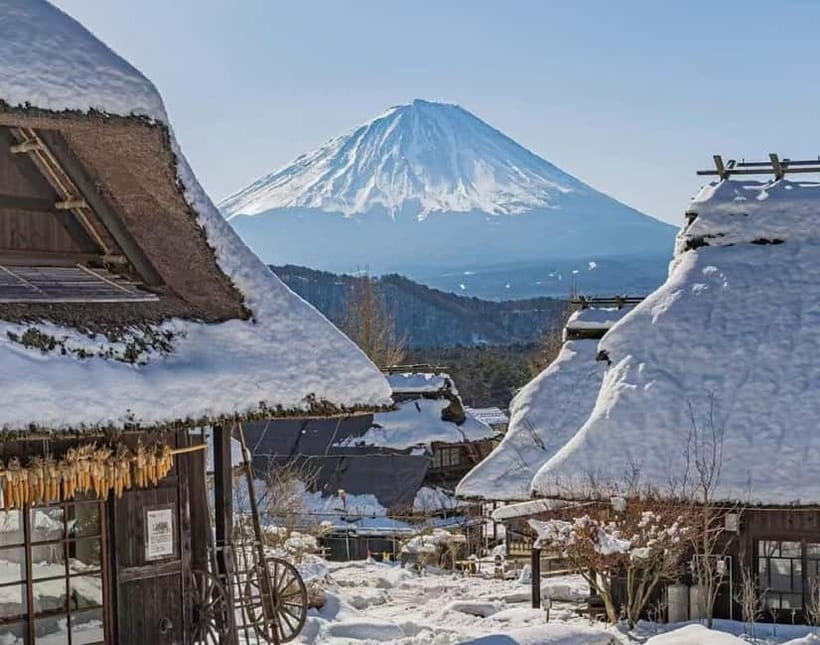
This is the start-of-day “wow” moment. Saiko Iyashi no Sato Nenba is a traditional village of thatched-roof houses designed to preserve the look of an older rural Japan. The best part for your camera is that the village sits in a way that often delivers an Mt. Fuji backdrop when the sky cooperates.
Here’s what makes it more than a staged photo pit:
- You get about an hour for a guided tour and photo stop time.
- You can snack near the entrance, which keeps the vibe casual rather than museum-quiet.
- There are souvenir shops on site, so you can pick up small crafts without hunting across towns.
Want to make your photos playful? You can rent a ninja costume there for an extra cost, and it’s a fun way to add personality to the thatched-house backdrop.
Photo advice that saves frustration: the village is popular. For your best shots, take a minute to walk a few steps away from the main clusters before you shoot. You’ll often get a cleaner line toward Mt. Fuji.
Oishi Park and the Maple Corridor: seasonal colors, plus one schedule rule
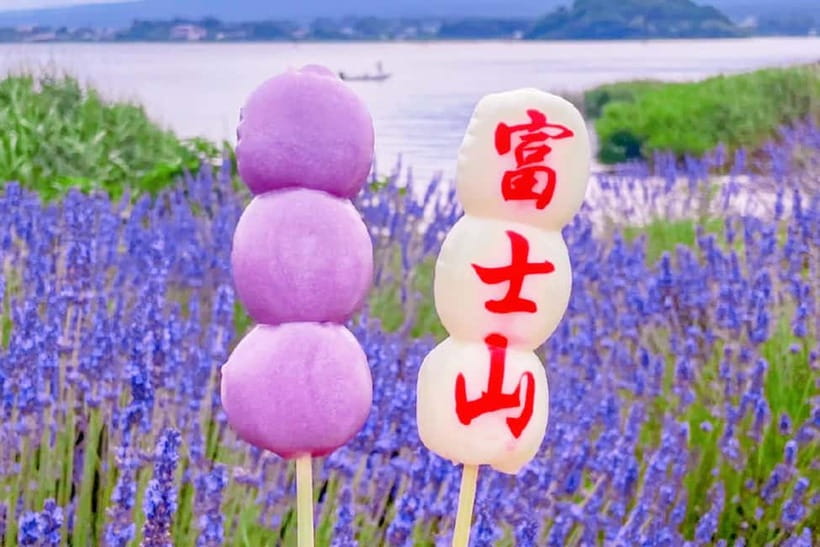
Lake Kawaguchi is the setting for this part of the trip, and it’s where the tour really leans into seasonal drama.
More Shrine & Temple Visits in Tokyo
- Tokyo: Meiji Shrine, Asakusa, Skytree Bus Tour and Cruise
★ 4.7 · 1,986 reviews - Tokyo: Asakusa Walking Tour with Sensoji Temple Visit
★ 4.8 · 1,583 reviews - Nikko: Kegon Falls, Lake Chuzenji & Toshogu Temple
★ 4.6 · 1,577 reviews - Tokyo: Nikko Toshogu Shrine and Kegon Waterfall Tour
★ 4.5 · 1,266 reviews
Oishi Park for summer lavender vibes
Oishi Park is known for seasonal flowers, and in summer you can catch fields associated with fragrant lavender. If you are visiting outside late autumn, this stop is your “pretty flowers” counterweight to the more architectural shrine viewpoints later.
You’re given around 40 minutes, which is enough to stroll key angles and still keep the group moving.
Maple Corridor for peak fall framing
Peak autumn foliage at the Maple Corridor runs Oct 26 to Nov 20, and this is the big timing detail. During that peak period, the itinerary notes that it does not go to Oishi Park.
So what do you get at Maple Corridor? A fall-color scene around Lake Kawaguchi, with fiery hues that frame Mt. Fuji when the sky is clear. If you are traveling specifically for autumn leaves, this timing rule matters more than almost anything else on the day.
Practical photo tip: fall foliage tends to be busy. Get to your chosen spot quickly, then work the light. A short change in your angle can turn a decent Fuji photo into a postcard one.
Arakurayama Sengen Park and the Chureito Pagoda: classic Fuji framing, plus a climb
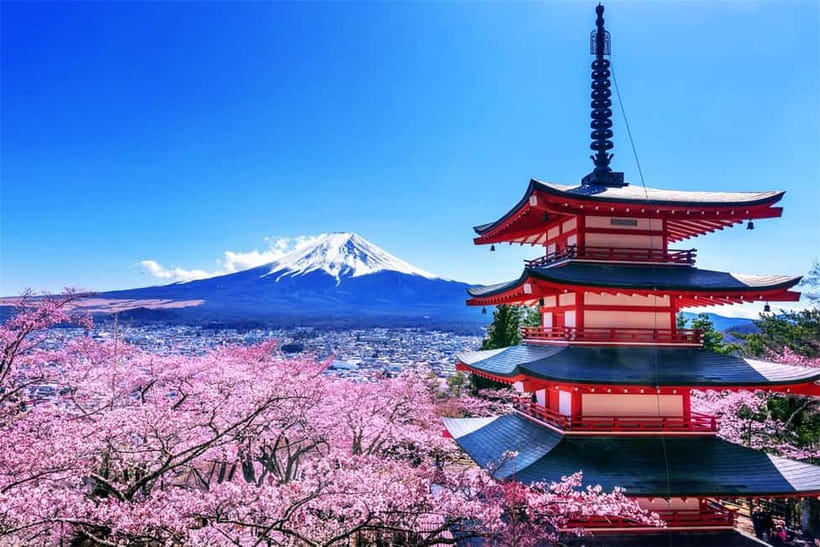
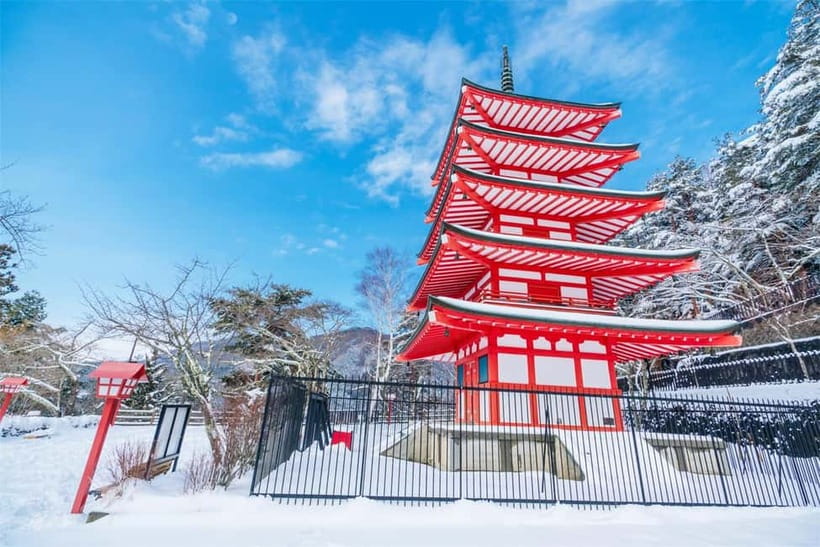
This is the stop you see everywhere: the shrine approach, the view over the area, and the Five-Story Pagoda commonly associated with the Chureito Pagoda view. At Arakurayama Sengen Park, you get time to visit the shrine and then climb the steps.
You’ll likely spend about 40 minutes at the park, then additional photo and shrine time at the nearby shrine area. The schedule gives you both the iconic view payoff and enough time to explore what’s around it.
Two things I’d watch for here:
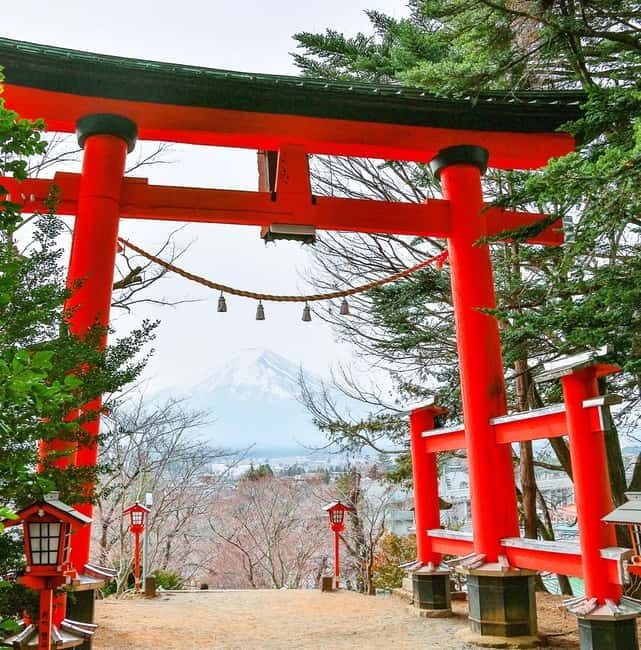
- This is a “stairs and crowds” zone. Wear comfortable shoes. I’d even pack a light layer if you run cold, since you can climb and then stand still waiting for clouds to move.
- If you want a shrine stamp or goshuin, plan your timing. One useful tip you can follow: if you want something inside the shrine process, hand over your book before you climb the stairs. The line can build during peak times, which can slow you down when you get back.
Also, don’t skip the shrine approach itself. You learn the layout fast, and the walk gives you multiple smaller view chances even if the main postcard moment is delayed.
Lake Kawaguchi between stops: where the mountain mood changes
You will spend time around Lake Kawaguchi, and the lake atmosphere can shift quickly. Clouds can clear, haze can roll in, and the mountain can go from crisp silhouette to soft outline in an hour.
This is where having a guided plan helps. The guide’s job is to keep you from wandering in circles and wasting your best weather window. From the repeated praise of guides like Sia, Wanting, Alex, and Kazi, one theme comes through: they give clear instructions about when to gather and where to find bathrooms, so you spend your attention on photos rather than logistics.
If the Fuji view is best at one stop, you still get value from the others. That’s the real win of the multi-stop design.
Local restaurant break: plan for your own lunch budget
There is a 40-minute break time at a local restaurant. But lunch is not included in the tour price.
This means you can:
- Bring your own food.
- Buy lunch at one of the stops.
- Eat at the restaurant suggested during the break.
If you care about budget, this is the part to think through before the day. Having cash helps here, because the tour guidance notes that credit cards may not be accepted at certain locations.
My advice: if you’re the type who gets annoyed by menu surprises, bring a simple snack from Tokyo. Then treat the restaurant meal as bonus, not survival food.
Oshino Hakkai: calm ponds and water that looks unreal
The final “big scenic payoff” is Oshino Hakkai, a set of eight spring ponds fed by Mt. Fuji’s melted snow. This is one of those places where the scenery feels quiet even when the area is busy.
What makes it so good for photos is the water clarity and the way reflections work. Even when Mt. Fuji is not fully visible, you still get strong pond textures and reflections.
You’ll have about 70 minutes, which is generous enough to:
- Walk the pond area without feeling rushed.
- Slow down for pictures.
- Try small local treats nearby.
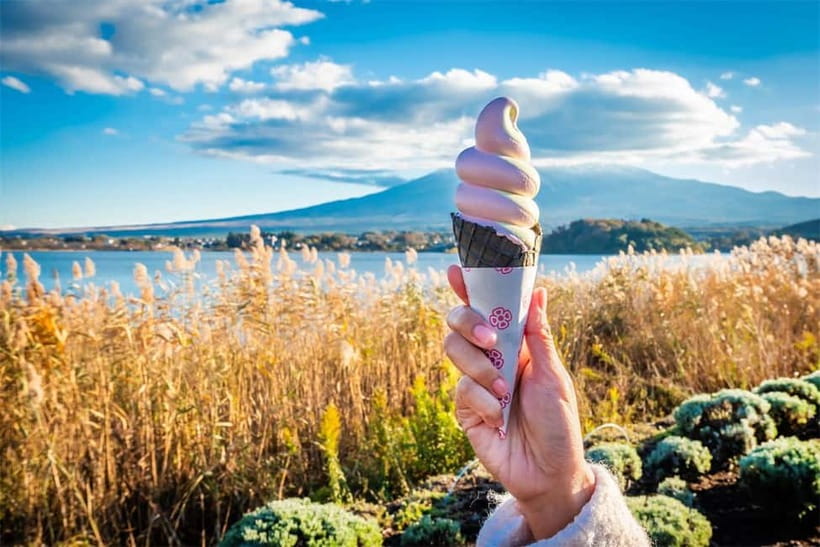
Oshino Hakkai also offers unique snack-style items. You might find fresh rice crackers or wasabi ice cream in the area, which is a fun way to end the day without turning the tour into a formal meal.
Weather reality: how to protect your day when Fuji hides
This is the big Mt. Fuji rule: visibility is not guaranteed. The tour notes that weather can prevent a clear view, so treat Mt. Fuji like a bonus you might get in full, not a promise.
Here’s how to make the day work anyway:
- Assume clouds are possible, and focus on the cultural stops as your base value.
- Bring water and comfy shoes so you can handle a climb and walking even if you need to adjust plans on the fly.
- Keep your expectations flexible. If Fuji is visible from one location, you’ll still have enough other sights to enjoy.
The good news is that your value does not depend on one photo. Thatched houses, shrine architecture, seasonal parks, and pond reflections all pay off even when the mountain is partly blocked.
Price and value: what your $50 buys you
At about $50 per person for a 10-hour guided day trip, the value comes from what’s bundled:
- Tour guide and driver
- Pickup and drop-off at designated meeting points
- Parking fee
- Admission to Saiko Iyashi no Sato Nenba
You are also getting access to the core Mt. Fuji icon set: lake-area parks, the Arakurayama Sengen Park shrine-pagoda viewpoint, and Oshino Hakkai.
What you pay extra for:
- Lunch, since it’s not included
- Personal expenses
- Optional extras like the ninja costume rental (extra cost)
If you were doing this solo, you’d pay for transportation between sites plus admission and guide time to keep everything coordinated. Here, your money mostly buys convenience and timing, which is exactly what you want when Fuji weather can change fast.
Who this tour suits best, and who should skip it
This tour is a strong match if:
- You want an efficient day with several famous Mt. Fuji stops.
- You prefer a guide who organizes photo timing and keeps the group on schedule.
- You like both traditional culture and scenic viewpoints in one outing.
It’s less ideal if:
- You hate long days or long bus rides.
- You need wheelchair accessibility, since it’s noted as not suitable for wheelchair users.
- You want unlimited time at each location. It’s a multi-stop tour, so some stops are intentionally timed.
Should you book this Mt. Fuji Heritage Tour?
If your goal is a guided, efficient sampler of the Mt. Fuji area, I think this is a good buy. The structure gives you multiple Mt. Fuji photo chances, and the included admission plus the guided walking at the thatched village and shrine area justify the price for many first-timers.
Book it if:
- You’re traveling on a tight schedule and want the classic hits.
- You’re comfortable with a long day and a shared group pace.
- You are prepared for the weather to be unpredictable, and you can still enjoy the cultural stops.
Skip it if:
- You want a relaxed, do-your-own-pace day.
- You plan to spend most of your time hunting for perfect photos and you get stressed by crowd flow.
For the best odds, target the season you care about. If autumn leaves are your thing, remember the Maple Corridor peak window Oct 26 to Nov 20, and that this period changes the Oishi Park plan.
FAQ
How long is the Mt. Fuji Heritage Tour?
The duration is 10 hours.
Where are the pickup and drop-off locations?
You’ll use one of two designated meeting point options in Tokyo, and you’ll also be dropped off at two designated locations in Tokyo (one option shown is Tokyo MODE Gakuen, 1-chōme-5-1 Marunouchi). The exact meeting point may vary by option booked.
What is included in the price?
Included items are admission to Saiko Iyashi no Sato Nenba, the tour guide, the driver, pickup and drop-off at designated meeting points, and the parking fee.
Is lunch included?
No. Lunch is not included. You can bring food, purchase lunch at attractions, or eat at a restaurant suggested by the guide during break time.
What languages are offered for the tour guide?
The live tour guide provides English, Japanese, and Traditional Chinese.
Do I need to bring cash?
Yes. The tour notes that credit cards may not be accepted at certain locations, so bring some cash.
What should I bring for the day?
Bring comfortable shoes and water, and cash. Weather can affect comfort too, so plan accordingly.
Will I definitely see Mt. Fuji clearly?
No. Weather can prevent a clear view of Mt. Fuji, so check the forecast.
When is peak foliage for the Maple Corridor?
Peak autumn foliage at the Maple Corridor is from Oct 26 to Nov 20.
Is the tour wheelchair accessible?
No. It is not suitable for wheelchair users.
More Historical Tours in Tokyo
- From Tokyo: Nikko World Heritage Site Private Full-Day Trip
★ 4.9 · 243 reviews - Tokyo: The Best of Izakaya in Shinjuku Food & Cultural Tour
★ 4.9 · 221 reviews - Tokyo: Nikko World Heritage Private Day Trip Hotel Pick-up
★ 4.8 · 145 reviews - Tokyo: Imperial Palace, the history of Japan (ENGLISH GUIDE)
★ 5.0 · 77 reviews
More Mount Fuji Day Trips in Tokyo
- Mt Fuji and Hakone 1-Day Bus Tour Return by Bullet Train
★ 5.0 · 26,383 reviews - Mt Fuji & Hakone Cruise, Drum Show Bullet Train 1 Day from Tokyo
★ 4.0 · 7,413 reviews - Tokyo Mt Fuji 5th St & Hakone Cruise Bus Tour w/Bullet Train
★ 4.4 · 5,024 reviews - From Tokyo: Mount Fuji Full-Day Sightseeing Trip
★ 4.5 · 4,970 reviews
Newly listed around Tokyo
- Tokyo private transfer for Yokohama Port★ 4.5 · 63 reviews
- Luxury Kimono Photoshoot at Ginza Tokyo★ 5.0 · 7 reviews
- Tokyo Allstar Food Tour★ 4.5 · 206 reviews
- Tokyo Art Aquarium Museum E-Ticket with optional Tokyo Metro Pass★ 5.0 · 17 reviews
- Tokyo: Best Ginza Food Tour at 3 Local Eateries★ 5.0 · 83 reviews
- Private One Day Nikko Tour with Bilingual driver★ 3.5 · 11 reviews
- Japanese Whisky Tasting Experience at Local Bar in Tokyo★ 5.0 · 59 reviews
- PRIVATE tour in 180SX to Daikoku+++++★ 5.0 · 6 reviews
Mount Fuji Day Trips, compared.
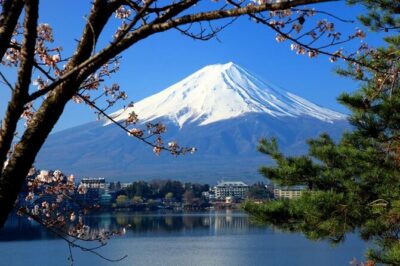
Mt Fuji and Hakone 1-Day Bus Tour Return by Bullet Train
Read our review →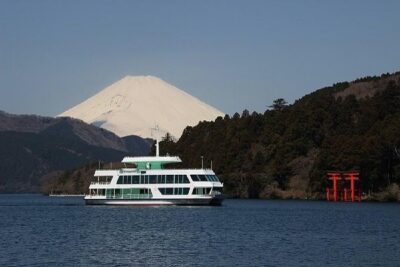
Mt Fuji & Hakone Cruise, Drum Show Bullet Train 1 Day from Tokyo
Read our review →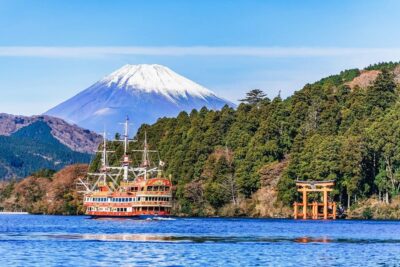
Tokyo Mt Fuji 5th St & Hakone Cruise Bus Tour w/Bullet Train
Read our review →
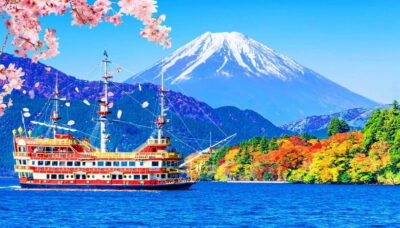
Mt. Fuji Tour, Hakone Ropeway, Owakudani, Lake Ashi
Read our review →
Mt.Fuji,Kawaguchiko Oishi Park,Arakurayama Sengen Park
Read our review →
Mt. Fuji 5th Station & Hakone Cruise 1-Day Bus Tour
Read our review →
Mt Fuji Top 5 Spots Day Tour: Arakurayama Park,Oshino Hakkai
Read our review →Browse the lists this tour appears in