
Review · JAPANESE COOKING WORKSHOPS
Osaka: Cooking Class & Sake Tasting with Local Market Visit
Shop, cook, and sip Osaka in four hours. You start outside FamilyMart near Minami Morimachi Station, then move into the MagicalTrip Original Cooking Studio to make niku-sui, okonomiyaki, and gyoza with an English-speaking local guide. I love the market trip first approach because it shows you how locals actually pick ingredients, and I love that you leave with downloadable recipes you can recreate at home. The main drawback is simple: gluten-free options are not available.
In a small group of up to seven, you cook at a relaxed pace, chat with other food lovers, and get three canned drinks (alcoholic or non-alcoholic) plus tea as you work. In classes guided by people like Chie, Emi, Eri, Akko, Ayu, or Linda, the tone is friendly and practical, and the room can even get seasonal touches depending on the date.
In This Review
- Key highlights worth planning for
- First stop: Minami Morimachi and a neighborhood supermarket you can trust
- MagicalTrip Original Cooking Studio: where the class actually feels easy
- The Osaka dishes you’ll cook in 4 hours
- Niku-sui: a comforting beef soup with real flavor
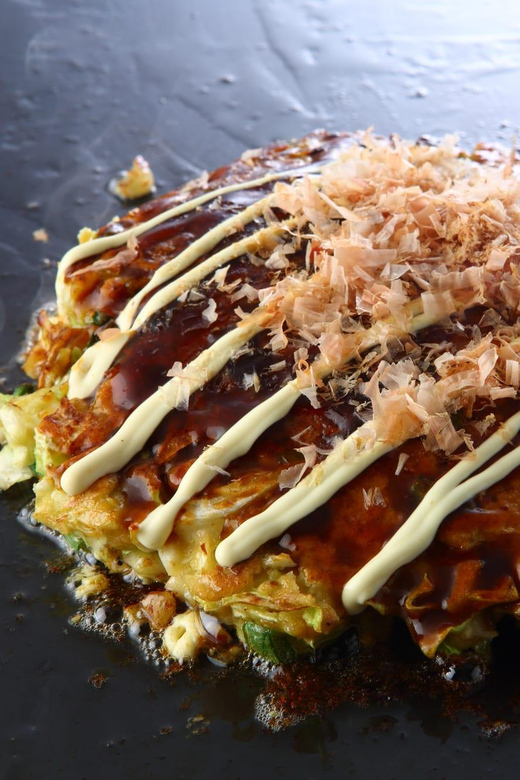
- Okonomiyaki: Osaka’s savory pancake, made your way
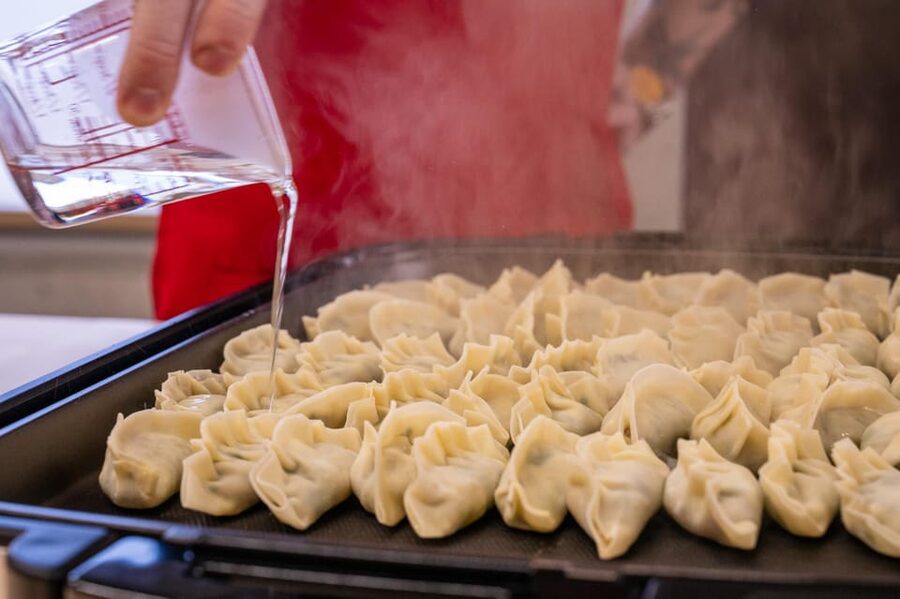
- Gyoza: folding dumplings that are both crisp and juicy
- Why this menu is such a smart way to learn Osaka cooking
- Shopping, cooking, chatting: the social side of Osaka food culture
- Lunch and photos: small extras that make the class feel finished
- Pricing the $90 half-day: does it feel worth it?
- Dietary needs, allergies, and who should ask early
- Timing and comfort: Osaka weather and the reality of cooking
- Accessibility and mobility: when a private option might fit better
- Should you book this Osaka cooking class?
- FAQ
- Where is the meeting point for the Osaka cooking class?
- How long is the experience?
- How many people are in the group?
- What dishes will I cook?
- What’s included in the price?
- Are alcoholic drinks included?
- Can vegans and vegetarians join?
- Is gluten-free available?
- What age is required to join?
- What are the cancellation and reserve options?
Key highlights worth planning for
- A real Osaka supermarket stop before you cook
- Three Osaka comfort foods, made step-by-step: niku-sui, okonomiyaki, gyoza
- A small group (max 7) with an English-speaking local guide
- Sake tasting included through three canned drinks, plus tea
- Photo recap from your guide, emailed after the experience
- No gluten-free option, so plan dietary needs at least one day ahead
First stop: Minami Morimachi and a neighborhood supermarket you can trust
The experience starts in front of FamilyMart, about a one-minute walk from the 4B Exit of Minami Morimachi Station. That matters more than it sounds. You are not trying to find some “tour-only” showroom, you are stepping into the everyday flow of Osaka right away.
From there, you head into a local supermarket to choose the ingredients you will cook with later. This is one of the best parts, because it turns food into something you can repeat at home. You get to see what’s easy to find, what looks fresh, and what ingredients are treated as normal staples in an Osaka kitchen.
Also, Osaka markets move fast. So even if you do not speak Japanese, you will quickly understand what the guide expects you to look for. The whole point is that the cooking recipes are built around accessible ingredients, not complicated specialty shopping.
More Cooking Classes in Osaka
- Osaka: Ramen and Gyoza Cooking Class in Dotonbori
★ 5.0 · 378 reviews - Osaka Cooking Class: Okonomiyaki &Japanese cuisines experience
★ 5.0 · 261 reviews - Ramen and Gyoza Cooking Class in Osaka
★ 5.0 · 202 reviews
MagicalTrip Original Cooking Studio: where the class actually feels easy
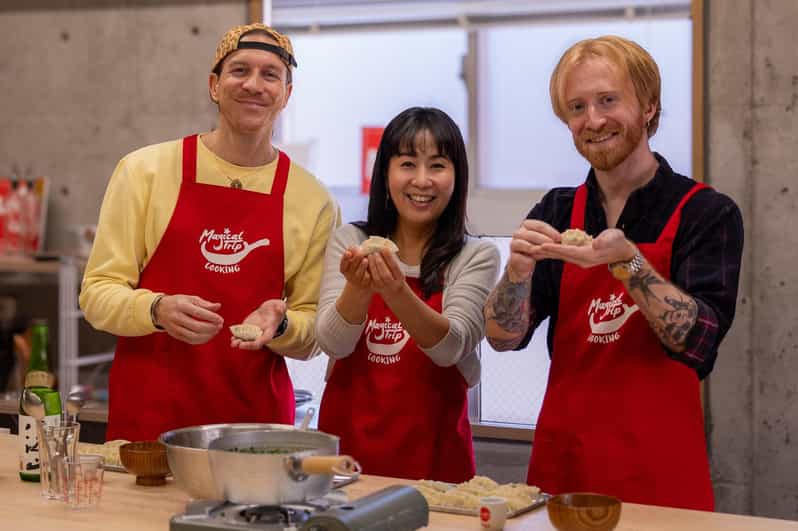
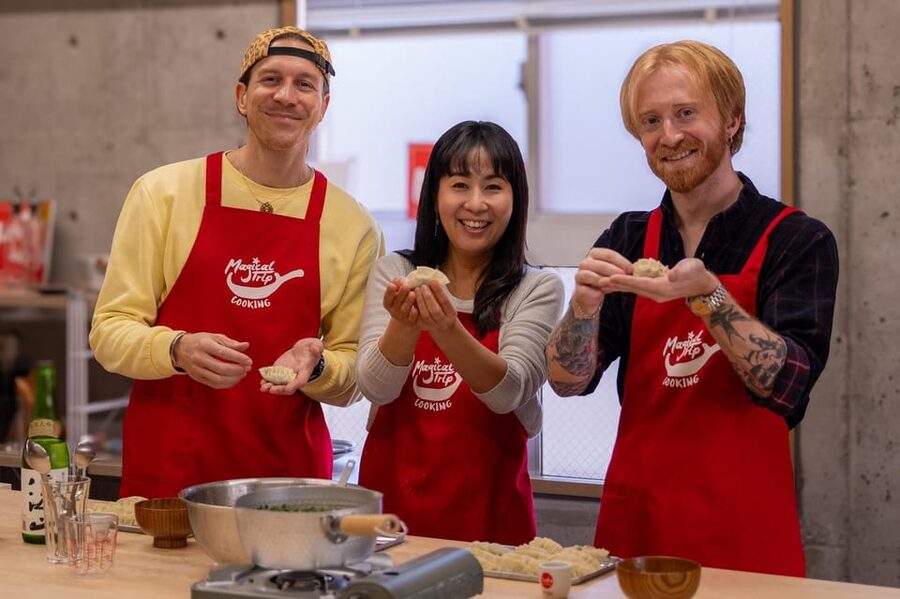
Back at the cooking studio, the vibe is calm and welcoming. Small group size helps a lot here. With a max of seven participants, you get hands-on help instead of watching from the sidelines.
You’ll work with a friendly local guide who walks you through each recipe step-by-step. Importantly, the class is designed so you can show up with no cooking background. You will still be doing real cooking tasks, including cutting and heating, but the process is broken into clear steps.
One detail I appreciate: some guides bring the experience to life with personal touches, like decorating the room for the season. That kind of warmth does not change the food, but it changes how the whole class feels. You end up relaxing into the cooking instead of worrying you are messing it up.
The Osaka dishes you’ll cook in 4 hours
This is a three-dish cooking class with lunch included. The dishes are the core of Osaka home-style cooking, so you are not just “sampling” food. You are building muscle memory for how these dishes are assembled.
Niku-sui: a comforting beef soup with real flavor
Niku-sui is a flavorful beef soup loved by locals, and it is a great choice for a cooking class because it teaches the logic behind Japanese comfort food. You’re working on a base that balances richness with a soothing, savory finish.
In practice, it means you learn how to handle the beef and develop a broth that tastes more “put together” than you might expect from a home-style recipe. It’s also a useful dish for cooks at home, because you can adjust portion size and still keep it satisfying.
More Cooking Workshops in Osaka
- Osaka: Sumo Stage Show with Bento or Snack + Fight & Photo
★ 4.3 · 364 reviews - Osaka: Cooking Class Ramen & Gyoza Course in Nanba
★ 4.9 · 86 reviews - Osaka: Gluten-Free Ramen and Gyoza Cooking Class
★ 5.0 · 42 reviews - Osaka : Cooking Class Okonomiyaki & Takoyaki course in Nanba
★ 4.9 · 25 reviews
Okonomiyaki: Osaka’s savory pancake, made your way
Okonomiyaki is Osaka’s famous savory pancake, and the class focuses on how the dish works as a structure. You assemble it, cook it, and then learn how the toppings and mixing choices change the final bite.
A big reason this dish works so well in a class is that it gives you room to personalize without breaking the recipe. You are not stuck with one rigid approach. You learn what makes it work, then you can adapt after you understand the base.
Gyoza: folding dumplings that are both crisp and juicy
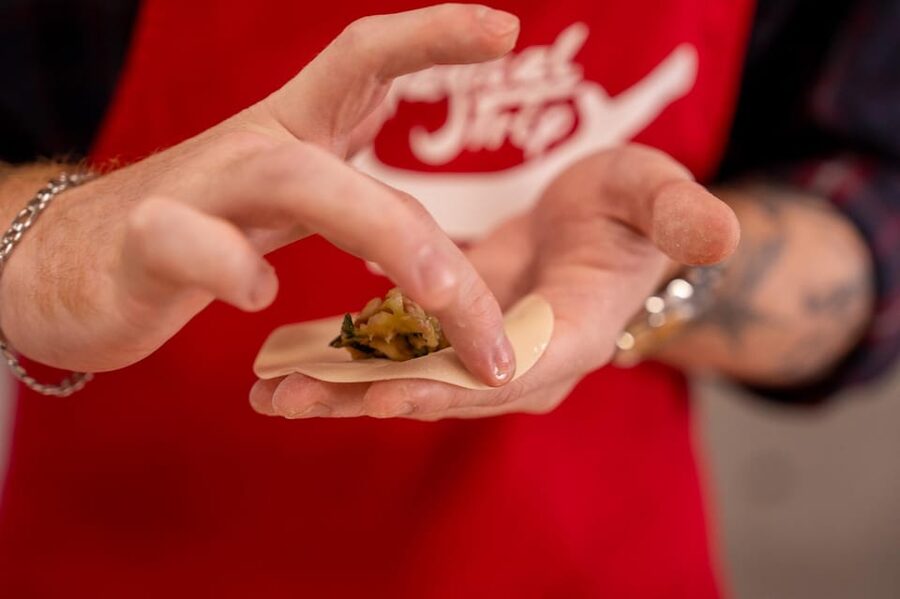
Gyoza is the interactive dish of the trio. Folding dumplings is simple in concept but fun in execution, especially in a group setting where everyone ends up laughing at least once.
This is the dish that helps you understand technique: how to shape, how to set up the filling, and how cooking creates that crispy edge while keeping the center juicy. Even if your first fold is a little lopsided, you will still learn what matters most.
Why this menu is such a smart way to learn Osaka cooking
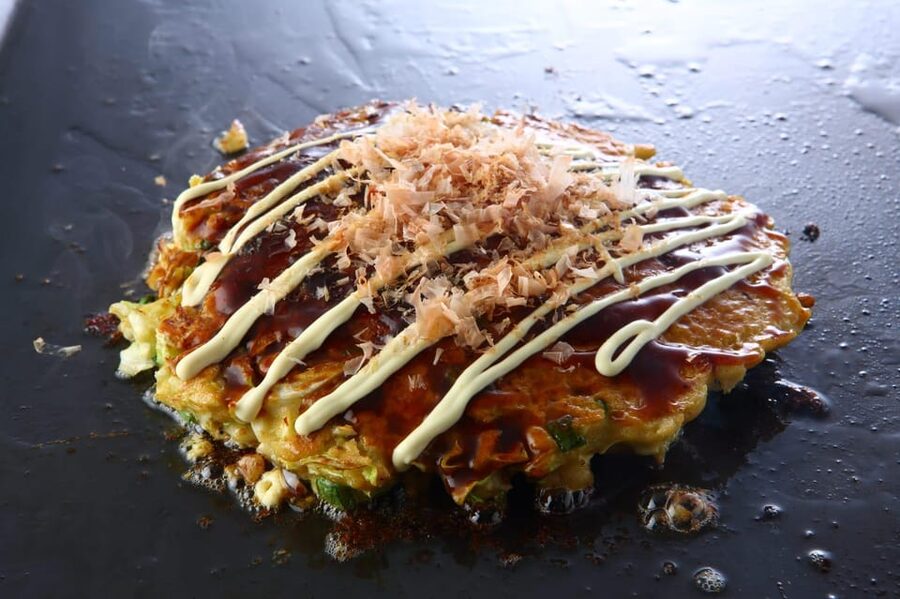
You might think you’re just learning recipes. You’re actually learning the “system” behind Japanese home cooking.
Here’s what you walk away with, dish by dish:
- Niku-sui teaches comfort and balance: how to make a savory broth feel complete.
- Okonomiyaki teaches assembly and texture: how ingredients behave when heated and cooked into layers.
- Gyoza teaches shaping and heat control: why technique matters for that crisp-to-juicy contrast.
And the recipes are designed to be authentic but simple. That is the key for value. If a cooking class teaches food you can’t easily reproduce, the memory fades fast. Here, the instructions focus on practical home cooking using straightforward ingredients.
Plus, you do not just cook, you also eat what you made as lunch. That closes the loop. You can taste the results while the instructions are still fresh in your mind.
Shopping, cooking, chatting: the social side of Osaka food culture
This class is not a silent demonstration. You are cooking alongside others, and the guide helps keep it conversational.
One nice bonus: you get three canned drinks, either alcoholic or non-alcoholic, plus tea served during the experience. This keeps the pace friendly while you cook, and it also makes sake tasting feel natural instead of formal.
If you opt for alcoholic drinks, you are still in a controlled setting where you’re working with food. It’s a good way to try sake as part of the meal rhythm rather than treating it like a separate activity.
Some guides also share context beyond the recipes, including explanations about Japanese products and regional connections. You end up understanding what you’re eating, not just how to make it.
Lunch and photos: small extras that make the class feel finished
Lunch is included, so you are not scrambling to find food afterward. You eat what you cooked, and that makes the class more satisfying than a “quick taste and move on” format.
You also get tea during the experience, which is a simple comfort that fits well with cooking and conversation. It helps you reset between steps, especially if you are getting hands-on with folding gyoza.
After the tour, your guide takes photos during the experience and sends them to you by email. That sounds minor until you remember how much you’re busy cooking. Having pictures afterward helps you remember details like plate presentation and ingredients you used.
Pricing the $90 half-day: does it feel worth it?
At $90 per person for a 4-hour class, you are paying for more than just instruction. You are paying for:
- The English-speaking local guide for the full session
- All ingredients for three dishes
- Lunch
- Three canned drinks (alcoholic or non-alcoholic)
- Tea during the experience
- Photo coverage and emailed recap afterward
- Downloadable recipes you can take home
When you look at it this way, the price starts to make sense. A class that includes ingredients and meals reduces “hidden costs” and helps you avoid the common problem where you spend a lot and then forget half the steps.
The value also comes from the market component. Shopping for ingredients in a real Osaka supermarket is not just a photo stop. It gives you something useful for your next meal back home.
The only pricing-related caution is dietary limits: gluten-free options are not available, and same-day allergy or dietary substitutions cannot be accommodated. If you have a strict requirement, you will want to plan ahead.
Dietary needs, allergies, and who should ask early
This is a food-focused tour, so you should treat dietary planning as part of your preparation.
- Vegans and vegetarians are welcome.
- Gluten-free options are unavailable.
- You should inform the team of dietary needs or allergies at least one day in advance, since same-day requests cannot be accommodated.
- Allergy-free meals cannot be guaranteed, because food is prepared in external kitchens.
- Substitutions may not always be possible, though the team will try to compensate at other stops.
If you are dealing with allergies, I suggest being extra clear about what you can and cannot eat. The tour can be great, but you need realistic expectations when multiple kitchens and ingredients are involved.
Timing and comfort: Osaka weather and the reality of cooking
This experience is four hours, and it starts on time. Late arrivals cannot join, reschedule, or receive refunds. So I’d treat it like a “show up early” plan, not a casual walk-in.
Japan’s weather varies a lot. Summer can hit around 40°C (110°F), and winter can fall to about -5°C (20°F). Dress for temperature changes and bring something light for summer.
Also, the tour involves cutting and heating, so participants must be over 12. That’s good to know if you’re deciding as a family or bringing a younger teen.
Accessibility and mobility: when a private option might fit better
The tour may include locations that are inaccessible by wheelchair or stroller. It is also not recommended for people with mobility issues.
If you have walking difficulties, a private tour is suggested as a better fit. That way, the route and pacing can match your needs.
If you are mostly fine on your feet but just want a calmer schedule, consider reaching out in advance so the guide can suggest the best approach.
Should you book this Osaka cooking class?
Book it if you want a practical Osaka food experience, not just a tasting. The combo of a local supermarket visit, hands-on cooking for niku-sui, okonomiyaki, and gyoza, and the chance to enjoy sake or non-alcoholic drinks makes the 4-hour format feel like real value.
Skip or rethink it if gluten-free is a must for you, or if you have strict allergies and cannot risk cross-kitchen preparation. Also, if mobility is a concern, you’ll likely be happier with a private setup.
If your goal is to learn recipes that you can actually recreate, this is one of the best ways to do it in Osaka. You leave with skills, food memories, and a recipe download you can use long after the trip.
FAQ
Where is the meeting point for the Osaka cooking class?
You meet in front of FamilyMart, about a 1-minute walk from the 4B Exit of Minami Morimachi Station.
How long is the experience?
The tour runs for 4 hours.
How many people are in the group?
The group is limited to 7 participants.
What dishes will I cook?
You’ll cook niku-sui, okonomiyaki, and gyoza.
What’s included in the price?
The price includes the cooking experience and lunch, all ingredients, tea during the experience, 3 canned drinks (alcoholic or non-alcoholic), tour photos taken by your guide sent afterward by email, and 4 hours with an English-speaking local guide.
Are alcoholic drinks included?
Yes. The class includes 3 canned drinks, which can be alcoholic or non-alcoholic.
Can vegans and vegetarians join?
Yes. Vegans and vegetarians are welcome. You should inform dietary needs or allergies at least one day in advance.
Is gluten-free available?
No. Gluten-free options are unavailable.
What age is required to join?
Anyone over 12 can join the tour.
What are the cancellation and reserve options?
You can cancel up to 24 hours in advance for a full refund. You can also reserve now and pay later.
More Food Tours in Osaka
- Osaka: Shinsekai Food Tour with 13-15 Dishes at 5 Eateries
★ 4.8 · 2,204 reviews - Osaka Food Tour: 13 Dishes at 5 Local Eateries
★ 5.0 · 2,149 reviews - Hungry Osaka Street Food Tour:15 Tastings & 3 Drinks with a Local
★ 5.0 · 1,727 reviews - Osaka Backstreet Nightlife & Street Food Walking Tour
★ 5.0 · 1,011 reviews
More Drinking Tours in Osaka
- Osaka Bar Hopping Night Walking Tour in Namba (3 bars, 6 tastes)
★ 5.0 · 958 reviews - Osaka: Namba Pub Bar Crawl with a Local Guide
★ 4.9 · 424 reviews - Osaka: Izakaya Bars Guided Walking Tour
★ 4.9 · 385 reviews - Osaka: Guided Pub Crawl
★ 4.4 · 331 reviews
Newly listed around Osaka
- Kyoto & Nara Private Day Tour★ 4.5 · 45 reviews
- Hiroshima and Miyajima Private Tour with English Speaking Driver★ 3.5 · 9 reviews
- Kyoto Top Four Highlights Day Trip from Osaka or Kyoto★ 5.0 · 18 reviews
- 【Family Friendly】Traditional Mochi Pounding Experience★ 5.0 · 26 reviews
- From Osaka: 10-hour Private Customizable Tour to Kyoto★ 4.5 · 8 reviews
- Osaka Highlights Walking Tour: Castle, Dotonbori & Hidden Gems★ 5.0 · 9 reviews
- Osaka Highlights: 4Hrs Guided Walking Tour with a Native Expert★ 5.0 · 12 reviews
- Honor – Experience Samurai & traditional Culture to the fullest★ 5.0 · 32 reviews
Japanese Cooking Workshops, compared.
Ramen Cooking Class at Ramen Factory in Kyoto
Read our review →
Ramen & Gyoza Cooking Class in Tokyo with Local Supermarket Visit
Read our review →
Ramen Cooking Class at a Ramen Factory with Souvenir
Read our review →
Japanese Washoku Bento Small Group Cooking Class
Read our review →

Sumo Stage Show with Bento or Snack + Fight & Photo
Read our review →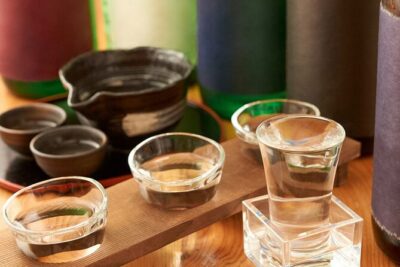
Ramen and Sushi Cooking Class with Sake Pairing Set in Tokyo
Read our review →Browse the lists this tour appears in