
Review · WALKING TOURS
Otsu-e Folk Art Workshop & Local Culture Walk Near Kyoto
Otsu-e painting has a perfect lakeside rhythm. This small-group workshop near Kyoto, led by Otsu native Misato Takahashi, pairs traditional Otsu-e folk art with an easy walking tour through places that explain how this culture grew over centuries. You also start and finish at Ichie Wado, so the experience stays grounded in the town rather than a studio-only lesson.
I especially love two things: first, you get to make your own takeaway artwork, choosing a design like the Lucky Oni Bell or the Three Wise Monkeys. Second, the walk is built around real Otsu tastes, from mochi-style sweets to long-standing snack and pickle stops, so you get context before you ever pick up a brush.
One thing to consider is that the tour is about 3.5 hours of walking through station areas and shopping arcades plus a few short transitions. Also, the Kyoto-to-Otsu train fare is not included, so you’ll want to plan that cost if you are not using a JR Pass.
In This Review
- Key highlights to watch for
- Otsu-e in plain terms, why this feels more personal
- Getting to Otsu from Kyoto, without adding stress
- The value in $104.51, what you are really paying for
- From Otsu Station to Kekaiji ginkgo trees, the lakeside story starter
- Snack stops before the brush: mochi, dried foods, and the pickle lesson
- Hirai Shoten and the Otsu Festival float, art’s neighbor worlds
- Otsu Hyakuchokan: step inside a preserved merchant house
- Otsu-e no Mise and Ichie Wado, where the art and family line connect
- Your painting workshop: Lucky Oni Bell or Three Wise Monkeys
- Pace and group size: how the tour stays relaxed
- Who should book, and who might want a different day
- Should you book this Otsu-e workshop and local culture walk?
- FAQ
- How long is the Otsu-e Folk Art Workshop & Local Culture Walk?
- Where does the tour start and end?
- Is this tour private?
- What do I paint in the workshop?
- What is included in the price?
- Is lunch included?
- Are train fares included?
- What is the cancellation policy?
Key highlights to watch for
- Your own Otsu-e painting to take home, not just a demonstration
- Misato Takahashi’s local perspective, tied to the Takahashi Shozan lineage
- Snack stops that set the mood, including sweets, dried foods, and pickles
- Iconic Otsu street scenes, from machiya houses to a preserved festival float
- A gentle pace in a small group, with time for questions and slow learning
- Temple and lakeside history cues, like the ginkgo trees once used as boat landmarks
Otsu-e in plain terms, why this feels more personal
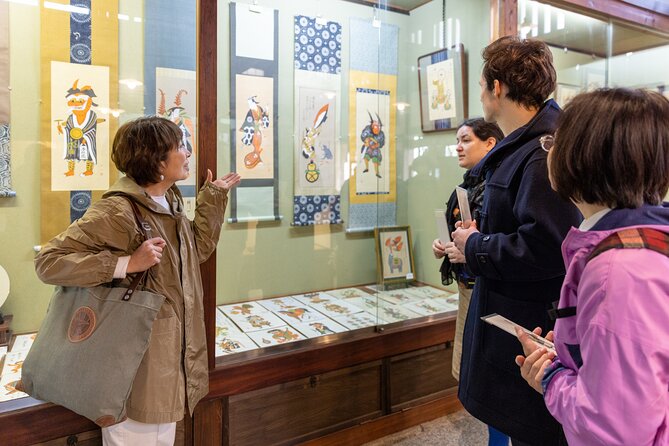
Otsu-e is one of those traditional crafts that can look decorative from far away, then turn meaningful once you understand where it comes from. The tradition started in this area about 400 years ago, and it carries a local way of storytelling, humor, and good-luck wishes in the artwork.
What makes this workshop work is that you learn while you move. Instead of only sitting and watching, you connect the art to the town itself, with stops that show daily life, festivals, and food traditions. That helps the painting lesson land in your brain like it belongs here, not like you rented time inside a culture exhibit.
Misato Takahashi brings a personal thread to the experience too. She is an Otsu native, and her family connections link back to the Otsu-e master family, including Takahashi Shozan through the line of the shop and workshop network. When an artist’s family history is woven into the lesson, you can feel the difference in how the instructions are given.
A few more Japan days to weigh up
- Kyoto Geisha Walking Tour: Gion District & Hidden Gems
★ 4.7 · 3,273 reviews - Tokyo Tsukiji Fish Market Food and Culture Walking Tour
★ 5.0 · 3,184 reviews - Kyoto: Gion Geisha District Walking Tour – Stories of Geisha
★ 4.7 · 2,187 reviews
Getting to Otsu from Kyoto, without adding stress
This tour uses Otsu as your base, and the logistics are refreshingly easy. Otsu is about a 10-minute train ride from Kyoto Station, so you are not committing to a long day of transit just to reach a class.
Your tour starts at Otsu Station North ticket gate and later finishes back at Ichie Wado Seminar House. That loop matters because you do not have to figure out how to get from a random neighborhood back to the start point.
Price note: the tour costs $104.51 per person, but it does not include train fares. The Kyoto to Otsu train fare is listed as JPY200 per adult for JR, unless your JR Pass covers it. If you plan around that, the math gets clean.
The value in $104.51, what you are really paying for
On paper, you might compare this to a workshop that only teaches painting. In practice, you are paying for three things at once: a guided local walk, multiple cultural stops, and the chance to produce an artwork you can keep.
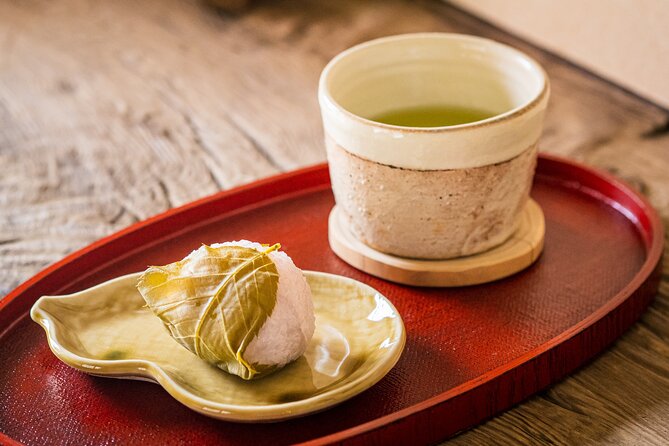
You also get an English-speaking professional guide, plus welcome tea and sweets during the day. That is not filler. Snacks and tea help you slow down, notice details, and reset between locations, especially when you are moving through older streets and shopping arcades.
Then there is the included entry time. You get admission coverage for places like Otsu Hyakuchokan and the Otsu Festival Float Exhibition Pavilion (or alternatives if needed). That keeps the experience from turning into a walk where you pay again and again at each door.
Finally, you receive original Otsu-e souvenirs, which means you are not leaving with only your painting. If you are budgeting for gifts, that’s a quiet win.
From Otsu Station to Kekaiji ginkgo trees, the lakeside story starter
The tour begins at the north ticket gate of Otsu Station. Starting here is helpful because it keeps your first step simple, especially if you arrive with limited local navigation energy.
One of the first meaningful stops is at the ginkgo trees of Kekaiji Temple near Kyomachi 3-chome. The trees once served as a landmark for boats on Lake Biwa, which connects the town’s geography to everyday movement. It’s a small detail, but it gives you a mental map of how locals read the landscape.
This is where you start understanding Otsu as a place of arrivals and departures, not just a day trip. Even if you only remember one fact from the walk, keep this one. When you see the ginkgo trees in context, the whole town feels more navigable.
A different sort of day in Japan:
- Mt Fuji and Hakone 1-Day Bus Tour Return by Bullet Train
★ 5.0 · 26,383 reviews - 1-Day Tokyo Bus Tour
★ 5.0 · 14,250 reviews - PERFECT KYOTO 1-Day Bus Tour
★ 5.0 · 13,518 reviews - Tokyo: TOKYO SKYTREE® Admission ticket
★ 4.5 · 11,192 reviews
Snack stops before the brush: mochi, dried foods, and the pickle lesson
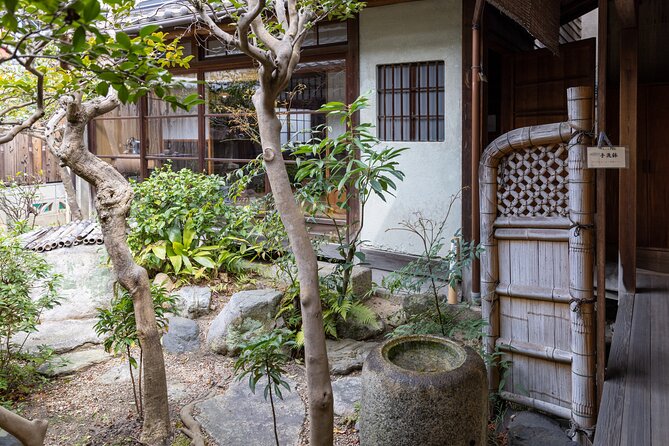
Before you paint, you get treated to an actual taste of Otsu. That choice feels smart because it gets you into a receptive mood, and it also reduces the stress of finding snacks on your own.
At Mochihyo, you pick up Japanese sweets from a shop positioned facing the old Tokaido Road. This stop is short, but it gives you a reason to pause and notice how food sits inside historical routes.
Next comes Senmaruya on Nakamachi Street, a long-standing dried food store. You select a retro-style snack here, and the point is not just eating. It shows how Japanese cuisine relies on ingredients that store well and travel through local markets and home cooking.
Then the tour shifts into deeper flavor culture with a stop at Yaoyo in Hishiya-cho shopping arcade. You learn one aspect of Japanese dietary through pickles, and you select a seasonal pickle as a later treat. If you have only thought of pickles as side dishes, this is a useful reminder that pickling is a whole world.
Hirai Shoten and the Otsu Festival float, art’s neighbor worlds
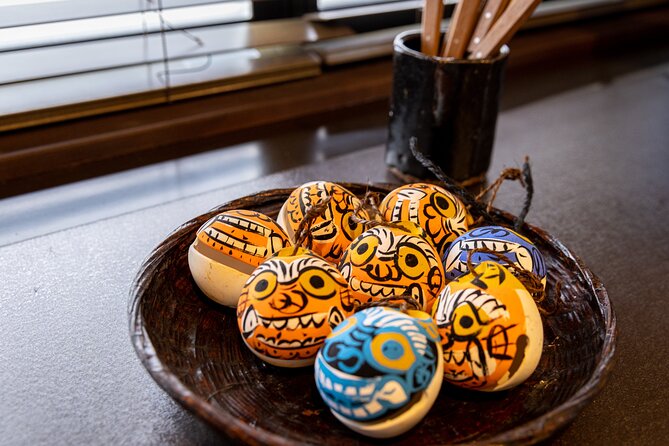
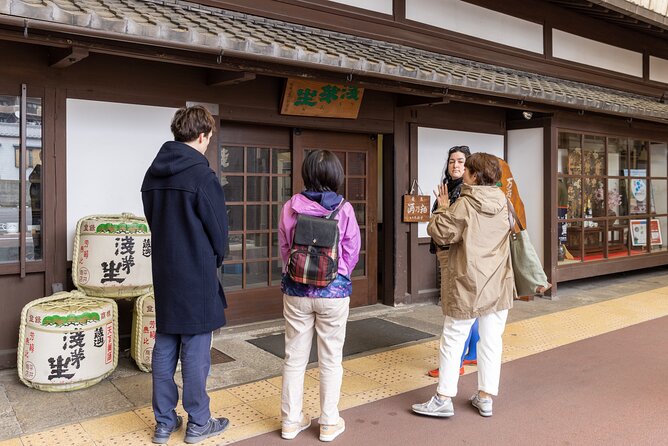
Otsu-e is folk art, so it naturally sits beside other local traditions. That’s why a stop at the Hirai Shoten sake brewery makes sense. The brewery has a 365-year history, and it sells its original brand’s local sake. Even if sake is not your thing, the long timeline helps you understand that craft and production are part of local identity.
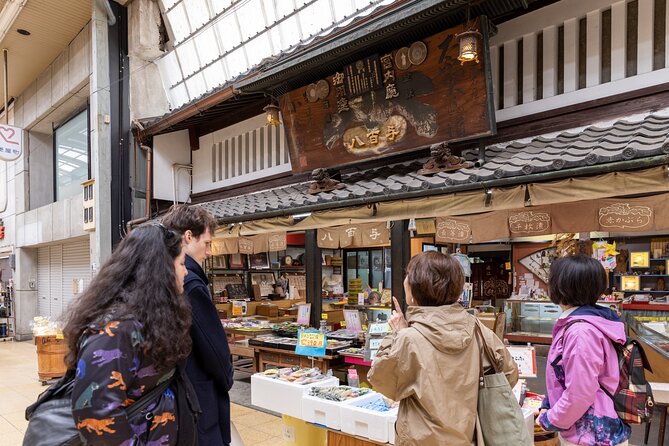
From there, you see a more visual festival stop at the Otsu Festival Hikiyama Exhibition Pavilion in the Maruya-cho shopping arcade. One of the actual floats pulled during the Otsu Festival is displayed there. Seeing the float in a preserved setting helps you connect festival energy to the kind of playful, expressive art Otsu-e is known for.
If you like culture that feels practical and lived-in, these stops do a great job. They show that art does not float alone. It connects to celebrations, shops, and daily routines.
Otsu Hyakuchokan: step inside a preserved merchant house
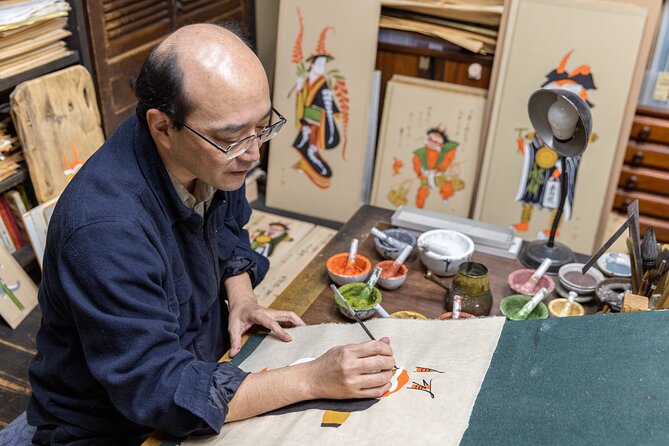
At Otsu Hyakuchokan, you get a house tour of an old, typical Otsu machiya merchant house, and that portion is included. A machiya setting makes the story more concrete, because it shows how commerce, families, and neighborhood life operated in traditional street layouts.
This stop runs about 20 minutes, which is a good length. It is enough time to absorb the layout, without dragging your legs too long after the earlier walking. If you tend to get bored by long museum lectures, you will probably like this one better.
Also, the guide can tie what you see back to the art. When the painting lesson arrives later, you are not starting from scratch.
Otsu-e no Mise and Ichie Wado, where the art and family line connect
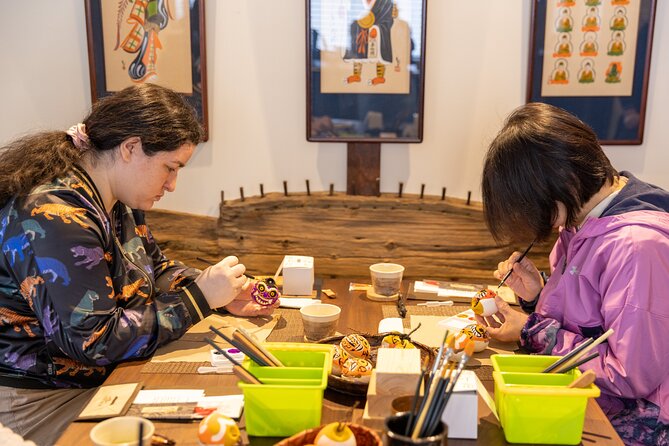
The tour reaches the dedicated Otsu-e retail and workshop world at Otsu Enomise, also called Otsu-e no Mise, in Miidera sando. This shop and workshop tradition is connected to the Takahashi Shozan legacy, succeeding the work of the fifth master in that line.
That detail matters. It helps you understand that this is not a one-off hobby shop. It is a living craft practice with a named lineage, maintained through a physical space where people come to learn, buy, and carry on the tradition.
Then you move to the painting workshop at Ichie Wado Seminar House, located in Kozeki-cho, in front of Nagara Jinja Shrine. Here you get the welcome tea and sweets too, along with a presentation about Otsu-e history and features.
The shrine-front setting also gives you a sense of everyday spirituality. You are not only learning art techniques. You are learning the cultural meaning behind subjects and motifs.
Your painting workshop: Lucky Oni Bell or Three Wise Monkeys
The workshop part is the heart of the experience, and it is hands-on. You paint an Otsu-e design, listed as the Lucky Oni Bell or the Three Wise Monkeys, and you get to take your work home.
This is the kind of activity where your expectations should be simple: you are making something authentic, guided step-by-step, not producing a museum-quality piece. The payoff is that you get a real object, and that object acts like proof that you did something beyond “seeing.”
What tends to make the workshop extra satisfying is the buildup you get beforehand. You taste sweets, dried foods, and pickles, then you see local crafts and festival visuals, then you learn the motif meaning, then you paint. By the time your brush starts moving, the symbols do not feel random.
You also receive original Otsu-e souvenirs from the workshop area. That helps if you are trying to bring back a small but meaningful gift instead of buying generic knickknacks.
Pace and group size: how the tour stays relaxed
This is a private tour in the sense that you only share it with your group, not random strangers. It is also described as a slower pace in the overall feel, which matches the day’s structure.
Time is spread across short stops, then a longer workshop block. That mix is ideal if you want to walk but still need room for questions. If you like culture but get tired of long lectures, this format tends to be easier to enjoy.
The tour notes also mention a moderate physical fitness level. You will be on your feet enough to matter, especially through shopping arcades and transitions. Comfortable walking shoes are a practical idea, even if the walking segments are not described as extreme.
Who should book, and who might want a different day
I think this is a great match if you:
- Want an Otsu-e experience that feels connected to local life, not just a classroom
- Enjoy hands-on crafts and like the idea of taking a painting home
- Prefer a smaller, calmer pace with time to talk
- Like food culture tied to place, especially pickles and old street shops
I would think twice if you:
- Are short on time in Kansai and need a more efficient city-walk only option
- Hate walking through shopping arcades and want a purely seated experience
- Do not drink tea or snack at all, since tea and sweets are part of the day’s structure
Also, this tour is booked far in advance on average. At the current pattern of booking around 102 days ahead, you’ll likely want to reserve early if your dates are fixed.
Should you book this Otsu-e workshop and local culture walk?
If your goal is to see Japan through a smaller town and make something real with your own hands, I would book it. The best reason is that the art workshop is not floating by itself. You get a guided set of stops that explain how Otsu-e sits next to streets, food, festivals, and old merchant houses.
The main tradeoff is time and walking, plus the fact that train fares from Kyoto are not included. If you plan those two issues, the rest feels like good value for a 3.5-hour culture day with a genuine creative payoff.
FAQ
How long is the Otsu-e Folk Art Workshop & Local Culture Walk?
The tour lasts about 3 hours 30 minutes.
Where does the tour start and end?
It starts at Otsu Station (North ticket gate) and ends at Ichiewado Seminar House in Kozekichō, Otsu.
Is this tour private?
Yes. It is private, meaning only your group participates.
What do I paint in the workshop?
You will paint an Otsu-e design, either the Lucky Oni Bell or the Three Wise Monkeys, depending on what the workshop provides.
What is included in the price?
Included items are an English-speaking guide, the Otsu-e painting workshop, welcome tea and sweets, local snacks, admission fees for Otsu Hyakuchokan and the Otsu Festival Float Exhibition Pavilion (or alternative places), original Otsu-e souvenirs, and local taxes.
Is lunch included?
No, lunch is not included.
Are train fares included?
No. Train fares are not included, including the Kyoto to Otsu JR fare listed as JPY200 per adult (covered by a valid JR Pass if you have one).
What is the cancellation policy?
Free cancellation is available up to 24 hours in advance for a full refund. If you cancel less than 24 hours before the start time, the amount paid is not refunded.
Newly listed around Japan
- Private Tokyo Food Tour – A Journey Through Time Through Food★ 5.0 · 36 reviews
- Private Tokyo Tour with Licensed Guide & Vehicle (Max 15 persons)★ 5.0 · 107 reviews
- Private Tokyo Custom Full-Day Tour by Chartered Vehicle★ 5.0 · 16 reviews
- Private Tokyo Custom Half-Day Tour by Chartered Vehicle★ 4.5 · 13 reviews
- Private Outstanding Nikko Tour with English Speaking Driver★ 4.0 · 11 reviews
- Private Sightseeing to Mt Fuji and Hakone with English Driver★ 5.0 · 51 reviews
- Private Snow Monkeys park Day Trip From Tokyo or Nagano★ 4.5 · 26 reviews
- 4 Day Tour – Mount. Fuji, Tokyo, Hakone, Kamakura and Yokohama★ 5.0 · 19 reviews
Walking Tours, compared.

Kyoto Geisha Walking Tour: Gion District & Hidden Gems
Read our review →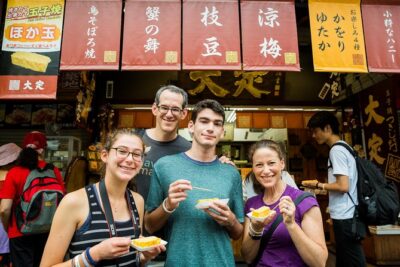
Tokyo Tsukiji Fish Market Food and Culture Walking Tour
Read our review →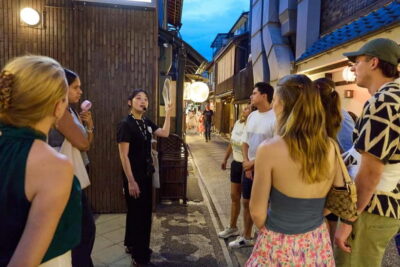
Gion Geisha District Walking Tour – Stories of Geisha
Read our review →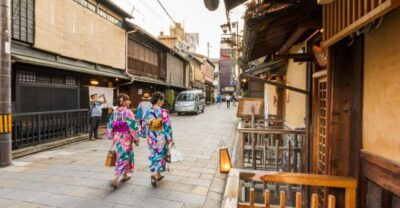
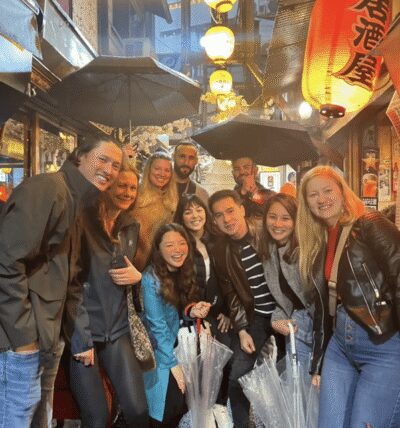
Shinjuku Local Bar and Izakaya Guided Walking Tour
Read our review →

Asakusa Walking Tour with Sensoji Temple Visit
Read our review →
Kyoto Gion Geisha District Walking Tour – The Stories of Geisha
Read our review →Browse the lists this tour appears in