
Review · LICENSED GUIDES & PRIVATE DRIVERS
Port Pick-Up: Naha Private Tour Licensed Guide& Vehicle
Six hours in Naha can feel like a week. This private cruise-day tour gives you port pickup and a National Government Licensed English guide, then lets you build a custom plan of 3-4 must-see stops around Shuri, Okinawa war memory, gardens, and local shopping. I love how the pacing stays realistic for a limited port window, and how guides use clear explanations (often with photos and slides) to make the islands history make sense fast. The main drawback to plan for is practical costs: entrance fees and lunch are not included, and Shuri Castle is still affected by the 2019 fire, so some expectations may need to soften.
What makes this work well for many visitors is the private vehicle. You get door-to-door movement between sites, and the guide can adjust the order when the day gets messy, like rain. Guides I’ve seen praised by name include Hiromi, Hyde, Kumiko, Michie, HM, and Sui, and the common thread is they treat your time like a puzzle to solve, not a checklist to rush.
In This Review
- Key Highlights That Make This Tour Worth Your Time
- Okinawa in Miniature: What This Private Day Feels Like
- Naha Port Pickup and the 6-Hour Timing That Keeps You Sane
- Price for Up to 2: When This Private Tour Is Good Value
- How the Custom Plan Works (and How to Choose Your 3-4 Stops)
- Shuri Castle and the Ryukyu Royal Story Still Rebuilding
- Kokusai-dori Street and Market Time for Everyday Naha
- WWII Memory in Naha: Himeyuri Peace Museum and Peace Memorial Park
- Sefa Utaki, Shikinaen Garden, and Tamaudun’s Quiet Power
- Fukushu-en and the China Connection Through Garden Design
- From Pottery Museums to Makishi Market: Shopping With a Plan
- The Former Japanese Navy Underground Headquarters, Steps and All
- How Guides Turn a Plan Into a Day You Can Handle
- Should You Book This Naha Private Tour?
- FAQ
- What is the meeting point for pickup?
- How long is the tour?
- Is the tour fully customizable?
- Are entrance fees included?
- Is lunch included?
- What does the price cover?
- Do you provide car seats or boosters?
- Can I cancel for a full refund?
Key Highlights That Make This Tour Worth Your Time
Licensed, English-speaking local interpreter
You get a guide with the government-licensed interpreter credential, so explanations fit Japanese culture and history, not just facts.
Cruise-friendly port pickup
Pickup is designed for Naha Port days, including help once you exit the ship and deal with the queue.
Pick 3-4 stops for a focused day
Instead of a scattershot bus tour, you choose what matters most and keep the day moving.
Major Okinawa themes in one 6-hour loop
Ryukyu royalty at Shuri Castle areas, WWII memory at Himeyuri Peace Museum and Peace Memorial Park, and sacred nature at Sefa Utaki.
Shopping with local texture
Time can include Kokusai-dori, Makishi Public Market, and the Tsuboya pottery area, depending on your priorities.
A guide who handles real-world needs
There are examples of guides coordinating for walkers and oxygen, plus helpful patience when steps or crowds get tricky.
Okinawa in Miniature: What This Private Day Feels Like
This is the kind of tour I recommend when your Okinawa time is short and you want the big themes without the guesswork. Naha is where history, religion, and daily life overlap. And Okinawa itself runs on a different rhythm from Japan’s main island, with its subtropical to tropical climate and strong local identity.
A private guide changes the whole feel. You’re not waiting for slow stragglers or stuck listening to someone else’s interests. You can ask, you can pause, and you can steer the day toward what you actually care about. That matters most on cruise days, where a few hours can vanish fast once you account for getting off the ship, moving through port areas, and finding your ride.
The guide part is not just narration. In well-rated examples, guides bring extra context with photos and slides, and they answer practical questions like etiquette, what you are looking at, and why certain sites feel the way they do. If you have a family member who uses oxygen or walkers, you’ll want that kind of calm coordination. There are also examples of guides taking care with loading and unloading during the day.
More Private Guides in Naha:
- Naha 6hr Private Walking Tour with Government Licensed Guide
★ 5.0 · 73 reviews - Tokyo 6hr Private Tour with Government-Licensed Guide
★ 5.0 · 3,902 reviews - Kyoto Early Morning Tour with English-Speaking Guide
★ 5.0 · 1,427 reviews
Naha Port Pickup and the 6-Hour Timing That Keeps You Sane
The tour is designed for travelers arriving by cruise ship, with pickup at Naha Port or hotels near the port. That’s the first win. You should not have to fight for taxis, decode schedules, or time your day based on hope.
The tour runs about 6 hours, with around 30 minutes per selected stop. That 30-minute rhythm is short enough to fit multiple sites, but long enough to do a real walk and not just stand at the entrance photo spot.
Here’s how I’d plan your mindset. Think of it as a theme park for understanding. You get enough time at each stop to connect details, then you move on before you burn out. If you choose places that are all “powerful and emotional,” plan to reserve a little lighter time for markets or street browsing, so your brain gets a breather.
Also, the private vehicle helps with the unglamorous parts, like transitions. You are not sprinting between far-flung corners of Naha. You ride, arrive, and reset. And if weather swings happen, the private format gives room for rearranging. One guide example specifically noted reorganizing the day when it rained.
Price for Up to 2: When This Private Tour Is Good Value
The price is listed as $505.58 per group for up to 2 people. On paper, it might sound high if you’re comparing it to a cheap bus. But compare it to what you are really buying:
- A licensed English-speaking guide who can explain culture and history in context
- A private vehicle for door-to-door movement
- A custom plan, so you pay for the day you want, not the day someone else wants
If you’re traveling as a pair, this can be a strong deal. Two people in a taxi and tickets add up quickly, especially when you want to hit multiple destinations in limited time. For a port day, the guide’s value is often less about “more sightseeing” and more about less wasted time.
Where you should stay cautious on value is spending creep. Entrance fees are not included, and lunch is not included. Also, guide entry fees are covered only for sights included in your selected plan. If you have a must-do that is outside your chosen stops, you should clarify that early so it doesn’t turn into a surprise later.
How the Custom Plan Works (and How to Choose Your 3-4 Stops)
You’ll customize the day by selecting 3-4 must-see spots from the tour’s options. The goal is a tight route where you get enough time to understand each place.
So how do you pick? Use this simple filter:
1) Pick 1 site for Ryukyu identity (like Shuri-related areas)
2) Pick 1 site for WWII memory (Himeyuri Peace Museum and/or Peace Memorial Park)
3) Pick 1 site for living culture (gardens, sacred spaces, pottery, markets)
4) Use the last slot for either more depth or a practical favorite (shopping streets, the underground HQ)
This approach keeps the day balanced. Okinawa history can hit hard. And you’ll enjoy the day more if you also get visual variety: royal architecture, garden calm, seafood-market energy, and then the weight of WWII sites.
Also, be specific with your interests. If you care about a certain kind of souvenir shopping, mention it. There was at least one unhappy experience where the guide did not follow the requested idea set, and the result was disappointment around lunch and shrine-related shopping. In other words, your expectations should be spelled out early, even on a private tour.
A few more Naha days to weigh up
- Official Street Go-Kart Tour – Okinawa Shop
★ 5.0 · 699 reviews - Naha: North Okinawa Sightseeing Tour & Churaumi Aquarium
★ 4.4 · 472 reviews - Okinawa: From Naha: Kerama Islands 1-day snorkeling tour
★ 4.4 · 423 reviews - From Naha: Tokashiki Island Day Trip by Boat
★ 4.3 · 385 reviews
Shuri Castle and the Ryukyu Royal Story Still Rebuilding

Shuri Castle is the headline site for many Naha days. Even if the castle grounds are not fully what the photos show, it still matters because it represents the Ryukyu kingdom’s power and how Okinawa connected with wider regional influence.
One important reality check: the main buildings were destroyed by fire on October 31, 2019. The city’s hope is to rebuild the main building by 2022, tied to the 50th anniversary of Okinawa’s reversion. What that means for you is simple: you should come ready for a history lesson, not just a perfect postcard.
When you visit the Shuri Castle area, expect guided context. A good guide will point out what you are seeing, how the Ryukyu royal world worked, and why certain structures matter. You’ll also likely hear about ongoing work in the broader Shuri-jo and Enkakuji area, because renovations can still affect sightlines and walking routes.
Practical tip: wear shoes that handle uneven ground. The castle neighborhood can include uphill stretches and stairs, and one guide example specifically reassured people about tackling the climb.
Kokusai-dori Street and Market Time for Everyday Naha
After royal history, switch gears to daily life. Kokusai-dori, Okinawa’s International Street, is a classic Naha stop. The street gained the nickname miracle mile after WWII reconstruction, and it’s still lined with restaurants and souvenir shops.
This stop is short, about 30 minutes. That’s enough time to:
- Get your bearings
- Grab a snack or drink
- Decide if you want to browse longer on your own
From there, the tour can pivot to the Makishi Public Market or the Tsuboya pottery area, depending on your choices.
Makishi Public Market is a key food-and-life stop. It’s known as the kitchen of the people of Naha, and it was established in 1972. It’s busy, so your guide’s job is to help you move through it with purpose, not get overwhelmed.
If you love small craft shopping, consider adding Tsuboya. The Tsuboya Pottery District is a short walk from Kokusai-dori into leafy backstreets. It can feel calmer than the main street, and the Tsuboya Pottery Museum area gives you a closer look at how pottery fits local daily culture.
WWII Memory in Naha: Himeyuri Peace Museum and Peace Memorial Park
If you visit Okinawa, you should plan time for WWII remembrance. This tour can include both Himeyuri Peace Museum and Peace Memorial Park.
Himeyuri Peace Museum connects to one of Okinawa’s bloodiest battles near the end of WWII, with references to the scale of loss, including over 100,000 women and students in the historical account given by the museum’s theme. The point of the stop is not shock for shock’s sake. It’s to help you understand the human cost and why Okinawa remembers the war in such a direct way.
Peace Memorial Park is the next stop for broader reflection. This site gives you space to absorb, and it pairs well with Himeyuri because you move from a focused story into a larger memorial landscape.
A strong guide will handle two things well:
- pacing, so you do not rush past important messages
- context, so you connect the story to the islands geography and wartime movement
One guide example also included practical teaching like etiquette and everyday cultural points, which can be a relief after heavier museum time. You do not have to be somber all day to respect the memorials.
Sefa Utaki, Shikinaen Garden, and Tamaudun’s Quiet Power
Okinawa’s identity shows up not only in palaces and museums, but in sacred nature and royal-era spaces.
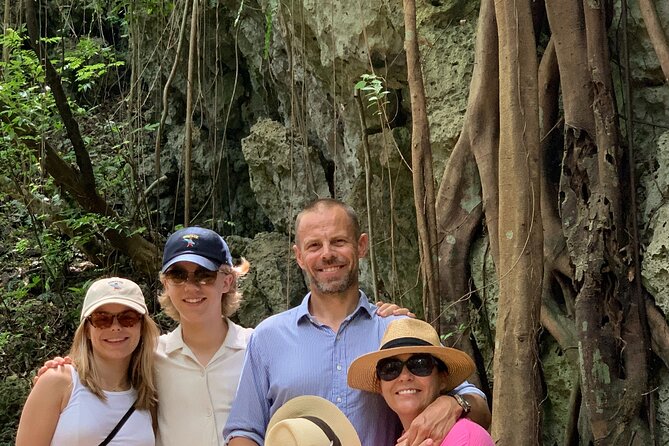
Sefa Utaki is an important sacred site of the indigenous Okinawan religion, focused on worship of nature in a way similar to Shinto. Expect it to feel like a nature walk with spiritual weight, and the site sits on a forested hillside. That setting matters. It’s harder to treat as a simple photo stop when the environment is part of the meaning.
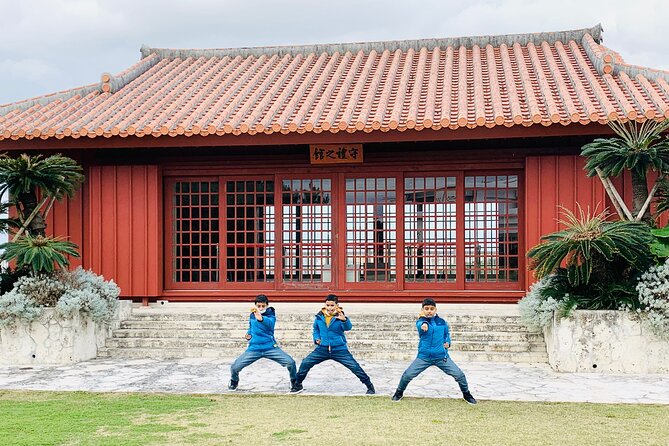
Shikinaen Garden is a different kind of serenity. It was constructed in the late 18th century as the second residence of the Ryukyu kings. You’ll see relatively simple wooden palace buildings with Okinawan style red tile roofs. Even in a short visit, it’s a strong contrast to the museums, because it shows beauty created for living and ruling, not for remembrance.
Nakamura Residence is another culture stop that can fit in this segment. It’s a traditional Okinawan house dating back to the 18th century, once the residence of the Nakamura family. It has been designated as a major cultural asset, so the short stop is a chance to see how homes represented social life in older Okinawa.
Tamaudun is where royal burial culture enters. It also comes with a heads-up: the area is undergoing renovations, so expect some building work still going on around the broader Shuri-jo and Enkakuji area, and there is a small museum associated with the mausoleum.
Practical tip: sacred and royal sites often mean quiet walking. Bring water and take your time with your guide’s explanations. The details are often in what you are meant to notice.
Fukushu-en and the China Connection Through Garden Design
Fukushu-en Garden adds an international thread to the Ryukyu story. The Ryukyu kingdom was strongly influenced by Chinese culture, and this ornamental garden was built in 1992 to celebrate links between Okinawa and China. The entrance is free, which is nice when you’re managing costs during a cruise day.
Garden stops can feel optional on some tours. Here, Fukushu-en works because it shows how influence travels. It’s not only about battles and politics. It’s also about design ideas and how people built beauty with foreign ties in mind.
If you enjoy architectural style, plant layout, and calm pacing, this is a good “breather” stop between heavier sites.
From Pottery Museums to Makishi Market: Shopping With a Plan
Shopping on a tour can go two ways. Either you get rushed into overpriced souvenir traps, or you get practical browsing with cultural context.
This tour’s shopping-friendly options tend to be the second type. Kokusai-dori gives quick access to souvenirs and food. Makishi Public Market gives you a taste of local food life. And Tsuboya lets you slow down near pottery workshops and displays in leafy streets.
In one praised example, a guide built in extra stops like pottery street shopping and even Ryukyu glass focus. That’s not guaranteed for everyone, but it shows the mindset: if you care about crafts, a good guide can steer you toward what fits your interests without blowing the schedule.
If you have strict shopping goals, treat the “custom 3-4 stops” selection like a shopping checklist. Pick the sites that include the kinds of stores you want, and tell your guide what you want to buy, even roughly. That reduces the odds of missing something like lunch you requested or a specific shrine stop tied to buying small items.
The Former Japanese Navy Underground Headquarters, Steps and All
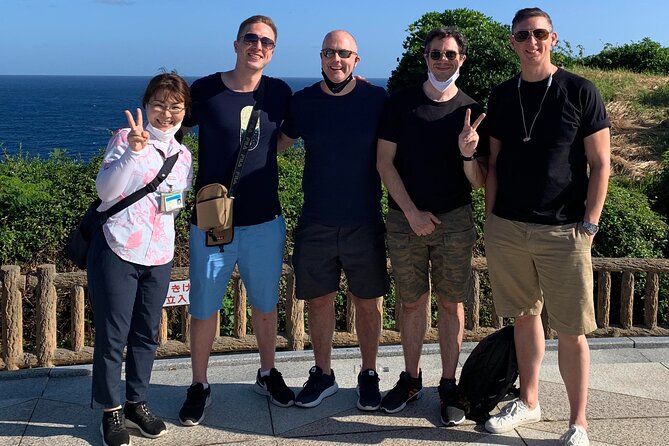
The Former Japanese Navy Underground Headquarters is one of the most memorable stops in the area. The site sits in the Tomigusuku uplands south-west of Naha City, and it offers views over the East China Sea, plus the southern metropolitan area and back toward the Shuri Castle region.
Underground sites can be intimidating. The good news is that the steps are not the deal-breaker people fear. One guide example specifically said not to worry about the underground HQ steps because they are quite easy.
Still, plan for enclosed spaces. Wear clothes that are comfortable for walking and standing, and be ready for a more reflective atmosphere. A licensed guide helps a lot here, because the purpose of the place is tied to WWII realities, and the details matter.
If you only have time for one WWII-leaning “seeing it in your body” stop, this often makes that list.
How Guides Turn a Plan Into a Day You Can Handle
This is where the tour really earns its high marks. Private guide work is mostly invisible when it goes well, so you notice it most when things would otherwise go wrong.
A few themes show up clearly:
- Port timing help after customs and exiting the ship
- Clear communication with the driver so you are not stuck figuring out which van to board
- Using photos, slides, and structured explanations to keep the day understandable
- Adjusting routes when weather changes
- Handling mobility needs patiently, including walkers and oxygen
Guides named in strong feedback include Hiromi, Hyde, Kumiko, Michie, HM, and Sui. Even with different personalities, they share a practical approach: they help you see, then they help you understand.
One caution comes from a low-rated experience where the guide did not follow the emailed idea list. The lesson is not that private tours fail. It’s that your instructions need to be precise. If you email preferences, restate your top priorities on the day too. And if you have a must-do like specific lunch timing or a particular shopping target, say it plainly so everyone is aligned.
Should You Book This Naha Private Tour?
Book it if you want a smart, focused Okinawa introduction from Naha, especially on a cruise day. This is a great fit for you if you:
- are traveling as a pair and want true private time
- care about Okinawa war memory, Ryukyu culture, and daily life
- want to build a route around your interests by choosing 3-4 stops
- prefer a licensed English guide over doing everything on your own
Consider skipping or adjusting your expectations if:
- you expected entrance fees and lunch to be included
- you want a large number of far-flung stops in one day, because the plan is intentionally built around 3-4 choices
- you have very specific shopping needs tied to places outside your selected stops, because the guide entry fee coverage and timing depend on the sites chosen
If you like the idea of a day that feels organized, humane, and tailored, this private Naha experience is a solid value for up to two people, and it saves you from the most stressful part of cruise travel: time pressure.
FAQ
What is the meeting point for pickup?
Pickup is at Naha Port or at hotels near the port.
How long is the tour?
The tour is about 6 hours.
Is the tour fully customizable?
Yes. You choose 3-4 must-see spots from the options in the tour information, and your guide builds the itinerary around them.
Are entrance fees included?
No. Entrance fees are not included for the sites.
Is lunch included?
No. Lunch is not included.
What does the price cover?
It covers a licensed local English-speaking guide and a private vehicle for your group, up to 2 people.
Do you provide car seats or boosters?
Car seats and booster seats are limited. Rear-facing car seats are not available, and you need to contact the provider directly if you need a specific seat setup.
Can I cancel for a full refund?
Yes, free cancellation is available. You can cancel up to 24 hours in advance for a full refund.
Newly listed around Naha
- Zodiac Shrines and Naha Backstreets Cycling Tour★ 5.0 · 29 reviews
- E-Bike Nature Tour in Shuri★ 5.0 · 25 reviews
- Naha 6hr Private Walking Tour with Government Licensed Guide★ 5.0 · 73 reviews
- Okinawa Sightseeing Bus Tour★ 3.5 · 9 reviews
- Sushi Making Experience Class in Naha Makishi Public Market★ 5.0 · 35 reviews
- Okinawa:Kerama Islands experience Diving/Snorkeling/WhaleWatching★ 4.5 · 16 reviews
- Naha Bar Hopping Tour in Okinawa★ 5.0 · 28 reviews
- Traditional Japanese Costumes “Kimono”, “Yukata”, “Ryuso”, “Photograph Course “Hair Set & Lipstick & Kimono & Photography”★ 5.0 · 17 reviews
Licensed Guides & Private Drivers, compared.
Tokyo 6hr Private Tour with Government-Licensed Guide
Read our review →
Kyoto Early Morning Tour with English-Speaking Guide
Read our review →
Tokyo 4hr Private Tour with Government-Licensed Guide
Read our review →
Kyoto 6hr Private Tour with Government-Licensed Guide
Read our review →
Hiroshima / Miyajima Full-day Private Tour with Government Licensed Guide
Read our review →Early Morning Tour with English-Speaking Guide
Read our review →
Tokyo Private Sightseeing Tour by Car- English speaking chauffeur
Read our review →
Mt Fuji Private Tour with English Speaking Driver
Read our review →Browse the lists this tour appears in