
Review · LICENSED GUIDES & PRIVATE DRIVERS
Naha 6hr Private Walking Tour with Government Licensed Guide
Shuri, then straight to peace memory, in 6 hours. This private walking tour with a licensed English guide helps you connect the big Okinawa stories, from Ryukyu royal culture to WWII, without getting lost. I also like that the day is adjustable around what you care about, and guides such as Hide or Hiromi tend to build the route to your pace. The main catch is that you may still need taxis between far-flung picks, and admission fees and lunch are not included.
You get a custom itinerary built from a list of nearly 20 sites, usually choosing 3 to 4 stops for the day. Expect solid walking, optional pickup in the Naha area, and a mobile ticket. At $155.26 per person for 6 hours, it can be great value when you want context and time-saving routing, not just a self-guided checklist.
In This Review
- Key highlights worth your attention
- What 6 hours of Naha walking really feels like
- Why the government-licensed guide changes the value
- Shuri Castle and the Ryukyu royal story (what you should expect)
- The WWII memory trail: Peace museums and memorial park
- Sefa Utaki and other sacred places: calm, nature, and respect
- Royal gardens and mausoleums: Shikinaen to Tamaudun
- Okinawa World, Gyokusendo caves, and cultural theme stops
- Tsuboya pottery district and Makishi Public Market
- Kokusai-dori: the souvenir-and-street version of Naha
- Former Japanese Navy Underground Headquarters: views plus WWII-era scale
- Price and logistics: when $155 makes sense
- Who this tour suits best
- Should you book this Naha walking tour?
- FAQ
- What is the duration of the Naha private walking tour?
- Can I customize which sights we visit?
- Is it a private tour?
- What’s included in the price?
- What is not included?
- Is admission included for stops like museums and gardens?
- Is free cancellation available?
Key highlights worth your attention

- Government-licensed English guides: you get a local, historical storyteller, not just directions.
- Choose 3 to 4 sites from a menu: you control the balance of castles, gardens, caves, and markets.
- WWII stops are real and direct: Peace museums and memorial areas are built into the most common routes.
- Ryukyu culture beyond the highlights: royal gardens, sacred sites, and traditional homes show Okinawa’s older layers.
- Walking plus optional taxi jumps: plan for some transport costs depending on your stop mix.
- Guide-driven timing: guides like Yoshi and Michie were praised for flexibility and staying on-track for the day.
What 6 hours of Naha walking really feels like

This tour is set up as a walking day, but it is not a marathon. The total time is about 6 hours, and each chosen stop typically gets around 30 minutes of site time, plus walking time between locations. That structure matters because Naha is not one tight sightseeing cluster. Even when attractions feel close on a map, real-world walking time can surprise you.
If you like your sightseeing with explanations, this format can be a win. A good guide turns “I’m looking at a gate” into “I understand why that gate matters,” especially for Shuri-related sites and the WWII memorial areas.
The tradeoff is heat and distance. One lower rating flagged taxi spending between attractions, and another pointed out that the gaps can be large enough to change the math on cost. Your best move: pick a route that keeps geography in mind, and ask your guide ahead of time what transport you should expect between your chosen stops.
More Private Guides in Naha:
- Port Pick-Up: Naha Private Tour Licensed Guide& Vehicle
★ 4.5 · 16 reviews - Tokyo 6hr Private Tour with Government-Licensed Guide
★ 5.0 · 3,902 reviews - Kyoto Early Morning Tour with English-Speaking Guide
★ 5.0 · 1,427 reviews
Why the government-licensed guide changes the value
If you care about history, a licensed guide is the whole point. People praised this tour most for guides who communicate well ahead of time and then shape the day around real interests. Names that came up often include Kumiko, Hide, Michie, Hide, Yoshi, Hiromi, and HM. The pattern is consistent: strong English, lots of Okinawa-specific context, and flexibility on the day.
Here is what that means for you:
- You can ask follow-up questions on the spot, especially for WWII and Ryukyu-era topics.
- You get practical interpretation, not just facts. For example, sacred sites like Sefa Utaki are easier to respect when someone explains what you are looking at and why it is treated differently.
- You avoid spending your limited Naha time figuring out how to line up sites efficiently.
A small planning note: entrance fees, transport, and lunch are not included. The guide fee is covered for the sights listed for the tour, but museums, gardens, theme attractions, and markets can still have their own costs depending on which stops you choose.
Shuri Castle and the Ryukyu royal story (what you should expect)
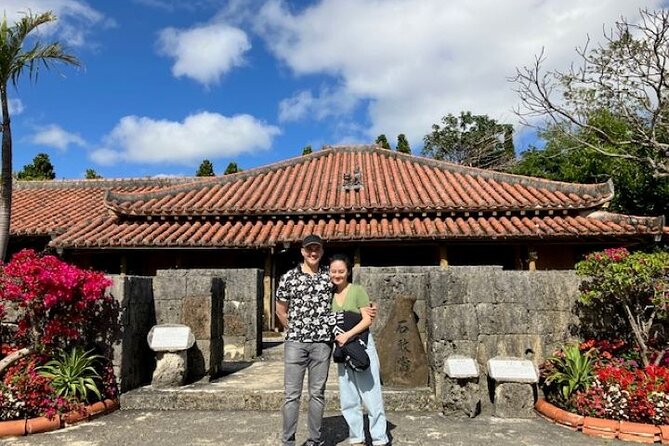
Shuri Castle is the big anchor for many Naha days. It is also one of the few places where you can feel the island’s history layered in a single view: the Ryukyu kingdom’s power, Okinawa’s unique cultural identity, and the modern reality of rebuilding.
One important thing to know: the main castle buildings were destroyed by fire on the night of October 31, 2019, and the city has a hope to rebuild the main building around the 50th anniversary of Okinawa’s reversion to Japan. So when you go, expect reconstruction context and not a fully restored “storybook castle” experience.
Why this stop works on a guided day:
- A guide can connect the castle to other nearby royal-linked areas you might visit, like Tamaudun or garden sites.
- Even if you cannot see everything you hoped for, you still get the story behind what survives and what is rebuilding.
Practical drawback: admission is not included, so the total cost will vary depending on the castle-related ticket situation on your date.
The WWII memory trail: Peace museums and memorial park
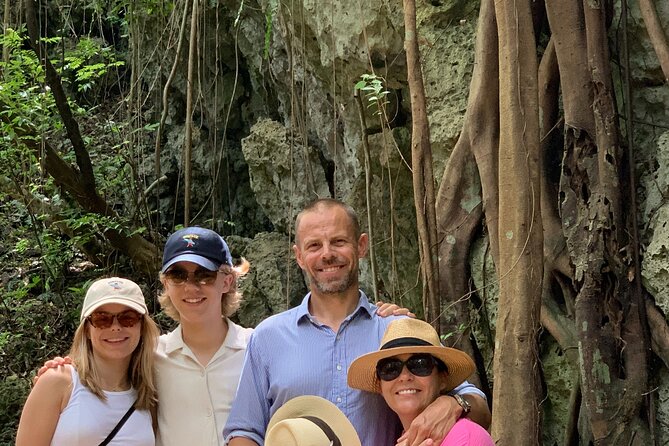
If your Naha trip includes WWII history, this tour is set up for it. Himeyuri Peace Museum and Peace Memorial Park are both common picks, and they give you a clear sequence: background, remembrance, and reflection in a single day.
What makes these stops meaningful is how direct they are. Instead of reading history in abstract terms, you see how Okinawa remembers specific experiences tied to the island’s civilian and wartime reality.
- Himeyuri Peace Museum: usually the emotional starting point in the WWII-focused version of the day.
- Peace Memorial Park: keeps you in a wider memorial setting, where the scale feels different than a single museum room.
Time tip: plan to walk slower here. A guide can pace the day so you do not rush through the important parts, but you should still give yourself some quiet time after the most intense exhibits.
Cost note: Himeyuri Peace Museum has an admission fee not included, while the park stops often have free entry. Your guide can help you decide if you want a shorter museum time in exchange for more time elsewhere.
A few more Naha days to weigh up
- Walking around town in a kimono, you can choose your favorite kimono from the traditional Okinawan costumes “Ryuso”, “Kimono”, “Yukata” 《Hairset & Lipstick & Kimono & Rental Fee》All Comic Book
★ 4.5 · 14 reviews - Kyoto Geisha Walking Tour: Gion District & Hidden Gems
★ 4.7 · 3,273 reviews - Tokyo Tsukiji Fish Market Food and Culture Walking Tour
★ 5.0 · 3,184 reviews - Kyoto: Gion Geisha District Walking Tour – Stories of Geisha
★ 4.7 · 2,187 reviews
Sefa Utaki and other sacred places: calm, nature, and respect
Sefa Utaki is a sacred site tied to Okinawan indigenous religion. It leans on nature worship, in a way that overlaps with ideas people may associate with Shinto, but it is still distinctly Okinawan.
On a guided day, Sefa Utaki feels less like a scenic spot and more like a place with rules, meaning, and atmosphere. You get guidance on what to look for and how to treat the site appropriately. That matters because sacred places are not just photo locations.
Expect:
- a forested setting and a shift in tone from urban streets,
- quiet walking,
- time to take it in, even if the stop is only about 30 minutes.
If you are sensitive to spiritual etiquette, this is exactly the kind of stop where a guide pays off quickly.
Royal gardens and mausoleums: Shikinaen to Tamaudun
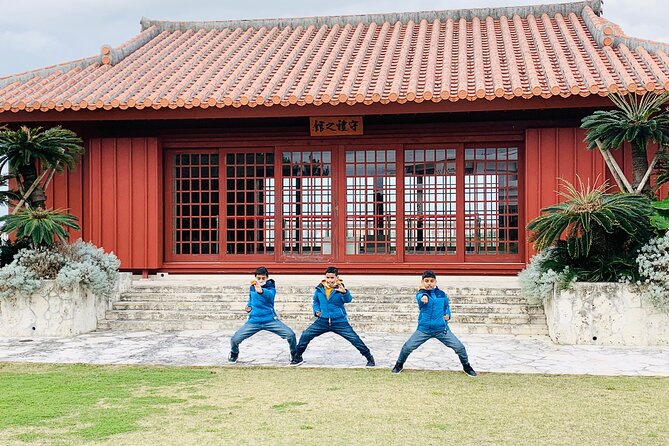
Okinawa gives you a very particular kind of beauty, and the gardens and royal sites are where that shows up best.
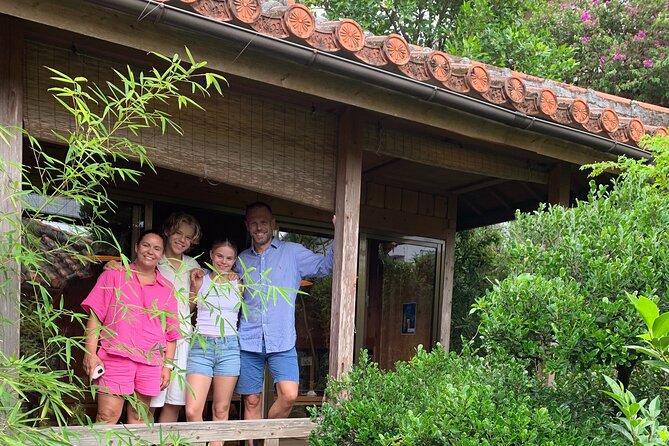
Shikinaen Garden is a standout option. It was built in the late 18th century as the second residence of the Ryukyu kings. The setting includes Okinawan-style wooden buildings and red tile roofs, which help you see how royal life blended with the island’s climate and materials.
Then there is Fukushu-en Garden, built in 1992 to celebrate links between Okinawa and China. It is smaller and more modern in framing, but it is a nice contrast if you want something calmer after WWII stops.
Tamaudun adds another royal layer. It is a mausoleum area connected to the Ryukyu royal family, and it can pair well with Shuri Castle. There is also currently renovation work going on, including building activity near Shuri-jo and Enkakuji, and the small accompanying museum may be affected by the schedule. A guide can help you decide how to manage the time so construction does not derail your expectations.
Gardens and mausoleums are also a great choice if you want a break from theme attractions. Just remember: if you pick too many outdoor sites, the day can get hot.
Okinawa World, Gyokusendo caves, and cultural theme stops
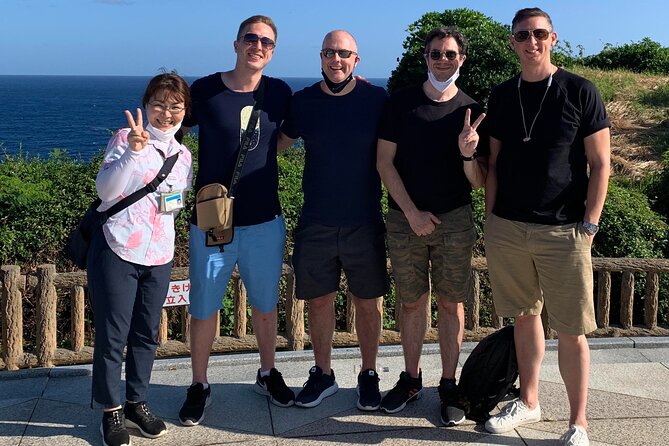
If you want the “wow” factor in a shorter time window, Okinawa World Culture Kingdom is a popular pick. It often includes:
- Gyokusendo natural cave,
- a craft village component,
- and a snake museum.
Then there is Ryukyu Mura, a recreated traditional village concept that gives you a fast, visual introduction to Ryukyu life.
These stops are not the same as historical ruins or memorial sites. They are designed as culture experiences you can understand quickly, even if your background knowledge is limited. On a guided day, you still get context about what you are seeing and how it connects to real Okinawan tradition.
Potential drawback: these are theme-style environments, and they can take your time budget away from quieter sacred or garden stops. If you are paying for the guide mainly to experience authenticity and history, you may want to select just one culture theme stop and reserve the rest of your day for places with deeper, original historical meaning.
Tsuboya pottery district and Makishi Public Market

Not all Naha value is monumental. Some of it is everyday Okinawan life, and two stops do that well.
Tsuboya Pottery Museum and the Tsuboya district put you into leafy backstreets, away from the main drag. The pottery focus can be a great choice if you like making something or watching traditional craft work. This is also a nice option when you want an atmosphere break between heavier history stops.
Makishi Public Market is food and local shopping energy. The market is famous and has been operating since 1972. You can treat it as lunch fuel, snack time, or a place to pick up small gifts. It is free to enter as a stop, but food costs are on you.
If you want the day to feel balanced, pair one market experience with one garden or sacred stop. Then you get rhythm, not just one kind of sight all day.
Kokusai-dori: the souvenir-and-street version of Naha
Kokusaidori is often included as a quick stop, about 30 minutes in many routes. It is the international street and a staple area for visitors. You get rows of restaurants and souvenir options, so it is easy to use it as a transfer zone, a quick coffee break, or a shopping sprint.
Pros:
- convenient, central location,
- easy to snack and reset,
- good for people who want a little city flavor without commitment.
Cons:
- it is not the most “Okinawa-specific” experience compared to gardens or memorial sites,
- you may find it more commercial than other stops.
If you love street life, it is worth including. If you prefer quieter sites, you can swap it out.
Former Japanese Navy Underground Headquarters: views plus WWII-era scale
The Former Japanese Navy Underground Headquarters is a strong option for people who want WWII-era engineering and a sense of place. The park setting also gives you views out toward the East China Sea and even toward the southern metropolitan area all the way to Shuri Castle.
A guided day helps because it is easier to understand the site when you know what you are seeing and why it was built the way it was. This stop can work as a transition between the museum-heavy parts of the day and more peaceful, nature-oriented areas afterward.
Cost note: it is not a free stop in every version because entrance fees are not included for this experience overall. Your guide will likely handle the flow, but your budget should include a buffer.
Price and logistics: when $155 makes sense
At $155.26 per person for about 6 hours, the headline price is not low. So you have to look at what you are buying.
You are paying for:
- a government-licensed English guide,
- a custom plan built from a menu of stops,
- and the time savings of not trying to connect all this solo.
Where people can feel disappointed is when the route requires taxis between far-apart picks. One critical comment complained that taxi rides pushed costs higher and that the guide seemed to do less than expected on the walking side. Even a more positive comment about needing taxis suggested budgeting a few rides.
My practical advice:
- Choose stop combinations that are near each other in the real world.
- If you want Okinawa World plus Shuri Castle plus a far market, expect taxi spending.
- If you have mobility needs, ask the guide how they will handle the walking portions before the day.
Also remember: entrance fees, transportation fees, and lunch are not included. If you add museum tickets and theme attractions, your final day cost rises quickly.
Who this tour suits best
This is a good fit if you:
- want WWII and Okinawa history explained in plain terms,
- prefer a guide-led day with flexibility,
- like picking specific experiences rather than being forced into a fixed group schedule.
It is also ideal for first-timers who want a smart “orientation plus highlights” day in Naha.
It may not be your best choice if you:
- hate walking and want everything handled by private transport,
- want only free sights and no museums,
- or plan to choose widely separated areas without budgeting for taxi jumps.
The tour style is best when you treat it like a guided route puzzle, not just a stroll with a friend.
Should you book this Naha walking tour?
If you care about understanding Okinawa, not just checking boxes, I’d book it. The licensed guide element plus the custom stop selection can save you from wasting Naha time on bad logistics and missed context. Guides such as Hide and Hiromi are repeatedly praised for flexibility, and that flexibility matters when you are balancing history, gardens, and city streets in one day.
Book it with two expectations in mind:
1) admit that you may need taxis depending on your chosen stop mix, and
2) add a budget for entrance fees and lunch.
Do that, and you get a day that feels like Okinawa was explained by someone who actually lives there.
FAQ
What is the duration of the Naha private walking tour?
The tour is listed as about 6 hours.
Can I customize which sights we visit?
Yes. You can choose from almost 20 points of interest to build a custom itinerary, typically selecting 3 to 4 sites from the available options.
Is it a private tour?
Yes. It is a private tour/activity, and only your group participates.
What’s included in the price?
Included items are a licensed local English speaking guide, a customizable tour of your choice of 3 to 4 sites, and a mobile ticket. Pickup is offered, and you meet the guide on foot in a designated Naha area.
What is not included?
Not included: entrance fees, transportation fees, lunch, and other personal expenses. Private transportation is not included.
Is admission included for stops like museums and gardens?
No. Entrance fees are not included, though some stops listed (like certain street or market stops) are free as stop options.
Is free cancellation available?
Yes. You can cancel up to 24 hours in advance for a full refund.
Newly listed around Naha
- Zodiac Shrines and Naha Backstreets Cycling Tour★ 5.0 · 29 reviews
- E-Bike Nature Tour in Shuri★ 5.0 · 25 reviews
- Port Pick-Up: Naha Private Tour Licensed Guide& Vehicle★ 4.5 · 16 reviews
- Okinawa Sightseeing Bus Tour★ 3.5 · 9 reviews
- Sushi Making Experience Class in Naha Makishi Public Market★ 5.0 · 35 reviews
- Okinawa:Kerama Islands experience Diving/Snorkeling/WhaleWatching★ 4.5 · 16 reviews
- Naha Bar Hopping Tour in Okinawa★ 5.0 · 28 reviews
- Traditional Japanese Costumes “Kimono”, “Yukata”, “Ryuso”, “Photograph Course “Hair Set & Lipstick & Kimono & Photography”★ 5.0 · 17 reviews
Licensed Guides & Private Drivers, compared.
Tokyo 6hr Private Tour with Government-Licensed Guide
Read our review →
Kyoto Early Morning Tour with English-Speaking Guide
Read our review →
Tokyo 4hr Private Tour with Government-Licensed Guide
Read our review →
Kyoto 6hr Private Tour with Government-Licensed Guide
Read our review →
Hiroshima / Miyajima Full-day Private Tour with Government Licensed Guide
Read our review →Early Morning Tour with English-Speaking Guide
Read our review →
Tokyo Private Sightseeing Tour by Car- English speaking chauffeur
Read our review →
Mt Fuji Private Tour with English Speaking Driver
Read our review →Browse the lists this tour appears in