
Review · SAMURAI SWORD & NINJA TRAINING
Real Samurai & Ninja Experience in Tokyo, 90‑Min Hands‑On Session
Tokyo turns into a dojo for 90 minutes. This small-group session in Asakusa blends Samurai and Ninja training with rituals, breathing, and hands-on weapon handling. Led by the 19th-generation Musashi Clan Daihyo in a traditional clan dojo, it feels more like family practice than a theme show.
I love that you get real clan-made tools to touch and learn, not plastic props. I also like the pacing, you try the basics step by step, then finish with a photo session and Q&A in a full dojo atmosphere.
One possible drawback: the location is tucked above shops, so it can take a moment to find the exact meeting spot on the right floor. Also, if you have kids, you’ll want them to be comfortable following instruction around training weapons and quiet drills.
In This Review
- Key Things to Know Before You Go
- Entering A Real Clan Dojo in Asakusa
- Where You Meet and How to Not Get Lost Upstairs
- The 90-Minute Flow, From Meditation to Movement
- Opening meditation and instructor demonstration
- Hands-on training: stances, awareness, and safe weapon handling
- Namba Walk and Stealth Steps, the Ninja Part You Can Actually Use
- Shuriken Throwing: More Mind Game Than Movie Action
- Samurai Sword Basics, Including the Idea of Winning Quietly
- Meditation, Kujikiri, and the Moment You Feel the Culture
- Photo Time and Q&A, the Fun Finale With Real Answers
- Price and Value: Is $167.15 Worth It?
- Who This Workshop Suits Best
- Should You Book It?
- FAQ
- How long is the session?
- How many people are in the group?
- Where do we meet?
- Is there an interpreter during the class?
- What is included in the experience?
- Can children participate?
- Is there a fee for spectators?
- Is private booking available?
- What is the cancellation policy?
Key Things to Know Before You Go
- Small-group format (max 6) keeps the class feeling personal, even with kids present
- Musashi Clan Daihyo leads the training in a traditional dojo setting
- Real hands-on practice, including stances, stealth steps, and safe weapon handling
- Shuriken throwing is taught as focus, not just a trick for photos
- Sword basics include the idea of winning without drawing
- Costume time plus dojo photos makes it a memorable, family-friendly finale
Entering A Real Clan Dojo in Asakusa
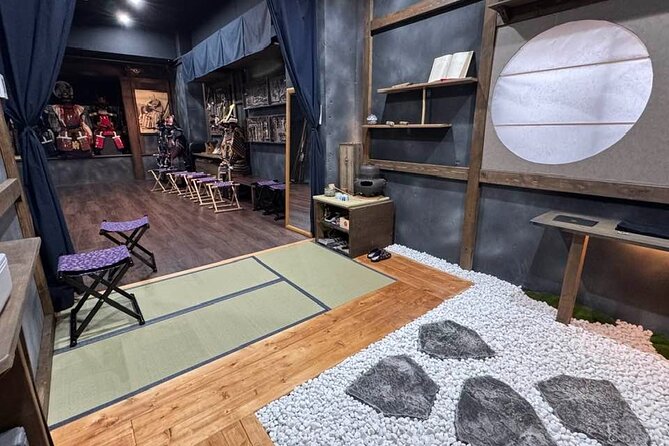
This experience is built around one idea: you learn ninja and samurai basics through what the dojo calls training, not performance. You’re in a traditional clan space in Asakusa, guided by the 19th-generation Musashi Clan Daihyo, so you feel the weight of lineage and routine. It is hands-on, but it stays grounded in discipline, posture, and safe handling.
I especially like how the session connects body and mind. You practice stances, breathing, awareness, and even the kind of mental quiet that martial arts people chase for years. The result is that you leave feeling like you learned something real, even if you are a total beginner.
This is also one of those Tokyo activities that works across ages. The session is designed for kids and adults alike, and the group size stays small enough that everyone gets a turn.
More Samurai & Ninja Sessions in Tokyo
- Tokyo: Samurai Restaurant Show Ticket with 2 Drinks
★ 4.5 · 1,307 reviews - Tokyo: Samurai Ninja Museum Guided tour and Experience
★ 4.6 · 1,010 reviews - Tokyo: Samurai Sword & Archery Class from Samurai Descendant
★ 5.0 · 603 reviews
Where You Meet and How to Not Get Lost Upstairs
Your start point is at MUSASHI JAPAN in Taito City, Matsugaya, 3-chōme. The address is listed as: Tokyo, 111-0036, Taito City, Matsugaya, 3-chōme 113 合羽橋 Mets 八番館 F3.
That floor detail matters. People have found it tricky to spot because it is on the third floor above a knife shop. My practical advice: arrive a bit early, scan for the correct building, and don’t hesitate to ask outside. The guide is there to help you connect to the group.
Also note you do not get hotel pickup or drop-off. This is very doable using public transportation, but you will want to plan the last few minutes on your own.
The 90-Minute Flow, From Meditation to Movement
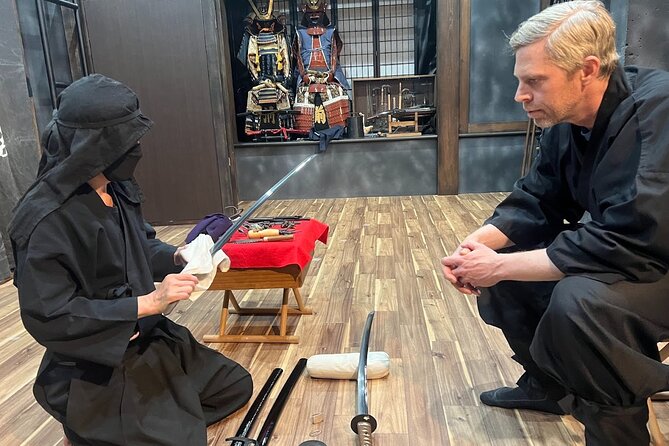
The session runs about 90 minutes, and the format stays clear from start to finish: meditation and instruction, demonstration, hands-on drills, then photos and Q&A.
Here is the rhythm you can expect.
Opening meditation and instructor demonstration
You begin with an opening meditation, then you watch an instructor demonstration. This is not long and stiff. It is meant to set your body and attention before you start moving.
The dojo guide and a translator support the group the whole time. In reviews, people often single out the interpreter teamwork, including a guide named Vanessa and her colleague. That matters because you are not just copying motions. You understand why they do the motions, and what each tool or drill is for.
More Samurai and Ninja sessions in Tokyo:
- Ninja+Kabuki Tokyo
★ 4.5 · 512 reviews - Skip the lines Basic Ticket at SAMURAI NINJA MUSEUM TOKYO
★ 5.0 · 470 reviews - Best Samurai Experience in Tokyo
★ 5.0 · 458 reviews - Tokyo: Legend Samurai Entertainment Night in Kanda Shrine
★ 4.6 · 367 reviews
Hands-on training: stances, awareness, and safe weapon handling
Next comes the core training: stances, breathing, awareness, and safe weapon handling. The “safe handling” part is important. This is a workshop where you practice how to hold and stand, and where the instructors keep the energy disciplined.
If you are traveling with kids, this is also where you’ll see the session’s family friendliness. Kids still get hands-on, but the pace stays structured.
Namba Walk and Stealth Steps, the Ninja Part You Can Actually Use
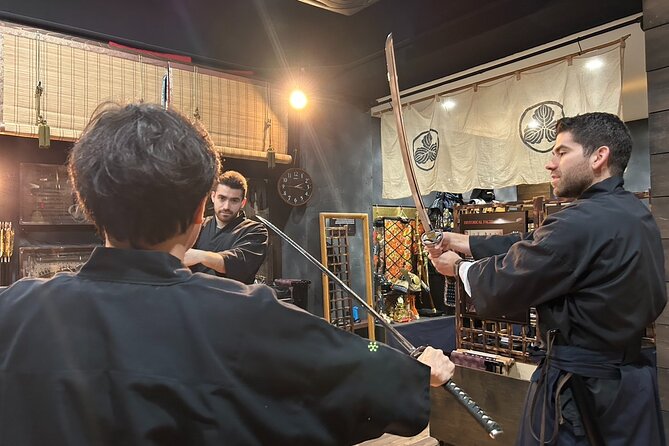
One of the most fun parts is the walking training: Namba (Shinobi Samurai Walk) plus stealth steps. This is classic martial arts basics translated into something you can do in a limited space.
The goal is not cinematic sneaking. The goal is control. You practice posture and movement, then refine it into something quieter and more intentional. It is the kind of drill that sounds simple but feels surprisingly hard once you try it.
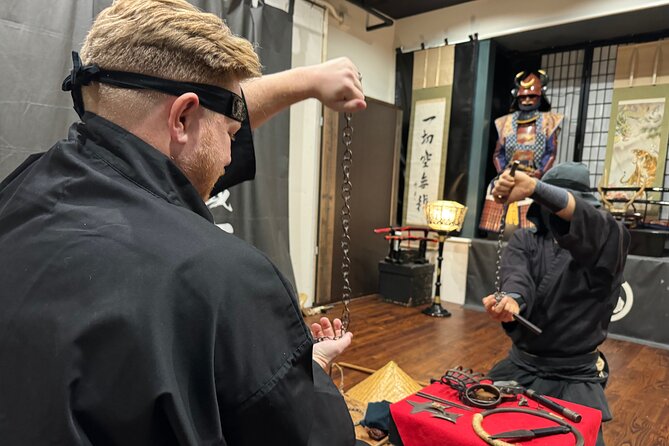
Some participants also describe a blindfolded ninja walk exercise. That is not the whole session, but it fits the theme of heightened awareness and calm focus. It also explains why the dojo spends time on breathing and attention before tools come out.
If you like martial arts movies, you’ll probably think you know what stealth looks like. This teaches you what stealth feels like when your body is aligned and your mind is quiet.
Shuriken Throwing: More Mind Game Than Movie Action
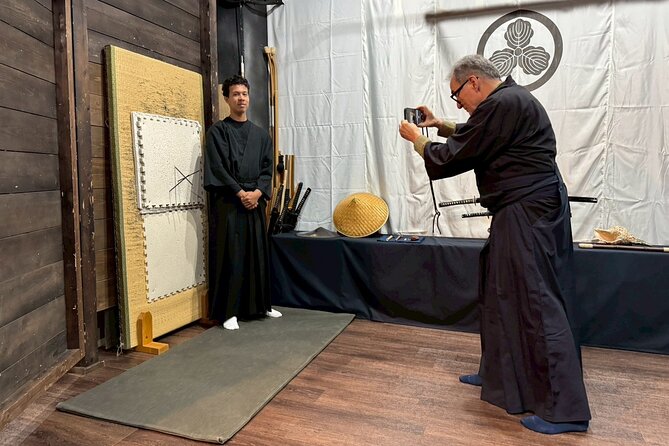
Then you get to shuriken throwing. Yes, you throw ninja stars. But the dojo frames it as more than aiming practice.
The purpose is concentration. You practice mental focus, with the idea that ninja training tries to keep your mind silent. That changes the vibe. Instead of rushing toward a “cool moment,” you slow down, breathe, and aim with control.
It’s also where you start to notice the difference between this and the usual sword-for-tourists style activity. Here, the drill is explained as training, and you do it that way.
Also, the session includes an introduction to handmade shinobi tools and weapons. Reviews mention that some groups handle other tools too, such as blow darts. The key takeaway for you is that you are not just seeing props. You are learning how they fit into a shinobi tool kit and what the instructors want you to practice.
Samurai Sword Basics, Including the Idea of Winning Quietly
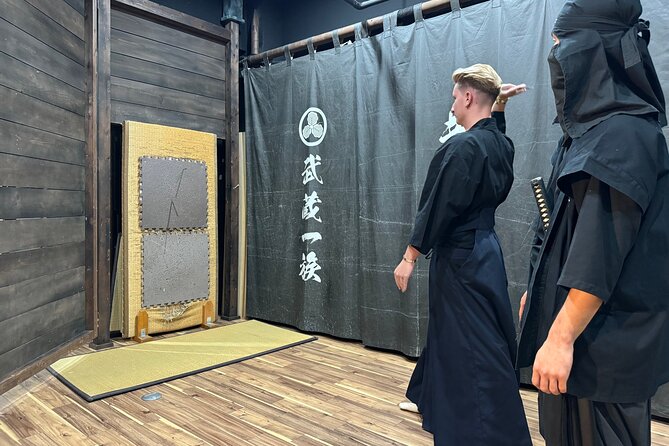
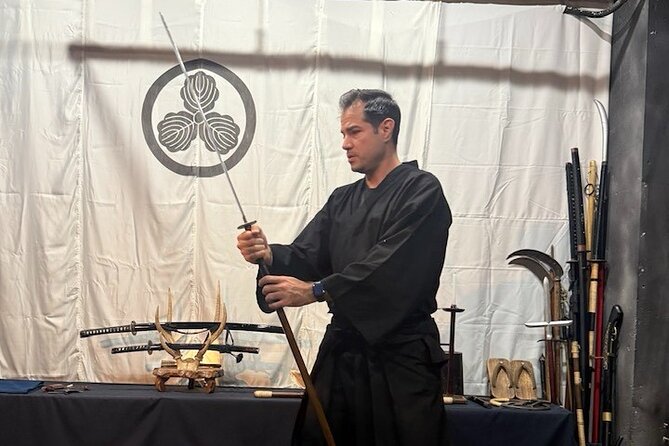
Sword time is a highlight, and it is taught in a beginner-friendly way. You learn how to hold and stand, and how to draw a sword safely as taught in the dojo.
One line in the session description really sticks: the ultimate goal of swordsmanship is to win without drawing a sword. That is more than poetry. It’s a training philosophy that pushes control, awareness, and restraint.
So if you expect wild sword swings, plan on something more disciplined. You get foundational movement and handling, and the instruction emphasizes posture and correct technique. It is hands-on enough to feel exciting, but it avoids the chaotic “try this and hope” feeling you sometimes get in casual demos.
If you have teens who love action scenes, this part can land big. If you have kids, the step-by-step structure helps them stay engaged while still learning safety.
Meditation, Kujikiri, and the Moment You Feel the Culture
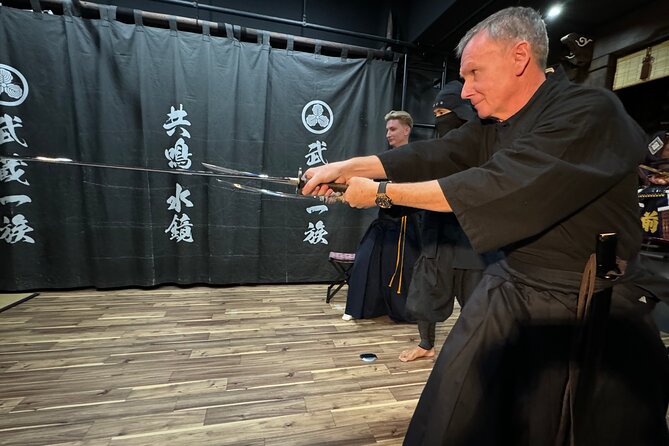
Between the movement drills and the photo session, you also do short meditation and Kujikiri. The session does not treat this as filler. It is part of the training logic: you practice focus, move with control, and then reset again.
This is where the experience shifts from “fun class” into “cultural ritual.” You are not just collecting photos. You’re learning how a dojo frames training as a mental state.
Even if you do not know Japanese martial arts terms, you can feel the intent because the instructors explain what they are doing and keep the flow calm.
Photo Time and Q&A, the Fun Finale With Real Answers
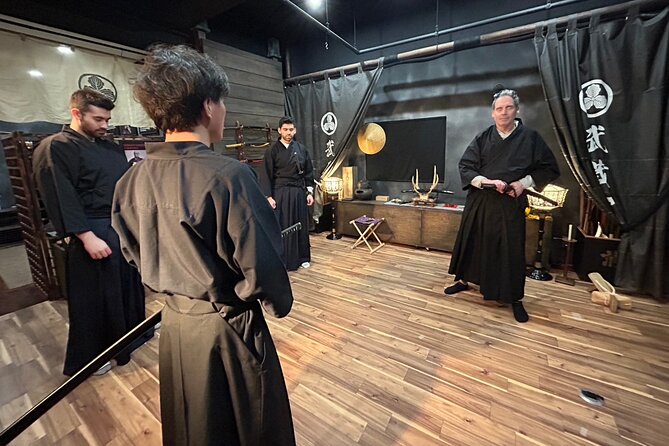
At the end, you get photo time and a 10-minute Q&A. You also get a chance to strike your best ninja pose in full dojo atmosphere.
This is more than a quick snapshot. You have time to ask questions, clarify what you practiced, and connect the dots between the drills and the philosophy. That is also where the interpreter support really helps. You can ask follow-ups without guessing.
Many families love this part because it becomes a structured, memorable finale rather than an awkward “okay, let’s take a photo” scramble.
Price and Value: Is $167.15 Worth It?
At $167.15 per person for a 90-minute, small-group dojo session, this is not the cheapest thing in Tokyo. But it is also not a generic performance.
You are paying for:
- Direct clan-led instruction from the Musashi dojo leadership
- Hands-on training with real tools and safe weapon handling guidance
- Interpreter support throughout
- A full experience structure that includes meditation, drills, and dojo photos
Demand also seems strong. The experience is often booked about 47 days in advance, so it is smart to plan early if your dates are firm.
If you value authentic instruction, family-run atmosphere, and hands-on practice over big-city spectacle, the price starts to make sense. If your goal is only casual entertainment, you might decide to spend elsewhere. But if you want to leave with technique and context, this feels like a fair trade.
And one practical plus for planning: the experience offers free cancellation up to 24 hours before the start time.
Who This Workshop Suits Best
This is ideal if you:
- Want a real dojo setting in Tokyo, not a movie-stunt session
- Travel as a family, with kids who still enjoy hands-on activities
- Like martial arts culture, and you enjoy learning why motions matter
- Want something interactive where the guide explains history and purpose along the way
It is also a good fit for martial arts fans who want an approachable introduction. The session is built for beginners, but it does not feel watered down.
Should You Book It?
If you are looking for the kind of Tokyo activity that feels specific and grounded, I think you should book it. The big strengths are the real clan dojo atmosphere, the small-group attention, and the fact that you practice training basics rather than doing a scripted sword photo.
The only real hesitation I see is logistical, the meeting spot is on the third floor above shops, so you need a little patience finding the exact location. If you can handle that, you will likely end the session with both fun memories and actual training takeaways.
FAQ
How long is the session?
The hands-on experience lasts about 90 minutes.
How many people are in the group?
The tour/activity has a maximum of 6 travelers.
Where do we meet?
You meet at MUSASHI JAPAN, Tokyo 111-0036, Taito City, Matsugaya, 3-chōme 113 合羽橋 Mets 八番館 F3. The activity ends back at the meeting point.
Is there an interpreter during the class?
Yes. An online interpreter is included, and instruction is supported with an interpreter during the session.
What is included in the experience?
Included items include the interpreter and a Shinobi Samurai black belt instructor. The session itself includes activities like wearing Samurai hakama trousers, opening meditation, instructor demonstration, weapon introductions, stealth steps, shuriken throwing, sword practice, short meditation and Kujikiri, plus photos and Q&A.
Can children participate?
Yes. Children under 12 may participate when accompanied by a participating guardian.
Is there a fee for spectators?
Yes. Spectators pay 2750 yen, and it is paid upon entering the dojo.
Is private booking available?
Yes. A private session option is available for up to 12 guests for a fee of ¥16,500 for the entire group.
What is the cancellation policy?
You can cancel for a full refund up to 24 hours before the experience’s start time. If you cancel less than 24 hours before, the amount paid is not refunded.
Newly listed around Tokyo
- Hitachi National Seaside Park`s Flowers & Ashikaga Flower Park★ 4.5 · 15 reviews
- Holiday Lights Walk Tour Hibiya Midtown Tokyo Station Marunouchi★ 5.0 · 6 reviews
- Tsugaru shamisen performance over traditional dinner★ 5.0 · 9 reviews
- Tokyo Family Photoshoot — Private & Authentic Experience★ 5.0 · 8 reviews
- Highlights of Japan Tour: 10-day Small Group★ 5.0 · 14 reviews
- Hide’s Table A Unique Dinner Gathering Every Wednesday Night★ 5.0 · 20 reviews
- Tokyo: Private Transfers to/from Narita Airport(NRT)★ 3.5 · 23 reviews
- Haneda Layover tour of 5hours with local Japanese guide by car★ 5.0 · 26 reviews
Samurai Sword & Ninja Training, compared.

Samurai Ninja Museum Guided tour and Experience
Read our review →
Kendo and Samurai Experience with Uniform and Gear
Read our review →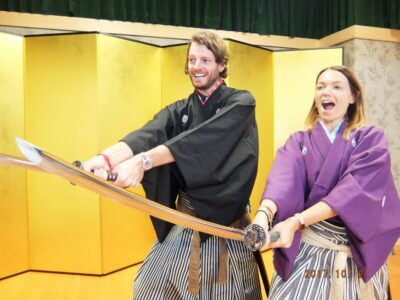
Samurai Sword Class by Experts in Traditional Arts
Read our review →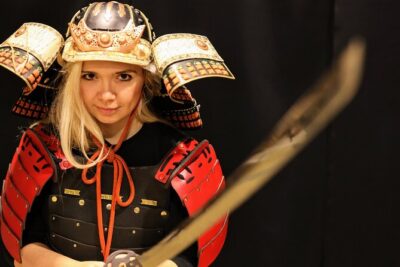
Skip the lines Basic Ticket at SAMURAI NINJA MUSEUM KYOTO
Read our review →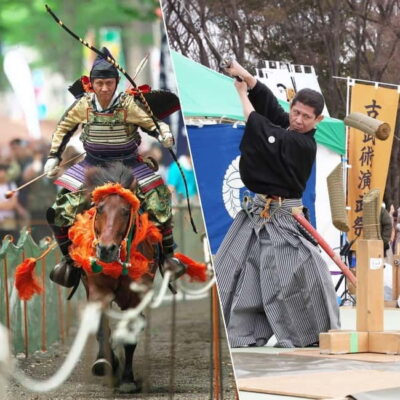
Samurai Sword & Archery Class from Samurai Descendant
Read our review →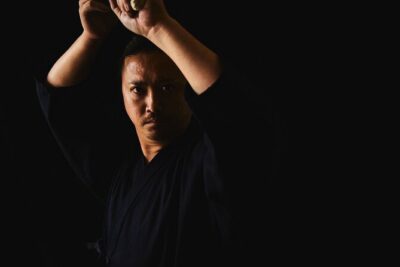
Browse the lists this tour appears in