
Review · LICENSED GUIDES & PRIVATE DRIVERS
Tokyo Baseball Experience Tour with Expert English-Speaking Guide
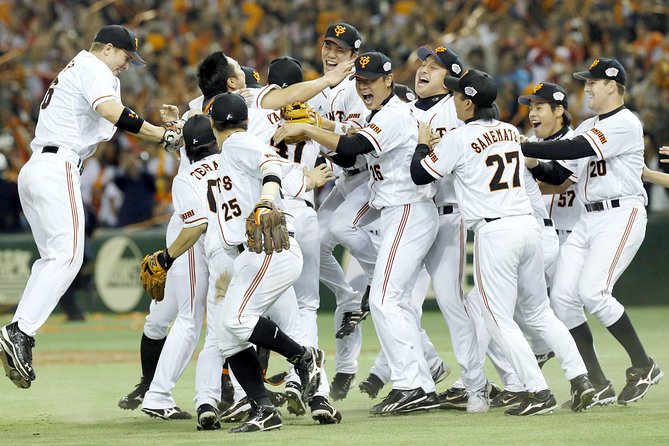
Chants can change how you watch baseball. In this small-group Tokyo Baseball Experience, I like that you do not just buy a ticket and hope you understand the noise. You learn the rhythm of Japanese baseball fan culture, with chants and anthems explained by an English-speaking guide, then you join in before the first pitch.
Two things I really like: the included seat ticket (S, A, or B, depending on availability) and the clear, guided game context through an audio headset. The one possible drawback is timing. The tour ends when the game starts, so you might not have as much time as you want to wander the stadium before first pitch.
In This Review
- Key takeaways before you go
- Where Meiji Jingu Baseball Stadium fits into Tokyo
- Your seat choice: what S, A, and B mean in real life
- The pre-game part: chants and anthems you can actually join
- How the tour schedule works (and why it feels short)
- English audio headset: how it keeps you from missing the plot
- The game experience: what you will feel in the stands
- Food and drinks at the stadium, what to plan for
- Group size and tour feel, why small helps
- Price value: what you get for about $98
- Weather reality check: open-air stadium, rain rules
- Who should book this tour (and who might not love it)
- Should you book Tokyo Baseball Experience at Meiji Jingu Stadium?
- FAQ
- Does the tour price include admission to the baseball game?
- What seat options do I get for the game?
- Is food provided during the tour?
- How long is the experience?
- What if I arrive late?
- What happens if it rains?
Key takeaways before you go
- Meiji Jingu Baseball Stadium is the whole show, and your seat choice matters (S, A, or B).
- Learn chants and anthems first, so the stands make sense instead of just being noise.
- Audio headsets help you catch the guide’s explanations clearly, in English.
- You get a ticketed game entry, not a “viewing only” experience, with admission included.
- Small group size (up to 12) keeps it personal enough to ask questions.
- The tour runs about 4 hours, but the game is the main event (around 3 hours).
Where Meiji Jingu Baseball Stadium fits into Tokyo
Meiji Jingu Baseball Stadium sits in a part of Shinjuku that is easy to reach using public transportation, which is exactly what you want for a half-day activity. This venue is open-air, so the weather plays a bigger role than it does at indoor stadiums. That is part of the charm, but it also means your plan is tied to match conditions.
The big practical win is that the experience is built around a real game day. You are not doing a museum-style baseball talk and then leaving. You are learning how Japanese fans sound and move, then you get to experience it live.
More Private Guides in Tokyo
- Tokyo 6hr Private Tour with Government-Licensed Guide
★ 5.0 · 3,902 reviews - Tokyo 4hr Private Tour with Government-Licensed Guide
★ 5.0 · 1,394 reviews - Tokyo Private Sightseeing Tour by Car- English speaking chauffeur
★ 5.0 · 1,004 reviews
Your seat choice: what S, A, and B mean in real life
You get admission plus a seat in Meiji Jingu Stadium, chosen from S, A, or B seats. The tour does not promise a specific seat category in advance, because it depends on availability. Still, the categories are clearly defined enough that you can picture what you will see.
- S Seats: right behind the batter, in the heart of the action. If you love pitch-by-pitch baseball, this is the most direct angle.
- A Seats: behind first and third base, with a view of the entire field and the bench area. This is a good all-around option if you want to watch both the action and the storytelling of the dugout.
- B Seats: behind the foul pole, great for seeing outfielder play. If you like tracking balls in the gaps and deep in the outfield, this can be satisfying.
Why this matters: Japanese baseball is not only about what happens on the field. It is also about the tempo of the crowd, the call-and-response energy, and the way players react. Better sightlines make it easier to follow all of that without craning or guessing what you missed.
The pre-game part: chants and anthems you can actually join
The heart of this tour is what happens before first pitch. In a small group, your English-speaking guide explains what makes Japanese baseball fan culture unique, and you learn the chants and anthems created by Japanese supporters. Then you practice them with the group so when the stadium gets loud, you are not standing there going, what is this?
This is one of those experiences where being in the stands changes everything. You are hearing the crowd at full volume, not through a broadcast. The guide’s job, paired with the audio headset, is to help you understand what you are hearing and why it matters.
Also, the guide highlights differences between Japanese baseball and MLB. I like this approach because it gives you a framework. Even if you are an MLB fan, you are not just looking for similarities. You start noticing what is different: how fans express support, how the atmosphere is organized, and how the game feels as a local event.
How the tour schedule works (and why it feels short)
The tour is about 4 hours, but it is not a “show up and stay the whole afternoon” situation. The game itself can last about three hours, and the tour ends when the game commences. In other words, the guiding and prepping time is tied tightly to getting you ready to be part of the crowd.
That structure has a couple effects:
- You get focused learning time up front.
- You spend most of your hours watching baseball, which is the point.
The trade-off is exactly what one of the ratings hinted at. If you were hoping to arrive super early and experience the stadium build-up, this may not give you that extra buffer. You will still watch the game from a ticketed seat, but your pre-game exploration time is limited by the way the tour is timed.
A different sort of day in Japan:
- Mt Fuji and Hakone 1-Day Bus Tour Return by Bullet Train
★ 5.0 · 26,383 reviews - 1-Day Tokyo Bus Tour
★ 5.0 · 14,250 reviews - Tokyo: TOKYO SKYTREE® Admission ticket
★ 4.5 · 11,192 reviews - Tokyo: teamLab Planets TOKYO Digital Art Museum Entry Ticket
★ 4.6 · 9,779 reviews
English audio headset: how it keeps you from missing the plot
You are given an audio headset so you can hear the guide clearly while you are listening and walking around before the game. In practice, this is a big deal in Tokyo where public spaces can be noisy and your attention is split between the crowd, directions, and context.
With the headset, you are less likely to miss key explanations. You can follow the history and culture talk, and you can also understand the guide’s comparisons between Japanese baseball and MLB. If you are the kind of person who likes to understand what you are seeing, this kind of audio support makes the whole half-day feel intentional.
The game experience: what you will feel in the stands
Once the game starts, the experience becomes very simple: you are in the stadium, in your assigned seat, watching live baseball while Japanese fans do what Japanese fans do best, create a shared rhythm.
Because you learned chants and anthems beforehand, you are more likely to join in naturally. That is not just fun. It also changes how you experience the momentum of the game. You start noticing when the crowd rises, when it settles, and how that energy syncs with key moments.
The guide’s earlier explanation also makes it easier to connect the crowd behavior to the game. Instead of watching only the ball and pitch sequence, you can also track how support builds around plays, matchups, and player moments.
Food and drinks at the stadium, what to plan for
Food is not included in the tour price. That said, you are not going to starve in an open-air stadium with concession stands. Snacks, drinks, and merchandise are available for purchase at the stadium stands.
My practical advice: if you think you will want a full meal, plan to eat before you arrive or after the tour. For game time, I’d treat purchases as optional add-ons. The tour is designed around the game and the cultural prep, not around providing food.
If you want to buy snacks during the game, bring cash or be ready to use whatever payment methods are available at the stands. The tour itself does not include any meal stops.
Group size and tour feel, why small helps
This is a join-in group experience with up to 12 travelers, and it needs a minimum of 8 bookings to operate. Small groups are the difference between learning something and getting lost in a crowd.
With a group this size, you are more likely to stay together without constantly checking the person ahead of you. That matters when you are trying to prepare your reactions for chants and anthems. It also helps if you have questions about the differences between Japanese baseball and what you already know from MLB.
Price value: what you get for about $98
At $98, you are paying for more than just a ticket. You get:
- An English-speaking guide
- A baseball seat ticket in the stadium (S, A, or B category)
- Audio headset support
- Service fee and tax
- A game admission included with the tour
If you tried to do this alone, you would still need to solve the basics: picking seats, navigating to the stadium, and figuring out the fan culture details without language support. This tour bundles that work into one clear plan.
So where does the value come from? It comes from understanding the game atmosphere. A seat gets you the baseball. The guide, chants, and headset get you the meaning behind the noise. That is what turns an ordinary game outing into a real Tokyo baseball experience.
Weather reality check: open-air stadium, rain rules
Because Meiji Jingu Stadium is open-air, your match depends on rain conditions. Heavy rain on your tour date cancels the match, and you get a full refund. Light rain usually means the game proceeds as scheduled.
One more practical note: if the match is ongoing and rain starts unexpectedly, no refund will be provided. So you are looking at a best-effort plan, not a guaranteed indoors experience.
Bring a small umbrella if you have one, and wear shoes you trust on wet walkways.
Who should book this tour (and who might not love it)
I think this tour is best for:
- You are a baseball fan, especially if you follow MLB and want to see how the culture changes the game
- You want an English guide so you can understand the chants, anthems, and baseball comparisons without guessing
- You like small-group experiences where you can hear the guide clearly and join in
It might be less ideal if:
- You want lots of time before first pitch to explore the stadium on your own
- You prefer zero structure and do not want to learn chants or listen to explanations before the game
Should you book Tokyo Baseball Experience at Meiji Jingu Stadium?
Yes, if you want a game that feels like part of Tokyo’s everyday culture, not just a tourist stop. The standout value is the combination of included seats, English guidance, and the prep for chants and anthems, which gives you something to do and understand before the action starts.
Book it if you will actually use the headset, and if you are curious about how Japanese baseball fandom sounds and moves. If you are mainly chasing a quiet, purely spectator approach, you may prefer a simpler ticket purchase. But for most MLB fans, or anyone who likes sports culture, this is a smart way to spend a half-day in Tokyo.
FAQ
Does the tour price include admission to the baseball game?
Yes. Baseball seat ticket admission is included in the tour price.
What seat options do I get for the game?
Your seat is booked as one of these options depending on availability: S Seats (right behind the batter), A Seats (behind first and third base with a good view of the field and bench), or B Seats (behind the foul pole with a good view of outfielder play).
Is food provided during the tour?
No. Food is not provided, but snacks, drinks, and merchandise are available to purchase at the stadium stands.
How long is the experience?
The tour is about 4 hours. The game can last about three hours, and the tour ends when the game begins.
What if I arrive late?
Try to arrive at least 10 minutes early. Because it is a group tour, they may not be able to wait. You can meet the group at the next location using the tour guide’s phone number.
What happens if it rains?
If there is heavy rain, the match may be canceled and you receive a full refund. If it is light rain, the match proceeds as scheduled. If the match is already ongoing and rain starts unexpectedly, no refund is provided.
Newly listed around Tokyo
- Enjoy Mt. Fuji View and free time shopping at Gotemba Outlets!★ 4.0 · 15 reviews
- the SUMO show with Dinner★ 5.0 · 38 reviews
- Asakusa: 2-hour history exploration★ 5.0 · 32 reviews
- Bullet Train Experience & Mishima Shrine Private Tour from Tokyo★ 5.0 · 9 reviews
- Let’s experience calligraphy in YANAKA, Taito-ku, TOKYO !!★ 5.0 · 127 reviews
- Calligraphy Experience at Tokyo Ginza and Tsukiji Area★ 5.0 · 17 reviews
- Ninja Lesson in Tokyo – 1 Hour Hands-On with Japanese Master★ 5.0 · 52 reviews
- 10-Day Private Tour with more than 60 Attractions in Japan★ 5.0 · 6 reviews
Licensed Guides & Private Drivers, compared.
Tokyo 6hr Private Tour with Government-Licensed Guide
Read our review →
Kyoto Early Morning Tour with English-Speaking Guide
Read our review →
Tokyo 4hr Private Tour with Government-Licensed Guide
Read our review →
Kyoto 6hr Private Tour with Government-Licensed Guide
Read our review →
Hiroshima / Miyajima Full-day Private Tour with Government Licensed Guide
Read our review →Early Morning Tour with English-Speaking Guide
Read our review →
Tokyo Private Sightseeing Tour by Car- English speaking chauffeur
Read our review →
Mt Fuji Private Tour with English Speaking Driver
Read our review →Browse the lists this tour appears in