
Review · HISTORICAL TOURS
Asakusa: 2-hour history exploration
Asakusa feels like Tokyo in slow motion. This 2-hour guided history walk hits the biggest sights with context, so you know what you are looking at.
I especially liked the headsets, which make a busy street feel manageable, and I liked the way the route mixes temples, gates, and everyday shopping. You also get small wins along the way, like snack stops and explanations that make the landmarks click fast.
One possible drawback: it packs a lot into a short window, so if you want long linger time at Senso-ji, you may wish you had extra hours after the tour.
In This Review
- Key takeaways before you go
- Why Asakusa is perfect for a 2-hour history walk
- From the Sumida River to iconic Tokyo skyline views
- Asakusa Culture Tourist Information Center, your route in one view
- Kaminarimon Thunder Gate, what that lantern really means
- Nakamise Shopping Street: souvenirs, snacks, and the 250-meter walk
- Hozomon Treasure-House Gate and the quieter temple details
- Inside Senso-ji: what to do before you pray
- Asakusa Shrine: Buddhism and Shinto together in one place
- Guides that make the difference: English clarity and real questions
- Pace, group size, and what 2 hours really means
- Price and value: why $64.55 can feel fair
- Where the tour ends, and how to keep your day going
- Who should book this Asakusa tour (and who should DIY instead)
- Should you book this 2-hour Asakusa history tour?
- FAQ
- How long is the Asakusa history exploration tour?
- Where does the tour start, and what time does it begin?
- Where does the tour end?
- What are the main stops on the route?
- Is admission included for the sights you visit?
- What is included in the price?
- Does the tour provide tickets on your phone?
- Is hotel pickup included?
- Is there free cancellation?
Key takeaways before you go
- 2-hour format means you get the essentials without losing half your day to transit and walking
- Headsets on the street help you hear the guide clearly even when it is crowded
- Senso-ji rituals explained so you know what to do at the incense and fortune steps
- Nakamise Shopping Street with snack guidance cuts through the chaos of stalls and souvenir choices
- Certified local guide in English with the kind of stories that connect the places
- A small group size (max 20) keeps it easy to ask questions and stay together
Why Asakusa is perfect for a 2-hour history walk
Asakusa is one of the few Tokyo neighborhoods where you can still feel old routines at street level. The trick is not just seeing buildings, it is understanding why they are there and how the area grew around them.
In a short tour like this, a good guide is the difference between sightseeing and actually getting the place. You will move at a leisurely walking pace, but with a plan that keeps you pointed at meaning, not just photos.
More History Tours in Tokyo
- Tokyo: Imperial Palace Japanese History Walking Tour
★ 4.9 · 987 reviews - Yanaka Walking Tour: Historic and Traditional District of Tokyo
★ 5.0 · 530 reviews - Tokyo: Shinjuku Historical Walking Tour & Secret Backstreets
★ 5.0 · 530 reviews
From the Sumida River to iconic Tokyo skyline views
You start near the Sumida River, the area where Asakusa’s story begins. You cross by Azumabashi Bridge and take in skyline landmarks, including Tokyo Skytree and the Asahi Breweries headquarters with its famous golden flame object.
This first stop matters because it sets the geography. Tokyo’s waterways shaped travel, commerce, and neighborhood growth, so getting your bearings early makes the rest of the walking feel logical, not random.
The good news: this section is quick and low-stress, about 15 minutes, so it is an easy warm-up even if you are still finding your feet in Tokyo.
Asakusa Culture Tourist Information Center, your route in one view
Next you stroll to the Asakusa Culture Tourist Information Center, a newer stop that doubles as a sightseeing preview. The building is designed to look like a stack of separate wooden structures, angled as if they are piled in layers.
If you can, use the terrace observation deck on the 8th floor as your “map moment.” From there, you can preview key landmarks you will see later, including Kaminarimon gate, Nakamise Shopping Street, Hozomon gate, and Senso-ji Temple. Seeing the route from above helps you follow the area like an insider afterward, especially if you plan to continue exploring on your own.
Another small plus: the entrance here is free, so you do not lose time on ticket math.
Kaminarimon Thunder Gate, what that lantern really means
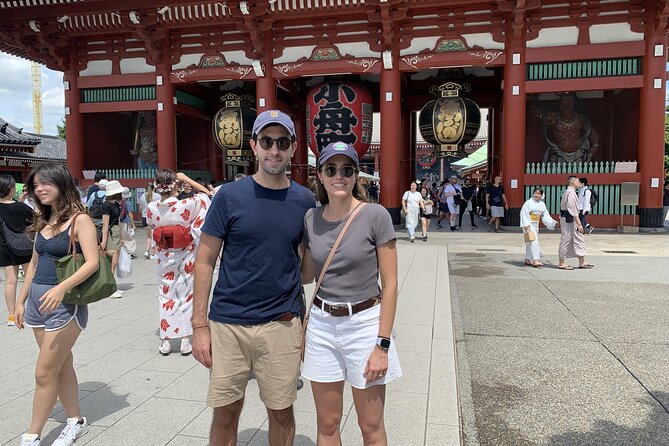
At Kaminarimon, you get the classic Asakusa arrival scene. The gate, called Kaminarimon or Thunder Gate, is known for its huge red lantern and the statues around it.
What makes this stop worthwhile is that you are not left guessing. Your guide explains what you are looking at, including how the lantern and surrounding elements fit into the temple approach. That one explanation can save you from spending your whole visit trying to figure out what is ceremonial and what is just decorative.
This stop is also timed well, around 15 minutes, so you can enjoy the photo moment without turning it into a traffic jam.
A few more Tokyo days to weigh up
- Mt. Fuji Heritage Tour: Traditional Villages, Lakes & Shrine
★ 4.5 · 509 reviews - From Tokyo: Nikko World Heritage Site Private Full-Day Trip
★ 4.9 · 243 reviews - Tokyo: The Best of Izakaya in Shinjuku Food & Cultural Tour
★ 4.9 · 221 reviews - Asakusa: 1400-year history exploration
★ 5.0 · 155 reviews
Nakamise Shopping Street: souvenirs, snacks, and the 250-meter walk
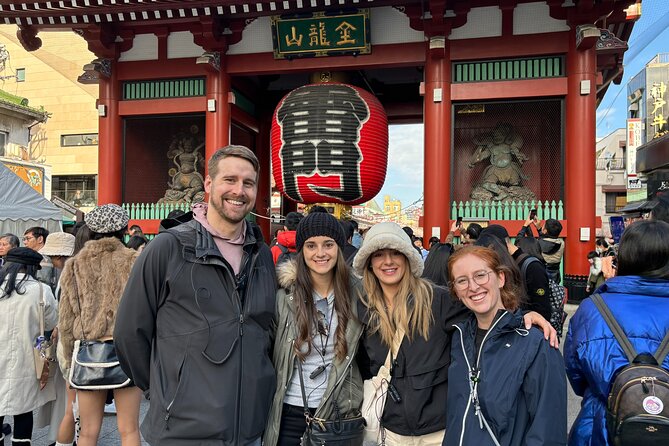
From Kaminarimon, you walk into Nakamise Shopping Street, a 250-meter approach packed with food stalls and souvenir shops. It is the kind of street where you can easily get overwhelmed if you go in without a plan.
Your guide helps you navigate it in a practical way, including where to buy souvenirs you actually want. You will also get traditional snack sampling as part of the tour, and the guide may adjust where they pick snacks based on your preferences.
As a traveler tip: use this part of the tour to decide what kind of souvenir you want before you buy. You will see a lot of similar-looking items, and having a local point you toward good options makes your money feel less like a gamble.
Toward the end of the street, you will notice history tablets along the side that show how Asakusa developed around Senso-ji. That detail is useful because it turns the shopping strip into a timeline you can follow, not just a corridor of stalls.
Hozomon Treasure-House Gate and the quieter temple details
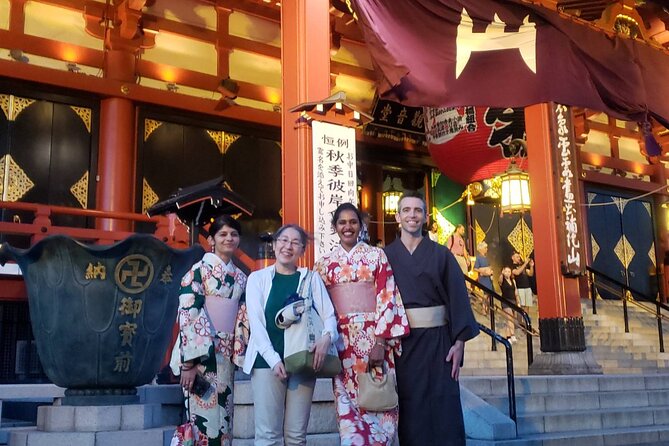
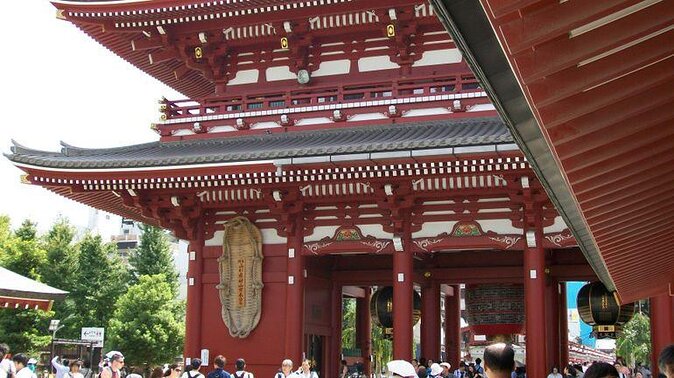
After Nakamise, you reach Hozomon, the inner gate leading into Senso-ji. It is a two-story structure, and the second story houses many of Senso-ji’s treasures.
Up close, you can also spot ceremonial statues, lanterns, and large sandals displayed at the first story. This stop is shorter, around 15 minutes, but it sets you up for how much craft and ritual are built into the temple approach.
If you tend to rush, slow down just a bit here. Hozomon is the “pause” before you enter the main temple areas.
Inside Senso-ji: what to do before you pray
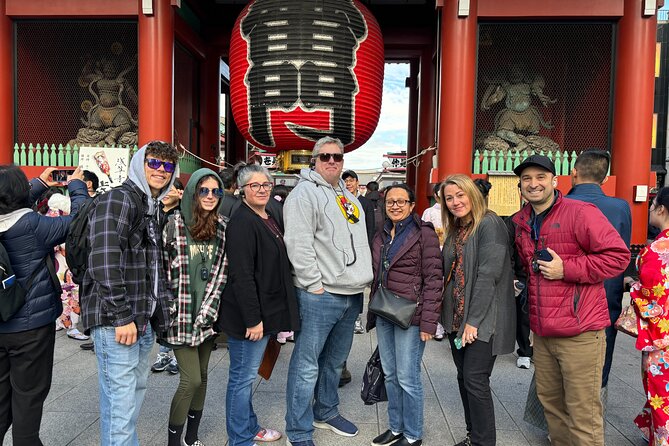
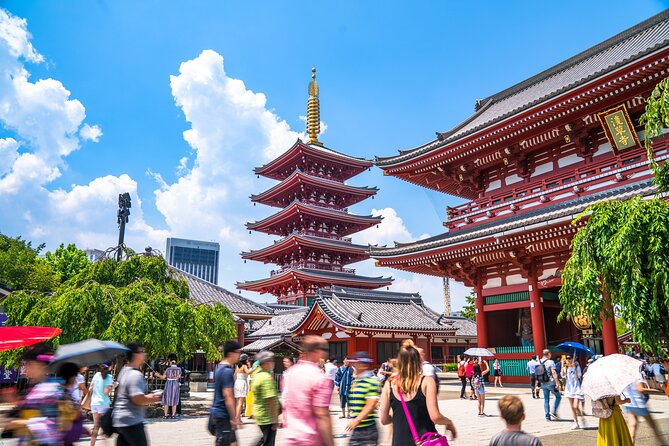
Senso-ji is the big one, and the tour helps you slow down at the right moments. Between Hozomon gate and the main hall, you see several key features, including the Five-storied Pagoda, which is 53 meters high and described as the second highest pagoda in Japan.
The tour also points out that the pagoda’s top floor holds Buddha’s ashes given by the Sri Lankan government. Even if you only remember one fact from the entire visit, this kind of detail makes the site feel connected to a larger world, not just local scenery.
Before you head into the main hall, you get three major things to do, with a guide explaining each:
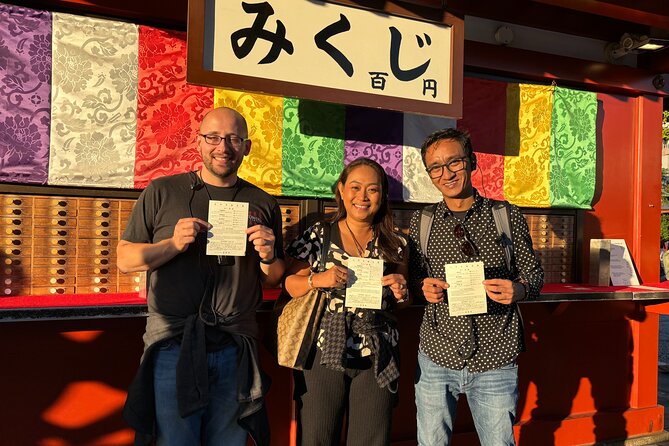
- Draw omikuji, paper fortunes to get a snapshot of what might be ahead
- Participate in the incense ritual, where many people bathe their hands and faces with smoke before climbing stairs to offer prayers
- Use the water purification fountain to cleanse yourself before entering
This is the part I like most on tours like this. You are not handed a checklist, you are told why these steps exist and what they mean in practice. It turns a tourist stop into a respectful, hands-on cultural moment.
Asakusa Shrine: Buddhism and Shinto together in one place
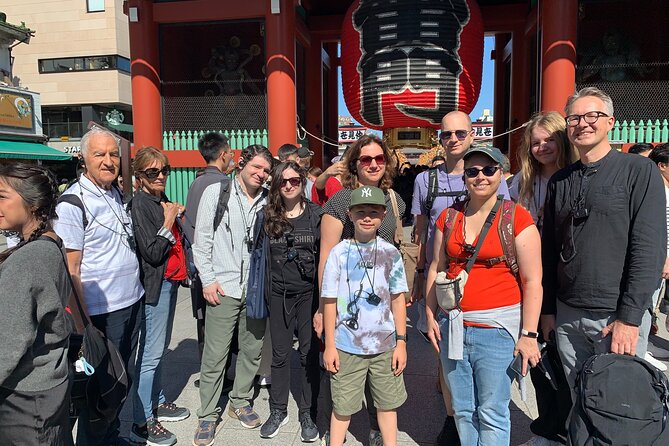
Right after Senso-ji, you visit Asakusa Shrine. This is where the story takes an interesting turn because it is not just one religious space. Buddhism and Shinto share the same area, with intertwined origins and worshippers.
Your guide explains why that coexistence happens and how it shows up in everyday life. That context is helpful, especially if you are the type who wants the “why” behind cultural scenes, not just the “what.”
This stop is also about 15 minutes, which keeps the pace steady while still giving the shrine space to be more than an afterthought.
Guides that make the difference: English clarity and real questions
This tour runs with a live local guide, and it is set up for listening. Headsets are included for groups of 3 or more, so you do not have to strain your ears when foot traffic gets heavy.
The guide approach matters, and it shows in the names people mention, like Choco, Yasu, and Amy. They are praised for clear English, friendly explanations, and for answering questions without making you feel awkward.
I also like that the tour is structured enough to cover major landmarks, but flexible enough that your preferences can influence the snack picks. Some departures even add a small extra like an origami lesson at the end, which turns the last few minutes into a fun take-home moment.
Pace, group size, and what 2 hours really means
The tour is about 2 hours and designed for active but relaxed walking. With a maximum of 20 people, you should not feel like you are getting swallowed by a huge crowd, and you can usually keep track of where everyone is going.
Still, you are moving through several high-demand areas. Expect short stops, quick photo chances, and enough time to do the ritual steps at Senso-ji before heading along. If you love slow travel and plan to linger at stalls, treat this as a strong sampler that you can build on later.
Price and value: why $64.55 can feel fair
At $64.55 per person, this is not a bargain-basement tour, but the value is pretty practical. You pay for a certified English-speaking guide, live interpretation, and the headset setup when your group qualifies.
You also get a route where multiple stops are free to enter, at least for the parts listed (like the Sumida River viewing, the tourist information center, and the temple areas on the walking route). That matters in Tokyo, where small tickets add up quickly when you stack sights.
What you do not get is hotel pickup, so you should plan to reach the meeting point yourself. For many people, that is a fair trade because it keeps the tour simple and on schedule.
Where the tour ends, and how to keep your day going
The walk ends near Saryō Ichimatsu, listed as the restaurant where a geisha activity is held. In other words, you are finishing in an area that makes it easy to continue your evening plans without backtracking.
If you want more temple time, Senso-ji is the natural place to add extra minutes. If you want more shopping, Nakamise is a good loop to revisit after the tour so you can buy without feeling rushed.
Who should book this Asakusa tour (and who should DIY instead)
I think this is ideal for first-time visitors to Asakusa who want the key sights plus context in a short window. If you are traveling with limited time, the 2-hour format helps you see Senso-ji, Kaminarimon, Nakamise, and the shrine without turning the day into logistics.
You might prefer a DIY approach if you love unguided wandering and already know what you are looking at. Also, if you are the type who needs long pauses at each stop, plan extra time after the tour so the schedule does not feel too fast.
Should you book this 2-hour Asakusa history tour?
If you want an efficient way to understand Asakusa, I would book it. The standout is how the guide connects the landmarks to meaning, then gives you enough structure to participate in rituals at Senso-ji rather than just watching from the sidelines.
Choose this if you like clear English guidance, appreciate headset support, and want snack and souvenir suggestions that keep you from getting lost in the street noise. Skip it only if you strongly prefer long independent exploration with no scheduled pace, since this tour is designed to pack the essentials into about two hours.
FAQ
How long is the Asakusa history exploration tour?
It runs for about 2 hours.
Where does the tour start, and what time does it begin?
The start point is Burger King Asakusa Azumabashi (Cross Bil Royal Palace area), and the start time is 9:30 am.
Where does the tour end?
The tour ends at Saryō Ichimatsu, in the Kaminarimon area.
What are the main stops on the route?
The tour includes the Sumida River area, Asakusa Culture Tourist Information Center, Kaminarimon, Nakamise Shopping Street, Hozomon, Senso-ji Temple, and Asakusa Shrine.
Is admission included for the sights you visit?
The provided tour info lists free admission for the listed stops.
What is included in the price?
Included are a 1400-year history walking experience, live English guiding by a local certified expert guide, and headsets (for groups of 3 or more).
Does the tour provide tickets on your phone?
Yes, it uses a mobile ticket.
Is hotel pickup included?
No, hotel pickup is not included.
Is there free cancellation?
Yes. You can cancel up to 24 hours in advance for a full refund.
Newly listed around Tokyo
- Enjoy Mt. Fuji View and free time shopping at Gotemba Outlets!★ 4.0 · 15 reviews
- the SUMO show with Dinner★ 5.0 · 38 reviews
- Bullet Train Experience & Mishima Shrine Private Tour from Tokyo★ 5.0 · 9 reviews
- Let’s experience calligraphy in YANAKA, Taito-ku, TOKYO !!★ 5.0 · 127 reviews
- Calligraphy Experience at Tokyo Ginza and Tsukiji Area★ 5.0 · 17 reviews
- Ninja Lesson in Tokyo – 1 Hour Hands-On with Japanese Master★ 5.0 · 52 reviews
- 10-Day Private Tour with more than 60 Attractions in Japan★ 5.0 · 6 reviews
- Tokyo Small Group Tour with Guide★ 4.5 · 38 reviews
Historical Tours, compared.
World Heritage Shirakawa-go and Experience Tours from Kanazawa
Read our review →
World Heritage Kyoto & Nara Uji Authentic Matcha Experience
Read our review →
World Heritage Shirakawa-go Morning Guided Tour
Read our review →
Hiroshima Historical Walking Tour – Why A-Bomb was Dropped
Read our review →
Hiroshima Peace (Heiwa) Walking Tour at World Heritage Sites
Read our review →
Yanaka Walking Tour: Historic and Traditional District of Tokyo
Read our review →
Shinjuku Historical Walking Tour & Secret Backstreets
Read our review →Browse the lists this tour appears in