
Review · SUMO STABLE VISITS
Tokyo: Morning Sumo Practice Viewing
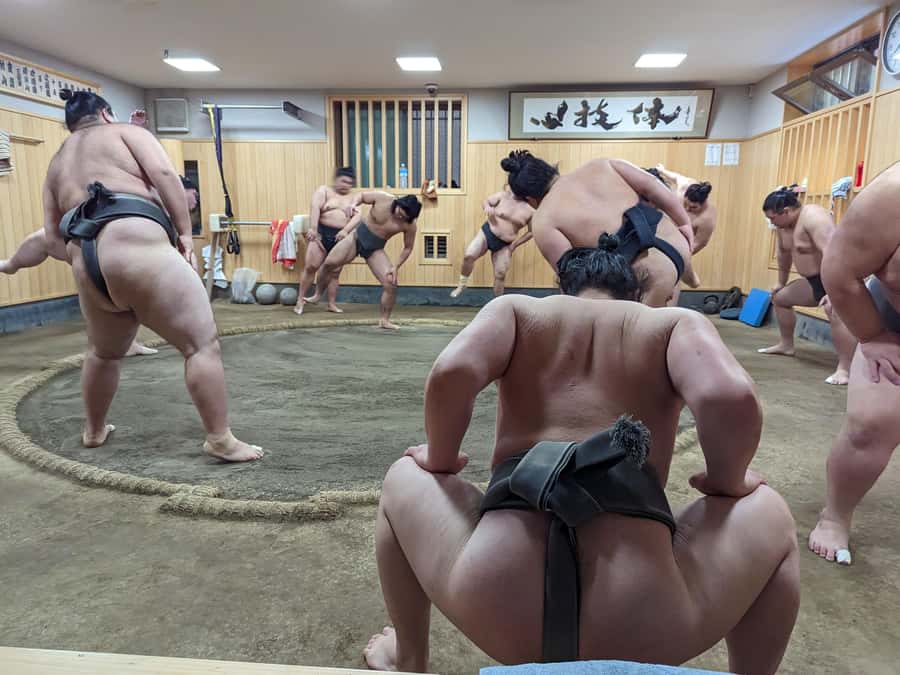
Sitting on the floor early, you feel the discipline. This Tokyo morning sumo practice lets you watch real training inside a stable, not a staged arena act, with an English guide leading the group. I love the authentic atmosphere from the moment you arrive, tense and focused instead of performative.
What I really liked, too, is the up-close view of top-division wrestlers and the challengers working around them. You are seeing professionals tied to the Japan Sumo Association, training for rank and tournament readiness, not putting on a show for laughs.
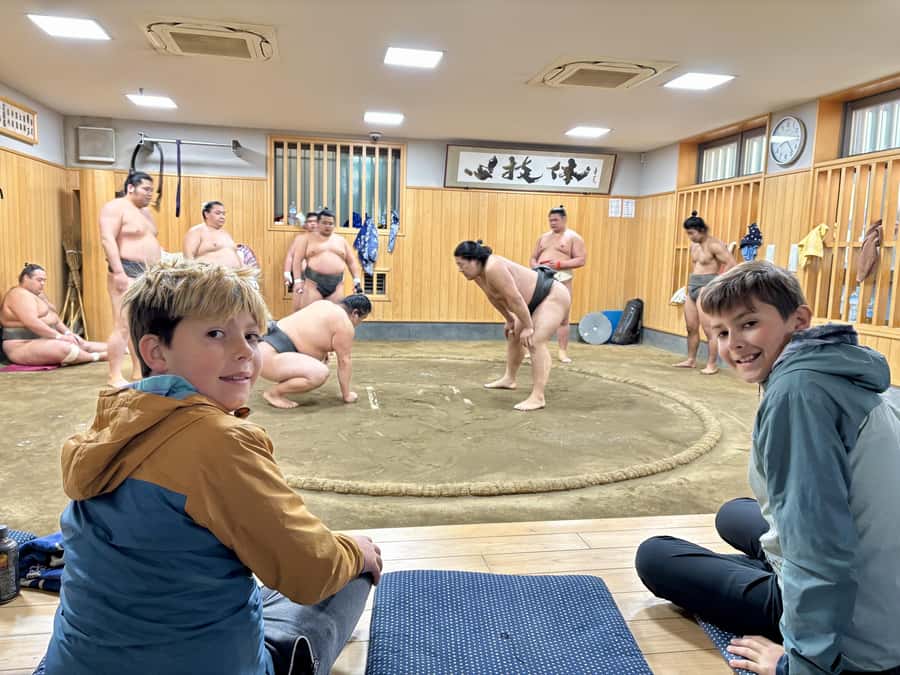
One thing to plan for: you sit on a flat floor with a cushion, there are no chairs, and you have to stay still and quiet during the practice. If you struggle with long sitting, or need easier mobility, this is not the right fit.
In This Review
- Key takeaways before you go
- A real sumo stable, starting at Hanami Zaka Square (Tokyo Skytree)
- Why this morning practice hits differently than sumo shows
- What you will see during the three-hour training session
- How stable etiquette and floor-sitting shape the experience
- Your English guide turns the action into context
- After training: photos, calm conversation, and respect
- Who should book this, and who should think twice
- FAQ
- FAQ
- How long is the Tokyo morning sumo practice viewing?
- Where is the meeting point?
- What language is the tour guide?
- How large is the group?
- Are chairs provided during the practice?
- Do I need to be quiet and still during training?
- Is this experience wheelchair accessible?
- Is there free cancellation and a reserve now, pay later option?
- Should you book this morning sumo practice?
Key takeaways before you go
- Real stable practice, with a serious tone you can feel right away
- Japan Sumo Association wrestlers, not show performers
- Top-division rikishi in the stable, plus grueling work from lower-ranked wrestlers
- English guide support, often with lots of room for questions
- You can take commemorative photos after practice, when the training intensity shifts
A real sumo stable, starting at Hanami Zaka Square (Tokyo Skytree)
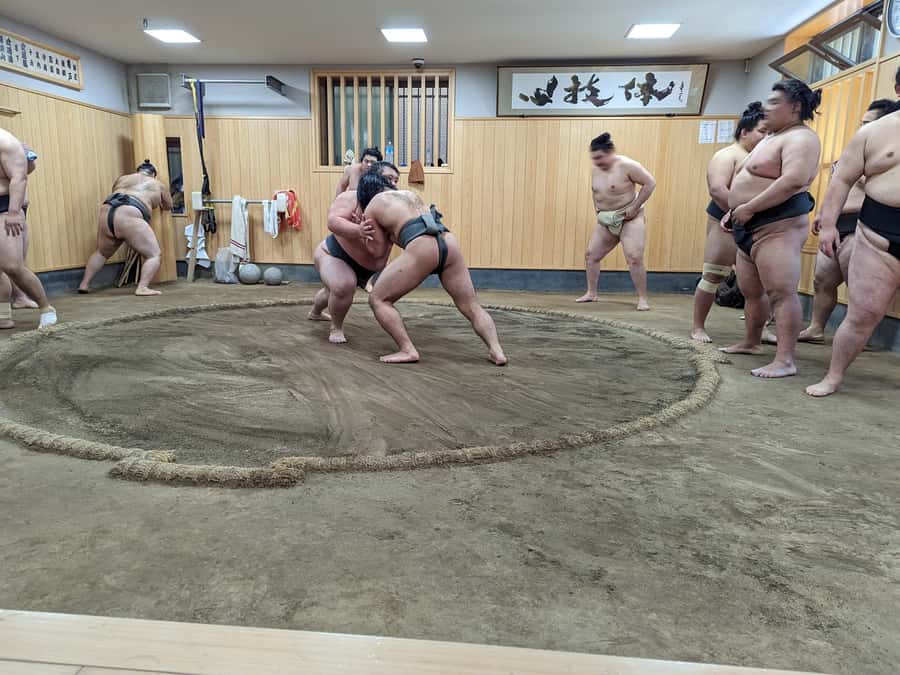
Your morning begins at Hanami Zaka Square at Tokyo Skytree Station on the Tobu Skytree Line (TS02). If you like having a backup, the coordinates are 35.71030044555664, 139.80880737304688. The meeting spot matters because the stable itself is not a big tourist venue. You are walking from a well-known station landmark into a place where the rules and routines are the point.
This is a small group experience, limited to 8 participants, which helps a lot. You get closer attention from your guide, and it is easier to keep the quiet, respectful behavior the stable expects. The tour runs for about 3 hours, and the guides are English-speaking.
Before you even step into the training area, your guide typically sets you up with the basics: what sumo practice is, how stable life works, how divisions and tournaments function, and what etiquette you must follow. That prep is not fluff. It helps you notice what is actually happening once you are inside.
Compare these Sumo Stable visits in Tokyo:
- Tokyo: Sumo Show Experience with Chicken Hot Pot and a Photo
★ 4.8 · 6,678 reviews - Tokyo: Sumo Show and Dining Experience
★ 4.8 · 2,742 reviews - the SUMO show
★ 5.0 · 1,960 reviews
Why this morning practice hits differently than sumo shows
Sumo shows are fun. But they are made for entertainment, often with a loosened rhythm for spectators. Here, the tone is totally different.
At this stable, the wrestlers you see are part of the Japan Sumo Association, the governing body of professional sumo in Japan. In other words, you are not watching performers who are mainly there to entertain. You are watching athletes focused on the grind that moves them up the ranks.
Another big difference is the focus on tournament life. The grand sumo tournaments happen six times a year, and the training you witness is about preparing for that cycle. That is why the practice feels tense and concentrated, even if you are sitting just a few steps away.
If your stable has two top-division wrestlers, you get an extra layer of insight. You can watch how other wrestlers try to earn their place around those higher-ranked athletes, with the sense that practice is also a test of status.
What you will see during the three-hour training session
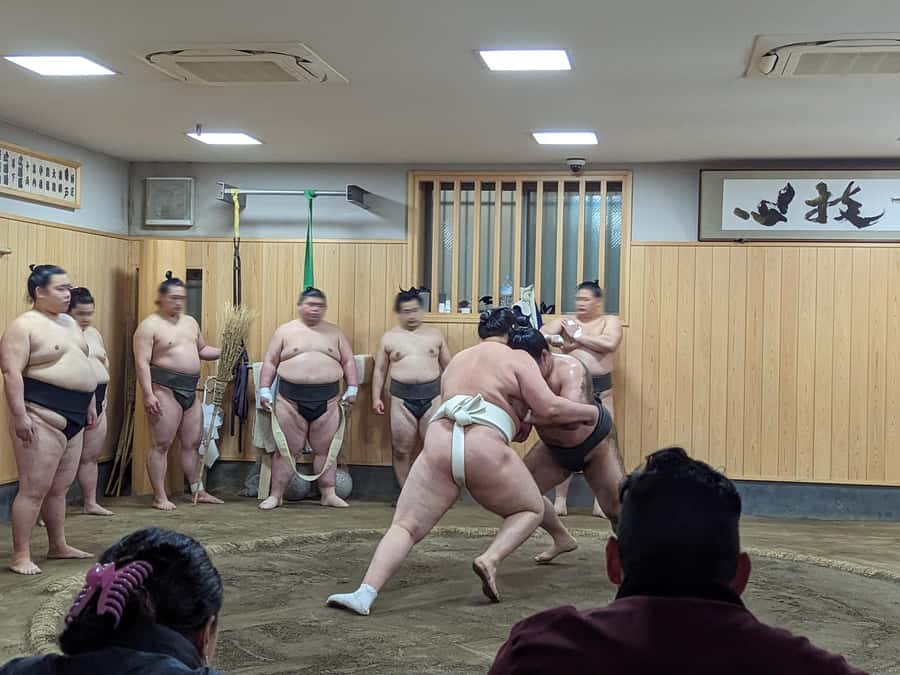
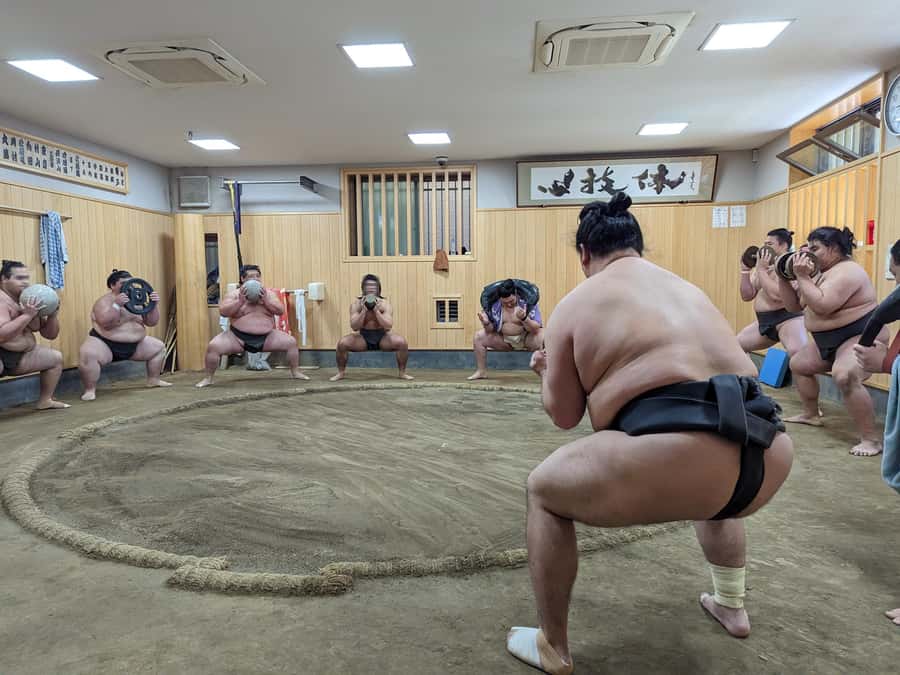
Inside the stable, you will notice the contrast between stillness and intensity. Everyone follows the flow of practice. Your job is to be a calm observer.
You should expect to watch grappling drills and bout-style training. The wrestlers work in ways that look repetitive until you understand the goal: getting strong positions, reading balance shifts, and building that split-second timing that turns a struggle into a win. The lower-ranked wrestlers often have a harder time, because they are fighting for traction against wrestlers who already sit at the top of the ladder.
One detail I really value in this kind of viewing is proximity. You are close enough to see how seriously they control space. During training, the top wrestlers can seem distant. That is normal. They are inside a working mindset, not a meet-and-greet mode.
That said, the mood can soften once practice ends. The experience description notes that while wrestlers may keep an unapproachable atmosphere around the ring during practice, they turn affable afterward. And yes, you get that moment to interact respectfully and take commemorative photos.
How stable etiquette and floor-sitting shape the experience
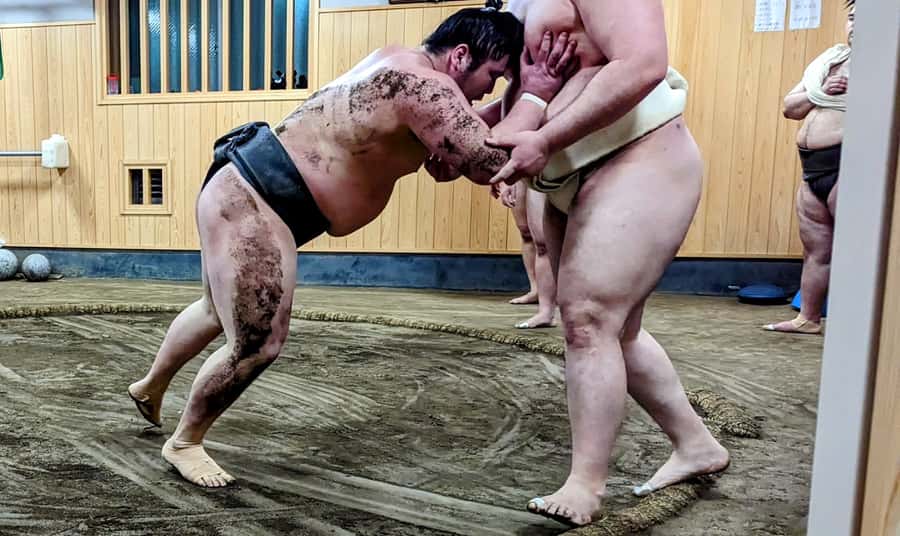
This is where the tour earns its authenticity. The stable does not treat this like a theme attraction, and the rules reflect that.
Plan for:
- No chairs. You sit on a flat floor with a cushion.
- Stay still during the practice.
- Refrain from talking to other guests.
- Follow your guide’s instructions at all times.
For some people, the hardest part is not the silence, it is the body position. One review mentions that sitting that long on cushions can be tough due to personal flexibility, even though the idea of getting a break was discussed. The key point for you: this is a seated-on-the-floor experience by design. If you can handle that, you will enjoy it more, because you can focus on what the wrestlers are doing instead of fighting discomfort.
Also, the silence is not just polite. It keeps the training atmosphere intact. When you treat the stable like a work space, you end up learning faster, because you start catching the rhythm: who steps in, when they reset, and how practice intensity builds.
A few more Tokyo days to weigh up
- Mt Fuji and Hakone 1-Day Bus Tour Return by Bullet Train
★ 5.0 · 26,383 reviews - 1-Day Tokyo Bus Tour
★ 5.0 · 14,250 reviews - Tokyo: TOKYO SKYTREE® Admission ticket
★ 4.5 · 11,192 reviews - Tokyo: teamLab Planets TOKYO Digital Art Museum Entry Ticket
★ 4.6 · 9,779 reviews
Your English guide turns the action into context
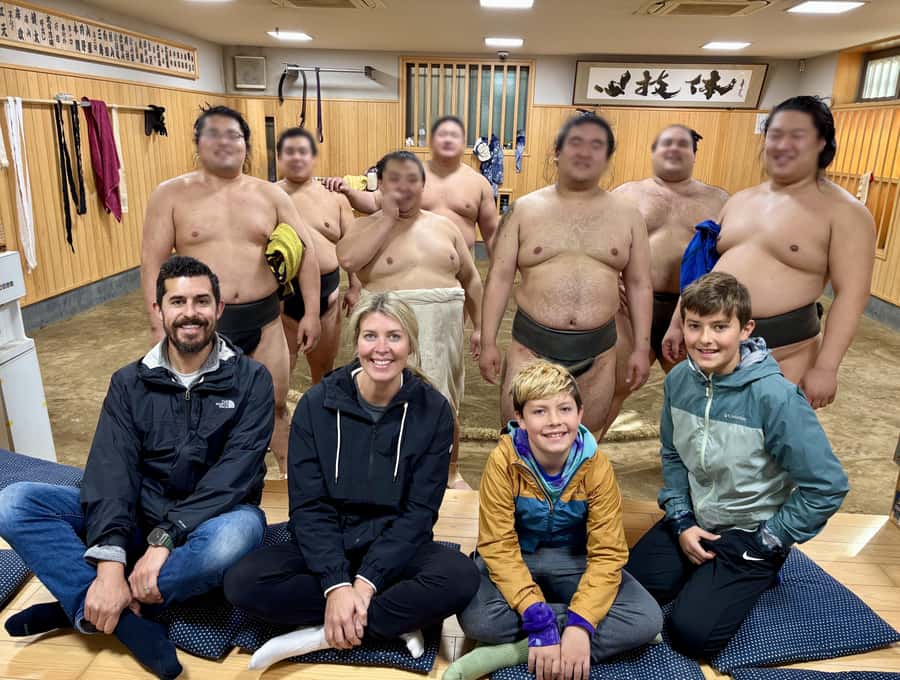
The most consistently praised part of this experience is the guide. And it makes sense. If you show up with no background, sumo practice can feel like a lot of strength wrestling. With the right explanations, it becomes a window into a full system.
In English, guides often explain:
- how wrestlers become part of a stable
- how divisions are structured
- how sumo culture works day to day
- how the Japan Sumo Association and tournaments connect to training goals
You might meet guides such as Aki, Jeff, Taka, Dawn, Sue, or Yasu. Across those different personalities, the pattern is similar: clear explanations, patience with questions, and real passion for the sport.
This is especially valuable if you are new to sumo. You start noticing why the practice looks the way it does. You also learn why the wrestlers can feel serious and distant during training, yet warm and approachable after. Good guiding helps you interpret that shift instead of reading it as attitude.
And if you are a martial arts fan, this is one of those mornings that can change how you see grappling. You will not just be entertained. You will be watching technique and discipline in real time.
After training: photos, calm conversation, and respect
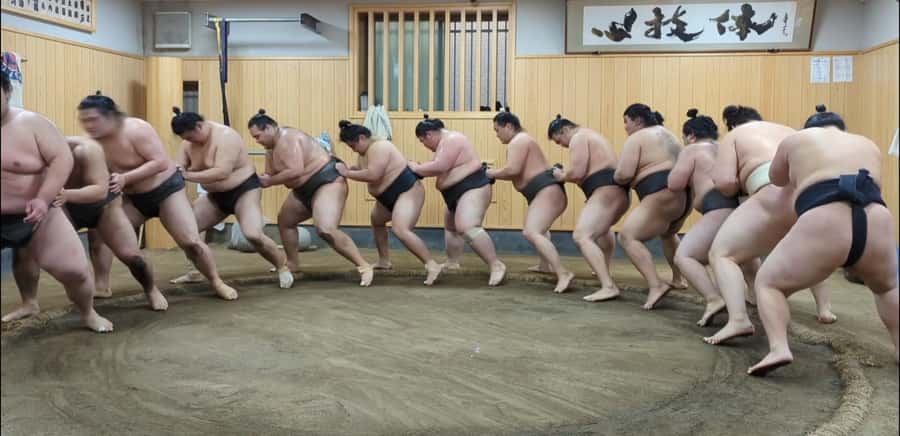
The photos matter here because they come at the right moment. The experience description emphasizes that commemorative photos happen after practice, when the wrestlers are no longer in full training mode.
During practice, the stable can feel strict. Once training ends, you often get a more human side. Reviews highlight that wrestlers can be affable off the ring, which makes the experience feel less like a one-way viewing and more like a brief, respectful exchange.
Think of it as closing the loop. You watch the work. Then you get a chance to connect briefly as a visitor who followed the rules. That respectful boundary is part of why this experience feels meaningful rather than just “another Tokyo activity.”
Who should book this, and who should think twice
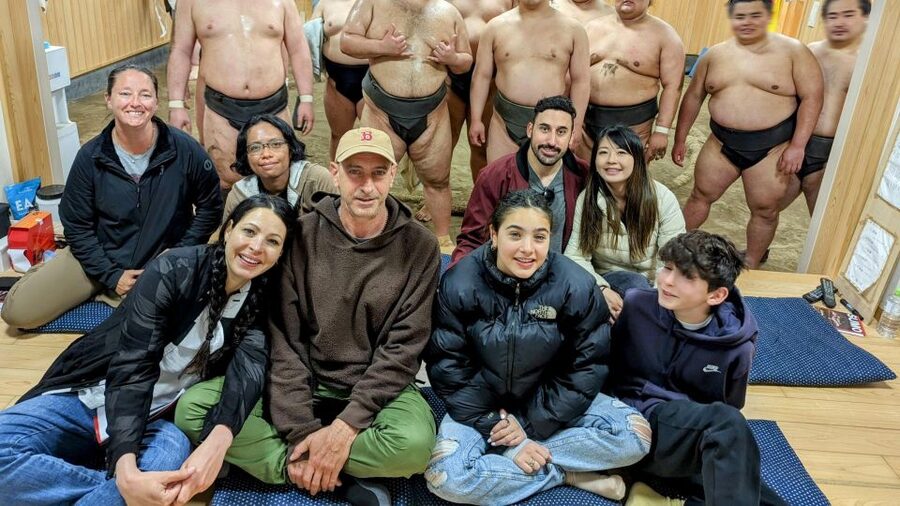
I think this is perfect for you if:
- you want an authentic look at sumo beyond what you see in public shows
- you like structured explanations and Q and A time with an English guide
- you are excited to watch top-division rikishi and how others challenge them
- you enjoy early mornings and can sit still for a while
You might want to skip it (or at least reconsider) if:
- you cannot comfortably sit on the floor for the duration
- you need a wheelchair-accessible setup, since it is not suitable for wheelchair users
- you mainly want the loud, humorous crowd-energy of a show, because this is intentionally not that
If you are in Tokyo around a time when tournaments are not running, this kind of training visit can still scratch the sumo itch, because it is tied to ongoing preparation and stable routine.
FAQ
FAQ
How long is the Tokyo morning sumo practice viewing?
It lasts 3 hours.
Where is the meeting point?
Meet at Hanami Zaka Square at Tokyo Skytree Station (Tobu Skytree Line, TS02).
What language is the tour guide?
The guide speaks English.
How large is the group?
The group is kept small, limited to 8 participants.
Are chairs provided during the practice?
No. You will sit on a flat floor with a cushion, and the stable does not provide chairs.
Do I need to be quiet and still during training?
Yes. You must stay still and refrain from talking to other guests, and you should follow your guide’s instructions at all times.
Is this experience wheelchair accessible?
No, it is not suitable for wheelchair users.
Is there free cancellation and a reserve now, pay later option?
Yes. You can cancel up to 24 hours in advance for a full refund, and you can reserve now and pay later.
Should you book this morning sumo practice?
If you want sumo as a serious sport, book it. This experience is built around the stable atmosphere, tight etiquette, and the chance to watch real professionals training with rank in mind. The small group size and consistently strong English guiding are a big reason it earns such high ratings.
If floor seating is a deal-breaker for you, or you need a more show-like experience, then look for a different sumo option. But for most people, an early morning inside the stable is exactly the kind of Tokyo moment that sticks.
Newly listed around Tokyo
- Modern Vegan Night Foodie Tour in Tokyo★ 3.9 · 7 reviews
- Tokyo: Asakusa Night Waling & Food Tour★ 4.9 · 16 reviews
- Tokyo Vegan Food Tour★ 5.0 · 8 reviews
- Tokyo: Tsukiji Market Walking Tour & Sushi Cooking Class★ 4.6 · 122 reviews
- Tokyo: Tsukiji walk & sushi private tour with Uni Students★ 5.0 · 17 reviews
- Tokyo: Two Types of Japanese Sweets Making and Tea Ceremony★ 4.6 · 26 reviews
- Tokyo Tsukiji Food & Culture Private Tour Licensed Guide★ 4.9 · 28 reviews
- Tokyo: Tsukiji Fish Market Culture Tour with Sashimi Tasting★ 4.6 · 54 reviews
Sumo Stable Visits, compared.
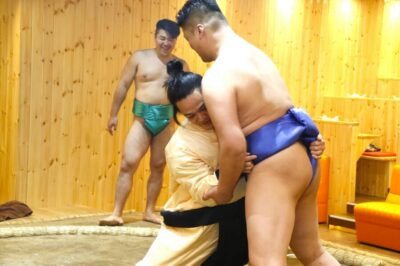
Sumo Show Experience with Chicken Hot Pot and a Photo
Read our review →
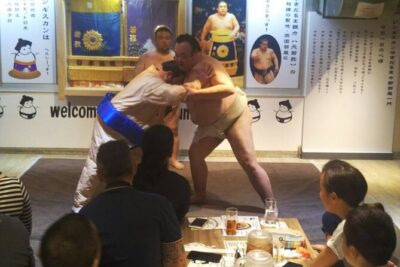

Tokyo Sumo Entertainment Show with Chicken Hot Pot and Photo
Read our review →
Tokyo Grand Sumo Tournament Viewing Tour with Tickets
Read our review →

Sumo Show & Experience w/ Optional Kimono & Hot Pot
Read our review →Browse the lists this tour appears in