
Review · SAMURAI SWORD & NINJA TRAINING
Tokyo: Samurai Sword Academy in the Hometown of the Last Samurai
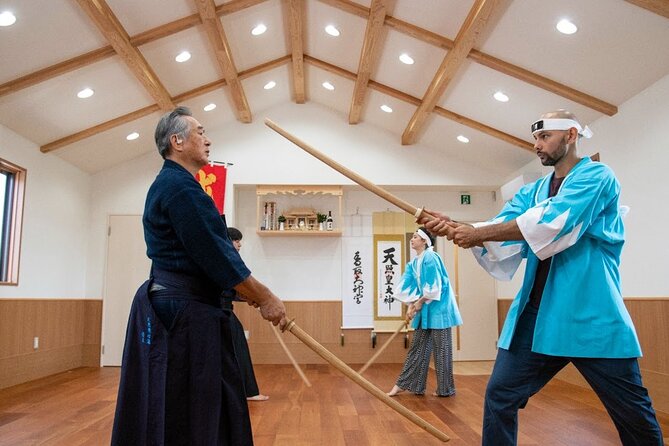
A sword lesson in Tokyo, rooted in real dojo life. This experience connects Tennen Rishin-ryu kenjutsu to the Shinsengumi story of the Last Samurai, with instruction inside the actual training space. I like that it is not a quick photo stop, it is practice, timing, and form.
Two things I really like. You get hands-on teaching that covers礼儀作法, sword posture, and kata basics, then you move on to handling a Japanese sword itself. And the program is led by Masao Inoue, a descendant of Shinsengumi executive Genzaburo Inoue, which gives the session a serious, personal connection to the tradition.
One consideration: this is real training, not a casual hobby demo, and you should expect moderate physical demands and a focused, disciplined atmosphere.
In This Review
- Key highlights you should care about
- Why Hino City Matters: Shinsengumi Roots and the Last Samurai Link
- Meeting at Genzaburo Inoue Shiryokan: What the Start Tells You
- Your 2-Hour Dojo Rhythm: How the Session Likely Moves
- Tennen Rishin-ryu and 礼儀作法: The Basics That Make Sword Training Work
- Handling a Japanese Sword: Beyond Grip, Toward Control
- The Sense of Shinsengumi Legacy, Guided by Masao Inoue
- What to Expect at Each Moment of the Experience
- Price and Value in Tokyo: Is $118.60 Worth It?
- Who This Suits Best, and Who Might Find It Hard
- Practical Tips Before You Go to the Dojo
- Should You Book Samurai Sword Academy in Hino, Tokyo?
- FAQ
- How long is the Samurai Sword Academy experience?
- Where do I meet for the tour?
- Do I need any prior sword experience?
- What is the group size?
- What ticket type will I use?
- Can I cancel and get a refund?
Key highlights you should care about
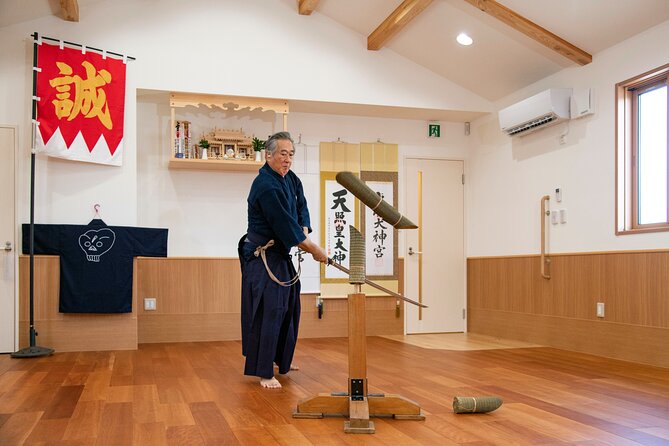
- Real dojo training: You learn at the Tennen Rishin-ryu Hino Dojo, not a staged studio.
- Last Samurai context: Hino City ties directly to the Shinsengumi, often linked with the Shogun’s Last Samurai nickname.
- Small group size: Maximum of 4 travelers means you are not just watching.
- Guided by Masao Inoue: The chairman of the dojo leads the program, with lineage connected to Shinsengumi figures.
- Hands-on sword handling: You actually handle a Japanese sword, described as the samurai’s soul.
- More than basics: Based on past sessions, the instruction can include test cutting practice with a serious tone.
Why Hino City Matters: Shinsengumi Roots and the Last Samurai Link
Hino City is presented as the hometown of the Shinsengumi, and this is the core idea behind the whole experience. You are not learning kenjutsu in an abstract way. You’re learning it in the place the tradition claims as its cultural root.
The style you practice, Tennen Rishin-ryu, traces back to the Edo period and is still carried on today. That matters because it frames sword training as a living discipline, not a museum reenactment. When an activity claims continuity, you should ask: do you practice the method, or do you just learn the story? Here, you do the method.
More Samurai & Ninja Sessions in Tokyo
- Tokyo: Samurai Restaurant Show Ticket with 2 Drinks
★ 4.5 · 1,307 reviews - Tokyo: Samurai Ninja Museum Guided tour and Experience
★ 4.6 · 1,010 reviews - Tokyo: Samurai Sword & Archery Class from Samurai Descendant
★ 5.0 · 603 reviews
Meeting at Genzaburo Inoue Shiryokan: What the Start Tells You
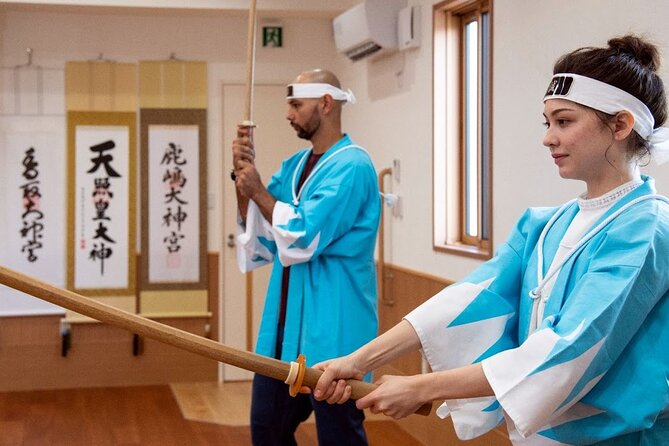
You meet at Genzaburo Inoue Shiryokan in Hinohonmachi, Hino. The fact that the meeting point is named after Genzaburo Inoue is not random. It reinforces the program’s theme that the Shinsengumi lineage is part of the day, not just background reading.
From there, the experience runs as a focused block, about 2 hours. That time window is long enough to teach basics properly, but short enough that the session stays concentrated. If you like structure and you do not want a half day of wandering, this format tends to fit well.
You also get a mobile ticket, and the location is near public transportation. That helps in Tokyo, where door-to-door commuting can quietly become the real time sink.
Your 2-Hour Dojo Rhythm: How the Session Likely Moves
You’re told this is an authentic dojo swordsmanship experience, and the wording is consistent with how the training is likely paced. Expect to start with etiquette and stance, then move into basic forms. After that comes the part most visitors remember, you handle a Japanese sword.
In small groups of up to 4, the instructors can adjust your posture and timing rather than just keeping everyone in sync. That is where the value sits. Sword training is physical, but it is also about precision, and precision is hard when your group is large.
The atmosphere is likely to feel tense in a good way. One past participant described the sense of seriousness and the feeling that it is not something you experience in daily life. That is exactly what you want if you are coming for authentic practice.
Tennen Rishin-ryu and 礼儀作法: The Basics That Make Sword Training Work
You are specifically guided through the essentials of Tennen Rishin-ryu. The training focus includes礼儀作法, sword posture, and kata. For most first-timers, these are not the headline words, but they are the real foundation.
礼儀作法 is not just politeness for tourists. In dojo culture, it is the system that keeps practice safe and consistent. It tells your body how to move, where your attention goes, and how you respect the space and the instructor. If you skip this part mentally, the rest can feel random.
Sword posture and kata basics teach your body the shapes before you chase speed or drama. The kata element matters because it turns handling a sword from a novelty into a repeatable skill. Even if you never become a kendo competitor, kata gives you something meaningful to carry home: a correct form you can try again later.
More Samurai and Ninja sessions in Tokyo:
- Ninja+Kabuki Tokyo
★ 4.5 · 512 reviews - Skip the lines Basic Ticket at SAMURAI NINJA MUSEUM TOKYO
★ 5.0 · 470 reviews - Best Samurai Experience in Tokyo
★ 5.0 · 458 reviews - Tokyo: Legend Samurai Entertainment Night in Kanda Shrine
★ 4.6 · 367 reviews
Handling a Japanese Sword: Beyond Grip, Toward Control
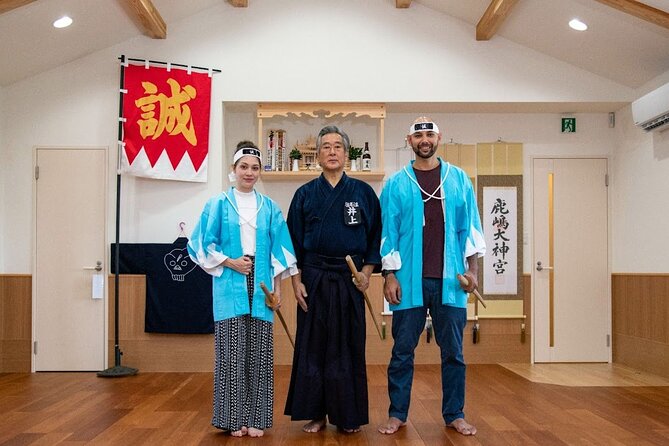
One of the strongest promises of this program is that you can actually handle a Japanese sword, described as the soul of the samurai. That line can sound poetic, but the practical point is simple. You are not just standing near a blade, you learn how to hold and manage it under instruction.
What I like about this segment is that it comes after etiquette and posture. That sequencing matters. If you handle the sword first, you learn only the obvious. If you handle it after fundamentals, you notice details like how your arms, shoulders, and hips coordinate.
Based on participant feedback, the teaching can include a more advanced step like test cutting (試し斬り) with a true sword experience. That is a major emotional moment for first-timers because it turns theory into an outcome. Still, treat it as part of a training progression, not a stunt.
The Sense of Shinsengumi Legacy, Guided by Masao Inoue
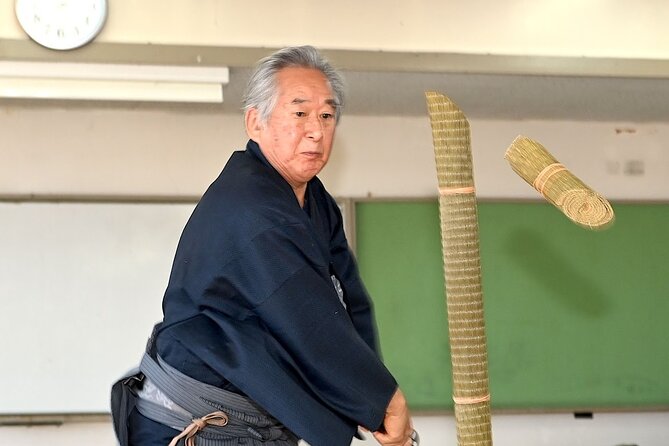
This is not a workshop run by a generic guide. Masao Inoue, chairman of the Tennen Rishin-ryu Hino Dojo, leads the program. He is also described as a descendant of Shinsengumi executive Genzaburo Inoue.
For you, the payoff is credibility plus clarity. A lineage connection does not replace good teaching, but it often comes with a strong respect for how traditions should be practiced. It can also change the tone of the room. Participants describe clear, attentive instruction and a feeling of not being treated like casual visitors.
In at least one recorded session, English support was provided by Yu Ma. If you prefer explanations in English, that is encouraging. Even if your Japanese is limited, you should still plan to learn through demonstration, corrections, and a mix of verbal cues and body instruction.
What to Expect at Each Moment of the Experience
You get one core stop, at the dojo-related meeting location at Genzaburo Inoue Shiryokan, and the activity ends back at the same meeting point. So you are not bouncing around multiple neighborhoods. You are doing one thing deeply.
Here is how that tends to translate in real life. You arrive, meet the team, and start with the fundamental movements. Then you practice the forms and stances repeatedly enough to notice corrections. Finally, you handle the sword and may progress to test cutting if the session includes that segment.
The “2 hours (approx.)” also tells you something useful. You should not expect a long, slow lesson that stretches into a full afternoon. Instead, you’ll get a dense session where each phase builds on the last. If you enjoy immediate feedback, this structure is a good match.
Price and Value in Tokyo: Is $118.60 Worth It?
At $118.60 per person for about 2 hours, the price is not cheap by Tokyo standards. But this is not a low-cost studio experience. You are paying for an actual dojo environment, a small group limit, and instruction tied to a named style and its leadership.
You also should consider what is included. The program highlights real sword handling, basic forms of Tennen Rishin-ryu, and guided learning at the dojo with instruction from the dojo chairman. That kind of access, in a small group, is usually expensive because the teacher to student ratio stays low.
Booking timing is another value clue. It is described as being booked about 31 days in advance on average. When something requires schedule coordination for a limited group and a specific instructor, it tends to fill earlier than casual tourist attractions. If you want a good time slot, don’t wait until the last minute.
Who This Suits Best, and Who Might Find It Hard
This experience is aimed at anyone who wants to learn the art of the sword in a true dojo setting. It is not only for experts, because you are taught the basic forms and you handle the sword as part of the lesson.
That said, it clearly asks for moderate physical fitness. You don’t need to be an athlete, but you should be comfortable with posture practice, controlled movement, and standing through instruction. If you have mobility limitations that affect balance or arms and shoulders, you might find it challenging.
Small group training is also better for some personalities than others. If you like quiet focus and taking corrections seriously, you will probably enjoy this more. If you want a social, casual activity with lots of free time, this is likely to feel intense.
Practical Tips Before You Go to the Dojo
You’ll feel safer and learn faster if you prepare for dojo-style practice. Dress in clothing that lets you move without fuss. You are training your body, so shoes and layers matter more than fashion.
Arrive a bit early if you can. The meeting point is specific, at Genzaburo Inoue Shiryokan in Hino. Being early helps you settle, follow instructions, and focus before the first movements.
Finally, keep your mindset on learning. Sword training will correct your posture and your timing. You’ll get more out of the session if you treat it like a skill class, not a one-time photo op. The tone from past participants suggests an experience that feels both fun and demanding in the best way.
Should You Book Samurai Sword Academy in Hino, Tokyo?
If you want an authentic kenjutsu experience tied to Tennen Rishin-ryu and the Shinsengumi homeland, this is a strong pick. The small group size, the dojo setting, and the leadership by Masao Inoue make it feel like real training access rather than a performance.
Book it if you fit these boxes: you want hands-on sword handling, you’re okay with moderate physical demands, and you appreciate instruction that includes etiquette and kata. You’ll likely enjoy the sense of history because you’re not just hearing it. You’re practicing with the method.
Skip it if you’re looking for a relaxed sightseeing activity, or if you feel uncomfortable with structured training in a serious environment. Also, if your goal is purely to watch, this program is intentionally hands-on.
If those points match your travel style, you should book. When a session is scheduled for a small group and anchored by a named dojo and master, it is the kind of Tokyo experience that leaves you with more than photos. It leaves you with a new way to understand disciplined movement.
FAQ
How long is the Samurai Sword Academy experience?
It lasts about 2 hours.
Where do I meet for the tour?
You meet at Genzaburo Inoue Shiryokan, Tokyo 191-0011, Hino, Hinohonmachi, 4-chōme 1112.
Do I need any prior sword experience?
No. The experience is described as beginner-friendly, with basic forms of Tennen Rishin-ryu taught in an authentic dojo setting.
What is the group size?
The maximum group size is 4 travelers.
What ticket type will I use?
You’ll receive a mobile ticket.
Can I cancel and get a refund?
Yes. You can cancel for a full refund up to 24 hours before the experience start time. Confirmation is received at booking, and free cancellation applies under that timeline.
Newly listed around Tokyo
- Private Tokyo Food Tour – A Journey Through Time Through Food★ 5.0 · 36 reviews
- Private Tokyo Tour with Licensed Guide & Vehicle (Max 15 persons)★ 5.0 · 107 reviews
- Private Tokyo Custom Full-Day Tour by Chartered Vehicle★ 5.0 · 16 reviews
- Private Tokyo Custom Half-Day Tour by Chartered Vehicle★ 4.5 · 13 reviews
- Private Outstanding Nikko Tour with English Speaking Driver★ 4.0 · 11 reviews
- Private Sightseeing to Mt Fuji and Hakone with English Driver★ 5.0 · 51 reviews
- Private Snow Monkeys park Day Trip From Tokyo or Nagano★ 4.5 · 26 reviews
- Private Omiya Bonsai Village Tour with Licensed Guide★ 5.0 · 8 reviews
Samurai Sword & Ninja Training, compared.

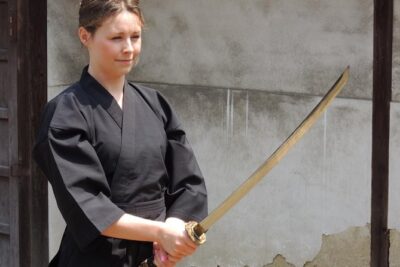
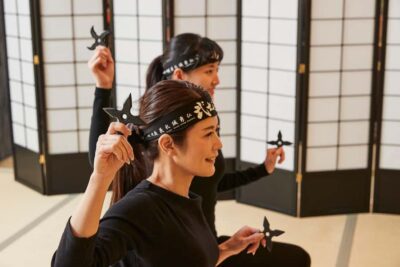
Samurai Ninja Museum Guided tour and Experience
Read our review →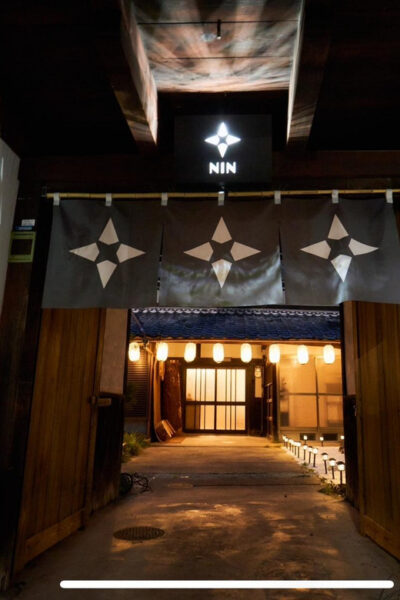
Kendo and Samurai Experience with Uniform and Gear
Read our review →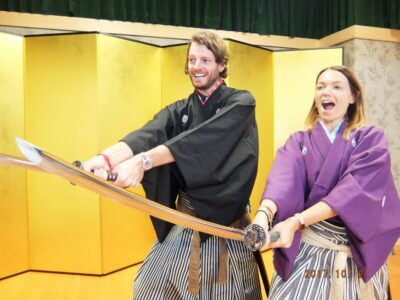
Samurai Sword Class by Experts in Traditional Arts
Read our review →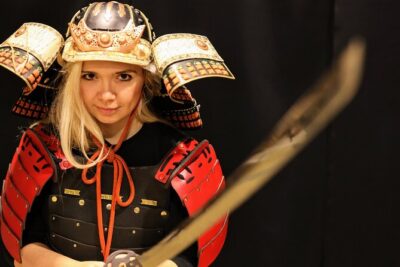
Skip the lines Basic Ticket at SAMURAI NINJA MUSEUM KYOTO
Read our review →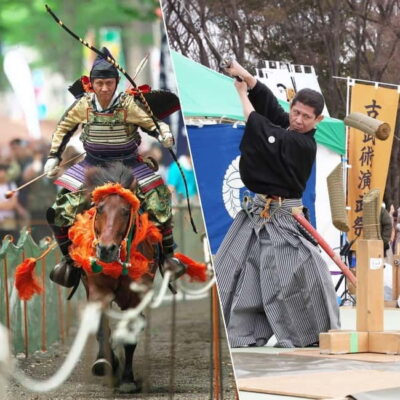
Samurai Sword & Archery Class from Samurai Descendant
Read our review →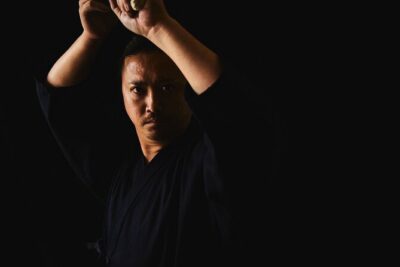
Browse the lists this tour appears in