Review · GUIDED
Tokyo Small Group Tour with Guide
Tokyo makes sense on foot. This small-group tour strings together the big-name places, from Imperial Palace East Gardens to Shibuya Crossing, and I like how the guide handles navigation while sharing quick context along the way. Small-group size keeps the experience from feeling rushed.
I also like the mix of Tokyo mainstays that are easy to check off in one day, with free admission listed for the key stops like Asakusa’s Senso-ji and Meiji Jingu. Imperial Palace East Gardens and the view from Nijubashi Bridge make a confident start.
One consideration: this is a long walking day with a moderate fitness level needed, so bring comfortable shoes and be ready for busy street crossings.
In This Review
- Key things to know before you go
- Where your Tokyo day starts at Kokyo Gaien Starbucks
- Imperial Palace East Gardens and Nijubashi Bridge views
- Asakusa and Senso-ji: old Tokyo rules the street
- Harajuku Station area: fashion energy with a guided pace
- Shibuya Crossing: the iconic photo stop with real momentum
- Meiji Jingu Shrine: a calm pause after the city noise
- Small-group size and the guide names that made the difference
- Mobile ticket, free admissions, and what $99 really covers
- Walking pace, shoes, and how to stay comfortable
- Should you book this Tokyo Small Group Tour with Guide?
- FAQ
- Where does the tour meet, and what time does it start?
- How many people are in the group?
- What ticket format do I need?
- What is included in the tour price?
- Where does the tour end?
- How much walking is involved?
- Is admission included for the main sights?
- What happens if the weather is bad?
- Are service animals allowed?
Key things to know before you go
- Max 15 travelers: small enough for questions and real guide interaction.
- A guide-led route through Tokyo icons: Imperial Palace East Gardens, Senso-ji, Harajuku, Shibuya Crossing, Meiji Jingu.
- Mobile ticket: no paper hassle.
- Free admission at the listed stops: you get the big sights without ticket stress.
- Ends in Shibuya: watch Shibuya Crossing in action, then finish at Shibuya Station.
Where your Tokyo day starts at Kokyo Gaien Starbucks
Your day begins at Starbucks Coffee – Kokyo Gaien Wadakura Fountain Park in Chiyoda, with a 9:00 am start. That’s a nice setup because you’re starting in a straightforward, easy-to-find meeting point rather than trying to decode a complicated transit maze right away.
From there, you walk. The tour is built for people who want a guided route that gets you oriented fast, without spending half the morning figuring out what’s closest to what. And since it’s a near-public-transport meeting area, you can arrive without needing a taxi gamble.
Also, this tour is explicitly set up for a moderate physical fitness level. If you’re the type who can handle an active day, you’ll do fine. If you’d rather sit down every 20 minutes, look for something with less walking.
A few more Tokyo days to weigh up
- Mt Fuji and Hakone 1-Day Bus Tour Return by Bullet Train
★ 5.0 · 26,383 reviews - 1-Day Tokyo Bus Tour
★ 5.0 · 14,250 reviews - Tokyo: TOKYO SKYTREE® Admission ticket
★ 4.5 · 11,192 reviews
Imperial Palace East Gardens and Nijubashi Bridge views
The first major stop is the East Gardens of the Imperial Palace, including the Edo Castle Ruin area. This is a smart opener because it’s a shift in pace: clean lines, wide paths, and those iconic palace views that make Tokyo feel both orderly and ancient at the same time.
Your walk includes a standout photo moment: the view from Nijubashi Bridge. Even if you’re not a big photographer, this is the kind of point where your brain goes, OK, I get what this city’s scale and history are about.
The time here is about 1 hour, and admission is listed as free. That matters for value, because it keeps your day simple. You’re not juggling paid tickets, and you’re not losing time hunting for entry rules.
Asakusa and Senso-ji: old Tokyo rules the street
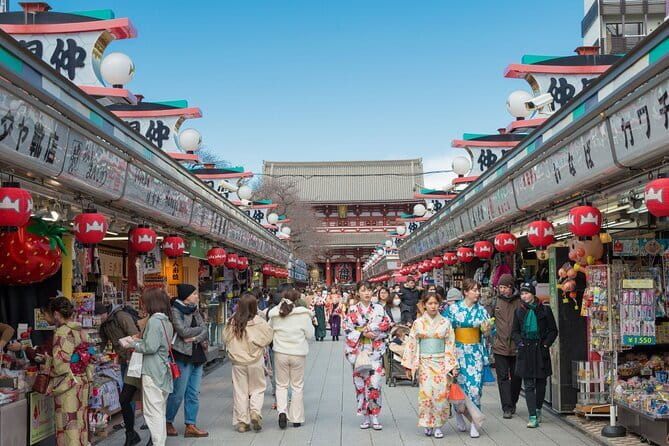
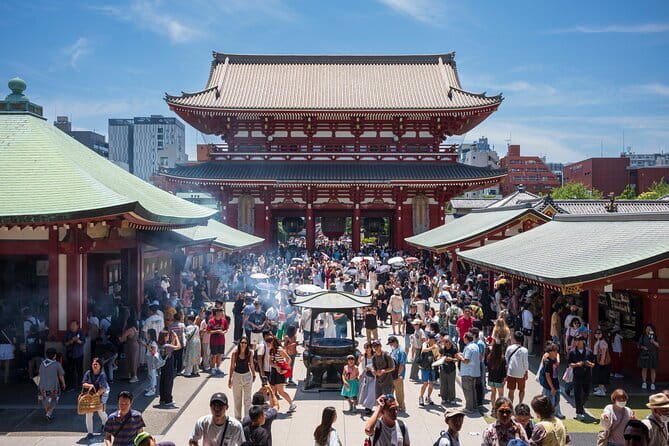
Next comes Asakusa, where you’ll spend about 3 hours focusing on one of Tokyo’s most enduring religious landmarks: Senso-ji, the city’s oldest Buddhist site. You also walk down Nakamise-dori Street, one of the most active streets in the neighborhood.
Asakusa is a great stop for orientation because it contrasts with the modern parts of Tokyo later in the day. Here, you’ll notice the mix of tradition, crowds, and the kind of street life that still feels local rather than theme-park tidy.
Practical advice: go in with your expectations set. This area can get busy, especially as people move through temple grounds and shopping streets. The guide helps by steering you through the right walking flow so you’re not stuck guessing where to go next.
Admission for this segment is listed as free, so your money goes toward the guide and your time, not toward entry fees. That’s part of why this stop fits so well into a single-day route.
Harajuku Station area: fashion energy with a guided pace
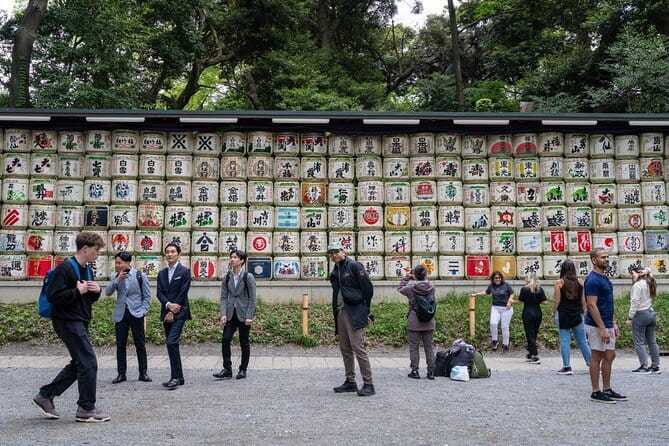
After Asakusa, you head to Harajuku Station for about 1 hour 30 minutes. This is where you’ll get a sense of Tokyo’s youth culture and style districts without needing to plan a separate neighborhood day.
Harajuku can be colorful, loud, and crowded, but your guide’s job is to make it legible. You’re not just wandering and hoping you stumble into the right lanes. You’ll also get the kind of context that helps you understand what you’re seeing, from local customs to why certain streets and areas draw certain crowds.
Admission is listed as free for this stop, which is great. You’re spending your energy on seeing and learning, not on budgeting for add-on tickets.
If you’re traveling with friends who disagree on what to do next, this part often works because it’s flexible. You can focus on street scenes, shop window browsing, or simply people-watching while the guide keeps the route moving.
A different sort of day in Japan:
- Tokyo: teamLab Planets TOKYO Digital Art Museum Entry Ticket
★ 4.6 · 9,779 reviews - Mt Fuji & Hakone Cruise, Drum Show Bullet Train 1 Day from Tokyo
★ 4.0 · 7,413 reviews - Tokyo: Sumo Show Experience with Chicken Hot Pot and a Photo
★ 4.8 · 6,678 reviews - Tokyo: Shinjuku Food Tour (13 Dishes at 4 Local Eateries)
★ 5.0 · 6,603 reviews
Shibuya Crossing: the iconic photo stop with real momentum

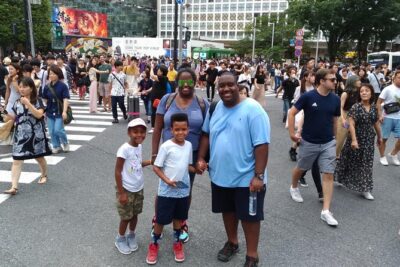
Then you reach Shibuya Crossing, where the tour sets aside about 30 minutes to watch it in action. You’ll see it in the commercial ward of Shibuya, at the kind of intersection that’s hard to truly understand until you’re standing there watching crowds flow in every direction.
This is one of the tour’s strongest “I get Tokyo faster” moments. Shibuya Crossing is famous for a reason, but seeing it through the guide’s framing helps you connect what you see to how the city works.
A practical note: for Shibuya, arrive ready to stand and look up. This is not a museum stop. It’s a street-life moment. Wear shoes that won’t punish you after 20 minutes of standing and shifting your spot.
The tour ends after this, at Shibuya Station, so it’s also convenient if you’re planning to continue the night on your own afterward.
Meiji Jingu Shrine: a calm pause after the city noise
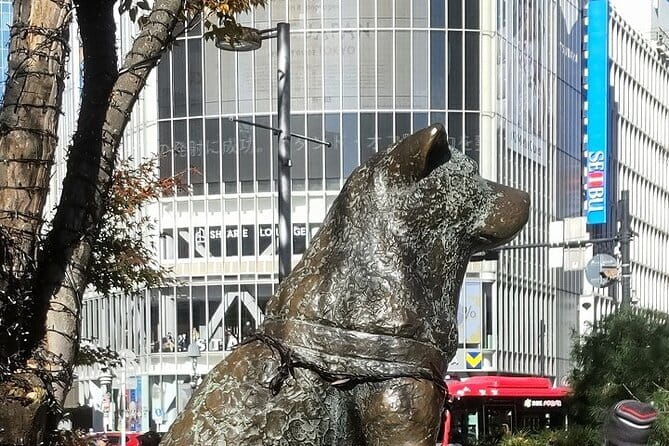
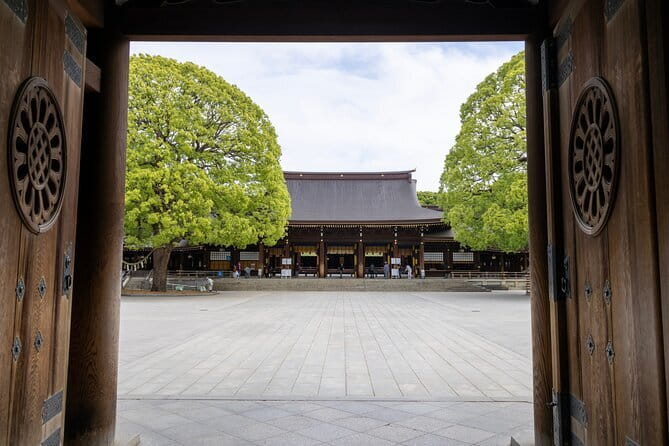
Your final big sight is Meiji Jingu Shrine. You’ll have about 1 hour 30 minutes here, and admission is listed as free.
Meiji Jingu is often what people hope for after a day of major city sights: a shrine experience that feels more spacious and reflective. You get the sense of the importance of Shinto belief and the way the shrine grounds encourage quieter observation.
This makes the overall route click. Imperial Palace East Gardens gives you an official-feeling start. Asakusa brings the street energy. Harajuku adds modern Tokyo culture. Shibuya adds urban intensity. Meiji Jingu provides a reset.
And since it’s the last major stop, you finish with a “Tokyo isn’t just one thing” feeling.
Small-group size and the guide names that made the difference
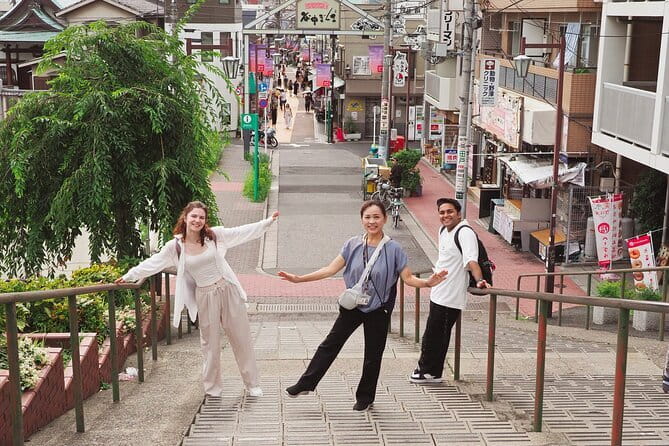
The tour caps at 15 travelers, and that size shows in how the day feels. When you’re not packed into a huge group, it’s easier for the guide to answer questions and adjust pace when one person stops to look while another needs a reminder about where to go next.
The guide also seems to be a major factor in why the experience gets such strong ratings. Past participants have specifically highlighted guides like Mary, Suzana, Daniel, Coral, and Tomas for explaining culture, customs, and the story behind what you’re seeing.
What I like about this style is that it turns sightseeing into comprehension. Instead of checking boxes, you start to understand the city’s logic, from religious practices in Asakusa and Meiji Jingu to why certain areas draw the crowds they do.
If you’re a first-time visitor to Japan or Tokyo, this is exactly the kind of structured day that prevents your trip from feeling like a photo scavenger hunt.
Mobile ticket, free admissions, and what $99 really covers
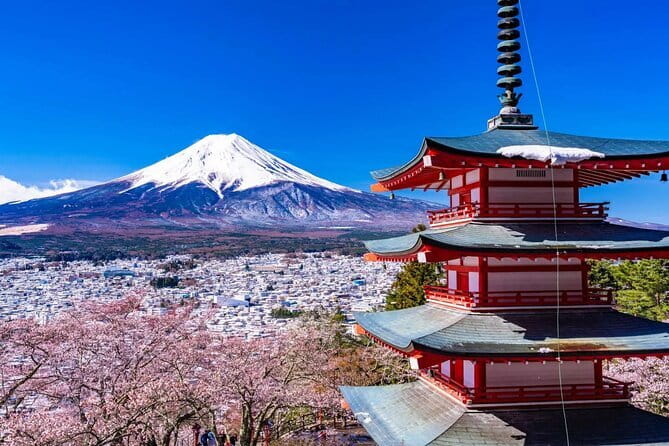
At $99.00 per person, this is priced like a guided walking experience, not a luxury tour. The value comes from a few concrete things:
- A hand-picked expert tour guide is included.
- The main stops list free admission, including the Imperial Palace East Gardens segment, Senso-ji, and Meiji Jingu.
- You get a route that strings together multiple major landmarks in roughly 7 to 8 hours.
So you’re paying mostly for direction, context, and time. That’s a good deal if you don’t want to spend your limited vacation hours charting trains, comparing routes, and figuring out which entrances match your interests.
If you’re the kind of traveler who loves independent wandering and doesn’t want to follow a schedule, a guided tour might feel less flexible. But for many first-timers, $99 is a straightforward way to reduce decision fatigue and still hit the highlights.
Walking pace, shoes, and how to stay comfortable
This is a walking tour, and the important detail is not just “you’ll walk,” it’s the amount and rhythm of walking across different neighborhoods. The tour specifies a considerable amount of walking, plus a moderate physical fitness level requirement.
So pack like it’s a full day on your feet. Bring comfortable walking shoes. That one line is doing a lot of work here, because the tour includes temple grounds, busy streets, and standing-and-watching time at Shibuya Crossing.
Also, plan your energy. The best approach is to pace yourself rather than trying to keep the same stride as the guide. If you get tired, you still won’t be lost. The guide is there to keep the group moving in the right order.
Finally, weather matters. This experience is described as requiring good weather. If conditions are poor, you’re offered a different date or a full refund, so always check your forecast as your start time approaches.
Should you book this Tokyo Small Group Tour with Guide?
Book it if you want a low-planning Tokyo day that covers the big icons in a logical order, with a guide making the city easier to read. It’s especially useful for first-time visitors who want get your bearings fast energy, and it works well if you care about understanding culture, customs, and why each place matters.
Skip it if you’re trying to minimize walking, or if you already feel fully confident building your own Tokyo route. Also, if you dislike group schedules and prefer drifting freely, the structured stops may feel too planned.
My take: this is a strong value choice when you want guidance, free entry to the listed sights, and a small group so you can actually ask questions. If that sounds like your travel style, you’ll likely enjoy the day as much as the city itself.
FAQ
Where does the tour meet, and what time does it start?
The tour meets at Starbucks Coffee – Kokyo Gaien Wadakura Fountain Park (3-1 Kōkyogaien, Chiyoda City, Tokyo). The start time is 9:00 am.
How many people are in the group?
This experience has a maximum of 15 travelers.
What ticket format do I need?
You receive a mobile ticket.
What is included in the tour price?
The tour includes a hand-picked expert tour guide.
Where does the tour end?
The tour ends at Shibuya Station after watching Shibuya Crossing in action.
How much walking is involved?
There is a considerable amount of walking. The tour lists a moderate physical fitness level and recommends comfortable walking shoes.
Is admission included for the main sights?
The stops listed in the schedule show admission ticket free for the activities at those sights.
What happens if the weather is bad?
This experience requires good weather. If it is canceled due to poor weather, you’ll be offered a different date or a full refund.
Are service animals allowed?
Yes, service animals are allowed.
Newly listed around Tokyo
- Enjoy Mt. Fuji View and free time shopping at Gotemba Outlets!★ 4.0 · 15 reviews
- the SUMO show with Dinner★ 5.0 · 38 reviews
- Asakusa: 2-hour history exploration★ 5.0 · 32 reviews
- Bullet Train Experience & Mishima Shrine Private Tour from Tokyo★ 5.0 · 9 reviews
- Let’s experience calligraphy in YANAKA, Taito-ku, TOKYO !!★ 5.0 · 127 reviews
- Calligraphy Experience at Tokyo Ginza and Tsukiji Area★ 5.0 · 17 reviews
- Ninja Lesson in Tokyo – 1 Hour Hands-On with Japanese Master★ 5.0 · 52 reviews
- 10-Day Private Tour with more than 60 Attractions in Japan★ 5.0 · 6 reviews
Guided, compared.
Tokyo 6hr Private Tour with Government-Licensed Guide
Read our review →
Shinjuku Local Bar and Izakaya Guided Walking Tour
Read our review →
Private City Highlights Tour with Local Guide
Read our review →
Kyoto Early Morning Tour with English-Speaking Guide
Read our review →
Tokyo 4hr Private Tour with Government-Licensed Guide
Read our review →
Kyoto 6hr Private Tour with Government-Licensed Guide
Read our review →