
Review · SUMO STABLE VISITS
Tokyo Sumo Morning Practice Tour at Stable
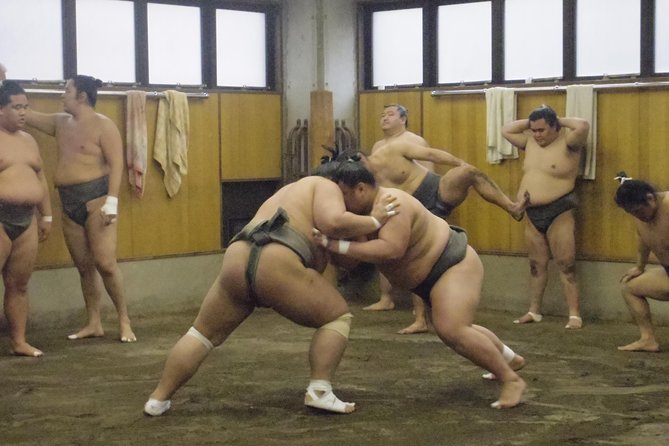
Morning sumo feels like a secret handshake. You get insider access to a local sumo stable for daily training, with a guide explaining the Shinto roots and how the pro world is built.
I especially like the small group setup and the chance to watch real practice up close, not a staged performance. Guides named Seiji, Noriko, Yumi, Cameo, and Nobu show up in past experiences, and they all seem to focus on helping you understand what you are seeing and why it matters.
One thing to think about: the experience relies on audio headsets, and a few people report that the headset audio was hard to hear clearly. If you are sensitive to background distractions or poor sound, plan to bring extra patience (and maybe ask for help if something seems off).
In This Review
- Key things to know before you go
- Why morning practice beats tournament TV in Tokyo
- Meeting at Ryogoku Station Gallery and the Shinto-to-sumo story
- Inside the stable: how training really looks (and how to not get in the way)
- Your viewing spot: timing, seating, and why early matters
- The practice rhythm: what you might see during morning drills
- Six tournaments, ranks, and what to connect while you watch
- Photos after practice: a quick moment, so plan for it
- Price and value: what you are paying for at $83.57
- Heat, morning rules, and how to avoid discomfort
- Should you book this Tokyo sumo morning practice tour?
- FAQ
- Where do I meet my guide for the sumo practice tour?
- How long is the Tokyo sumo morning practice tour?
- What is the minimum age to join?
- Is this a small group tour?
- Are photos and videos allowed inside the stable?
- Can I eat or drink during the practice?
- What are the main rules for behavior in the ring area?
- What should I do with my phone and what clothing is restricted?
- Can I cancel and get a refund?
Key things to know before you go
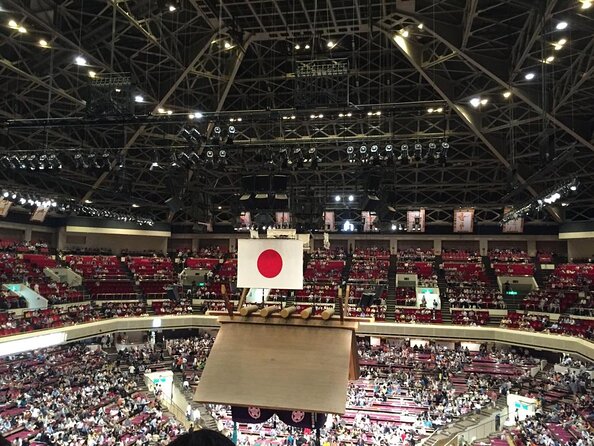
- Close-up stable access to watch morning training in a real sumo setting
- Guide-led explanations that connect Shinto traditions to the way sumo works today
- Six grand tournaments, clearly explained, including Tokyo, Osaka, Nagoya, and Fukuoka
- Follow the stable etiquette: silence, no flash, no videos, and respect the ring area
- Small group size (maximum 20), so you are not fighting crowds for sightlines
- Summer comfort rule: no air conditioning during summer, but you can drink water and sports drinks inside
Why morning practice beats tournament TV in Tokyo
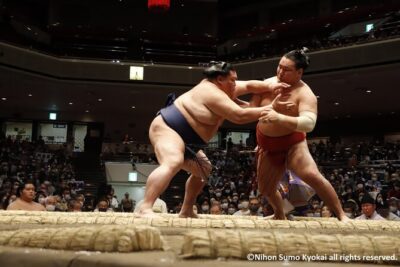
A sumo tournament is big drama, full of ceremony and pageantry. Morning practice is the other side: raw work, repetition, and discipline, with pro wrestlers getting their bodies and techniques ready for the next 15-day grind.
What makes this tour valuable is the way it teaches you how to watch. When you know why certain drills happen and how the tournament cycle works, those heavy throws and practice bouts stop being random spectacle.
Also, this is priced like a short guided experience, not like a pricey “show.” For about $83.57 per person and roughly two hours, you’re paying for the hardest part: getting into a stable and sitting where you can actually see.
Compare these Sumo Stable visits in Tokyo:
- Tokyo: Sumo Show Experience with Chicken Hot Pot and a Photo
★ 4.8 · 6,678 reviews - Tokyo: Sumo Show and Dining Experience
★ 4.8 · 2,742 reviews - the SUMO show
★ 5.0 · 1,960 reviews
Meeting at Ryogoku Station Gallery and the Shinto-to-sumo story
The tour starts with a guide meeting you near Ryogoku Station. The stated meeting time is 7:45am at Ryogoku Station Gallery, and then you head to the stable. One practical note: the meeting location can shift depending on your plan, so your confirmation email matters.
Before you even enter the stable, you get the context. Expect the guide to explain how sumo is tied to Shinto traditions, with connections described as going back to the religion’s roots and preserved through ritual. You’ll also hear that sumo tradition dates back at least 1500 years, and that the sport still carries those ceremonial influences.
You’ll also get a quick orientation to the pro calendar: six annual Grand Tournaments lasting 15 days each, with three held in Tokyo and the other three in Osaka, Nagoya, and Fukuoka. This matters because practice is not just exercise. It is how wrestlers prepare for those specific stages of the year.
Inside the stable: how training really looks (and how to not get in the way)
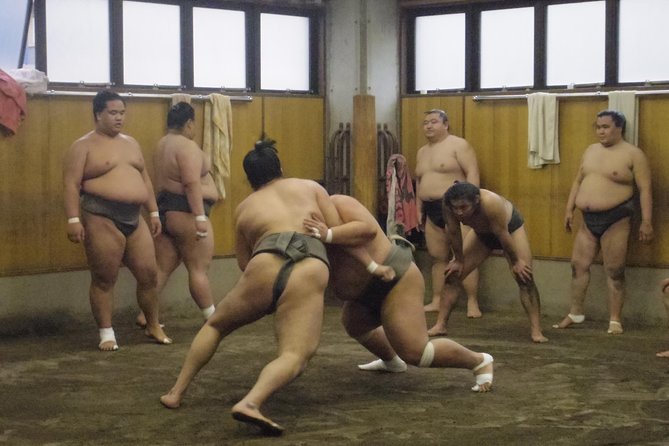
Once you reach the stable, the vibe shifts to quiet focus. You are expected to watch silently and respectfully as the wrestlers go through daily training routines. Your guide’s running commentary helps you follow what’s happening, especially if you do not know the rankings yet.
This is also where stable etiquette is not optional. Please remember:
- Cellphones must be on silent.
- Photos are allowed, but only without flash or shutter sounds, and videos are not allowed.
- Sunglasses and hats are not allowed inside.
- You cannot step down onto the ring or the sandy ground area. The ring is treated as sacred for the wrestlers.
- Try not to stretch your legs toward the ring, since showing the soles of your feet is considered impolite.
If you do these things automatically, you will feel more comfortable and the whole group experience runs smoother.
Your viewing spot: timing, seating, and why early matters
The tour is about two hours total, but practice length can change depending on what happens that morning. Some sessions may be a bit shorter or longer than expected, so do not plan a tight connection immediately after.
Sightlines can also vary. Several people highlight that seating matters, and early arrival can help you get into a better position. One reviewer advised getting there early to line up for a better seat, noting that the front section can be reserved for sponsors or special guests.
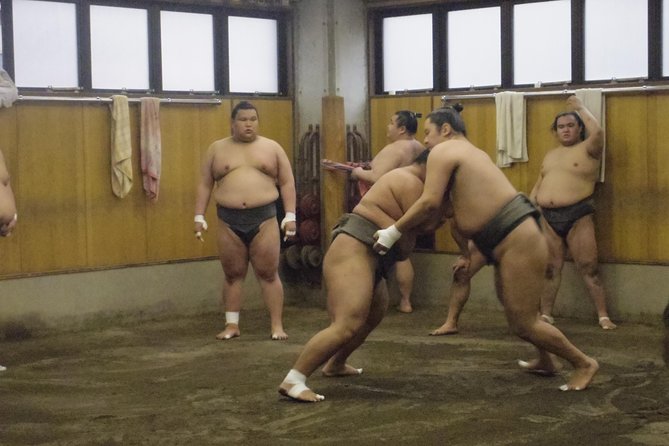
In other reports, people mention being seated on stools rather than mats, and having a comfortable, close view right in front of the training. That lines up with what you want for this kind of tour: the ability to see footwork, grip changes, and the setup moments before big action.
If your goal is to learn sumo by watching closely, arriving early and staying alert during the commentary is the best combo.
A few more Tokyo days to weigh up
- Mt Fuji and Hakone 1-Day Bus Tour Return by Bullet Train
★ 5.0 · 26,383 reviews - 1-Day Tokyo Bus Tour
★ 5.0 · 14,250 reviews - Tokyo: TOKYO SKYTREE® Admission ticket
★ 4.5 · 11,192 reviews - Tokyo: teamLab Planets TOKYO Digital Art Museum Entry Ticket
★ 4.6 · 9,779 reviews
The practice rhythm: what you might see during morning drills
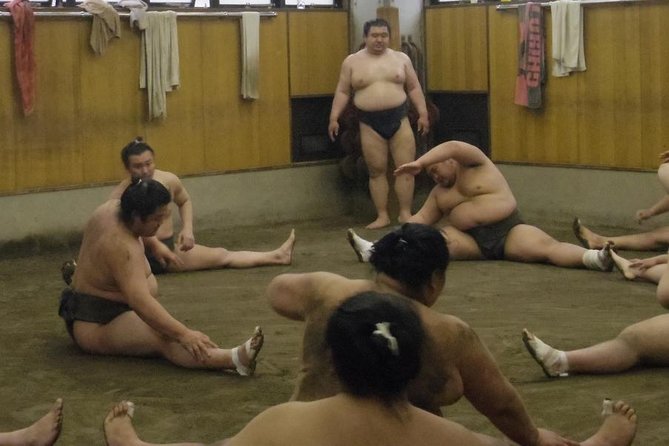
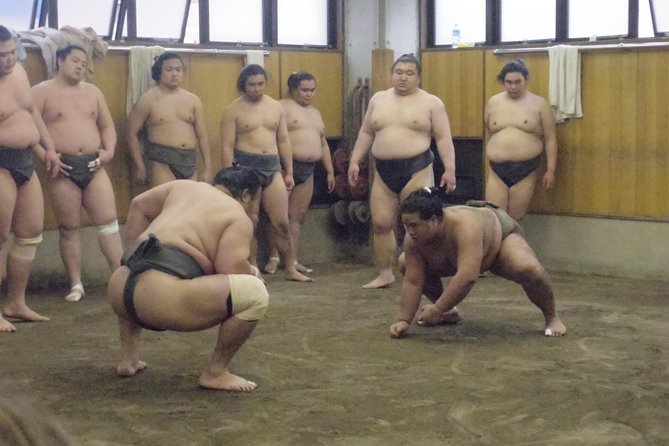
You should expect to see wrestlers move through a series of training segments that can include repeated bouts and exchanges. Multiple descriptions emphasize that the tour can include dozens of bouts during the session, which is a big reason morning practice can feel more intense than a traditional tournament viewing experience.
You may notice that this is not a perfectly scripted “camera show.” People describe it as real work, with wrestlers training, struggling, and correcting as they go. That also means the exact balance of drills and sparring can shift.
One interesting wrinkle from past experiences: if something special happens at the stable, like a sponsor showing up, the practice can run extra long and include more intense wrestling from more seasoned wrestlers. You cannot count on that, but it is good to know this tour is tied to real stable life.
Six tournaments, ranks, and what to connect while you watch
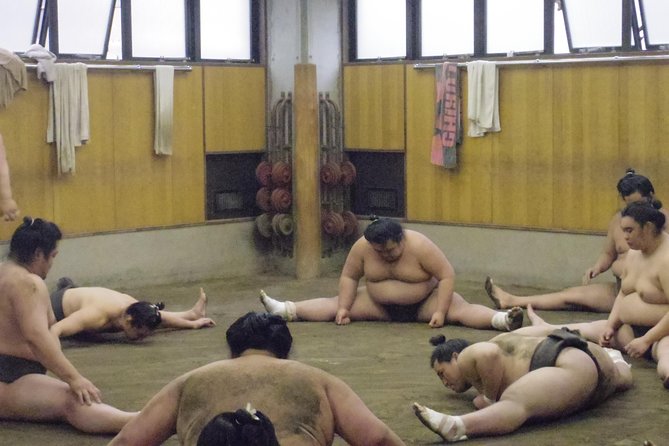
The tour’s teaching value comes from linking practice to the tournament system. You’ll learn that there are six Grand Tournaments each year, each lasting 15 days. Tokyo hosts three of them, and the rest are in Osaka, Nagoya, and Fukuoka.
Why this matters to you while you watch training: once you understand the rhythm of the year, the morning practice feels like part of a larger training plan. Even if you never memorize every ranking term, you will start seeing patterns. You’ll recognize that techniques get repeated for a reason and that discipline is not about one event, it is about preparing for a cycle.
A recurring theme in past feedback is that the guide explains how the sport works, including the rankings and the lifestyle around sumo. You leave with a better understanding of what it takes to move up and keep working.
Photos after practice: a quick moment, so plan for it
There is at least one clearly described end-of-session element: a brief photo opportunity after practice. People mention quick picture time at the end, and some describe it as a highlight, since it adds a human moment after the intense training.
That said, a few people also note the photo segment can be brief, and the flow can feel fast when the tour wraps. So treat it like a short bonus, not like a long meet-and-greet.
Also remember: you cannot ask wrestlers to take a photograph with you while practice is still going on. If you want a photo, save it for the post-practice moment your guide coordinates.
Price and value: what you are paying for at $83.57
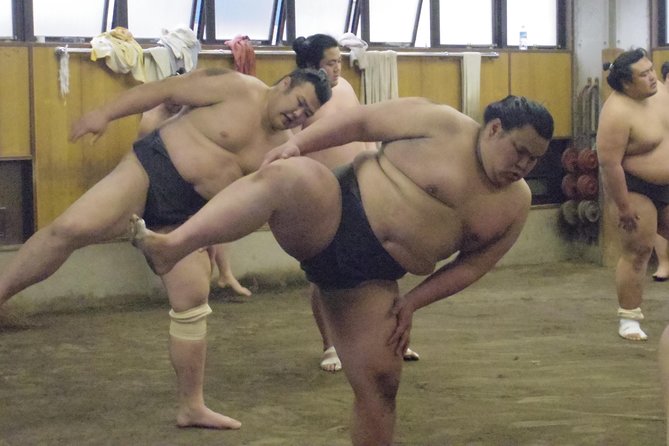
For $83.57 per person and around two hours, you are paying for:
- Entry to a stable morning practice, with access that is harder to arrange on your own
- A guide to translate what you are seeing, including Shinto connections and the tournament calendar
- A small group setting that keeps the experience from feeling like a mass event
Is it “cheap”? No. Sumo stable access is not like walking into a museum. But the value tends to be strong if you want context and you care about watching real training instead of only seeing tournament bouts on TV.
If you are purely chasing entertainment, consider that the tour is built on etiquette, silence, and rules. It is not loud, and you will not be doing hands-on interaction during practice.
Heat, morning rules, and how to avoid discomfort
Tokyo mornings can still get hot quickly in summer. The tour notes that there is no air conditioning in the summer months inside the stable area.
The practical advice is simple:
- Bring something to cool down, like an ice pack or a cold towel.
- In summer, guests are allowed to drink water and sports drinks inside the stable.
Also, plan your arrival with restroom breaks done before the meeting point. The stable experience is rule-driven, and you will want to stay comfortable so you do not miss parts of the training.
Should you book this Tokyo sumo morning practice tour?
Book it if you want a close, respectful look at how sumo works when no one is putting on a tournament show. You’ll like it most if you enjoy early mornings, you follow rules easily, and you want the background on Shinto influence and the six-tournament system so the practice makes sense.
I would be more cautious if audio quality is a deal-breaker for you. A small number of past experiences mention that headset audio was distracting or hard to hear. If you know you rely heavily on spoken commentary, arrive with the expectation that you might need to focus visually as well.
FAQ
Where do I meet my guide for the sumo practice tour?
You meet your guide in the morning at Ryogoku Station Gallery at 7:45am. Depending on the option plan, the meeting location may differ, so check your confirmation email.
How long is the Tokyo sumo morning practice tour?
The tour runs about 2 hours total, including time for introductions and the stable practice session. The practice portion may be a bit shorter or longer depending on the session.
What is the minimum age to join?
The minimum age is 12 years old. Kids 11 and under cannot enter the stable.
Is this a small group tour?
Yes. The experience has a maximum group size of 20 travelers.
Are photos and videos allowed inside the stable?
Photos are allowed without flash or shutter sounds. Videos are not allowed. Unauthorized use of photographs taken is strictly prohibited.
Can I eat or drink during the practice?
Eating and drinking is not allowed. In summer, you are allowed to drink water and sports drinks inside the stable, since there is no air conditioning.
What are the main rules for behavior in the ring area?
You must watch silently and respectfully. Do not step down onto the ring or the sandy ground area. Also, do not stretch your legs toward the ring because showing soles of your feet is considered impolite.
What should I do with my phone and what clothing is restricted?
Cellphones must be on silent. Sunglasses and hats are not allowed in the stable.
Can I cancel and get a refund?
Yes. You can cancel for free up to 24 hours in advance for a full refund.
Newly listed around Tokyo
- Tokyo private transfer for Yokohama Port★ 4.5 · 63 reviews
- Luxury Kimono Photoshoot at Ginza Tokyo★ 5.0 · 7 reviews
- Tokyo Allstar Food Tour★ 4.5 · 206 reviews
- Tokyo Art Aquarium Museum E-Ticket with optional Tokyo Metro Pass★ 5.0 · 17 reviews
- Tokyo: Best Ginza Food Tour at 3 Local Eateries★ 5.0 · 83 reviews
- Private One Day Nikko Tour with Bilingual driver★ 3.5 · 11 reviews
- PRIVATE tour in 180SX to Daikoku+++++★ 5.0 · 6 reviews
- Kabuki Talk★ 5.0 · 10 reviews
Sumo Stable Visits, compared.
Sumo Show Experience with Chicken Hot Pot and a Photo
Read our review →

Tokyo Sumo Entertainment Show with Chicken Hot Pot and Photo
Read our review →
Tokyo Grand Sumo Tournament Viewing Tour with Tickets
Read our review →

Sumo Show & Experience w/ Optional Kimono & Hot Pot
Read our review →Browse the lists this tour appears in