
Review · SUMO STABLE VISITS
Tokyo: Sumo Morning Practice Viewing Tour at a Real Stable
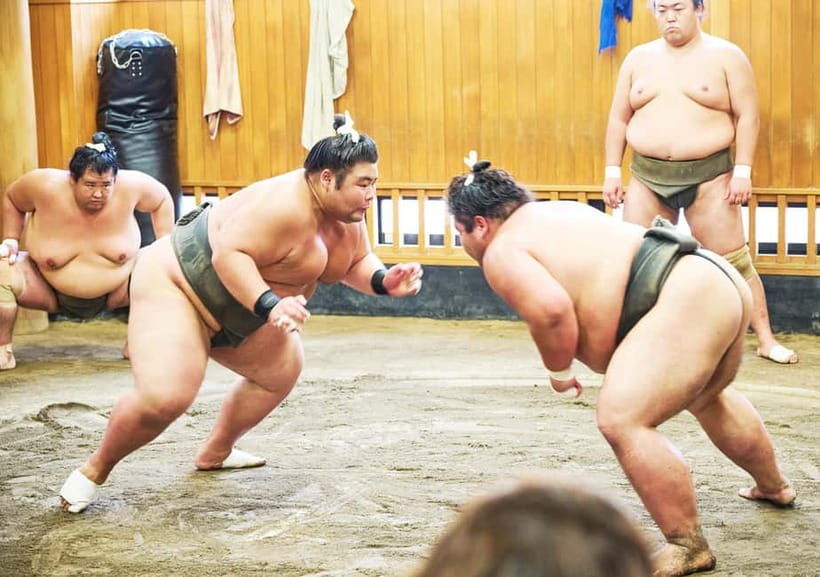
A sumo workout is loud in your bones. This Tokyo morning visit takes you to a real stable where wrestlers train, reset, and carry their rituals with purpose. You get hands-on context for what you’re seeing, not just a pass through a facility.
I love the chance to get close to the ring and watch training the way it actually happens, with the wrestlers staying focused on their work. I also like how the English guide explains the sport’s rules and meaning behind the movements, so the day makes sense minute by minute.
The main drawback is simple: this is a workplace. You must follow strict behavior rules, stay until the end of practice, and arriving late can mean you might not get in.
In This Review
- Key highlights worth your early start
- Why This Morning Sumo Session Feels Real, Not Staged
- Meeting at Kiyosumi-Shirakawa, Then Head to the Stable
- The Structure of the Visit: What the 2 Hours Actually Includes
- Inside a Real Sumo Stable: The Atmosphere You Can’t Fake
- What You’ll Watch During Morning Practice (and What It Means)
- Learning the Rules and Rituals Before You Sit Down
- Speaking With Wrestlers Outside Training Hours
- Price and Value: Is $98 Worth It for 2 Hours?
- Practical Rules That Will Save Your Morning
- Getting the Most Out of a Small Group Experience
- Who This Tour Suits Best (and Who Should Skip It)
- Should You Book This Sumo Morning Practice Viewing Tour?
Key highlights worth your early start
- A rare inside look at a Tokyo stable that is usually not open to the public
- Up-close viewing of morning training from ringside
- English explanations of rules and rituals you’ll recognize during the action
- Time to speak with wrestlers outside training hours
- Small-group feel that keeps the session respectful and focused
Why This Morning Sumo Session Feels Real, Not Staged
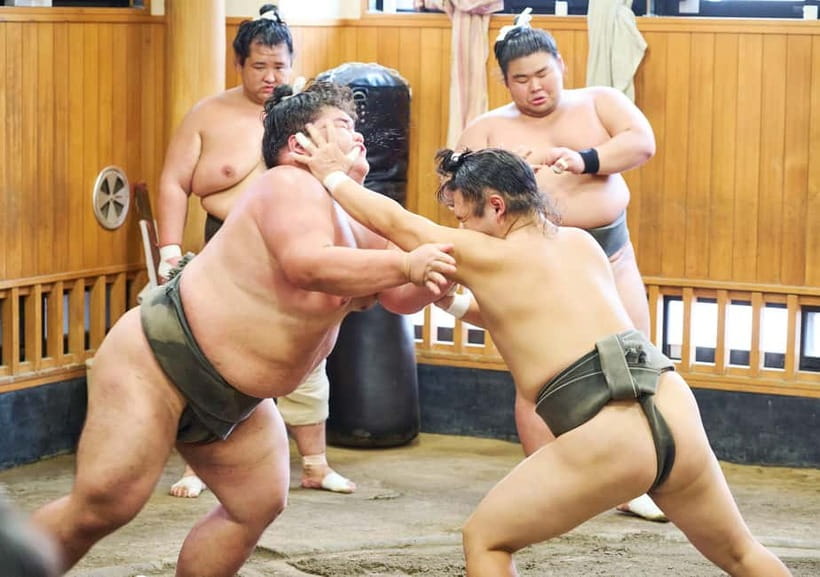
A lot of sumo experiences are basically performances. This one is different because the goal is not to entertain you, it’s to train for competition. When you watch from the side of the ring, you’ll notice the wrestlers move with the economy of people who have done the same patterns for years. The energy is intense, but it’s not chaotic.
The best part is how quickly the experience starts teaching you. Before the practice begins, your English-speaking guide sets the stage by explaining the rules and the rituals, so you can read the signals in the dohyō (the ring). You’ll also get a clearer sense of how ancient Shinto beliefs connect to sumo’s ceremonies and seriousness.
Compare these Sumo Stable visits in Tokyo:
- Tokyo: Sumo Show Experience with Chicken Hot Pot and a Photo
★ 4.8 · 6,678 reviews - Tokyo: Sumo Show and Dining Experience
★ 4.8 · 2,742 reviews - the SUMO show
★ 5.0 · 1,960 reviews
Meeting at Kiyosumi-Shirakawa, Then Head to the Stable
You’ll meet at Kiyosumi-Shirakawa Station, Exit A1. The guide will be holding a sign that says Local Guide Stars, so it’s not a guessing game. From there, you can reach the station via the Toei Oedo Line or the Hanzomon Line.
After you link up, the group may take a train to the stable. That matters because you’re not just “walking to a sight,” you’re timing a tight schedule around the morning practice window. Plan your arrival with extra cushion, because if you’re late, entry may not be possible.
The Structure of the Visit: What the 2 Hours Actually Includes
This tour is 2 hours, centered on morning practice viewing and cultural context. The core flow is: you meet, you travel to the stable, you get guidance on what you’ll see, you watch the practice, and you finish with an opportunity to speak with wrestlers outside training hours.
Your guide also keeps the group grounded in sumo rules and rituals. Guides such as Mao and Yuki are specifically praised for being clear, patient, and ready with explanations that don’t overwhelm you. Other guides named in feedback include Kawa and Tomo, with the same theme: they help you understand what’s happening without turning the stable into a classroom where nobody can hear the ring.
You should expect the practice window to run around 09:00 to 10:00 AM, and you must stay until the end of the session. If you have another commitment right after, give advance notice. This tour is short by design, so the timing is part of the deal.
Inside a Real Sumo Stable: The Atmosphere You Can’t Fake
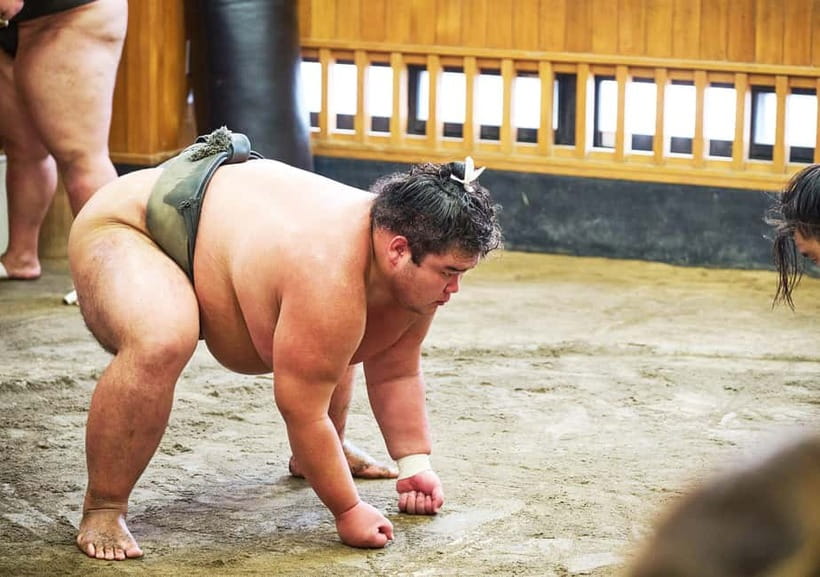
You’re not touring a museum. A sumo stable is a working environment where wrestlers live, train, and build their discipline. That’s why the tour feels focused and calm. In the best cases, you’ll feel like the wrestlers barely notice you, because their training is the priority.
There’s another realism factor: silence and stillness. Your instructions include no making noise, phones on silent, and not standing or moving around during practice. In practice, this creates a room tone you usually don’t experience in tourist attractions. The result is that you can hear the training rhythm better and watch the techniques without distractions.
Also, this is one of those experiences where you’ll appreciate the viewing position. Sitting close to the action means you can actually track how they enter and reset stances, and how quickly power travels through the body. People describing this tour repeatedly point out the same thing: it feels close enough to see what’s happening in the moment.
A few more Tokyo days to weigh up
- Mt Fuji and Hakone 1-Day Bus Tour Return by Bullet Train
★ 5.0 · 26,383 reviews - 1-Day Tokyo Bus Tour
★ 5.0 · 14,250 reviews - Tokyo: TOKYO SKYTREE® Admission ticket
★ 4.5 · 11,192 reviews - Tokyo: teamLab Planets TOKYO Digital Art Museum Entry Ticket
★ 4.6 · 9,779 reviews
What You’ll Watch During Morning Practice (and What It Means)
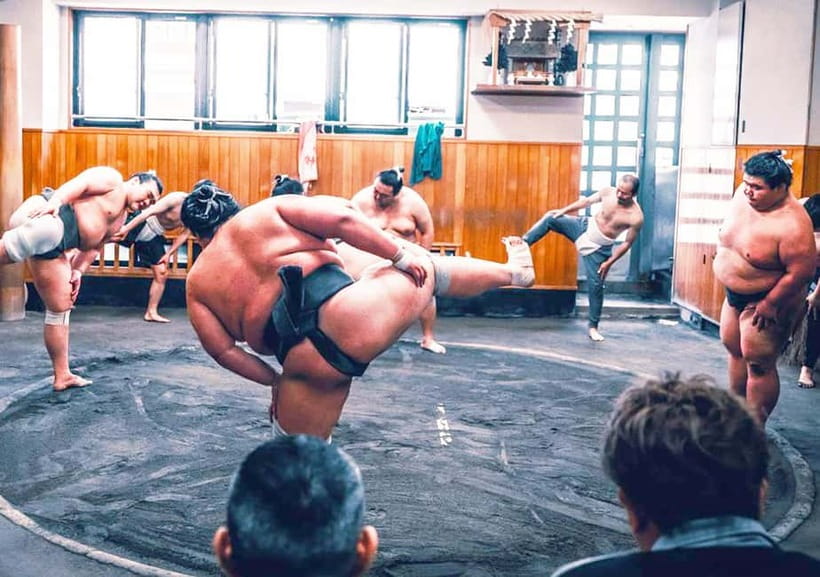
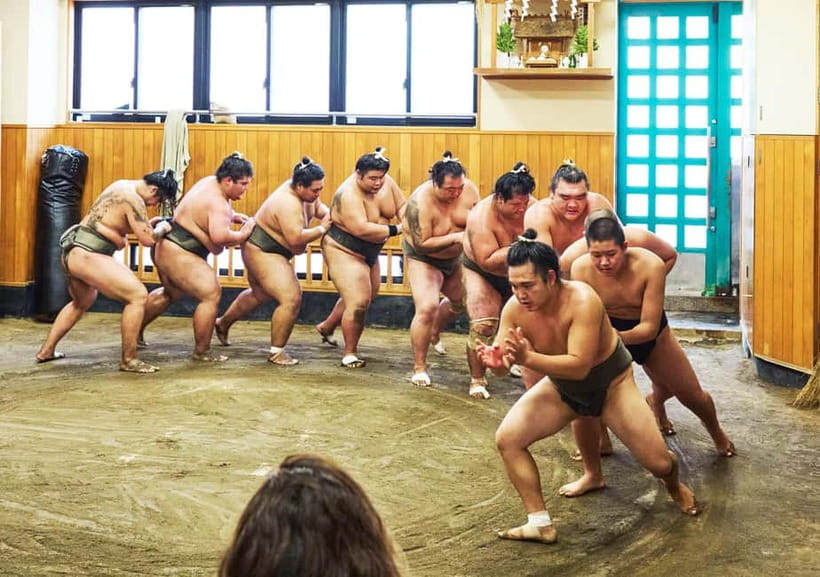
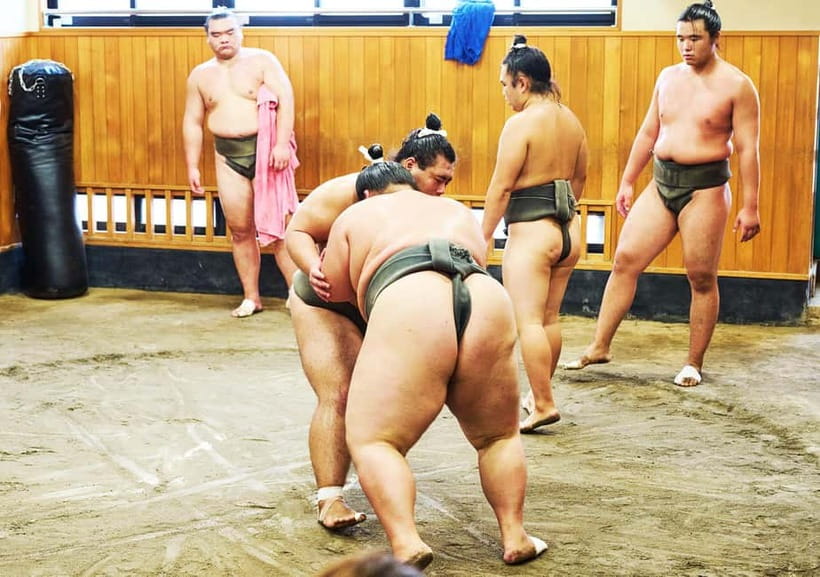
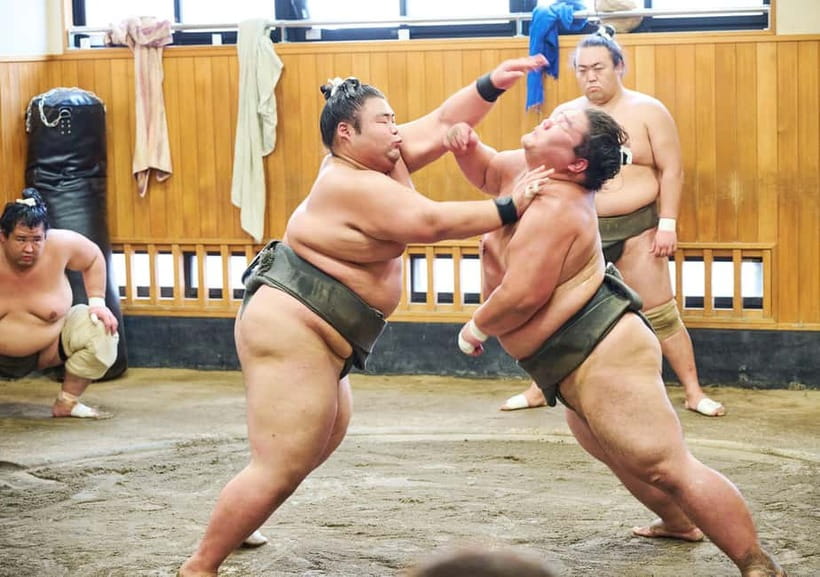
Morning practice is where you see sumo as training, not spectacle. Instead of focusing only on a dramatic match moment, you’ll watch repetition, conditioning, and technique. Expect to see wrestlers work hard with direct purpose, often with fast physical exchanges and frequent resets.
Because your guide explains the rules and meaning of the rituals, you’ll be better able to interpret what you’re observing. You’ll learn how sumo matches are won by forcing the opponent out of the ring or making any part of their body touch the ground. Even if you already know the basics, connecting that rule to the way training unfolds helps a lot.
You might also see big names. Some feedback mentions the possibility of seeing a yokozuna depending on the schedule. You can’t plan on that every day, but the chance adds a fun edge to the morning. In any case, you should go in expecting technique and intensity, not fireworks.
Learning the Rules and Rituals Before You Sit Down
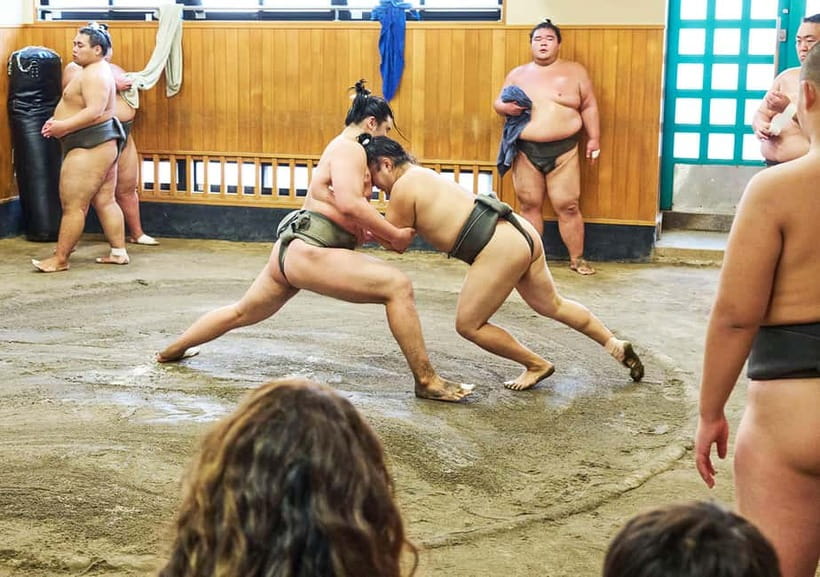
One of the best values here is the pacing of understanding. Your guide gives you the explanations in advance, so when the practice starts you can connect the dots between the ceremony, the movement, and the match logic.
Sumo is rooted in ancient Shinto beliefs, and the guide’s explanations help you see that link as part of the sport’s identity, not as extra decoration. The goal is to understand why every movement in and around the ring carries meaning. You’ll also hear about the culture surrounding training and tournaments, which helps you understand the wrestlers’ motivation.
I also like that the guide’s style seems practical. Multiple guide names in feedback, including Mao and Yuki, are praised for being patient with latecomers and for keeping the explanations clear and well-paced. If you’re the type who wants to ask questions, this kind of structure makes it easier to focus.
Speaking With Wrestlers Outside Training Hours
A big reason to book a stable visit is that you get more than viewing. You have an opportunity to speak with wrestlers outside training hours. This is not a meet-and-greet where you interrupt their day for photo ops. It’s more respectful and more grounded, because it happens when training is done.
In feedback, people mention that speaking time can feel friendly and that you may even get a chance for photos in some situations. If that matters to you, remember it depends on the stable’s flow that day.
This is also the moment where your questions pay off. If you want the experience to stick, ask about something your guide already set up: what a ritual means, how training starts early, or what it takes to chase top-ranked goals. The wrestlers may not be giving a lecture, but questions that connect to what you saw make the conversation more meaningful.
Price and Value: Is $98 Worth It for 2 Hours?
At $98 per person for a 2-hour experience, the ticket looks straightforward. The real value comes from what you’re buying: access to a real stable that is typically not open to the public. You’re also getting an English-speaking guide focused on rules and rituals, plus time to speak with wrestlers.
For me, this price makes sense because it’s not a generic city activity. It’s a time-sensitive cultural experience tied to early morning practice. You can’t really “DIY” the same access without the right contacts, and you certainly can’t recreate the explanation that helps you read what’s happening in the ring.
One more value angle: the tour behavior rules are strict for a reason. Since the stable is a workplace, the experience stays authentic. That authenticity reduces the chance you’ll feel like you paid to watch a show with performers trained to accommodate a crowd.
Practical Rules That Will Save Your Morning
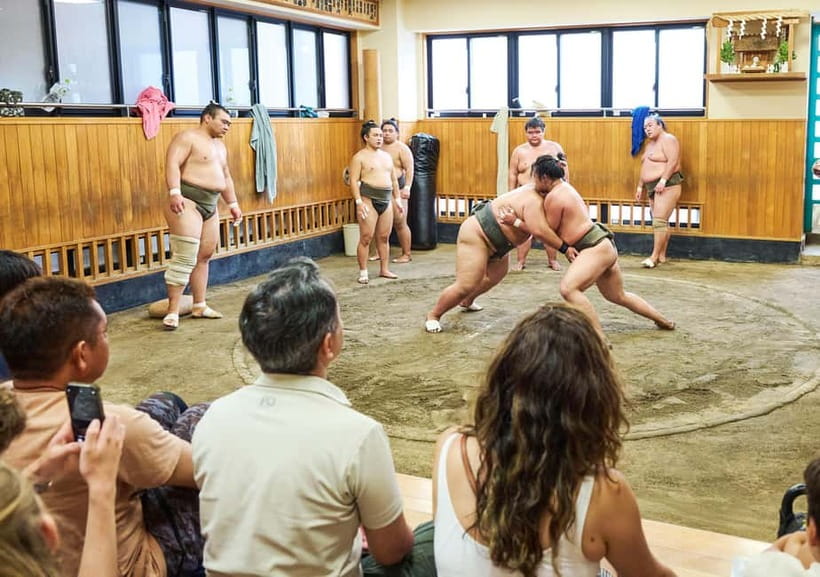
This tour runs like a working session, so treat it that way. The “do’s” are simple, but they matter:
- Stay until the end of practice (around 09:00 to 10:00 AM)
- No standing up or moving around during the practice
- Modest clothing only
- Phone on silent
- Don’t make noise
You’ll also want to be ready for the “no re-entry” rule. Once you leave the stable, you can’t go back in. So if you need the restroom, do it early and don’t try to time it mid-session.
One more practical point: your arrival time matters. If you arrive late, entry may not be possible. I’d aim to be at the station well ahead of the meeting time, not just right on time. In feedback, a guide named Mao is praised for managing late arrivals, but the schedule still tightens when people slip late. That’s your clue to give yourself a cushion.
Getting the Most Out of a Small Group Experience
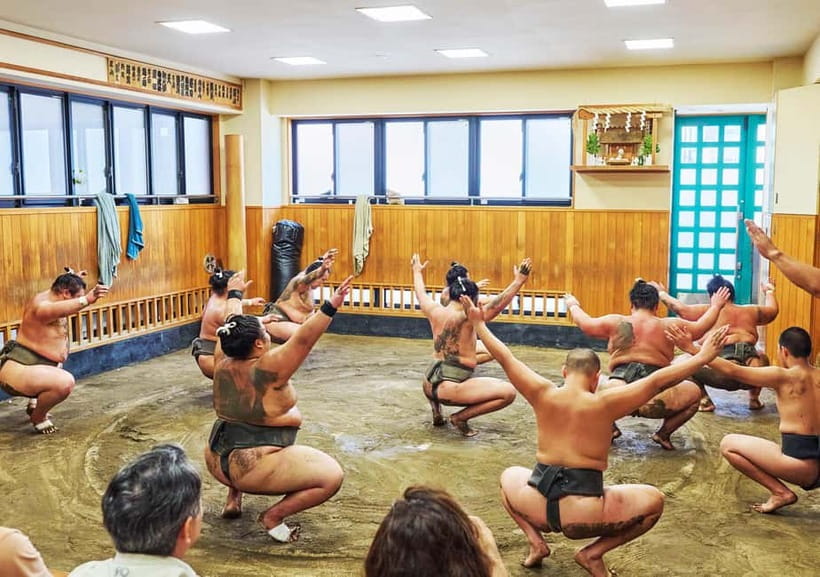
This tour can run with a small group. Feedback includes examples like a group of 11 guests and a group size of 14. Small numbers help in two ways: you can focus on the ring without constant crowd jostling, and your behavior expectations are easier to follow. The stable staff can keep training running smoothly.
A small group also makes the guide more effective. When your guide can see everyone’s attention level, explanations come in the right order, and the time before practice helps you understand what matters most. If you love cultural context as much as action, that’s a big plus.
Who This Tour Suits Best (and Who Should Skip It)
This is best for you if you want authentic culture you can watch closely, and if you like learning what you’re seeing. If you’re excited by rules, rituals, and how discipline shapes a sport, you’ll likely enjoy how the guide frames sumo.
It’s also a good fit for adults and older kids, but there’s a clear limit: the tour is not suitable for children under 11. It’s also not a good match if you can’t follow quiet workplace rules. The stable is serious about respect, and you’ll need to follow instructions.
If you hate sitting still for a while or you plan to snack or talk constantly, this won’t feel comfortable. The point here is quiet observation during practice, then conversation afterward.
Should You Book This Sumo Morning Practice Viewing Tour?
Book it if you want a real stable experience where the wrestlers treat the day as work, not a performance. The combination of ringside viewing, an English guide explaining rules and rituals, and a chance to speak with wrestlers outside training hours makes this one of the more meaningful ways to experience sumo in Tokyo.
Skip it if you’re late-prone, don’t like strict etiquette, or you’re traveling with someone under 11. Also skip it if you’re trying to stack tight plans right after, because you must stay through the end of practice.
If you’re willing to arrive early, dress modestly, stay quiet, and watch like a respectful student of the sport, this is a morning you’ll remember long after you leave the stable.
Newly listed around Tokyo
- Modern Vegan Night Foodie Tour in Tokyo★ 3.9 · 7 reviews
- Tokyo: Asakusa Night Waling & Food Tour★ 4.9 · 16 reviews
- Tokyo Vegan Food Tour★ 5.0 · 8 reviews
- Tokyo: Tsukiji Market Walking Tour & Sushi Cooking Class★ 4.6 · 122 reviews
- Tokyo: Tsukiji walk & sushi private tour with Uni Students★ 5.0 · 17 reviews
- Tokyo: Two Types of Japanese Sweets Making and Tea Ceremony★ 4.6 · 26 reviews
- Tokyo Tsukiji Food & Culture Private Tour Licensed Guide★ 4.9 · 28 reviews
- Tokyo: Tsukiji Fish Market Culture Tour with Sashimi Tasting★ 4.6 · 54 reviews
Sumo Stable Visits, compared.
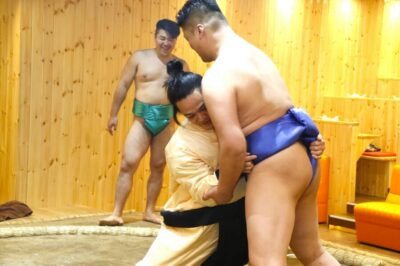
Sumo Show Experience with Chicken Hot Pot and a Photo
Read our review →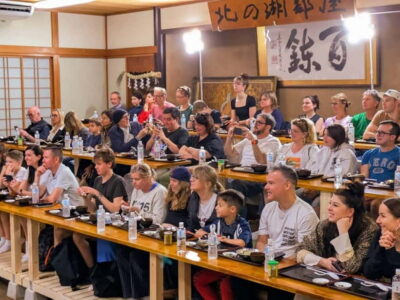

Tokyo Sumo Entertainment Show with Chicken Hot Pot and Photo
Read our review →
Tokyo Grand Sumo Tournament Viewing Tour with Tickets
Read our review →

Sumo Show & Experience w/ Optional Kimono & Hot Pot
Read our review →Browse the lists this tour appears in