
Review · SUMO STABLE VISITS
Tokyo: Sumo Morning Practice Viewing Tour
Seeing sumo up close is rare. This morning tour gets you inside a real sumo stable in Ryogoku, where you watch training with the same focus the wrestlers use every day.
I especially like the up-close training feel, because you are not watching from a distance like you do at a stadium. I also love that you have an English guide who explains what you are seeing and why it matters, with help from clear notes during the quiet parts.
One consideration: you need to follow strict rules during practice, including staying seated and not moving around, and there is no re-entry once you leave the stable.
In This Review
- Key things that make this Tokyo sumo tour worth your time
- Ryogoku Morning: The sumo district energy you cannot fake
- Entering the stable: the rules that keep practice respectful
- How the 90 minutes to 2 hours actually moves
- What you will see: the real work behind the matches
- Seating and sightlines: getting the best view without stressing out
- The guides and the notes: how you learn to watch sumo
- Photos with wrestlers: what you should expect
- How the tour compares to a tournament day
- Price and value: does $81 buy real access?
- Who should book this Tokyo sumo morning practice tour
- My take: should you book this tour or skip it?
- FAQ
- FAQ
- How long is the Tokyo sumo morning practice viewing tour?
- Where does the tour take place in Tokyo?
- Do I need to stay until the end of the practice?
- Are hats, sunglasses, food, or drinks allowed?
- Can I record video or use flash photography?
- Does the tour include an English guide?
- Is this tour suitable for children?
- Are photos with wrestlers included?
- What are the cancellation and pay options?
Key things that make this Tokyo sumo tour worth your time
- Enter a stable, not a show room: the stables are hard to access, so this feels rare.
- Close, floor-level viewing: you watch drills and bouts up close, with intense power and fast action.
- An English guide who talks in the right moments: short explanations, then silence during practice.
- Ryogoku is built for sumo: the area around the Sumo stadium and Sumo town makes the morning feel like the sport’s home base.
- Stars can appear depending on the day: some schedules include big names during training.
- Photos are possible when offered: you might get a photo with wrestlers, but it depends on the day.
Ryogoku Morning: The sumo district energy you cannot fake
Ryogoku is where Tokyo feels most “sumo.” You are in Honshu’s capital, but the vibe is different here, because the sport is treated like daily life, not just entertainment. This tour builds that setting into your morning, since the stable is in the same neighborhood as the Sumo stadium and the surrounding Sumo town.
I also like that this is scheduled early. Morning practice is when the discipline shows. You get to see wrestlers running their training like a routine they have repeated for years, not like a performance built for crowds.
And yes, it matters that you are stepping into a working stable. Many stables are basically off limits to the public, and some access has historically been tied to sponsors. So when you get in, you feel the difference right away.
Compare these Sumo Stable visits in Tokyo:
- Tokyo: Sumo Show Experience with Chicken Hot Pot and a Photo
★ 4.8 · 6,678 reviews - Tokyo: Sumo Show and Dining Experience
★ 4.8 · 2,742 reviews - the SUMO show
★ 5.0 · 1,960 reviews
Entering the stable: the rules that keep practice respectful
You will be in a place of work, and the stable expects visitors to act like guests who understand the rules. Here is what you need to plan around from the start:
Modest clothing is required. You should also plan to leave hats and sunglasses behind. Food and drinks are not allowed, and you cannot use flash photography or record video. Phones need to be on silent.
During the practice itself, you must stay until it ends (roughly 09:00 to 10:00 AM), and once you exit, there is no re-entry. That means you need to keep your schedule clean after the tour, because you cannot pop back in if you forget something.
The hardest part for some people is the posture and the silence. You are told not to stand up or move around during training, and you are expected to be quiet. It sounds simple, but it changes how you experience the bouts, because you start paying attention to footwork, timing, and the rhythm of drills.
How the 90 minutes to 2 hours actually moves
This tour is short on paper, but it feels full because the morning training itself is the main event.
First, you meet your licensed English guide and head to the stable area, which can include a short train ride after meeting. Then you get an initial orientation, about 15 minutes, that frames what you are about to see. This is where the “how to watch sumo” part happens, so later, the training makes more sense.
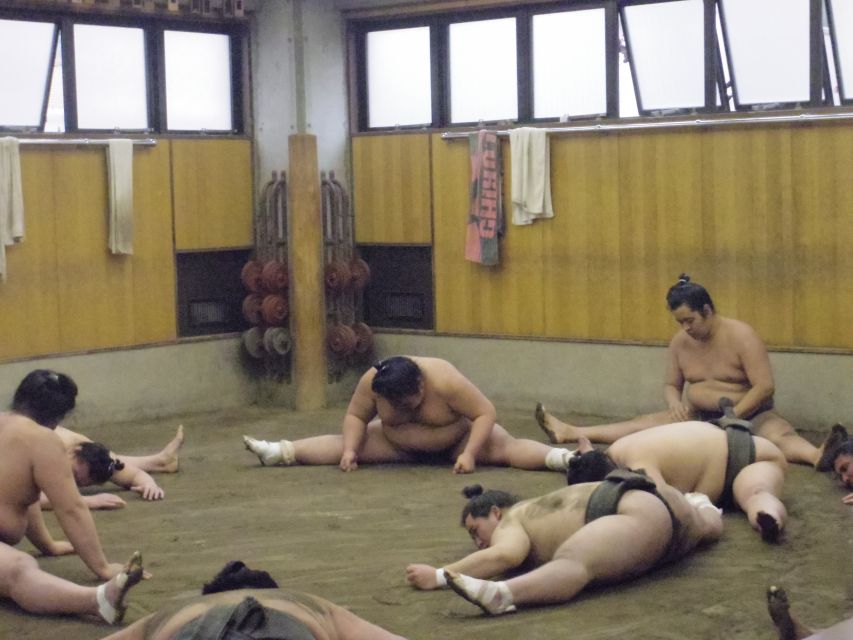
Next comes the main block, around 60 to 90 minutes of morning practice. The exact length can vary depending on the day, but the expectation is that you stay through the end of training. You are watching wrestlers warm up, drill techniques, and test match-ups in training rounds.
Finally, the tour wraps. Ending location can differ from the meeting place depending on the schedule, so it helps to be ready to follow your guide’s lead for the last step.
What you will see: the real work behind the matches
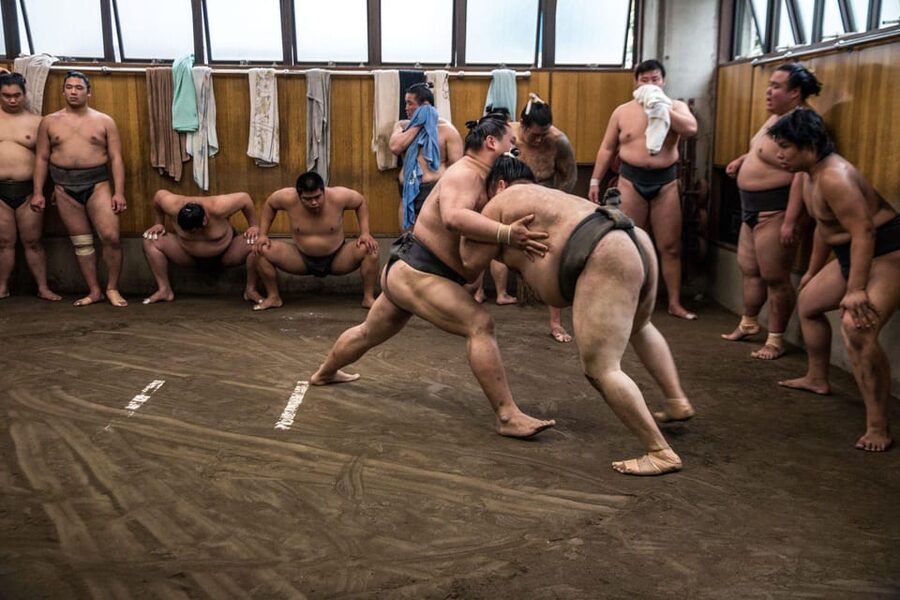
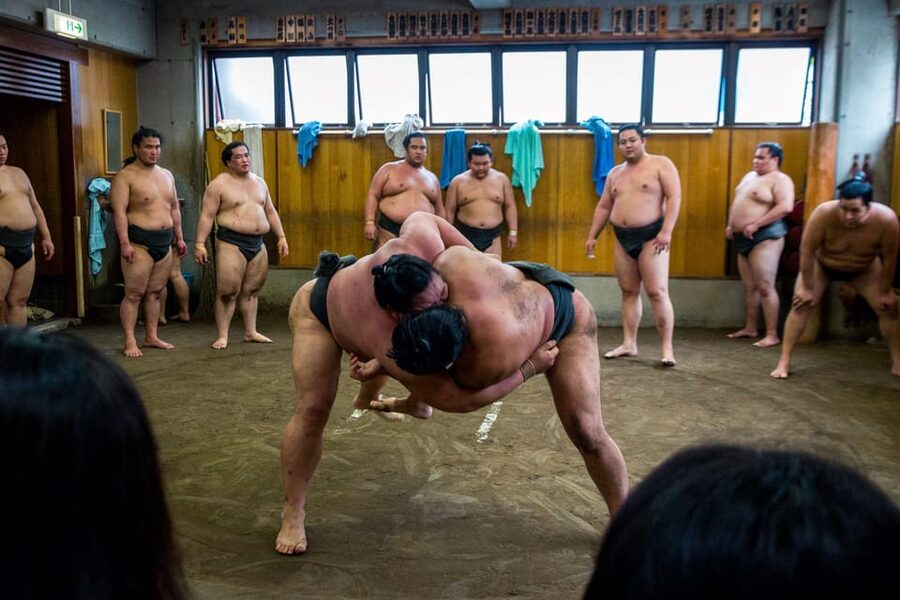
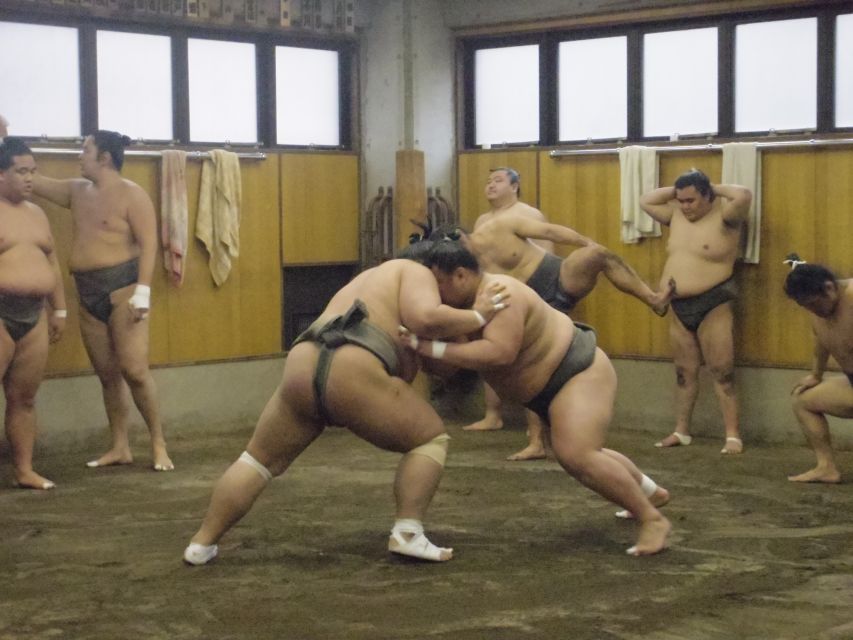
Sumo practice is not a gentle stretch session. It is intense, repetitive in the best way, and built for competition. The basic goal is familiar if you have seen sumo bouts: force your opponent out of the ring or make any part of the body touch the ground.
But what surprised me, as a concept to watch, is how much effort goes into control. Matches can be quick, and even in training, the wrestlers are constantly adjusting distance, balance, and pressure. That makes the action feel sharper when you are sitting close enough to hear the movement and see the tension in their stances.
You might notice different kinds of practice moments in the same session. Some sequences look like technique testing, others look more like structured bouts, and you often see wrestlers repeating drills to tighten what will matter later in tournaments.
This is also where sumo’s deeper roots show up. Sumo is tied to Shinto beliefs, and the sport still carries that sense of ritual and formality even when it is hard-driving training. Watching up close gives you a better feel for why the tradition is not just decoration.
A few more Tokyo days to weigh up
- Mt Fuji and Hakone 1-Day Bus Tour Return by Bullet Train
★ 5.0 · 26,383 reviews - 1-Day Tokyo Bus Tour
★ 5.0 · 14,250 reviews - Tokyo: TOKYO SKYTREE® Admission ticket
★ 4.5 · 11,192 reviews - Tokyo: teamLab Planets TOKYO Digital Art Museum Entry Ticket
★ 4.6 · 9,779 reviews
Seating and sightlines: getting the best view without stressing out
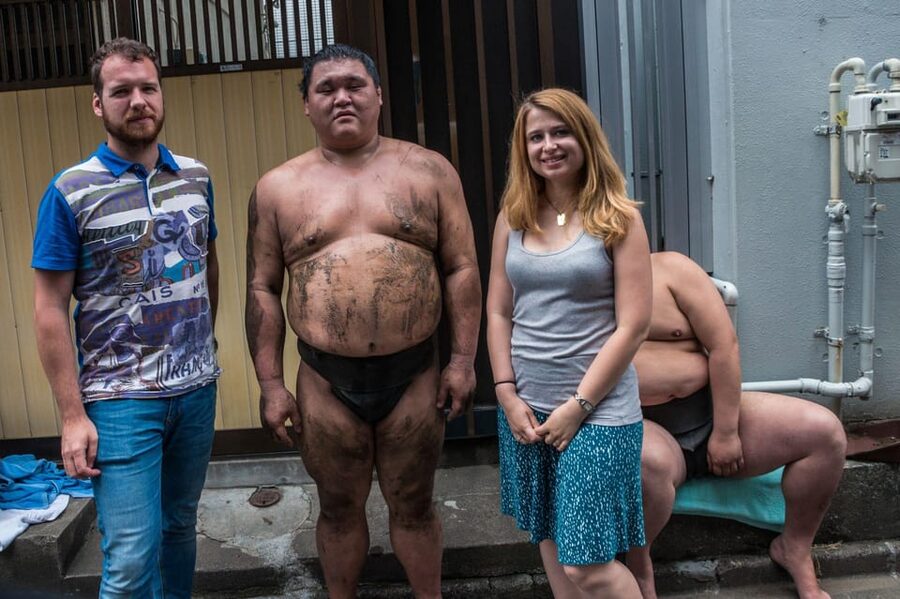
Most people come for the close-up experience, and you can get it, but you still have to work with the reality of floor seating. One practical tip: arrive with a little extra patience and be ready to sit promptly when your group is positioned.
Some groups can be larger on certain mornings, and that affects how front-row seating plays out. If another group arrives early and claims the front, your view can be a bit more side-on. The good news is that even second-row and end-of-row seats usually still feel close, because the stable floor brings you into the action.
Also, plan for the quiet. You will want to keep your phone low, silent, and away. If you want photos, plan them carefully and only when permitted and when your day’s photo moment happens.
The guides and the notes: how you learn to watch sumo
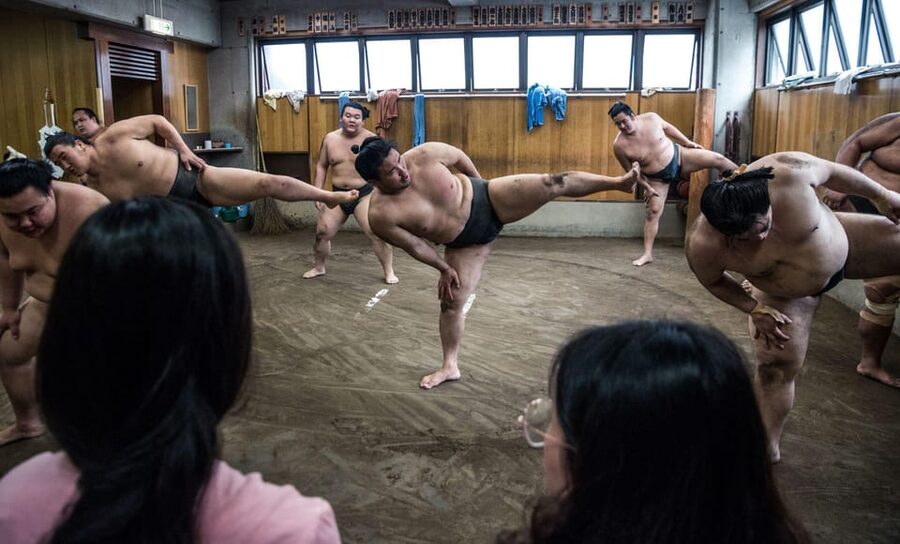
What makes this tour better than just sitting in silence is how your English guide explains things at the right time. Guides often do short teaching moments before practice, then they step back during training so you can watch without chatter.
In past groups, guides named Oku San, Yoko, Noriko, Taku, Mako, Nobu, Miwako, Tad, Kaz, Daigo, and Yuko have led tours and shaped the experience through clear explanations and humor. Even when the personalities differ, the pattern is the same: they help you identify what is happening and why it matters, so your hour of training does not turn into guessing.
A detail I really like is the use of written aids. Some guides provide help sheets or cards, and you can follow along while staying quiet. That is huge, because sumo stable rules mean you cannot be asking questions mid-bout. If you have notes, you can connect the actions you see with the explanations you were given earlier.
Photos with wrestlers: what you should expect
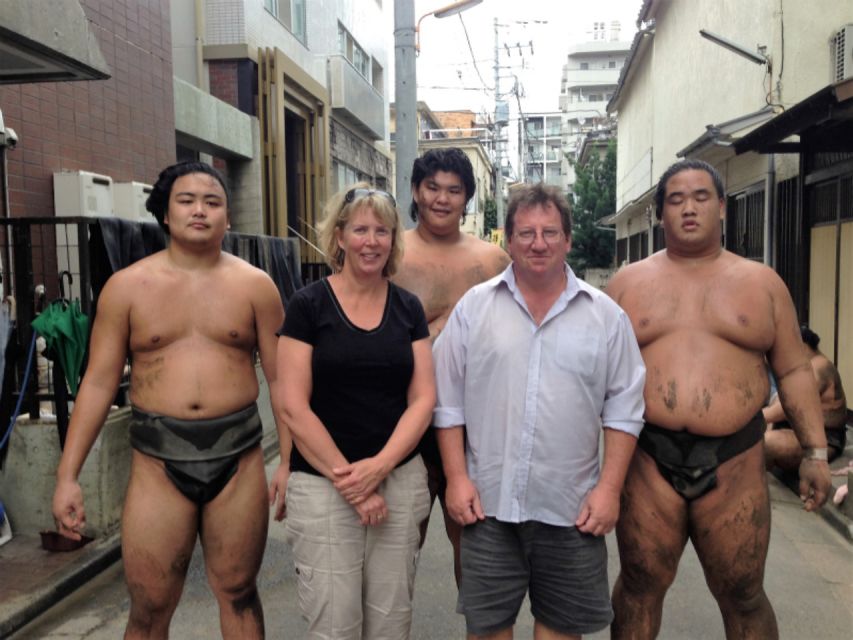
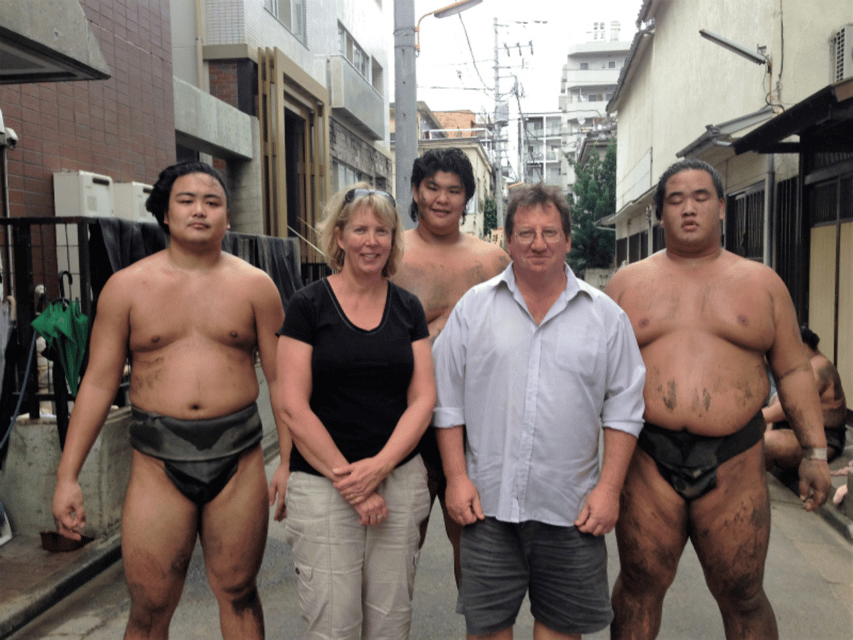
The tour includes photos with wrestlers when available. That can change by day, and the stable schedule controls what is possible.
If your day includes the photo moment, take it seriously. Follow your guide’s cues and stay respectful in the moment. A photo here feels different than a staged souvenir stop, because you are still inside a working stable. When it works out, it is a memorable way to mark that you were truly in the training space, not just outside it.
Even without a photo, you still get the main value: watching training up close in a setting that is usually closed to the public.
How the tour compares to a tournament day
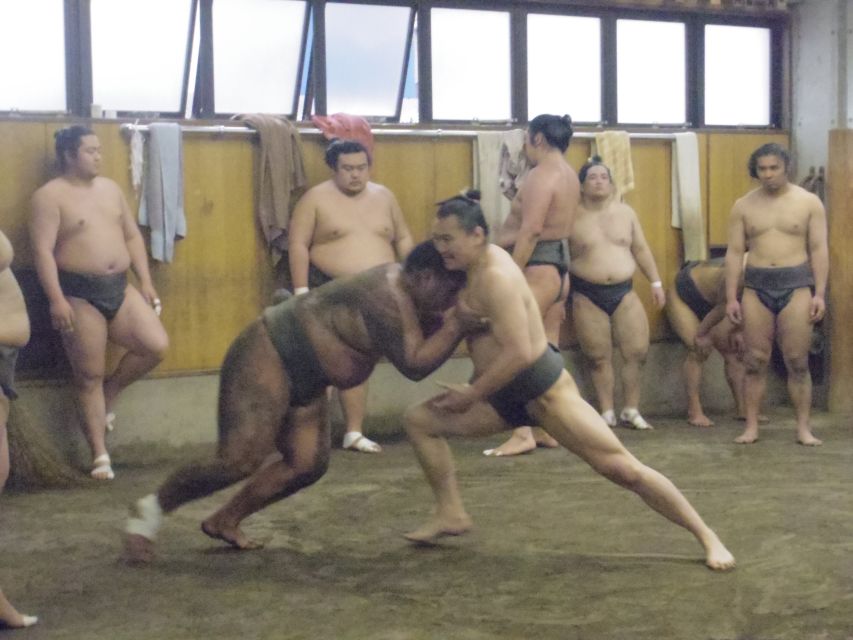
A tournament is the big dramatic show. This tour is something else. It gives you the behind-the-scenes structure that makes a tournament easier to understand later.
Seeing wrestlers practice the same kind of pushing, pulling, and footwork helps you learn what to watch during a match. It also shows you how much stamina and repetition the sport demands, since training is about building consistent timing and balance.
If you cannot easily line up your Tokyo dates with a tournament, this tour can scratch a similar itch in a realistic way. It is also a strong choice if you want context first, then you can enjoy a later stadium day with sharper eyes.
Price and value: does $81 buy real access?
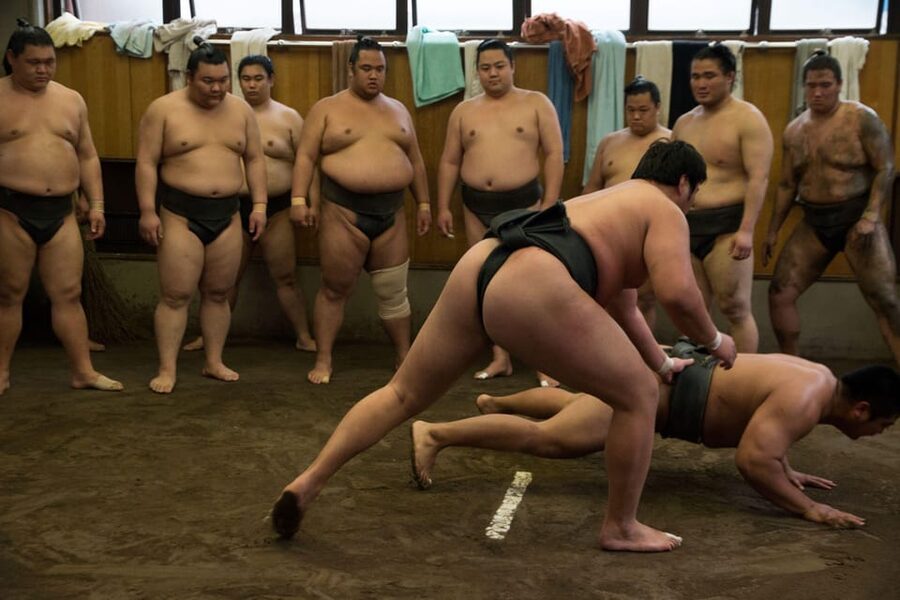
$81 per person is not cheap, and you should not pretend it is bargain pricing. But it can still feel fair when you understand what you are paying for: access to a real sumo stable during morning practice, with an English licensed guide, plus photo options when the stable allows it.
You are also paying for something most sumo visitors cannot get on their own. Since stables are not broadly open to the public, the main “product” is entry plus an interpreter who helps you understand what you are witnessing.
Is it worth it? If you care about sumo beyond surface-level bouts, yes. You will leave feeling like you saw the machinery, not just the headline result. If you dislike rules, quiet sessions, or sitting on the floor for a sustained period, you might find the experience more demanding than you expected.
Who should book this Tokyo sumo morning practice tour
This is a great fit if you:
- Want a real stable experience in Ryogoku, not a simplified tourist version of sumo
- Enjoy learning the sport’s structure and customs, and you are comfortable with rules
- Want to watch training up close and feel the intensity in person
- Prefer a morning activity that is focused, not an all-day shuffle
It may be less ideal if you:
- Need frequent movement or you find long quiet stretches hard
- Are visiting with children under 11, since the tour is not suitable for that age group
- Have mobility impairments, since the experience is not designed for accessibility needs described in the tour info
My take: should you book this tour or skip it?
If you are in Tokyo and sumo is on your list, I think this tour is a smart booking. It gives you rare stable access, a short guide-led setup, and then the real work of sumo training up close. The strict behavior rules are not a nuisance here, they are part of what makes the experience feel authentic.
My “yes, book it” advice is simple: plan to arrive with patience, dress modestly, keep your phone silent, and treat the practice like you are in someone’s workday. Do that, and you will get far more than a photo moment. You will understand how serious morning training really is, and you will carry that knowledge into anything you see later, including tournament days.
FAQ
FAQ
How long is the Tokyo sumo morning practice viewing tour?
The tour runs about 90 minutes to 2 hours, depending on the day’s practice schedule.
Where does the tour take place in Tokyo?
The stable is located in Ryogoku, a well-known sumo area near the Sumo stadium and Sumo town.
Do I need to stay until the end of the practice?
Yes. You must stay until the end of the practice, around 09:00 to 10:00 AM. Once you leave the stable, there is no re-entry.
Are hats, sunglasses, food, or drinks allowed?
No. Hats and sunglasses are not allowed, and food and drinks are also not allowed inside the stable area.
Can I record video or use flash photography?
No. Flash photography is not allowed, and video recording is not allowed.
Does the tour include an English guide?
Yes. The tour includes a live English guide.
Is this tour suitable for children?
No. The tour is not suitable for children under 11 years old.
Are photos with wrestlers included?
Photos with wrestlers are included when available, and they depend on the day’s schedule.
What are the cancellation and pay options?
You can cancel up to 24 hours in advance for a full refund. You can also reserve now and pay later.
Newly listed around Tokyo
- Tokyo private transfer for Yokohama Port★ 4.5 · 63 reviews
- Luxury Kimono Photoshoot at Ginza Tokyo★ 5.0 · 7 reviews
- Tokyo Allstar Food Tour★ 4.5 · 206 reviews
- Tokyo Art Aquarium Museum E-Ticket with optional Tokyo Metro Pass★ 5.0 · 17 reviews
- Tokyo: Best Ginza Food Tour at 3 Local Eateries★ 5.0 · 83 reviews
- Private One Day Nikko Tour with Bilingual driver★ 3.5 · 11 reviews
- Kabuki Talk★ 5.0 · 10 reviews
- Japanese Whisky Tasting Experience at Local Bar in Tokyo★ 5.0 · 59 reviews
Sumo Stable Visits, compared.
Sumo Show Experience with Chicken Hot Pot and a Photo
Read our review →

Tokyo Sumo Entertainment Show with Chicken Hot Pot and Photo
Read our review →
Tokyo Grand Sumo Tournament Viewing Tour with Tickets
Read our review →

Sumo Show & Experience w/ Optional Kimono & Hot Pot
Read our review →Browse the lists this tour appears in