
Review · SUMO STABLE VISITS
Tokyo: Sumo Morning Practice with Photo Banzuke and Guide
Sumo feels different when you see it up close. This Tokyo morning practice puts you right by the ring so you can feel the power of the wrestlers, and the English guide makes the traditions click with a practical basics lesson. I also like the small-group setup, plus the chance to photograph the banzuke before the action moves on. The main drawback to plan for is timing, the group runs together and you really do need to be on time, since late arrivals can slow the start.
You’ll be watching training for their next big match, not a staged show. Sumo runs on ritual and repetition, and sitting in chairs keeps it comfortable while you focus on what the wrestlers are actually doing. One more thing to consider: this is not designed for small kids, so if you’re traveling with children under 9, you’ll need a different plan.
In This Review
- Key Points Before You Go
- Sumo Morning Practice in Tokyo, and Why It Feels Like the Real Thing
- Meeting at Kiyosumi-shirakawa Exit B1, and the Punctuality Trick That Matters
- The First 15 Minutes: Getting Oriented Before the Action
- 2.5 Hours of Guided Observation: Watching Practice Like a Sumo Fan
- Photo Stop Time and the Banzuke Moment You’ll Actually Use
- The Short Basics Presentation: How to Understand No Weight Classes and Ritual
- Walking Segments: Keep Them Comfortable, Don’t Rush Them
- Value and Price: Why $115 Can Be Worth It for the Right Person
- Who This Tour Is Best For, and Who Should Skip It
- Practical Tips That Make the Day Smoother
- Should You Book This Tokyo Sumo Morning Practice With Photo Banzuke and Guide?
- FAQ
- How long is the tour in Tokyo?
- Where do I meet the guide?
- Is the tour in English?
- What’s included in the experience?
- Is there time to take photos?
- How large is the group?
- Is this activity wheelchair accessible?
- Is the tour suitable for children?
- Can I get a refund if I cancel?
Key Points Before You Go
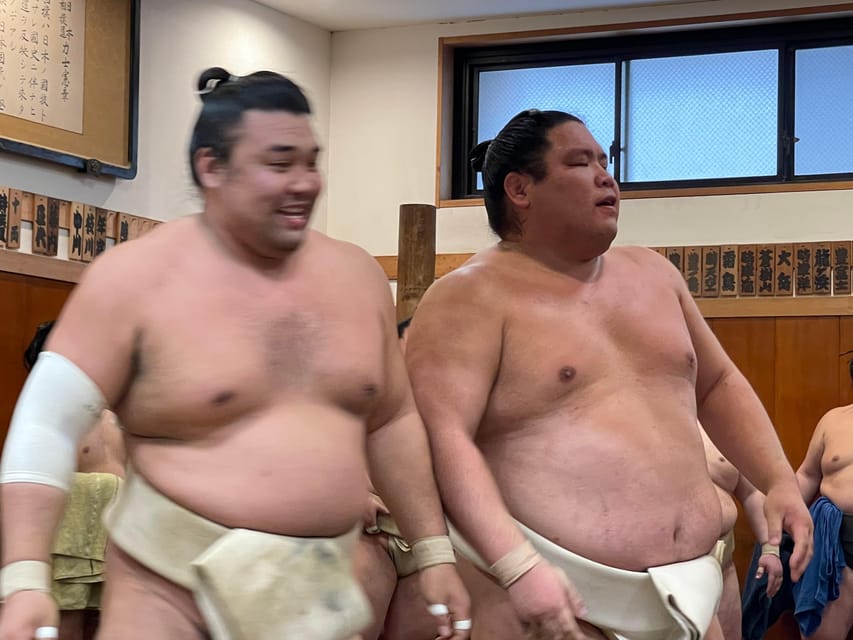
- Up close training, seated in chairs, so you can actually watch footwork and throws
- English guide with a short basics presentation, so you leave understanding more than just spectacle
- Banzuke photo time, helpful for connecting rankings to what you’re seeing
- Small group of up to 9, which makes questions easier and the experience calmer
- Strong on punctuality, because the group experience depends on everyone arriving together
- Not for children under 9, so plan accordingly for family travel
Sumo Morning Practice in Tokyo, and Why It Feels Like the Real Thing
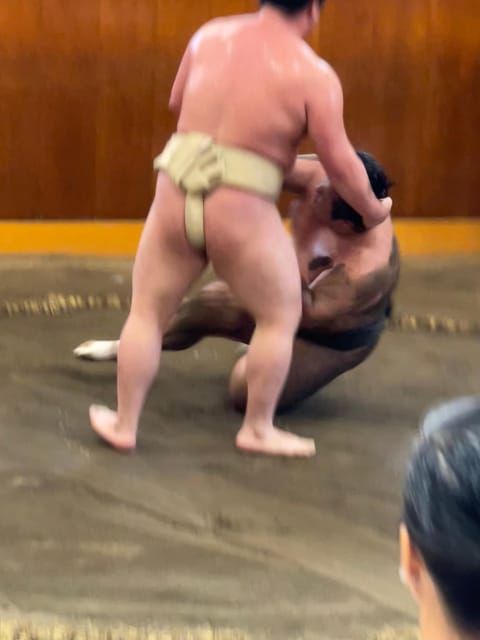
If you’ve only ever seen sumo on TV, this kind of morning session changes your sense of scale. The wrestlers look like they’re built from solid muscle and focus, and in practice you see the mechanics. You’re not just looking at dramatic moments, you’re watching them test grips, timing, balance, and throws over and over.
The big appeal here is that the tournaments are held only 90 days of the year, which means this training world is where the sport lives between big events. You get a rare look at what’s happening inside a working stable, the place where tradition and daily effort meet. It’s also one of the few sports where there’s no weight class, so the matchups and techniques are less about categories and more about leverage, speed, and control.
This tour also pairs observation with meaning. I like that you’re not left with just photos. You get a short presentation that helps you translate what you’re seeing into simple sumo basics you can carry home.
Compare these Sumo Stable visits in Tokyo:
- Tokyo: Sumo Show Experience with Chicken Hot Pot and a Photo
★ 4.8 · 6,678 reviews - Tokyo: Sumo Show and Dining Experience
★ 4.8 · 2,742 reviews - the SUMO show
★ 5.0 · 1,960 reviews
Meeting at Kiyosumi-shirakawa Exit B1, and the Punctuality Trick That Matters
The whole day runs like a tight local schedule, so the meeting point detail is not minor. You meet at Kiyosumi-shirakawa Station Exit B1, near a FamilyMart convenience store. That spot matters because it’s easy to recognize from street level, and it reduces the usual Tokyo problem of “Where exactly are you?”
One very practical tip: be at the exit, not five minutes down the sidewalk. The instructions are specifically set up so people using taxis do not miss the group. In a group tour, that means the meeting place is chosen for speed and visibility, not convenience for wanderers.
If you think you might be late, contact the tour team. They’ll still try to accommodate you, but the group needs to be prioritized. In plain terms, late arrivals can push back the flow, and it can make the experience feel longer than you hoped.
The First 15 Minutes: Getting Oriented Before the Action
Right after meeting, you get a short guided orientation. This part is brief, but it matters. Before you’re watching serious training, you want context for what you’re about to see: how a stable day works, and what the practice is trying to accomplish.
This is also where you can mentally shift gears from sightseeing mode to spectator mode. Tokyo is full of things to photograph, but sumo has its own rhythm. Once you understand that rhythm, the practice session becomes easier to follow, and you’ll notice details you would otherwise miss, like why certain movements happen in sequence.
2.5 Hours of Guided Observation: Watching Practice Like a Sumo Fan
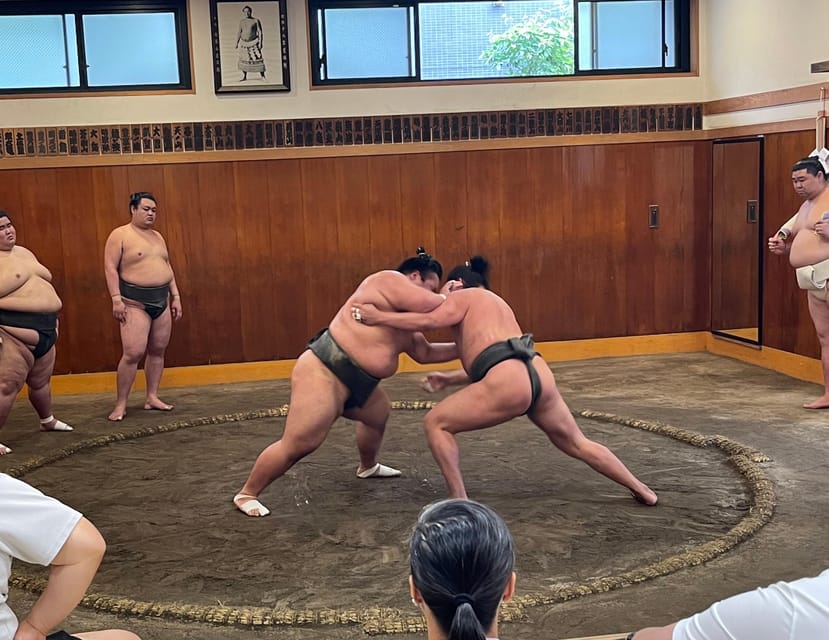
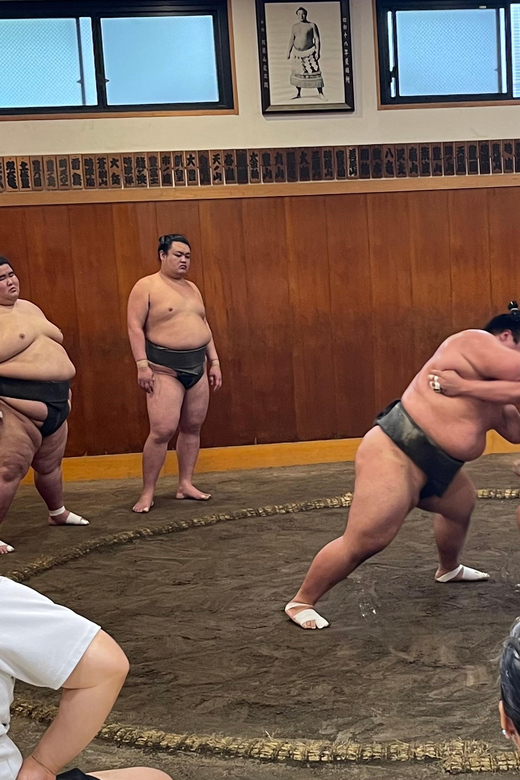
The heart of the experience is a long, guided observation of sumo practice. You’ll watch the wrestlers train and compete in a traditional sumo stable, and you’ll see them prepare for their next big match.
This is the part people love most because it’s close. Sumo is powerful even when you’re watching on TV, but when you’re physically near the wrestlers, you notice things like stance, spacing, and the force behind each attempt. Practice is also where technique shows up. You can watch how they enter, how they control the upper body, and how they scramble for balance when the first plan fails.
A key detail: you sit in chairs. That sounds simple, but it’s a big deal. During long practice sessions, standing for hours makes it hard to keep your eyes on the ring and harder to take steady photos. Seated viewing helps you stay alert, which means you’ll actually remember what you saw after the tour.
And because it’s guided, you’re not stuck guessing. You learn the meaning behind the rituals and how training fits into the bigger picture of the sport.
A few more Tokyo days to weigh up
- Mt Fuji and Hakone 1-Day Bus Tour Return by Bullet Train
★ 5.0 · 26,383 reviews - 1-Day Tokyo Bus Tour
★ 5.0 · 14,250 reviews - Tokyo: TOKYO SKYTREE® Admission ticket
★ 4.5 · 11,192 reviews - Tokyo: teamLab Planets TOKYO Digital Art Museum Entry Ticket
★ 4.6 · 9,779 reviews
Photo Stop Time and the Banzuke Moment You’ll Actually Use
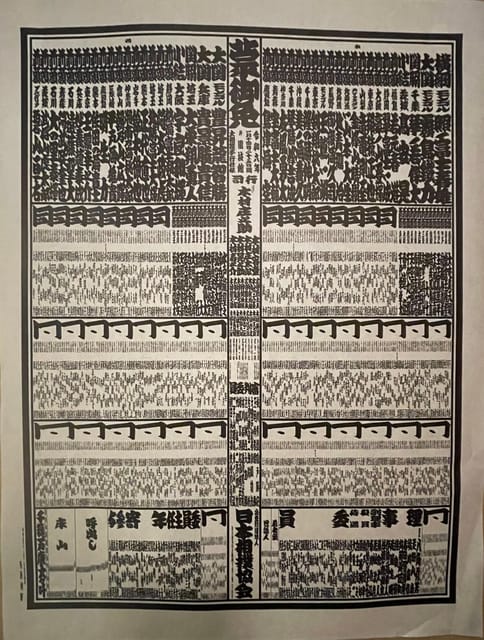
There’s a dedicated photo stop built into the day, including time connected to the banzuke. If you’re not sure what that is, don’t worry. The banzuke is the official ranking list, and seeing it in the right context makes it feel less abstract and more connected to real wrestlers and real training.
For photography, a photo stop is more than a break. It’s time when you can reposition, reframe, and get shots that make sense later. Without that structured moment, you’d often spend your camera time chasing the best angle instead of learning what you’re looking at.
If photography matters to you, bring your camera and be ready to use it in low-motion, close-up situations. Practice action comes in bursts, and having a short, planned photo window helps you capture both the visual details and the stable atmosphere.
The Short Basics Presentation: How to Understand No Weight Classes and Ritual
After the practice session, you get a short presentation from your local English guide focused on sumo basics. I like this because it turns the spectacle into knowledge you can reuse.
You learn the basics of the sport, including the idea that sumo has no weight class. That changes how you think about matchups. Instead of asking, Who is bigger, you start asking, Who has better leverage, foot placement, timing, and control. You also gain a framework for understanding why certain moments feel more important than you’d expect, because technique and discipline matter as much as raw strength.
This portion is especially helpful if you’re not already fluent in sumo terms. You don’t need to memorize everything. The goal is to leave with enough understanding that your next sumo moment in Japan does not feel like random tradition.
Walking Segments: Keep Them Comfortable, Don’t Rush Them
Between the guided parts, there are short on-foot walks to move between points and transitions. Each walking segment is relatively brief, but you’ll still want comfortable shoes.
This is not the kind of day where you can wear uncomfortable sneakers and hope for the best. Morning practice can be physically demanding even if you’re seated most of the time, because you’re focused, watching closely, and you’re likely to be standing or shifting positions for photos.
The walking time also gives you small gaps to reset your brain. You’ll get brief breathing space so you can focus again when the next guided moment begins.
Value and Price: Why $115 Can Be Worth It for the Right Person
At $115 per person for a 7-hour experience, the value depends on what you want out of Tokyo sumo.
Here’s why it can feel like good value:
- You’re getting access to a practice session at a stable that allows observation, which is not guaranteed everywhere.
- You’re not doing it alone. The guide adds context through the basics presentation, and that makes the experience more than a photo walk.
- The small group size, limited to 9 participants, keeps the experience personal enough that you can benefit from explanations.
- You’re seated during the main observation, which improves comfort and helps you actually watch.
When it might not feel like value:
- If you only want photos and you don’t care about understanding the traditions, you may find the guided basics part extra.
- If punctuality is hard for you on travel days, the group timing can feel restrictive. One review described the start taking longer because people kept showing up late, which is the kind of thing you want to avoid by being early.
For most people who want something real, not just a quick stop, the price is reasonable. This is the kind of experience where good guidance and a working stable setup make the difference.
Who This Tour Is Best For, and Who Should Skip It
This tour is a strong match if you want:
- Hands-on understanding of sumo culture, not just a quick look
- An English guide to explain what you’re seeing
- Close viewing and chair seating for the long practice window
- A small group day in Tokyo that feels structured but not rushed
It’s likely not ideal if:
- You’re traveling with children under 9, since it’s not suitable for them.
- You dislike group timing or you often run late. The tour is built around moving together and making sure the stable observation stays on track.
Also, if you’re a camera person, this day can work well because you get both guided observation and a dedicated photo window.
Practical Tips That Make the Day Smoother
A few things to help your day go smoothly:
- Arrive early and wait at the exact meeting spot, Exit B1 near FamilyMart. Do not assume someone will find you if you wander off.
- Bring comfortable shoes for the walking segments and the time you’ll spend paying attention.
- Bring a camera if banzuke and action shots matter to you.
- Plan your schedule so you do not need to leave early. The experience is paced for the group, and cutting out early can reduce what you get from the guide’s explanations.
Should You Book This Tokyo Sumo Morning Practice With Photo Banzuke and Guide?
Book it if you want a real, close-up view of sumo training in a stable setting, and you like the idea of learning the basics from a local guide in English. The combination of seated observation, a banzuke photo moment, and guided explanation is what turns this from sightseeing into understanding.
Skip it if you need a super flexible schedule, or if you’re only interested in quick photos and you do not care about the rituals and the no-weight-class logic. Also, if you’re traveling with kids under 9, look for another option that fits your family.
FAQ
How long is the tour in Tokyo?
The tour duration is 7 hours.
Where do I meet the guide?
You meet at Kiyosumi-shirakawa Station Exit B1 near a FamilyMart convenience store.
Is the tour in English?
Yes, the live tour guide speaks English.
What’s included in the experience?
You get observation of a sumo practice session, a short presentation on the basics of sumo, and a local guide.
Is there time to take photos?
Yes. There is a photo stop during the experience, including time connected to the banzuke.
How large is the group?
The tour is a small group limited to 9 participants.
Is this activity wheelchair accessible?
Yes, it’s listed as wheelchair accessible.
Is the tour suitable for children?
It is not suitable for children under 9 years.
Can I get a refund if I cancel?
You can cancel up to 24 hours in advance for a full refund.
Newly listed around Tokyo
- Tokyo private transfer for Yokohama Port★ 4.5 · 63 reviews
- Luxury Kimono Photoshoot at Ginza Tokyo★ 5.0 · 7 reviews
- Tokyo Allstar Food Tour★ 4.5 · 206 reviews
- Tokyo Art Aquarium Museum E-Ticket with optional Tokyo Metro Pass★ 5.0 · 17 reviews
- Tokyo: Best Ginza Food Tour at 3 Local Eateries★ 5.0 · 83 reviews
- Private One Day Nikko Tour with Bilingual driver★ 3.5 · 11 reviews
- PRIVATE tour in 180SX to Daikoku+++++★ 5.0 · 6 reviews
- Kabuki Talk★ 5.0 · 10 reviews
Sumo Stable Visits, compared.
Sumo Show Experience with Chicken Hot Pot and a Photo
Read our review →
Tokyo Sumo Entertainment Show with Chicken Hot Pot and Photo
Read our review →
Tokyo Grand Sumo Tournament Viewing Tour with Tickets
Read our review →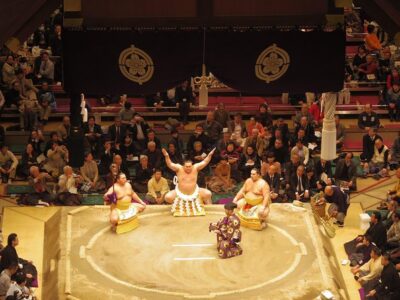
Sumo Show & Experience w/ Optional Kimono & Hot Pot
Read our review →Browse the lists this tour appears in