
Review · SUMO STABLE VISITS
Tokyo: Sumo Morning Training Visit
Tokyo sumo is one of those sports you understand only up close. This morning visit takes you inside a real sumo stable so you can see active professionals train, not just pose for a tournament crowd. The experience is simple on paper, but what you’ll actually notice is the discipline, the pace of practice, and how physical the work looks when you’re sitting right there.
I love two things most: seeing keiko at close range (drills, warm ups, and sparring-like action depending on the day) and the guaranteed finish with a group picture with the wrestlers. The main drawback to plan for is sitting still on the floor for a long time, with strict rules about noise, phones, and movement, so it is not a casual “tour stop.”
In This Review
- Key points before you go
- Tokyo Sumo Morning Training, the Real Keiko
- Meeting up When the Address Changes and Timing Matters
- What the Morning Session Looks Like, and Why Your Seat Matters
- The Training Focus: Drills, Intensity, and What You Can Spot
- The Group Photo Moment, When It Happens and How to Get Ready
- Stable Rules You Should Treat Like Non-Negotiables
- Price and Value: Is $77 Worth a Working Stable Session?
- Guide Experience: What to Expect From English Support
- Who This Tokyo Sumo Visit Suits Best
- Booking Tips That Fix 90 Percent of Problems
- Should You Book This Tokyo Sumo Training Visit?
- FAQ
- Where do I meet, since the address can change?
- How long is the training visit?
- What is included in the price?
- What should I bring and what is not allowed?
- Are photos and videos allowed?
- Is hotel pickup available?
Key points before you go
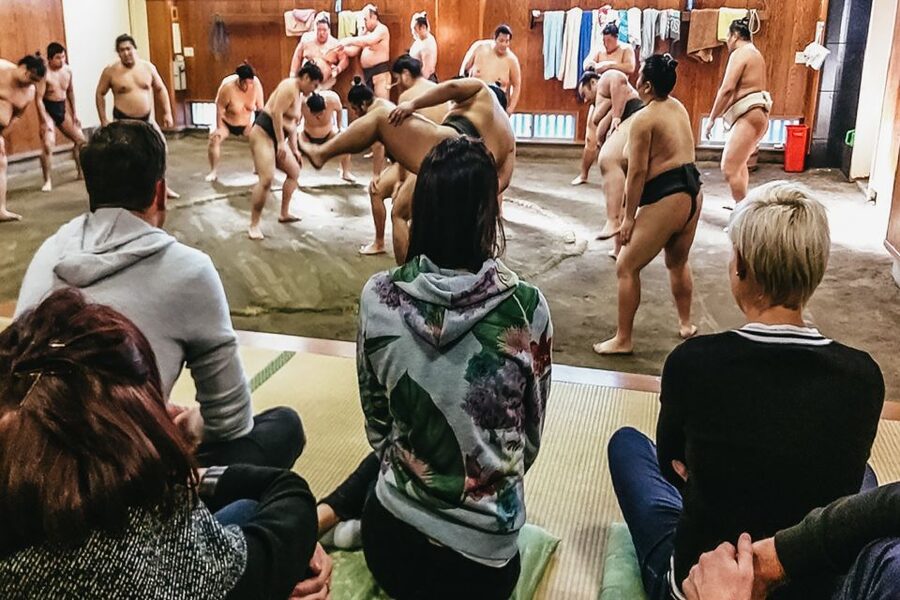
- Working stable access, not a staged show: you’re watching training, with the rhythm of a real morning practice.
- Close views depend on timing: arrive early to give yourself a better seat angle.
- Training length can be shorter in tournament weeks: expect about 60 minutes normally, about 30 minutes during Grand Sumo Tournaments.
- Your group photo depends on staying until the end: leaving early can mean missing it.
- Stable rules are firm: no flash photography, no hats or sunglasses, and quiet voices only.
Tokyo Sumo Morning Training, the Real Keiko
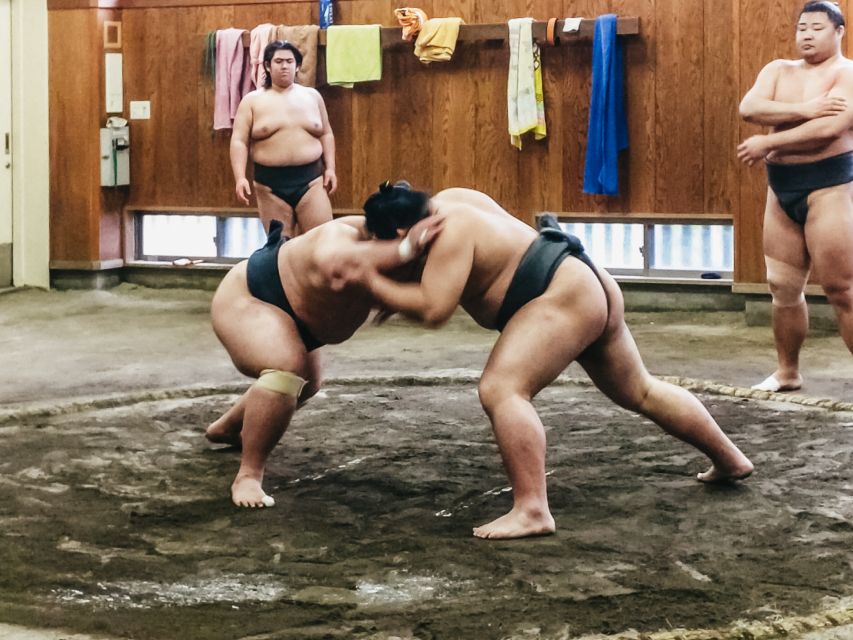
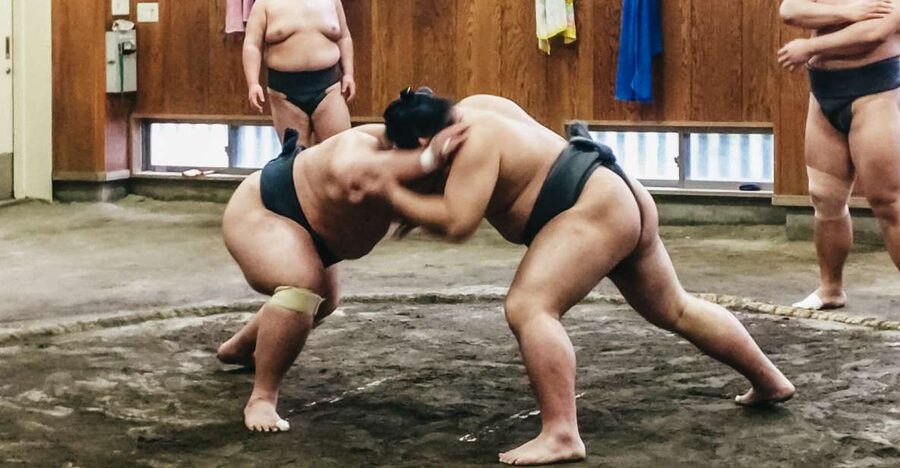
This is not a “look at sumo” performance. It’s a front-row seat to training at a working stable, the kind of place where routines matter and visitors follow the flow. You’ll see active wrestlers practice the physical basics that make the sport work: explosive movement, tight footwork, pushing drills, and match-like intensity when sessions include sparring.
The best part is how quickly your perspective changes. In tournaments, you mostly watch the finish, the dramatic throw, the ring of noise. In training, you understand the craft: how wrestlers set their stance, how they reset, how they drill balance and timing. Even if you do not know the terminology yet, you’ll feel the seriousness. Multiple people have said it feels like a privilege to be allowed in, and that’s the vibe here.
If you’re coming mainly for history lessons or a narrated culture talk, you might feel slightly underfed. The setup is very focused on getting you into the stable, watching the session, and following conduct rules. Think of it as a live training observation first, education second.
Compare these Sumo Stable visits in Tokyo:
- Tokyo: Sumo Show Experience with Chicken Hot Pot and a Photo
★ 4.8 · 6,678 reviews - Tokyo: Sumo Show and Dining Experience
★ 4.8 · 2,742 reviews - the SUMO show
★ 5.0 · 1,960 reviews
Meeting up When the Address Changes and Timing Matters
One thing you need to respect right away: your meeting point is not fixed. The exact location and time get confirmed by email about 3 days before your visit, and it can differ from what Google Maps shows. The voucher you receive can also be a sample, so you have to treat the confirmation email as the source of truth.
Check-in starts at the meeting time. That means if you arrive early, do not ring the doorbell or enter on your own. If you show up late, your spot can be considered waived after 10 minutes, so plan for Tokyo logistics and transit delays.
There’s also an optional transfer, but it is not universal. You can choose a one-way hotel pickup if you’re in Tokyo’s 23 wards. Drivers are Japanese-speaking and do not speak English, so if you are using pickup, have your meeting details ready on your phone.
Practical tip: save the contact number from your confirmation email. People have had meeting-place confusion (wrong address listed online), and calling for help gets you unstuck fast.
What the Morning Session Looks Like, and Why Your Seat Matters
The visit is built around morning training, usually about 60 minutes. During Tokyo Grand Sumo Tournaments in January, May, and September, the training sessions can be only about 30 minutes. The length can also shift depending on the wrestlers’ condition, because this is training, not a timed theater show.
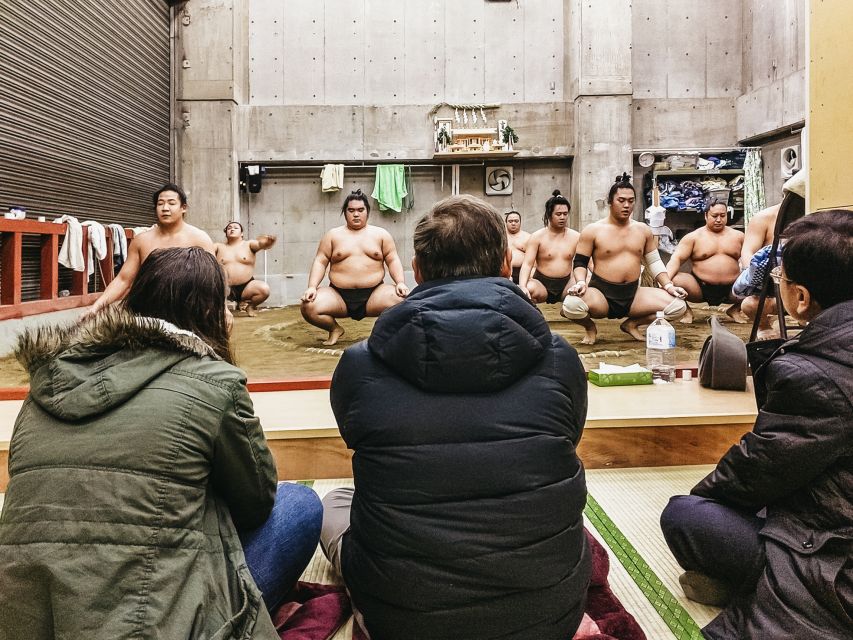
What you will do during the session is mostly what everyone is talking about in their feedback: sit quietly, watch closely, and let the intensity play out in front of you. You’re in the stable environment where movements happen in a small space around the dohyo, the ring area. That is why this experience works. The action is not far away, and you can see technique rather than just spectacle.
Seats are often first-come, and many visitors recommend aiming for the front if you care about visibility and photo framing. If you end up in the back, you may still enjoy the workout, but you can lose some of the details when heads and bodies block your line of sight.
Comfort note: the schedule is demanding because you need to stay put. Several people mention the floor seating takes getting used to, and at least one person wanted more seating support like cushions or chairs. If you have knee issues or you know you struggle with long still periods, this is a real consideration.
The Training Focus: Drills, Intensity, and What You Can Spot
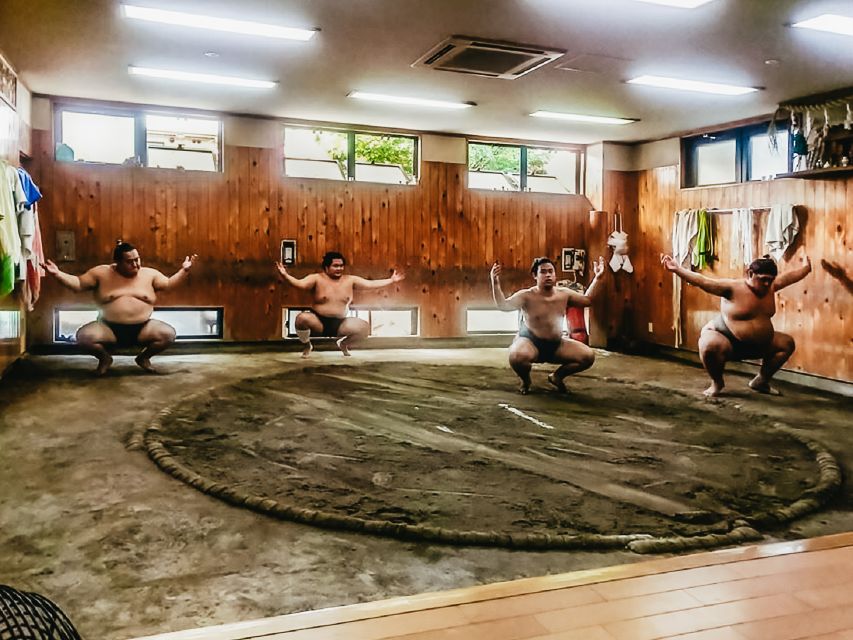
On a typical morning, you can expect a mix of warm-ups and practice. From the way people describe their time inside, the session often includes:
- Strenuous warm-up and drills (you see sweat, effort, and repeated technique)
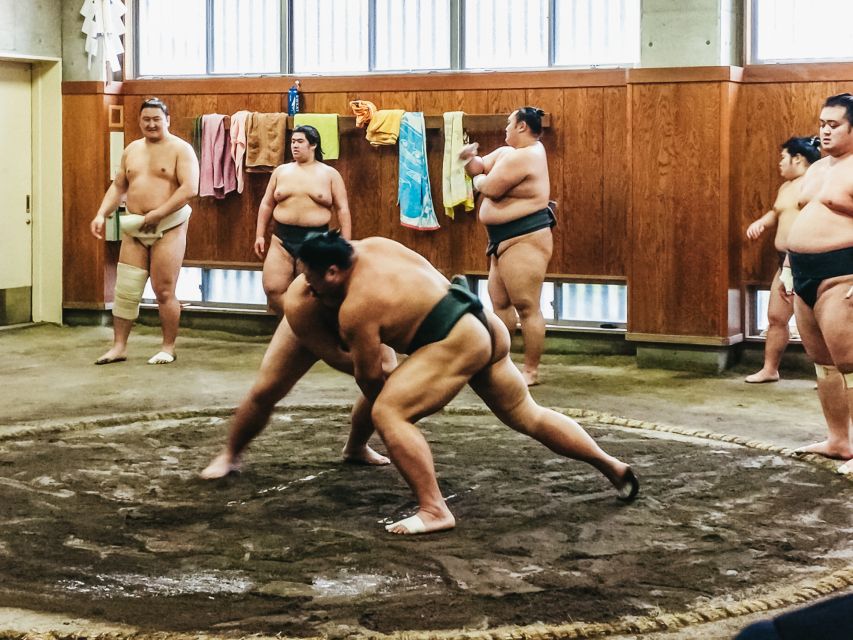
- Pushing and grappling practice that looks closer to training than exhibition
- Sometimes sparring-like action, depending on what’s scheduled that day
One of the big surprises for many first-timers is how dynamic training looks once you’re close enough to track the body mechanics. People note how fast wrestlers move, how they recover their stance, and how they use leverage and timing rather than only raw size.
Also remember: this is not necessarily a full tournament moment with a guaranteed bout. You are seeing a working stable, and training can include more preparation than match drama. If you want competition-style bouts, you might need separate tournament tickets, but for seeing how sumo is made day to day, this gets you there.
A few more Tokyo days to weigh up
- Mt Fuji and Hakone 1-Day Bus Tour Return by Bullet Train
★ 5.0 · 26,383 reviews - 1-Day Tokyo Bus Tour
★ 5.0 · 14,250 reviews - Tokyo: TOKYO SKYTREE® Admission ticket
★ 4.5 · 11,192 reviews - Tokyo: teamLab Planets TOKYO Digital Art Museum Entry Ticket
★ 4.6 · 9,779 reviews
The Group Photo Moment, When It Happens and How to Get Ready
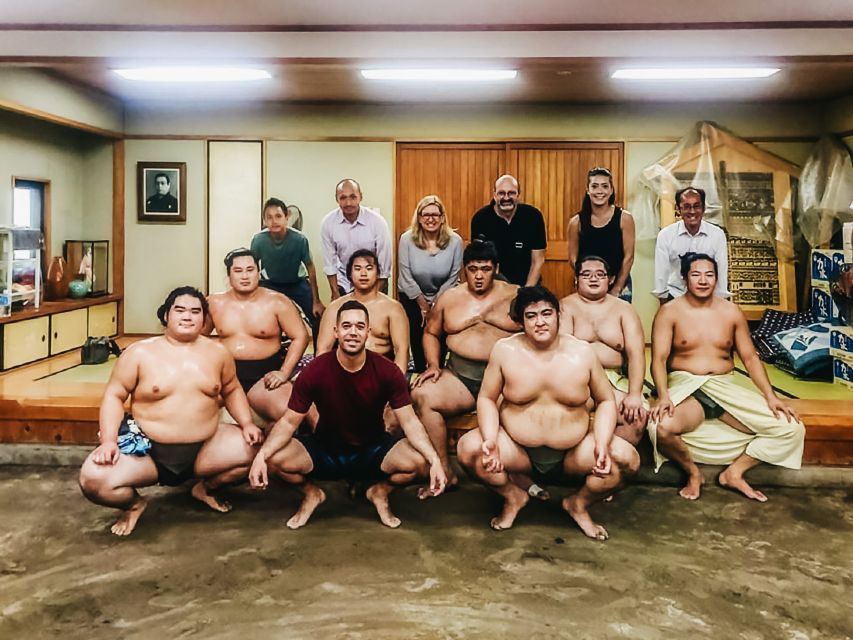
The visit includes a group picture with the sumo wrestlers. It’s usually at the end of the session. That detail changes your planning more than you might expect.
If you leave early, you may not receive the group photo. So if you’re on a tight schedule later in the morning, give yourself buffer time. Plan your next stop only after you’re sure you’ll stay until the end.
What to do practically:
- Be seated and ready when the photo time approaches.
- Keep your phone away until allowed for the group shot.
- Follow the guide or host instructions exactly, since the flow depends on the stable staff and wrestlers.
It’s not a casual souvenir moment either. It’s part of the stable’s structured ending, and doing it the right way matters.
Stable Rules You Should Treat Like Non-Negotiables
The stable has clear do’s and don’ts. If you want the smoothest experience and the least stress, assume these rules are strict and follow them without negotiation.
Bring:
- A face mask or protective covering.
Do not bring or do:
- Hats and sunglasses
- Food and drinks
- Luggage or large bags
- Smoking indoors
- Flash photography
- Loud talking or noises
- Phones that are not in silent mode
Also:
- Entering the stable is only allowed with the guide.
- Video may be possible only with prior permission, so don’t treat filming as automatic.
These rules matter because you’re stepping into a real training environment, not a visitor attraction with flexible boundaries. You’ll probably hear the message quickly during check-in, but it helps to arrive mentally prepared.
Price and Value: Is $77 Worth a Working Stable Session?
At $77 per person for a 1-hour experience, the value depends on what you want from Tokyo sumo.
This price includes two things that are hard to replicate on your own:
- Entry to a real morning training stable
- A group photo with the wrestlers
It does not include hotel pickup unless you add the optional transfer. And the experience is only as “long” as the training session runs that day, especially in tournament weeks when it may be about 30 minutes.
How does that compare? People have specifically said it can be cheaper than paying for a tournament event, while still giving you the rare, close access of seeing training up close. If your goal is authenticity and technique rather than match entertainment, the cost starts to make sense fast.
Where the value can feel weaker is when you expected more narration or more seated comfort. Some visitors mention the guide’s role is light, with limited English background explanations. Others were perfectly happy with the focus on watching. Your ideal depends on whether you want a guided story or you want the training as the main event.
Guide Experience: What to Expect From English Support
The host or greeter is listed as English, but the level of explanation can vary day to day. People describe two common patterns:
- Some guides focus mainly on getting names checked and handing out simple rules.
- Others communicate well, but miscommunication can happen if English is limited on the day.
So here’s how to set expectations the smart way: go in ready to learn by observation. Watch carefully. Even without a long talk, the training speaks for itself.
If you care about “what you’re seeing,” it helps to do a tiny bit of prep before you go, like reading about basic sumo rituals and common training terms. Then, when the action starts, you’ll understand more of what’s happening.
Who This Tokyo Sumo Visit Suits Best
This is a great fit if you:
- Want to see sumo as a real training routine
- Like sports that have technique you can spot
- Are comfortable with rules and quiet behavior
- Get excited by a cultural experience that feels “daily life,” not theme-park style
It might be less ideal if you:
- Need lots of breaks or you struggle with sitting on the floor for extended periods
- Expect detailed narration and a full “sumo 101” lesson
- Want guaranteed tournament-style bouts
One honest way to frame it: you are paying for access to the stable environment. You are not paying for a cushy, guided show with maximal comfort and maximal commentary.
Booking Tips That Fix 90 Percent of Problems
Here’s how you avoid the most common headaches and get better views.
- Arrive a bit early for better seating. Front seats make a big difference inside a small stable space.
- Double-check the email 3 days out for the meeting place and time. Ignore random map pins.
- Bring your face mask as requested.
- Keep your phone ready for the post-session moment only. During training, it needs to stay silent.
- Skip heavy luggage. Large bags can be an issue, and the stable environment is not built for carry-on chaos.
- If you get lost, call the contact number in your confirmation email rather than guessing.
If you do these things, you’ll spend your energy watching instead of stressing. That’s the whole game with this kind of early morning access.
Should You Book This Tokyo Sumo Training Visit?
I’d book it if you want the closest realistic sumo experience in Tokyo that day-to-day training can offer. The combination of working stable access, active professional wrestlers training, and the group photo makes it an easy recommendation for people who value authenticity over narration.
I would think twice if floor seating discomfort would ruin your morning, or if you absolutely need a thick layer of guided history. This visit is structured around rules and observation, not a comfortable classroom.
If you’re flexible, you get up early anyway, and you treat it like training time rather than a performance, you’ll probably leave with a stronger understanding of sumo than you’d get from watching a screen from far away.
FAQ
Where do I meet, since the address can change?
Your exact meeting place and time are confirmed by email about 3 days before the experience. The Google Map location may differ, so follow the instructions in your confirmation email and check the stable name listed on your voucher.
How long is the training visit?
Training sessions are normally about 60 minutes. During Tokyo Grand Sumo Tournaments in January, May, and September, sessions are typically about 30 minutes, and no refunds are given for the shorter duration.
What is included in the price?
The experience includes a visit to the sumo wrestlers’ morning training and a group picture at the end.
What should I bring and what is not allowed?
Bring a face mask or protective covering. Hats and sunglasses are not allowed, and you cannot bring food or drinks, luggage or large bags, or smoke indoors. Flash photography is also forbidden.
Are photos and videos allowed?
Flash photography is not allowed. Videos may be possible only with prior permission.
Is hotel pickup available?
Optional hotel pickup is available as a one-way transfer from your hotel, but only within Tokyo’s 23 wards. Drivers are Japanese-speaking and do not speak English.
Newly listed around Tokyo
- Tokyo private transfer for Yokohama Port★ 4.5 · 63 reviews
- Luxury Kimono Photoshoot at Ginza Tokyo★ 5.0 · 7 reviews
- Tokyo Allstar Food Tour★ 4.5 · 206 reviews
- Tokyo Art Aquarium Museum E-Ticket with optional Tokyo Metro Pass★ 5.0 · 17 reviews
- Tokyo: Best Ginza Food Tour at 3 Local Eateries★ 5.0 · 83 reviews
- Private One Day Nikko Tour with Bilingual driver★ 3.5 · 11 reviews
- Kabuki Talk★ 5.0 · 10 reviews
- Japanese Whisky Tasting Experience at Local Bar in Tokyo★ 5.0 · 59 reviews
Sumo Stable Visits, compared.
Sumo Show Experience with Chicken Hot Pot and a Photo
Read our review →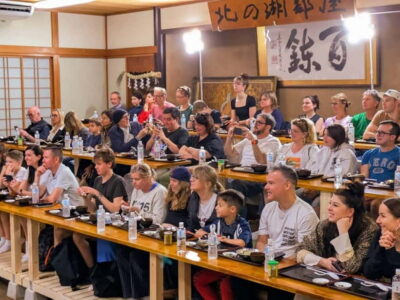
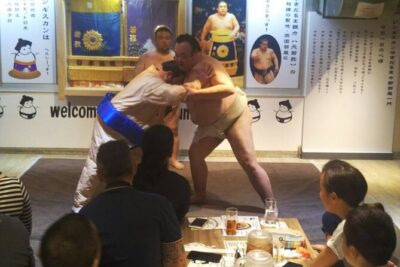
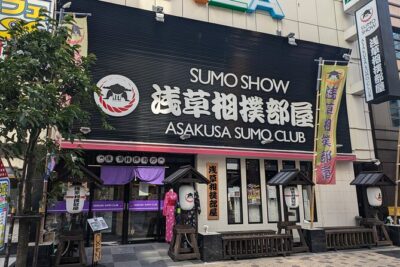
Tokyo Sumo Entertainment Show with Chicken Hot Pot and Photo
Read our review →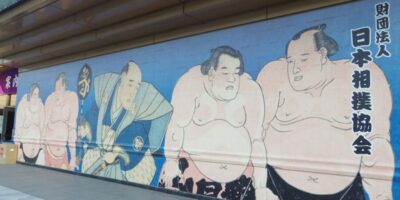
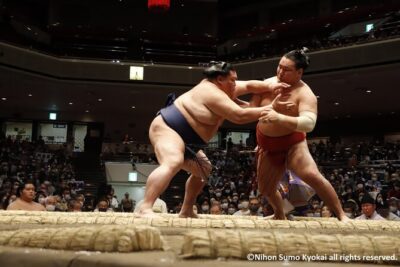
Tokyo Grand Sumo Tournament Viewing Tour with Tickets
Read our review →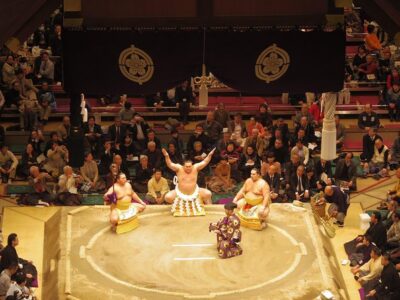
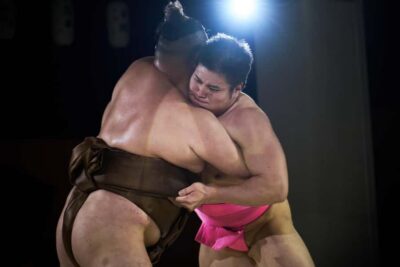
Sumo Show & Experience w/ Optional Kimono & Hot Pot
Read our review →Browse the lists this tour appears in