
Review · SUSHI COOKING WORKSHOPS
Tokyo Toyosu Tuna Auction + Breakfast (Sushi Dai or Bentomi)
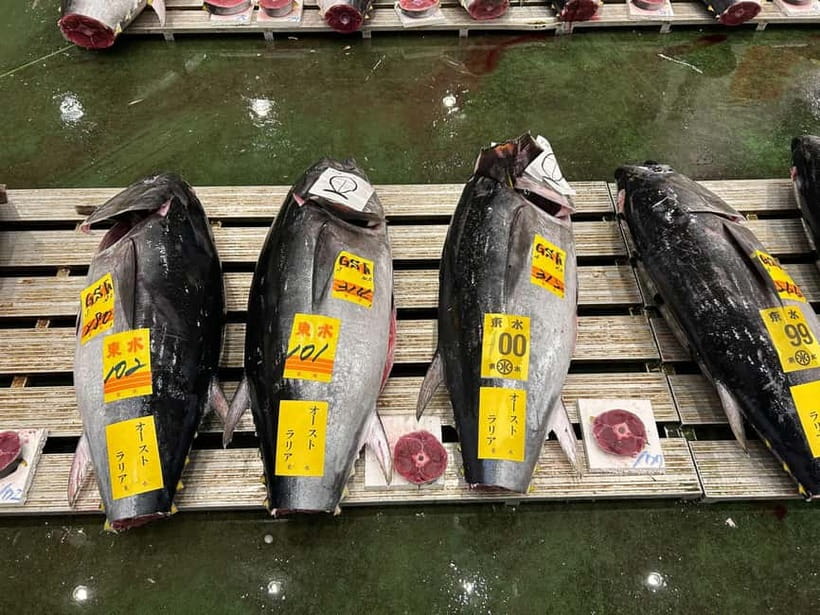
Waking before dawn gets real when tuna bids start flying. Toyosu’s bluefin auction is a high-speed, hand-signaled ritual that shows how Japan’s seafood system actually works, from inspection to grading to buying. I love the intensity of the auction viewing, and the te-jirushi hand-signal mini lesson that helps you understand what you are seeing instead of just staring at chaos.
The next big win is the food that comes right after. I like that the tour pairs auction insight with hands-on katsuobushi shaving and tasting, plus a breakfast reservation at either Bentomi or Sushi Dai. One consideration: the reservation is included, but the breakfast meal fee is not, and Sushi Dai seating is extremely limited, so you want to know what you are signing up for before you fall for the omakase vibe.
In This Review
- Quick Key Points
- Toyosu at 5:25 AM: Where the tuna buying ritual starts
- Ground-Level Deck vs 3rd-Floor Gallery: Pick your kind of closeness
- Exclusive ground-level deck (max 4 guests)
- Standard 3rd-floor gallery (open group)
- Inside the auction hall: How te-jirushi turns chaos into meaning
- Katsuobushi shaving and maguro-bushi comparison: The tasting lesson that sticks
- Breakfast at Toyosu: Bentomi vs Sushi Dai, and what the reservation really means
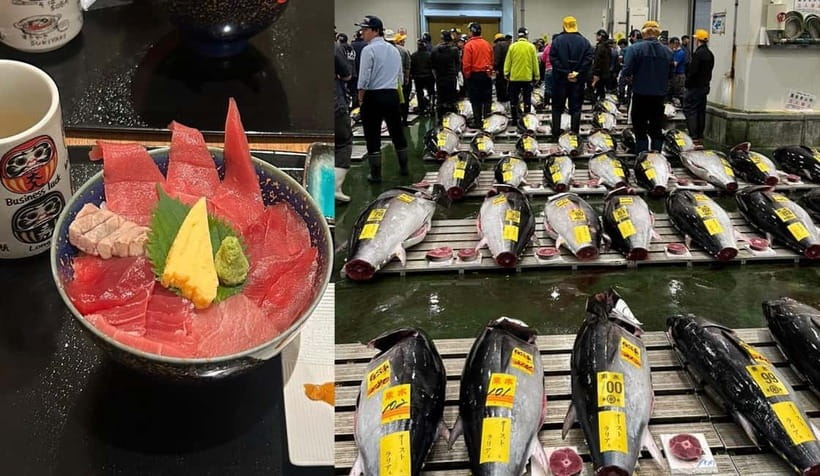
- Bentomi for kaisendon energy
- Sushi Dai for a more refined omakase-style start
- A practical caution
- Market time beyond the auction: the small Tokyo details you might notice
- What $141 buys you on a Tokyo morning (and where you still spend extra)
- Timing and transportation tips for VIP-level mornings
- Who should book this, and who should skip it
- Should you book this Tokyo Toyosu Tuna Auction + Breakfast tour?
- FAQ
- What time does the tour start?
- Where do I meet the guide?
- How long is the experience?
- Is the breakfast included in the price?
- What breakfast options are available?
- What do I do during the tour besides watching the auction?
- Do I need to bring cash?
- Can I choose an up-close viewing option?
- Is the tour suitable for wheelchair users or vegetarians?
Quick Key Points
- Two viewing styles: Exclusive ground-level deck (max 4) or the 3rd-floor gallery for a wider view
- Hand-signal context: a te-jirushi mini lesson so the auction makes sense
- Hands-on seafood skill: shaving katsuobushi and comparing it with rarer maguro-bushi flavors
- Breakfast handled for you: reservation at Sushi Dai or Bentomi (meal fee excluded)
- Small but fun extras: miso soup cup souvenir and a photo moment with Okami-san
- Early logistics matter: start time is 5:25 AM, and VIP arrivals need extra planning
Toyosu at 5:25 AM: Where the tuna buying ritual starts
Tokyo’s seafood world runs on a tight clock, and this tour respects it. The experience starts at 5:25 AM, with the meeting point at PR Square inside Toyosu Market. If you like your travel plans orderly, you will appreciate how direct the flow is: you get in early, you watch how buying happens, then you eat while the day is still young.
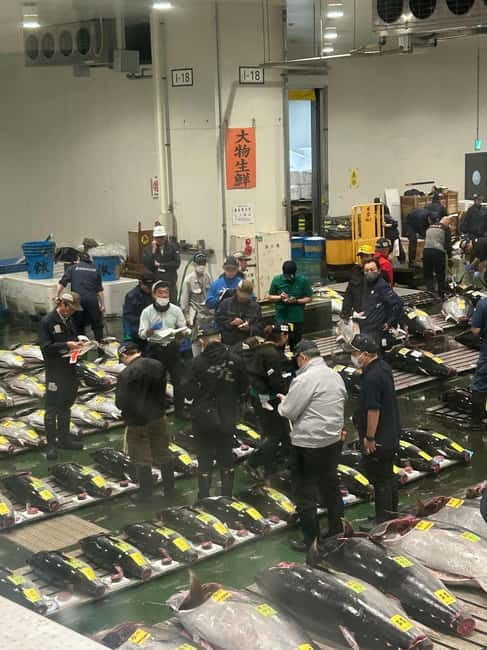
Here is what makes this kind of morning special. Toyosu is not a theme park for sushi lovers. It is a working marketplace. You’ll see expert buyers inspect tuna that has been inspected, graded, and readied for sale. The auction hall has a fast rhythm, with calls and hand signals (the te-jirushi signals) that act like a language. The tour guide’s job is to help you decode that language so you can tell the difference between surface-level excitement and actual auction mechanics.
Practical tip: wear comfortable shoes and plan to arrive early. With early mornings, the cost of being late is bigger than normal, and the tour structure does not slow down for confusion.
More Market Walks in Tokyo
- Tokyo Tsukiji Fish Market Food and Culture Walking Tour
★ 5.0 · 3,184 reviews - Tokyo: Tsukiji Fish Market Food and Walking tour
★ 5.0 · 1,724 reviews - Tokyo: Tsukiji Fish Market Guided Walking Tour
★ 4.9 · 1,397 reviews
Ground-Level Deck vs 3rd-Floor Gallery: Pick your kind of closeness
This tour gives you two viewing levels, and choosing the right one changes the whole feeling.
Exclusive ground-level deck (max 4 guests)
If you want to feel the auction as a physical event, this is the option. You get access to a lower-floor observation deck located just meters from the most intense bidding action. Expect to see million-yen deals happen right before your eyes, with the buyers’ focus up close. Depending on the morning, you may even witness the highly coveted fresh tuna auction.
This option is also limited. It is capped at a maximum of 4 guests, so timing matters. If you are serious about this view, you should plan ahead and contact the team via Instagram (Yummy Guide Japan) around two months in advance, as recommended.
Standard 3rd-floor gallery (open group)
If you want a comfortable overview and less pressure, the 3rd-floor gallery is the easier way in. You get a bird’s-eye view of the auction hall from above, with the rhythmic calls of the auctioneers and the hand signals still visible, just less up-close.
For first-time visitors, this is a smart choice. You can take in the layout of the entire process and follow along with the guide’s explanations without feeling like you are trying to squeeze into a live-action front row.
More Sushi Workshops in Tokyo
- Sushi Making Tokyo Roll and Authentic Japanese Sushi Class
★ 5.0 · 3,971 reviews - Tokyo: Roll and Authentic Sushi Making Class in Asakusa
★ 4.9 · 1,957 reviews - Tokyo: Sushi Making Class in a Happi Coat near a Famous Spot
★ 4.9 · 1,377 reviews - Sushi Making Tokyo! Popular Maki Sushi & Japanese Sushi(+Recipe!)
★ 5.0 · 1,314 reviews
Inside the auction hall: How te-jirushi turns chaos into meaning
Watching an auction without context is like listening to a song in a foreign language. You might enjoy the sound, but you will not catch the structure. That’s why the small te-jirushi mini lesson included with the tour is such a big deal.
You will see the buyers inspect tuna as it moves through the process, and you’ll hear the auctioneers call out, then use hand signals to communicate. The guide explains what those signals mean and how the inspection and grading steps feed into the bidding.
What I like about this approach is that it helps you shift from wow factor to understanding. You start to notice patterns, like how the auction moves quickly, how buyers look at specific qualities, and how the workflow is organized to keep the morning moving.
The tour also highlights that Toyosu handles both fresh and frozen inventory, and you’ll get a sense of the logistics that keep Japan’s seafood supply running smoothly. Even if you are not a seafood nerd, that logistics view is the point. It explains why sushi quality is not just about a restaurant skill, it is about a system.
Katsuobushi shaving and maguro-bushi comparison: The tasting lesson that sticks
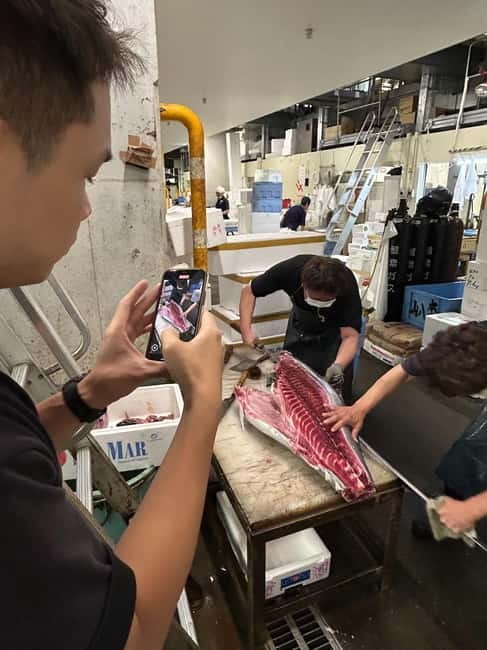
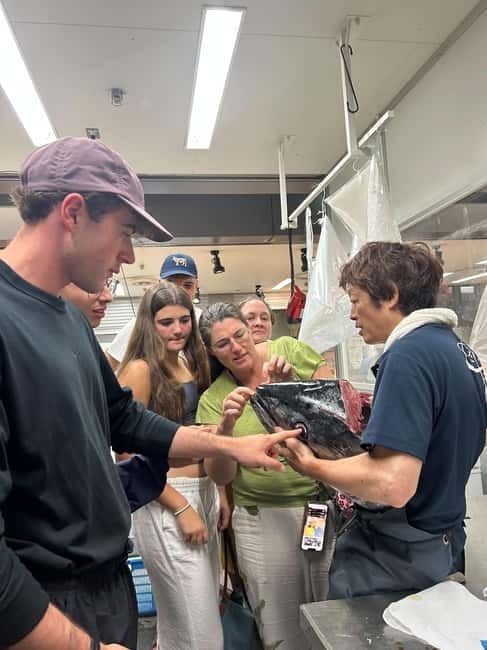
After the auction viewing, the tour shifts from watching to doing. You try your hand at shaving real katsuobushi, one of the foundations of Japanese cuisine. This is not a casual snack station. The guide shows the basics of how to handle it and then you taste, so you can connect the texture and aroma to the flavor.
You also get a tasting comparison with maguro-bushi, described as rarer and deeper in flavor. That contrast is one of the most memorable parts of the morning because it turns an abstract idea (dried, fermented, shaved fish products) into something you can actually identify on your tongue.
Added value: you come away with a better sense of why Japanese cuisine can taste layered even when the ingredients seem simple. You are learning what changes when fish becomes katsuobushi and how flavor concentrates over time. Even if you already love sushi, this gives you new appreciation for why Japanese chefs care so much about preparation details.
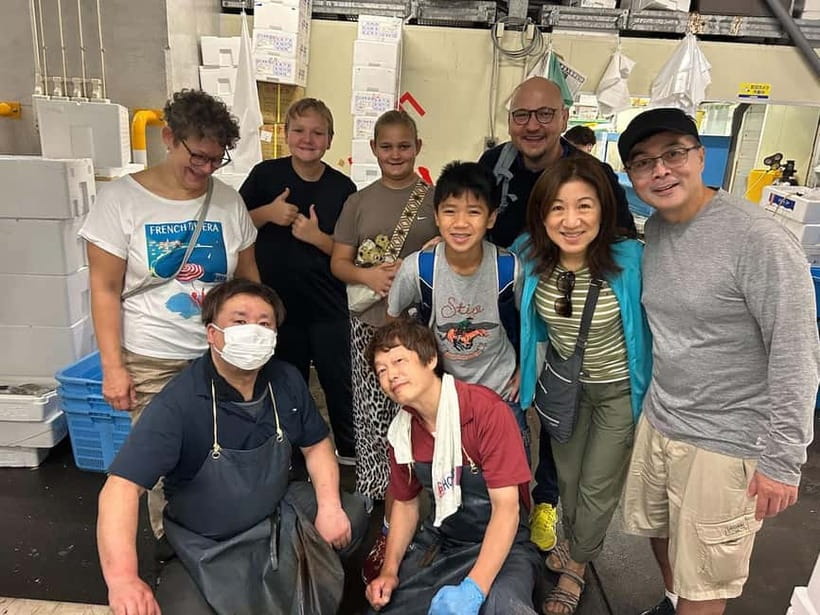
A few small extras round out the experience. You’ll get a miso soup cup souvenir, and there is also time built in for photo moments, including a photo with Okami-san using your phone or camera.
Breakfast at Toyosu: Bentomi vs Sushi Dai, and what the reservation really means
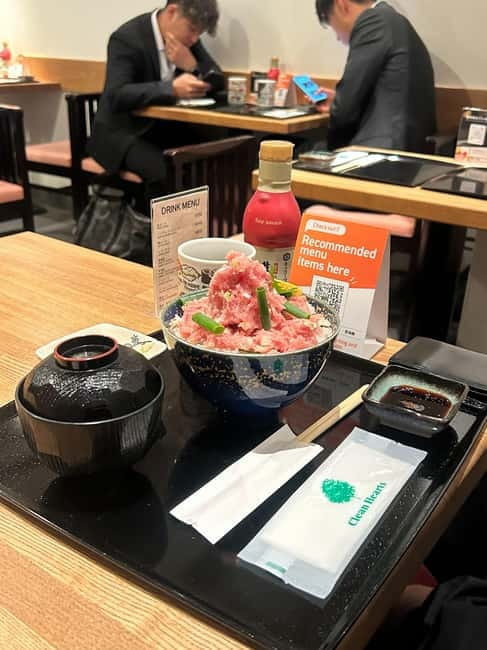
Your tour ends with a premium seafood breakfast inside Toyosu Market, and the tour lets you choose your style.
Bentomi for kaisendon energy
Bentomi is a long-time favorite among seafood professionals. Expect tuna bowls like kaisendon, with ingredients sourced straight from that morning’s market. If you like variety, fresh cuts, and a breakfast that feels like a direct extension of what you just watched, Bentomi fits.
Sushi Dai for a more refined omakase-style start
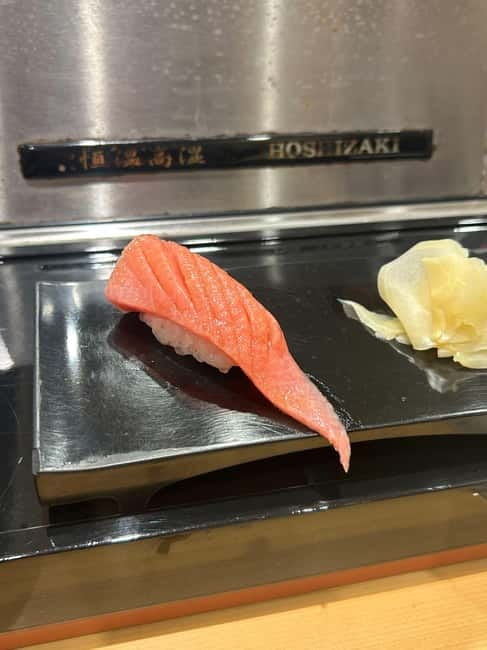
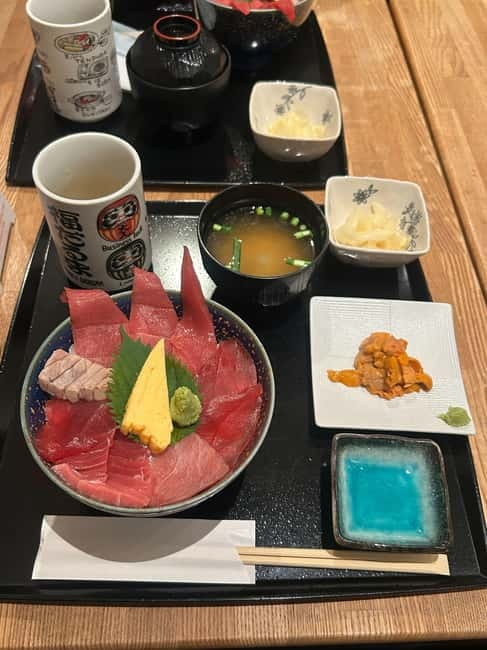
Sushi Dai is one of Tokyo’s celebrated sushi counters and is featured in the Michelin Guide. This breakfast option is more refined, with a seasonal, chef-style presentation.
But here’s the key: seating is extremely limited. The tour includes a reservation, not the meal fee. So you should budget for the cost of breakfast itself when you choose Sushi Dai, and you should understand that your ability to get in depends on the plan you book and the timing.
A practical caution
If you are expecting the full sushi breakfast cost to be included, pause. The tour listing separates the reservation from the meal fee. That is common, but it catches people off guard, especially when they are excited about a specific restaurant name.
Market time beyond the auction: the small Tokyo details you might notice
Toyosu is not only about auction spectacle. Depending on how the morning flows with your guide, you may have time to explore the surrounding market area in between structured moments.
From the experiences described for this tour, I’d expect you to notice practical, real-market details like ceramics and restaurant equipment, plus opportunities to taste high-quality green tea. You’ll also likely get a moment to ask questions to your guide, who can tie what you see on the floor to the choices chefs make later.
One more reason this matters: it turns your visit into more than a one-hour show. You come home with context. You understand why sushi supply chains look the way they do, and you start to connect the auction to the final plate you will order later in Tokyo.
What $141 buys you on a Tokyo morning (and where you still spend extra)
At $141 per person, you are paying for more than a view.
Here’s what is included:
- Tuna auction observation with access to the auction floor area via the selected viewing style
- The ground-level deck or 3rd-floor gallery access depending on your option
- A te-jirushi hand-signal mini lesson
- Katsuobushi shaving plus tasting comparison with maguro-bushi
- Bonito-related slicing/shaving tasting elements
- A miso soup cup souvenir
- Photo shooting with Okami-san with your phone or camera
- A Japanese/English-speaking local guide
- A reservation at Sushi Dai or Bentomi, with the reservation itself included
Where you spend extra:
- The meal fee for breakfast (reservation is included, meal cost is not)
- Transportation to and from Toyosu Market (not included)
So is it good value? For me, the best answer is this: you are paying for access plus interpretation. If you tried to DIY this morning on your own, you could possibly watch some parts, but you likely would miss the hand-signal meaning, the tasting education, and the restaurant reservation support. The pricing makes more sense when you treat it as a guided seafood industry experience, not just a breakfast with a photo.
Also, the early start can add friction if you do not plan. That’s not the tour’s fault, it’s the nature of Toyosu. Transportation planning is part of the value equation.
Timing and transportation tips for VIP-level mornings
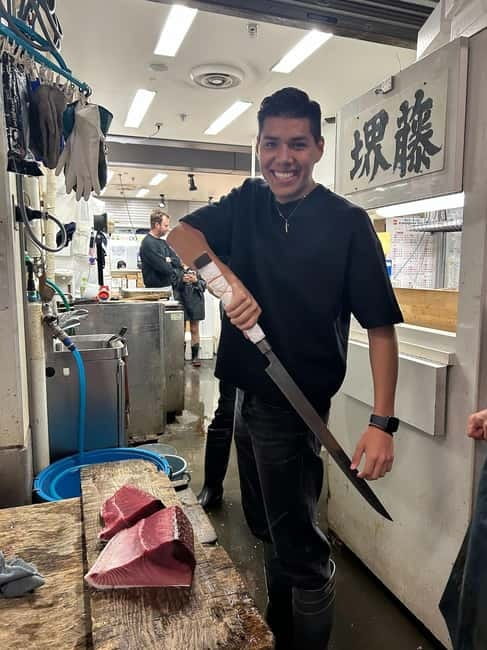
This matters more than most tours because the start time is 5:25 AM. The meeting point is PR Square inside the market, and you’ll want to arrive early enough to check in without stress.
The tour notes also include a VIP-specific timing warning: for VIP guests, arrival may need to happen before public transportation is available. The recommendation is to come by taxi or on foot. That is worth taking seriously if you selected the exclusive ground-level deck option, since you want the morning to run smoothly from the first minute.
If you’re staying in central Tokyo, set aside extra time and do not assume you can roll in at the last second. Early mornings are when small delays become big problems.
Who should book this, and who should skip it
This experience is a great fit if:
- You love food and want to understand where it comes from, not just eat it
- You want a real look at how seafood buying happens in Japan
- You are comfortable waking early and walking in market areas
- You want a guided explanation of the auction process through te-jirushi and tastings
You might want to skip it if:
- You need wheelchair accessibility, since it is noted as not suitable for wheelchair users
- You are vegetarian, since the tour is not suitable for vegetarians
If you can handle the early start and you want seafood education plus a serious morning meal reservation, this tour aligns well with what you came to Tokyo for.
Should you book this Tokyo Toyosu Tuna Auction + Breakfast tour?
Book it if you want a Tokyo morning that is more than a meal. The combination of auction viewing, the hand-signal te-jirushi explanation, and the hands-on katsuobushi shaving and tasting comparison makes the experience feel earned. Add the breakfast reservation support at Bentomi or Sushi Dai, and you end up with a complete story arc, from auction floor to table.
Don’t book it if you expect the breakfast cost to be fully included, or if you are not ready for a 5:25 AM start and early arrival demands. Also, if you need accessibility accommodations or you eat vegetarian, this is not the right match based on what is stated.
If you want the best odds of getting the close-up ground-level experience, plan early for that exclusive deck option, since it is limited to 4 guests.
FAQ
What time does the tour start?
The tour starts early at 5:25 AM.
Where do I meet the guide?
The meeting point is PR Square inside Toyosu Market. The exact meeting point may vary depending on the viewing and breakfast options you book.
How long is the experience?
The duration is 150 minutes.
Is the breakfast included in the price?
The reservation is included, but the meal fee is excluded for Sushi Dai or Bentomi. You will pay the restaurant meal separately.
What breakfast options are available?
You can choose between Bentomi (tuna bowls like kaisendon) or Sushi Dai (a refined seasonal omakase-style breakfast). Seating at Sushi Dai is extremely limited.
What do I do during the tour besides watching the auction?
You get a te-jirushi hand-signal mini lesson. You also do a katsuobushi shaving and tasting experience, including a comparison with maguro-bushi, plus you receive a miso soup cup souvenir and a photo moment with Okami-san.
Do I need to bring cash?
Yes, the tour suggests bringing cash.
Can I choose an up-close viewing option?
Yes. There is an Exclusive option with access to a ground-level deck (max 4 guests). A Standard option offers the 3rd-floor gallery open group viewing.
Is the tour suitable for wheelchair users or vegetarians?
No. It is not suitable for wheelchair users and it is not suitable for vegetarians.
Newly listed around Tokyo
- Tokyo private transfer for Yokohama Port★ 4.5 · 63 reviews
- Luxury Kimono Photoshoot at Ginza Tokyo★ 5.0 · 7 reviews
- Tokyo Allstar Food Tour★ 4.5 · 206 reviews
- Tokyo Art Aquarium Museum E-Ticket with optional Tokyo Metro Pass★ 5.0 · 17 reviews
- Tokyo: Best Ginza Food Tour at 3 Local Eateries★ 5.0 · 83 reviews
- Private One Day Nikko Tour with Bilingual driver★ 3.5 · 11 reviews
- PRIVATE tour in 180SX to Daikoku+++++★ 5.0 · 6 reviews
- Kabuki Talk★ 5.0 · 10 reviews
Sushi Cooking Workshops, compared.
Sushi Making Tokyo Roll and Authentic Japanese Sushi Class
Read our review →
Roll and Authentic Sushi Making Class in Asakusa
Read our review →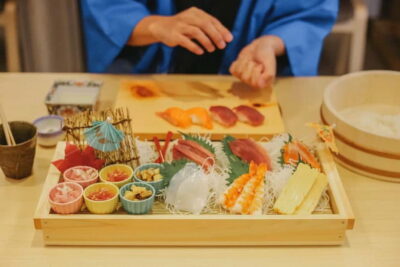
Sushi Making Class in a Happi Coat near a Famous Spot
Read our review →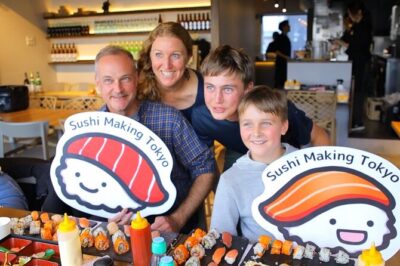
Sushi Making Tokyo! Popular Maki Sushi & Japanese Sushi(+Recipe!)
Read our review →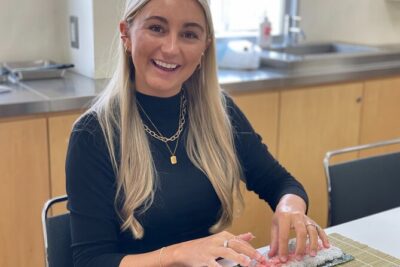
Tokyo Sushi Making Class in Tsukiji with Professional Chef
Read our review →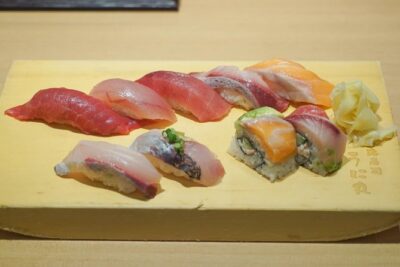
Tokyo Night Foodie Tour in Shinjuku – Seasonal Sushi, Wagyu Beef
Read our review →
Tsukiji Fish Market Guided Tour and Sushi Making with Pro Chef
Read our review →
Tsukiji Fish Market Sushi Making Class with Pro Chef
Read our review →Browse the lists this tour appears in