
Review · SUMO STABLE VISITS
Watch Sumo Morning Practice at Stable in Tokyo
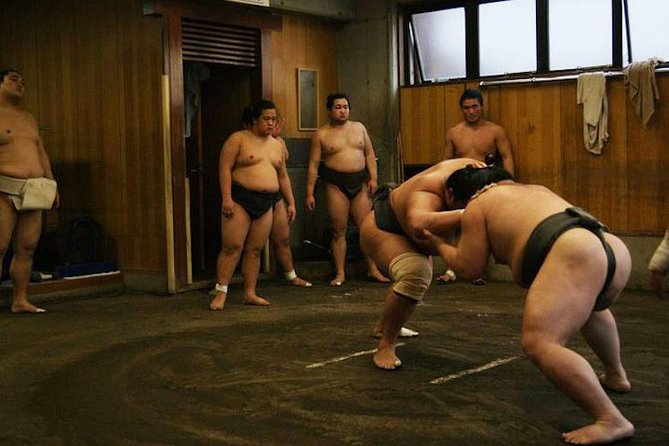
Sumo morning practice feels like backstage Japan. You get to watch wrestlers train at a working stable in Tokyo, where the atmosphere is quiet, controlled, and seriously traditional. It is a rare peek into a world most visitors never see.
I love the floor-side viewing during warmups and sparring, especially the way the session builds from stretching to harder contact. I also like that the experience wraps with photos with the wrestlers, so you leave with more than memories.
The big consideration is comfort and attention. You need to sit for a long stretch on the floor (60 to 90 minutes, sometimes shorter around tournament season), and the rules are strict, including no loud talking or intrusive photography.
In This Review
- Key Things I Think You Should Know First
- Tokyo Sumo Morning Practice: What You Actually See
- Ryogoku Kokugikan and the Area: Your First Logistics Check
- Timing Rules: When Morning Practice Starts, Ends, and Changes
- The Stable Floor: Comfort, Seating, and How to Save Your Legs
- The Sumo Etiquette: Why Silence Makes the Experience Better
- Warmups to Sparring: How the Session Builds
- Photos With the Wrestlers: Included, but Plan for Timing
- Tour Value and Price: Is $95.77 Worth It?
- Who This Tour Suits Best (And Who Should Think Twice)
- Practical Tips Before You Go
- Should You Book This Sumo Morning Practice Tour?
- FAQ
- What is the duration of Watch Sumo Morning Practice at Stable in Tokyo?
- Where does the tour take place?
- Do I need to find the meeting point myself?
- Is food or drinks included?
- What are the rules during the practice?
- Is there a minimum age?
- Will I be sitting the whole time?
- Are photos included?
- How many people are in the group?
- Can I change my date if my plans shift?
- What is the cancellation policy?
Key Things I Think You Should Know First
- Small group size (max 10) helps you stay close to the action
- Ritual first, sparring later means the session starts calm and gets intense
- No eating, no loud talk, no bright flash keeps the practice respectful
- Duration varies by stable schedule and can shorten during Tokyo tournament weeks
- End photos are included, but timing can feel tight if practice runs long
- Bring plan for the hard floor because sitting is a main part of the experience
Tokyo Sumo Morning Practice: What You Actually See
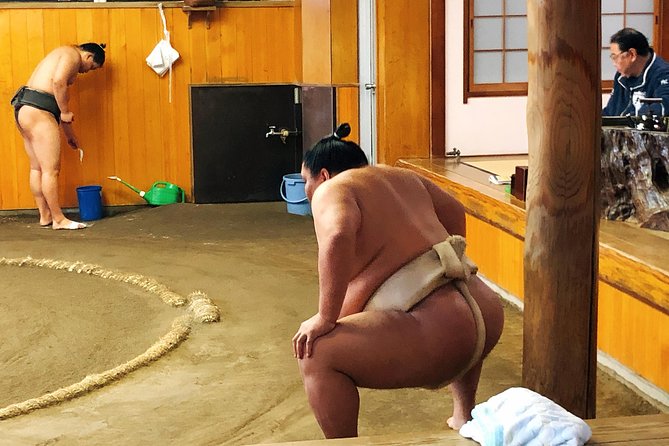
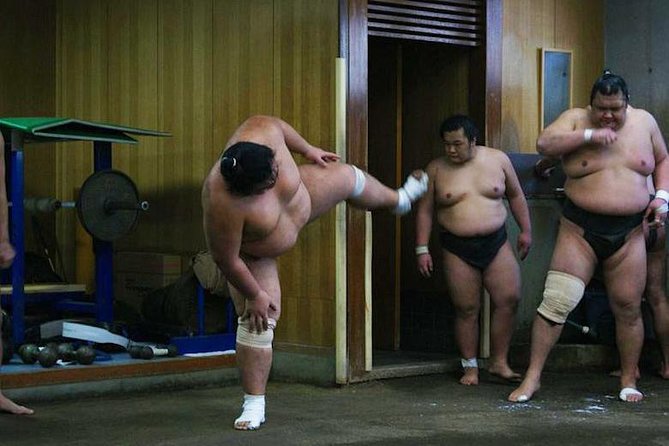
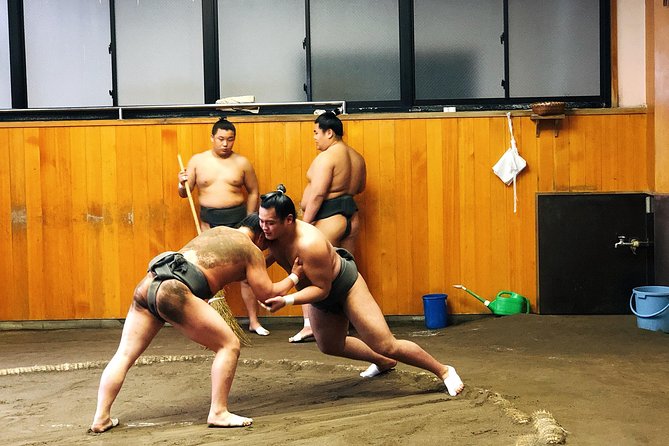
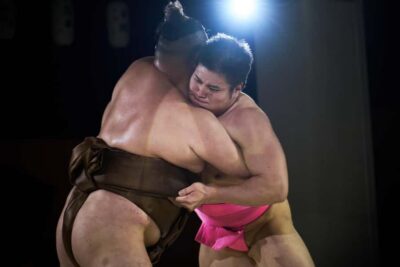
This is one of those experiences where the “headline” is simple, but the payoff is all in the details. You meet up with your group at a set meeting spot in Tokyo, then head into a sumo stable to watch morning training. The session centers on the wrestlers’ routine: stretching, warmups, technique practice, and then sparring moments that hit with a shock of real power.
What makes it work for you is that sumo practice is not a performance built for crowds. The wrestlers are training. That sounds obvious, but it changes the whole vibe. You are not supposed to react loudly or treat it like a show. Instead, you watch closely and quietly as they work in layers, with older or higher-ranked practice habits setting the tone.
You also get some context through what you notice. Even if you do not know the rules of sumo hierarchy going in, the practice pattern tells a story. The order of drills, who works with whom, and the steady seriousness of everything all make more sense once you connect it to ranking and tradition. One practical way to prepare is to read a little about sumo rank roles before you go, so the pacing feels intentional rather than repetitive.
Compare these Sumo Stable visits in Tokyo:
- Tokyo: Sumo Show Experience with Chicken Hot Pot and a Photo
★ 4.8 · 6,678 reviews - Tokyo: Sumo Show and Dining Experience
★ 4.8 · 2,742 reviews - the SUMO show
★ 5.0 · 1,960 reviews
Ryogoku Kokugikan and the Area: Your First Logistics Check
The activity’s stop is tied to the Ryogoku Kokugikan area. That matters because this is not “central Tokyo, two blocks from the hotel” territory for everyone. You are responsible for getting to the meeting point on your own, then your group and guide handle the stable access from there.
A helpful tip: get the address in Japanese ahead of time if you plan to taxi. Not all drivers can read English well. Some travelers also find it easier to take a taxi from nearby transit hubs such as Asakusa rather than walking a long distance in the cold or rain.
Before you leave your hotel, do a quick reality check:
- Where is your nearest station?
- Can your phone use the local navigation well?
- Do you have the Japanese address copied for your return?
If you want the least stress, plan extra time to arrive early. That matters because getting into position and settling down takes longer than you expect when everyone is sitting on the floor.
Timing Rules: When Morning Practice Starts, Ends, and Changes
This tour runs as a morning activity with a window set between 8:00 AM and 10:00 AM on Mon-Sat for the listed date ranges. You should think of it as early, not late-morning sightseeing.
Here is what can change your schedule:
- Duration is usually 60 to 90 minutes, even though the overall tour is described as about 2 hours.
- The ending time varies daily based on the stable’s schedule.
- Stable access depends on the stable being open, and in some tournament months the stable may be closed.
There is also a key seasonal note for Tokyo tournament season in January, May, and September, around 15th to 25th. During that stretch, practice can run only 30 to 40 minutes, but the price stays the same. That is not a deal-breaker if you understand it going in, but it is something you should check before you lock your dates.
In practice, the “unpredictable end time” thing shows up as tight transitions. Photos happen at the end, and if the practice runs long, you may feel rushed. Keep that in mind if you have another reservation right after.
The Stable Floor: Comfort, Seating, and How to Save Your Legs
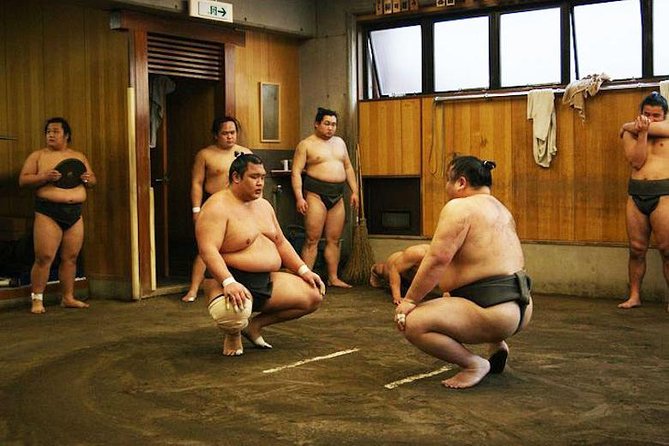
This experience requires a long stretch of sitting on the floor. You should plan for it like it is part of the activity, not a minor inconvenience.
What you need to know:
- You will sit to watch the wrestlers during warmups and drills.
- You are expected to be mindful and quiet.
- The stable floor can be uncomfortable for some people because the tatami can feel thin when it is on a harder surface.
Some travelers note that chairs exist but are limited, and getting a chair may be possible only by request. If you have back issues or knee problems, it is smart to plan for a chair or stool in advance, because once you are seated, options can be limited.
My practical advice:
- Wear pants that do not get stiff and crackly on tatami.
- Bring a small sit cushion if you normally need one for floor seating.
- Do not count on being able to switch positions easily during the most serious parts of practice.
This is also why reviews can swing in different directions. If you expect standing or easy viewing, the floor time is a rude surprise. If you accept it, prepare a little, and treat it as a ritual viewing session, you get a much better experience.
A few more Tokyo days to weigh up
- Mt Fuji and Hakone 1-Day Bus Tour Return by Bullet Train
★ 5.0 · 26,383 reviews - 1-Day Tokyo Bus Tour
★ 5.0 · 14,250 reviews - Tokyo: TOKYO SKYTREE® Admission ticket
★ 4.5 · 11,192 reviews - Tokyo: teamLab Planets TOKYO Digital Art Museum Entry Ticket
★ 4.6 · 9,779 reviews
The Sumo Etiquette: Why Silence Makes the Experience Better
Inside the stable, you will follow strict “do not interfere” rules. You are asked not to eat, not to talk loudly, and not to use camera flashes that distract the wrestlers. Intrusive sound is also a no.
This is not just about politeness. The quiet helps you see more. When everyone is still, you start noticing the rhythm:
- how they warm up with purpose
- how movement is controlled
- how sparring changes the entire energy of the space
It also helps you respect why the stable feels exclusive. This is their work time. You are there to observe, not to create a show.
If you want to be extra prepared, review a few basics of sumo etiquette before you go. The main point is simple: stay low-key, stay quiet, and watch the practice as it happens.
Warmups to Sparring: How the Session Builds
The best moments here are not one highlight, they are the build.
Most sessions follow a pattern like this:
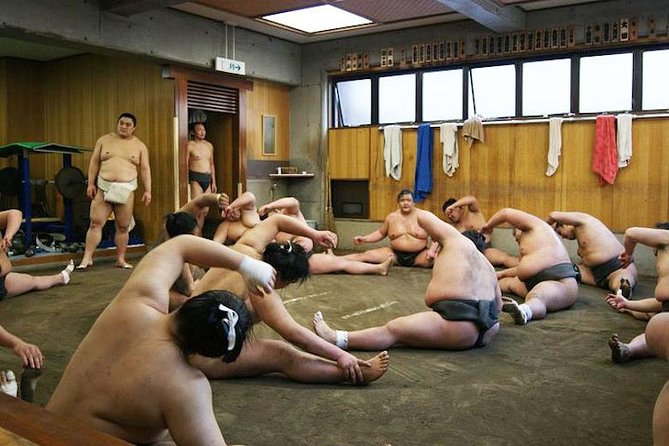
- stretching and warmups
- technique practice and controlled drills
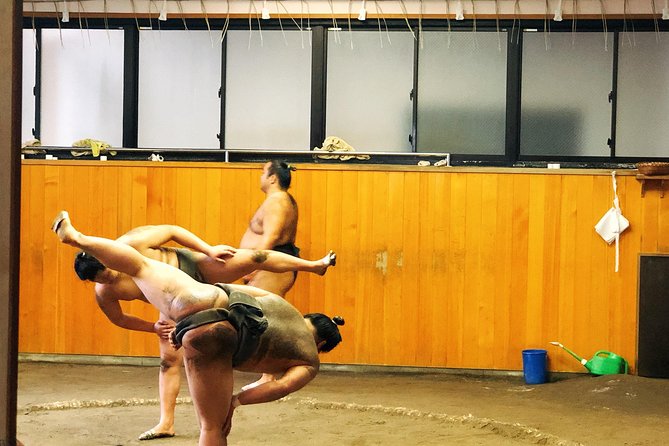
- sparring or higher-intensity training moments
That step-by-step progression is what makes the experience stick. At first it can feel like a routine gym session. Then the intensity ramps up, and you see the brute strength and force up close. You also get a real sense of training discipline, not just the spectacle.
One thing I like about the format is that it gives you time to understand the seriousness of sumo as an athletic craft. You are not only watching collisions. You are watching preparation, focus, and repetition done by professionals.
Photos With the Wrestlers: Included, but Plan for Timing
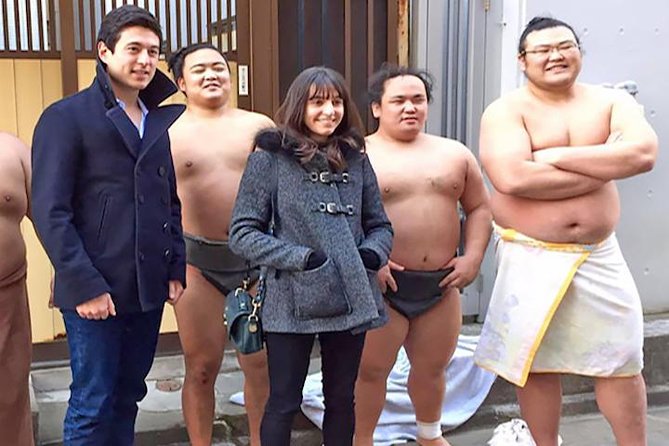
Photos with sumo wrestlers at the end are included. That is a big deal for value because it turns the visit into something you can share immediately, not just later through blurry memories.
However, the end of practice can vary, and the session is sometimes unpredictable in length. Some people have missed the photo portion when practice ran past the expected schedule. You can reduce the odds of disappointment by:
- arriving early
- staying fully attentive and ready during transitions
- not scheduling something that needs an exact end minute right after
Tour Value and Price: Is $95.77 Worth It?
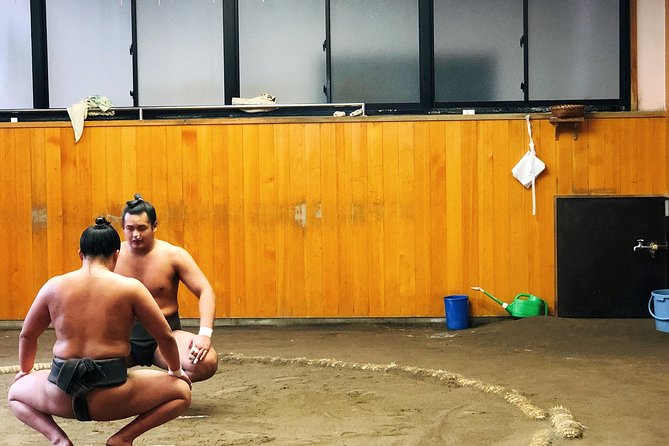
At $95.77 per person, this is not a bargain ticket, but it can still feel like good value if you want the real stable experience. Why? You are paying for access, an entrance fee, and the structure that gets you into a place that would be difficult to enter casually as an outsider.
It is also a small-group setup with a maximum of 10 travelers. That matters. Big crowds tend to ruin respectful viewing in a quiet setting. Here, the smaller format keeps your experience closer to what a practical observation session would feel like.
Also, the ticket includes photos. Many activities charge extra for that kind of souvenir. Here it is built in, which helps the price feel more reasonable.
On the other hand, if you have trouble with floor seating, the value can drop fast. For you, the cost is not the money only. It is the discomfort and the patience required.
Who This Tour Suits Best (And Who Should Think Twice)
This works best if you like cultural experiences where you observe rather than consume.
Great fit if you:
- want a hands-on look at real training
- can sit on the floor for 60 to 90 minutes
- enjoy quiet, respectful activities
- want a Tokyo morning plan that feels different from temples and shopping
Proceed carefully if you:
- cannot handle floor seating for an extended period
- need constant narration or Q and A during the session
- expect the stable to function like a guided museum with explanations at every step
Some tours can vary in how much commentary you get. The core value is the access to practice, not a talk-filled program. If you want a lot of explanation, you might want to choose a tour date or operator experience that emphasizes a guided history and rules context.
Practical Tips Before You Go
A few things will make this tour smoother the moment you step into the stable area.
1) Arrive early
Early arrival gives you a better chance to settle near the front. Even small differences in seating position matter a lot when you are all sitting on the floor.
2) Take the rules seriously
No flash, no loud chatter, no intrusive sound. Keep your phone on silent. If you are filming, avoid anything that looks like a bright burst camera.
3) Bring the right mindset
This is training, not an entertainment show. Expect repetition and seriousness before the intensity.
4) Plan for the timing reality
The session ending time varies. Give yourself breathing room after the tour.
5) Bring a “floor plan”
If your legs or hips get stiff easily, plan for it. A stool or chair may be available on request, so think ahead.
Should You Book This Sumo Morning Practice Tour?
Book it if your goal is authentic access. If you want to see how sumo wrestlers train, stretch, and build toward sparring in an atmosphere that stays quiet and respectful, this is one of the best ways to do it.
Skip it or rethink it if comfort is your priority, or if you need a lot of guided explanation and constant interaction. The experience is mostly observation while you sit on the floor and watch the practice unfold.
My simple decision rule for you: if you can handle quiet, early mornings, and floor seating, you will likely feel like you got the real Tokyo sumo moment, not a generic photo stop.
FAQ
What is the duration of Watch Sumo Morning Practice at Stable in Tokyo?
The practice duration is listed as approximately 1 hour in the overview, but the additional info says it will be between 60 to 90 minutes, and it can be shorter (around 30 to 40 minutes) during Tokyo tournament season in January, May, and September.
Where does the tour take place?
The itinerary lists Stop 1 at Ryogoku Kokugikan, and the activity ends back at the meeting point in Tokyo.
Do I need to find the meeting point myself?
Yes. The tour says you make your own way to the easily accessible Tokyo meeting point where you meet the guide and small group.
Is food or drinks included?
No. The tour does not include any food or beverages.
What are the rules during the practice?
You should be mindful not to distract the wrestlers. The tour guidance includes not eating, not talking loudly, and avoiding bright flashes or intrusive sound when using a camera.
Is there a minimum age?
Yes. The minimum age is 13 years.
Will I be sitting the whole time?
The activity requires sitting for long periods of time on the floor.
Are photos included?
Yes. Photos with sumo wrestlers at the end are included.
How many people are in the group?
This activity has a maximum of 10 travelers.
Can I change my date if my plans shift?
Date changes are not allowed within 3 days of the experience. If you cancel within 3 days due to flight delays, illness, or other reasons, it will be treated as a cancellation.
What is the cancellation policy?
You can cancel up to 6 days in advance for a full refund. A 50% refund is available if you cancel 2 to 6 full days before the experience start time, and less than 2 full days before is not refunded.
Newly listed around Tokyo
- Tokyo private transfer for Yokohama Port★ 4.5 · 63 reviews
- Luxury Kimono Photoshoot at Ginza Tokyo★ 5.0 · 7 reviews
- Tokyo Allstar Food Tour★ 4.5 · 206 reviews
- Tokyo Art Aquarium Museum E-Ticket with optional Tokyo Metro Pass★ 5.0 · 17 reviews
- Tokyo: Best Ginza Food Tour at 3 Local Eateries★ 5.0 · 83 reviews
- Private One Day Nikko Tour with Bilingual driver★ 3.5 · 11 reviews
- PRIVATE tour in 180SX to Daikoku+++++★ 5.0 · 6 reviews
- Kabuki Talk★ 5.0 · 10 reviews
Sumo Stable Visits, compared.
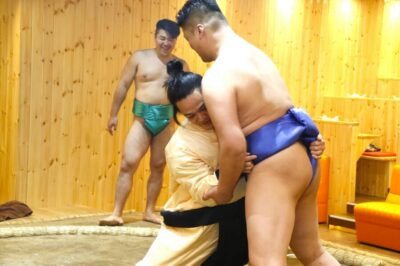
Sumo Show Experience with Chicken Hot Pot and a Photo
Read our review →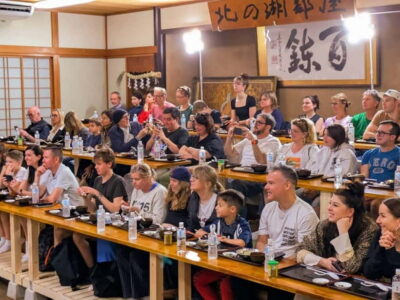
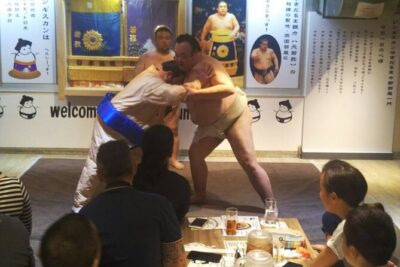
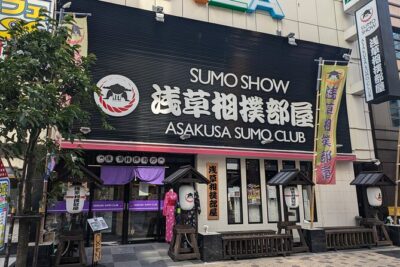
Tokyo Sumo Entertainment Show with Chicken Hot Pot and Photo
Read our review →
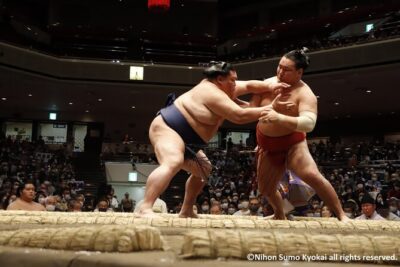
Tokyo Grand Sumo Tournament Viewing Tour with Tickets
Read our review →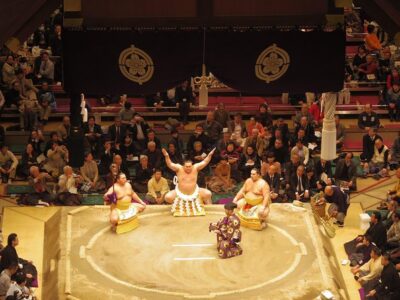
Sumo Show & Experience w/ Optional Kimono & Hot Pot
Read our review →Browse the lists this tour appears in