
Review · BAMBOO GROVE WALKS
Arashiyama’s Best Vegan Ramen & Gyoza Class
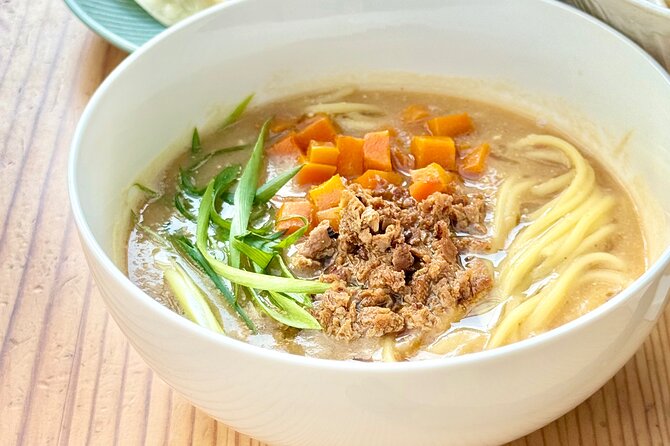
Arashiyama tastes like serious comfort food. This 2-hour Arashiyama class turns plant-based ramen into something built for real depth, using a dashi-free “secret umami broth” made from kombu, shiitake, and Kyoto vegetables, then adds crispy gyoza you make from scratch. I love the umami-first broth and the English-speaking instruction that keeps you confident the whole time. One consideration, the hosts keep a dog at the home kitchen, so animal-allergy guests should think twice.
You also get the full payoff in the same sitting, you cook and then eat dinner or lunch in a clean home setting, with bottled water and tea freely available. The class is private, so it stays relaxed and personal, led by hosts Satoru and Akiko of Kyoto green cuisine. If you want a hands-on Kyoto food lesson that feels more like a dinner party than a demo, this is the kind of experience that sticks.
In This Review
- Key things to know before you book
- Meeting at Arashiyama Station and moving straight to the kitchen
- Satoru and Akiko lead a clean, organized home-kitchen experience
- The secret umami broth: how vegan ramen avoids tasting like compromise
- Building crispy gyoza from scratch, then eating immediately
- Lunch or dinner format: how the 2 hours really shape the experience
- What you get included, and what costs extra (so there are no surprises)
- Dietary needs: vegan, vegetarian, gluten-free options, and the dog note
- Price and value: what $65.15 buys you in Kyoto
- Who this class suits best in Arashiyama
- Should you book the Arashiyama vegan ramen and gyoza class?
- FAQ
- What is the duration of the Arashiyama ramen and gyoza class?
- How much does it cost, and what is included in that price?
- Where do I meet for the class?
- Is this a private class?
- Is the ramen broth vegan?
- Are gluten-free options available?
- Does the class include alcohol or soda?
- What does the class teach you to make?
- Is food allergy information handled?
- Is it a problem if I have a pet allergy?
Key things to know before you book

- Two ramen broths from scratch: you make more than one rich base for your ramen texture and flavor.
- Dashi-free, 100% plant-based broth: kombu, shiitake, and local Kyoto vegetables build the umami.
- Crispy gyoza included: you learn the gyoza process and then eat the results.
- Private, English-led session: only your group, guided in English.
- Dog in the home kitchen: animal allergy is the main caution to plan around.
- Gluten-free options may be available: ask ahead if you need it.
Meeting at Arashiyama Station and moving straight to the kitchen
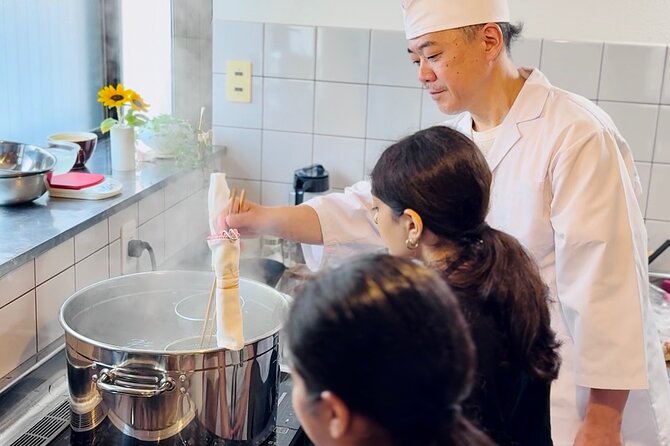
The class starts at Arashiyama Station, then you end back at the same meeting point. That matters because Arashiyama is a zone where you can lose time if you wander too far before you find your host, so having a clear, transit-friendly start is a big help.
They also use a mobile ticket, so you are not hunting paper. And because the time window is short, about 2 hours, you benefit from a smooth start that gets you cooking quickly rather than stretching the day.
More Ramen Trips in Kyoto
- Ramen Cooking Class at Ramen Factory in Kyoto
★ 5.0 · 1,937 reviews - Kyoto: Ramen Cooking Class at a Ramen Factory with Souvenir
★ 4.9 · 532 reviews - Kyoto: Ramen, Gyoza, and Onigiri Cooking Class
★ 5.0 · 445 reviews
Satoru and Akiko lead a clean, organized home-kitchen experience
This is held in the hosts’ home, and the reviews make one thing clear, the space feels clean and the pacing is organized. In practice, that translates to less confusion for you, you get clear steps, you can ask questions in English, and you are not stuck guessing what happens next.
You will also be provided aprons and towels at no extra cost. It is a small thing, but it keeps the class feeling practical. No frantic shopping for “kitchen gear,” no worrying about what to wear, you just show up ready to cook.
Because it is a private activity, only your group participates. That is great if you want a more personal experience, or if your group has different dietary needs or pace, you are not competing with strangers for attention.
The secret umami broth: how vegan ramen avoids tasting like compromise
Here is the promise, and the reason this class has traction: the broth is designed to be satisfying even if you normally order meat-based ramen. The instructors are very upfront that they are not trying to make food that is “good for vegan.” Their goal is simple, you should taste something you genuinely want to eat again.
What makes the broth different is the method. It is 100% plant-based and explicitly dashi-free, with flavor built from kombu (kelp), shiitake, and fresh Kyoto vegetables. The idea is classic Japanese umami layering, but with a vegan backbone, then brought to a richness that rivals the punch people associate with tonkotsu.
Why that matters for you at the table is texture and depth. When vegan broths are thin, people think the problem is just the lack of meat. Here, you are learning a process that chases the savory notes and body that usually come from animal-based stocks, so the final bowl has weight, not just aroma.
You will make two types of rich ramen broth in the class. That is useful because ramen is not one single flavor, it is a balance of aroma, salinity, and richness. Making two versions gives you a feel for how the same plant ingredients can be tuned to change the bowl.
Building crispy gyoza from scratch, then eating immediately
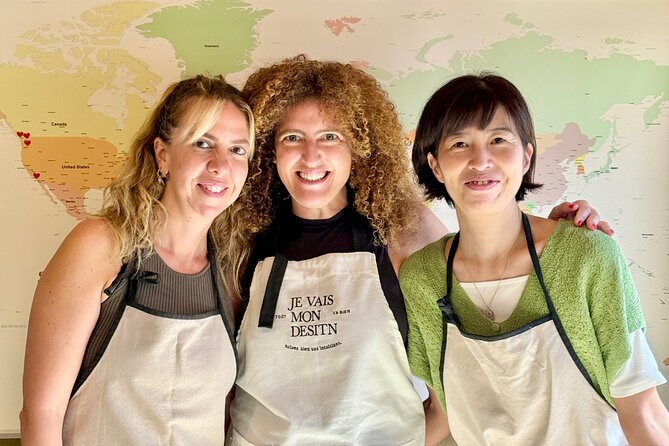
Ramen is only half the story. You also make crispy gyoza from scratch and eat them as part of the meal. That combo is smart because gyoza gives you a contrast to the broth, crisp outside, juicy inside, and it keeps the meal from becoming one-note.
Since the class is short, about 2 hours, you should treat gyoza as the “hands-on payoff” portion. This is where your effort shows fast. You are not just watching someone else assemble dumplings while you take photos, you are working alongside the instructor’s steps.
And because dinner or lunch is included, you do not leave with only theory. You get a chance to adjust, taste, and understand how your ramen broth works with the gyoza crunch.
A few more Bamboo Grove walks around Kyoto:
- Kyoto: Fushimi Inari, Kinkakuji, Bamboo Grove 1 Day Bus Tour
★ 4.8 · 4,316 reviews - Osaka/Kyoto:Kinkakuji,Arashiyama,FushimiInariShrine,NaraPark
★ 4.1 · 1,596 reviews - Kyoto/Osaka: Nara, Fushimi Inari Taisha, Arashiyama Bus Tour
★ 4.7 · 1,275 reviews - Kyoto Arashiyama Walking Tour: Bamboo, Monkeys, Gardens & Secrets
★ 5.0 · 1,216 reviews
Lunch or dinner format: how the 2 hours really shape the experience
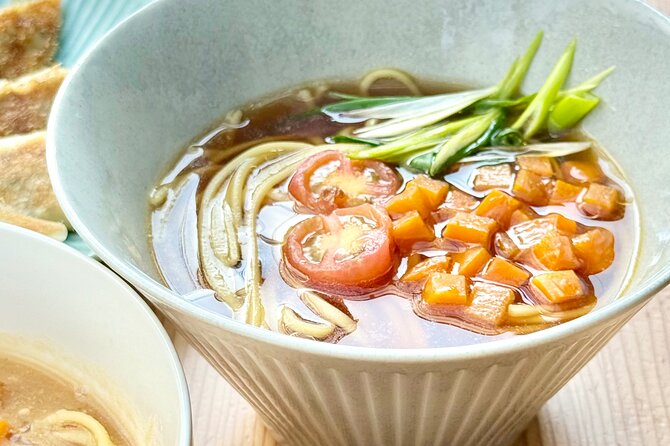
You choose either an evening dinner reservation or a lunch reservation. In both cases, you cook and eat with the hosts. That means you are not doing a long “sit and wait” format, you stay in motion through the class.
Two hours is not a lot of time, and that is not a drawback if you like focused lessons. It is plenty for hands-on cooking and tasting, but it is not the kind of class where you can wander off, take extra breaks, or slow down for perfect precision. If you are someone who likes relaxed, long-form cooking sessions, you might feel the pace is tight.
Still, the way the class is described and reviewed suggests the timing is handled well, with clear instruction and a friendly, relaxed vibe. For me, the sweet spot is hungry, curious, and ready to cook without needing to “master everything” in one afternoon or evening.
What you get included, and what costs extra (so there are no surprises)
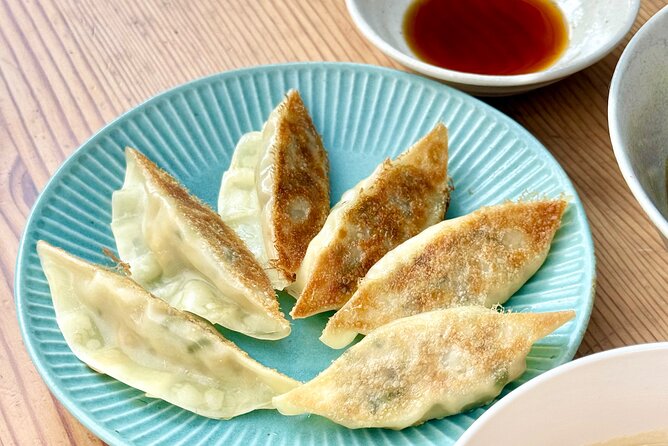
The value here comes from meal + instruction together. You get:
- Dinner or lunch, depending on your reservation time
- Bottled water, plus tea freely available
- Aprons and towels
- An English-speaking instructor
- Cooking recipes
- The cooking itself, including two ramen broths and crispy gyoza
Alcoholic beverages are not included, and soda or pop is also not included. If you want a drink, plan on buying it separately. If you are budgeting, this makes it easier to estimate your total spend because the base meal is covered.
Dietary needs: vegan, vegetarian, gluten-free options, and the dog note
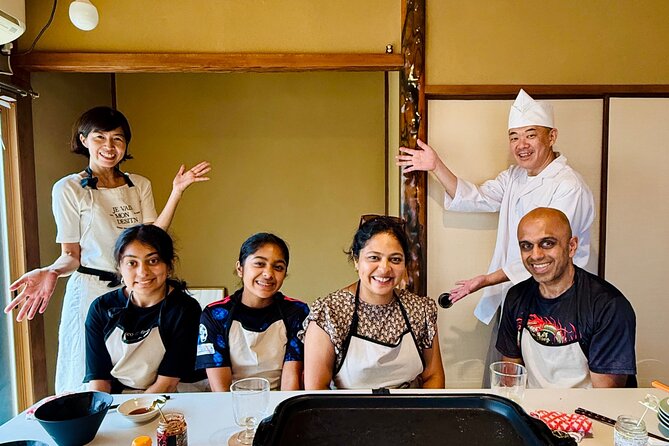
This class is built around 100% plant-based cooking, with the broth being dashi-free. That is great if you are vegan or vegetarian, and it is also why meat-lovers often feel pleasantly surprised, because the target is flavor depth rather than strict avoidance.
Gluten-free options are available, but the wording suggests you should ask ahead rather than assume everything will be automatically gluten-free. If you have celiac disease or a serious gluten intolerance, send your needs in advance so the host can guide you appropriately.
The main caution is not ramen style, it is the home setting. The hosts keep a dog, and the note says this is not recommended for guests with animal allergies. If you are sensitive, do not gamble, choose a different food class or a venue without pets.
Finally, if you have food allergies, you should tell them in advance. That is the practical step that keeps the experience comfortable for everyone.
Price and value: what $65.15 buys you in Kyoto

At $65.15 per person for about 2 hours, this is not the cheapest “snack and stroll” option in Kyoto. But it is also not overpriced when you look at what you actually get.
You are paying for:
- Hands-on cooking with an English-speaking guide
- A full included meal you cook and eat
- Ingredient work that most people would never do at home, like building a layered ramen broth from scratch
- The recipes so you can repeat it later
It also helps that it is private. Group classes can be cheaper, but you often spend your money on crowd control instead of learning. Here, you can ask questions, adjust flavors, and focus on technique.
Booking demand is also a hint. It is commonly booked around 11 days in advance on average, so if you know your Kyoto window, reserve earlier rather than waiting until the last minute.
Who this class suits best in Arashiyama
I think this class fits best if you want a real cooking lesson in Kyoto, not just a place to eat. It is especially good for:
- Vegans and vegetarians who want ramen that feels full, not lightweight
- Omnivores who are curious and willing to be surprised by plant-based umami
- Foodies who like technique, especially broth building and flavor tuning
- Small groups who want a private, English-led evening or lunch
If you are expecting a quiet food tour with lots of walking and sightseeing, this is not that. It is a kitchen-first experience. The payoff is in what you make and then taste right away.
Should you book the Arashiyama vegan ramen and gyoza class?
Book it if you care about flavor depth and hands-on cooking. The biggest reasons to go are the dashi-free plant-based broth built around kombu, shiitake, and Kyoto vegetables, plus the fact that you leave with recipes and a meal you cooked yourself. The tone from the hosts also matters, they aim for a bowl so good it would satisfy meat-lovers, and the class is organized in a way that helps you succeed.
Skip it if you have a dog allergy, or if your group needs fully guaranteed gluten-free setups without any follow-up questions. Also, if you hate short time limits and prefer slow, wandering experiences, the 2-hour format might feel rushed.
If your goal is one memorable Kyoto food skill you can actually repeat at home, this is a strong pick.
FAQ
What is the duration of the Arashiyama ramen and gyoza class?
The class lasts about 2 hours.
How much does it cost, and what is included in that price?
It costs $65.15 per person. The experience includes dinner or lunch (based on your reservation), cooking, bottled water and tea, aprons and towels, an English-speaking instructor, and cooking recipes.
Where do I meet for the class?
The meeting point is Arashiyama Station (Arashiyama Higashiichikawacho, Nishikyo Ward, Kyoto, 616-0002, Japan). The activity ends back at the meeting point.
Is this a private class?
Yes. It is a private tour/activity, and only your group will participate.
Is the ramen broth vegan?
Yes. The class is 100% plant-based, and the broth is also dashi-free.
Are gluten-free options available?
Gluten-free options are available, but you should plan to communicate your needs in advance.
Does the class include alcohol or soda?
No. Alcoholic beverages and soda or pop are not included.
What does the class teach you to make?
You will make two types of rich ramen broth and crispy gyoza from scratch.
Is food allergy information handled?
The experience notes that if you have food allergies, you should tell them in advance.
Is it a problem if I have a pet allergy?
This is not recommended for people with animal allergies because the host has a dog.
More Vegan & Vegetarian in Kyoto
- Tokyo: 2-Hour Vegan and Vegetarian Ramen Guided Walking Tour
★ 4.8 · 33 reviews - Shibuya Tokyo: Sushi Making Class (Vegan/Vegetarian/Halal)
★ 4.7 · 29 reviews - Osaka Dotonbori: Vegan/Vegetarian Sushi Making Experience
★ 5.0 · 9 reviews - Tokyo Vegan Food Tour
★ 5.0 · 8 reviews
Newly listed around Kyoto
- Gion Night Walking Tour★ 5.0 · 142 reviews
- Kyoto: Descending Arashiyama (Private)★ 5.0 · 24 reviews
- Private Art Sushi Roll Class in Kyoto★ 5.0 · 13 reviews
- Start from Kyoto Station: Early Morning E-Bike Tour with Kyotoite★ 5.0 · 15 reviews
- Kyoto Private Tour with Customized Itinerary★ 5.0 · 7 reviews
- Osaka Day Trip from Kyoto with a Local: Private & Personalized★ 4.0 · 6 reviews
- Nara Day Trip from Kyoto with a Licensed Guide★ 4.5 · 6 reviews
- Kyoto Private Photo Shoot & Tour by SnapKyoto★ 5.0 · 41 reviews
Bamboo Grove Walks, compared.

Fushimi Inari, Kinkakuji, Bamboo Grove 1 Day Bus Tour
Read our review →
Osaka/Kyoto:Kinkakuji,Arashiyama,FushimiInariShrine,NaraPark
Read our review →
Kyoto/Osaka: Nara, Fushimi Inari Taisha, Arashiyama Bus Tour
Read our review →
Kyoto Arashiyama Walking Tour: Bamboo, Monkeys, Gardens & Secrets
Read our review →
Arashiyama Bamboo, Temple, Monkeys, or Secret Sake Brewery
Read our review →
Osaka/Kyoto: Arashiyama, Nara & Fushimi Inari Shrine w/Lunch
Read our review →
Nijo, Kinkaku-ji, Arashiyama, Kiyomizu & Fushimi Inari
Read our review →
Kyoto Ghost Tour: Dark Tales, Urban Legends, Bamboo Forest Night
Read our review →Browse the lists this tour appears in