
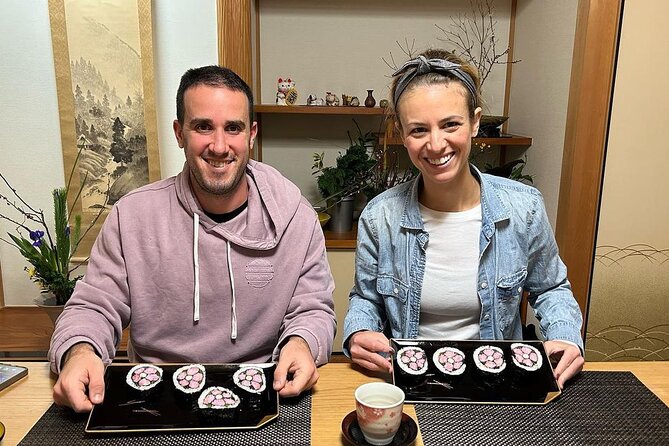
Review · SUSHI COOKING WORKSHOPS
Private Art Sushi Roll Class in Kyoto
Sushi art in Kyoto, for real. This private class teaches kazarimaki patterns inside a sushi roll, using plant-based edible pigments and a step-by-step setup that makes fancy looks achievable. I also like that you leave with a booklet and certification, so it feels more like a workshop than a quick demo.
The downside to plan for is simple but important: you must bring socks, because you cannot enter the tatami room without them. If you arrive late, you will not be able to join the class, so it pays to build in a few extra minutes around your 4:30 pm start.
In This Review
- Key highlights you should care about
- Inside the SAKURA Nijo Home: what the 4:30 pm session feels like
- What you make: a peach flower kazarimaki roll (and why it’s hard in a fun way)
- Instructor-led details: English guidance that keeps the process moving
- The tatami-room customs: socks, timing, and what “private” means in practice
- Wearing traditional garments: kimono time without the museum vibe
- Price and value: what $93.32 buys you, and what makes it worth it
- The lesson flow, from arrival to certification
- Who should book this class, and who might want to think twice
- Practical tips to make your 60 minutes go smoothly
- Should you book Private Art Sushi Roll Class in Kyoto?
- FAQ
- How long is the private Art Sushi Roll class?
- How much does the sushi roll class cost?
- Where does the class meet in Kyoto?
- What is kazarimaki?
- Do I need socks for the class?
- What happens if I arrive late?
- Is the class private?
- Is there an age requirement for participants?
- What is included in the class price?
- What is the cancellation policy?
Key highlights you should care about
- Private, in-home style class run for only your group, so you can ask questions without crowd pressure
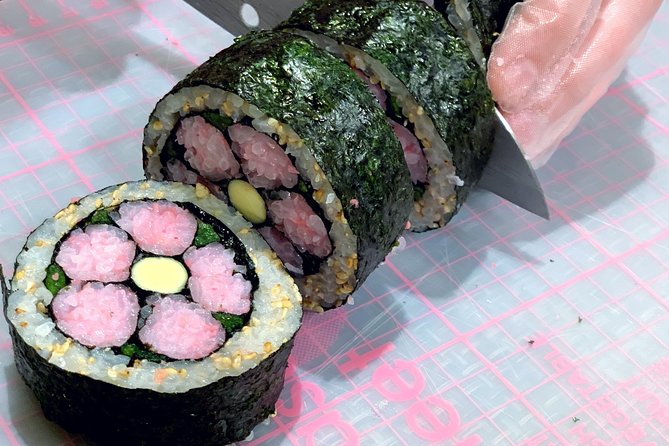
- Kazarimaki sushi design skills using edible pigments extracted from plants to create a peach-flower pattern
- All ingredients included, plus bottled water and tea or coffee, which keeps the cost more honest
- Traditional garments provided (kimono for women, and other traditional garments for men and children) to make it feel like Kyoto
- Step-by-step guidance in English, designed to work even if you are starting from scratch
- Take-home booklet and certification so you can recreate your roll later and remember the steps
Inside the SAKURA Nijo Home: what the 4:30 pm session feels like
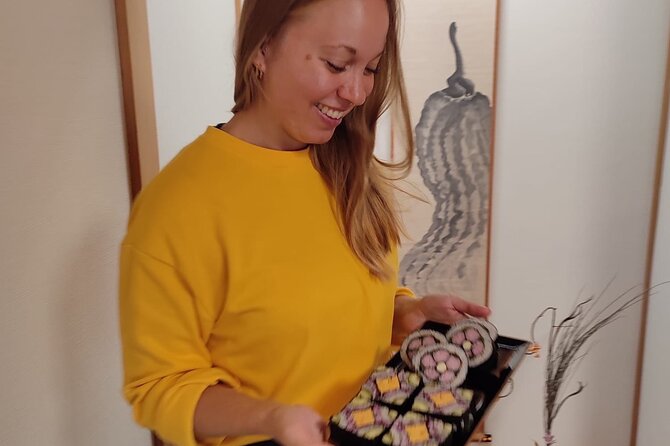
Kyoto does not always do things fast. This class runs about 1 hour at a set start time, beginning at 4:30 pm at SAKURA Experience Japanese Culture Nijo Home in the Nijo area (SAKURA Experience Japanese Culture Nijo Home, 660 Izumicho, Nakagyo Ward). It is a good fit if you want an evening activity that is hands-on and close to transit.
Because it is private, your experience is not shaped by other schedules or by a rotating line of participants. You get the benefit of a slower pace where the instructor can correct grip, handling of rice, and how you layer the materials for the design. If you like cooking classes where you can actually ask why something works, this format tends to deliver.
There is also a cultural layer that matters. You are not just making food. You are learning in a home setting with a tatami room. That means you get the quiet, calm atmosphere that makes the details of kazarimaki feel less like a craft project and more like a small ritual.
One practical note: you need to be on time. If you arrive more than 15 minutes late, you will not be able to join the class. Build buffer time into your route, especially if you are juggling dinner plans right after.
More Sushi Workshops in Kyoto
- The Original Small-Group Sushi Making Class in Kyoto
★ 5.0 · 436 reviews - Kyoto: Small-Group Authentic Sushi Making Workshop
★ 5.0 · 137 reviews - Sushi – Authentic Japanese Cooking Class – the best souvenir from Kyoto!
★ 5.0 · 93 reviews
What you make: a peach flower kazarimaki roll (and why it’s hard in a fun way)
The main outcome of the session is clear: you will create a peach flower pattern sushi roll using natural food colorings and traditional ingredients. The class is built around learning how to shape the roll while keeping the design visible once sliced.
This is where kazarimaki earns its reputation. Standard sushi rolling is already a precision skill. Kazarimaki adds a second mission: design placement. You are not only forming a roll, you are positioning colorful edible materials so the pattern shows up as intended.
What I find valuable for your learning curve is that the class focuses on repeatable steps. The goal is not just a pretty final roll. You should come away understanding the mechanics of building and rolling so you can attempt the same pattern later at home.
The class also includes vegan and vegetarian options, which is a big deal if your group has dietary needs. Sushi can be tricky in mixed groups, but here the teaching approach is clearly meant to include more than just one style.
Instructor-led details: English guidance that keeps the process moving
This is an English-operated private class. Based on how the hosts describe the experience, the instruction style centers on clarity and patience. In particular, Aya and her husband Manabu Ito run the experience, and the teaching is set up so you can follow without getting lost in Japanese food vocabulary.
I like that the class does not treat you like a spectator. You are meant to make the roll yourself. You will receive insightful commentary as you work, which matters because kazarimaki is one of those techniques where small choices change the result. For example, if rice handling is off, your pattern placement can blur. If the roll tension is wrong, the slice can look uneven.
One more detail that helps: someone is typically doing the supporting tasks too, like handling tools and cleanup. That keeps your hour focused on learning rather than juggling kitchen chores. If you enjoy classes where you get to concentrate on the cooking, this kind of setup is a win.
The tatami-room customs: socks, timing, and what “private” means in practice
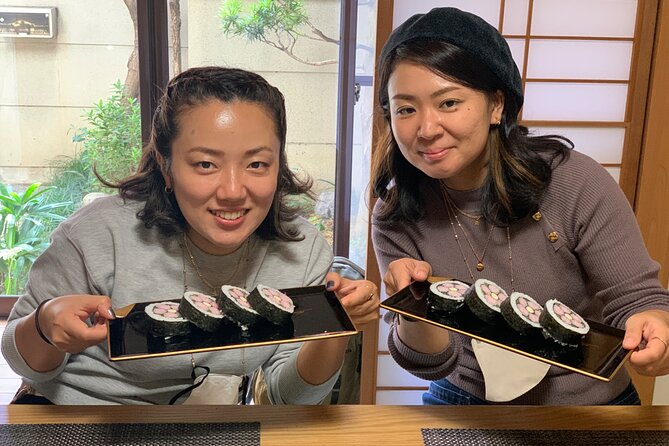
Socks are not a suggestion here. You must bring socks to respect Japanese customs, because you cannot enter the tatami room without them. That is one of those details that can ruin a day if you forget, so pack them the way you would pack a toothbrush.
There is also an easy family note: baby and toddler can sit or sleep on tatami mat. If you are traveling with little ones, that reduces the stress of finding a more rigid seating setup. (Still, you should plan around the class timing, since the session does not say it adjusts for delays.)
This is a private class, meaning only your group participates. It is not a drop-in event where you are expected to adapt to random people and shifting schedules. For families, couples, or small friend groups who want a shared activity, this is exactly the kind of environment where everyone gets a turn and asks questions.
For minors, the rule is straightforward: if someone is under 18, they need to come with the parent or guardian (over 21). So if your group includes teens, confirm the adults who will be with you before you go.
A different sort of day in Japan:
- PERFECT KYOTO 1-Day Bus Tour
★ 5.0 · 13,518 reviews - Kyoto: Fushimi Inari, Kinkakuji, Bamboo Grove 1 Day Bus Tour
★ 4.8 · 4,316 reviews - Kyoto: Tea Ceremony in a Traditional Tea House in Kiyomizu
★ 4.9 · 3,519 reviews - Kyoto Geisha Walking Tour: Gion District & Hidden Gems
★ 4.7 · 3,273 reviews
Wearing traditional garments: kimono time without the museum vibe
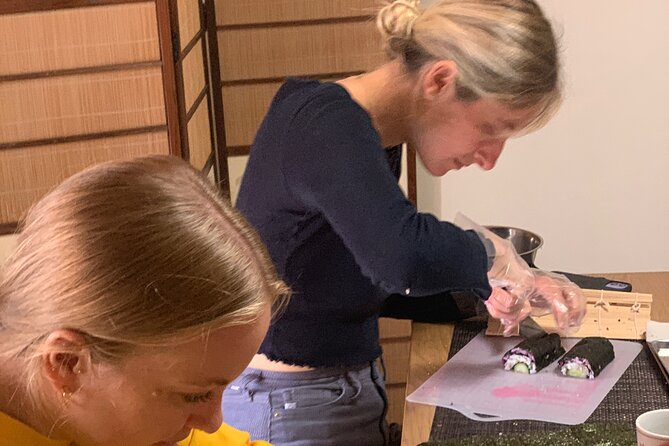
One of the most fun parts is the option to wear traditional clothing during the experience. The class provides a kimono for women and other traditional garments for men and children.
Why does that matter? Because it changes the feel of the activity. Food classes can sometimes be “kitchen practical” only. Here, the outfit supports the cultural tone, which helps you slow down and focus on the technique. It also makes it easy to create a memorable moment without needing to chase the perfect photo spot.
Just remember: since you must wear socks for tatami, plan your outfit and footwear so it is easy to remove and replace. You are going to be moving around a bit, and you do not want to spend time wrestling with shoes when you should be learning how to build the roll.
Price and value: what $93.32 buys you, and what makes it worth it
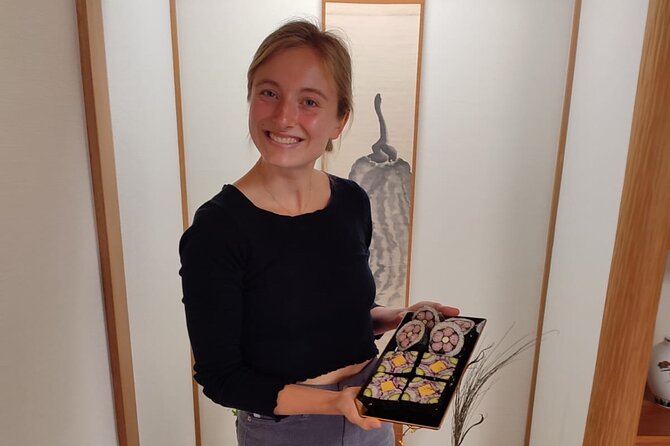
At $93.32 per person, you are paying for a private class, not a mass-market cooking demo. That price includes several things that help it feel more balanced:
- All sushi ingredients for the session
- Bottled water plus tea or coffee
- Instruction in English
- Booklet and certification at the end
- Garments for the experience
That combination is why the price can make sense. Many short classes charge a similar amount but leave you to source ingredients, bring supplies, or skip the “learning material” take-home. Here you get both the workshop format and the documentation piece.
There are also group discounts (if your group is large enough to qualify through the operator). And the class supports a mobile ticket, which helps reduce friction when you are moving through Kyoto at night.
In other words, the value is in the learning plus the extras. If you are already planning to do a cooking class in Kyoto, this one is particularly attractive if you like the idea of making something visually impressive, not just something tasty.
The lesson flow, from arrival to certification
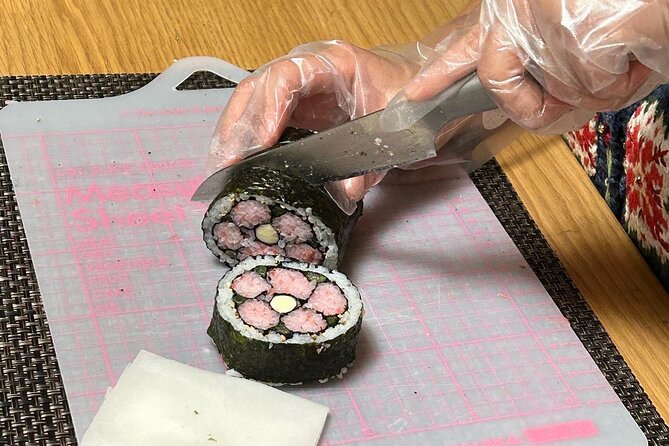
Since there is only one meeting location, the itinerary is really the hour you spend inside the session. Here is the practical flow you should expect.
First, you show up at SAKURA Experience Japanese Culture Nijo Home near public transportation. You should arrive early enough to get checked in comfortably. After that, you will head toward the tatami room, and you will be ready to use socks on arrival.
Next comes the garment moment. For many people, this is when the experience clicks into place, because you feel like you are doing something more specific than everyday cooking. Then the instructor guides you into the technique for the pattern roll.
During the main part, you build a roll designed to show a peach flower look once sliced. You work with colorful edible materials using plant-derived pigments and natural food colorings, and you focus on placement, shape, and rolling technique.
Finally, you finish up and receive a booklet and certification. That take-home piece is more than a souvenir. It gives you a reference for recreating the steps later, which is what makes this kind of class worth doing even if you are not planning to become a sushi chef.
Who should book this class, and who might want to think twice
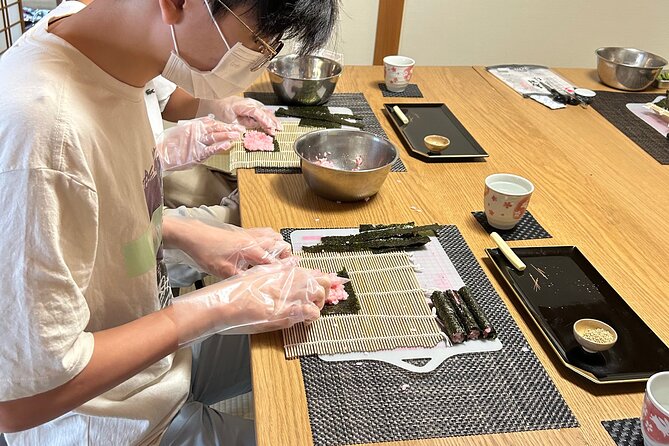
This private sushi art roll class fits best if you want a structured, hands-on Kyoto experience. It also works well if you are traveling as a family or in a mixed group, because the session includes options like vegan and vegetarian choices and provides garments for different ages.
It is also a strong pick for people who like learning crafts with visible results. The peach-flower roll is the kind of project where you can slice it and see the design immediately.
The one group that might want to plan carefully is beginners who are nervous about sushi rolling. The class is positioned as doable for beginners, but at least one feedback note suggests it may feel easiest if you already know a bit of sushi technique. If you have never handled rice for sushi before, go in with patience and treat it like a practice session.
Practical tips to make your 60 minutes go smoothly
Socks first. Bring them with you, even if you think you will be wearing them under shoes. You will be asked to use them in the tatami area.
Then plan your timing around the strict entry rule. With a 4:30 pm start and a 15-minute cutoff, you want transit time plus a little buffer.
If you care about dietary needs, confirm the vegan or vegetarian setup in advance. The class indicates these options are available, but it is smart to make sure your group is aligned before you arrive.
Also, bring the mindset of learning. Kazarimaki is not just about the final slice. The technique is the point, and a bit of trial within the hour is normal.
Should you book Private Art Sushi Roll Class in Kyoto?
If you want a Kyoto evening that is creative, structured, and culturally flavored, I think this is a smart booking. The price is high enough that you should not treat it like casual entertainment, but the included ingredients, drinks, garments, and take-home booklet and certification make it feel like a real workshop.
Book it if you love the idea of learning kazarimaki and creating a peach-flower roll you can recreate later. Skip it if you cannot meet the basic requirements, especially the socks rule and the late-arrival cutoff, or if your schedule is too tight to guarantee punctual arrival.
If your group wants a shared activity that feels authentically Kyoto but still has modern, Instagram-friendly results, this one checks a lot of boxes.
FAQ
How long is the private Art Sushi Roll class?
The class runs about 1 hour.
How much does the sushi roll class cost?
The price is $93.32 per person.
Where does the class meet in Kyoto?
You meet at SAKURA Experience Japanese Culture Nijo Home, located at 660 Izumicho, Nakagyo Ward, Kyoto 604-0015.
What is kazarimaki?
Kazarimaki is the art of making designs inside a sushi roll using edible pigments extracted from plants.
Do I need socks for the class?
Yes. You must bring socks because you cannot enter the tatami room without them.
What happens if I arrive late?
If you arrive more than 15 minutes late, you will not be able to join the class.
Is the class private?
Yes. It is a private class, and only your group will participate.
Is there an age requirement for participants?
Under 18 years old must come with the parent or guardian, who must be over 21 years old. Baby and toddler can sit or sleep on the tatami mat.
What is included in the class price?
The class includes bottled water, tea or coffee, and all sushi ingredients. You also receive a booklet and certification at the end.
What is the cancellation policy?
You can cancel for a full refund up to 24 hours in advance of the experience start time. If you cancel less than 24 hours before the start time, the amount paid will not be refunded.
Newly listed around Kyoto
- Gion Night Walking Tour★ 5.0 · 142 reviews
- Kyoto: Descending Arashiyama (Private)★ 5.0 · 24 reviews
- Start from Kyoto Station: Early Morning E-Bike Tour with Kyotoite★ 5.0 · 15 reviews
- Kyoto Private Tour with Customized Itinerary★ 5.0 · 7 reviews
- Osaka Day Trip from Kyoto with a Local: Private & Personalized★ 4.0 · 6 reviews
- Nara Day Trip from Kyoto with a Licensed Guide★ 4.5 · 6 reviews
- Kyoto Private Photo Shoot & Tour by SnapKyoto★ 5.0 · 41 reviews
- Kyoto Day Trip to Nara with a Local – Private & Personalized★ 5.0 · 10 reviews
Sushi Cooking Workshops, compared.
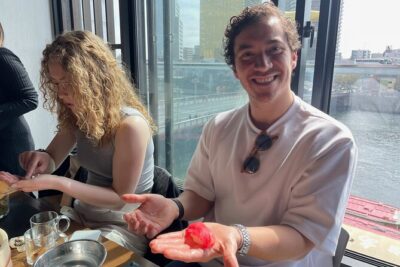
Sushi Making Tokyo Roll and Authentic Japanese Sushi Class
Read our review →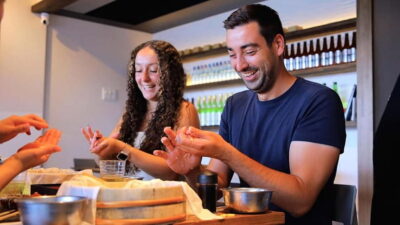
Roll and Authentic Sushi Making Class in Asakusa
Read our review →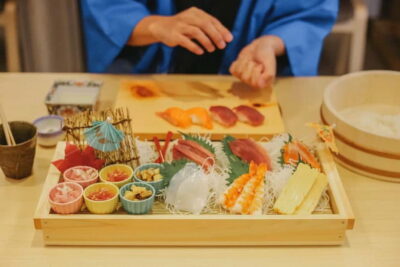
Sushi Making Class in a Happi Coat near a Famous Spot
Read our review →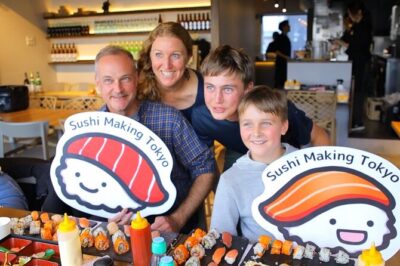
Sushi Making Tokyo! Popular Maki Sushi & Japanese Sushi(+Recipe!)
Read our review →
Tokyo Sushi Making Class in Tsukiji with Professional Chef
Read our review →
Tokyo Night Foodie Tour in Shinjuku – Seasonal Sushi, Wagyu Beef
Read our review →
Tsukiji Fish Market Guided Tour and Sushi Making with Pro Chef
Read our review →
Tsukiji Fish Market Sushi Making Class with Pro Chef
Read our review →Browse the lists this tour appears in