
Review · SHRINE & TEMPLE VISITS
Best of Kyoto: Red Gates of Fushimi Inari & Kiyomizu Temple
Kyoto hits different before the day-trippers wake up, and this half-day tour is built for that. I love the early access feel at Fushimi Inari’s torii gates, and I love how the guide turns Kiyomizu-dera into more than a photo stop with clear context on Buddhism. One consideration: the route has stairs and you will rack up serious walking, so it is not the best pick if mobility is an issue.
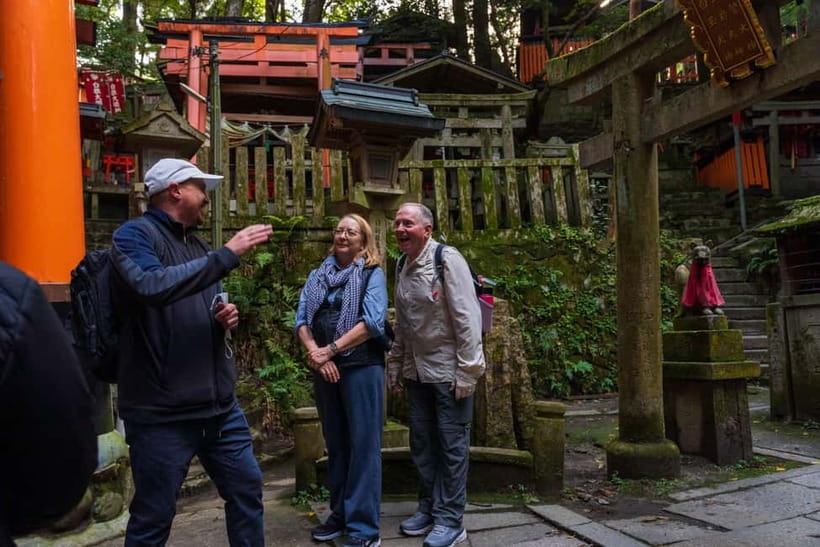
The vibe is calm, you get time to look closely, and you come away understanding what you are seeing instead of just collecting landmarks. In particular, guides like Shanda and Diana are praised for taking things at a good pace, sharing stories, and even giving room to pause for photos. If you are an extremely early morning person, you will like the start; if not, plan on feeling awake fast, because the best angles are tied to the morning light.
For $58, this is a tidy-value way to cover two top sights in about 3 hours, with entrance fees and transit handled for you. The route ends at % ARABICA Kyoto Higashiyama, so you can reward yourself with coffee after the steps. If you hate crowds, this early timing is the point, but it also means some nearby shops may not be open yet.
In This Review
- Key highlights you will actually feel
- Early mornings at Fushimi Inari, why it changes everything
- Fushimi Inari Taisha: torii gates, pacing, and what to watch for
- Kiyomizu-dera: the iconic temple and the view you came for
- Higashiyama lanes, Sannenzaka, Ninenzaka, and why preserved streets feel different
- The photo stop that saves your sanity
- Food breaks, coffee, and where the tour ends
- Price and value: what $58 covers and why it matters
- The pace, the steps, and who should skip it
- Guides make the difference, and names you might get
- Should you book this Kyoto best-of tour?
- FAQ
- How long is the tour?
- What does the tour cost?
- Where do I meet the guide?
- Which stops are included?
- Is transportation included?
- Are entrance fees included?
- What language is the tour guide?
- What should I wear or bring?
- Is this tour good for people with mobility impairments?
- Is there an option to cancel for a refund?
Key highlights you will actually feel
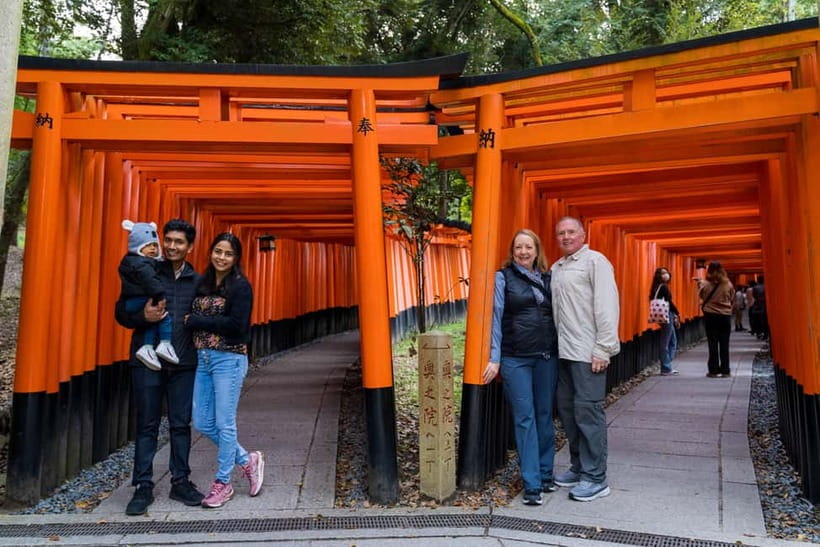
- Early-bird timing at Fushimi Inari, with long shadows and far fewer people for photos
- Story-driven Buddhism context from your guide, not just dates and directions
- Kiyomizu-dera with skyline views, guided so you know what matters and where to look
- Higashiyama lanes plus preserved Sannenzaka and Ninenzaka atmosphere
- Stress-free moving day, since entry fees, train fares, and taxi fare between stops are included
- Finish at % ARABICA Kyoto Higashiyama, with tips for where to eat and drink next
Early mornings at Fushimi Inari, why it changes everything
Fushimi Inari Taisha is famous for a reason, but the experience depends heavily on when you go. Early in the day, you trade peak-hour noise for something quieter and more spacious. The torii gates look almost sculptural when the light is low, and you get better chances to frame photos without constant sidestepping.
This tour is designed around that exact advantage. You start at JR Inari Station, then head straight to the shrine. Your guide helps you get your bearings quickly, so you are not spending precious minutes trying to figure out where the most interesting gate lines and viewpoints are.
There is also a mental benefit to an early plan: you are still fresh when you reach Kiyomizu-dera later. A lot of Kyoto sightseeing tours end with people feeling rushed, but here the structure keeps you moving with purpose rather than panic.
More Shrine & Temple Visits in Kyoto
- Kyoto: Fushimi Inari, Kinkakuji, Bamboo Grove 1 Day Bus Tour
★ 4.8 · 4,316 reviews - Kyoto: Tea Ceremony Ju-An at Jotokuji Temple
★ 4.9 · 3,207 reviews - Fushimi Inari Hidden Hiking Tour (Private Option Available)
★ 5.0 · 1,750 reviews
Fushimi Inari Taisha: torii gates, pacing, and what to watch for
Your first guided block is about 50 minutes at Fushimi Inari Taisha. You are not just walking through red gates, you are moving along a shrine experience that feels like a corridor of devotion. The sheer repetition of torii gates can turn into visual overload if you rush, which is why the guide matters.
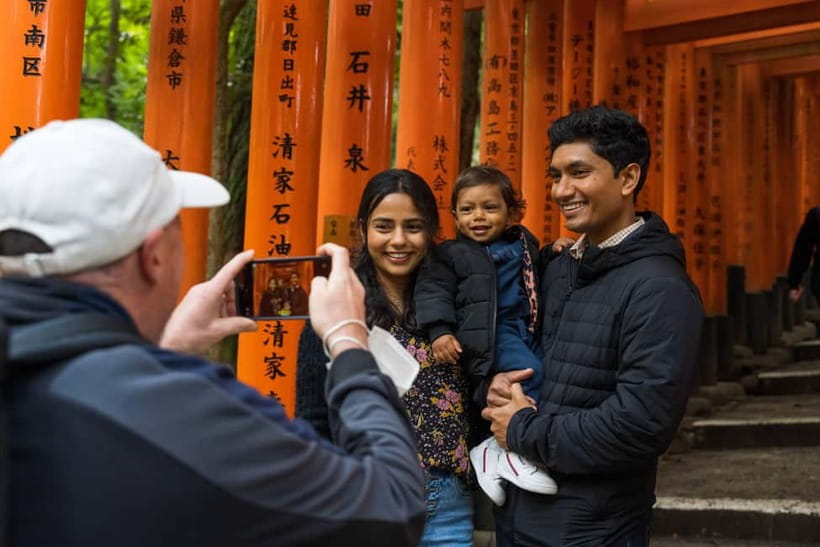
What I like about this part of the tour is the emphasis on slowing down at the right moments. Guides are known for giving guests time to take photos in a relaxed way. That matters because at Inari, the best images are usually tied to small decisions: stepping slightly to the side, pausing at a gate line where shadows fall well, or stopping when you can see depth through the rows.
You will also hear historical and cultural context tied to Buddhism and religious practice. The point is not to turn the shrine into a lecture, but to help you recognize what you are seeing as meaningful symbols rather than background decoration.
One practical consideration: expect plenty of steps and uneven terrain. Comfortable shoes are not optional here. Even with a guide, you are doing real walking through a shrine complex.
Kiyomizu-dera: the iconic temple and the view you came for
Next comes Kiyomizu-dera, with about 1 hour of guided time. This is the stop where many people first understand why Kyoto is such a magnet. The temple’s main profile is instantly recognizable, and the surrounding areas offer viewpoints that make you want to stop and stare.
The best way to enjoy Kiyomizu-dera is to know where to look while you are there. Your guide helps you connect the dots, so you understand what is special about the temple and why people talk about it as an icon of the city. You also get the benefit of a guided route through the area rather than wandering and hoping you find the right angles.
Photo time matters here too. With Inari, you are hunting for gate lines. At Kiyomizu-dera, you are hunting for the right sightlines back toward Kyoto and the right composition of the temple setting. A guided pace helps because you are not scrambling at the last minute when the crowd thickens.
If you are sensitive to heights, take your time at viewpoints. You do not need to force dramatic spots. Just keep moving at a comfortable rhythm and let the guide show you options.
Higashiyama lanes, Sannenzaka, Ninenzaka, and why preserved streets feel different
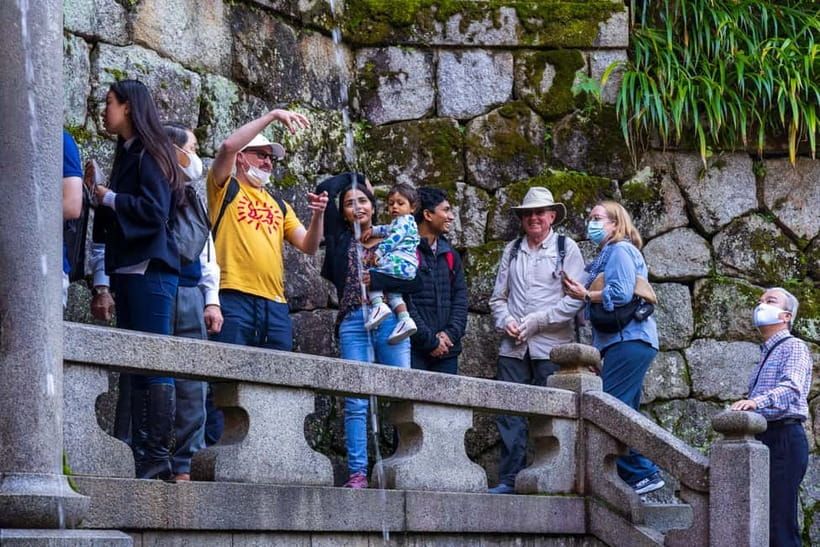
After the two big anchor stops, the tour transitions into the charm of Higashiyama and the preserved districts around Sannenzaka and Ninenzaka. This is the part that often becomes your favorite, even if the temples are what got you excited in the first place.
These streets are narrow, with historic wooden-house atmosphere that slows the whole experience down. It feels less like sightseeing and more like walking through a living slice of Kyoto. The route also gives you time to soak in small details: the feel of the lanes, the rhythm of foot traffic early in the morning, and the way the area holds onto its old layout.
A small heads up from real-world experience: since the tour runs early, some shops may be closed when you pass through. That is not a dealbreaker if you are here for the temple and street vibe, but if you are planning to shop heavily, keep expectations realistic and save shopping for later in the day.
More Shrine and Temple visits in Kyoto:
- Osaka/Kyoto:Kinkakuji,Arashiyama,FushimiInariShrine,NaraPark
★ 4.1 · 1,596 reviews - Kyoto/Osaka: Nara, Fushimi Inari Taisha, Arashiyama Bus Tour
★ 4.7 · 1,275 reviews - Arashiyama Bamboo, Temple, Monkeys, or Secret Sake Brewery
★ 4.8 · 886 reviews - Osaka/Kyoto: Arashiyama, Nara & Fushimi Inari Shrine w/Lunch
★ 4.4 · 754 reviews
The photo stop that saves your sanity
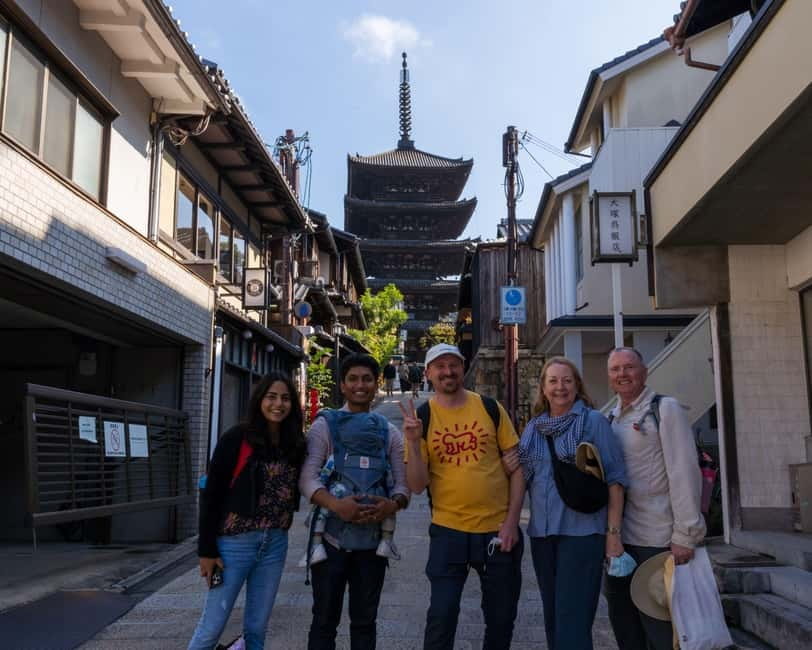
There is a dedicated 30-minute photo stop. It might sound small, but it is actually a gift on a short tour. Without it, you would be fighting for quick snapshots between guided walking and view changes.
This break works best if you treat it as a chance to reset. Check your photos, clear your head, and decide what you still need. If your camera is acting up or you want to compare angles, this block prevents you from falling behind the group.
Food breaks, coffee, and where the tour ends
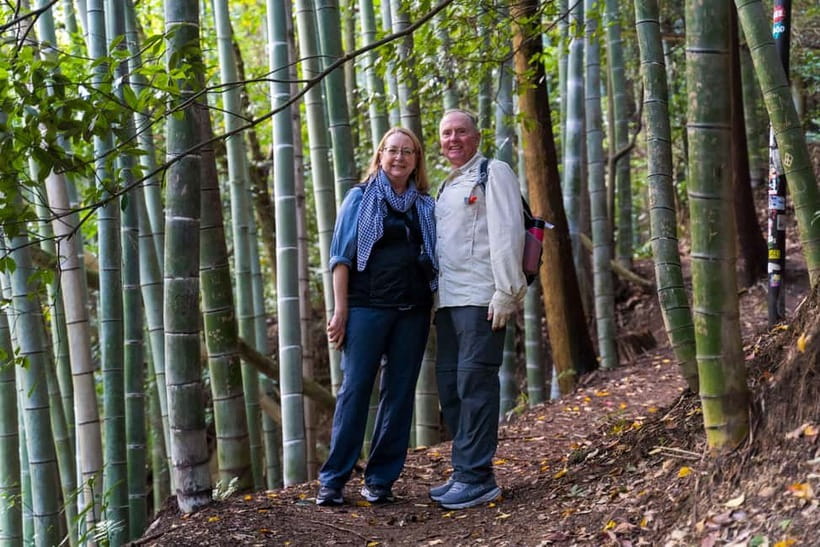
The tour finishes at % ARABICA Kyoto Higashiyama. That is a smart ending point because you are not left hanging with an awkward lunch scramble or “now what?” vibes.
You will also receive local guide tips at the end, aimed at helping you choose restaurants, cafes, and bars for the rest of your day. I like this kind of add-on because it saves time. Kyoto is full of great options, and having a guide point you toward neighborhoods and styles you actually want can cut your decision fatigue fast.
If you want a simple plan, do this: drink coffee at the end, then pick one nearby lunch option from the guide tips. After that, you can explore at your own pace without feeling like you missed something.
Price and value: what $58 covers and why it matters
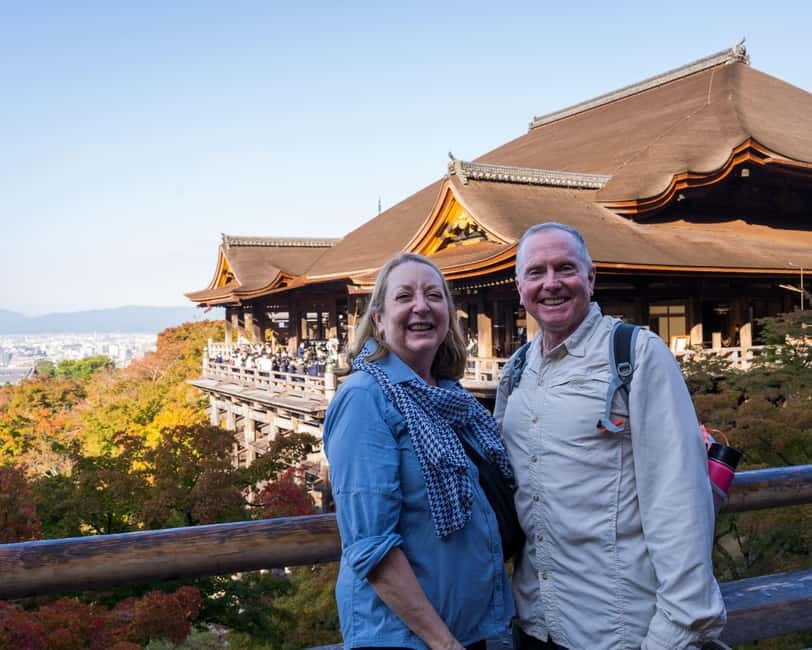
At $58 per person for a 3-hour tour, you are paying for more than access to two famous sites. You are paying for reduced friction.
Here is the practical value you get:
- Entrance fees are included, so you are not budgeting on the fly.
- Train fares and taxi fares between stops are included, which matters because Kyoto timing can turn into a stress fest if you have to manage transit yourself.
- You also get a live guide in English or French, which is the difference between seeing a place and understanding what you are seeing.
That is why this tour can feel like good value even if you would normally think, Sure, I can just take the train. You can. But on a short schedule, time and energy are your real currencies, and this tour spends them for you.
If you hate logistics, this is the sweet spot. If you are very independent and love planning every minute, you might still prefer DIY. But for most people trying to hit the highlights without losing the day, this feels fair.
The pace, the steps, and who should skip it
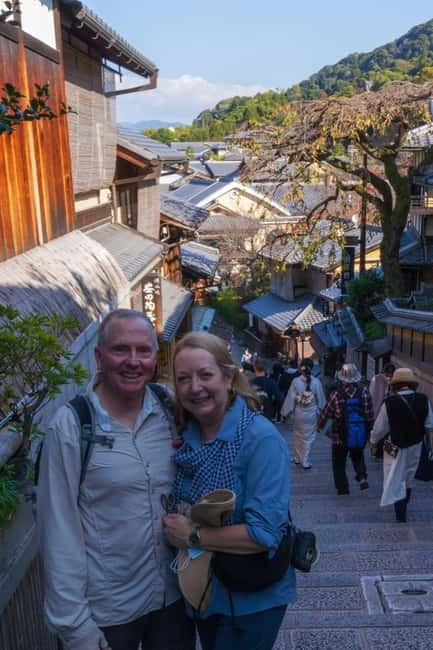
The route includes quite a few stairs, and you can end up doing 10,000 or more steps. That is not a scare tactic, it is just honesty. The tour moves efficiently, and early morning routes often mean a lot of vertical movement at shrine and temple sites.
If you have strong mobility and you already walk regularly, you should be fine with a good footwear choice. If you need mobility assistance, this tour is not suitable.
Small group or private options are available, which can help you feel less rushed. Still, the walking remains the walking. If you hate being on your feet for hours, consider a different Kyoto plan with fewer stairs.
Guides make the difference, and names you might get
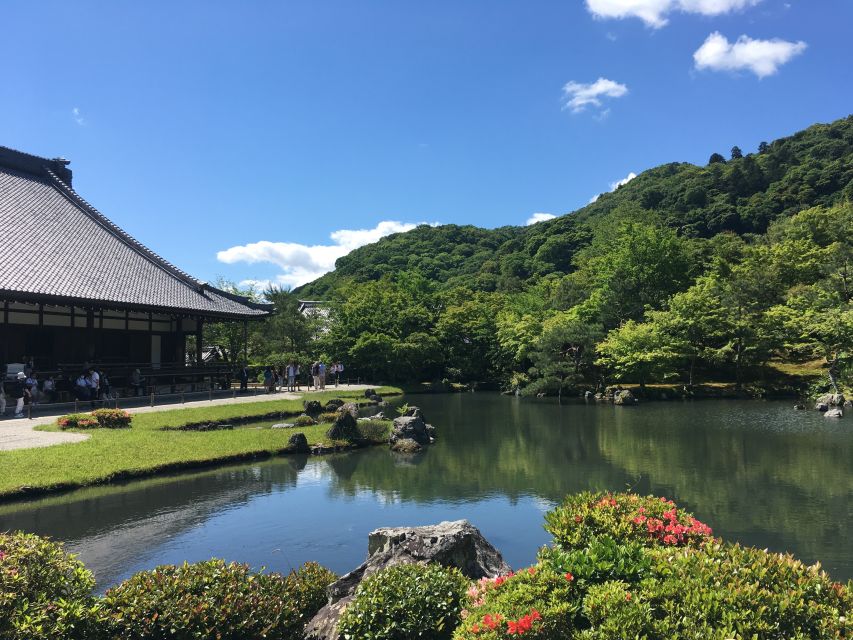
One of the most praised parts of this experience is the guide. People highlight the combination of strong explanations and an upbeat, friendly approach. Guides like Shanda are specifically praised for sharing a lot of expertise and also giving time for quiet photos.
Diana is another name that comes up, with praise tied to giving lots of interesting information and making the early timing feel worthwhile. In plain terms: the tour is not just a guided walk, it is a guided understanding.
If your guide also helps you get your bearings afterward, that is a real plus. Kyoto streets can be confusing the first day, so leaving with a sense of direction is helpful.
Should you book this Kyoto best-of tour?
Book this tour if you want:
- Fewer crowds at Fushimi Inari by starting early
- A guided plan that hits Fushimi Inari and Kiyomizu-dera in a short window
- Context on Buddhism and temple significance, not just directions
- Included transit and entry fees so you do not waste your morning on logistics
- A clear finish point at % ARABICA Kyoto Higashiyama plus local recommendations
Skip it if:
- You cannot handle lots of stairs and walking
- You want a long, slow wander with lots of shopping stops mid-route
- You are scheduling something later that depends on you feeling fresh afterward, because you will work up energy quickly
If your goal is to see the icons and still feel calm doing it, this is a solid pick.
FAQ
How long is the tour?
The duration is 3 hours.
What does the tour cost?
The price is $58 per person.
Where do I meet the guide?
Meet your guide in front of the entrance to JR Inari Station at the time on your voucher. You will see a small mailbox and a public phone next to each other.
Which stops are included?
You visit Fushimi Inari Taisha, then Kiyomizu-dera, and you finish at % ARABICA Kyoto Higashiyama. There is also a photo stop.
Is transportation included?
Yes. Train fares are included, and taxi fares from Fushimi Inari to Kiyomizu Temple are included.
Are entrance fees included?
Yes. Entry fees are included.
What language is the tour guide?
The live tour guide is available in English and French.
What should I wear or bring?
Wear comfortable shoes and comfortable clothes.
Is this tour good for people with mobility impairments?
No. It is not suitable for people with mobility impairments.
Is there an option to cancel for a refund?
Yes. You can cancel up to 24 hours in advance for a full refund.
Newly listed around Kyoto
- Taste of Nishiki Market Walking Food Tour with Local guide★ 5.0 · 17 reviews
- Kyoto: Sushi Making Class with Sushi Chef★ 4.8 · 64 reviews
- Simple Plan with Maiko★ 4.4 · 10 reviews
- Shibori Furoshiki Course at Kyoto Shibori Museum★ 5.0 · 21 reviews
- Kyoto: City Secrets eBike Tour★ 4.9 · 196 reviews
- Sacred Pathways: Discover the Philosopher’s Path of Kyoto★ 4.9 · 20 reviews
- Private Tour to Monkey Park and Arashiyama Highlights★ 5.0 · 22 reviews
- Private Nara Tour from Osaka – Meet at Your Hotel★ 5.0 · 22 reviews
Shrine & Temple Visits, compared.
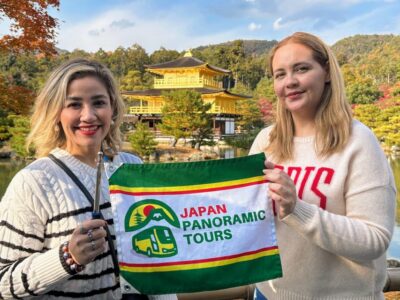
Fushimi Inari, Kinkakuji, Bamboo Grove 1 Day Bus Tour
Read our review →

Meiji Shrine, Asakusa, Skytree Bus Tour and Cruise
Read our review →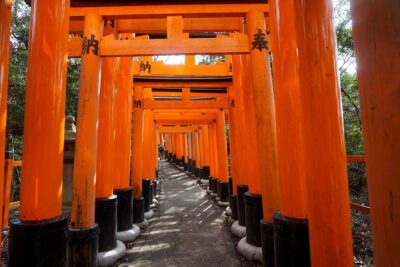
Fushimi Inari Hidden Hiking Tour (Private Option Available)
Read our review →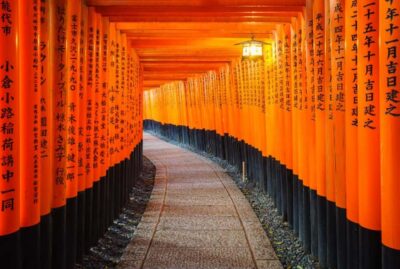
Osaka/Kyoto:Kinkakuji,Arashiyama,FushimiInariShrine,NaraPark
Read our review →
Asakusa Walking Tour with Sensoji Temple Visit
Read our review →
Nikko: Kegon Falls, Lake Chuzenji & Toshogu Temple
Read our review →
Kamakura & Enoshima Day Trip including Temple Tickets
Read our review →Browse the lists this tour appears in