
Review · SHRINE & TEMPLE VISITS
Full-Day Tour: Immerse in Takayama’s History and Temples
Takayama feels different when you’re walking with a local. This full-day tour strings together festival culture and old-town shrines in a way that makes the town’s history feel practical, not academic. I love how the day is paced around meaningful stops like the Matsuri no Mori float hall and Sakurayama Hachimangu, and I especially like the small group size that keeps things relaxed. One thing to consider: it is a full day of sightseeing, so if you want long free time to wander solo, you may feel time is slightly tight.
The guide is a real highlight. In particular, Yoshi has a reputation for being engaged and for shaping the day around your interests, while still keeping the whole route flowing smoothly. Still, the day includes both guided walks and indoor museum/shrine time, so plan on comfy shoes and expect some steady walking.
In This Review
- Key things you’ll get from this Takayama tour
- Takayama by foot: how this 7-hour day hangs together
- Matsuri no Mori: festival floats and the craft behind Takayama’s big tradition
- Sakurayama Hachimangu Shrine: Shinto practice you can actually notice
- Sanmachi Suji old-town streets: preserved architecture and the right kind of wandering
- Takayama History and Art Museum: seeing how the town changed over time
- Hie Shrine: a calm stroll to close the loop
- Your guide, Yoshi: why a small group makes the day feel personal
- Price and value: what $157.67 buys you in Takayama time
- Who should book this Takayama temples and history tour
- Should you book this tour?
- FAQ
- What is the duration of the tour?
- Where does the tour start?
- What time does the tour begin?
- How much does the tour cost?
- Is the admission fee included for all stops?
- Is this a small group tour?
- Do I need a paper ticket?
- Is the meeting point near public transportation?
- Can I cancel for a full refund?
Key things you’ll get from this Takayama tour
- Matsuri no Mori float craftsmanship: see how festival skill and design are explained in plain language.
- Sakurayama Hachimangu Shrine context: understand Shinto practice as you explore the grounds.
- Sanmachi Suji old-town streets: a guided route through preserved traditional architecture and shop-lined lanes.
- Takayama History and Art Museum exhibits: a focused window into how the town evolved.
- Hie Shrine as a quiet break: a calm end to the day with time to slow down.
Takayama by foot: how this 7-hour day hangs together
You start at Takayama Station at 9:00 am, then the tour loops back to the same meeting point at the end of the day. The total time is about 7 hours, and the group caps at 15 people, which matters more than you’d think in a place like Takayama, where you want to move with enough space to actually look at things.
Logistically, the tour uses a mobile ticket, and it’s described as near public transportation, so you are not stuck with some awkward out-of-the-way pickup. Also, admissions for some stops are included, while others are free, so you get a clear sense of what your day will cost once you’ve paid.
Best of all, this is the kind of day that gives you both the pretty scenes and the meaning behind them. Tokyo can be information-dense. Osaka can be fast. Takayama works better when you slow down enough to notice the details, and this tour does that for you without feeling like a lecture.
More History Tours in Takayama
- Kanazawa: World Heritage Shirakawa-go Morning Guided Tour
★ 4.9 · 988 reviews - Kanazawa: World Heritage Shirakawa-go & Two Local Experience
★ 4.9 · 274 reviews - Departing from Takayama [Regular sightseeing bus] World Heritage Sites Shirakawago and Gokayama Ainokura
★ 4.5 · 137 reviews
Matsuri no Mori: festival floats and the craft behind Takayama’s big tradition
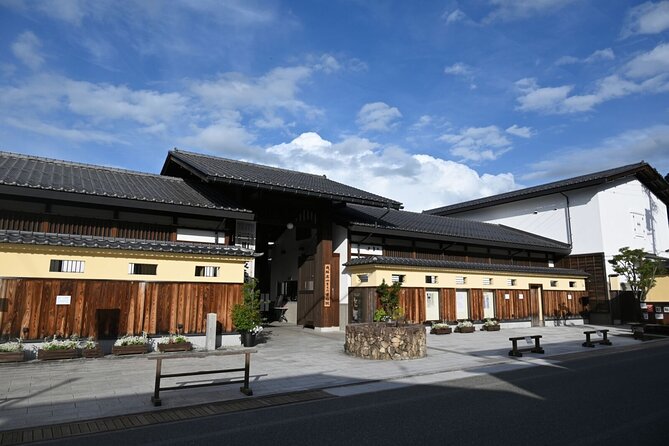
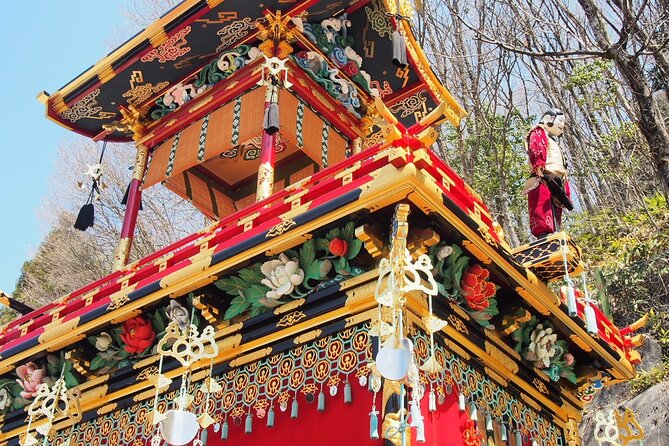
Your first stop is the Takayama Festival Floats Exhibition Hall at Matsuri no Mori. This is where Takayama’s most famous cultural engine starts to make sense. You’re not just seeing the floats as objects. You’re learning what goes into them, including the careful craftsmanship and the festival culture that surrounds them.
Why this stop is such good value: festival floats are easy to admire, but it’s harder to connect them to the town’s identity. A guided visit helps you understand why these floats matter to locals, not just why they look great on photos.
What I’d watch for during your visit:
- the way the museum explains how the floats are made and maintained
- the scale and detail, especially where craftsmanship shows up in small parts
- how festival tradition links to community life across generations
Time here is about 1 hour, and that’s long enough to take it in without dragging. If you’re the type who likes cultural context as much as the visual, this will be one of your favorite parts of the day.
Sakurayama Hachimangu Shrine: Shinto practice you can actually notice
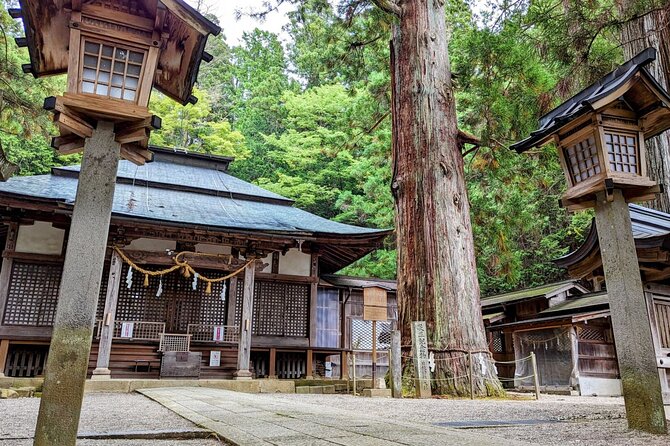
Next you head to Sakurayama Hachimangu Shrine. The main benefit of a shrine stop on a guided day is orientation. You get enough background to make the space legible, instead of just walking through and hoping you’re reading everything correctly.
You spend about 2 hours here, which is a solid block. That extra time is useful because shrines aren’t designed for quick scanning. You’ll have a chance to walk the grounds at an unhurried pace, and your guide can connect what you see to Shinto rituals and beliefs in straightforward terms.
How to get the most out of this portion:
- take a slow walk first, then ask your guide what you should pay attention to
- don’t rush past smaller details, shrine architecture rewards looking
- give yourself a moment of quiet. The tour keeps moving, but you can still take a breath
This stop also balances the day. After the float hall, you transition from community celebration to spiritual routine, and that contrast helps the full story of Takayama feel coherent.
Sanmachi Suji old-town streets: preserved architecture and the right kind of wandering
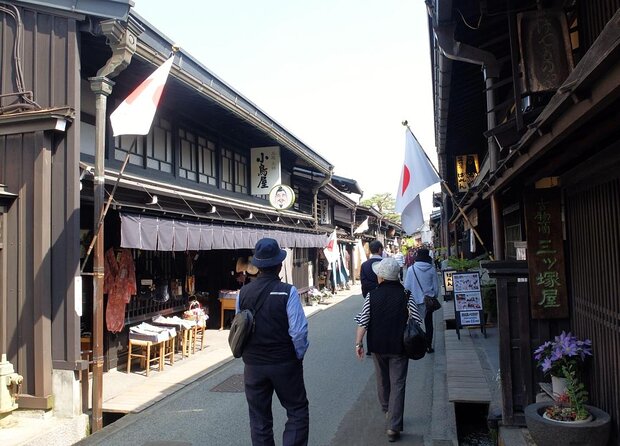
Then you’re walking through Sanmachi Suji, one of Takayama’s best-known old-town lanes. You’ll spend about 1 hour 30 minutes here, and the big idea is a leisurely walk through streets known for beautifully preserved buildings and traditional architecture.
This is one of the best parts of the day for you if you enjoy the “between the landmarks” moments. You’ll pass through a neighborhood that feels lived-in, not staged, and there are shops along the way that you can browse at your own pace.
A practical tip: don’t treat this as a shopping hour. Treat it as an observation hour. Look at the architecture, the way storefronts blend into the street, and how the lane layout affects how people move through the area. The shops are a bonus, not the whole point.
Admission here is free, so you’re not paying twice for the privilege of walking around. It’s a good time to recharge mentally, take photos, and get your bearings in the historic center.
More Shrine and Temple visits in Takayama:
- Takayama: Onigiri and miso soup making at a buddhist temple
★ 4.9 · 93 reviews - Kyoto: Fushimi Inari, Kinkakuji, Bamboo Grove 1 Day Bus Tour
★ 4.8 · 4,316 reviews - Kyoto: Tea Ceremony Ju-An at Jotokuji Temple
★ 4.9 · 3,207 reviews - Tokyo: Meiji Shrine, Asakusa, Skytree Bus Tour and Cruise
★ 4.7 · 1,986 reviews
Takayama History and Art Museum: seeing how the town changed over time
After the old streets, you head to the Takayama History and Art Museum (listed as the Takayamashi Hidatakayama Town Experience Exchange Center). This is where the day becomes clearer.
Instead of just enjoying scenes, you’re shown the town’s evolution and cultural heritage through exhibits. That framing helps you understand why the old-town lanes look the way they do, and how festival culture and local identity developed where they did.
You’ll spend about 1 hour 30 minutes here, with admission included. That is a good length for a museum visit on a tour day. You can take in the main exhibits without feeling like you’re stuck reading labels until the end of time.
How to make this museum feel useful:
- pay attention to how the exhibits connect everyday life with bigger cultural traditions
- look for the moments where the town’s story is explained in themes, not just dates
- use the museum to ask questions that come up while you’re walking outside later
If you like history but hate the “sit and listen” vibe, this stop is a nice compromise. You get context while still staying active.
Hie Shrine: a calm stroll to close the loop
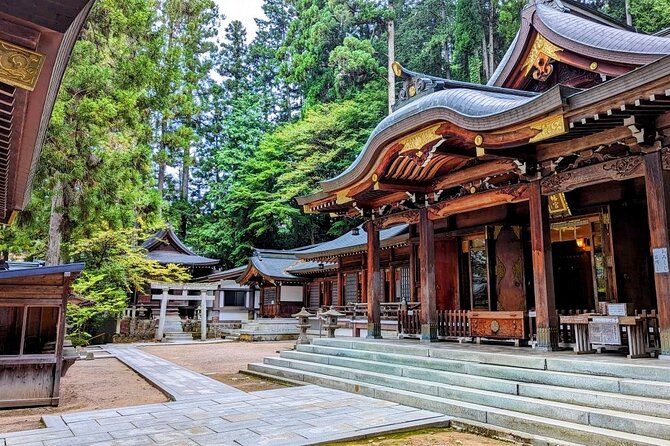
For the final stop, you go to Hie Shrine. This is listed as a scenic stroll to a serene sanctuary with greenery, and the pace here is intentionally lighter.
Time here is about 1 hour, and admission is free. This makes it a satisfying payoff at the end of a day that started with floats and strong cultural detail. The shrine offers a natural reset, so you leave with that quiet, grounded feeling you often miss when you’re rushing through a busy city.
If you’re tired from walking, this is where you’ll appreciate the shift. You can slow down, look around, and let the day’s information settle.
Your guide, Yoshi: why a small group makes the day feel personal
The strongest signal from the experience is the guide. Yoshi is described as fabulous, with strong local history knowledge and the ability to stay flexible. That flexibility is what makes the tour feel less like a script and more like a day tuned to you.
In practice, that means your questions matter. If you’re curious about festival meaning, you’ll get more than just a description of what you’re seeing. If you’re more interested in the spiritual side, the shrine time can connect better to daily life and local beliefs. The tour still follows a route, but it doesn’t feel locked.
Yoshi is also noted for staying engaged and making sure the whole day stays enjoyable, not just informative. That matters because a 7-hour tour can either feel smooth or it can feel like you’re being dragged. A good guide makes it feel like you’re spending the day with someone who knows what to point out.
With a maximum group size of 15, it’s also easier for your guide to track who needs a slower pace, who has mobility limits, and who wants a few extra minutes to look closely.
Price and value: what $157.67 buys you in Takayama time
At $157.67 per person for about 7 hours, this tour isn’t a budget add-on. But the price makes sense when you look at what’s included and what you avoid.
What helps the value:
- admissions included for multiple key stops (listed at Stop 1, Stop 2, and Stop 4)
- a guide to connect the festival, shrine, and museum pieces into one story
- small group pacing, up to 15 people
- easy logistics with pickup at Takayama Station at 9:00 am and returning back there
Where you still need to think:
- you are paying for convenience and interpretation, not just transport
- you will likely spend time walking and moving between sites, so you want comfortable shoes
I think it’s strong value if you want a guided day that reduces guesswork. If you are the type who hates tours and prefers to go completely on your own, you might feel the cost less justified. If you like structure and clarity, you’ll probably feel like the day earns its price.
Who should book this Takayama temples and history tour
This works best for you if:
- you want to see Takayama’s historic core and temples in one day
- you care about festival culture, not just sightseeing photos
- you’d rather have a guide explain what you’re looking at
- you like small groups and a pace that stays human
It may not be ideal if:
- you want lots of solo free time, with no scheduled stops
- you dislike guided walking and museum time
- you prefer to move at a very slow pace with long breaks
Also, the tour notes that most travelers can participate, which suggests you do not need special planning just to join. Still, it is a full-day schedule, so plan for walking and standing at shrines.
Should you book this tour?
If your goal is to understand Takayama, not just pass through it, I’d book this. The combination of festival float history, a major Shinto shrine, the preserved streets of Sanmachi Suji, and a museum stop that explains town development is a smart set of pieces that fit together.
I’d especially recommend it if you appreciate a guide who can shape the day to your interests. With Yoshi leading and the group staying under 15, you get a better chance of asking questions and getting answers that actually match what you care about.
FAQ
What is the duration of the tour?
The tour is about 7 hours.
Where does the tour start?
The tour starts at Takayama Station.
What time does the tour begin?
The start time is 9:00 am.
How much does the tour cost?
The price is $157.67 per person.
Is the admission fee included for all stops?
Admission is included for some stops. The tour lists admission included at Stop 1, Stop 2, and Stop 4, while Stop 3 and Stop 5 are listed as free.
Is this a small group tour?
Yes. The maximum group size is 15 travelers.
Do I need a paper ticket?
No. The tour uses a mobile ticket.
Is the meeting point near public transportation?
Yes, it is described as near public transportation.
Can I cancel for a full refund?
Yes, you can cancel up to 24 hours in advance for a full refund. If you cancel less than 24 hours before the start time, the amount paid is not refunded.
More Historical Tours in Takayama
- Takayama: Authentic Sake Tasting at a Historic Brewery
★ 4.8 · 50 reviews - Takayama Local Cuisine, Food & Sake Cultural Tour with Government-Licensed Guide
★ 5.0 · 17 reviews - Shirakawa-go Half day tour (UNESCO World Heritage near Takayama)
★ 5.0 · 9 reviews - Takayama to Gujo Hachiman, History Traditions and Crafts
★ 5.0 · 7 reviews
Newly listed around Takayama
- Takayama Half-Day Private Tour with Government Licensed Guide★ 5.0 · 69 reviews
- Shuriken Experience in Takayama★ 5.0 · 46 reviews
- Shirakawago All Must-Sees Private Chauffeur Tour with a Driver (Takayama DEP.)★ 4.0 · 8 reviews
- Takayama Full-Day Private Tour with Government Licensed Guide★ 4.5 · 13 reviews
- Special Food tour in Takayama★ 4.5 · 7 reviews
- Special Food and Sake Factory Tour in Takayama★ 5.0 · 11 reviews
- Departing from Takayama [Regular sightseeing bus] World Heritage Sites Shirakawago and Gokayama Ainokura★ 4.5 · 137 reviews
- Japanese Cooking Class with Local Family in Takayama Old Town★ 5.0 · 40 reviews
Shrine & Temple Visits, compared.
Fushimi Inari, Kinkakuji, Bamboo Grove 1 Day Bus Tour
Read our review →

Meiji Shrine, Asakusa, Skytree Bus Tour and Cruise
Read our review →
Fushimi Inari Hidden Hiking Tour (Private Option Available)
Read our review →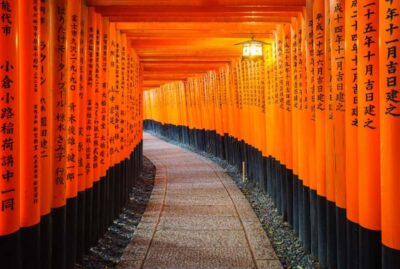
Osaka/Kyoto:Kinkakuji,Arashiyama,FushimiInariShrine,NaraPark
Read our review →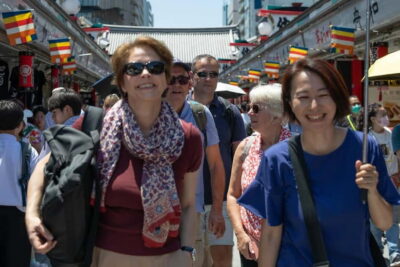
Asakusa Walking Tour with Sensoji Temple Visit
Read our review →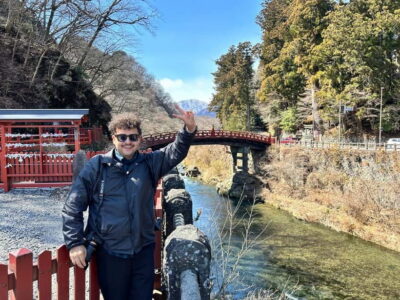
Nikko: Kegon Falls, Lake Chuzenji & Toshogu Temple
Read our review →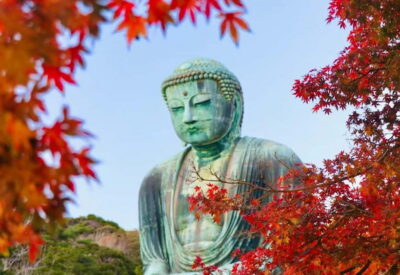
Kamakura & Enoshima Day Trip including Temple Tickets
Read our review →Browse the lists this tour appears in