
Review · LICENSED GUIDES & PRIVATE DRIVERS
Takayama Full-Day Private Tour with Government Licensed Guide
Takayama clicks when someone helps you connect the dots. This private, government-licensed English tour has you choosing a few key places, then moving through town using efficient public transport. I especially liked how the route is customizable and how you get a real feel for Takayama’s old streets, festival culture, and local daily life.
Two things I’d happily do again: first, the combination of Edo-era settings like Sanmachi Street with practical stops like the morning markets. Second, the guide approach, with names showing up in the tour feedback such as Akane Ito, Yuriko (Lily), and Elvis, puts a human voice to what you’re seeing. You also get a clear rhythm to the day, about 6 hours, without trying to sprint across town.
One drawback to plan for: the experience uses walking plus public transport, and entrance fees, meals, and transit tickets are not included. If you want maximum insight, you’ll need to be active about your interests so the guide can shape the stops around you.
In This Review
- Key things that make this tour work well
- Why a licensed English guide matters in Takayama
- Price and value: what you really get for $153.50
- The “3 to 4 stops” strategy (and how to pick them)
- Route overview: old town first, then temples and festival sites
- Sanmachi Street and Hida no Sato: your Edo-era reset
- Takayama Jinya and Higashiyama: history you can walk into
- Festival Forest and the Floats Exhibition Hall: where spring and autumn make sense
- Miyagawa Morning Market and Jinya-mae Market: shop like the locals
- Temples, pagodas, and heritage houses: pick one quiet anchor
- Showa-kan and Retro Museum: when you want a change of pace
- How public transport fits a private walking day
- Lunch and Hida beef: how to plan a satisfying meal
- Who this Takayama tour suits best
- Should you book this Takayama private tour?
- FAQ
- How long is the Takayama full-day private tour?
- Is this tour private?
- What time does the tour meet?
- What does the guide help with?
- How many stops can I choose?
- Is pickup provided by vehicle?
- Are entrance fees included?
- Is lunch included?
- Are transportation fees included?
- Can I cancel for free?
- Is the tour okay for people bringing service animals?
- Is the tour suitable for most people?
Key things that make this tour work well

- A true private day built around your choices, not a fixed checklist
- Government-licensed English guides who can explain what you’re seeing in plain language
- Public transport on a smart route, so you spend less time figuring out logistics
- Festival-focused stops like the Floats Exhibition Hall and Festival Forest
- Old-town walking that pays off, especially around Sanmachi Street and Higashiyama
- Pick 3 to 4 sites and avoid the all-day blur that kills context
Why a licensed English guide matters in Takayama
Takayama is one of those towns where good interpretation changes everything. The streets are photogenic, sure, but you’ll get more from the place when you understand what buildings meant and how the festival fits into local identity.
A government-licensed English guide keeps the day practical. They help you connect why the city grew, what the old government building represented, and what you’re looking at when you see festival structures and workshop details. It also helps with pacing, because you can choose fewer stops and actually absorb them instead of hopping through.
I also like that the tour is private. You’re not trying to hear over other languages, and you can ask direct questions. If you care about temples, craft houses, markets, or festival tradition, you can steer the day toward that.
More Private Guides in Takayama:
- Takayama Half-Day Private Tour with Government Licensed Guide
★ 5.0 · 69 reviews - Magome & Tsumago Nakasendo Trail Day Hike with Government-Licensed Guide
★ 5.0 · 38 reviews - Magome & Tsumago Nakasendo Full-Day Private Trip with Government-Licensed Guide
★ 5.0 · 20 reviews
Price and value: what you really get for $153.50
At $153.50 per person for about 6 hours, you’re paying for a few things at once: a licensed guide, a customized route, and a setup that’s built around you meeting the guide in Takayama. You’re also getting help using public transport efficiently, which matters in a town where a few tram and train decisions can eat time.
What’s not included is the big “extras bucket”: entrance fees, lunch, and transportation fees. The tour structure covers the guide and the planned visit spots, while you cover individual admission and transit tickets. In practice, that can be good value if you choose a couple of paid attractions you truly care about.
To judge value for yourself, think like this: if you would otherwise spend half a day reading maps and figuring out which sights connect, this tour buys you time and clarity. If you prefer free roaming and don’t care much about explanations, then a self-guided walk could be cheaper. But if you want your day to feel intentional, the pricing makes sense.
The “3 to 4 stops” strategy (and how to pick them)
The heart of this tour is customization. Instead of trying to see everything, you choose 3 to 4 sites from the menu of options, then the guide builds a smooth route around that.
Here’s my practical way to choose: pick one “anchor” that matches your main interest, then add one old-town or temple stop, and one culture or people-watching stop. For example:
- Festival anchor: Floats Exhibition Hall plus a shrine connection
- History anchor: Takayama Jinya plus an old-town street
- Culture anchor: Hida no Sato plus a museum stop
- Food and daily life anchor: morning markets plus an artisan or heritage house
This approach keeps your time from getting chopped into tiny fragments. It also helps you avoid the common trap of seeing five places where you remember almost nothing.
Route overview: old town first, then temples and festival sites
Takayama’s day feels easiest when you start close to the old-town core and work outward. A lot of the most walkable character sits in the center, especially around the traditional streets and riverside market areas.
Once you’ve got that base, you can branch into temple-town areas, then connect to festival sites and museums. Some options are more off-center, so the guide’s job is to make those hops efficient using public transport.
Because the tour meets at 9am, you’re positioned to include the morning market window. That’s a great time to see how locals shop, snack, and chat before the day shifts into the midday rush.
A few more Takayama days to weigh up
- Kanazawa: World Heritage Shirakawa-go Morning Guided Tour
★ 4.9 · 988 reviews - Kanazawa: World Heritage Shirakawa-go & Two Local Experience
★ 4.9 · 274 reviews - 1-Day Private Rural E-Bike Tour in Hida
★ 5.0 · 188 reviews - Kanazawa/Takayama: Shirakawago & Takayama Private Day Tour
★ 4.8 · 172 reviews
Sanmachi Street and Hida no Sato: your Edo-era reset
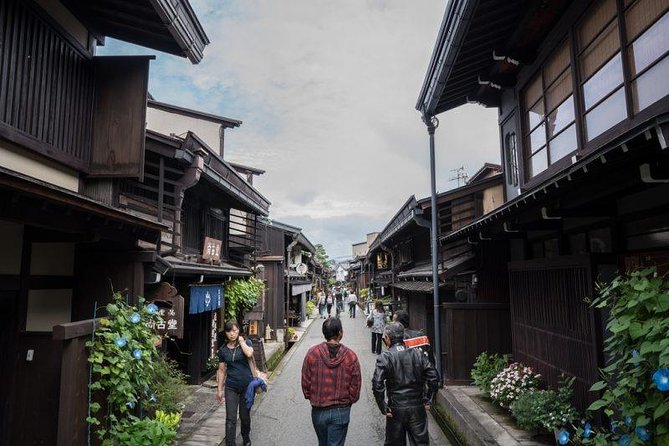
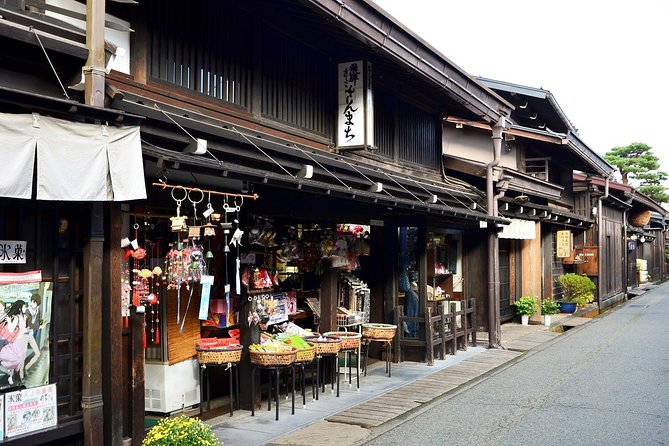
Sanmachi Suji (Sanmachi Street) is the classic old-town corridor, with buildings and storefronts that reflect the Edo period. This is where you can slow down, look closely at shop styles, and get the sense of how Takayama’s commerce worked long ago.
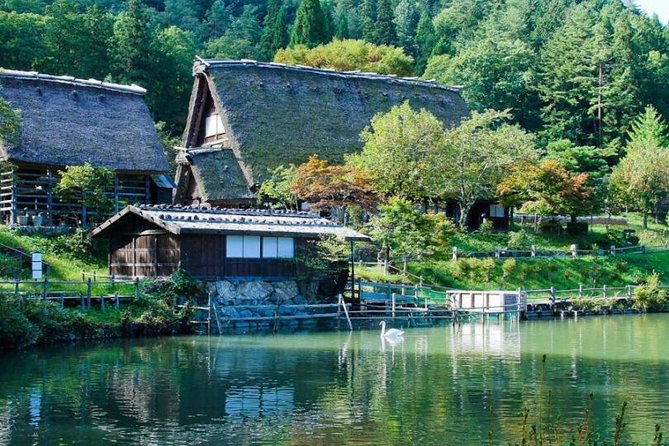
If you like museums that feel like you stepped into another era, Hida no Sato is a strong pick. It’s an open-air folk village with over 30 traditional houses from the Hida region. It’s especially useful when you want more than photos, because you’re not just seeing one house, you’re comparing many building styles in a single space.
Potential drawback: if you’re short on museum tolerance, the open-air village can feel like a lot of similar “viewpoints.” The guide can help by pointing out what to focus on, so ask for a simple checklist like materials, layout, or daily life clues.
Takayama Jinya and Higashiyama: history you can walk into
Takayama Jinya is the place to understand the town’s administrative roots. In 1692, the Hida region was placed under direct control by the Tokugawa Shogunate due to its timber resources, and the Jinya served as the local government office. Standing in that context helps you read Takayama’s architecture and importance with more than just aesthetics.
Then pair it with Higashiyama Walking Course, a temple-town route through Teramachi and onward toward Shiroyama Park. This is a good “breather” option because it mixes calm walking with sight stops, and it breaks the day into smaller, calmer segments.
Why I like this combo: you get a sense of authority and systems (Jinya) and then you soften into everyday religious geography (Higashiyama). It’s a smart balance if you’re mixing history and atmosphere.
Note: some stops on the menu have admissions that are not included. The Jinya stop is listed as not included, so budget for any ticket cost if you choose it.
Festival Forest and the Floats Exhibition Hall: where spring and autumn make sense
Takayama’s festivals are famous for a reason, and several stops on this menu help you understand them without needing festival dates. Hida Takayama Art and Festa Forest (Festival Forest) focuses on the Takayama Festival and its key aspects, tied to spring and autumn events. It’s especially helpful if you want the story behind the elaborate floats and festival craft.
The other big festival anchor is the Takayama Festival Floats Exhibition Hall. The festival runs in April 14 to 15 and October 9 to 10, and this hall connects you to the floating centerpiece tradition through actual float displays. Even if you’re not traveling during festival days, this is where the details become clear.
If you want a cultural link that you can feel in the town’s layout, add Sakurayama Hachimangu Shrine. The shrine is tied to the Takayama Festival in autumn, and it sits next to the Floats Exhibition Hall, which makes sequencing easy.
Possible drawback: festival-themed stops can overlap in what you learn. To avoid feeling repetitive, choose either Museum/Forest plus shrine, or Museum plus exhibition hall, and let the guide streamline what you see.
Miyagawa Morning Market and Jinya-mae Market: shop like the locals
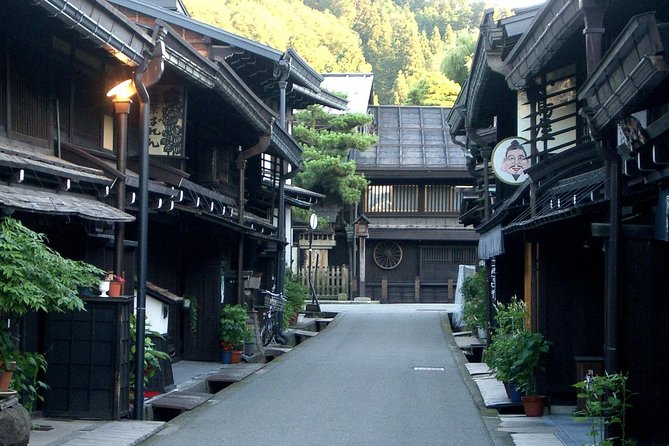
Two morning markets run daily, roughly from 7:00 to noon, with winter hours starting at 8:00. The options are the Miyagawa Market along the Miyagawa River in the old town and the Jinya-mae Market near the Jinya area.
Because the tour starts at 9am, you’re well positioned to catch the middle portion of the market bustle. This is a great moment for people-watching and for picking up small treats you can taste immediately.
What’s the value here? Markets turn a cultural tour into a real day. You see what locals buy, you smell what’s cooking, and you understand what’s practical and seasonal.
If you choose a market stop, plan to keep your bag light and your time flexible. The guide can point out what’s worth trying, but the food cost is your expense.
Temples, pagodas, and heritage houses: pick one quiet anchor
If your idea of a great day includes sacred architecture, the menu gives you at least two ways to do it.
Hida Kokubun-ji Temple is a short walk from JR Takayama Station, and it’s known for its iconic three-storied pagoda constructed in 1820. Even in a short visit window, it’s the kind of landmark that makes the town feel grounded in centuries of faith and craftsmanship.
For a more domestic, human-scale stop, choose one of the heritage residences:
- Kusakabe Folk Museum, a historic private residence built in the Meiji period with Edo architectural style.
- Yoshijima Heritage House, built in 1908, connected to a sake brewery tradition and marked by a huge sakabayashi shop sign made of Japanese cedar leaves.
These heritage-house stops are ideal when you want tangible details. You can look at materials, proportions, and how a household or business adapted across time.
Possible drawback: if you choose too many “quiet interior” options, you may end up with a day that feels less energetic. Balance them with at least one street or festival-focused stop.
Showa-kan and Retro Museum: when you want a change of pace
Takayama isn’t only old Japan. If you want something lighter, choose Takayama Showa-kan. It reconstructs retro streets of the 1950s and revives day-to-day lifestyle and culture. There’s also Midget Alley, plus a barbershop and photo spots, which can make the visit feel playful even if your time is short.
Another option is the Hida Takayama Retro Museum, which leans into Showa-era nostalgia. It includes showa-themed items and interactive angles where you can see, snap photos, and play with retro items like figures, magazines, posters, toys, games, and even showa-style pachinko.
I like adding one of these if the day already has several history-heavy stops. They provide contrast, and they’re often faster to enjoy than a deep museum marathon. Since these stops are listed as shorter, you can still keep the day feeling full without dragging.
How public transport fits a private walking day
This is a walking tour, and the pickup is offered in a way that stays close to the city center, with you meeting the guide on foot within a designated area of Takayama. You’re not going to be spending the day inside a private vehicle.
Instead, you move using Japan’s efficient public transport. Your guide helps you make the right connections and keeps the walk portions aligned with your chosen stops. Since transportation fees are not included, you’ll want to budget for transit tickets, but the guide handles the decision-making.
Practical tip: wear comfortable shoes. Even when you only walk short segments, Takayama’s charm is in foot exploration. You’ll also be in and out of small streets and pathways where traction matters.
Lunch and Hida beef: how to plan a satisfying meal
Lunch is flexible and not included, and if you want Hida beef, that’s your choice to make. The tour framework suggests you can try it if you like, but the meal is your own expense.
Here’s what I think makes lunch work best on a guided day: you tell the guide your preference, then let them suggest a place that fits the time you have left. That way, lunch doesn’t become a stressful detour.
One review detail that’s worth learning from: the restaurant choice made by a guide was described as fantastic. That’s a reminder that the guide’s local instincts can save you from wasting time searching.
If you’re not hungry for Hida beef, you can still enjoy lunch as a break from walking. Just remember that the tour still depends on keeping your selected stops on track.
Who this Takayama tour suits best
This is a strong fit if you:
- Want a private day with a licensed English guide
- Like your travel with context, not just photos
- Enjoy a mix of old streets, temples, markets, and festival culture
- Prefer choosing 3 to 4 places so you don’t feel rushed
It may be less satisfying if you:
- Want to fully freestyle without paying for guiding help
- Don’t care about explanations and prefer to read signs yourself
- Expect entrance fees and lunch to be included
One balanced consideration from the feedback: when someone feels the guide mainly walked them around familiar areas, the tour can feel like something you could do on your own. The solution is simple: come with your top priorities, and ask the guide to steer you to the most relevant stops.
Should you book this Takayama private tour?
I’d book it if you want Takayama to feel like more than a pleasant stroll. For the money, you’re buying a guided plan, licensed explanations, and a route that connects festival culture, old-town atmosphere, and everyday market life.
If you enjoy wandering, you can still get value here, because you’re not locked into every site. The customization lets you match the day to your interests, so you can spend time where it matters and skip the parts that feel less important to you.
My final check before you decide: pick your 3 to 4 sites in a way that creates contrast. Pair one festival or museum stop with one old-town or temple stop, then add a market or heritage house. Do that, and this tour is likely to feel like a thoughtful day in Takayama, not a generic circuit.
FAQ
How long is the Takayama full-day private tour?
It runs for about 6 hours.
Is this tour private?
Yes. It is a private tour/activity, and only your group participates.
What time does the tour meet?
You meet your guide at 9am.
What does the guide help with?
You get a licensed local English speaking guide who escorts you and helps customize your itinerary based on selected sites. The tour also uses public transportation.
How many stops can I choose?
You can customize the day by choosing 3 to 4 sites from the listed options.
Is pickup provided by vehicle?
Pickup is offered, but the tour is a walking tour, so you meet the guide on foot within a designated area of Takayama.
Are entrance fees included?
No. Entrance fees are not included, and some stops explicitly show that admission is not included.
Is lunch included?
No. Lunch is not included. The meal is your own expense.
Are transportation fees included?
No. Transportation fees are not included, even though the tour uses public transport with an extra fee.
Can I cancel for free?
Yes, free cancellation is available. You can cancel up to 24 hours in advance for a full refund.
Is the tour okay for people bringing service animals?
Service animals are allowed.
Is the tour suitable for most people?
Most travelers can participate, and it is described as a walking tour.
Newly listed around Takayama
- Takayama Half-Day Private Tour with Government Licensed Guide★ 5.0 · 69 reviews
- Shuriken Experience in Takayama★ 5.0 · 46 reviews
- Shirakawago All Must-Sees Private Chauffeur Tour with a Driver (Takayama DEP.)★ 4.0 · 8 reviews
- Special Food tour in Takayama★ 4.5 · 7 reviews
- Special Food and Sake Factory Tour in Takayama★ 5.0 · 11 reviews
- Departing from Takayama [Regular sightseeing bus] World Heritage Sites Shirakawago and Gokayama Ainokura★ 4.5 · 137 reviews
- Japanese Cooking Class with Local Family in Takayama Old Town★ 5.0 · 40 reviews
- Ninja Experience in Takayama – Trial Course★ 5.0 · 20 reviews
Licensed Guides & Private Drivers, compared.
Tokyo 6hr Private Tour with Government-Licensed Guide
Read our review →
Kyoto Early Morning Tour with English-Speaking Guide
Read our review →
Tokyo 4hr Private Tour with Government-Licensed Guide
Read our review →
Kyoto 6hr Private Tour with Government-Licensed Guide
Read our review →
Hiroshima / Miyajima Full-day Private Tour with Government Licensed Guide
Read our review →Early Morning Tour with English-Speaking Guide
Read our review →
Tokyo Private Sightseeing Tour by Car- English speaking chauffeur
Read our review →
Mt Fuji Private Tour with English Speaking Driver
Read our review →Browse the lists this tour appears in