
Review · WALKING TOURS
Gotokuji and Setagaya Walking Tour: Home of the Lucky Cat Statue
Lucky cats in real suburban Tokyo. This half-day style walk ties Gotokuji history to the reason those famous cat statues exist, with multiple shrines and a shopping street stop. I like that you get a free drink up to ¥800 at Shoinjinja Shopping Street, and that the route feels local, not like a checklist.
The one thing to plan for is the walking, including mountain paths, so good shoes matter more than souvenirs.
This is also the kind of tour where the guide quality really shows. Names like Mitsuko, Yumi, Emiko, and Yoshimi pop up in feedback, and what those guides are praised for is practical shrine guidance, clear storytelling, and staying upbeat while you walk.
In This Review
- Key highlights I’d pencil into your Tokyo day
- Why Gotokuji and Setagaya Feel Like Tokyo’s Back Streets
- Price, time, and what $84.70 really buys you
- Start at Gotokuji Station and get your bearings fast
- Setagaya Hachimangu: the sumo ring inside shrine grounds
- Gotokuji Temple: where the Lucky Cat connection becomes clear
- Setagaya Castle Ruins Park: history without the museum walls
- Shoinjinja Shrine and the Yoshida Shoin story
- Shoin Jinja Shopping Street: your included drink and local shopping time
- Tokyu Setagaya Line: a short local ride that helps you connect
- What makes the guides stand out here
- Who should book this Lucky Cat walking tour
- Should you book this tour or DIY it?
- FAQ
- What is the tour duration?
- Where do I meet and where do I end?
- What time does the tour start?
- How much does the tour cost?
- Is an admission fee required for the shrines and temple stops?
- What is included with the tour?
- Do I need to pay for transportation during the tour?
- Is there an option to extend the tour?
- Is pickup from my hotel available?
- What kind of walking should I expect?
Key highlights I’d pencil into your Tokyo day
- Lucky Cat origin story tied to Gotokuji, not just photos
- Hundreds of cats lined up at the famous temple area
- Shrines plus Setagaya Castle Ruins Park for a varied route
- Shoinjinja Shopping Street stop with a drink up to ¥800
- Local train ride on the Tokyu Setagaya Line after the walking
Why Gotokuji and Setagaya Feel Like Tokyo’s Back Streets
Most Tokyo sightseeing goes hard and fast, then repeats itself. This tour takes a different angle. You move through Setagaya Ward, a less famous slice of the city where you’ll see shrines, small streets, and everyday life side by side.
The “Lucky Cat Temple” idea draws you in, sure. But the real charm is how the day turns into a mini lesson in how beliefs, neighborhoods, and old figures connect. You don’t just spot cat statues, you learn why they’re there and what people hope for when they offer prayers.
You also get that sweet spot between culture and comfort. Shrines are free to enter, and you’re not stuck in a museum with forced silence. It’s outdoors, you can look around, and your guide keeps the story moving so the walk doesn’t drag.
More Walking Tours in Tokyo
- Tokyo Tsukiji Fish Market Food and Culture Walking Tour
★ 5.0 · 3,184 reviews - Tokyo: Shinjuku Local Bar and Izakaya Guided Walking Tour
★ 4.9 · 1,794 reviews - Tokyo: Tsukiji Fish Market Food and Walking tour
★ 5.0 · 1,724 reviews
Price, time, and what $84.70 really buys you
At $84.70 per person, this isn’t the cheapest Tokyo add-on. Still, I think it lands well because you’re paying for three things that are hard to DIY.
First, you’re paying for a guide who can explain the sites in plain language. Places like Shoinjinja Shrine and Gotokuji are meaningful, but they’re also easy to miss if you’re just scanning plaques.
Second, you’re paying for structure. The route connects several spots in one half-day block, including areas tied to local history and the famous cat lineup.
Third, you get a real perk that offsets part of the cost: a free coffee and/or tea drink up to ¥800 at Shoinjinja Shopping Street. Even if you’d buy a drink anyway, having it included makes the price feel less abstract.
Timing is also reasonable. Plan for about 3 hours 30 minutes, starting at 10:00 am. Also note it’s commonly booked about 7 days in advance, so if you want a specific day, don’t treat it like a last-minute “maybe.”
Start at Gotokuji Station and get your bearings fast
Your meeting point is Gotokuji Station (1 Chome-43 Gotokuji, Setagaya City). You’ll start at 10:00 am, and you’ll end near Shoin-jinja-mae Station (4-chōme-21-16 Wakabayashi, Setagaya City).
The walking style matters here. You’ll be on foot for several hours, including mountain paths, so bring shoes that feel good after repeated steps. This is the kind of tour where a blister can turn the Lucky Cat magic into a long, unhappy walk.
Also, this is designed for small-group feel. It’s described as a private tour/activity, meaning only your group participates. That usually helps with questions, pace, and getting personalized context when a shrine detail matters.
Setagaya Hachimangu: the sumo ring inside shrine grounds
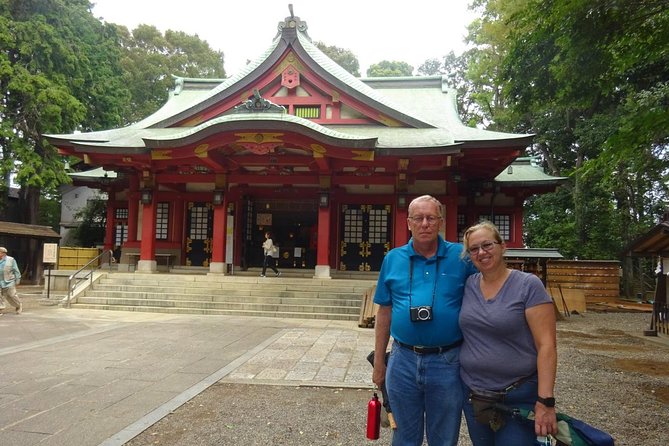
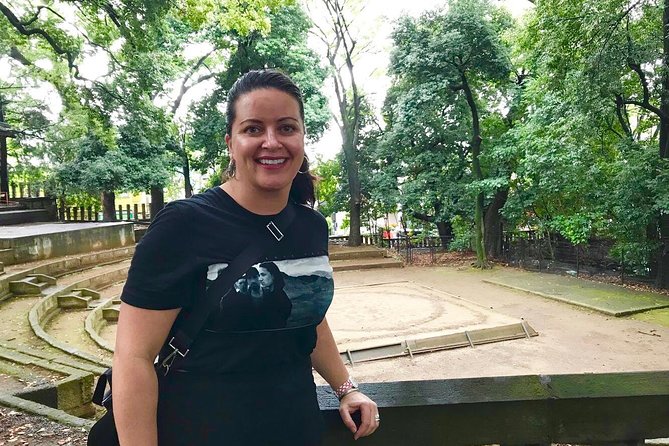
One of the first stops is Setagaya Hachimangu, one of the larger shrines in Setagaya Ward. Even if you visit on a normal day, you’ll get a sense that this place isn’t just decorative.
What makes it stand out is the dohyo (sumo ring) set up in the shrine grounds. The site is tied to events like honosumo (奉納相撲), a form of shrine offering sumo. For me, that’s a fun reminder that Japanese religious spaces often blend ceremony with local tradition, not just quiet prayer.
Admission here is free, so you can take your time without feeling pressured to “get your money’s worth.” I also like that this stop gives you a cultural warm-up before you switch into the cat-centric storytelling at Gotokuji.
A few more Tokyo days to weigh up
- Tokyo: Asakusa Walking Tour with Sensoji Temple Visit
★ 4.8 · 1,583 reviews - Tokyo: Tsukiji Fish Market Guided Walking Tour
★ 4.9 · 1,397 reviews - Tokyo Castle & Imperial PalaceーShogun Walking Tour
★ 4.7 · 1,068 reviews - Tokyo: Imperial Palace Japanese History Walking Tour
★ 4.9 · 987 reviews
Gotokuji Temple: where the Lucky Cat connection becomes clear
Then you move into Gotokuji Temple, the heart of the story. This is where the tour name starts making sense beyond a cute theme.
Gotokuji is linked with Kotokuin hermitage, connected to a figure named Kira Masatada. He’s also tied to building Setagaya Castle back in 1480, so your guide can connect religious practice to the area’s older power and life.
The temple’s sect history adds depth too. It started as a Rinzai sect temple, then in 1584 it became Soto. That kind of timeline might sound technical, but in person it helps you understand why places evolve rather than staying frozen in a single era.
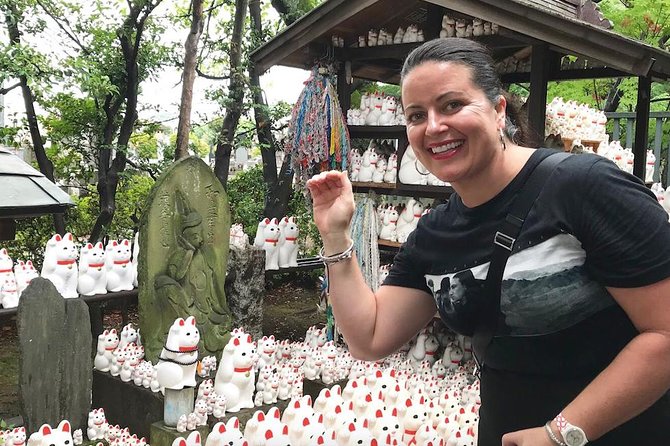
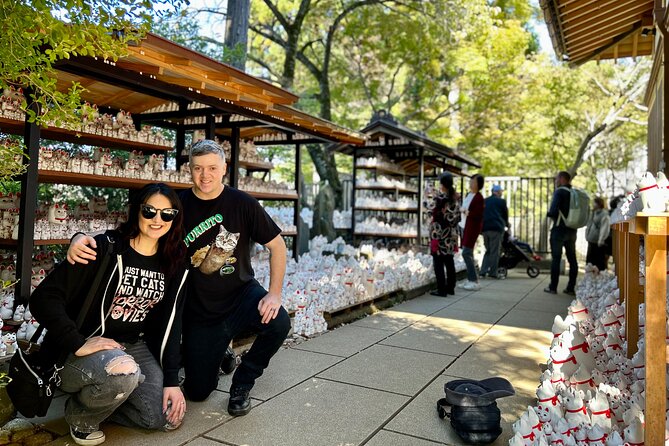
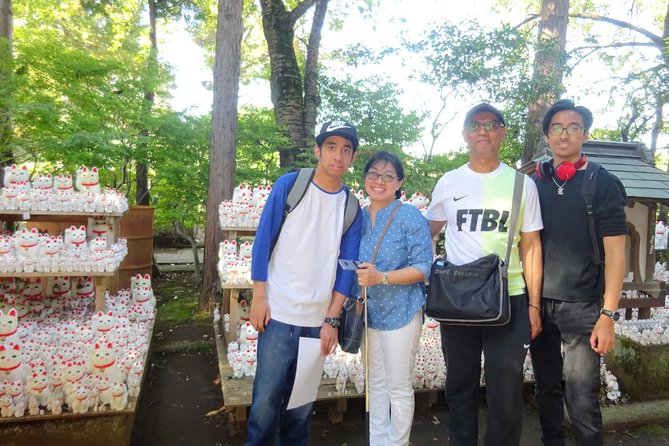
And yes, the famous part is the cats. Expect to see numerous lucky cat statues, with the highlight described as hundreds lined up. The best way to enjoy this is to slow down. Walk the line, look for patterns, and notice how the cat theme shows up alongside shrine practice. Your guide’s job is to connect the meaning, not just point.
This is also where your guide’s explanation style matters most. If they point out what people do and why, the lineup becomes more than “a lot of cats,” it becomes a living tradition with a reason.
Setagaya Castle Ruins Park: history without the museum walls
A nice change of pace comes with Setagaya Castle Ruins Park. You may not get the same “wow factor” you’d see at a major national monument, but that’s exactly why I like it.
Here, you’re not stuck staring at one big structure. Instead, you get a sense of place. The park sits in the wider narrative thread that includes Setagaya Castle, the hermitage connections, and the way older power structures shaped where religious sites grew.
Think of it as the tour’s breathing space. You walk, you look, and you reset your eyes between temple stops. For a half-day tour, that matters. It keeps the experience from becoming only stone, only wood, only plaques.
Shoinjinja Shrine and the Yoshida Shoin story
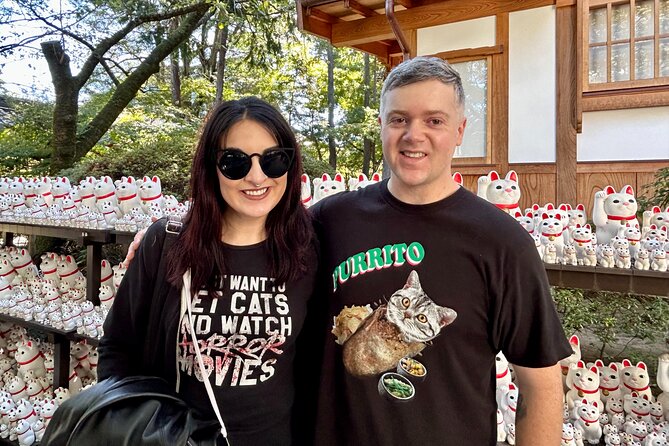
Next is Shoinjinja Shrine. This one is special because it’s explicitly connected to a major person: Yoshida Shoin, who sits at the center of the shrine’s story.
The shrine was founded in 1882, and that gives it a modern anchor compared with older sites. In the precincts, you’ll find the tombs of Shoka Village school children, including Yoshida Shoin. That detail changes the mood. You’re not only seeing ritual space. You’re also seeing how education, ideals, and memorials can shape a sacred site.
Admission is listed as free, so you can spend time without nickel-and-diming your schedule. Take a minute to watch how people behave there. Even if you’re not fluent, you’ll pick up the basic rhythm, and your guide should translate what those actions mean.
Shoin Jinja Shopping Street: your included drink and local shopping time
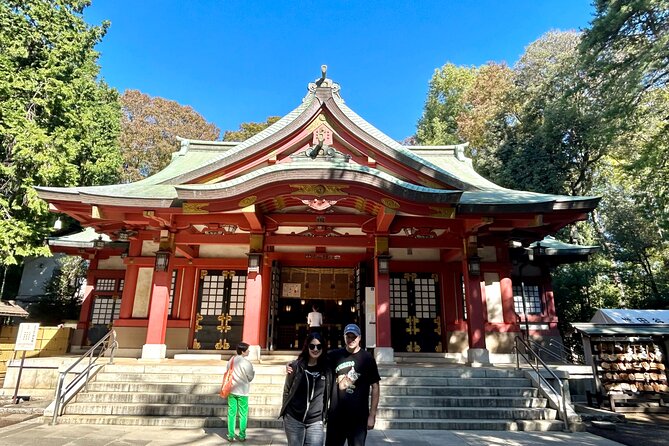
After the shrine focus, the tour shifts into everyday life with Shoinjinja Shopping Street. This is where I think many people underestimate the value.
First, you get an included beverage: coffee and/or tea up to ¥800. That’s not just a perk, it’s a built-in pause. Walking drains you faster in Tokyo than you expect, especially if you started at 10:00 am and you’re on paths that climb.
Second, you’re in a place where locals gather. You can browse small shops, see what people buy day to day, and get a feel for the neighborhood beyond the main shrine draw.
Third, your guide gives advice on where to eat and what to see after the tour. That practical tip is worth a lot because it helps you turn the rest of your day into something smooth. Instead of hunting aimlessly with a dead battery, you follow someone’s local logic.
If you’re trying to eat in the area and not end up with a tourist-only menu, this is the section that pays off.
Tokyu Setagaya Line: a short local ride that helps you connect
After your main walking loop, there’s a brief segment on the Tokyu Setagaya Line, described as about 10 minutes. This part is listed as free in the experience notes, and it’s a clever touch because it shows you how people actually move through the area.
You’ll also end near Shoin-jinja-mae Station, which is convenient if you want to continue exploring Setagaya on your own afterward. I like that the tour doesn’t feel like a one-way street where you get dropped somewhere odd.
Also, this is a good reality check. You’ll see locals, not just visitors. It makes the neighborhood feel more like a place you could live, not just visit for photos.
What makes the guides stand out here
The best part of this tour is the way guides handle the mix of religion, local history, and theme storytelling.
From what’s highlighted about guides such as Mitsuko and Emiko, you can expect a friendly pace with clear explanations, plus help navigating the area. Yumi is specifically praised for showing how to enter a shrine, including purity and prayer rituals. That matters, because doing even one small step correctly can make the whole experience feel respectful and less confusing.
So when you’re choosing a time slot, don’t just think about the sites. Think about the guide’s role in connecting the dots. Lucky cats are visual. Understanding them is guidance.
If you like learning etiquette and seeing how Japanese rituals work in real time, this tour hits that sweet spot.
Who should book this Lucky Cat walking tour
This is a great fit if you want Tokyo that feels less famous and more human.
It’s especially good for:
- People who love shrine culture but want it explained in plain, practical terms
- Travelers who want something off the main tourist grid, but still easy to manage
- Anyone who enjoys a theme when it leads to real history, not just a photo stop
It might be less ideal if:
- You hate walking on uneven or climbing paths
- You’re only interested in a quick cat temple photo and nothing else
If you fall in the first group, you’ll appreciate the range. You get shrines with distinctive features, a local park tied to older stories, a shopping street with an included drink, and a short local train ride.
Should you book this tour or DIY it?
I’d book it if you want the experience to feel guided and coherent. The value comes from the story links. Gotokuji connects to Setagaya Castle through historical figures and temple sect changes. Shoinjinja connects to Yoshida Shoin and the memorials in the precincts. Then you get the cultural “why” behind the lucky cats, plus tips for what to do next.
I’d consider DIY only if:
- You’re already comfortable reading shrine context on your own
- You don’t care much about the origin story and rituals
- You’re fine doing several separate stops without a structured flow
For most visitors, paying for guidance makes this kind of suburban tour much more rewarding.
FAQ
What is the tour duration?
It runs for about 3 hours 30 minutes.
Where do I meet and where do I end?
You meet at Gotokuji Station (1 Chome-43 Gotokuji, Setagaya City) and the tour ends at Shoin-jinja-mae Station (4-chōme-21-16 Wakabayashi, Setagaya City).
What time does the tour start?
The start time is 10:00 am.
How much does the tour cost?
The price is $84.70 per person.
Is an admission fee required for the shrines and temple stops?
Admission tickets are listed as free at the stops where admissions are mentioned.
What is included with the tour?
A professional guide is included, plus coffee and/or tea as a free drink up to ¥800 at Shoinjinja Shopping Street.
Do I need to pay for transportation during the tour?
Transportation to and from attractions is not included. A 10 minute Tokyu Setagaya Line segment is included as part of the experience.
Is there an option to extend the tour?
Yes. The tour duration can be extended for a rate of ¥5,000 per group, per hour, paid in cash.
Is pickup from my hotel available?
Hotel pickup is available for an extra fee of ¥5,000 per group (for hotels in the Tokyo and Yokohama area).
What kind of walking should I expect?
You should have a moderate physical fitness level and wear shoes that are easy to walk in, because you will walk mountain paths.
Newly listed around Tokyo
- Private Tokyo Food Tour – A Journey Through Time Through Food★ 5.0 · 36 reviews
- Private Tokyo Tour with Licensed Guide & Vehicle (Max 15 persons)★ 5.0 · 107 reviews
- Private Tokyo Custom Full-Day Tour by Chartered Vehicle★ 5.0 · 16 reviews
- Private Tokyo Custom Half-Day Tour by Chartered Vehicle★ 4.5 · 13 reviews
- Private Outstanding Nikko Tour with English Speaking Driver★ 4.0 · 11 reviews
- Private Sightseeing to Mt Fuji and Hakone with English Driver★ 5.0 · 51 reviews
- Private Snow Monkeys park Day Trip From Tokyo or Nagano★ 4.5 · 26 reviews
- 4 Day Tour – Mount. Fuji, Tokyo, Hakone, Kamakura and Yokohama★ 5.0 · 19 reviews
Walking Tours, compared.
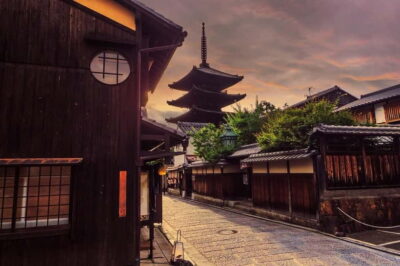
Kyoto Geisha Walking Tour: Gion District & Hidden Gems
Read our review →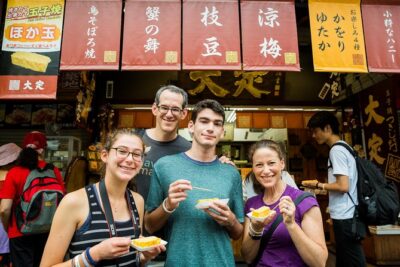
Tokyo Tsukiji Fish Market Food and Culture Walking Tour
Read our review →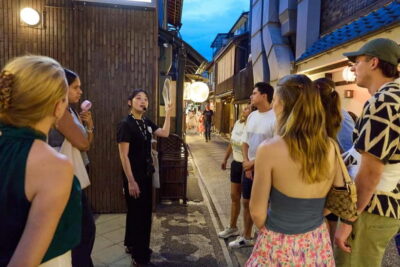
Gion Geisha District Walking Tour – Stories of Geisha
Read our review →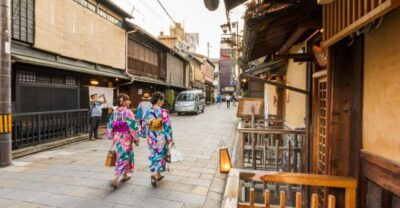
Shinjuku Local Bar and Izakaya Guided Walking Tour
Read our review →
Asakusa Walking Tour with Sensoji Temple Visit
Read our review →
Kyoto Gion Geisha District Walking Tour – The Stories of Geisha
Read our review →Browse the lists this tour appears in