
Review · CYCLING & E-BIKE RIDES
Hiroshima 3hr Peace Cycling Tour with Local Guide
Hiroshima hits harder from the saddle. This 3-hour peace cycling tour gives you an efficient route through the sites tied to August 6, while your local guide adds the human layer of what changed, what rebuilt, and what still matters today. I especially like how the ride is built around e-bikes and a tight small-group feel, so you are not stuck in a long bus line of strangers.
Two things I really appreciate: entrance fees are included, so you can focus on the story instead of hunting for tickets, and the tour is paced for a gentle ride between stops, not a fitness challenge. The whole morning is designed to cover a lot of ground without exhausting you, which means you still get the afternoon free for Hiroshima on your own.
One consideration: the electric bike setup depends on height, and at least one rider noted that the bikes can feel a bit small. If you are on the shorter side, bring your height info up front when you book, and plan to ask your guide for a quick fit check.
In This Review
- Key points before you pedal
- A 3-hour peace ride that leaves your afternoon open
- Meeting at Peace Park Rest House, then a route briefing that starts the day right
- Hiroshima Castle and the Gokoku Shrine gate: why the pre-war context matters
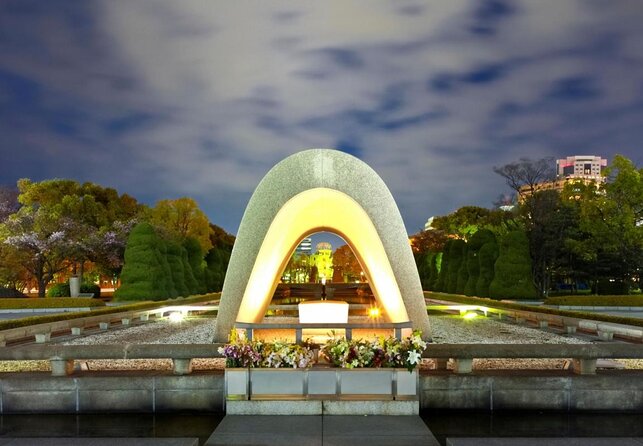
- Stop 1: Hiroshima Peace Memorial Park
- Stop 2: Hiroshima Castle (20 minutes)
- Stop 3: Hiroshima Gokoku Shrine and the shrine gate (15 minutes)
- From Central Park to Aioi Bridge: the city looks peaceful, then history snaps in
- Stop 4: Hiroshima Central Park (20 minutes)
- Stop 5: Aioi Bridge (10 minutes)
- Atomic Bomb Dome and the Peace Park zone: the stops you came for
- Stop 6: Atomic Bomb Dome (15 minutes)
- Stop 7: Motoyasu River and the Peace Bridge (15 minutes)
- Stop 8: Higashisenda Park (20 minutes)
- Beyond the main memorials: Red Cross remnants, surviving transport, and more
- Stop 9: Atomic Bomb Window Frame Monument, Hiroshima Red Cross Hospital remnants (20 minutes)
- Stop 10: Hiroshima Railway (10 minutes)
- Stop 11: Miyuki Bridge and Kobayashi River (10 minutes)
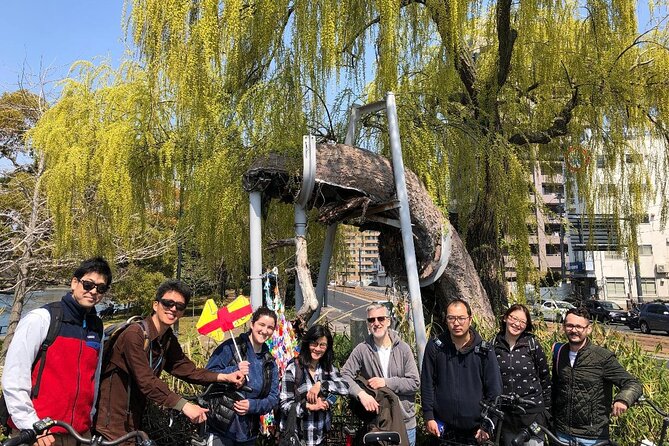
- Stop 12: Surviving Weeping Willow Tree (10 minutes)
- Peace Boulevard return: you finish with monuments and a thriving present
- Stop 13: Peace Boulevard (10 minutes)
- Stop 14: Return to Hiroshima Peace Memorial Park (around 13:00)
- Price and value: what $85.89 really buys you
- Comfort, safety, and fit: who the e-bike tour suits best
- Rainy-day plans: you are not stuck if weather turns
- Should you book this 3-hour Hiroshima Peace Cycling Tour?
- FAQ
- Where does the tour meet, and where does it end?
- How long is the Hiroshima Peace cycling tour?
- How big is the group?
- Are entrance fees included?
- What type of bike is used, and who can ride?
- Is there luggage storage at the meeting point?
- What happens if the tour is canceled or rain changes the plan?
Key points before you pedal
- Up to 10 people keeps the mood intimate and easier to ask questions
- E-bike makes it practical even in summer heat and on a fixed schedule
- Entrance fees included for key stops, plus accident insurance in the price
- Local guide storytelling includes family-perspective context, not just dates
- A balanced route that pairs the big memorial landmarks with lesser-known remnants
A 3-hour peace ride that leaves your afternoon open
This is the kind of Hiroshima tour I like: short enough to keep your energy, long enough to matter. You spend about three hours cycling, then the rest of the day is yours to wander, eat well, and explore without rushing.
The e-bikes are the secret sauce. They help you cover multiple locations along the peace corridor without feeling like you are forcing a workout. That matters in Hiroshima because the sites are spread out, and the emotional weight of the topic already puts you in a slow, reflective mode.
Also, the small group size helps with pacing. You are not stuck waiting for one slow rider for twenty minutes. If someone in the group needs a slower rhythm, your guide adjusts the tempo so everyone stays together.
More Bike Rides in Hiroshima
- Hiroshima 2hr Peace Cycling Tour with Local Guide
★ 5.0 · 321 reviews - Hiroshima: Peace Cycling Tour with Local Guide
★ 4.8 · 286 reviews - Hiroshima: Best of Hiroshima Guided Bike Tour
★ 4.9 · 89 reviews
Meeting at Peace Park Rest House, then a route briefing that starts the day right
Your tour meets at the Hiroshima Peace Memorial Park Rest House in Naka Ward. The plan is very organized right from the start: greetings, a route explanation, and health steps like temperature checks, then a quick sanity check on the bikes before you roll out.
I like that the tour starts right where your mind is already tuned for the day. You are not commuting across town first, then trying to switch into a memorial mindset later. It makes the ride feel like one continuous experience from the first stop.
Two practical notes that can save you stress:
- There is no luggage drop-off at the Rest House. Coin lockers are available at the International Conference Center Hiroshima and the Hiroshima Peace Memorial Museum, about a 6-minute walk away.
- If you need Wi-Fi, there is no free Wi-Fi on this activity, though Hiroshima Free Wi-Fi is available around the city.
Hiroshima Castle and the Gokoku Shrine gate: why the pre-war context matters
Your first cycling segment is short, then you hit a set of stops that explain the broader setting before you reach the blast area.
Stop 1: Hiroshima Peace Memorial Park
You meet for the introduction and route briefing here. Even if you know the basics of August 6 already, this is where your guide sets the tone and frames what you will see next.
More Bike Tours in Hiroshima
- Hiroshima in a Nutshell: Morning Bike Adventure
★ 5.0 · 524 reviews - Hiroshima: City and Miyajima Bike and Boat Tour
★ 5.0 · 20 reviews - Hiroshima Scenic Cycling Guided Tour
★ 5.0 · 19 reviews - Hiroshima: Peace Park, Castle, and Mitaki Temple E-Bike Tour
★ 4.8 · 11 reviews
Stop 2: Hiroshima Castle (20 minutes)
Hiroshima Castle matters because it is tied to the military fort that reported early about the atomic bomb. Your guide uses this stop to connect what was happening before the bombing to what followed after. It is a good breather stop, too, because it gives your brain some structure before it gets overwhelmed by the next set of emotionally heavy landmarks.
Stop 3: Hiroshima Gokoku Shrine and the shrine gate (15 minutes)
This is one of those stops that many people skip when they only focus on the iconic memorial sights. You will learn about details like the Guardian Dog statue and a shrine gate that withstood the atomic bomb. This is where you see how the city’s cultural landmarks became silent witnesses.
If you are a person who likes small, specific details, this is a strong part of the tour. The stories are not abstract.
From Central Park to Aioi Bridge: the city looks peaceful, then history snaps in
After the shrine, the ride threads through green space before you reach sites directly connected to the blast.
Stop 4: Hiroshima Central Park (20 minutes)
A green pause in the schedule helps. Central Park gives you a chance to slow down and actually enjoy the ride between heavier stops. It also helps the tour feel less like a checklist.
Stop 5: Aioi Bridge (10 minutes)
Aioi Bridge is the target of the bomb. The river and the bridge remain, so you see how the city’s geography endured even when everything else changed. This stop hits best if you look at it twice: once as a normal bridge, then again as a fixed point in a world-changing moment.
Atomic Bomb Dome and the Peace Park zone: the stops you came for
This is the core emotional section of the morning.
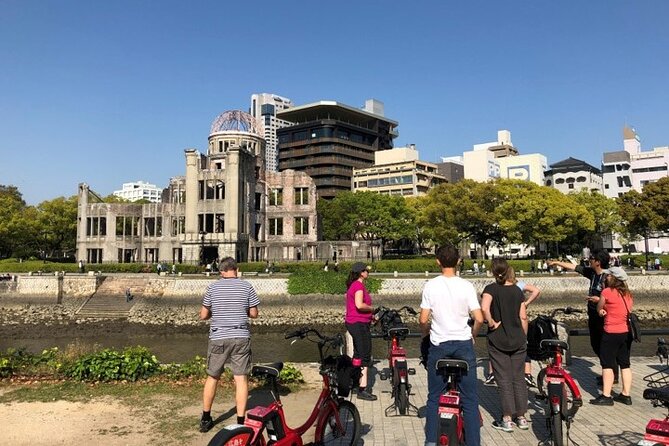
Stop 6: Atomic Bomb Dome (15 minutes)
The Atomic Bomb Dome is world-renowned, but the real value here is the guide context around it. You do not just look at the building. You hear local stories and memories tied to what it meant then and what it means now.
If you are visiting during a busy season, cycling helps you arrive with less scramble. You can stand and look with your guide’s pacing instead of trying to beat crowds and time your photos.
Stop 7: Motoyasu River and the Peace Bridge (15 minutes)
Heading south toward the suburbs, you see riverside scenery again. Your guide explains what you are looking at while you ride alongside living parts of Hiroshima. This stop is a reminder that a city keeps moving, even when it carries the past in plain view.
Stop 8: Higashisenda Park (20 minutes)
This park is about 1 km from the blast center and includes trees sent from countries around the world. Your guide shares stories connected to this site, and it becomes a kind of visual peace language, planted and tended across generations and borders.
Beyond the main memorials: Red Cross remnants, surviving transport, and more
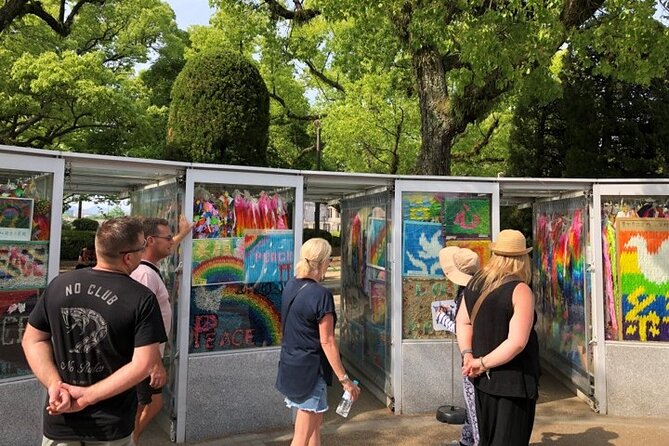
This is where the tour feels especially worthwhile, because it goes beyond the obvious photos.
Stop 9: Atomic Bomb Window Frame Monument, Hiroshima Red Cross Hospital remnants (20 minutes)
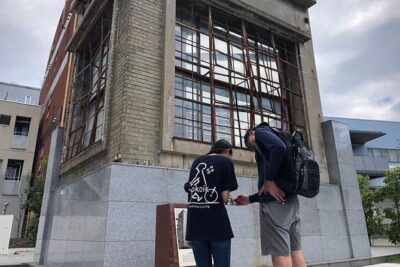
You will see remnants of the Red Cross Hospital building, located about 1.5 km from the blast center. This is a harder stop than it sounds. Seeing building remnants makes the force of the bomb feel immediate, not historical.
Stop 10: Hiroshima Railway (10 minutes)
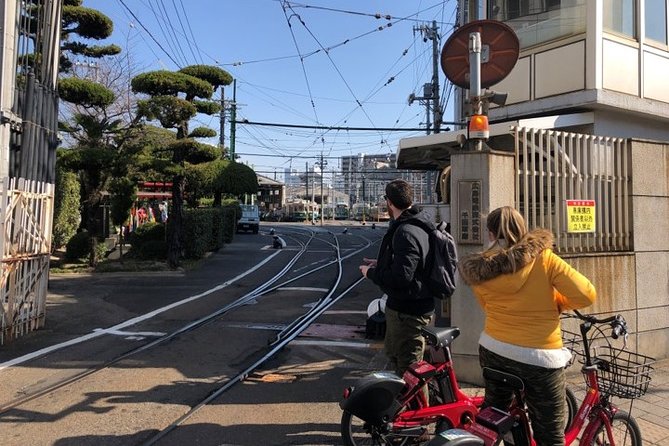
Here you learn about two trains that survived the blast and still run today. It is a small detail, but it is one of the most powerful ideas in Hiroshima: infrastructure returns, people return, life returns, even after catastrophe.
Stop 11: Miyuki Bridge and Kobayashi River (10 minutes)
This spot marks where the bomb’s reach ended, and there is a display with a picture showing the reality of the difference between then and now. It is not just sad. It is measurable, which helps your brain absorb what your heart already understands.
Stop 12: Surviving Weeping Willow Tree (10 minutes)
This is described as the highlight of the tour. The tree kept growing despite rumors that it would not grow naturally for at least 70 years. Even if you are not into botany, you will understand why this matters. It is a symbol you can actually stand next to.
From here, you are cycling through a living city again, not just a memorial route.
Peace Boulevard return: you finish with monuments and a thriving present
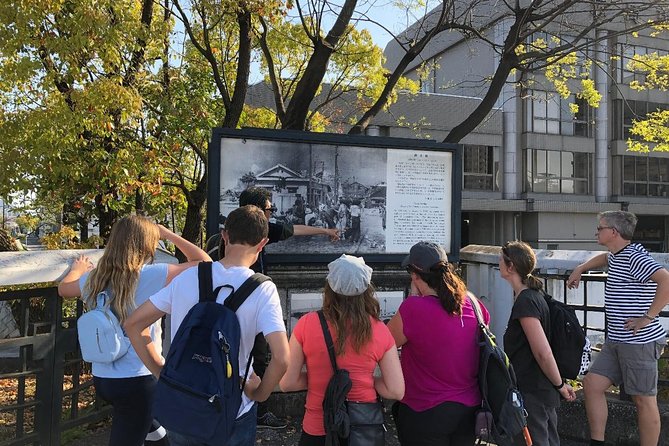
Stop 13: Peace Boulevard (10 minutes)
On the way back, you pass monuments and trees tied to Hiroshima’s history. You also see the city as it is now, with people moving through their day. This keeps the tour from ending like a museum visit. You leave with the sense that Hiroshima is not stuck in 1945.
Stop 14: Return to Hiroshima Peace Memorial Park (around 13:00)
You end back at the meeting point. At this point, you are usually not looking for another stop right away. You will be in that reflective state where you want good food, quiet walking, and time to process.
If you are choosing the 3-hour morning slot, that timing is smart. It gives you enough closure to enjoy the afternoon without feeling like you are rushing back to fit everything in.
Price and value: what $85.89 really buys you
The price is listed as $85.89 per person for about three hours. I judge value by what is included and what you save.
You get:
- Entrance fees included for multiple stops, so you do not lose time paying at each location
- E-bike electric assistance, which changes the practical reach of the tour
- Accident insurance for bicycle incidents included in the price
- A local guide focused on wartime and post-war recovery, and in many cases personal family stories
That combination usually adds up to more than the ticket cost, especially if you would otherwise pay for admission one by one and spend extra hours hopping between sites on your own.
One more value point: your route is planned. You are not guessing the best order of stops, or trying to figure out what is worth your limited time. Even if you love independent travel, a guided morning like this can save brain power for the parts that truly matter.
Comfort, safety, and fit: who the e-bike tour suits best
This tour is designed for most people who can ride a bike, and it is described as having a maximum of 10 travelers. You can expect a route that includes gentle cycling between stops, not constant pedaling uphill.
That said, you need to match the bike to you:
- Participation requires an adult bicycle (electric) with height 145 cm or more
- For children, there are options like children’s bikes (cross bike type) for bookings, with additional size and weight limits mentioned
If you are unsure about your fit, ask before you start cycling. In one case, a rider felt the e-bikes were under-sized, so it is worth doing a quick fit check. A slightly awkward fit can make a meaningful tour feel tiring.
Safety is also part of the experience. Your guide follows a route plan and takes care with cycling pace, and the tour can adjust for riders who are less comfortable.
And yes, e-bikes help in heat. If you are visiting in summer or during warmer months, the motor support can turn a potentially sweaty morning into something you can actually enjoy.
Rainy-day plans: you are not stuck if weather turns
This tour requires good weather, but you have options if rain hits. You can switch to a Rainy Day Limited Peace Route on set times (10:00 or 14:00), which follows a different path with stops that include Peace Memorial Park, Atomic Bomb Dome, and the hypocenter area, plus other specific points on the route.
If you prefer not to change to the rainy route, you can choose a refund. There is also a possibility to switch to a walking tour on rainy days, with a radius around the hypocenter reduced area described as about 0.5 km to 1 km.
So the big idea is simple: you are not guaranteed perfect weather, but the operator has a plan, and they do not just cancel and shrug.
Should you book this 3-hour Hiroshima Peace Cycling Tour?
I think you should book if you want Hiroshima in one focused morning, and you care about context. This tour is ideal for people who feel moved by history but also want to understand how a city rebuilt after a catastrophe. The local guide storytelling is the real differentiator, and the e-bike format makes it workable without turning the day into a marathon.
I would skip or reconsider if:
- You are very sensitive to emotionally intense stops and prefer a lighter itinerary
- You might struggle with bike fit, even with electric support
- You are visiting in a period of unsettled weather and need a fully outdoor schedule with no backup
If you are the type who likes efficient routing, small-group atmosphere, and a guided set of meaningful stops, this is a strong “do it once and do it well” experience in Hiroshima.
FAQ
Where does the tour meet, and where does it end?
The tour meets at the Hiroshima Peace Memorial Park Rest House, address listed as Hiroshima, Naka Ward, Nakajimachō, 11. It ends back at the same meeting point.
How long is the Hiroshima Peace cycling tour?
The main experience runs for about 3 hours.
How big is the group?
This is a shared tour with a maximum of 10 travelers.
Are entrance fees included?
Yes. Entrance fees are included so you do not need to pay on the spot for the stops that require them.
What type of bike is used, and who can ride?
The tour uses adult electric bicycles. Adult bicycle participation requires height 145 cm or more. Children have separate options based on age, height, and weight limits described in the booking info.
Is there luggage storage at the meeting point?
No luggage drop-off is available at the Rest House. Coin lockers are available at nearby locations like the International Conference Center Hiroshima and the Hiroshima Peace Memorial Museum.
What happens if the tour is canceled or rain changes the plan?
The experience requires good weather. If it is canceled due to poor weather, you can choose a different date or a full refund. On rainy days, there is also a Rainy Day Limited Peace Route option, or a walking tour option is described for rainy days. If you are late for the meeting time without prior notice, the tour can be cancelled and a non-refundable fee may apply.
More Cycling Tours in Hiroshima
- Hiroshima Country Cycling: Explore Rural Life 1 HR from City
★ 5.0 · 8 reviews - Hidden Kyoto E-Biking tour
★ 5.0 · 1,843 reviews - Tokyo Guided Small-Group Biking Tour
★ 5.0 · 1,250 reviews - Bike Tour Exploring North Kyoto plus Lunch
★ 5.0 · 1,087 reviews
Newly listed around Hiroshima
- Hiroshima and Miyajima 1 Day Walking Tour★ 5.0 · 43 reviews
- Hiroshima and Miyajima 1 Day Cruise Tour★ 5.0 · 24 reviews
- Hiroshima & Miyajima: UNESCO A-Bomb Dome & Itsukushima with Local★ 5.0 · 25 reviews
- Hiroshima & Miyajima: Private Full-Day Tour with a Local Guide★ 5.0 · 39 reviews
- Hiroshima and Miyajima 1 Day Bus Tour★ 4.5 · 145 reviews
- Hiroshima 5k Running Tour of Hijiyama Park★ 5.0 · 7 reviews
- Hiroshima and Miyajima Bus Tour with Indian Lunch★ 5.0 · 10 reviews
- Hiroshima Peace Memorial and Atomic Bomb Dome Private Tour★ 5.0 · 37 reviews
Cycling & E-Bike Rides, compared.
3h Tokyo E-Bike Tour: Hidden Gems, and Local Life with guide
Read our review →
Arashiyama Bamboo Forest & Hidden Gems Bike Tour (Early Bird)
Read our review →
5 Top Highlights of Kyoto Full Day Bike Tour (E-bike option)
Read our review →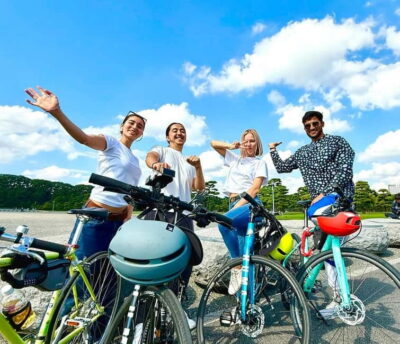
Hiroshima 2hr Peace Cycling Tour with Local Guide
Read our review →Browse the lists this tour appears in