
Review · CYCLING & E-BIKE RIDES
Hiroshima: Peace Cycling Tour with Local Guide
Hiroshima hits different when you pedal. This electric bike tour connects the Peace Memorial Park with nearby A-bomb sites, including townscapes you usually skip.
One thing I love is the way guides like Shin and Kana explain what people felt back around 70 years ago, not just what happened on paper. Another is the chance to see destruction and recovery side by side as you roll through areas around the Peace Memorial Park and beyond.
One drawback to consider: the route is still cycling. You need to be comfortable riding an e-bike, and there are height limits, with adult bikes requiring 145 cm height or more.
In This Review
- Key things to know before you ride
- Why an electric bike is perfect for Hiroshima’s Peace story
- Meeting at Hiroshima Peace Park and getting set up
- Peace Memorial Park, where the tour slows down for meaning
- Two-hour course: Peace Memorial Park, then the A-bombed Streetcars story
- Three-hour course: from Hiroshima Castle to the Peace Boulevard loop
- Hiroshima Castle, then Gokoku Shrine and the gate
- Hiroshima Central Park, then Aioi Bridge
- Atomic Bomb Dome, Motoyasu River, Peace Bridge
- Higashisenda Park, Red Cross Hospital, and Hiroshima Railway
- Miyuki Bridge and Kobayashi River, then the Surviving Weeping Willow
- Peace Boulevard, then you finish where you started
- How the guide frames loss, and then the city’s change
- Practical value, cost, and what you should plan for
- Should you book this peace cycling tour in Hiroshima?
- FAQ
- How long is the Hiroshima Peace Cycling Tour?
- Where do I meet, and how do I get there from Hiroshima Station?
- Is the tour guided in English?
- How many people are in the group?
- Is food included?
- What should I bring, and what shoes are not allowed?
Key things to know before you ride
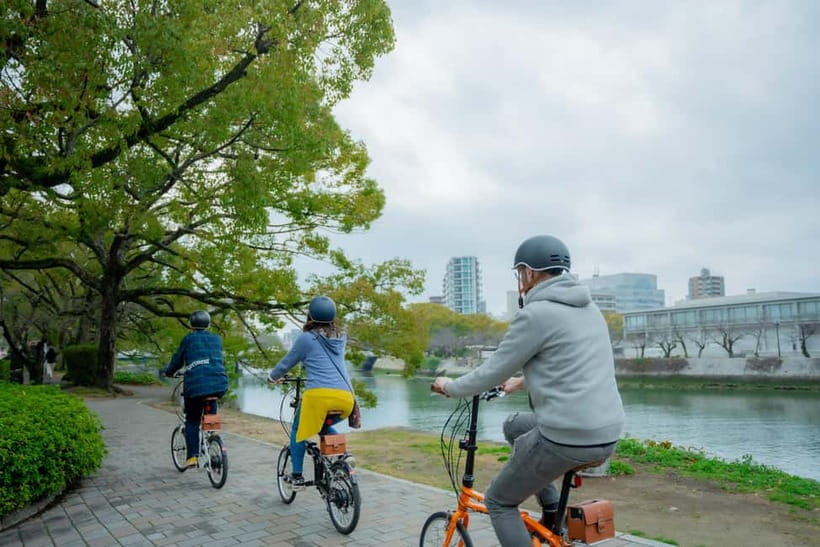
- Electric bikes keep the ride easy, so you can focus on the story and the streetscape
- The Peace Memorial Park area gets handled carefully, including the Atomic Bomb Dome zone and the monuments
- You’ll hear local, family-linked perspectives from guides such as Shin, Kana, Moe, Mai, and Bella-Kana
- The route goes past the main sights into suburban A-bomb heritage areas and viewpoints
- Two ride lengths fit different days, from about 2 hours to about 3 hours of stops
Why an electric bike is perfect for Hiroshima’s Peace story
Hiroshima is a place where “just seeing the sights” can feel too shallow. This tour helps because it moves you through the city the way locals experience it, one intersection, one street corner, one pause at a memorial at a time. You’re not stuck in a bus window, and you’re not trying to sprint between landmarks either.
The big practical win is the electric bike. Even though the stops are meaningful, the ride itself is designed to be manageable. The group is capped at 10 people, and the pace can be adjusted if someone in the group is not used to cycling, including children.
I also like the tone the guides bring. Many guides use personal family stories to explain the meaning of the Peace Memorial Park and what came after. You hear how remembrance lives in everyday Hiroshima, not just in a museum. That personal layer is also why this tour can feel emotional without becoming chaotic. In guides like Shin, Kana, and Moe, you often get a mix of sadness and steadiness, plus room for questions.
More Bike Rides in Hiroshima
- Hiroshima 2hr Peace Cycling Tour with Local Guide
★ 5.0 · 321 reviews - Hiroshima 3hr Peace Cycling Tour with Local Guide
★ 5.0 · 131 reviews - Hiroshima: Best of Hiroshima Guided Bike Tour
★ 4.9 · 89 reviews
Meeting at Hiroshima Peace Park and getting set up
You meet at the Rest House of Hiroshima Peace Park. The easiest approach from Hiroshima Station is the Hiroshima Electric Railway to Atomic Bomb Dome Station (about 20 minutes), then a short 5-minute walk.
Plan for a quick start, because if you’re late and you don’t let the operator know, the tour can be canceled. Once you arrive, you’ll get your rental bicycle and a safety check. Since this is a small group tour, the handoff is usually smooth and personal.
What to bring is simple but important:
- Comfortable shoes (you need grip for stops and quick turns)
- A towel (it helps, even when the weather is mild)
- Drinks and comfortable clothes
- If you tend to feel warm, consider extra sun protection, since you will be outside
Not allowed: high-heeled shoes. Also note the size rules. Adult electric bikes require a height of 145 cm or more. If you’re under that, you’ll need the correct child bike setup, and the operator says some seats and bikes are limited. If you’re traveling with kids, check seat weight and height rules before you book.
Peace Memorial Park, where the tour slows down for meaning
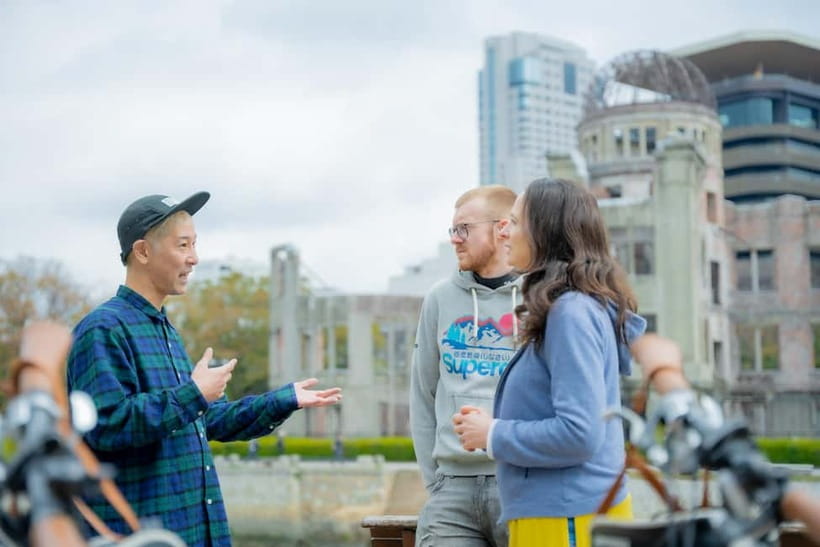
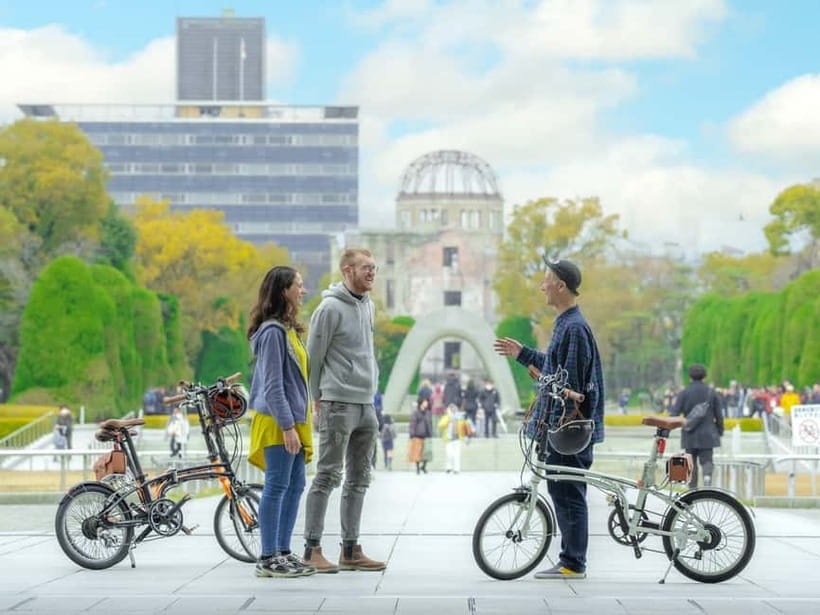
Your first major stop is the Peace Memorial Park. This is the heart of the story, and the tour structure reflects that. The guide introduces what’s contained in the monuments, plus the area around the Atomic Bomb Dome. You’ll also learn what happened roughly 70 years ago and how people in Hiroshima remember it.
The key value here is context. It’s easy to stand in front of monuments and think you already understand, especially if you’ve read or watched documentaries. The guide helps you connect the symbols to real human experience and Hiroshima’s local memory. Since the tour is English guided, you’re not left translating in your head while you’re trying to absorb a powerful site.
What I’d watch for during this part:
- How the guide links the monuments to feelings people carried at the time
- How the talk shifts from event facts to longer-term impact on everyday life
- The way the guide sets expectations for what you will see next, so you’re not blindsided later on suburban streets
And there’s a practical benefit too. Cycling keeps your body engaged. You can actually move, breathe, and reset between stops instead of walking yourself into fatigue right as the story becomes heavier.
Two-hour course: Peace Memorial Park, then the A-bombed Streetcars story
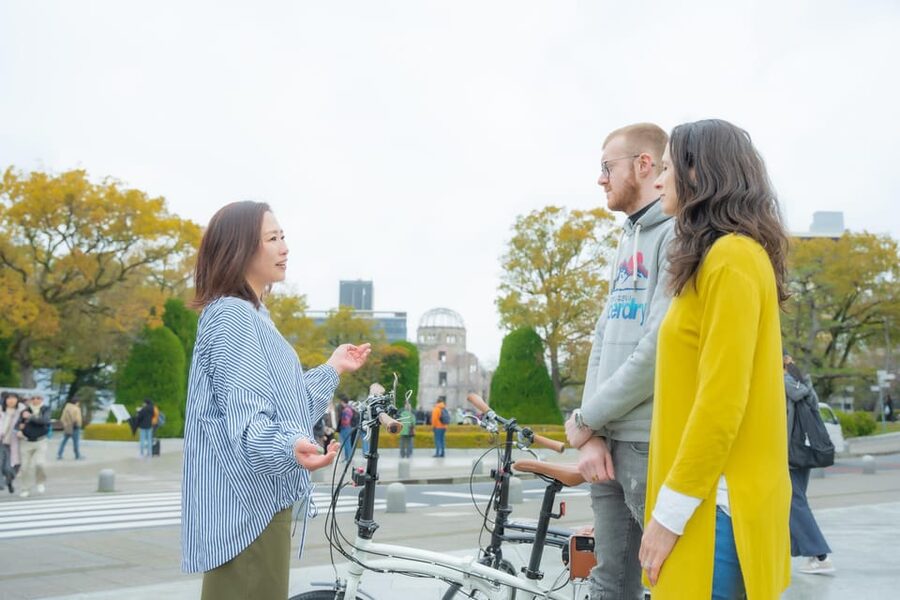
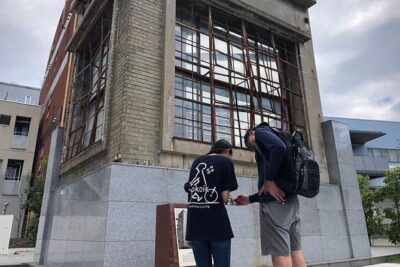
If you choose the about 2-hour course, you start at Peace Memorial Park, then move to a standout survival story in Hiroshima’s townscape.
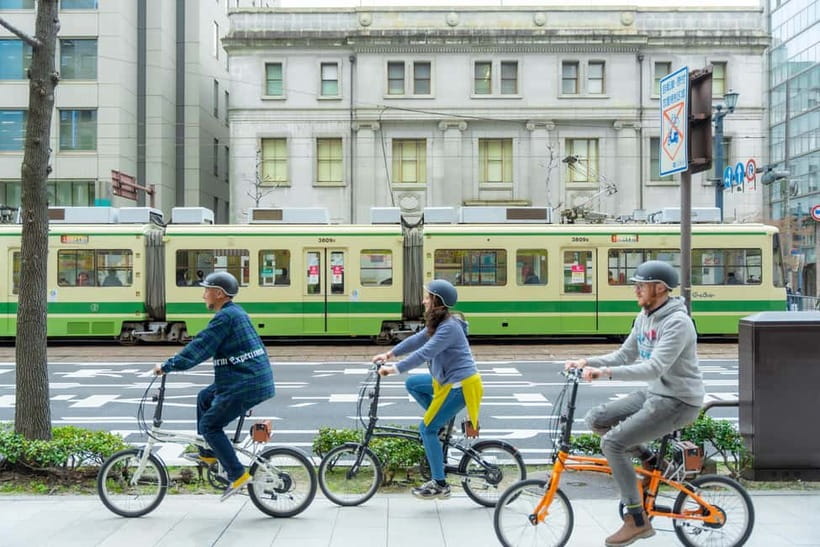
After the park stops, your guide takes you to the area featuring the A-Bombed Streetcars. The tour description emphasizes that there is still a train running today that survived the atomic bombing, and the guide shows how that survival fits into Hiroshima’s daily rhythm. It’s a memorable shift from monumental remembrance to living infrastructure.
This is where cycling really earns its keep. You’re not just viewing the Peace Park zone. You’re carrying the story with you into the surrounding city, which helps you understand the extent of damage and later rebuilding, in a way photos often can’t.
The tour also highlights the idea that the area within about a 2.5 km radius from the hypocenter was severely damaged. You’ll hear that, then you’ll look at the city and see how it changed. The “before and after” becomes less abstract when your route passes through different-looking neighborhoods along the way.
For some people, this 2-hour option is ideal because it keeps your day open for Hiroshima Castle, shopping, or even just quiet time near the monuments on your own.
More Bike Tours in Hiroshima
- Hiroshima in a Nutshell: Morning Bike Adventure
★ 5.0 · 524 reviews - Hiroshima: City and Miyajima Bike and Boat Tour
★ 5.0 · 20 reviews - Hiroshima Scenic Cycling Guided Tour
★ 5.0 · 19 reviews - Hiroshima: Peace Park, Castle, and Mitaki Temple E-Bike Tour
★ 4.8 · 11 reviews
Three-hour course: from Hiroshima Castle to the Peace Boulevard loop
The about 3-hour course is a bigger sweep. You’ll visit a set of key points that stretch across central Hiroshima, with time at each stop to connect landmark names to the atomic bombing story and Hiroshima’s recovery.
Here’s the flow, and what to pay attention to.
Hiroshima Castle, then Gokoku Shrine and the gate
You begin with Hiroshima Castle, then head to Hiroshima Gokoku Shrine and its shrine gate. This start matters because it frames Hiroshima as a full city, not only a memorial site. Guides often use these openings to help you understand Hiroshima’s identity, before they bring you back to bombing-related memory.
Hiroshima Central Park, then Aioi Bridge
Next comes Hiroshima Central Park, then you reach Aioi Bridge. Aioi Bridge is part of the area associated with the bombing story, and the guide typically connects what you see with what was happening at that time and how the site is remembered now. Even if you don’t know the detailed timeline, the guide’s explanations make the stop feel purposeful rather than random.
Atomic Bomb Dome, Motoyasu River, Peace Bridge
You then visit the Atomic Bomb Dome area again as part of the longer loop. After that, the tour continues to the Motoyasu River and Peace Bridge. This segment gives you a sense of geography. You can better visualize how the city’s waterways and bridges fit into the overall story, and why some memorial areas feel so specific.
Higashisenda Park, Red Cross Hospital, and Hiroshima Railway
After the bridge, you stop at Higashisenda Park, then Hiroshima Red Cross Hospital, then Hiroshima Railway. These are the kinds of places that make the event feel more human and less like an abstract historical page. The guide’s job is to show how the bombing affected institutions and community services, and how Hiroshima changed since.
A note on delivery: several guides across different language tours in Japan are strong on facts, but the strongest ones also teach you how to look. Here, that means listening for what the guide says to match the place in front of you.
Miyuki Bridge and Kobayashi River, then the Surviving Weeping Willow
You continue to Miyuki Bridge and Kobayashi River, then to the Surviving Weeping Willow Tree. The phrase surviving is doing real emotional work here. The guide helps you understand why survival like this matters as a symbol. It’s not just a tree, it’s a marker of continuity.
Peace Boulevard, then you finish where you started
Finally, you reach Peace Boulevard and the tour ends back at the meeting point. Ending near the start keeps the day feeling complete. You also leave with a mental map of central Hiroshima, which is helpful if you want to come back later on your own.
How the guide frames loss, and then the city’s change
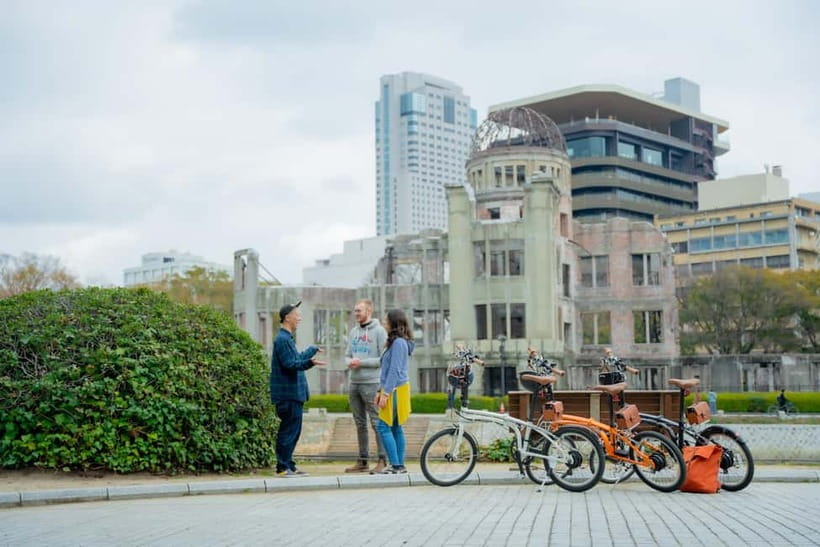
This tour’s emotional power comes from how the guide frames the city’s transformation. The story doesn’t end with destruction. You learn about the power of the atomic bomb, but you also see how Hiroshima has been dramatically revitalized, with greenery returning and life continuing.
That balance is not soft. It’s careful. The guides often connect the past to today’s message of peace and the long healing process. In personal storytelling from guides such as Shin, Kana, and Moe, you may hear family-linked memories passed down through generations. That can turn a monument visit into something more personal and reflective.
I also appreciate that the tour includes a built-in pacing choice. You can pick:
- the about 2-hour course if you want a focused intro, or
- the about 3-hour course if you want a deeper walk-and-ride tour of more landmarks
Either way, the ride helps you absorb the message. When you’re rolling through neighborhoods and not just standing still, you tend to notice details: how the city is laid out, how people move, and how places connect.
Practical value, cost, and what you should plan for
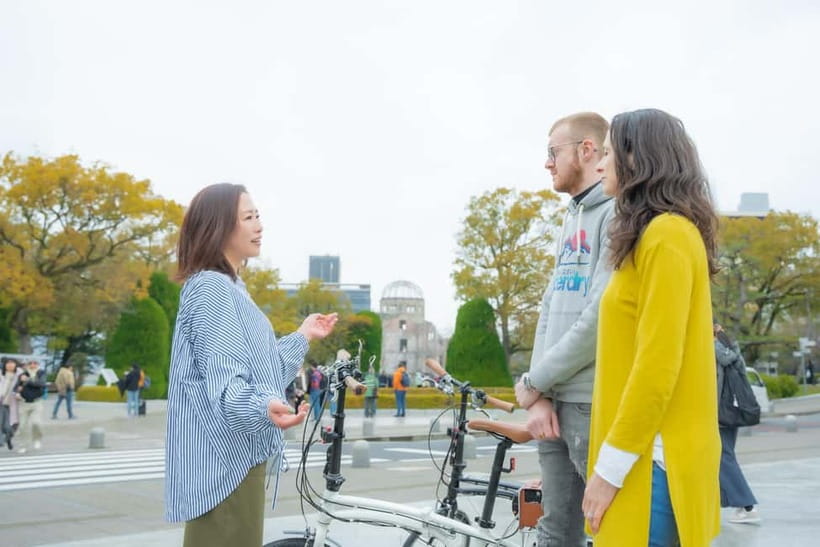
At $52 per person, this is one of the more reasonable ways to get an English guided experience tied to Hiroshima’s most important themes. You’re paying for:
- a rental bicycle (electric),
- an English-speaking local guide, and
- insurance for bicycle accidents.
Food is not included, so budget for drinks. The tour guidelines also suggest bringing drinks yourself, and the ride includes breaks when needed. I’d plan to buy water once or twice during the day, especially in warmer months.
Time is another part of the value equation. In 2 to 3 hours, you cover multiple landmarks without wearing yourself out. That’s a big deal in Hiroshima, where the emotional intensity can tax you even when you feel physically fine.
Who is this best for?
- People who want more meaning than a self-guided walk
- Anyone who likes seeing cities from street level
- Families who can ride a bicycle, since the pace can be adjusted for shared groups
Who might want to skip it?
- If you can’t meet the 145 cm height requirement for the adult e-bike setup
- If cycling feels like a deal-breaker for you, because the tour is built around riding between memorial and townscape stops
Should you book this peace cycling tour in Hiroshima?
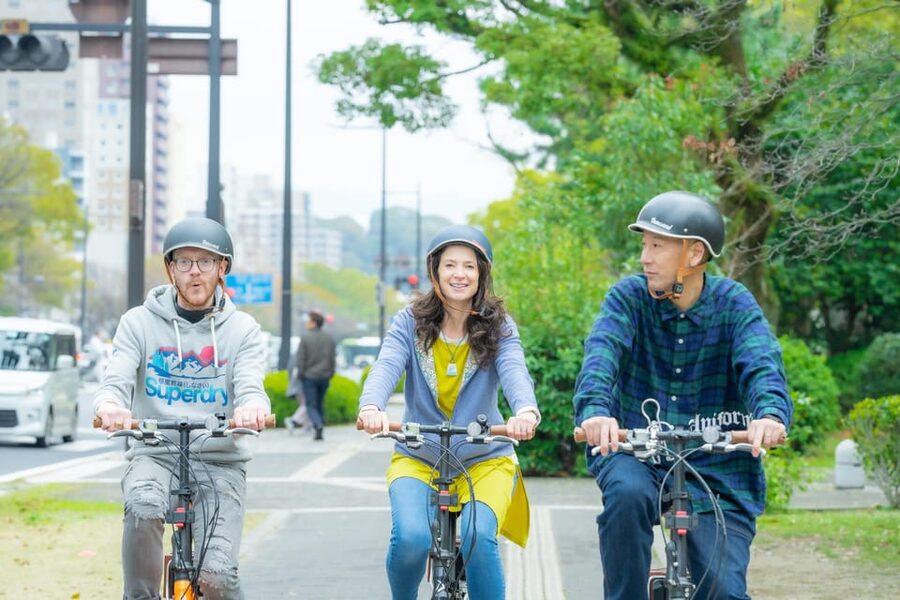
If you’re planning a first trip to Hiroshima and you want a fast, respectful way to understand what the Peace Park means, I think this is a strong booking. The electric bike makes it accessible, and the local English guides often bring stories that turn monuments into something you can feel, not just read.
Book it if you want:
- an easy ride plus a clear guide narrative,
- a route that includes the Peace Memorial Park and extends into nearby A-bomb heritage townscapes, and
- a small group setting with time to ask questions.
Skip or reconsider if you’re not comfortable riding, if your height doesn’t fit the bike rules, or if you prefer a purely self-paced visit where you can stop and sit for as long as you want at the biggest sites.
FAQ
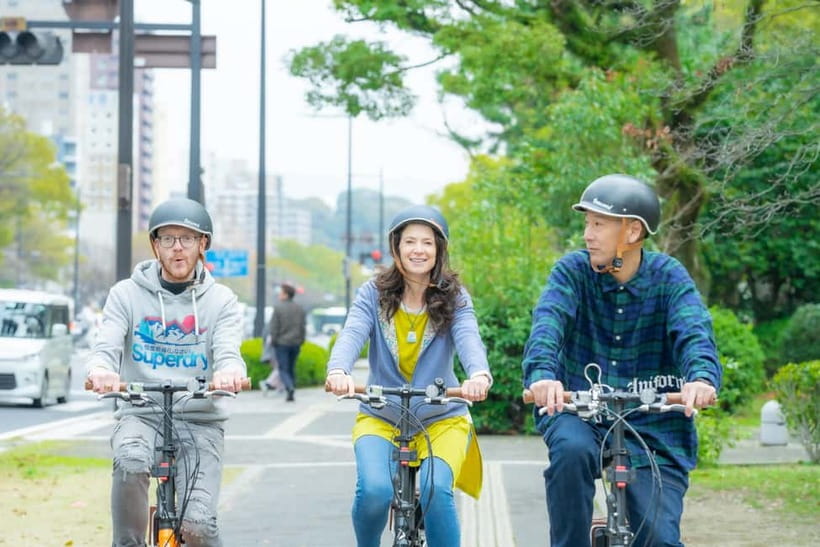
How long is the Hiroshima Peace Cycling Tour?
The tour runs about 2 to 3 hours depending on the course you choose.
Where do I meet, and how do I get there from Hiroshima Station?
Meet at the Rest House of Hiroshima Peace Park. Take the Hiroshima Electric Railway from Hiroshima Station to Atomic Bomb Dome Station (about 20 minutes), then walk about 5 minutes.
Is the tour guided in English?
Yes. The tour is an English guided tour.
How many people are in the group?
It is a small shared group, limited to up to 10 participants.
Is food included?
No. Food and drinks are not included.
What should I bring, and what shoes are not allowed?
Bring comfortable shoes, a towel, drinks, and comfortable clothes. High-heeled shoes are not allowed.
More Cycling Tours in Hiroshima
- Hiroshima Country Cycling: Explore Rural Life 1 HR from City
★ 5.0 · 8 reviews - Hidden Kyoto E-Biking tour
★ 5.0 · 1,843 reviews - Tokyo Guided Small-Group Biking Tour
★ 5.0 · 1,250 reviews - Bike Tour Exploring North Kyoto plus Lunch
★ 5.0 · 1,087 reviews
Newly listed around Hiroshima
- Hiroshima and Miyajima 1 Day Cruise Tour★ 5.0 · 24 reviews
- Hiroshima and Miyajima 1 Day Walking Tour★ 5.0 · 43 reviews
- Hiroshima & Miyajima: UNESCO A-Bomb Dome & Itsukushima with Local★ 5.0 · 25 reviews
- Hiroshima & Miyajima: Private Full-Day Tour with a Local Guide★ 5.0 · 39 reviews
- Hiroshima 5k Running Tour of Hijiyama Park★ 5.0 · 7 reviews
- Hiroshima and Miyajima Bus Tour with Indian Lunch★ 5.0 · 10 reviews
- Hiroshima and Miyajima 1 Day Bus Tour★ 4.5 · 145 reviews
- Hiroshima Peace Memorial and Atomic Bomb Dome Private Tour★ 5.0 · 37 reviews
Cycling & E-Bike Rides, compared.

3h Tokyo E-Bike Tour: Hidden Gems, and Local Life with guide
Read our review →
Arashiyama Bamboo Forest & Hidden Gems Bike Tour (Early Bird)
Read our review →
5 Top Highlights of Kyoto Full Day Bike Tour (E-bike option)
Read our review →
Hiroshima 2hr Peace Cycling Tour with Local Guide
Read our review →Browse the lists this tour appears in