
Review · HIROSHIMA PEACE MEMORIAL TOURS
Hiroshima Peace Park & Atomic Bomb Dome Guided Walk
Hiroshima hits you fast, in the best way. This guided walk through Hiroshima Peace Memorial Park turns scattered landmarks into one clear story, from August 6, 1945 to a message of peace.
I especially like the focus on people, not just dates, like the Fountain of Prayer and the Monument of Dr. Marcel Junod, which brings in a real helper’s perspective. And I like how the Peace Memorial Museum fits right into the route, so you can connect what you see outside to the facts inside.
One possible drawback: the pace is brisk, with about 10 minutes at many major stops, and the topic is emotionally heavy. If you have mobility limits, note the activity is listed as wheelchair accessible but also says it is not suitable for wheelchair users.
In This Review
- Key highlights not to miss
- Hiroshima Peace Park, explained on foot in just two hours
- Gates of Peace to Junod’s monument, where the story gets human
- Prayer Fountain, Flame of Peace, and what the museum adds
- Victims memorials that don’t let you look away
- Flame, bell, tower, and the ritual of hope
- Atomic Bomb Dome and the Hypocenter Monument, the moment history changed
- Price, timing, and how to make the most of your 2 hours
- Who this guided walk is best for
- Should you book this Hiroshima Peace Park guided walk?
- FAQ
- How long is the Hiroshima Peace Park and Atomic Bomb Dome guided walk?
- Where is the meeting point?
- What is the price per person?
- Which languages are available for the live guide?
- What attractions are included in the tour?
- Is the Peace Memorial Museum entry included?
- Can I eat or drink inside the museum?
- What should I bring?
- Is it wheelchair accessible?
- Is free cancellation available?
- What payment options are offered?
Key highlights not to miss
- Dr. Marcel Junod monument, a Swiss doctor who helped survivors
- Fountain of Prayer reflections for the victims of the atomic bomb
- Peace Memorial Museum entry, built into the flow of the walk
- Children’s Peace Monument and the Korean Victims Memorial, both deeply specific
- Peace Bell and Peace Tower, where hope gets a physical ritual
- Atomic Bomb Dome and the Hypocenter Monument, for the key moment that changed history
Hiroshima Peace Park, explained on foot in just two hours
Hiroshima Peace Memorial Park is big on meaning and light on small talk. This guided walk is designed to make sense of it without turning it into a rushed checklist. In about two hours, you move through the park’s most important points, with short guided stops so you get context before you move on.
The value here is the way your guide helps you read the space. The park can feel like a collection of monuments if you wander alone. With a live guide, you learn what each site is trying to say, why it was built, and how it connects to the rest of the park.
One practical note: this is mostly outdoor walking plus short stops at fixed locations. Bring your patience and comfortable shoes, because you will likely stand and look around for long stretches.
More Walking Tours in Hiroshima
- Hiroshima Historical Walking Tour – Why A-Bomb was Dropped
★ 4.8 · 893 reviews - Hiroshima Peace (Heiwa) Walking Tour at World Heritage Sites
★ 5.0 · 872 reviews - Hiroshima City 4hr Private Walking Tour with Licensed Guide
★ 5.0 · 437 reviews
Gates of Peace to Junod’s monument, where the story gets human
The tour begins at the Gates of Peace, in front of an Italian restaurant near the park. Even before the memorials, the gates set the tone: they symbolize global unity. That matters, because the rest of the experience is not only about tragedy, it is also about what people chose to build afterward.
From there, you head into the early part of the memorial route and one stop I think you will appreciate is the Monument of Dr. Marcel Junod. Junod was a Swiss doctor, and the guide frames his role as a direct form of help to survivors. It is a reminder that history is not only governments and weapons. It is also the people who showed up and worked with what they had.
If you like your tours structured with a clear line from past to present, this is a good fit. The guide’s job is to connect the symbols to real human actions, and you see that early rather than after you are already tired.
Prayer Fountain, Flame of Peace, and what the museum adds
Next comes the Prayer Fountain, where you take a guided moment to reflect on the victims of the atomic bomb. This stop is quieter in practice because the purpose is contemplation. The guide helps you understand what the fountain represents, and it sets up the next symbolic stop well.
After that, you visit the Flame of Peace. The flame represents a commitment to a nuclear-free world. You might see flames in lots of places across the world, but here it is tied to the specific reality of what nuclear weapons did, and why people keep pushing for prevention.
Then you get to the anchor point for facts: the Hiroshima Peace Memorial Museum. Museum entry is included, and the stop is guided for around 10 minutes. You are not going to read every exhibit during that time, so think of it as a guided map. You will likely leave with a few stronger details in your head, the kind you can follow up on later with your own reading.
A key practical detail: food and drinks are not allowed inside the museum. So plan water outside, and keep snacks for after you finish the park walk.
Victims memorials that don’t let you look away
Hiroshima’s park includes memorials that focus on different groups, and this tour does not lump everything into one blur. Instead, it gives you a separate guided stop at each major place.
You visit the Hiroshima Victims Memorial Cenotaph and the Hiroshima National Peace Memorial as part of the route. These stops help you understand that the memorial landscape is meant for remembrance, not for quick photos. The guide’s timing matters here, because it gives you a moment to slow down without feeling like you are stuck.
Two stops are especially important for perspective and context:
- The Children’s Peace Monument, which honors young lives lost.
- The Korean Victims Memorial (listed as a Korean victims cenotaph), honoring Koreans who perished.
These sites make the story bigger than Hiroshima’s borders. If you only think about the atomic bomb as an event that happened in one city, these memorials push you to see it as a wider tragedy with wider victims. That is hard to carry, but it is also what makes the experience more honest.
If you are traveling with kids or teens, these stops will likely be the most intense part of the walk. The upside is that the experience is guided, and you can get explanations that fit the age and questions of your group, rather than you improvising.
Other Hiroshima Peace Memorial tours worth a look in Hiroshima:
- Hiroshima: Miyajima Peace Memorial Icons of Peace and Beauty
★ 4.9 · 361 reviews - Hiroshima/Guided Virtual Tour of Peace Park/PEACE PARK TOUR VR
★ 5.0 · 157 reviews - Hiroshima: Peace Memorial Park and Atomic Bomb Dome Tour
★ 4.9 · 91 reviews - Hiroshima; Hiroshima Peace Memorial Museum and Castle Tour
★ 5.0 · 89 reviews
Flame, bell, tower, and the ritual of hope
Not every stop is about looking back. The tour includes places where hope becomes part of the visitor experience.
You visit the Peace Bell for a guided experience, and the guide explains it as a way to ring for global harmony. Then you also visit the Peace Tower. The tour frames these as more than landmarks. They are part of a ritual language, where visitors are asked to participate in a message rather than only observe.
This section can feel surprising if you expect a memorial to be only solemn. But Hiroshima’s park includes hope on purpose. The message is that remembrance should lead somewhere, or it turns into just another stop you check off.
It is also a good reset for your emotions. After the heavier memorials, the bell and tower help you shift from grief into reflection and intent. It does not erase the past, it gives you a way to hold onto the message of peace for the future.
Atomic Bomb Dome and the Hypocenter Monument, the moment history changed
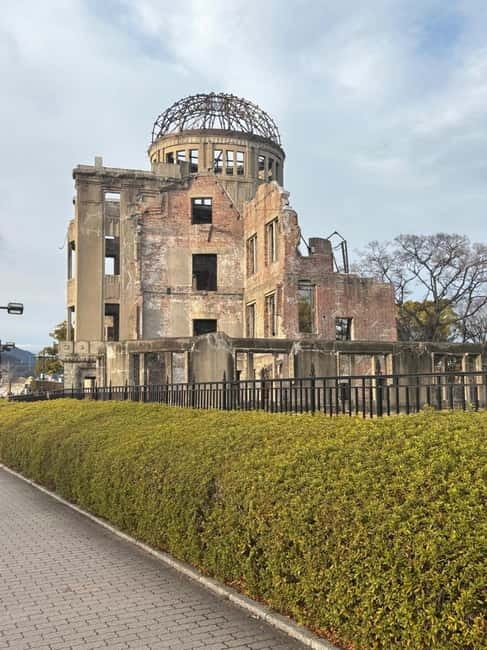
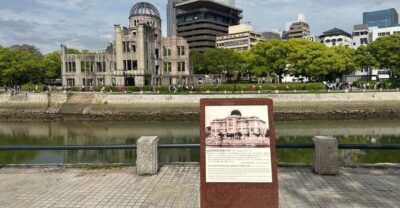
The last major outdoor highlight is the Atomic Bomb Dome. The guide presents it as a solemn reminder of the devastation. Even if you have seen photos before, the physical presence changes the way you understand it. It is not only a structure. It is a marker of the impact that stayed long after the event itself.
Then you pause at the Hypocenter Monument, where the guide asks you to reflect on the moment that changed history. This stop is one of the most meaningful parts because it brings the story to a specific point in time and space, rather than keeping it abstract.
You may find yourself quiet here, and that is normal. This is the part of the tour that sticks with you because it connects the symbols and facts you gathered earlier to the central event that the entire park is built around.
Price, timing, and how to make the most of your 2 hours
This experience costs $21 per person for a two-hour guided walk, and I think the price makes sense if you care about context. If you only want to take photos of monuments, you could do it on your own. But if you want to understand why each stop matters, the guided structure adds value fast.
You also get a lot for the time: museum entry is included, plus visits to multiple memorials, the Rest House, the Peace Bell experience, the Peace Tower, and the Atomic Bomb Dome and Hypocenter Monument.
One more timing reality: many guided stops are timed around 10 minutes each. That means you will not have long stretches for extended reading or deep personal journaling at every point. So if you are the type who likes slow exploration, plan to return later on your own for extra time.
In terms of what to bring, keep it simple:
- Comfortable walking shoes
- Camera
- Sunscreen and water
Also, remember the museum rule about no food and drinks inside.
Finally, there is a mixed note on mobility. The activity is listed as wheelchair accessible, but it also says it is not suitable for wheelchair users and people with mobility impairments. If mobility is a concern, it is worth checking in before you book so you are not surprised by the on-foot parts of the route.
Who this guided walk is best for
This is the kind of tour I recommend when you want your Hiroshima visit to feel structured and meaningful. It is a strong fit for:
- First-timers who want the big landmarks in the right order
- Travelers who want historical grounding from the Peace Memorial Museum
- People who care about multiple victim groups, including the Children’s Peace Monument and the Korean Victims Memorial
- Anyone who wants a live guide who can connect symbols to real stories
It may not be ideal if you want a slow, self-paced stroll, or if you struggle with lots of walking and outdoor standing.
And one reason I trust the guide quality here: the provider is Adina, and the tour description and feedback about him point to careful explanations and patience, including time spent on technical topics like nuclear reactions. That kind of effort matters in Hiroshima, because the goal is understanding, not just nodding along.
Should you book this Hiroshima Peace Park guided walk?
Yes, if you want a guided, high-impact route through Hiroshima Peace Memorial Park that keeps history, remembrance, and hope connected. For $21, you get museum entry plus major memorial stops in a tidy two-hour window, and you avoid the common problem of reading symbols without context.
I would skip it or look for a different style if you need a lot of downtime, you want to linger much longer at fewer sites, or you are concerned about the walking demands given the accessibility notes. Otherwise, this is a solid way to experience Hiroshima Peace Memorial Park with clarity, respect, and a message you can carry beyond the park gates.
FAQ
How long is the Hiroshima Peace Park and Atomic Bomb Dome guided walk?
It runs for 2 hours.
Where is the meeting point?
You meet at the Gates of Peace, in front of an Italian restaurant (near coordinates 34.3906308, 132.4516662).
What is the price per person?
The price is $21 per person.
Which languages are available for the live guide?
The live tour guide is available in English, Urdu, and Hindi.
What attractions are included in the tour?
The tour includes visits to the Gates of Peace, Monument of Dr. Marcel Junod, Prayer Fountain, Flame of Peace, Peace Memorial Museum, Rest House, Children’s Peace Monument, Korean Victims Memorial, Peace Bell, Peace Tower, Atomic Bomb Dome, and the Hypocenter Monument.
Is the Peace Memorial Museum entry included?
Yes, entry to the Peace Memorial Museum is included.
Can I eat or drink inside the museum?
No. Food and drinks are not allowed inside the museum.
What should I bring?
Bring comfortable shoes, a camera, sunscreen, and water.
Is it wheelchair accessible?
It is listed as wheelchair accessible, but it also notes it is not suitable for wheelchair users and people with mobility impairments. If this applies to you, check first to avoid surprises about the walking route.
Is free cancellation available?
Yes, you can cancel up to 24 hours in advance for a full refund.
What payment options are offered?
The tour offers reserve now & pay later, so you can book your spot and pay nothing today.
Newly listed around Hiroshima
- Hiroshima/Miyajima Private Custom Tour with Local Guide★ 5.0 · 134 reviews
- Hiroshima: Tour of Atomic Bomb Dome & Peace Memorial Museum★ 5.0 · 20 reviews
- Hiroshima:Guided Virtual Tour/PEACE PARK TOUR VR★ 5.0 · 29 reviews
- Hiroshima: Miyajima Private Cultural Tour by Ferry★ 4.9 · 72 reviews
- Hiroshima: Private Walking Tour with a Local★ 4.6 · 70 reviews
- Hiroshima: Peace Walking Tour of World Heritage Sites★ 4.9 · 190 reviews
- Hiroshima Private Day Tour★ 4.8 · 6 reviews
- Hiroshima: Peace Park, Castle, and Mitaki Temple E-Bike Tour★ 4.8 · 11 reviews
Hiroshima Peace Memorial Tours, compared.
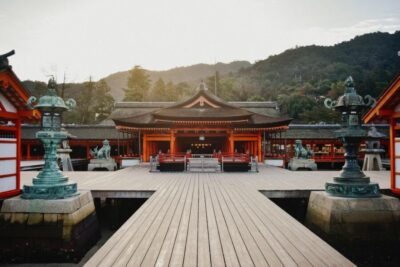
Miyajima Peace Memorial Icons of Peace and Beauty
Read our review →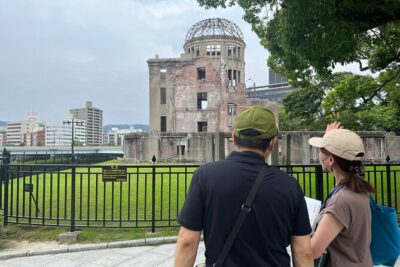
Hiroshima/Guided Virtual Tour of Peace Park/PEACE PARK TOUR VR
Read our review →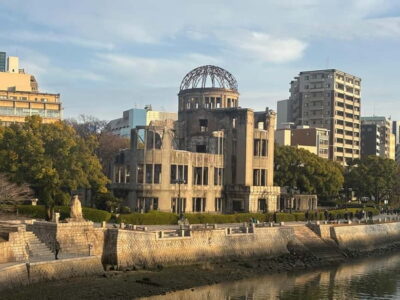
Hiroshima; Hiroshima Peace Memorial Museum and Castle Tour
Read our review →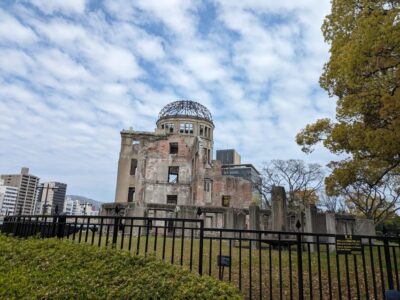
Peace Memorial and Atomic Bomb Dome Private Tour
Read our review →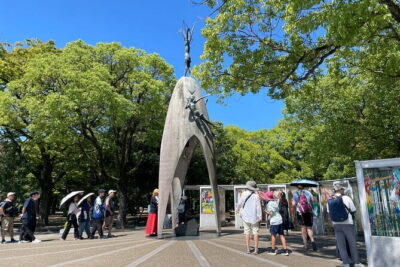
Hiroshima History Tour : A-Bomb Dome, Peace Memorial & City
Read our review →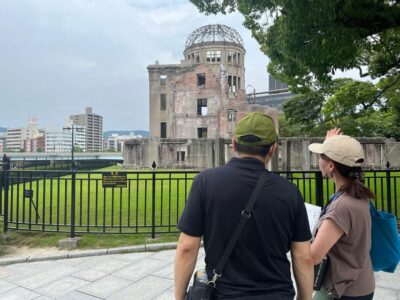
Hiroshima:Guided Virtual Tour/PEACE PARK TOUR VR
Read our review →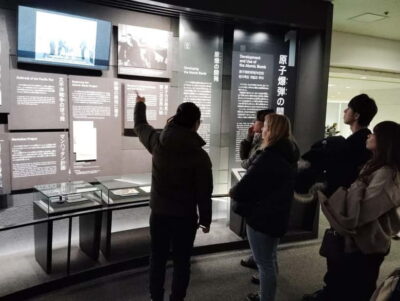
Tour of Atomic Bomb Dome & Peace Memorial Museum
Read our review →Browse the lists this tour appears in