
Review · KIMONO & YUKATA RENTALS
Japanese miniature kimono made with origami in Osaka
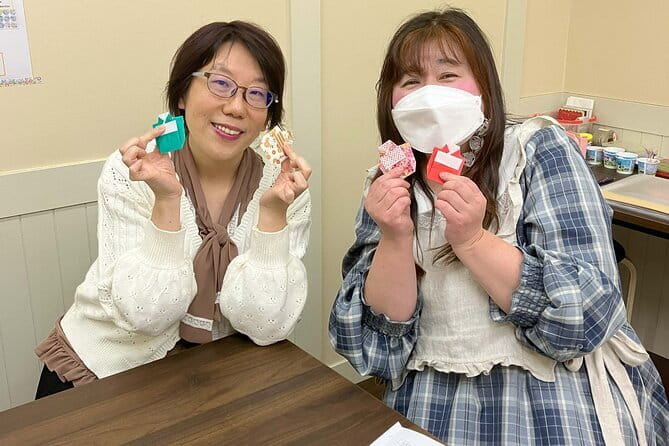
A miniature origami kimono feels oddly personal. In Osaka, you fold a tiny kimono using an instructor’s original design, then take home a QR code for the video and diagrams so you can keep practicing later. I love the patient teaching style, and I love that the finished piece looks like a real kimono, complete with thoughtful details you can even use like a gift. One thing to consider: it is a hands-on craft class, so plan to slow down and focus, especially if you are a true origami beginner.
This is also a smart stop if you want something cultural that is not just looking at stuff. The meeting point is easy to reach from Abeno Station, and the class stays structured: a short practice fold first, then you build up to the full pattern. If you want a quick souvenir you can do while sightseeing, this is a better match than a long tour.
In This Review
- Key highlights to know before you go
- Why a miniature origami kimono workshop is a great Osaka craft stop
- Finding the classroom near Abeno Station (Exit 7)
- The pre-fold warm-up and how you choose your paper
- Folding the miniature kimono: practice first, then the real pattern
- Extra designs: if you have time, pick your favorite of 20
- What you take home: QR video and fold diagram for repeat practice
- Price and value for a 1.5-hour private Osaka activity
- Who this suits best (and who may want a different option)
- How to plan your day around the class
- FAQ
- Where do I meet for the origami kimono class in Osaka?
- How long is the experience?
- Is pickup available?
- Is this a private group activity?
- What is included in the price?
- Do I get anything to take home besides the finished kimono?
- Is the class beginner-friendly?
- What is the cancellation policy?
- Should you book this Japanese miniature kimono origami workshop?
Key highlights to know before you go
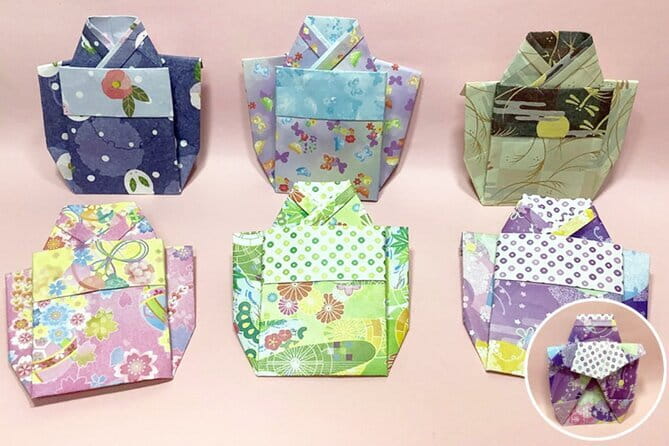
- Original miniature kimono design: the pattern is created by the instructor, not pulled from generic diagrams.
- Beginner-friendly pace: you do a practice fold before you tackle the real one.
- Take-home QR code: a video plus a folding diagram, so you can repeat it after you leave Osaka.
- Options for extra designs: if you have time, you can choose from 20 traditional works.
- Gift-ready idea: the finished kimono is meant to hold small items, like picks or coins, and can be paired with small written notes.
Why a miniature origami kimono workshop is a great Osaka craft stop

Osaka can be loud, bright, and fast. This kind of workshop gives you the opposite feeling: calm focus with your hands. You are not just learning a trick. You are making a miniature kimono that shows up as a small, satisfying object you can keep in your bag or on a shelf.
The biggest win for me is the way the class is structured. You start with a quick practice fold, so your hands learn the logic before the pattern gets more detailed. The other strong point is the teaching style. In the feedback you can feel how patient the instructor is, including when people admit they were struggling at first. That matters, because origami is where many people either get hooked or drop off fast.
The class also has a built-in bonus for souvenir lovers. You do end up with something cute and displayable, but you also leave with the means to do it again at home through the QR video and diagram.
More Craft Workshops in Osaka
- Osaka: Tea Ceremony, Calligraphy, and Kimono Experience
★ 4.9 · 130 reviews - Kamigata Ukiyoe Museum:Ukiyo-e Woodblock Printing Experience
★ 4.9 · 79 reviews - Osaka: Private Japanese Calligraphy Experience
★ 5.0 · 66 reviews
Finding the classroom near Abeno Station (Exit 7)
You meet at the bottom of the stairs of Abeno Station, Exit 7. That is helpful because you do not need a complicated scavenger hunt. The location is close to the station on the Osaka Metro Tanimachi Line, and the building area is described as a general facility with many stores.
If you are coming from elsewhere in Osaka, this is a practical choice. You will likely arrive by subway, then walk a short stretch and find the stairs. And if you are planning your day around big landmarks, the area gives you flexibility. Nearby, you can reach spots like Abeno Harukas, Tsutenkaku Tower, and Tennoji Zoo, so you can fit the class between sightseeing blocks.
One small planning note: this is a private activity, meaning it is just your group. That is great for attention and pacing, but it also means you should show up on time, so your whole group can start together.
The pre-fold warm-up and how you choose your paper
Once you meet, you head to the classroom together. You will be guided with origami steps right away, and you pick your origami paper at a table.
The format is simple but effective:
- Sit at a chosen table.
- Choose your paper.
- Fold together once for practice.
- Then move from practice to the real miniature kimono fold.
I like this sequence because it reduces the most common frustration in origami classes. Many beginners get stuck on step one and feel behind immediately. Here, you get that early “practice rep” first, so your brain knows what success feels like before the full design starts.
Also, the classroom setup means you can ask questions easily. Several people specifically mentioned that questions were easy to ask and that the instructor explained things in a clear way. If you are the kind of traveler who worries you will not catch a step, this setup is reassuring.
Folding the miniature kimono: practice first, then the real pattern

After the practice fold, you will familiarize yourself with the method, then fold the real piece with a beautiful pattern.
This part is where you earn the “cute kimono” outcome. The finished work is a miniature kimono made from origami, and it is designed to look like a kimono rather than just a generic paper model. The pattern includes details people specifically called out, including a back figure that looks especially cute.
Another standout detail from the feedback: the miniature kimono has a function. It includes pockets, and it is designed to hold things. That means the craft is not only about shape. It also gives you a practical element, like holding a small item.
The best way to enjoy this segment is to treat it like a slow cooking step. Do not rush ahead to “save time.” Follow the fold, check your alignment, then move on. The instructor’s patient guidance helps, especially if you are not naturally steady with paper yet.
More Kimono Rentals in Osaka
- Osaka: Sumo Show & Experience w/ Optional Kimono & Hot Pot
★ 4.5 · 609 reviews - Learning Zen of Japanese Calligraphy in kimono near Osaka Castle
★ 4.5 · 53 reviews - Osaka: Kimono or Yukata Rental &Photos Service Options
★ 4.9 · 25 reviews - Kimono photoshoot-Includes 100 photo data
★ 5.0 · 21 reviews
Extra designs: if you have time, pick your favorite of 20
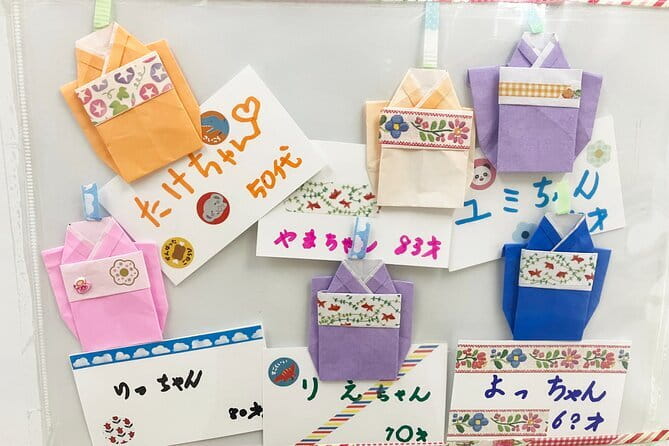
You can choose a favorite piece from 20 traditional works if you have more time. That is a nice option when you want your souvenir to feel more personal.
This choice also helps if you have different skill levels in your group. If someone finishes quickly, they might get more options. If you want extra time, you are still guided through the main kimono, so you are not left empty-handed.
For families, this can be a big deal too. The class is described as something beginners and small children can enjoy together, which suggests the pace and support are flexible enough to handle mixed groups.
What you take home: QR video and fold diagram for repeat practice
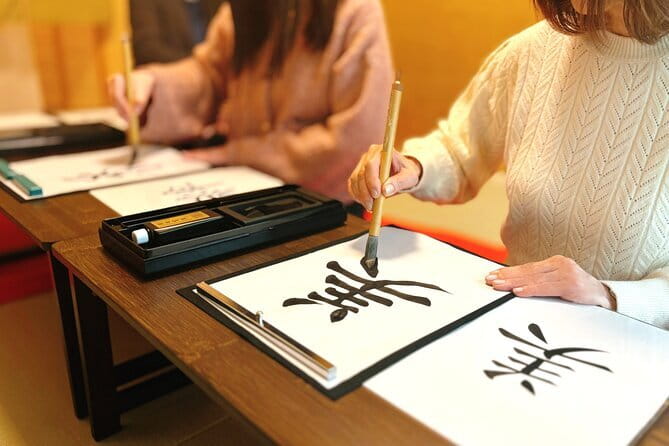
The takeaway is not just the finished miniature kimono. You also get a QR code for the video and folding instructions.
That matters more than it sounds. Origami steps can be hard to reconstruct from memory, especially once you are home in a different light, with different paper, and no instructor in front of you. The video and diagram let you refresh the steps later, and that is how this turns into a lasting skill instead of a one-time craft.
Also, the kimono can work as a gift. The class mentions you can give them as gifts with picks, coins, or otegami in them. That tells you the project is meant to be more than decorative. You are learning a format that can act like a tiny holder and a tiny message, which is a very Japanese way to treat small objects.
If you like making “useful cute” souvenirs, this fits your style.
Price and value for a 1.5-hour private Osaka activity

The price is listed as $65.32 per person, and the class runs about 1 hour 30 minutes. You can also get pickup offered, group discounts, and mobile tickets.
Here is the value angle that makes this price make sense:
- The class includes tools and materials needed for the activity.
- You leave with a finished miniature kimono plus the QR video and folding diagram.
- It is private, meaning only your group participates, which usually increases instruction attention.
If you compare this to many craft experiences that charge similarly but do not include take-home learning tools, the QR code and diagram are a real bonus. It is also not a long time commitment, so it is easier to fit into an Osaka day that already has major sights.
One more practical note: traveling expenses are not included. So if you are paying for local transit to reach Abeno Station, budget for that separately.
If you want a quick but meaningful cultural experience, this is priced like a small workshop with real instruction, not a mass market demo.
Who this suits best (and who may want a different option)

This class is a strong fit if:
- you enjoy hands-on activities more than passive sightseeing
- you want a compact craft session that still feels authentic
- you are a beginner who needs step-by-step support
- you want a small souvenir that looks like a mini kimono and can even hold small items
It may be less ideal if:
- you want a fast, low-attention photo stop
- your group hates learning steps and prefers “watch only”
- you are hoping for a large walking tour with many locations
In the feedback, people emphasized how helpful and gentle the instruction was. One person specifically referenced being “hopeless” at the start and still finishing, which is exactly what you want to hear from a beginner-friendly class. Another noted the instructor was bright and easy to understand, and that it was easy to ask questions. That kind of teaching style is the difference between “I made something” and “I actually learned it.”
How to plan your day around the class
Since the meeting point is near Abeno Station Exit 7, I suggest you schedule it with a buffer. Osaka is easy to navigate, but stations can be busy and stairs can take a moment to find.
Try this approach:
- Do one major sight block near Abeno first, or do it after the class.
- Keep the craft session central in the middle of your day if you want to stay energized.
- If you are visiting Abeno Harukas or Tennoji area spots, you are in a convenient zone.
Duration is about 1 hour 30 minutes, so you do not need an entire half-day. It is a great “in between” experience when you want something memorable without losing your whole afternoon.
FAQ
Where do I meet for the origami kimono class in Osaka?
You meet at the bottom of the stairs of Abeno Station, Exit 7.
How long is the experience?
It runs about 1 hour 30 minutes.
Is pickup available?
Pickup is offered.
Is this a private group activity?
Yes. It is a private tour or activity, and only your group participates.
What is included in the price?
Tools and materials needed for the activity are included.
Do I get anything to take home besides the finished kimono?
Yes. You receive a QR code for the video and a folding diagram, so you can follow the steps after you go home.
Is the class beginner-friendly?
Yes. Beginners and small children can also enjoy the experience, and most travelers can participate.
What is the cancellation policy?
You can cancel for a full refund if you cancel up to 24 hours in advance. If you cancel less than 24 hours before the experience starts, the amount paid is not refunded.
Should you book this Japanese miniature kimono origami workshop?
If you want a meaningful Osaka souvenir that teaches you something you can repeat, this is an easy yes. The combination of patient instruction, a clear step-by-step structure, and the take-home QR video plus fold diagram makes it more valuable than a typical craft stop. You also get a finished miniature kimono that people described as cute, with details like a pocket concept, so it feels both decorative and practical.
Book it if your group likes hands-on work and you are okay spending focused time at a table. If you mainly want fast sightseeing or you hate learning steps, you might prefer a different kind of Osaka tour.
Newly listed around Osaka
- 2 Hours of Bar Hopping in Osaka Style★ 5.0 · 22 reviews
- Same-Day Osaka Food Crawl with local food and Hidden gems★ 5.0 · 114 reviews
- Osaka Authentic Local Izakaya Hopping Experience: Food & Drinks★ 5.0 · 99 reviews
- Well-balanced BENTO (lunch box) Cooking Class★ 5.0 · 35 reviews
- Anime Cosplay Photshoot-50 Digital Photos Provided★ 5.0 · 8 reviews
- OSAKA:Feel the Power! Learn Taiko Drum from Professionals★ 5.0 · 28 reviews
- Three Types of Ramen Cooking Class in Osaka★ 5.0 · 119 reviews
- Urban Canvas: Osaka Street Art Bike Tour★ 5.0 · 47 reviews
Kimono & Yukata Rentals, compared.


Sumo Show & Experience w/ Optional Kimono & Hot Pot
Read our review →
Kimono Dressing, Walking, and Photography Session
Read our review →
KYOTO Tea Ceremony with kimono near by Imamiya Jinjya Shrine
Read our review →
Kimono and Tea Ceremony Experience at Cultural Asset
Read our review →
Browse the lists this tour appears in