Review · KIMONO & YUKATA RENTALS
Learning Zen of Japanese Calligraphy in kimono near Osaka Castle
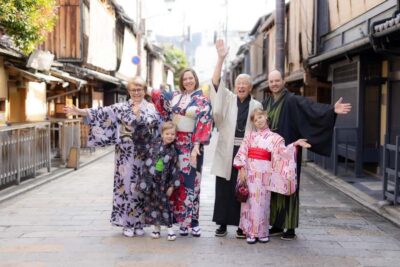
Brushwork becomes calm in a kimono. This small-group shodo class near Osaka Castle turns a 1-hour lesson into a personal keepsake, with kimono dressing and a kanji writing project you take home. I love how hands-on it is with a professional shodo teacher, and I love that you get your name translated into kanji characters and then captured in photos. One thing to consider, the storefront can be easy to miss and you need to arrive on time, since being more than 30 minutes late can mean no entry.
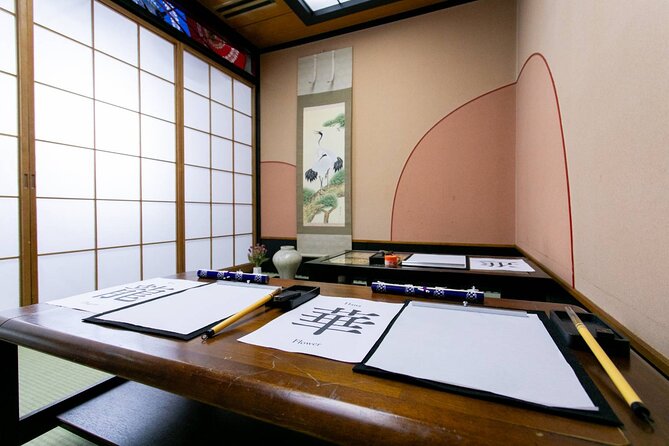
You’ll start by changing into traditional clothing, then get guided practice on how to hold the brush and how Japanese stroke movement actually works. English support is built in with an English-Japanese or Chinese-Japanese translator, so you do not need Japanese to follow along. The vibe is focused, respectful, and surprisingly relaxing for an activity that involves a lot of careful muscle memory.
In This Review
- Key things to know before you go
- Entering The Shodo Studio Near Osaka Castle
- 1 Hour in Kimono, From Outfit On to Seated Practice
- Learning Brush Movements That Actually Control the Line
- Choosing Your Kanji and Mastering Stroke Order
- The Teacher Surprise: Your Name in Kanji on Wooden Tags
- Your Final Draft, Then a Kimono Photo Shoot
- Value for $43.59: Why This Works for Short Time in Osaka
- Who Should Book This Shodo and Kimono Class
- Should You Book This Shodo and Kimono Class?
Key things to know before you go
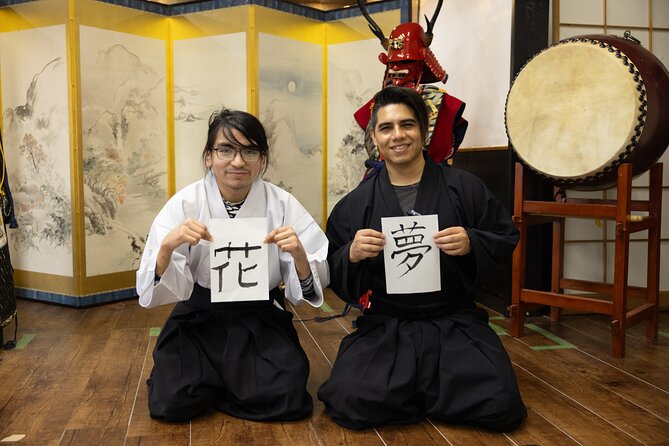
- Kimono, hakama, and traditional attire are part of the experience, and you will pose with your work during the photo moment.
- Pick your own kanji, then learn stroke order and practice until your final draft looks like you made it on purpose.
- Brush basics are taught clearly, including the movements tome, hane, and harai.
- A name-based surprise souvenir happens during the session, with wooden tags written using kanji tied to your choices.
- Photos come to you digitally, plus you can take some smartphone photos during the class (with a few rules).
Entering The Shodo Studio Near Osaka Castle
This class starts in Osaka, close enough to Osaka Castle that you can treat it like a natural second act to your day in the park area. The meeting point is a small address in Joto Ward, Shiginonishi, and it is the kind of place you may walk past the first time if you expect a big tourist storefront.
Tip: when you head out, give yourself a few extra minutes. The directions can be right, but the entrance is small, so slow down at the last turn and look carefully.
The good news is that once you are inside, everything moves fast in the best way. There is a clear flow, and the small group size (max 10) helps the teacher actually watch your brush grip and stroke shape instead of just lecturing.
More Castle Visits in Osaka
- Osaka Castle: Museum and Tower Entry Ticket
★ 4.5 · 2,380 reviews - Ultimate Osaka Walking Tour: Castle, Dotonbori & Hidden Gems
★ 5.0 · 862 reviews - From Osaka: Himeji Castle, Arima Onsen & Mt. Rokko Day Tour
★ 4.6 · 339 reviews
1 Hour in Kimono, From Outfit On to Seated Practice
Your first step is getting changed into traditional Japanese clothing, like a kimono. The process takes time, because the outfit has multiple parts and you want to get it right before you sit down to write.
Before dressing, the instruction is straightforward: use the restroom first. That matters because once you are in the clothing, you do not want to interrupt your session mid-practice.
As you settle on your seat, you shift into the shodo mindset. This is not just decorative handwriting copied from a worksheet. Japanese shodo has its own rhythm, and the lesson makes the difference between writing as a Western-style activity versus shodo as a disciplined art form.
You will also get tool guidance. Expect support on how to hold the brush and how to use the tools without fighting them. Even if your calligraphy is your only calligraphy experience, you should leave feeling like you understand the basics of how the brush behaves.
Learning Brush Movements That Actually Control the Line
This is where the class gets practical. You learn the core brush movements that define Japanese calligraphy, including tome, hane, and harai.
- Tome helps you finish a stroke cleanly, instead of letting it fade or stop awkwardly.
- Hane teaches you how to create a small lift that changes the character’s personality.
- Harai is about the sweep that gives the stroke its final energy.
You also practice the physical mechanics of writing. That sounds obvious, but the difference here is that the teacher watches your movements and corrects what you are doing, not just what the end result looks like. For first-timers, that feedback is the real value.
A quick consideration: if you have back problems or heart conditions, this class may not be a good fit. You will be seated and focused, and traditional clothing can feel warm. If you are sensitive to that, plan carefully.
Choosing Your Kanji and Mastering Stroke Order
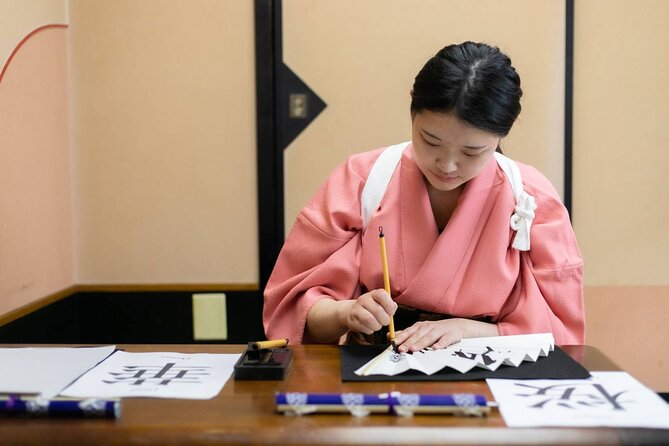
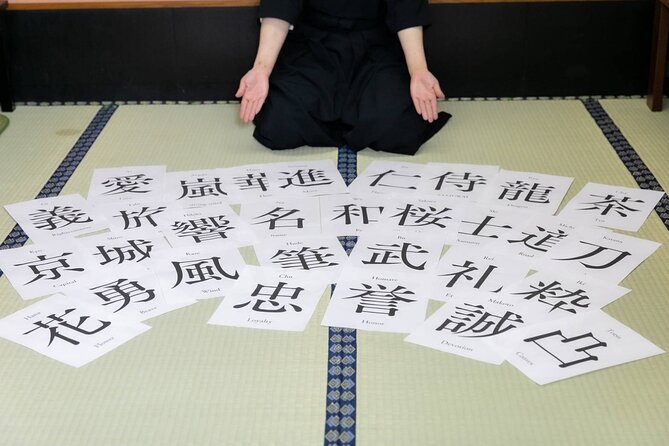
Here’s a favorite part: you choose your favorite Japanese kanji to challenge yourself. The point is personal. You are not being assigned a random character that is hard just to be hard. You choose something that feels meaningful to you, then you work it into something you can control.
Then comes the structure lesson: you learn stroke order for your chosen kanji. Stroke order is not trivia. It affects how the character balances on the page, and it affects how the brush moves. Without stroke order, shodo can look messy even if you copy the shape. With stroke order, your character starts to look intentional.
Important detail: you are not just copying. The class helps you build consistency. The teacher’s guidance nudges you toward the small changes that make a big difference in calligraphy.
And because kanji can be confusing for non-Japanese speakers, the translation support matters. You pick characters, then you practice them while an English-Japanese or Chinese-Japanese translator helps with questions and clarity.
More Craft Workshops in Osaka
- Osaka: Tea Ceremony, Calligraphy, and Kimono Experience
★ 4.9 · 130 reviews - Kamigata Ukiyoe Museum:Ukiyo-e Woodblock Printing Experience
★ 4.9 · 79 reviews - Osaka: Private Japanese Calligraphy Experience
★ 5.0 · 66 reviews - Calligraphy Workshop in Namba, Dotonbori
★ 5.0 · 57 reviews
The Teacher Surprise: Your Name in Kanji on Wooden Tags
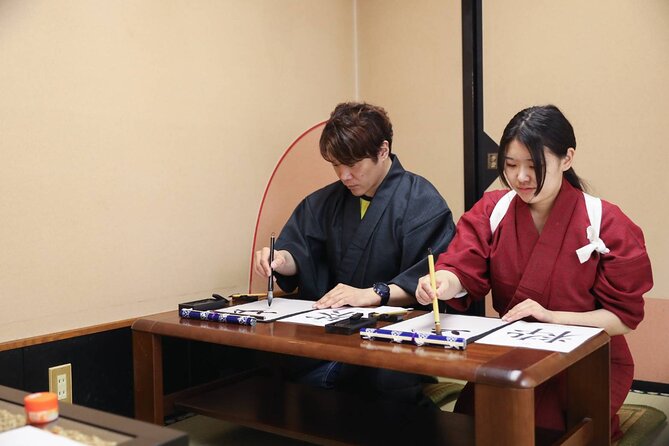
After you practice your chosen kanji, the class adds a fun surprise. The teacher writes the foreign names of participants on wooden tags using the kanji characters you have chosen.
This part is clever for two reasons. First, it turns your work into a tangible souvenir you can actually carry home. Second, it makes the session feel personal in a way that most tourist activities do not.
If you are doing this as a couple, with friends, or as a parent-child outing, it also creates an easy conversation piece. You can show the tag, compare kanji choices, and talk about how the same writing tools create different results.
Your Final Draft, Then a Kimono Photo Shoot
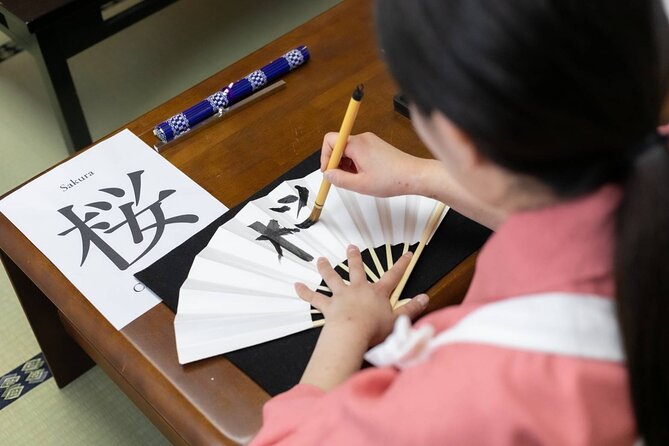
Once you reach the final draft stage, you write your finishing piece while keeping what you learned in mind. This is the payoff moment, because earlier practice can feel like you are just building muscle memory. Then you produce a final version that you can be proud of.
Next comes the photo shoot. You capture your kimono outfit and your artwork. You do not have to be a model. The point is that you are dressed in traditional clothing, holding your work, and taking home images that document what you made.
What you get:
- Photography is included as digital data sent to your designated email address.
- Smartphone photography is permitted, but you must avoid selfies and you should not photograph other guests.
- Fixed tripods and recording videos are discouraged because they can disturb other participants.
If you care about photos, this is a solid arrangement. The staff takes photos for you, and you also have limited freedom to snap your own shots.
Value for $43.59: Why This Works for Short Time in Osaka
$43.59 for about one hour may sound like a lot if you only think in terms of art supplies. But the real value is what comes bundled with the instruction and outcome.
You get:
- A lesson from a professional shodo teacher that guides your brush control.
- Traditional Japanese attire, such as kimono and possibly other items like hakama depending on what you are provided.
- A personalized kanji project, plus your name translated into kanji characters.
- Photo coverage plus digital delivery by email.
- A small group setup, with max 10 people.
For short trips, that kind of bundling matters. You are not spending your day hunting for tools, chasing a studio that speaks your language, or figuring out how to practice. You arrive, you learn, you write, you pose, and you leave with a souvenir.
One more plus: the class is open to all skill levels, so you are not punished for being brand new.
Who Should Book This Shodo and Kimono Class
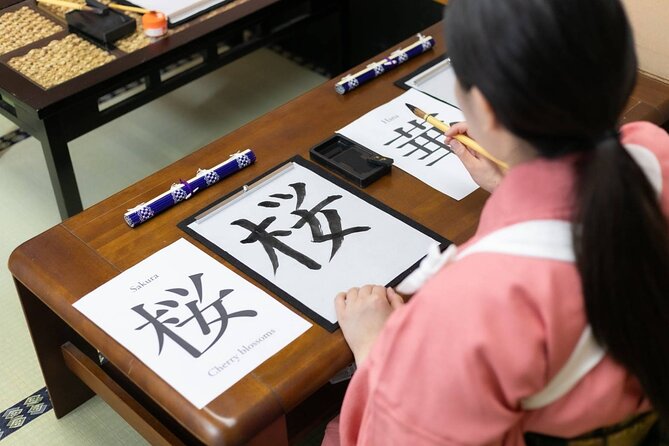
I think this experience is best for three kinds of people.
First, book it if you want something more meaningful than a quick photo stop. The writing project turns your name into kanji, and you practice brush techniques that you can actually feel in your hand.
Second, book it if you like artsy travel that still has structure. You are not staring at blank paper guessing what to do. The teacher teaches steps, then you follow them and make them yours.
Third, it is a good family-friendly option. The class is open to all skill levels, including kids. If you want a cultural activity that feels calm but not boring, this fits.
Two things to think about before you go:
- If you are worried about physical comfort, consider the warnings about back problems and heart conditions, and the fact that traditional clothing can be warm during practice.
- If you rely on a stroller, it is not stroller accessible.
Should You Book This Shodo and Kimono Class?
Yes, if you want a short, structured, hands-on Japanese cultural experience that ends with both art and photos. The professional instruction, the choice-based kanji practice, and the personalized name outcome make it feel worth the money for a one-hour slot.
I would skip it if you know you cannot comfortably sit for a sustained period, or if you are likely to arrive late. This type of lesson depends on timing, and being more than 30 minutes late can get you refused entry. If you plan to be punctual and you like making something with your own hands, this is a great fit.
More Kimono Rentals in Osaka
- Osaka: Sumo Show & Experience w/ Optional Kimono & Hot Pot
★ 4.5 · 609 reviews - Osaka: Kimono or Yukata Rental &Photos Service Options
★ 4.9 · 25 reviews - Kimono photoshoot-Includes 100 photo data
★ 5.0 · 21 reviews - Osaka: Kimono Rental Traditional Experience at WARGO
★ 4.8 · 10 reviews
Newly listed around Osaka
- (Ticket Included) Explore Osaka Castle & Museum of History★ 4.8 · 21 reviews
- Hidden Osaka – Yukaku Red Light Tour & Culinary Adventure★ 4.8 · 96 reviews
- Osaka: Walking Tour and Top Highlights★ 4.8 · 104 reviews
- Same Day OK! Osaka: Local Food, Izakaya & Local Bites Tour!★ 4.8 · 17 reviews
- Osaka: Private Ceramic Painting Workshop★ 5.0 · 13 reviews
- Pickleball in Osaka & Kyoto with Locals!★ 4.6 · 64 reviews
- Eat Like a Local in Osaka – Private Custom Street Food Tour★ 4.3 · 33 reviews
- Osaka:SUMO BEATS SHOWCASE: Taiko Drum and Wagyu burger!★ 4.2 · 37 reviews
Kimono & Yukata Rentals, compared.

Sumo Show & Experience w/ Optional Kimono & Hot Pot
Read our review →
Kimono Dressing, Walking, and Photography Session
Read our review →
KYOTO Tea Ceremony with kimono near by Imamiya Jinjya Shrine
Read our review →
Kimono and Tea Ceremony Experience at Cultural Asset
Read our review →