
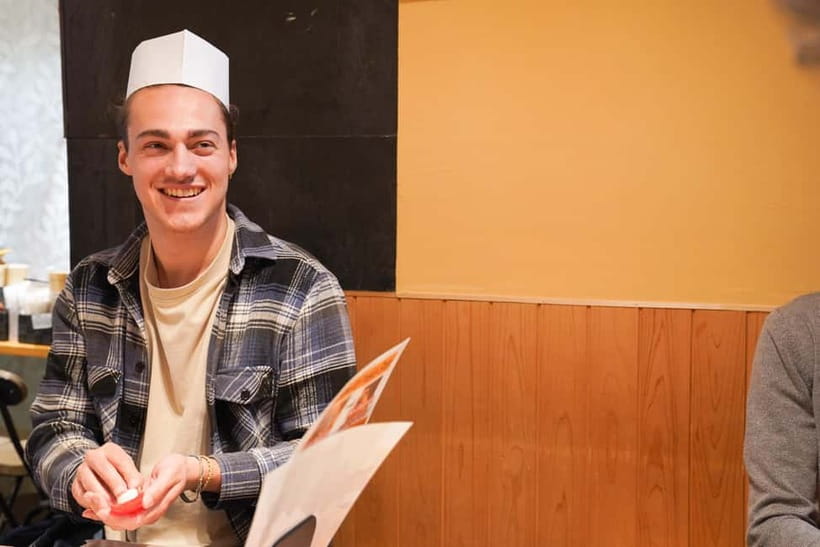
Review · SUSHI COOKING WORKSHOPS
Kanazawa: Sushi Making Experience at Oumicho Market
Sushi tastes better when you make it. I love chef-led sushi technique and the chance to work with Kanazawa fresh seafood right inside Omicho Market. The only catch is finding the place in a maze of stalls, so plan to arrive early and follow the Sushi Enome sign.
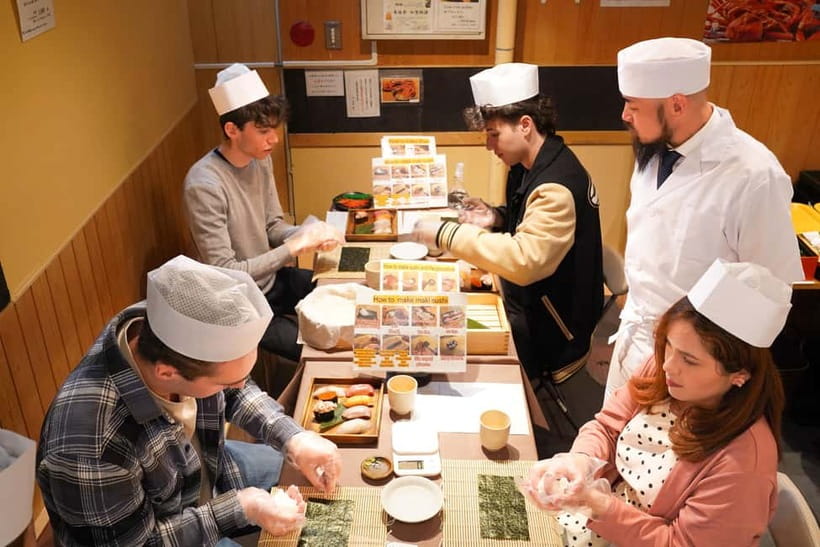
In a tight 2 hours, you shape 5 pieces of nigiri, 2 gunkan-maki, and 1 roll, then you eat what you made. The chef also talks through sushi culture, and you can take photos during the prep and after the final plate.
At $70 per person, it is not a steal, but it is good value for what you get. You pay for instruction, ingredients, and a tasting, not just a meal you forget the next day.
In This Review
- Key highlights
- Omicho Market is the perfect classroom for sushi
- Finding Sushi Enome at the M’ZA entrance (and not getting lost)
- What you learn in 2 hours: knife basics, rice rhythm, and rolling
- Your exact menu: nigiri, gunkan-maki, and one roll
- Nigiri: the balance of rice and fish
- Gunkan-maki: learning structure and control
- The roll: timing and shaping
- Fresh Kanazawa seafood and why the market matters
- The chef’s teaching style: patient, practical, and geared to real beginners
- Tasting your sushi and making photos look good
- Price and value: is $70 worth it?
- Who this class is best for
- Small rules to keep the experience smooth
- Should you book this Kanazawa sushi making experience?
- FAQ
- How long is the Kanazawa sushi making experience?
- What will I make during the class?
- What is included in the price?
- Are hotel pickup and drop-off included?
- Where do I meet for the class inside Omicho Market?
- What should I wear or bring?
- Is the class taught in Japanese only?
- Can I cancel for a refund?
Key highlights
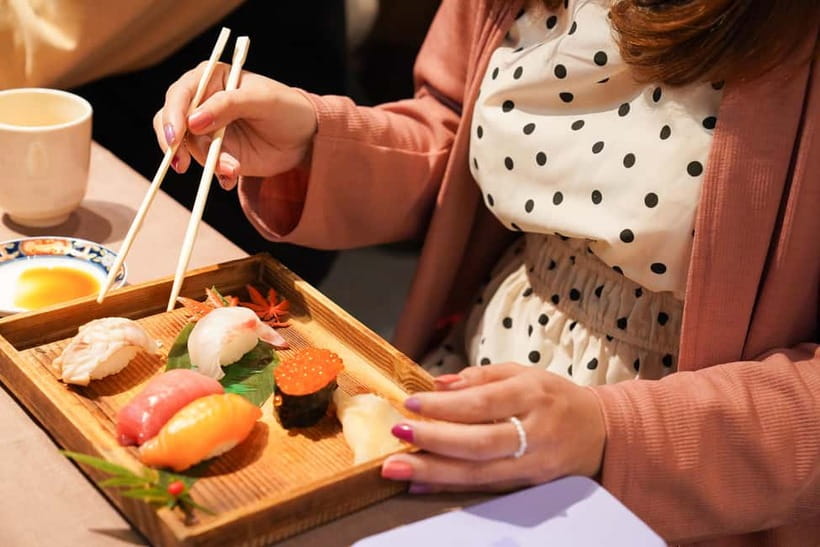
- Hands-on build: 5 nigiri, 2 gunkan-maki, and 1 roll made by you
- Omicho Market energy: learn while the market hums around you
- Chef explanations: sushi history and culture, plus real knife and rolling guidance
- Taste your work: you eat the pieces you assemble
- Photo-friendly: capture both your process and finished plate
- Private group setting: class feels more personal even in a busy market
Omicho Market is the perfect classroom for sushi
Omicho Market is one of those places where you feel the city working. You see fish, watch vendors move fast, and you spot both locals and tourists weaving through the aisles. That constant motion matters, because sushi is not museum food. It is about timing, temperature, and getting the balance right before anything goes flat.
What I like most is that the class happens in the middle of that scene, not tucked away somewhere quiet. When a chef shows you how to handle fresh seafood from Kanazawa, it feels immediate. You are not learning sushi as a theory. You’re learning it as a craft tied to the market right outside the door.
And yes, you will still need to focus. But that is the charm. One part of your brain is learning, and the other part is keeping up with the market buzz. It turns the lesson into a real “you are here” memory.
More Sushi workshops in Kanazawa:
- Kanazawa: Authentic Japanese Cooking and Sushi-Making Lesson
★ 5.0 · 93 reviews - Kanazawa: Sushi & Japanese Cooking Class at a Historic School
★ 5.0 · 66 reviews - Sushi Making Tokyo Roll and Authentic Japanese Sushi Class
★ 5.0 · 3,971 reviews
Finding Sushi Enome at the M’ZA entrance (and not getting lost)
This is the practical part that can make or break your first 10 minutes. Start by entering Omicho Market from the Emza (M’ZA) entrance. Then turn right at the first intersection and walk a short distance. Look for the Sushi Enome sign on your left.
If you show up late, you’ll waste energy doing what Japanese markets do best, confusing you. Plan a little buffer. Arrive about 10 minutes early so you can settle in and avoid rushing. Comfortable clothes help too, because you will be moving around in a compact space.
Also, this is a class tied to a specific restaurant location inside the market. That means you should aim to be at the right entrance, not just “somewhere in Omicho.” A quick wrong turn can cost you time you do not want to lose right before you start handling knives and rice.
What you learn in 2 hours: knife basics, rice rhythm, and rolling
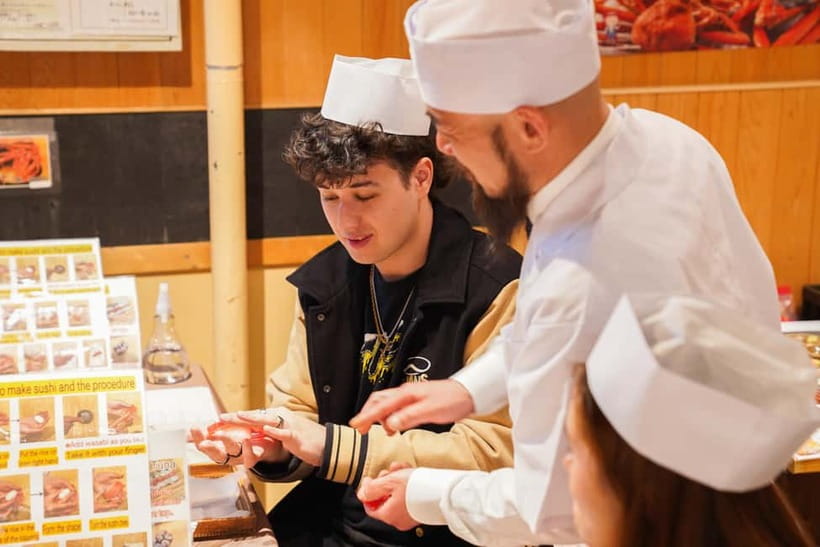
This is a chef-led experience at Enome Sushi inside Omicho Market. You meet at the restaurant, and the instruction is led by a Japanese sushi chef. Expect explanation, demonstrations, and then your turn at the sushi-making stations.
The lesson includes sushi history and culture, so you get more than technique. That matters because sushi is not just a recipe. It is a tradition built around how ingredients work together. A good chef will explain what the craft is trying to achieve, then you’ll feel it when you press rice and place fish.
In the practical skills side, you learn how to use a knife and how to roll sushi. Even if you have never cut anything more challenging than vegetables at home, the format gives you guided steps. You’re not left alone with a mystery box of tools. You’re following an instructor who is trying to help you make correct, edible pieces.
You will also do the work step-by-step. That is a big reason this feels worth the money. You are not just watching and taking photos. You are building the pieces yourself, which forces you to slow down and pay attention to details like shape, pressure, and alignment.
Your exact menu: nigiri, gunkan-maki, and one roll
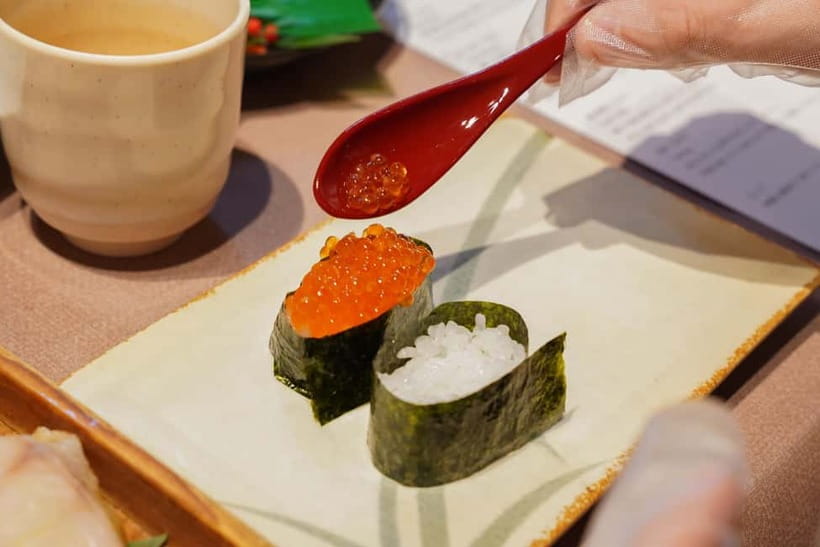
The class is designed around a clear output. You make 5 pieces of nigiri sushi, 2 pieces of gunkan-maki, and 1 roll. That structure is handy because you know what you are working toward the whole time.
A few more Kanazawa days to weigh up
- Kanazawa: 2-Hour Private Tour of Omicho Market with Tastings
★ 4.9 · 7 reviews - Tokyo Tsukiji Fish Market Food and Culture Walking Tour
★ 5.0 · 3,184 reviews - Tokyo: Tsukiji Fish Market Food and Walking tour
★ 5.0 · 1,724 reviews - Tokyo: Tsukiji Fish Market Guided Walking Tour
★ 4.9 · 1,397 reviews
Nigiri: the balance of rice and fish
Nigiri is where the “balance” idea becomes real. You get to shape rice and top it with fresh seafood from Kanazawa. The goal is not just to make something that looks like sushi. It is to assemble pieces with the right feel so the fish sits right on the rice.
This is also where you learn the rhythm of handling. Rice can be forgiving, but it can also go wrong if you press too hard or shape inconsistently. You’ll feel that immediately as you try your own pieces.
Gunkan-maki: learning structure and control
Gunkan-maki is a different challenge. The form is more structured, and it asks you to build a supportive base so the topping can sit securely. It is a good move in a class because it forces you to think beyond “make a mound and add fish.” You need a stable, controlled shape.
In practice, gunkan-maki teaches you how to work with thickness and placement. You are learning technique that you can carry over if you ever try similar sushi styles at home.
The roll: timing and shaping
Then you get one roll. Rolling is where “sushi technique” becomes more physical and more coordinated. You have to align ingredients, roll tightly enough for shape, and end up with clean slices.
Even if your first attempt is not perfect, the value is that you get feedback from a chef. With enough guidance, you leave with a mental checklist for what matters: how the roll holds, how the ingredients distribute, and how the final shape should look.
Fresh Kanazawa seafood and why the market matters
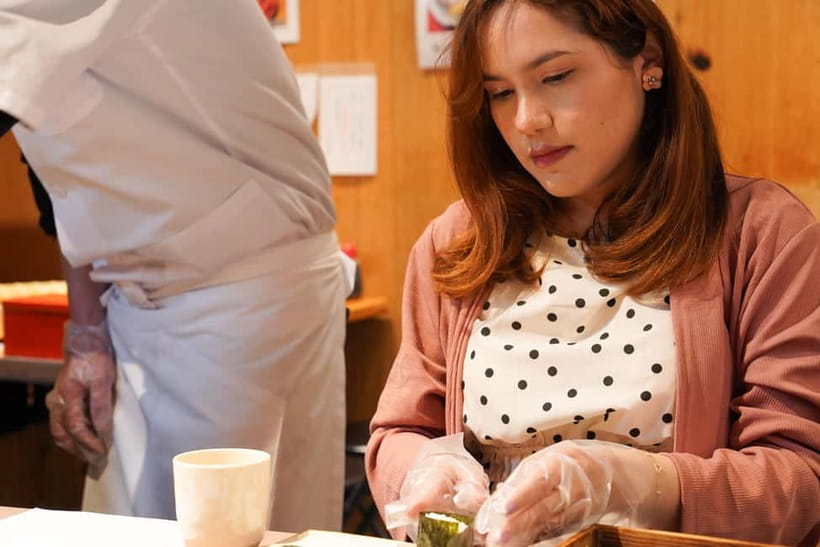
The class uses fresh seafood from Kanazawa, and that alone improves the learning. Sushi is extremely sensitive to quality, so using fresh fish helps you understand the end goal. When your ingredients taste right, your training clicks faster.
What you are really learning here is the connection between ingredient quality and your technique. If the seafood is fresh, you can taste how it pairs with the rice. If the rice is handled well, the mouthfeel works. When one part is off, you notice it in the flavor.
The market setting adds another layer. Omicho Market has a history of over 300 years and it is still an active, lively place. That means the environment reflects the practical side of food culture: people buy, sell, and snack in a rhythm that has kept going for generations. You feel that continuity while you work. It turns a cooking class into a local food experience.
The chef’s teaching style: patient, practical, and geared to real beginners
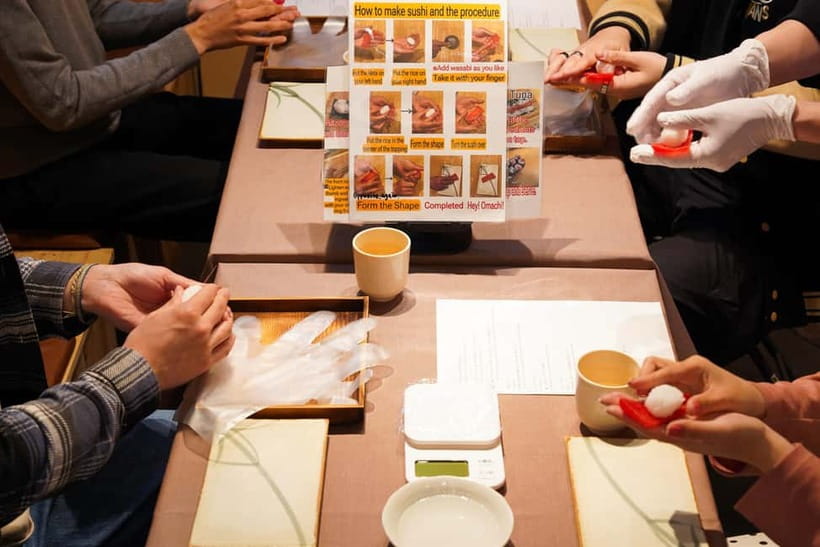
This type of class lives or dies on the instructor. The good news is the teaching tone tends to be patient and clear. You get time to learn knife handling and the steps for building sushi, and you are guided through mistakes instead of pushed through them.
Another real plus is that chefs often mix instruction with personality. In past sessions, instructors have been described as helpful and funny, and that matters more than you think. When you feel comfortable, you try harder. You pay attention longer. You also stop worrying about messing up.
One more detail that can help: the experience is taught in Japanese. If your Japanese is limited, don’t panic. The structure relies on demonstration, and some sessions may include extra support from restaurant staff to help with communication. Either way, bring a learning mindset and use body language. Sushi is hands-on, so you will understand more than you think you will.
Tasting your sushi and making photos look good
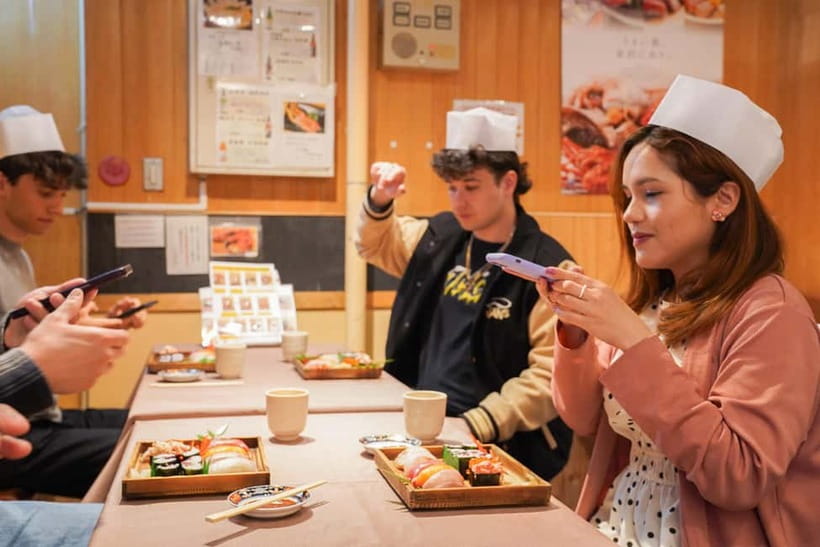
After you finish your pieces, you taste what you made. This is not just a polite sampling. You eat the sushi you shaped, topped, rolled, and plated. That makes the lesson stick.
It also helps you calibrate what you learned. If the rice felt right to you, you notice it in texture. If your nigiri looked a little uneven, you feel whether it still tasted balanced. If the gunkan-maki held together well, you understand the purpose of the structure.
And don’t skip photos. You are allowed to take pictures of your sushi-making and the finished product. If you want your photos to look better, snap a few during the plating moment. You’ll capture the colors of seafood, the rice texture, and your final assembly in a way that looks different from just photographing food after it’s eaten.
Tip: do not try to photograph while your hands are actively working with tools. Wait for a safe moment. It keeps the class moving and your sushi intact.
Price and value: is $70 worth it?
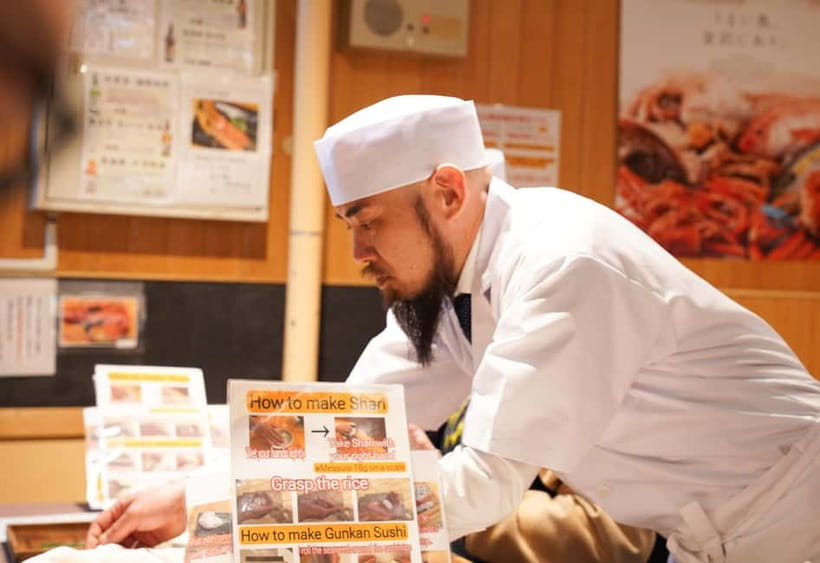
For many people, $70 for two hours sounds like “that’s a lot.” But compare it to what you actually receive. You get professional sushi chef instruction, all necessary ingredients, and the sushi you make, plus a tasting of your own work.
You are paying for technique plus ingredients plus expertise. You also get the market experience layered in. That is hard to replicate if you just walk around Omicho and buy sushi off a counter. Buying sushi gives you flavor. This gives you skills and memory.
It is also privately run as a private group format. That often means you are not stuck in a large crowd watching from the sidelines. You get a more direct learning environment, even while the market stays loud and busy outside.
The main value trade-off is language. Since instruction is in Japanese, you might need to rely on visual cues and patience. If that worries you, consider coming with a few basic sushi words you already know, like nigiri and maki, so you can follow the steps faster.
Who this class is best for
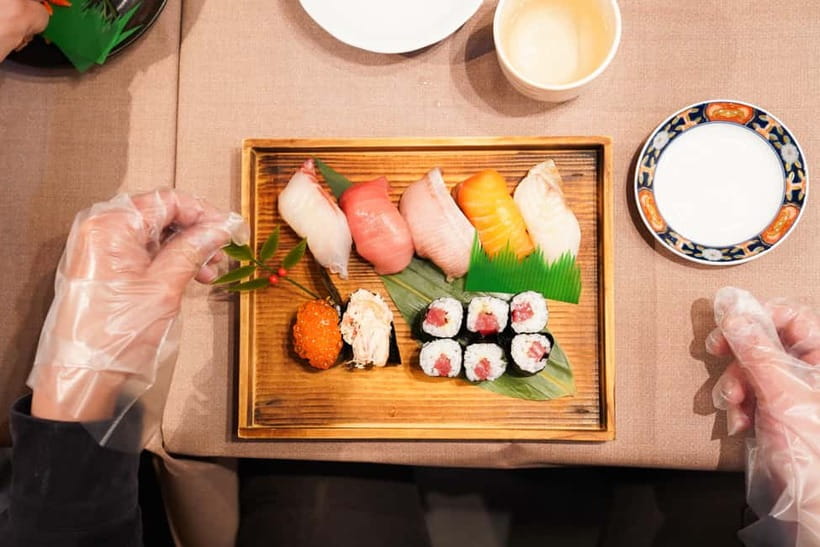
I think this works best for a few kinds of travelers:
- Food lovers who want a skill, not just a bite of something tasty
- Beginners who feel intimidated by sushi and want guided knife and rolling practice
- People who enjoy hands-on experiences more than lectures
- Anyone visiting Kanazawa who wants an authentic local setting, meaning you learn while standing in a real market
If you are hoping for a long class or a deep, hours-long workshop, this is shorter by design at 2 hours. But that can be an advantage. You leave with finished sushi in hand and a clear sense of what to repeat next time.
It is also wheelchair accessible, so it can work for travelers who need that consideration. If you travel with mobility needs, you’ll still want to wear comfortable clothing suited for cooking and moving around.
Small rules to keep the experience smooth
This class has straightforward behavior guidelines. Smoking is not allowed, and alcohol and drugs are not allowed. Drinks are not included, so plan accordingly if you need water or other non-alcoholic options.
You should wear comfortable clothes suitable for cooking. Since you’ll be standing and working with your hands, choose something you can move in. Also arrive about 10 minutes early so you can get oriented and avoid rushing at the start.
That early arrival is worth it. Omicho Market can be tricky to navigate. Give yourself a little buffer and you will start calmer, which helps you learn faster.
Should you book this Kanazawa sushi making experience?
Yes, if you want a hands-on food lesson with real output. Making 5 nigiri, 2 gunkan-maki, and 1 roll is a clear reward, and you also taste what you built. The chef-led instruction in a lively Omicho Market setting makes it feel like a Kanazawa experience, not a generic cooking class.
Book it with confidence if you enjoy learning skills you can repeat at home, even at a basic level. The knife guidance and rolling practice give you something tangible to take home.
Skip it only if you dislike busy food environments or you are uncomfortable working with your hands in a short 2-hour session. Also, because instruction is in Japanese, if you need very detailed explanations in your native language, you might find the communication aspect more challenging.
If you’re flexible and excited to try, this is one of those experiences where you walk away with both sushi knowledge and a plate of memories.
FAQ
How long is the Kanazawa sushi making experience?
It lasts 2 hours.
What will I make during the class?
You will make 5 pieces of nigiri sushi, 2 pieces of gunkan-maki, and 1 sushi roll.
What is included in the price?
The experience includes professional sushi chef instruction, all necessary ingredients, and tasting of your own made sushi.
Are hotel pickup and drop-off included?
No, hotel pickup and drop-off are not included.
Where do I meet for the class inside Omicho Market?
Enter Omicho Market from the Emza (M’ZA) entrance, turn right at the first intersection, then walk a short distance to find the Sushi Enome sign on your left.
What should I wear or bring?
Wear comfortable clothes suitable for cooking.
Is the class taught in Japanese only?
Yes, the instructor is Japanese, and the languages listed for the experience include Japanese.
Can I cancel for a refund?
You can cancel up to 24 hours in advance for a full refund.
More Markets in Kanazawa
- Nishiki Market Brunch Walking Tour (7 Tastings + Brunch)
★ 5.0 · 1,355 reviews - Tsukiji Fish Market Guided Tour and Sushi Making with Pro Chef
★ 5.0 · 775 reviews - Tokyo: Tsukiji Fish Market Food and Culture Walking Tour
★ 4.7 · 757 reviews - Tsukiji Fish Market: Street Food & Culture Walking Tour
★ 5.0 · 669 reviews
Newly listed around Kanazawa
- From Kanazawa/Toyama: Shirakawago and Takayama Day Tour★ 4.7 · 82 reviews
- Kanazawa:Traditional Experience -kimono rent at wargo★ 4.7 · 30 reviews
- Kanazawa: Authentic Japanese Cooking and Sushi-Making Lesson★ 5.0 · 93 reviews
- Kanazawa: Private Tour with Local Guide★ 4.9 · 70 reviews
- Kanazawa: Tea Ceremony Experience at Kenrokuen★ 4.2 · 7 reviews
- Kanazawa: Private Custom Tour with Local Guide★ 4.9 · 20 reviews
- Kanazawa: Private Food Tasting Walking Tour★ 4.7 · 25 reviews
- Kanazawa “Near Ninja Temple” : Japanese Calligraphy Class★ 5.0 · 13 reviews
Sushi Cooking Workshops, compared.
Sushi Making Tokyo Roll and Authentic Japanese Sushi Class
Read our review →
Roll and Authentic Sushi Making Class in Asakusa
Read our review →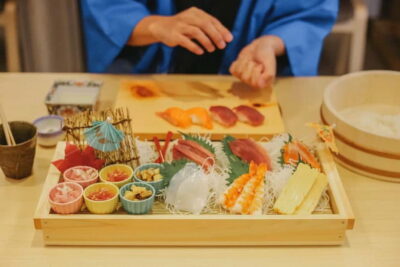
Sushi Making Class in a Happi Coat near a Famous Spot
Read our review →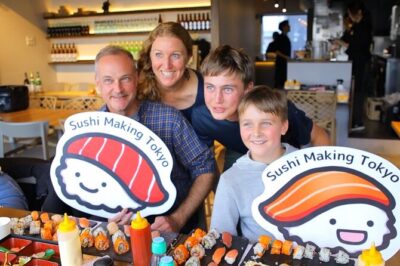
Sushi Making Tokyo! Popular Maki Sushi & Japanese Sushi(+Recipe!)
Read our review →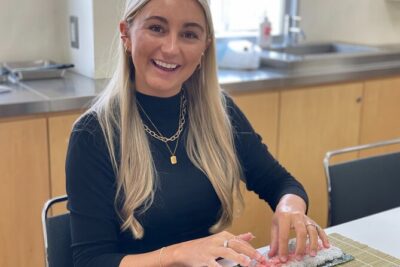
Tokyo Sushi Making Class in Tsukiji with Professional Chef
Read our review →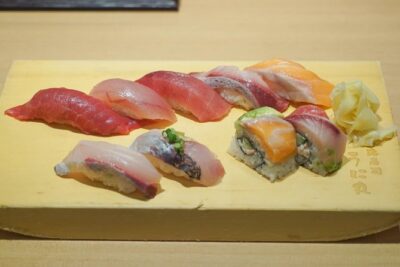
Tokyo Night Foodie Tour in Shinjuku – Seasonal Sushi, Wagyu Beef
Read our review →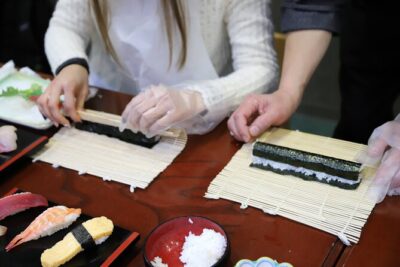
Tsukiji Fish Market Guided Tour and Sushi Making with Pro Chef
Read our review →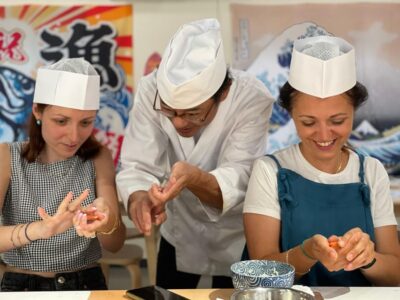
Tsukiji Fish Market Sushi Making Class with Pro Chef
Read our review →Browse the lists this tour appears in