
Review · SUSHI COOKING WORKSHOPS
Kanazawa: Sushi & Japanese Cooking Class at a Historic School
Kanazawa sushi is more than raw fish, and this class proves it. You’ll cook five dishes hands-on at a long-running culinary school just a few minutes from Kanazawa Station, with real-time AI translation keeping instructions clear in English. I especially love the practical take-home skills, like shaping nigiri and making dashi, not just watching someone else cook. One heads-up: it cannot accommodate vegan diets or people avoiding fish-based dashi, and changes can’t be made at the last minute.
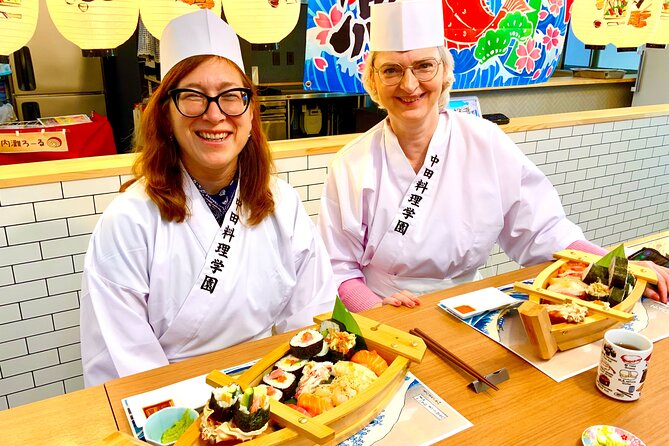
The setting is the hook, too. You change into a sushi chef uniform, use premium Japanese knives during the class, and then you sit down to eat everything you made, with a small aperitif of plum wine or local sake. Expect an intimate format, with a class size capped at 8 people, and plenty of time to ask questions through the translation screen.
In This Review
- Key highlights you should care about
- Stepping into a real culinary school, not a stage show
- Arriving at Nakata Cooking School and the Knife Shop setup
- Translation that keeps the class fun and understandable
- The 2.5-hour flow: how the cooking actually unfolds
- Nigiri sushi with Omicho Market fish: shaping technique matters
- Dashi and the science of flavor: broth you can actually remake
- Dashi-maki tamago: the rolled omelet you thought would be easy
- Jibuni: Kanazawa’s chicken stew and the local roots
- The seasonal side and miso soup finish the plate
- Knife skills and the practical lesson you can use anywhere
- Eating your work: aperitif, full tasting, and photos with your name
- Who this class suits best, and what to watch for
- Price and value: why $99.10 can make sense
- Should you book this Kanazawa sushi and Japanese cooking class?
- FAQ
- How long is the cooking class?
- Where does the class start?
- What’s the maximum group size?
- Is this a demonstration or hands-on cooking?
- What dishes will I cook?
- Is real-time English translation provided?
- Are vegan diets or fish-dashi free diets available?
- What’s included for food and drinks?
- Do I get recipes or photos?
- Can I visit the Knife Museum?
Key highlights you should care about
- 5-dish, hands-on menu: nigiri sushi, Jibuni, dashi-maki tamago, dashi broth, plus a seasonal side and miso soup
- Near Kanazawa Station: about 3 minutes to the cooking school, so this fits tight schedules
- AI translation on a large screen: voice and text to keep the class moving in English
- Premium knife use during class: plus an optional Knife Museum visit (with a 10% discount for participants)
- Photos and a name certificate: photo service during the experience and a Japanese Certificate of Completion
Stepping into a real culinary school, not a stage show
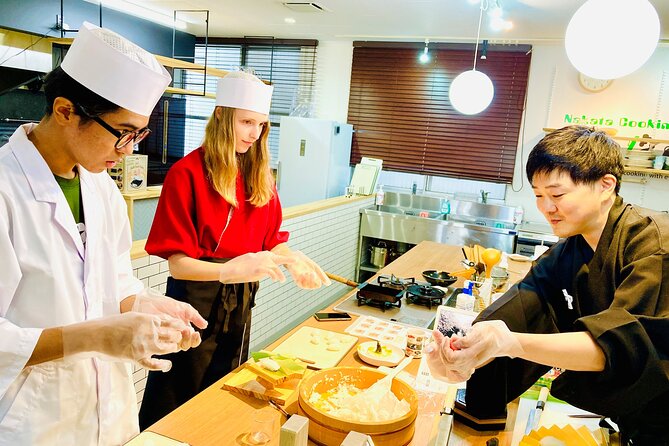
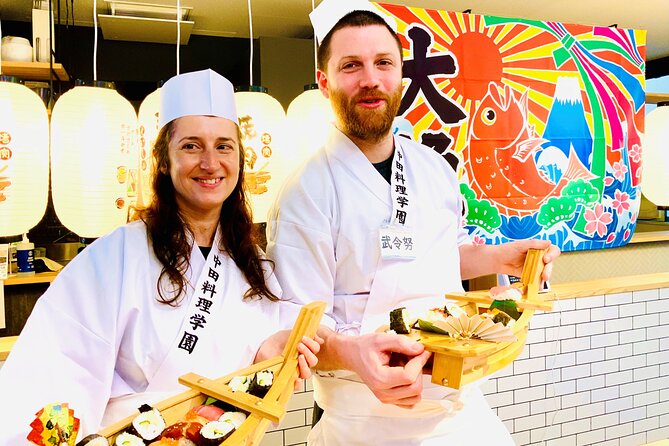
This isn’t the kind of class where you hover and hope the final dish looks like the example. The whole point is that you cook. You’ll work at a long-established culinary school in Kanazawa, where you’ll switch into a chef-style uniform before you start. That small ritual matters, because it signals you’re doing the real thing, not a quick demo for tourists.
The location is another practical win. The meeting point is just a short walk from Kanazawa Station, about 3 minutes away. That means you can actually build it into your day without stressing over transit time. If your itinerary is already packed with Higashi Chaya District strolls or Omicho Market stops, this is a manageable commitment.
Finally, the group size is capped at 8 people. That is big enough to feel lively, but small enough that the instructor can correct technique as you go. In a sushi class, those tiny corrections matter, from how you shape rice to how you handle timing for the tamago.
More History Tours in Kanazawa
- World Heritage Shirakawa-go and Experience Tours from Kanazawa
★ 5.0 · 4,049 reviews - [One-day bus tour departing from Kanazawa Station] Shirakawa-go and Gokayama – Two World Heritage Villages Enjoyable Bus Tour
★ 5.0 · 253 reviews - World Heritage Shirakawa-go Perfect Guided Tour from Kanazawa
★ 5.0 · 220 reviews
Arriving at Nakata Cooking School and the Knife Shop setup
Your experience starts at Nakata Cooking School and Knife Shop. You’ll find the address in Konohanamachi, with check-in required by appointment, in a 2nd-floor location. Since it is near the station, you can usually plan to arrive a little early, then settle in without rushing.
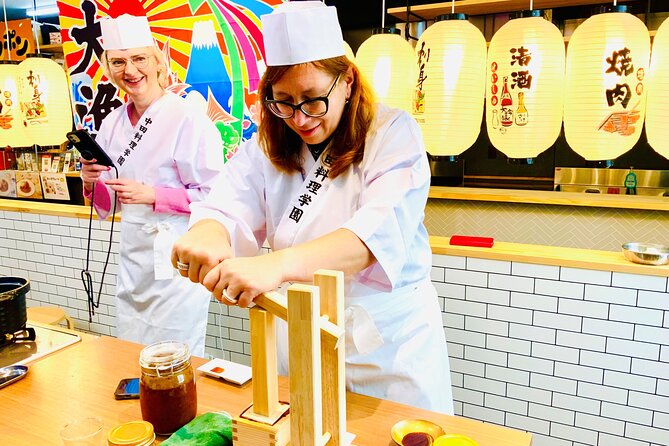
Once you’re inside, you’ll rent a chef-style apron for the class. You’ll also use premium Japanese kitchen knives while you cook. Even if you never plan to buy a knife back home, this is one of the best parts of the experience because it helps you understand what good steel and proper technique feel like in your hands.
There is also an optional in-house Knife Museum visit. The museum opening is listed for July 2025, and participants get a 10% discount. If your travel timing lines up after that opening, it’s a nice add-on because knife culture is a real part of Japanese cooking, not just cookware obsession.
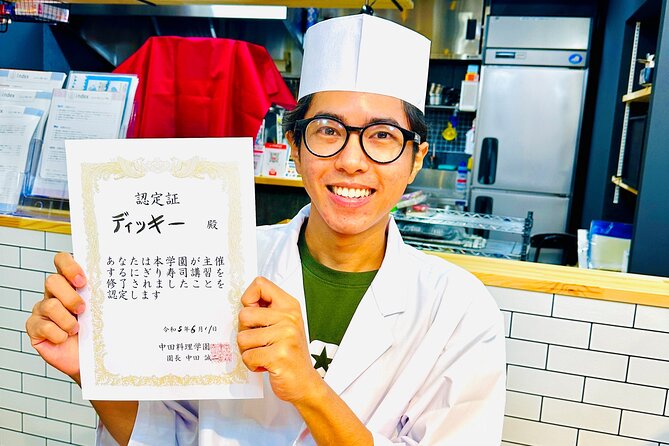
You can expect photo service during the experience, and the school issues a Japanese Certificate of Completion with your name. You won’t leave empty-handed, even if you mess up a roll or two. (Learning includes mistakes, as long as someone is there to guide you back.)
Translation that keeps the class fun and understandable
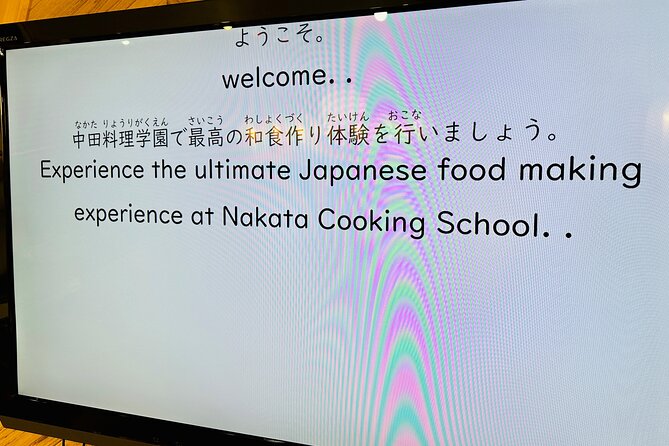
Language barriers can wreck the best intentions of a cooking class. This one solves that with real-time AI translation displayed on a large screen, using both voice and text. In plain terms: you’re not stuck guessing what you’re supposed to do next.
In a class like this, you need two kinds of communication. First is the how-to, like how to shape nigiri rice and keep it tender. Second is the quick context, like why dashi is built a certain way or where Jibuni comes from in Kanazawa’s food culture. The translation helps you catch both, without slowing the class down.
You’ll also be able to follow along with humor and instructor personality, because the translation is running throughout the session, not just for formal instructions. That keeps it from feeling like a strict exam. And it makes it easier to ask questions when something feels off in the moment.
The 2.5-hour flow: how the cooking actually unfolds
You have about 2 hours 30 minutes for the full experience. The pacing is built around making five dishes during that time, so the class doesn’t wander. Instead, it moves in a logical order: sushi first, then the broth and omelet skills, then the Kanazawa specialty and finishing touches.
Before you start cooking, you’ll get oriented to the kitchen workflow and how the instructor wants you to move through each recipe. Then you jump into knife work and core prep. For sushi, that includes rice handling and shaping technique. For dashi and tamago, it includes managing heat and timing so the textures land correctly.
If you’ve watched Japanese cooking on videos, you know how often the results depend on small details. This class tries to teach those details in a way you can reproduce later. That is why it’s not just about tasting good food in the moment. It’s about giving you a method.
More Cooking workshops in Kanazawa:
- Ramen Cooking Class at Ramen Factory in Kyoto
★ 5.0 · 1,937 reviews - Ramen & Gyoza Cooking Class in Tokyo with Local Supermarket Visit
★ 5.0 · 823 reviews - Kyoto: Ramen Cooking Class at a Ramen Factory with Souvenir
★ 4.9 · 532 reviews - Kyoto: Ramen, Gyoza, and Onigiri Cooking Class
★ 5.0 · 445 reviews
Nigiri sushi with Omicho Market fish: shaping technique matters
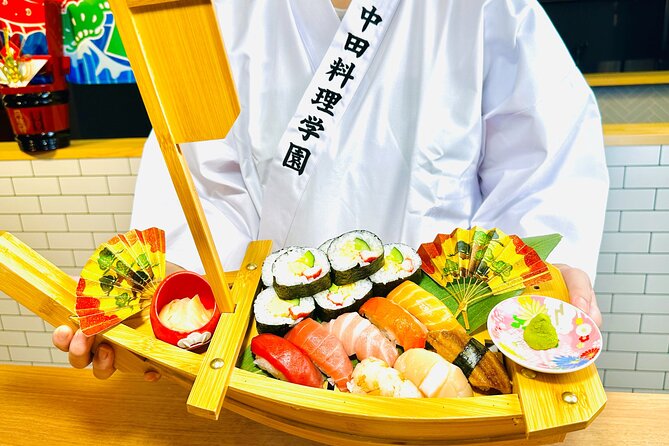
The first big dish is Nigiri Sushi. You’ll use wild fish from Omicho Market, which is a serious ingredient choice for a cooking class. Fresh seafood is one thing, but technique is what makes nigiri feel right.
When you cook nigiri yourself, you learn the logic behind shaping rather than memorizing a look. The rice has to feel right in your fingers, and it needs a balanced amount of fish so it sits correctly on the rice without falling apart. The instructor guidance is designed to help you build that balance.
A related technique that may come up during sushi prep is how closely you watch measurement. One class example included the idea that sushi roll rice weight can be precise (like 15 grams per portion). That kind of detail is exactly what separates casual sushi from sushi that holds its shape.
Once you’ve made your nigiri, you don’t just sample one piece and move on. Your class includes full tasting of everything you prepare, so you can compare what you made with what you were aiming for. That feedback loop is useful, especially if you’re already interested in cooking Japanese food at home.
Dashi and the science of flavor: broth you can actually remake
Next is the backbone of a lot of Japanese cooking: dashi. You’ll learn how to make dashi broth using bonito and kelp. If you’ve ever had miso soup or noodle broth that tastes deep but not heavy, that’s dashi doing its job.
Making it in class matters because you learn what to watch for: not just the ingredient list, but how to handle timing and heat so the broth flavor stays clean. This is one of the most practical skills to take home. Dashi is reusable in multiple dishes, so once you can make it, you can build a home Japanese pantry around it.
The class also includes Dashi Broth as a dish you prepare, so you’ll taste what you made rather than only using it as an ingredient for something else. That helps you connect process to flavor, and it makes it easier to adjust next time.
One note for planning: this experience cannot accommodate people avoiding fish-based dashi. If you want a fish-free dashi, you’ll need a different class option.
Dashi-maki tamago: the rolled omelet you thought would be easy
The menu includes Dashi-Maki Tamago, a soft rolled omelet. The description calls it out with a Michelin-style recipe, which is a clue that technique is part of the challenge.
Rolled omelet seems simple until you try it. The texture has to be soft and silky, and it requires careful rolling and layering while the mixture cooks. This is exactly the kind of dish where instructor guidance and translation support make a difference.
You learn more than just a recipe. You learn the workflow, like how to keep layers cohesive and how to manage heat so the omelet stays tender rather than turning rubbery. Even if you don’t master it perfectly the first time, you’ll understand what went wrong and why.
Jibuni: Kanazawa’s chicken stew and the local roots
Then you get to a Kanazawa specialty: Jibuni. The class description notes it has samurai-era roots, which is a nice example of how local food tells local history without turning the class into a lecture.
Jibuni is a chicken stew that reflects what people in Kanazawa needed and valued, warming comfort food that also fits with the city’s culinary identity. In class, you’ll cook it with hands-on guidance, then taste it as part of the meal.
The practical value here is that Jibuni gives you a non-sushi Japanese dish you can confidently try at home. Sushi can be intimidating, but stew skills transfer well to home cooking, and they don’t require special fish handling.
The seasonal side and miso soup finish the plate
You’ll also prepare a seasonal side dish and miso soup. This is where the class rounds out into a proper Japanese meal rather than a set of isolated skills.
Seasonal components are important for two reasons. First, it teaches you that Japanese cooking changes with what’s available. Second, it reminds you that miso soup is not just one more bowl. It’s part of the balance of saltiness, warmth, and comfort.
This last segment also helps you taste the full range of flavors you practiced, from dashi-based elements to the cooked savory stew flavors.
Knife skills and the practical lesson you can use anywhere
Because premium Japanese knives are used during the class, the instruction naturally includes knife handling and technique. Even if you are not aiming to buy a knife, you can still learn what makes Japanese knives different, like how they slice and how they change the feel of your cuts.
Some classes in this setup include small technique demonstrations. For example, one class example mentioned cutting a star pattern on the top of mushrooms for appearance, and using precise rice measurements for sushi portions. Whether every detail is repeated exactly the same way, the underlying lesson is consistent: Japanese cooking cares about look and texture, and knife work is part of that.
If you already own knives, you’ll likely notice how different this feels. If you don’t, you’ll understand why people get opinionated about knife brands.
And if you want to go beyond the class, there is the Knife Museum option when it opens in July 2025. With the listed 10% discount for participants, it’s a logical follow-up if you’re the type who likes to understand the tools behind the food.
Eating your work: aperitif, full tasting, and photos with your name
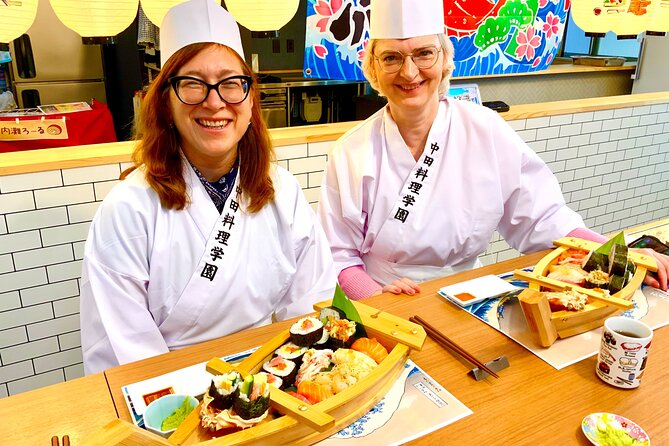
This experience includes full tasting of all dishes you prepare, plus a small aperitif before or with the meal. The aperitif options are Kanazawa plum wine or local sake. It’s not a big party pour, but it adds that sense of occasion that cooking classes often lack.
Photo service is also included. You’ll have photos taken during the experience, and you receive them after the class. You’ll also get a Japanese Certificate of Completion with your name, which is a fun souvenir and a good reminder of what you actually learned, not just what you ate.
Finally, you’ll get the English recipe by email the day before the class. That is a smart design choice. It gives you time to look at ingredient lists and skim technique notes, so you spend the class cooking rather than panicking with questions.
Who this class suits best, and what to watch for
This is best for people who want hands-on instruction and a set of skills they can repeat at home. If you love sushi, you’ll appreciate shaping nigiri, not just eating it. If you want broader Japanese cooking, the menu is balanced with dashi making, rolled tamago technique, and Kanazawa’s Jibuni.
It is also a good fit for small group travel, especially if you want something that works for different tastes at the table. The class format is structured enough to keep everyone involved.
The biggest limitation is dietary. Vegan diets are not accommodated, and people avoiding fish-based dashi cannot be accommodated either. If you have allergies or other dietary restrictions, the guidance is to inform the staff when you book, because same-day changes are not possible. Plan ahead and you’ll be able to enjoy the class without stress.
Price and value: why $99.10 can make sense
At $99.10 per person for about 2 hours 30 minutes, the headline number looks simple. The real question is what you’re paying for.
Here’s what you get included:
- Hands-on cooking for five dishes
- Use of premium Japanese kitchen knives
- Chef-style apron rental
- Full tasting of everything you make
- One aperitif (Kanazawa plum wine or local sake)
- Real-time AI translation (voice and text) on a large screen
- Photo service during the experience, plus a Japanese Certificate of Completion with your name
- English recipes sent by email the day before
On top of that, optional extras are available, like the participants-only knife purchase option and the Knife Museum visit (opening July 2025, with a 10% discount for participants).
What’s not included is transportation and additional drinks, which can matter if you are planning your budget. But for the core experience, the class includes a lot that many cooking classes treat as add-ons: translation tech, photos, and the full meal you make.
If your goal is to come home with techniques you can use, this price often feels fair because the class is packed with teachable moments, not just a single dish.
Should you book this Kanazawa sushi and Japanese cooking class?
Book it if you want hands-on Japanese cooking in Kanazawa with strong structure: sushi shaping, dashi broth, rolled tamago, plus Jibuni and miso soup. The location near Kanazawa Station also makes it easy to fit into a real itinerary without eating your whole day in transit.
Skip or look for an alternative if you need vegan options or you avoid fish-based dashi. This class is explicit about those limits, and same-day adjustments are not supported.
If you like learning by doing, and you want a memorable, practical food experience you can recreate later, this one is a solid choice.
FAQ
How long is the cooking class?
It runs for about 2 hours 30 minutes.
Where does the class start?
It starts at Nakata Cooking School and Knife Shop, by appointment only, at Konohanamachi, Kanazawa, Ishikawa 920-0852, Japan (2nd floor, indicated on the listing).
What’s the maximum group size?
The class has a maximum of 8 people.
Is this a demonstration or hands-on cooking?
It is hands-on. You cook every dish yourself with step-by-step guidance.
What dishes will I cook?
You’ll cook five dishes: Nigiri Sushi, Jibuni, Dashi-Maki Tamago, Dashi Broth, and a Seasonal Side Dish plus Miso Soup.
Is real-time English translation provided?
Yes. There is real-time AI translation (voice and text) on a large screen.
Are vegan diets or fish-dashi free diets available?
No. Vegan diets and guests avoiding fish-based dashi cannot be accommodated. Let them know about other dietary restrictions at booking, since same-day changes are not possible.
What’s included for food and drinks?
You’ll taste all dishes you prepare, plus receive one aperitif (Kanazawa plum wine or local sake). Additional drinks can be purchased separately.
Do I get recipes or photos?
Yes. You’ll receive an English recipe by email the day before the class. Photos are taken during the experience, and you also receive a Japanese Certificate of Completion with your name.
Can I visit the Knife Museum?
There is an in-house Knife Museum option, and it is listed to open in July 2025. Participants get a 10% discount for the visit.
More Historical Tours in Kanazawa
- Kanazawa Historic Brewery: Fermentation Tour, Tasting, Lunch
★ 4.9 · 15 reviews - World Heritage Kyoto & Nara Uji Authentic Matcha Experience
★ 5.0 · 1,573 reviews - Kanazawa: World Heritage Shirakawa-go Morning Guided Tour
★ 4.9 · 988 reviews - Tokyo: Imperial Palace Japanese History Walking Tour
★ 4.9 · 987 reviews
More Sushi Workshops in Kanazawa
- Kanazawa: Authentic Japanese Cooking and Sushi-Making Lesson
★ 5.0 · 93 reviews - Kanazawa: Sushi Making Experience at Oumicho Market
★ 5.0 · 7 reviews - Sushi Making Tokyo Roll and Authentic Japanese Sushi Class
★ 5.0 · 3,971 reviews - Tokyo: Roll and Authentic Sushi Making Class in Asakusa
★ 4.9 · 1,957 reviews
Newly listed around Kanazawa
- Shirakawa-go, Gokayama & Takayama Private Tour From Kanazawa★ 4.7 · 21 reviews
- From Kanazawa/Toyama: Shirakawago and Takayama Day Tour★ 4.7 · 82 reviews
- Kanazawa:Traditional Experience -kimono rent at wargo★ 4.7 · 30 reviews
- Kanazawa: Sushi Making Experience at Oumicho Market★ 5.0 · 7 reviews
- Kanazawa: Authentic Japanese Cooking and Sushi-Making Lesson★ 5.0 · 93 reviews
- Kanazawa: Private Tour with Local Guide★ 4.9 · 70 reviews
- Kanazawa: Tea Ceremony Experience at Kenrokuen★ 4.2 · 7 reviews
- Kanazawa: Private Custom Tour with Local Guide★ 4.9 · 20 reviews
Sushi Cooking Workshops, compared.
Sushi Making Tokyo Roll and Authentic Japanese Sushi Class
Read our review →
Roll and Authentic Sushi Making Class in Asakusa
Read our review →
Sushi Making Class in a Happi Coat near a Famous Spot
Read our review →
Sushi Making Tokyo! Popular Maki Sushi & Japanese Sushi(+Recipe!)
Read our review →
Tokyo Sushi Making Class in Tsukiji with Professional Chef
Read our review →
Tokyo Night Foodie Tour in Shinjuku – Seasonal Sushi, Wagyu Beef
Read our review →
Tsukiji Fish Market Guided Tour and Sushi Making with Pro Chef
Read our review →
Tsukiji Fish Market Sushi Making Class with Pro Chef
Read our review →Browse the lists this tour appears in