
Review · SUSHI COOKING WORKSHOPS
Kanazawa: Authentic Japanese Cooking and Sushi-Making Lesson
AI translation makes sushi lessons painless. I liked the hands-on cooking, where Seiji Nakata actually has you do the work, and I also liked the Kanazawa-only flavors that show up in dishes you will not easily find elsewhere in Japan.
One thing to think through first: if you avoid fish-based ingredients completely, this class may not work because the Japanese dashi is made with bonito fish flakes.
In This Review
- Key moments that make this class worth your time
- Arriving at Seiji Nakata’s school by Kanazawa Station
- The welcome setup: AI translation, tea, and a cooking rhythm
- The first technique lesson: using Japanese knives with confidence
- Making oshizushi (pressed sushi) the Kanazawa way
- Jibuni: a Kanazawa-only comfort stew you can actually recreate
- Tamagoyaki and the dashi omelet style: rolling with that soft umami
- The rest of the meal: side dishes, miso soup, and dessert
- Costumes, photos, and that “this is fun” teaching style
- Recipes emailed the day before, so your cooking actually sticks
- Price and value: is $94 per person a fair deal?
- Who should book this cooking lesson?
- A realistic game plan for your day
- Should you book this Kanazawa cooking and sushi lesson?
- FAQ
- How long does the lesson take?
- Where do I meet the cooking school?
- Is there an elevator to the 2nd floor?
- Is there translation support for non-Japanese speakers?
- What dishes will I make?
- Can vegetarians join?
- Can the class accommodate strict vegans?
- Does the experience include costumes and photos?
- Will I receive recipes to use at home?
- Is hotel pickup included?
Key moments that make this class worth your time
- Near Kanazawa Station: you can walk over in just a few minutes, then focus on cooking instead of logistics
- Real technique, not a demo: you press and shape oshizushi, roll tamagoyaki, and cook alongside the chef
- AI translation on big monitors: voice and text in multiple languages, plus smart translators for rental
- Dress-up sushi chef time: custom outfits and plenty of photos during the experience
- Knife culture, plus a sales chance: you can handle top-tier Japanese knives, with a special offer if you want to buy
- Recipes sent to you ahead: you get detailed instructions by email the day before, so you can repeat the food at home
Arriving at Seiji Nakata’s school by Kanazawa Station
This is the kind of class that starts before you even cook. The school is in a 3-story building, and you meet on the 2nd floor, just a short walk from Kanazawa Station. There is no lift, so you will be using stairs, and that matters if you have any mobility constraints.
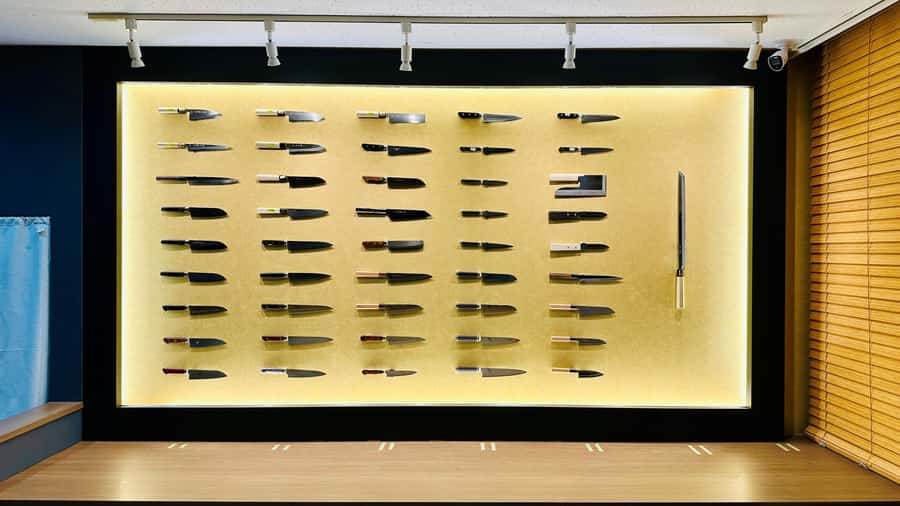
Look up when you arrive. The building has a display of Japanese knives near the 2nd-floor window, which makes the location easy to spot. On the street level you will also notice a blue noren curtain for a themed movie theater, which helps you confirm you are in the right place.
More Sushi workshops in Kanazawa:
- Kanazawa: Sushi & Japanese Cooking Class at a Historic School
★ 5.0 · 66 reviews - Kanazawa: Sushi Making Experience at Oumicho Market
★ 5.0 · 7 reviews - Sushi Making Tokyo Roll and Authentic Japanese Sushi Class
★ 5.0 · 3,971 reviews
The welcome setup: AI translation, tea, and a cooking rhythm
Inside, the vibe is friendly and practical. Seiji Nakata runs things with his wife, and the atmosphere feels like a real working kitchen space rather than a staged tourist show. From the beginning, communication is handled smoothly through an AI translation system projected on big screens.
You will see both voice and text in multiple languages, so you can follow the steps even when the chef is moving quickly. In many situations, that type of support is what turns a “maybe I will try it” class into a true learning session, especially if your Japanese is limited.
You are also offered Japanese tea, and you get oriented to what the session will cover. The class is designed for hands-on participation even if you are a beginner, and the structure keeps you from getting lost mid-recipe.
The first technique lesson: using Japanese knives with confidence
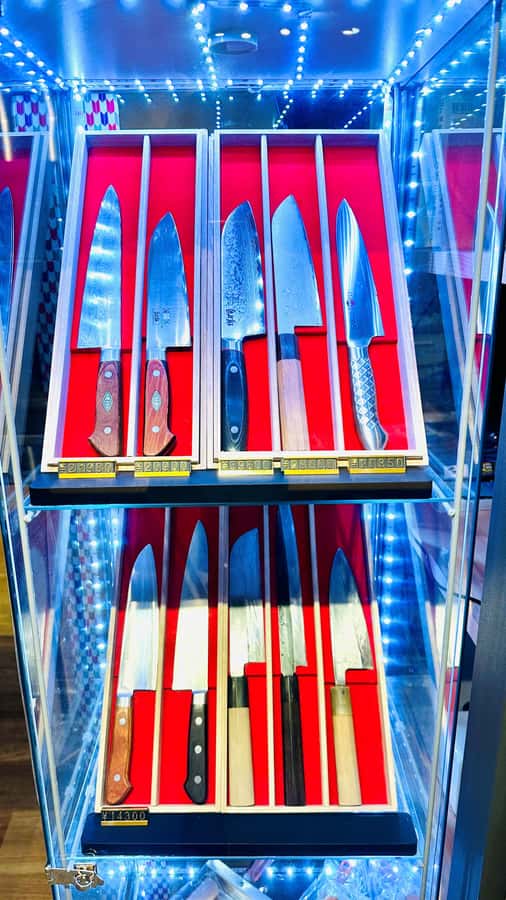
One reason I think people love this class is that the knife portion is not treated like a souvenir activity. You get to try top-tier Japanese knives, and you learn how they connect to the food you are making. If you are interested in buying a knife, there is a special offer, and you will be in a better position to judge quality after actually using one.
Even if you are not shopping, treat this moment as part of the lesson. Japanese knives feel different because of geometry and sharpness, and that changes your confidence when you are pressing, slicing, and forming ingredients.
Making oshizushi (pressed sushi) the Kanazawa way
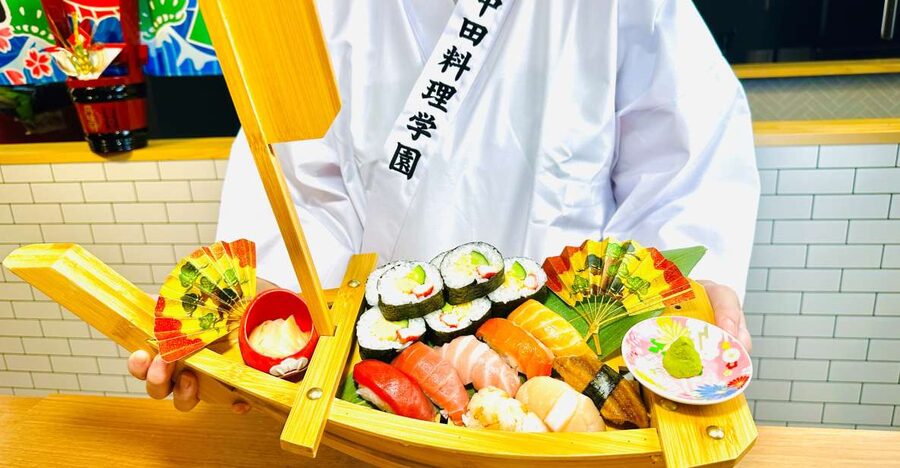
The standout “wow” dish here is oshizushi, the pressed sushi that becomes neat, clean squares when done right. You are making it with premium sashimi sourced from a top fishmonger at Omicho Market, a detail that matters because oshizushi lives or dies by ingredient quality.
Kanazawa is known for fresh seafood, and this class leans into that reputation in a realistic way. You are not just eating fish and rice; you are shaping the end result with technique, so you understand how the pressure, rice texture, and topping placement all work together.
What I like about this format is that the final product looks restaurant-level, but you are learning the steps that get you there. That is the kind of takeaway that actually helps when you cook later at home.
A few more Kanazawa days to weigh up
- Ramen Cooking Class at Ramen Factory in Kyoto
★ 5.0 · 1,937 reviews - Ramen & Gyoza Cooking Class in Tokyo with Local Supermarket Visit
★ 5.0 · 823 reviews - Kyoto: Ramen Cooking Class at a Ramen Factory with Souvenir
★ 4.9 · 532 reviews - Kyoto: Ramen, Gyoza, and Onigiri Cooking Class
★ 5.0 · 445 reviews
Jibuni: a Kanazawa-only comfort stew you can actually recreate
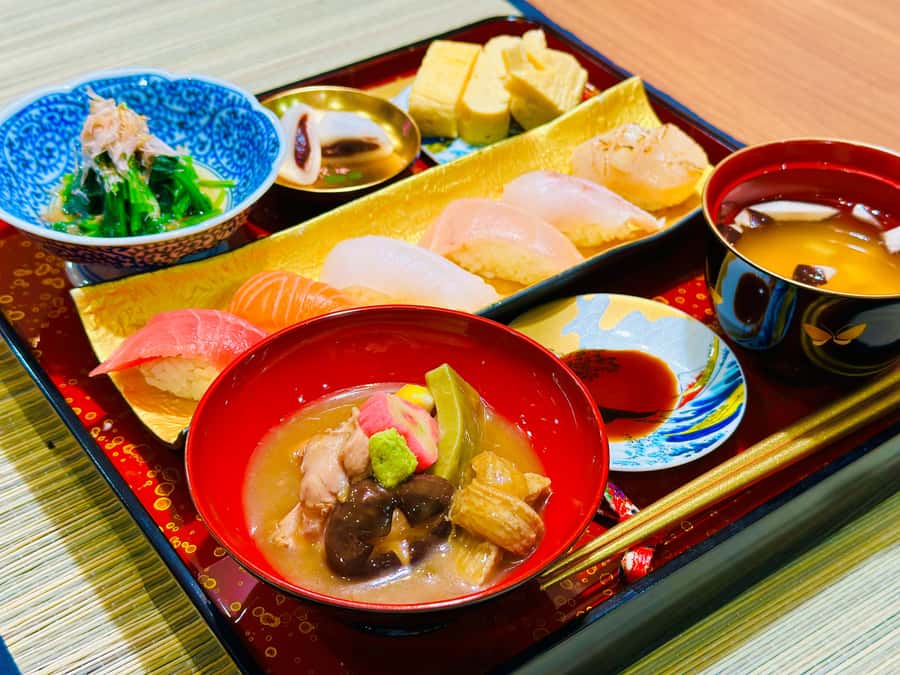
Next comes jibuni, a dish strongly tied to Kanazawa cooking culture. It is a gently simmered stew with a dashi-based savory sauce, featuring duck or chicken, seasonal vegetables, and fu (wheat gluten cake).
This is not the typical “Japanese stew” people imagine, and that makes it memorable. The class frames it as a local tradition connected to samurai-era culinary customs, and the effect in your bowl is that it tastes both hearty and precise, not heavy for the sake of being heavy.
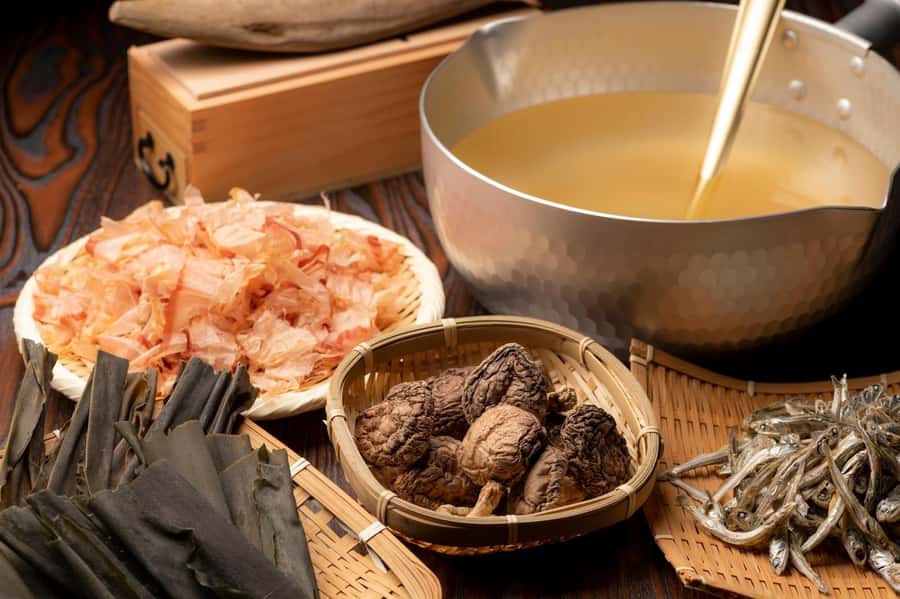
Vegetarian substitutions are available upon request for some components, and the chef will adjust in limited ways. But keep one rule clear in your head: you are still dealing with traditional dashi made with bonito fish flakes, which is not something they can replace.
Tamagoyaki and the dashi omelet style: rolling with that soft umami
Then you get to the egg lesson. You are making a fluffy dashi omelet, described as Michelin-inspired, which sits in the same world as rolled tamagoyaki. The key point is the delicate umami you build through dashi and the way the egg is rolled.
Even if you have never made rolled omelet before, the class is designed to be approachable. The chef walks you through the rhythm, and the AI translation support helps you catch small timing details that usually get lost in language barriers.
This is also where you start to see why the class is worth the time. You are practicing a technique that shows up in many Japanese home kitchens, but the version you make here is structured, guided, and tied to real dashi flavor.
The rest of the meal: side dishes, miso soup, and dessert
In addition to the main projects, you will make seasonal side dishes and miso soup, with classic pairings that round out the meal. The class includes five kinds of Japanese food and desserts, so you will not leave hungry or feel like you only experienced one dish.
The best part is that the menu is coherent. You do not get random items thrown together. It is a meal-building approach, so when you taste, you understand why the different flavors and textures belong together.
Costumes, photos, and that “this is fun” teaching style
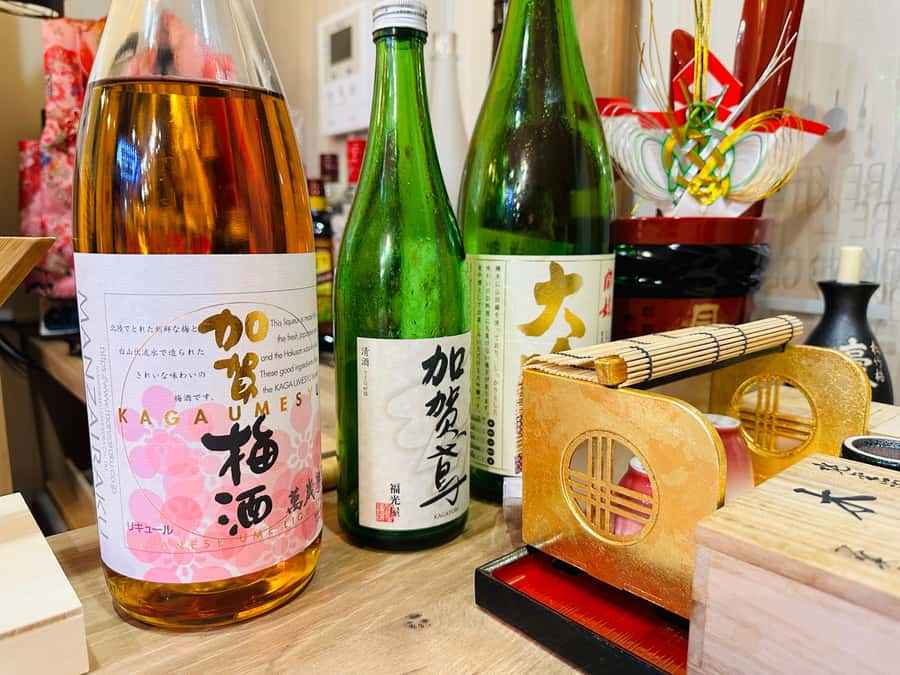
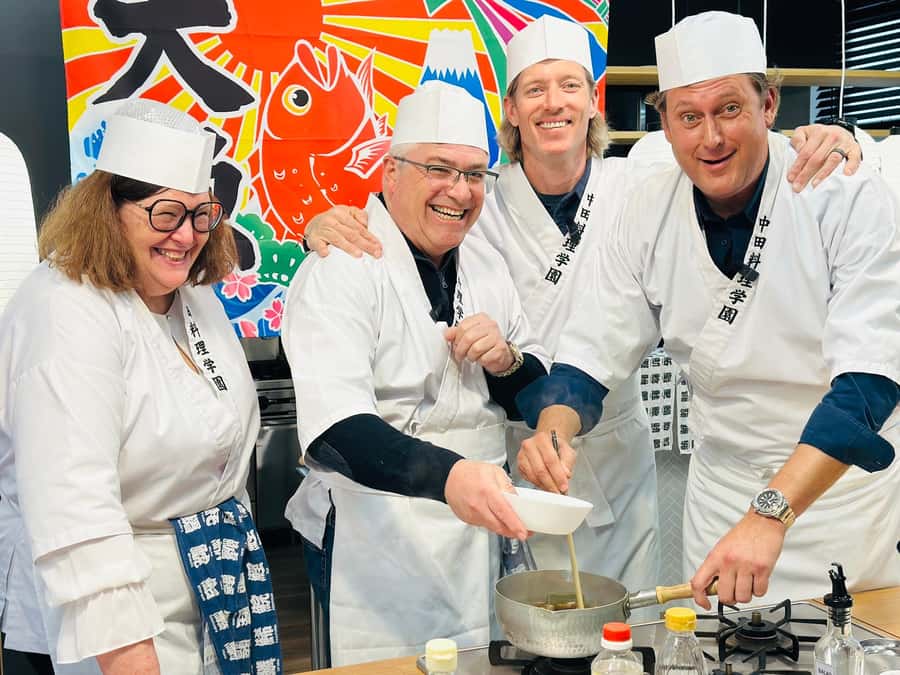
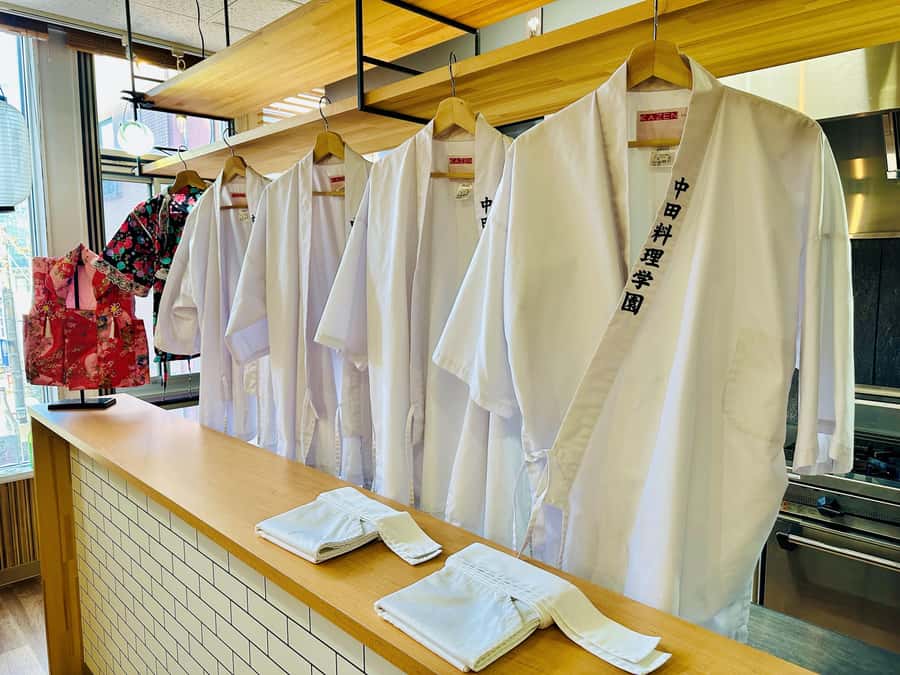
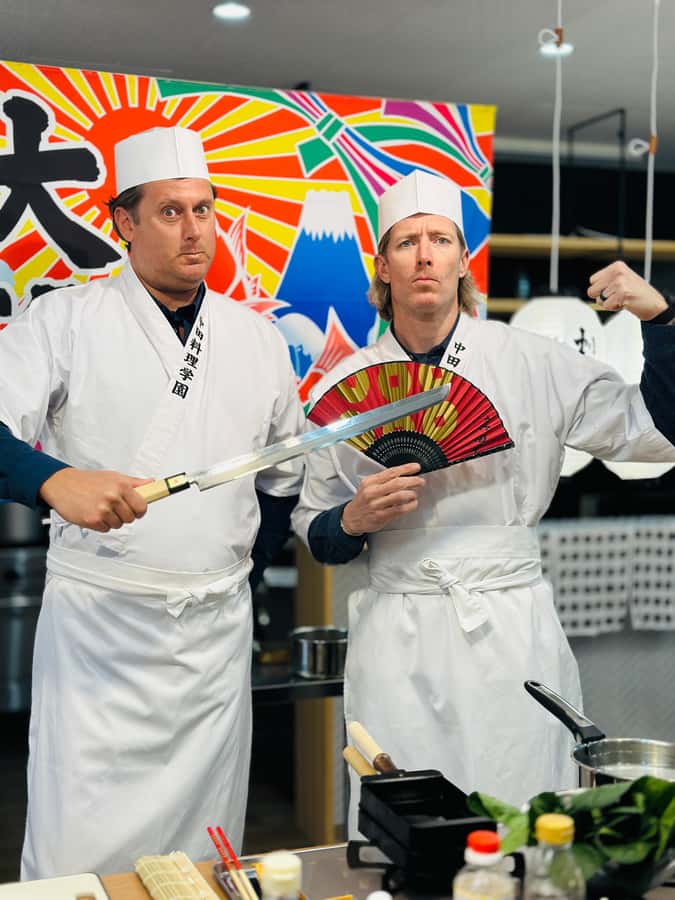
I know it sounds silly, but the costume part actually works. You can dress up in a custom sushi chef costume, and it turns the session into something you remember later, not just a blur of chopping.
More useful than the novelty is the photo setup. Staff present high-quality souvenir photos during your experience, so you end up with images that capture the cooking moments, not just a posed group shot.
From the tone of the class, Seiji Nakata and his wife clearly focus on getting you comfortable. Many people say the humor and encouragement are part of the reason the class feels easy, even when techniques are new.
Recipes emailed the day before, so your cooking actually sticks

A big value point that often gets overlooked in cooking classes is follow-through. Here, you receive detailed recipes for all dishes by email the day before. That means when you get home, you are not guessing measurements or steps based on memory.
If you have ever taken a class and then recreated nothing because the details faded, this is a practical fix. You will be able to cook again while the steps are still fresh in your mind.
Price and value: is $94 per person a fair deal?
At $94 per person, the price is not low. But for what you get, it is reasonable for a structured, chef-led, hands-on meal experience near a major train station.
You are paying for:
- A guided cooking format that includes multiple dishes, not a single demo
- High-quality ingredient sourcing, like the sashimi used for oshizushi
- Equipment time and instruction, including knife handling
- AI translation support and smart translator rentals, which reduces misunderstandings
- Costume and souvenir photos
- Pre-sent recipes so the learning continues after the class
If you love food that is specific to place, and you want techniques you can repeat, this price starts to feel fair. If you only want to eat and take photos, you might find cheaper meals around Kanazawa. But if your goal is to learn, this class is set up to deliver.
Who should book this cooking lesson?
This works best if you want:
- Hands-on cooking instruction in a small-group setting
- A Kanazawa-specific dish lineup (especially jibuni and the pressed sushi style)
- Translation help so you can understand every step
- A fun, welcoming experience that still feels like real cooking
It is not ideal for everyone. It is not suitable for children under 12, pregnant women, wheelchair users, or people who are visually impaired. Also, strict vegans and people who must avoid animal-based dashi cannot be accommodated because the class uses bonito fish flakes.
A realistic game plan for your day
If you are tight on time in Kanazawa, this is manageable because the meeting point is about a 3-minute walk from Kanazawa Station. I would still plan to arrive a few minutes early, so you can get settled and start with tea without rushing.
Wear something comfortable for cooking. You will likely be moving and standing while you handle ingredients and tools. If you have allergies or foods you cannot eat, tell them at booking, because same-day changes are not possible.
Also, keep your expectations aligned with the structure. The class lasts around 2.5 hours, plus time to enjoy your meal. You are not only cooking, you are eating what you made, so build in time afterward to relax.
Should you book this Kanazawa cooking and sushi lesson?
Book it if you want a focused, chef-led class that feels genuinely local to Kanazawa, with real technique and translation support that makes learning painless. The combination of oshizushi, jibuni, and tamagoyaki-style egg work is a smart way to understand what makes Kanazawa food distinct.
Skip it if your diet needs a fish-free dashi, or if mobility access (stairs, no lift) is a concern. Also pass if you are hoping for a purely vegetarian menu, because they can only make limited swaps and cannot replace dashi made with bonito.
If your travel style is hands-on and you like coming home with skills, this is one of the more satisfying classes in Kanazawa to spend your time and money on.
FAQ
How long does the lesson take?
The cooking lesson runs for about 2.5 hours, and you also get time to enjoy the meal you prepare.
Where do I meet the cooking school?
Meet at the cooking school on the 2nd floor of a 3-story building, a few minutes’ walk from Kanazawa Station. The 1st floor serves as parking space and includes a Stayable Movie Theater.
Is there an elevator to the 2nd floor?
No. The classroom is on the 2nd floor and there is no lift.
Is there translation support for non-Japanese speakers?
Yes. There is AI translation shown on large monitors with voice and text in multiple languages, and you can also rent smart translators for the class.
What dishes will I make?
You will make pressed sushi (oshizushi), jibuni (a Kanazawa-only local dish), a fluffy dashi omelet (rolled egg), seasonal side dishes, miso soup, and you’ll also have desserts included.
Can vegetarians join?
Minor adjustments are possible, including replacing sashimi with vegetables or egg for sushi, and substituting chicken in jibuni with tofu or vegetables if requested in advance.
Can the class accommodate strict vegans?
No. The class uses traditional Japanese dashi made with bonito fish flakes, and that cannot be replaced.
Does the experience include costumes and photos?
Yes. Sushi chef costumes are included, and staff will present high-quality souvenir photos during the experience.
Will I receive recipes to use at home?
Yes. Detailed recipes for all dishes are emailed to you the day before.
Is hotel pickup included?
No. Hotel pickup and drop-off are not included. You start and end at the meeting point near Kanazawa Station.
Newly listed around Kanazawa
- From Kanazawa/Toyama: Shirakawago and Takayama Day Tour★ 4.7 · 82 reviews
- Kanazawa:Traditional Experience -kimono rent at wargo★ 4.7 · 30 reviews
- Kanazawa: Sushi Making Experience at Oumicho Market★ 5.0 · 7 reviews
- Kanazawa: Private Tour with Local Guide★ 4.9 · 70 reviews
- Kanazawa: Tea Ceremony Experience at Kenrokuen★ 4.2 · 7 reviews
- Kanazawa: Private Custom Tour with Local Guide★ 4.9 · 20 reviews
- Kanazawa: Private Food Tasting Walking Tour★ 4.7 · 25 reviews
- Kanazawa Night Foodie Tour★ 4.5 · 6 reviews
Sushi Cooking Workshops, compared.
Sushi Making Tokyo Roll and Authentic Japanese Sushi Class
Read our review →
Roll and Authentic Sushi Making Class in Asakusa
Read our review →
Sushi Making Class in a Happi Coat near a Famous Spot
Read our review →
Sushi Making Tokyo! Popular Maki Sushi & Japanese Sushi(+Recipe!)
Read our review →
Tokyo Sushi Making Class in Tsukiji with Professional Chef
Read our review →
Tokyo Night Foodie Tour in Shinjuku – Seasonal Sushi, Wagyu Beef
Read our review →
Tsukiji Fish Market Guided Tour and Sushi Making with Pro Chef
Read our review →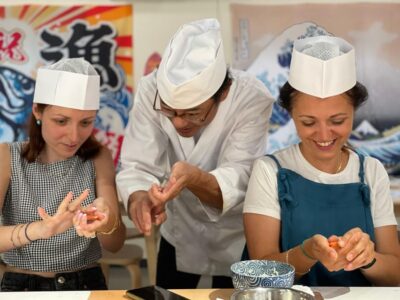
Tsukiji Fish Market Sushi Making Class with Pro Chef
Read our review →Browse the lists this tour appears in