
Review · SHRINE & TEMPLE VISITS
Kyoto: Early Morning Fushimi Inari Shrine – Beat the Crowds
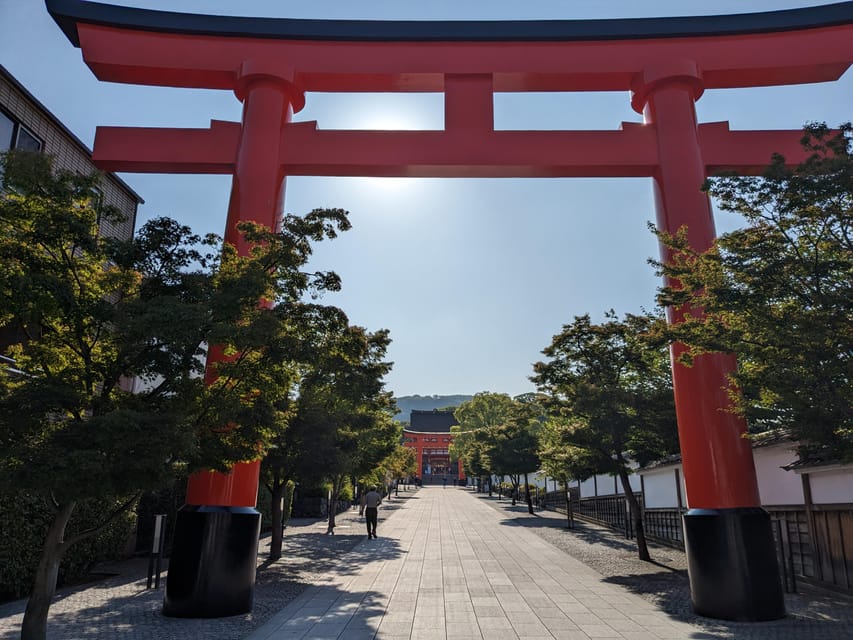
Arrive early, and Inari feels like a secret. This early morning version of Kyoto’s most famous shrine path trades daytime chaos for a calmer climb through orange torii tunnels, guided with context that makes the place click.
I like two things most. First, you get the shrine’s big icons without the visual clutter, so your photos feel clean and unedited. Second, the guide points out small meaning behind what you’re seeing, from Inari shrine traditions to the practical way locals handle respect at each main torii.
One caution: this tour involves walking up a holy mountain area, so it is not a match if you have mobility or fitness limits. There are also clear restrictions, like no baby strollers and no large bags.
In This Review
- Key Points You’ll Care About
- Why Early Fushimi Inari Changes Everything
- Meeting at Inari Station, Then Moving Like a Pro
- The Torii Trail With a Local Guide at Fushimi Inari Taisha
- Photo payoff without the crowd edits
- The Viewpoint Stop for the Classic Orange-Gate Shot
- A Less-Frequented Quiet Stop and a Legend Spot
- The Inari Souvenir That Feels More Than Generic
- Price and Value: What $70 Buys in 150 Minutes
- Who Should Book This and Who Should Skip It
- Guides Matter, and Here’s What to Look For
- Should You Book This Early Morning Fushimi Inari Tour?
- FAQ
- What does the tour include?
- How long is the tour?
- Where do we meet the guide?
- What language is the tour offered in?
- How much does it cost?
- Is there an option for private or small groups?
- What should I bring?
- What is not allowed during the tour?
- Is the tour suitable for children or limited mobility?
Key Points You’ll Care About
- Early start for crowd control, so the torii tunnel looks like it should
- Guide-led respect and context, including how to approach major torii areas
- Photo-friendly timing, designed for that iconic orange-gate shot without crowds in the frame
- A viewpoint stop plus a quiet side spot, so you see more than the obvious route
- A special Inari-themed souvenir, unique to this shrine experience
Why Early Fushimi Inari Changes Everything
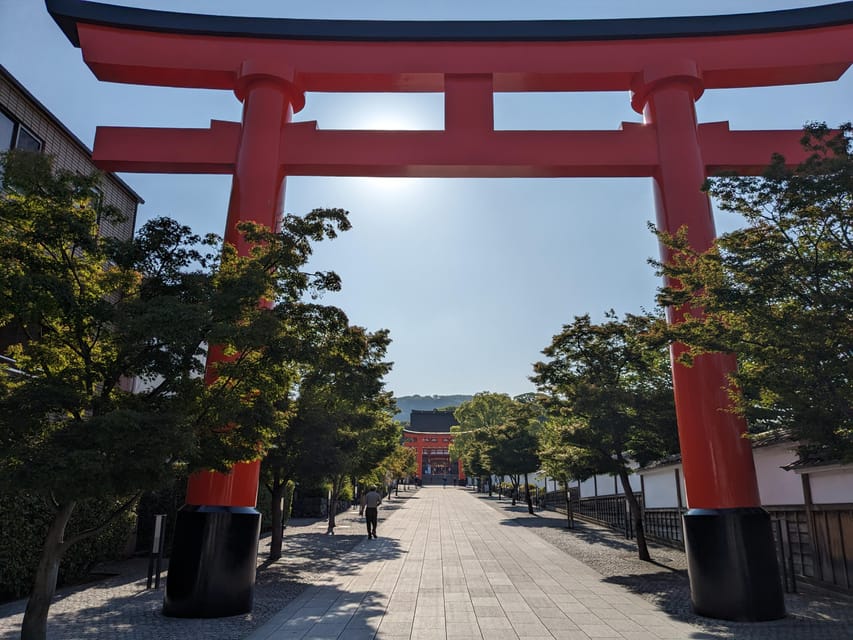
Fushimi Inari Taisha is famous for a reason. The orange torii gates form one of Japan’s most recognizable walking experiences, and the site has been Japan’s most visited place since 2016. The problem is simple: popularity creates crush-hour crowds.
An early morning tour flips the experience from show-and-tell to something calmer. You still get the full dramatic effect of the torii tunnels, but you’re less likely to feel like you’re being swept along in a human river. You also tend to get better light and more space for photos, which matters at a place where you only get one chance to frame the classic view.
There’s also a spiritual rhythm to the morning. Even if you’re visiting for photos, you’ll notice how people slow down early, and the guide’s pacing helps you do the same.
More Shrine & Temple Visits in Kyoto
- Kyoto: Fushimi Inari, Kinkakuji, Bamboo Grove 1 Day Bus Tour
★ 4.8 · 4,316 reviews - Kyoto: Tea Ceremony Ju-An at Jotokuji Temple
★ 4.9 · 3,207 reviews - Fushimi Inari Hidden Hiking Tour (Private Option Available)
★ 5.0 · 1,750 reviews
Meeting at Inari Station, Then Moving Like a Pro
You start at JR Inari Station, with your guide waiting outside, across the main entrance, holding a bright yellow DeepExperience signboard. This is one of those small details that saves real time because Kyoto can be confusing when you’re rushing, especially before you’ve had coffee.
From the start, the tone is practical. You’re not just “going to the shrine,” you’re getting oriented. That matters at Fushimi Inari because there are lots of paths, side shrines, and viewpoints, and the difference between seeing the highlights and wandering is usually time plus local guidance.
Group size can be private or small group. In plain terms, that gives you a better chance to keep up on the walking sections without feeling like you’re constantly behind or being pushed forward.
The Torii Trail With a Local Guide at Fushimi Inari Taisha
The main portion is a guided walk through Fushimi Inari Taisha, about 1.5 hours focused on the key shrine areas. You’re not just collecting sights. The guide helps you understand why Inari matters to locals, so the gates, paths, and related structures feel connected rather than random.
What stands out in the experience is how the guide slows you down at the right moments. One theme that shows up again and again in accounts of this tour style is step-by-step guidance on respect, including how to handle visits at major torii areas. If you’ve ever worried about whether you’re doing the right thing at a shrine, this reduces that stress fast.
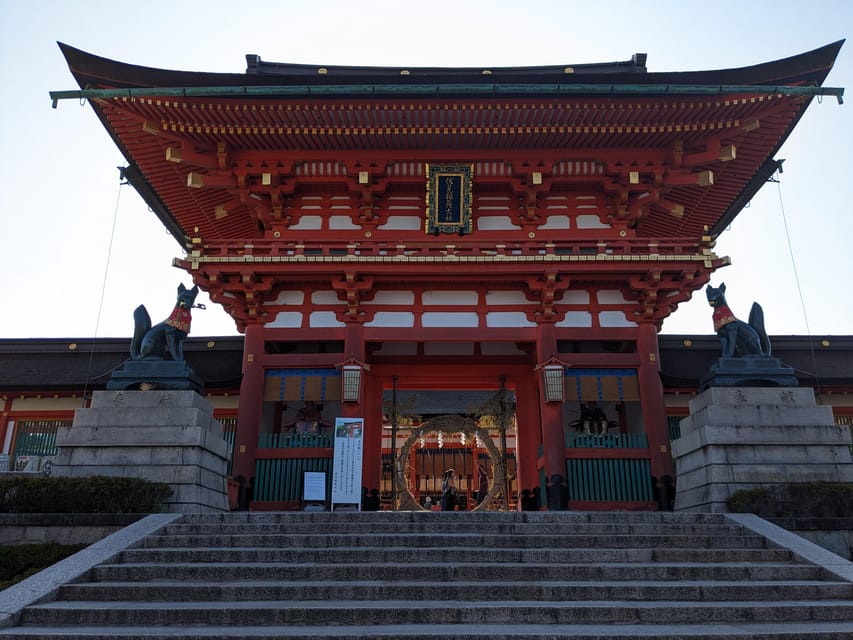
You also get a better look at the features people often walk past. Inari isn’t only about the gates. Along the way you may notice the related shrine elements tied to Inari traditions, including kitsune-linked elements that show up around the complex. With a guide, those details stop being decorations and start being clues.
Photo payoff without the crowd edits
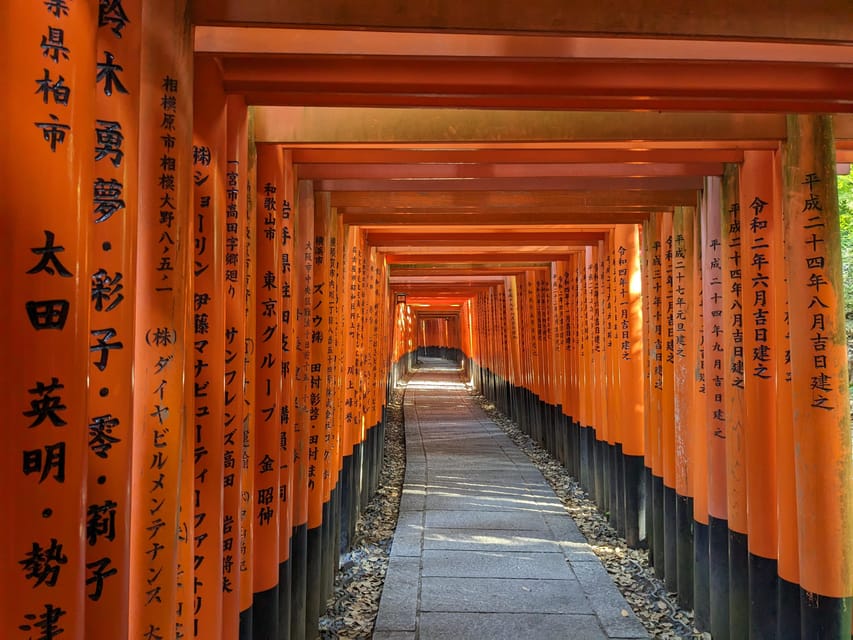
The “beat the crowds” promise is not abstract. It’s built into your timing and where you pause, so you can get that tunnel shot where the gates look deep and continuous. Instead of spending your trip editing out strangers, you’re positioning yourself before the busiest flows.
If you’re a photographer, arrive at the mindset of patience. The icons are fixed, but your angle and position change the whole image.
More Shrine and Temple visits in Kyoto:
- Osaka/Kyoto:Kinkakuji,Arashiyama,FushimiInariShrine,NaraPark
★ 4.1 · 1,596 reviews - Kyoto/Osaka: Nara, Fushimi Inari Taisha, Arashiyama Bus Tour
★ 4.7 · 1,275 reviews - Arashiyama Bamboo, Temple, Monkeys, or Secret Sake Brewery
★ 4.8 · 886 reviews - Osaka/Kyoto: Arashiyama, Nara & Fushimi Inari Shrine w/Lunch
★ 4.4 · 754 reviews
The Viewpoint Stop for the Classic Orange-Gate Shot
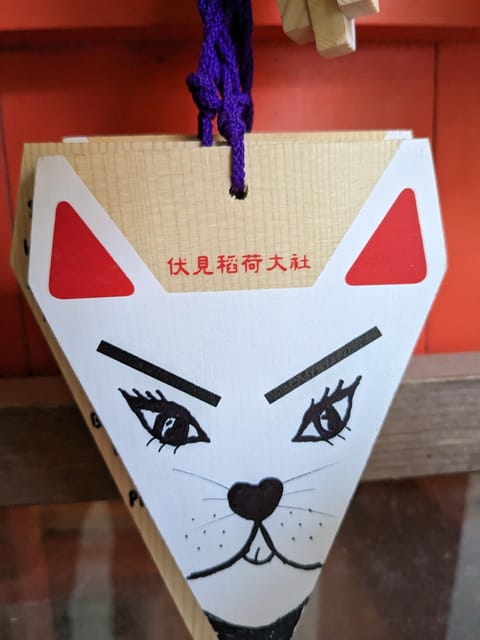
About 30 minutes are set aside for a viewpoint. This is where you cash in on the morning advantages. Viewpoints at Inari tend to get crowded later because that’s where people want the “I’m really here” framing.
At the viewpoint stop, you can focus on composition: the repetition of torii gates creates strong lines, and the early timing usually gives you fewer interruptions. You also get a moment to breathe and reset your eyes. The trail draws you forward, and the viewpoint stop helps you see it as a whole.
This part works especially well if you like snapshots more than selfies. The viewpoint is not only scenic, it’s a chance to translate what you walked through into one visual summary.
A Less-Frequented Quiet Stop and a Legend Spot
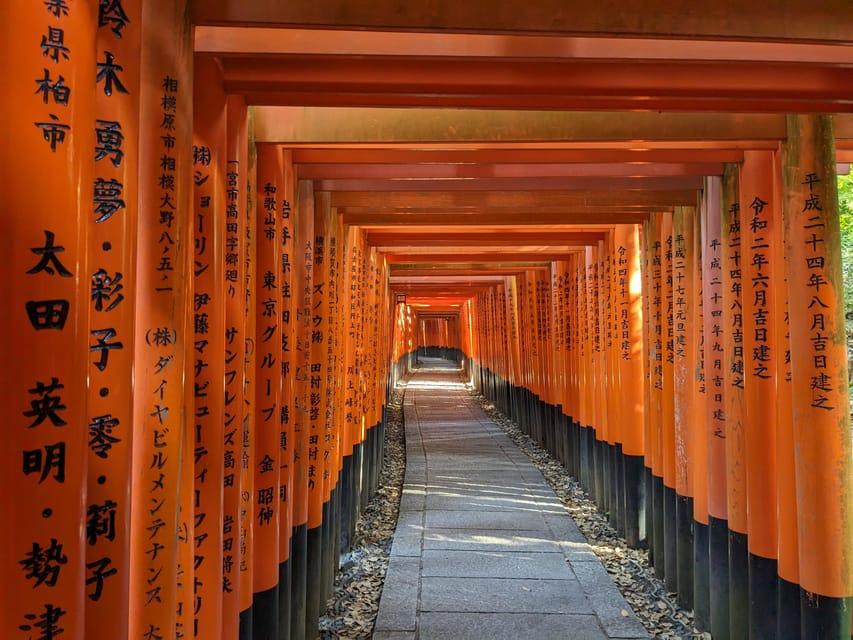
Next comes another 30 minutes for a less-visited side area, guided. This is the part that changes the tour from “famous shrine checklist” to “this felt special.”
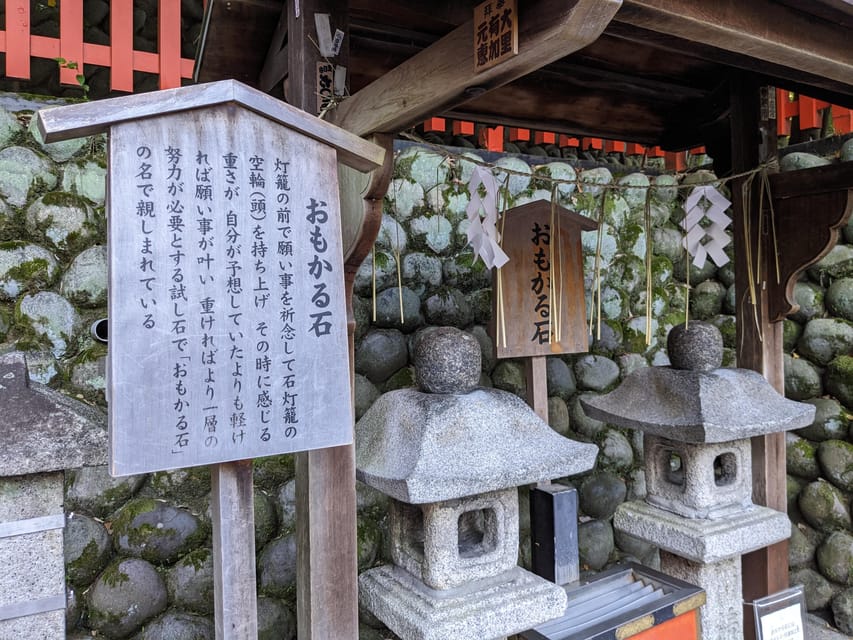
One reason is the kind of storytelling guides can do in a quieter spot. You might pause at a small fountain tied to a legend about curing illness. The key word here is legend, not medical advice, but the myth gives the scene meaning beyond its physical look.
This stop also tends to feel more forgiving than the busiest tunnel sections. If you want space to take your time, look around, and ask questions without talking over a crowd, this is the section that usually delivers.
The Inari Souvenir That Feels More Than Generic
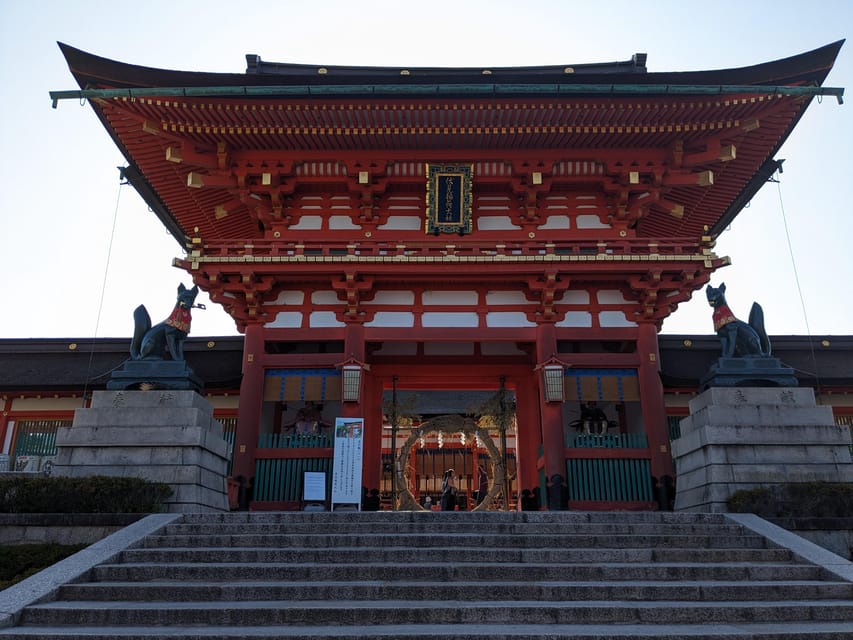
The tour includes a special souvenir unique to Inari, described as something not available anywhere else. I like this kind of inclusion because it closes the loop. You come away with a small tangible reminder that matches what you actually experienced, rather than a mass-produced trinket you could grab at any shop near a train station.
It also saves decision fatigue. Kyoto has plenty of shopping, and once you’re tired, you start buying based on convenience. Here, you get a structured souvenir moment tied to the shrine experience, which feels more thoughtful.
Price and Value: What $70 Buys in 150 Minutes
At $70 per person for about 150 minutes, this isn’t the cheapest thing on your Kyoto list. But value is the point, not bargain shopping.
Here’s what you’re paying for:
- An English-speaking local expert guide for the key shrine segments
- A pacing plan designed for early crowd avoidance
- Help understanding shrine traditions, including respect behavior at major torii areas
- Photo timing that aims to reduce the need to deal with crowds in your shots
- A special Inari souvenir that is unique to this experience
- Private or small-group options, which usually improves the overall flow
If you’re the kind of traveler who can enjoy a famous sight on your own, you might wonder why a guide is worth it. The answer is time and clarity. At Fushimi Inari, the difference between wandering and seeing the highlights comes down to route choices, pause points, and knowing what to look for. The guide makes those choices for you, and you spend your energy enjoying rather than figuring out.
Who Should Book This and Who Should Skip It
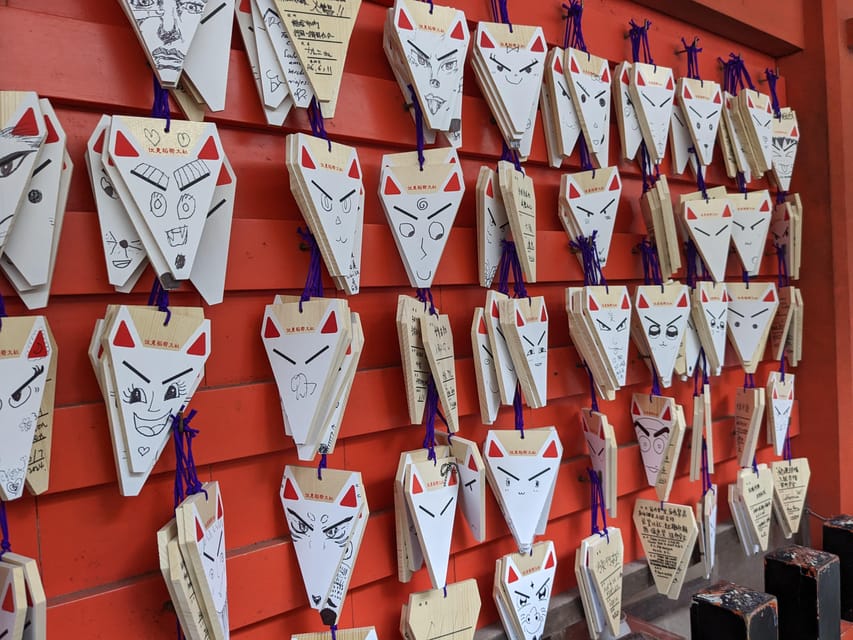
This tour is best for people who:
- Want the iconic torii tunnel experience without the thick crowds
- Appreciate context about shrine traditions and why places matter to locals
- Like early mornings, and don’t mind a steady walking rhythm
- Value small-group attention and clear explanations in English
It may not suit you if:
- You are traveling with children under 10
- You have back problems, mobility impairments, wheelchair needs, respiratory issues, or heart problems
- You’re dealing with low fitness or age concerns, especially since people over 70 are listed as not suitable
- You plan to bring strollers or large luggage, since baby strollers and large bags are not allowed
If you fall into any of those categories, it’s smarter to choose a more accessible plan. The point of this tour is the walk, and it’s meant to run smoothly with limited baggage and steady pace.
Guides Matter, and Here’s What to Look For
A big part of the success of this tour is the guide. Names that show up in highly praised accounts include Teppei, Akino, Hiro, Masa, Maru, and Yoshi. The common thread is how they mix clear explanations with genuine warmth.
You’ll benefit most from a guide who:
- Explains the meaning behind what you’re seeing, not just the name of the spot
- Keeps the group moving at a pace that still allows pauses for photos
- Responds well if timing goes off, like when someone arrives late and the guide keeps things calm and professional
- Helps with small practical needs along the way, like photo moments
In other words, the guide is not background entertainment. Here, the guide is the difference between a photo stop and an experience that actually makes sense.
Should You Book This Early Morning Fushimi Inari Tour?
I think you should book if your priority is the torii tunnel experience with less crowd pressure and you want the “why” behind Inari, not only the “what.” The included photo-friendly timing and a guided focus on key shrine areas make the money feel more justified than a solo walk, especially at a place as famous as this.
You should skip or rethink if you are worried about walking, or you need accessibility support that this format is not designed to handle. This tour is built for movement and a specific rhythm.
If you fit the sweet spot, you’ll get an early Kyoto memory that feels calmer than the daytime stampede, plus a souvenir that matches the shrine itself, not just your shopping list.
FAQ
What does the tour include?
It includes an English-speaking local expert guide and a special souvenir unique to Inari.
How long is the tour?
The duration is 150 minutes.
Where do we meet the guide?
Meet your guide outside JR Inari Station, across the main entrance, holding a bright yellow DeepExperience signboard.
What language is the tour offered in?
The live tour guide speaks English.
How much does it cost?
The price is $70 per person.
Is there an option for private or small groups?
Yes, private or small groups are available.
What should I bring?
Wear comfortable shoes and comfortable clothes.
What is not allowed during the tour?
Baby strollers and luggage or large bags are not allowed, and intoxication is not allowed.
Is the tour suitable for children or limited mobility?
It is not suitable for children under 10, and it is also not suitable for people with back problems, mobility impairments, wheelchair users, or certain health concerns like heart or respiratory issues.
Newly listed around Kyoto
- Taste of Nishiki Market Walking Food Tour with Local guide★ 5.0 · 17 reviews
- Kyoto: Sushi Making Class with Sushi Chef★ 4.8 · 64 reviews
- Simple Plan with Maiko★ 4.4 · 10 reviews
- Shibori Furoshiki Course at Kyoto Shibori Museum★ 5.0 · 21 reviews
- Kyoto: City Secrets eBike Tour★ 4.9 · 196 reviews
- Sacred Pathways: Discover the Philosopher’s Path of Kyoto★ 4.9 · 20 reviews
- Private Tour to Monkey Park and Arashiyama Highlights★ 5.0 · 22 reviews
- Private Nara Tour from Osaka – Meet at Your Hotel★ 5.0 · 22 reviews
Shrine & Temple Visits, compared.

Fushimi Inari, Kinkakuji, Bamboo Grove 1 Day Bus Tour
Read our review →

Meiji Shrine, Asakusa, Skytree Bus Tour and Cruise
Read our review →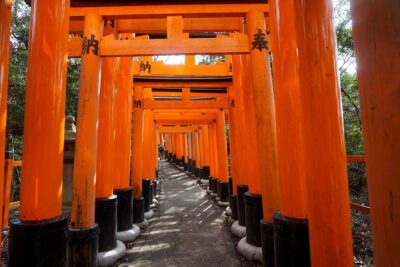
Fushimi Inari Hidden Hiking Tour (Private Option Available)
Read our review →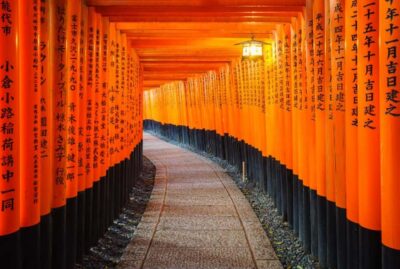
Osaka/Kyoto:Kinkakuji,Arashiyama,FushimiInariShrine,NaraPark
Read our review →
Asakusa Walking Tour with Sensoji Temple Visit
Read our review →
Nikko: Kegon Falls, Lake Chuzenji & Toshogu Temple
Read our review →
Kamakura & Enoshima Day Trip including Temple Tickets
Read our review →Browse the lists this tour appears in