
Review · GEISHA DISTRICT WALKS
Kyoto Gion Early Morning Walking Tour
Kyoto is calm before the day starts. This early-morning Gion walk is built for people who want the famous sights with less pushing, plus a guide to help you connect what you see with why it matters. You’ll hit classic stops like Kiyomizu-dera, Yasaka Shrine, and the streets of Sannenzaka before the daytime crush fully arrives.
I especially like the small group size, which makes it easier to ask questions and stay together without stress. I also like the English-speaking guide focus on history and local culture, not just reciting names from a brochure.
One thing to plan for: Kiyomizudera-Temple has an extra admission fee (¥500 per person), and even with an early start, it can still be busy by the time you arrive.
In This Review
- Key things you’ll notice on this early Gion walk
- Why Kyoto at dawn feels different than daytime
- Meeting point, pace, and why small-group walking works
- Stop 1, Gion Shirakawa: the river side you see before it fills
- Stop 2, Hanamikoji Street: geisha district atmosphere at an easier hour
- Stop 3, Kiyomizu-dera: the viewpoint stop that can still get crowded
- Stop 4, Sannenzaka and Ninenzaka: stone lanes, old-town details, local shops
- Stop 5, Yasaka-no-To: a quick pause for a recognizable silhouette
- Stop 6, Yasaka Shrine: vermilion gate, lantern stage, and a quiet ending
- Guides make or break a walking tour, and this one has real talent
- Price and value: what $49.42 gets you in real terms
- Who should book this early Gion tour
- Should you book the Kyoto Gion Early Morning Walking Tour?
- FAQ
- How long is the Kyoto Gion Early Morning Walking Tour?
- How much does the tour cost?
- Is Kiyomizudera-Temple admission included?
- What stops are included on the walk?
- How big is the group?
- Does the tour include hotel pick-up?
- Is the tour guided in English?
- Can I cancel for a full refund?
Key things you’ll notice on this early Gion walk
- Crowd timing that actually matters, with stops chosen for quieter morning light
- A group capped at 12, so your guide can answer questions as you walk
- Navigation help that prevents detours, so you spend energy on the sights, not map-pin gymnastics
- Iconic lanes and landmarks in one logical route, from Gion streets to temple viewpoints
- Free admission at most stops, with only Kiyomizudera needing a paid ticket
- Guides with strong English and storytelling, including past praise for Caleb, Hiro, and Vincent
Why Kyoto at dawn feels different than daytime
Early morning in Kyoto is not just about fewer people. The whole feel of the city changes. In Gion, you notice the details first, old wooden machiya houses, the river edge, and the smaller streets that get swallowed by tour buses later.
This tour’s timing is the big idea: you start early, then move through a tight set of must-see places while the streets are still waking up. That means you get a calmer rhythm, and photos tend to look cleaner, because you are not fighting for space in front of every gate.
Another smart part is how the route mixes atmosphere with landmarks. You are not only walking past postcard views, you are also stepping into shrine and temple spaces where the morning pace lets you actually read the setting.
More Walking Tours in Kyoto
- Kyoto Geisha Walking Tour: Gion District & Hidden Gems
★ 4.7 · 3,273 reviews - Kyoto: Gion Geisha District Walking Tour – Stories of Geisha
★ 4.7 · 2,187 reviews - Night Walk in Gion: Kyoto’s Geisha District
★ 4.5 · 2,003 reviews
Meeting point, pace, and why small-group walking works
The tour meets at the Statue of Izumo-no-Okuni, Kawabatacho, in Higashiyama Ward, and it ends back at the meeting point. You’ll be near public transportation, but the tour does not include hotel pick-up, so plan to arrive on your own.
It runs about 3 hours, which is long enough to feel like you covered real ground, but not so long that you’re exhausted before Kiyomizu-dera. Also, the maximum group size is 12, and that matters more than you might think. With a small group, the guide can pause for questions without losing half the sidewalk behind you.
I like that you get a guide-led route because it reduces the chance you wander into the wrong lane. Kyoto’s historic districts reward curiosity, but it’s also easy to lose time when you’re trying to fit in several signature stops.
Stop 1, Gion Shirakawa: the river side you see before it fills
Your first stop is Gion Shirakawa, around 15 minutes. This is where the tour starts doing something practical, it places you in a quieter, scenic pocket of old Kyoto before the larger foot traffic wakes up.
Gion Shirakawa is associated with the Shirakawa River, and the walk there is described as calm, with traditional machiya houses along the river edge and weeping willows that help create that classic “Kyoto at rest” feeling. Even if you’ve seen photos, it hits differently in the morning when the area feels less performative.
The main benefit here is simple: you ease into the neighborhood with a guide who can set context early. That makes the later stops feel like part of a story instead of disconnected hits.
Stop 2, Hanamikoji Street: geisha district atmosphere at an easier hour
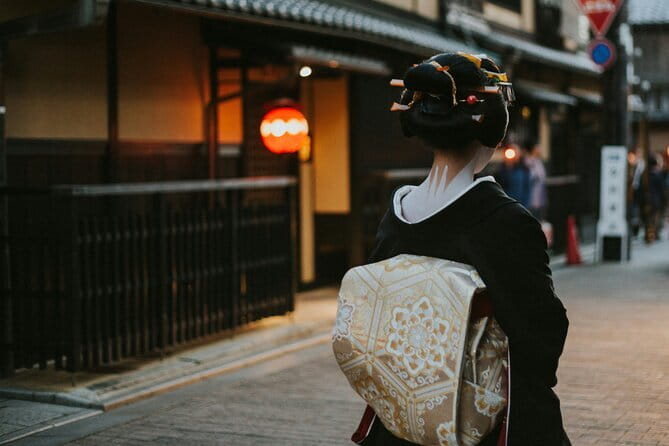
Next is Hanamikoji Street, about 20 minutes. This is the geisha district street many people have on their mental list, lined with historic wooden machiya houses and traditional teahouses (ochaya).
Morning helps because you can look at the details without constantly stepping aside. You get time to notice the feel of the street and the rhythm of walking there, instead of just getting a quick glance before you’re ushered onward.
A small practical note: this is a place where respectful behavior matters. Stick close to the group, keep your voice low, and let pedestrians flow naturally. A calm approach makes your experience better, and it keeps things smooth for everyone.
Compare these Geisha District walks in Kyoto:
- Best of Kyoto: Gion, Geisha, Pagodas & Cobblestones
★ 4.9 · 2,058 reviews - Kyoto Night Foodie Tour in Gion (9+ dishes + 6 Sake tastings)
★ 5.0 · 1,762 reviews - Kyoto Gion Geisha District Walking Tour – The Stories of Geisha
★ 5.0 · 1,441 reviews - Kyoto: Gion Magical Night Walking Tour with Geisha Insights
★ 4.9 · 1,286 reviews
Stop 3, Kiyomizu-dera: the viewpoint stop that can still get crowded

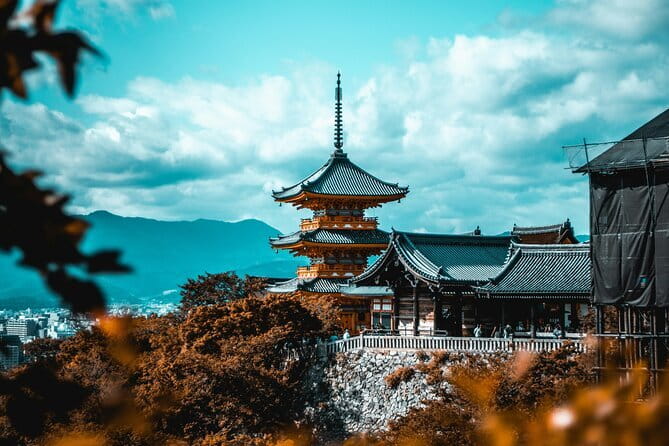
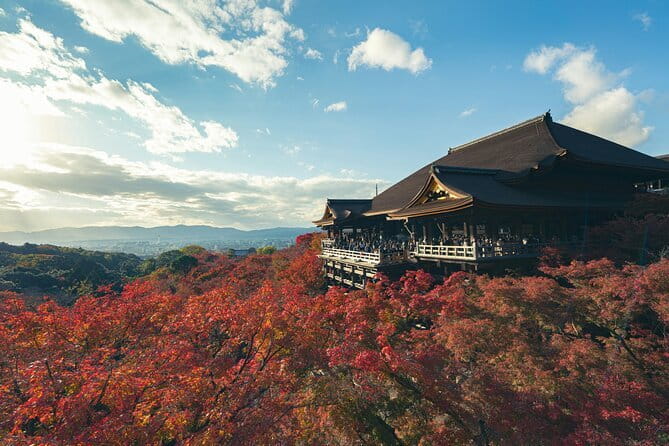
Kiyomizu-dera is the big anchor stop, with about 1 hour on-site. The headline feature is its wooden stage and the sweeping city overlook from the temple grounds.
There’s also a timing reality you should be aware of. Even with an early start, Kiyomizu-dera can become busy by the time your group arrives, especially because it’s one of Kyoto’s most famous landmarks. One review flagged that the temple was already crowded when they reached it, which is a useful heads-up for your expectations.
Plan for a mix of views and walking time once you’re inside the temple area. The guide can help you find your bearings so you’re not spending that one hour searching. And since the admission fee is not included, you should budget ¥500 per person in advance, otherwise it can be an annoying surprise right when you’re trying to focus.
Stop 4, Sannenzaka and Ninenzaka: stone lanes, old-town details, local shops

After Kiyomizu-dera, you’ll walk through Sannenzaka and Ninenzaka for about 30 minutes. These are the stone-paved lanes famous for traditional wooden townhouses and the kind of small shops that make this part of Higashiyama feel like a living open-air street.
This stop is valuable for two reasons. First, it slows you down just enough to absorb the street textures, steps, and the “old Kyoto” vibe. Second, it helps you transition from the temple atmosphere to the everyday side of the neighborhood, where people still shop and wander.
If your main goal is photos, this is where the morning light often helps. You’ll likely have an easier time moving through narrow areas, because the wider crowds haven’t fully arrived yet.
Stop 5, Yasaka-no-To: a quick pause for a recognizable silhouette
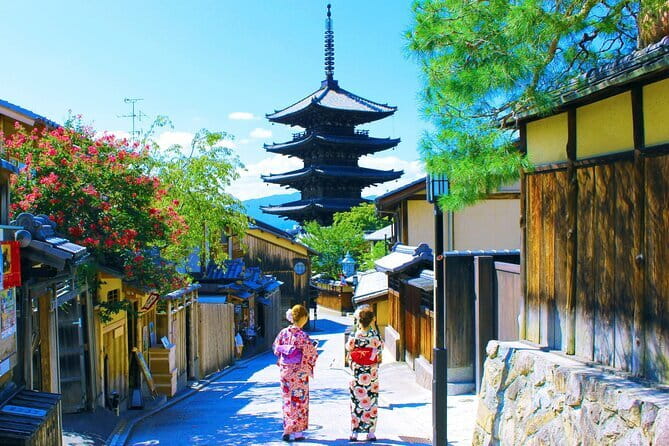
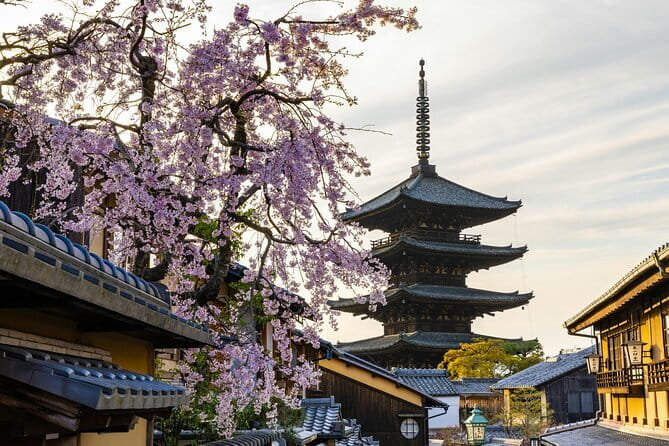
Next is Yasaka-no-To, also called Yasaka Pagoda, around 10 minutes. It’s one of Kyoto’s recognizable landmarks, and the idea of this stop is less about deep site time and more about getting your eyes on that elegant silhouette in a calmer moment.
Even in just 10 minutes, a stop like this works because it gives you a visual reference point. If you’re visiting Kyoto for the first time, it’s helpful to connect the skyline and street views to specific landmarks you can later recognize on your own.
This is also a nice reset point after the longer Kiyomizu-dera and Sannenzaka stretches. Short stops can keep your energy up, and that matters on a walking tour.
Stop 6, Yasaka Shrine: vermilion gate, lantern stage, and a quiet ending
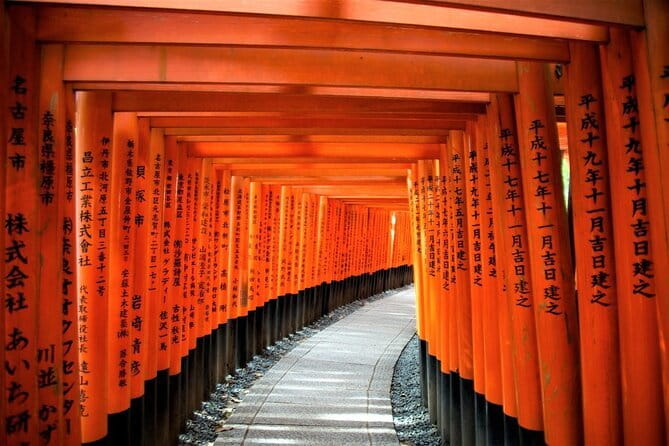
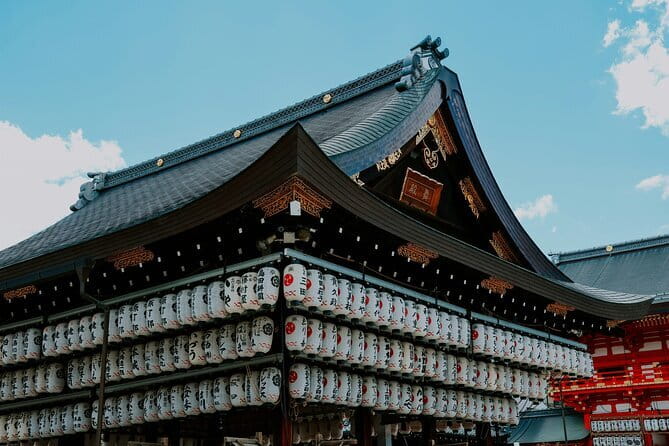
Your final stop is Yasaka Shrine, about 30 minutes. The shrine is known for its vermilion gate, and it’s also linked with a famous lantern-lit dance stage.
This stop is where the tour’s culture part shows up again. You’re not just moving through scenic spaces, you’re also seeing how shrine traditions live alongside modern city life. Morning pacing helps here too, because the area is calmer and easier to observe.
If you want a good ending, this is a strong choice. It’s a landmark people recognize, but your guide’s narration can turn it into something more meaningful than a photo backdrop.
Guides make or break a walking tour, and this one has real talent
The tour includes an English-speaking guide, and the small group size makes that quality feel personal rather than scripted. Past reviews repeatedly praised guides for friendliness, strong English, and depth in explanations.
Names that showed up in feedback include Caleb, Hiro, and Vincent. One review praised Caleb as brilliant and passionate about history. Another called Hiro fantastic, with deep knowledge and good English. Vincent also earned praise for being very informative and for always answering questions, with humor and an easy conversational flow.
That guide talent matters because it changes how you experience the landmarks. Without help, you might see Kiyomizu-dera as scenery and Yasaka Shrine as a stop. With a good guide, you understand how these places fit into Kyoto’s traditions and why they look and function the way they do.
Also, the tour messaging is built around avoiding getting lost. In Kyoto, that’s not a small thing. Your guide navigation keeps you moving efficiently so you get more of the morning without wasting energy.
Price and value: what $49.42 gets you in real terms
The price is $49.42 per person, and the tour runs about 3 hours. What you get for that money is not just “someone walking you around.” You get an English-speaking guide, a planned route with key landmarks, and a small-group experience capped at 12 people.
Most stops are free for entry, which helps the overall value. The one clear cost add-on is Kiyomizudera-Temple, with an admission fee of ¥500 per person not included. If you’re doing the math, that extra fee is still a modest add-on compared to many guided temple tours that include everything up front.
So the value question becomes: are you paying for guided time and smart crowd avoidance? In this case, yes. And crowd avoidance is one of those invisible benefits that can make the day feel less stressful. If you’ve ever tried to enjoy Kiyomizu-dera while dodging tour groups, you already know why early matters.
One more value point: you don’t need hotel pick-up. That can be good or bad depending on your hotel situation, but it keeps the experience simple. You start at a specific meeting point, you walk with the group, and you return to the same spot.
Who should book this early Gion tour
This tour is a great fit if you want:
- A first-time Kyoto day that hits major East Kyoto landmarks in one connected route
- An early start to avoid the heaviest crowds, especially for temple areas
- A guide-led walk so you don’t spend your limited time figuring out where to go next
- Better photo opportunities from calmer streets and early lighting
You might choose something else if you dislike walking, or if you hate the idea of an extra fee for Kiyomizudera. Also, if your top priority is guaranteed empty sites, it’s worth tempering expectations, because even mornings can get busy at globally famous places.
Should you book the Kyoto Gion Early Morning Walking Tour?
My take: book it if you want Kyoto in “calmer mode” and you like having a guide who can explain what you’re seeing. The combination of small group size, early timing, and a route that covers Gion, Kiyomizu-dera, Sannenzaka, and Yasaka Shrine is a strong value for a 3-hour morning plan.
If you’re the type who wants to sleep in, then wait for a later start, this tour is probably not your best match. But if you’re ready for an early morning and you want structure, crowd relief, and better context, this is exactly the kind of tour that makes the city feel easier.
FAQ
How long is the Kyoto Gion Early Morning Walking Tour?
It lasts about 3 hours.
How much does the tour cost?
The price is $49.42 per person.
Is Kiyomizudera-Temple admission included?
No. Kiyomizudera-Temple costs ¥500 per person and is not included.
What stops are included on the walk?
You’ll visit Gion Shirakawa, Hanamikoji Street, Kiyomizu-dera Temple, Sannenzaka and Ninenzaka, Yasaka-no-To (Yasaka Pagoda), and Yasaka Shrine.
How big is the group?
The tour has a maximum of 12 travelers.
Does the tour include hotel pick-up?
No, hotel pick-up is not included. You meet at the starting point.
Is the tour guided in English?
Yes, it includes an English-speaking guide.
Can I cancel for a full refund?
Yes. You can cancel up to 24 hours in advance of the experience start time for a full refund.
Newly listed around Kyoto
- Kyoto Samurai Discovery Samurai Sword Test Cutting Training★ 5.0 · 132 reviews
- Kyoto Sake Brewery Tour with Lunch★ 4.5 · 12 reviews
- Kyoto Sagano Insider: Rickshaw and Walking Tour★ 5.0 · 15 reviews
- Private Food & Sake Tour in Central Kyoto with Sake Sommelier★ 5.0 · 24 reviews
- Ramen Gyoza Onigiri Japanese Cooking Class in Kyoto★ 5.0 · 44 reviews
- Kyoto Rickshaw Tour★ 5.0 · 210 reviews
- Kyoto Ramen Tour★ 5.0 · 22 reviews
- Kyoto Portrait Tour with Kimono★ 5.0 · 48 reviews
Geisha District Walks, compared.
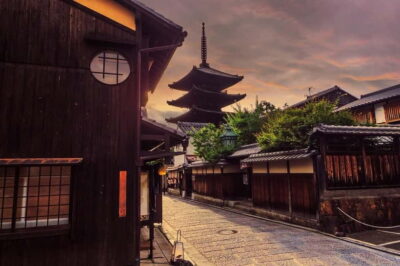
Kyoto Geisha Walking Tour: Gion District & Hidden Gems
Read our review →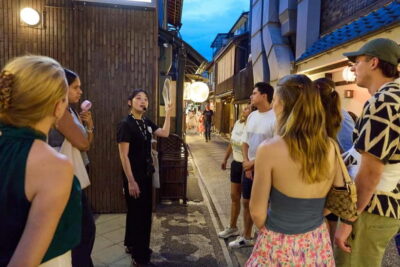
Gion Geisha District Walking Tour – Stories of Geisha
Read our review →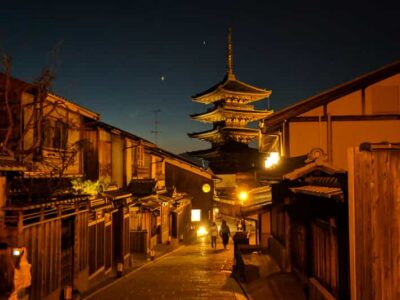
Best of Kyoto: Gion, Geisha, Pagodas & Cobblestones
Read our review →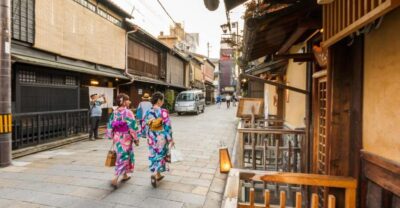
Kyoto Night Foodie Tour in Gion (9+ dishes + 6 Sake tastings)
Read our review →
Kyoto Gion Geisha District Walking Tour – The Stories of Geisha
Read our review →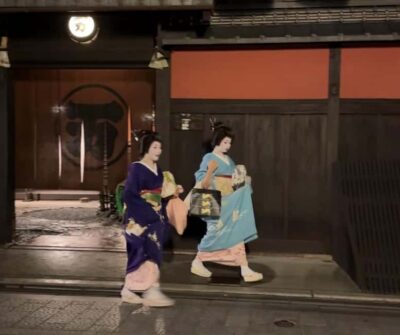
Gion Magical Night Walking Tour with Geisha Insights
Read our review →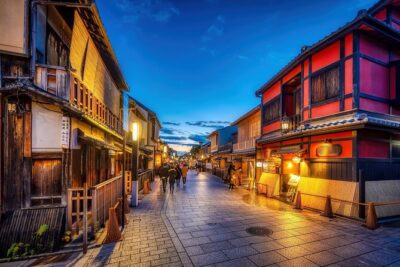
Kyoto Gion Night Walk & Geisha District Guided Tour
Read our review →Browse the lists this tour appears in