
Review · NAGASAKI TOURS
Nagasaki Like a Local: Private & Custom Experience (2-3 hrs)
Nagasaki reveals itself fast on foot. This private, custom walk pairs you with a local host who acts like GPS plus guidebook, steering you through central neighborhoods tied to port trade and foreign enclaves. You’ll work your way through the old Chinatown in Japan, then hit major landmarks like Meganebashi Bridge and the European-style Oura Cathedral.
Two things I really like: the private and personalized format, where you can adjust the route mid-walk, and the way the host tailors stories to your interests after a short questionnaire. The vibe is practical too, since it’s mostly walking and your guide helps you read the streets like a local, not just a checklist.
One consideration: it is still a walking tour, so plan for stairs and uneven sidewalks in older neighborhoods. Also, food is not included, even though you’ll have time for street-food tasting, so budget a bit extra if you want to eat along the way.
In This Review
- Key things that make this Nagasaki walk different
- A like-minded host who works like GPS and guidebook
- Price and time: what you’re paying for
- Meeting point and how the walk usually flows
- Nagasaki Chinatown: oldest lanes plus snack time
- Fukusai-ji temple and the WWII mausoleum aspect
- Oura Cathedral: European-style architecture on Japanese streets
- Meganebashi Bridge: the 400-year-old spectacles moment
- Dutch Slope: stone street and old foreign trader residences
- How “custom” really shows up during the day
- What’s included, what isn’t, and how to plan your budget
- Who should book this Nagasaki private walk
- Should you book this tour?
- FAQ
- How long is the Nagasaki Like a Local private experience?
- Where does the tour start?
- Is food included?
- Is transportation provided?
- Can I request a hotel meet-up?
- Can I cancel for a full refund?
Key things that make this Nagasaki walk different
- Matched hosting: A questionnaire helps assign a like-minded guide who suggests a flexible plan.
- Local pacing: Most of the value is in route choices, not a rush to collect stamps.
- Central highlights, connected by context: Chinatown, Dutch Slope, and the cathedral tied into port-era Nagasaki.
- Meganebashi Bridge at the right moment: The 400-year-old spectacles-style bridge is treated like a viewpoint stop, not a quick photo.
- Meaningful WWII stop: Fukusai-ji includes a mausoleum aspect that hits with quiet weight.
- Real-world flexibility: Guides can accommodate requests and keep the day moving even when conditions are rough.
A like-minded host who works like GPS and guidebook
The biggest reason this experience feels worth it is the host matching. Within 24 hours after booking, you get a short questionnaire about your personality and interests, then you’re assigned a like-minded guide. That matters because Nagasaki can be approached in a few ways: food and street life, Christian and foreign-influenced architecture, or the port-and-war layers running underneath it all.
Your host communicates directly to set a meeting time and place, then suggests an itinerary you can tweak. During the walk, the route stays flexible. That means you can slow down for views, cut something if you’re tired, or spend extra time where you feel the pull.
The hosts also seem built for real conditions, not brochure conditions. In a few examples from past groups, guides met people coming off ships and still managed to cover a lot even in terrible weather. The practical lesson for you: if you have limited time in Nagasaki, a custom host is how you make every minute count.
A few more Nagasaki days to weigh up
- Nagasaki: Private Walking Tour with a Local
★ 4.7 · 79 reviews - Nagasaki Full-Day Private Tour with Government-Licensed Guide
★ 5.0 · 66 reviews - Nagasaki Half-Day Private Tour with Government-Licensed Guide
★ 5.0 · 53 reviews
Price and time: what you’re paying for
At $64.07 per person for about 2 to 3 hours, you’re not buying a long bus tour. You’re buying a private walking guide who can shape the day around you, help you navigate older streets, and point out details you’d miss alone.
This price also works better for people who care about context. If you just want the basic headline sights, you could do it on your own with a guidebook. But if you want someone to connect Chinatown lanes to the wider port story, and connect Oura Cathedral and Dutch Slope to the foreign trader presence, the guide earns their keep.
What to budget on top: food and drinks are not included, and tickets for attractions are not included either. So if you plan on eating beyond a small taste, think of it as a separate line item.
Meeting point and how the walk usually flows
You meet at the Nagasaki City Tourist Information Center, 1-60 Onouemachi, Nagasaki, 850-0058. The tour ends back at the meeting point, so you don’t need to worry about being dropped somewhere confusing.
It’s primarily a walking experience. If the route needs it, your host may use public transportation, but the intention is walking. For you, that’s good because most of the value in older Nagasaki is in street-level details, not just distant views.
Also, the tour can include a hotel meet-up for central locations if you request it. If you’re staying in the city center, that can save time and help you start the walk rested. For everyone else, arriving at the Tourist Information Center is straightforward.
Nagasaki Chinatown: oldest lanes plus snack time
A strong start is the Chinatown area, described as the oldest in Japan. This is where you get your bearings in a way that feels fun, not academic. Expect tight lanes, lively storefront energy, and the kind of street details you only notice when someone points them out.
One common moment here is sample street food. That’s the right idea for a short tour because food helps you understand a neighborhood quickly. Just remember: food and drinks are not included, so treat tastings as something you may pay for on the spot, depending on what your host chooses for your day and what you feel like trying.
The biggest drawback you might run into in Chinatown is crowding, especially at peak times. The good news is private pacing. Your host can often steer you into the right lanes at the right speed so you still enjoy it.
Tip that makes the walk better: bring cash or a payment method you trust for quick snacks, since you might want to try more than one bite once you see what’s available.
A different sort of day in Japan:
- Visit Gunkanjima Island (Battleship Island) in Nagasaki
★ 4.0 · 32 reviews - Nagasaki Full Day Tour with Licensed Guide and Vehicle
★ 5.0 · 27 reviews - Taste Local Life: Nagasaki’s Historical Street Walking Tour
★ 5.0 · 27 reviews - Nagasaki Street Food Adventure: Private Walking Tour with a Local
★ 5.0 · 26 reviews
Fukusai-ji temple and the WWII mausoleum aspect
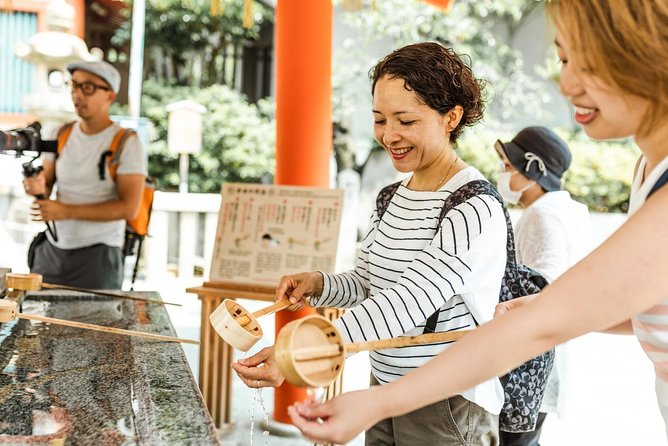
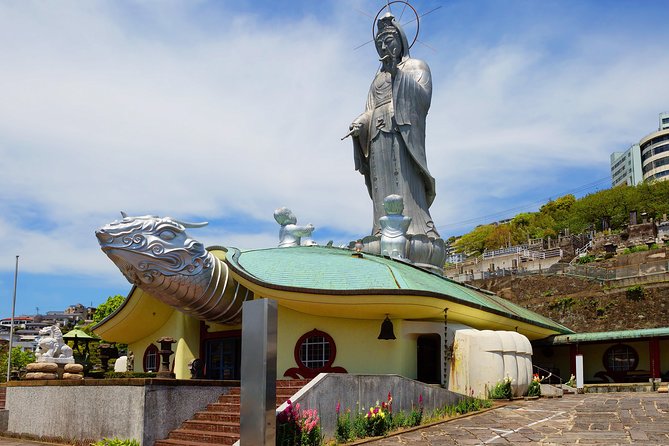
Next often comes Fukusai-ji, a temple known for its curiously shaped look. What makes this stop more than a photo spot is its WWII connection. It was rebuilt after WWII as a mausoleum for fallen Japanese soldiers.
This stop changes the tone of the tour in a good way. The point is to slow down and notice how a place can hold grief while still functioning as a spiritual space. If you’re the type who likes history that has weight, this is the moment that does it.
Practical note: because the meaning runs deep, you might want a bit of quiet time to absorb it. The private setup helps you do that, instead of being pushed forward by the group machine.
If you don’t usually care for solemn stops, you might feel this one more than you expected. But even then, it’s one of the clearest ways to understand Nagasaki beyond architecture and street scenes.
Oura Cathedral: European-style architecture on Japanese streets
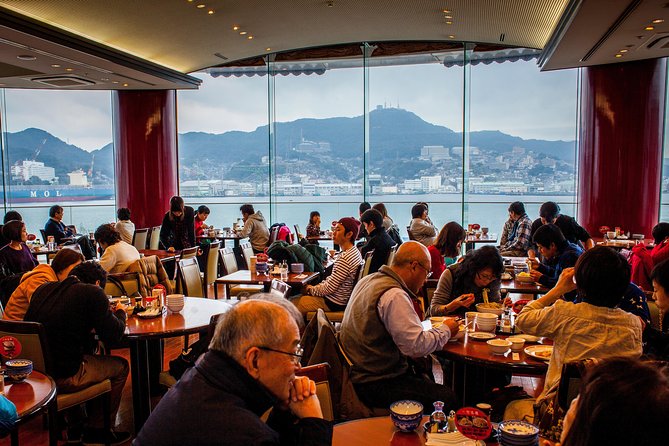
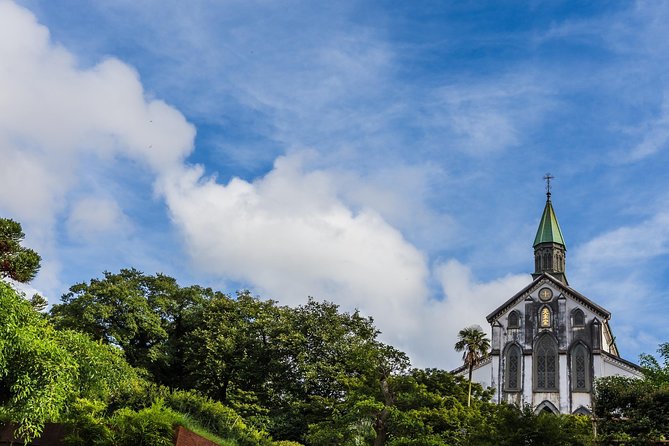
Then comes the European-style Oura Cathedral. This is one of those places where the architecture acts like a storybook cover. Your host can help you read what you’re seeing in the context of foreign presence in Nagasaki.
Expect a distinct visual shift from Chinatown lanes to a hillier, more open-feeling atmosphere. Even on cloudy days, cathedral exteriors tend to photograph well because the lines are crisp and the setting gives you angles.
Here’s the value of having a guide: your host can connect the cathedral to the broader patterns around Dutch Slope and the old trader residences. Without that, you might just see a beautiful building. With context, you understand why it exists in this city.
Possible consideration: the walk may involve some uphill movement. If you have mobility limits, tell your host early so they can adapt the pacing and choose safer routes.
Meganebashi Bridge: the 400-year-old spectacles moment
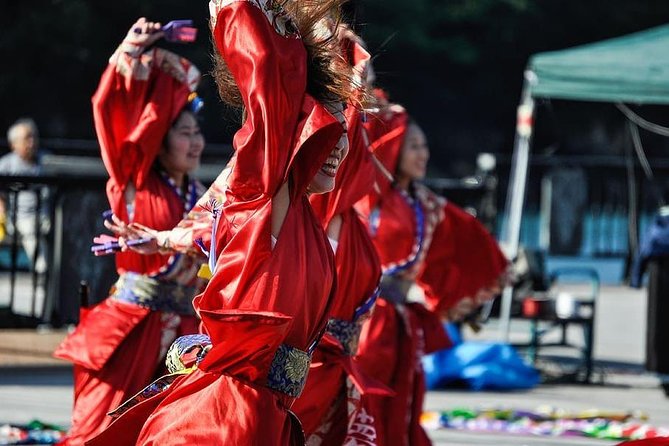
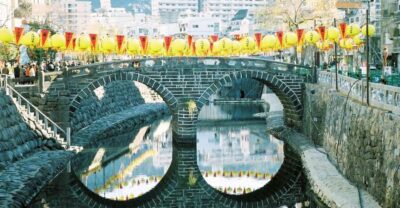
One of the most iconic moments is Meganebashi Bridge, often called the spectacles bridge. It’s described as 400-year old, and the name tells you what to look for: the bridge shape resembles glasses when viewed from the right angle.
This is a stop where timing matters. You’ll want a few minutes where you can look across and around, instead of snapping one quick photo and moving on. The private format makes that easier, because you can linger if the view pulls you in.
Why this matters: it’s not only a landmark. It’s also a way to feel the age of the city. Nagasaki has layers, and Meganebashi gives you one physical layer you can actually stand beside.
If it’s raining or windy, the bridge area can be a little slippery. Your best move is simple: wear shoes with grip and let your host set the pace on approach and exit.
Dutch Slope: stone street and old foreign trader residences
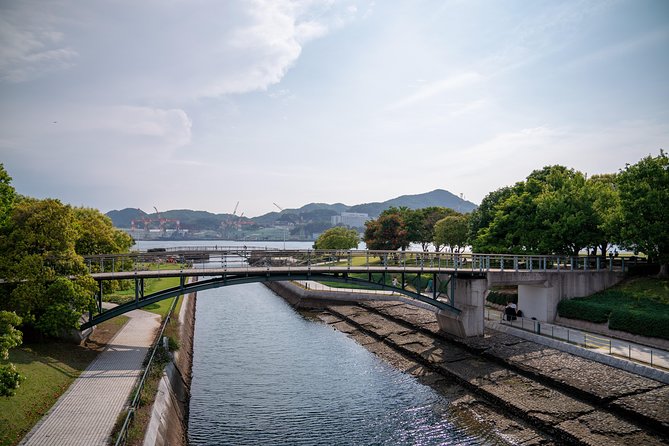
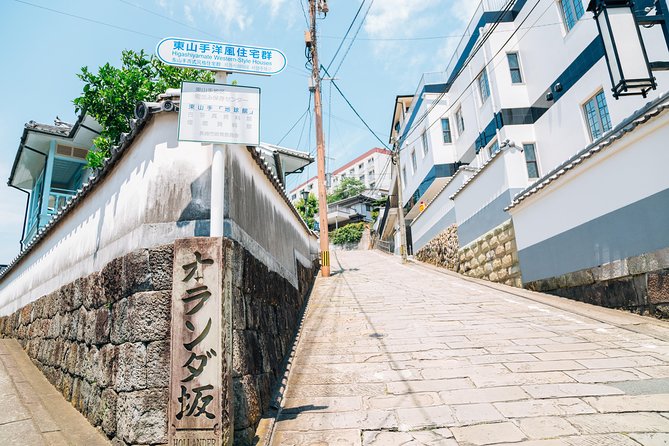
Dutch Slope is a stone-paved street associated with former Western-style residences of foreign traders. It’s one of the most atmospheric segments of a central Nagasaki walk because you’re moving along a street that feels designed for footsteps and careful living.
What I like about this stop is that it’s visually different from the religious and market areas. Instead of temple quiet or snack energy, Dutch Slope feels like the “in-between” space where trade, people, and buildings intersect.
Your host can connect Dutch Slope to the bigger port story, including context mentioned around Higashiyamato and Dejima. If you enjoy the city as a network, not a list, that connection makes the whole tour click.
Possible drawback: stone streets can be uneven underfoot. If you’re traveling with a foot injury or just sore legs, tell your host before the day gets rolling. Guides have shown they can adapt when someone needs extra help with stairs or footing.
How “custom” really shows up during the day
The itinerary isn’t locked. Even the places can shift based on your interests, with your host choosing what fits your day. That’s different from tours that feel like a conveyor belt.
You’ll also notice the tailoring in small ways:
- Your host can steer you toward what you care about most, rather than forcing a one-size route.
- If you want more viewpoints or fewer stops, you can usually shift the balance while walking.
- If you’re traveling with specific needs, a good host will respond quickly, like adjusting pacing or accommodating stairs.
In real examples, guides such as Moe and Senyo were praised for strong communication and practical flexibility. Guides like Miki were also noted for tailoring around an injury, while Armand was praised for finding ways to show sites without crowds. Those examples point to one core benefit: the host is the system that makes the day work for you.
What’s included, what isn’t, and how to plan your budget
Included is a private and personalized walking tour with a passionate local, typically 2 to 3 hours. Hotel meet-up is available on request for central locations. You also get a mobile ticket and group discounts.
Not included:
- Food and drinks
- Transportation, though walking is the main plan and public transport may be used if needed
- Tickets to attractions
- Gratuities
How I’d plan: treat the tour as the navigation and storytelling package. Then set aside cash for snacks, drinks, and any small purchases you want to make. If you like to eat while you travel, plan extra because Chinatown is designed for it.
Also, don’t underestimate how much you’ll walk in a “2 to 3 hour” experience. Older Nagasaki streets add up fast. Bring comfortable shoes and a light layer, even if it’s warm, since weather can change.
Who should book this Nagasaki private walk
This works best if you want:
- A personalized overview of central Nagasaki without doing the entire city solo
- A mix of street-level neighborhoods and major sights like Oura Cathedral and Meganebashi
- A guide who can adapt to your energy level and interests
It’s especially ideal for people with limited time, including visitors who arrive via cruise and need a strong, organized walk. It’s also a good match if you enjoy meaningful stops. The Fukusai-ji WWII mausoleum element adds weight in a way that can be hard to find on a self-guided route.
If you hate walking, this is probably not your style. But if you can handle a few kilometers, comfortable footwear will make a big difference.
Should you book this tour?
Yes, if you want a central Nagasaki walk that feels personal and well paced. The best part isn’t just the landmarks. It’s how your host stitches together Chinatown, Dutch Slope, and port-era context into a day that makes the city feel connected.
Book it if:
- You value flexibility and want to adjust the route as you go
- You want a private guide instead of crowd logistics
- You like architecture and street detail, plus one heavier WWII moment
Skip it if:
- You need fully included meals and paid-entry tickets
- You want a car-based tour with minimal steps
- You’re looking for a rigid, same-everywhere route
FAQ
How long is the Nagasaki Like a Local private experience?
It runs about 2 to 3 hours.
Where does the tour start?
The meeting point is the Nagasaki City Tourist Information Center at 1-60 Onouemachi, Nagasaki, 850-0058, Japan.
Is food included?
No. Food and drinks are not included, even if your route includes time for street-food-style sampling.
Is transportation provided?
The tour is primarily a walking experience. Your host may use public transport if needed, but transportation is not included.
Can I request a hotel meet-up?
Hotel meet-up is available on request for central locations.
Can I cancel for a full refund?
Yes. You can cancel up to 24 hours in advance for a full refund. If you cancel less than 24 hours before the start time, the amount paid will not be refunded.
Newly listed around Nagasaki
- Nagasaki Private Historical Tour with Licensed Guide★ 5.0 · 13 reviews
- Nagasaki Full Day Tour with Licensed Guide and Vehicle★ 5.0 · 27 reviews
- Taste Local Life: Nagasaki’s Historical Street Walking Tour★ 5.0 · 27 reviews
- Nagasaki: Half Day Sightseeing Private Tour with 1day Tram Ticket★ 4.5 · 8 reviews
- Nagasaki Private Customizable Full Day Tour★ 5.0 · 7 reviews
- Nagasaki Private Customizable Half Day Tour★ 5.0 · 16 reviews
- Nagasaki WW2 History and Culture Tour★ 5.0 · 19 reviews
- Gunkanjima Digital Museum Attraction Ticket★ 3.5 · 7 reviews
Nagasaki Tours, compared.
Nagasaki Full-Day Private Tour with Government-Licensed Guide
Read our review →
Nagasaki Half-Day Private Tour with Government-Licensed Guide
Read our review →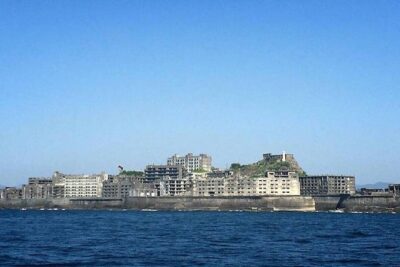
Visit Gunkanjima Island (Battleship Island) in Nagasaki
Read our review →
Taste Local Life: Nagasaki’s Historical Street Walking Tour
Read our review →
Nagasaki Full Day Tour with Licensed Guide and Vehicle
Read our review →
Nagasaki Street Food Adventure: Private Walking Tour with a Local
Read our review →
Nagasaki Private Tour with a Local – Highlights & Hidden Gems
Read our review →Browse the lists this tour appears in