
Review · LICENSED GUIDES & PRIVATE DRIVERS
Nagasaki Private Historical Tour with Licensed Guide
Nagasaki hits you fast, then lingers. This private day is built for history on foot, using public transport and a licensed guide to connect the dots between trade-era Nagasaki and the atomic bombing.
I love that your time is organized around the places that explain the city’s identity, not just random landmarks. I also like that you can choose between routes with the Mount Inasa viewpoints or the classic bridge and church stops.
The main thing to consider is the emotional weight. If the war imagery at the Atomic Bomb Museum might be too much, the tour can be adjusted with your guide during planning.
In This Review
- Key things I’d plan for before you go
- Price and logistics: what you get for $350 per person
- How the day actually runs on public transportation
- Stop 1 at the center of the story: Nagasaki Atomic Bomb Museum
- Urakami Cathedral: the brick church that still matters
- Peace Park and the Peace Memorial Statue: a promise you can walk through
- Spectacles Bridge (Meganebashi) or the Mount Inasa viewpoint choice
- Classic route: Spectacles Bridge (Meganebashi)
- Alternative route: Mount Inasa Observation Deck
- Glover Garden: western buildings you can walk through like a time machine
- Oura Catholic Church: another landmark, another layer of influence
- The best guides make this tour: names you should recognize
- Fitness, timing, and the real-world walking factor
- When does this tour feel like the right match?
- Should you choose the Mount Inasa route or the classic stops?
- Getting authentic value: why the guide + admissions combo matters
- Who I’d recommend this tour for, and who should pass
- Final call: should you book this Nagasaki private historical tour?
- FAQ
- How long is the Nagasaki private historical tour?
- Does the tour include admission fees?
- What is included besides the guide and admissions?
- Is lunch included?
- Is this a private tour or a group tour?
- Can the itinerary be changed if I’m sensitive to war-related images?
- What happens if I choose the Mount Inasa option?
- What is the booking and cancellation flexibility?
Key things I’d plan for before you go
- Licensed guide (English or Mandarin) keeps the stories grounded and clear
- Atomic Bomb Museum included, with admission paid for you
- Urakami Cathedral and Peace Park stops offer physical places to process the past
- Route choice matters if you pick Mount Inasa, Spectacles Bridge and Oura Catholic Church are not included
- Public transport walking day means lots of steps and city walking
Price and logistics: what you get for $350 per person
At $350 per person for about 7 hours, this isn’t a budget tour. But it is priced like a full-service day: you’re paying for a nationally licensed guide, admission fees, public transportation fees, and hotel or port pickup. For Nagasaki, that package can be good value because many travelers end up buying transit tickets, entry tickets, and paying for private guide time separately.
A quick reality check: this is still a walking tour. The total duration includes travel time, and the tour asks for a moderate fitness level. If you do not enjoy walking, this will feel like a long day.
One more practical note: this tour is averaging about 108 days booked in advance, so it’s not a last-minute move unless you are flexible. If you want a specific route choice, I’d book early.
More Private Guides in Nagasaki:
- Nagasaki Full-Day Private Tour with Government-Licensed Guide
★ 5.0 · 66 reviews - Nagasaki Half-Day Private Tour with Government-Licensed Guide
★ 5.0 · 53 reviews - Nagasaki Full Day Tour with Licensed Guide and Vehicle
★ 5.0 · 27 reviews
How the day actually runs on public transportation
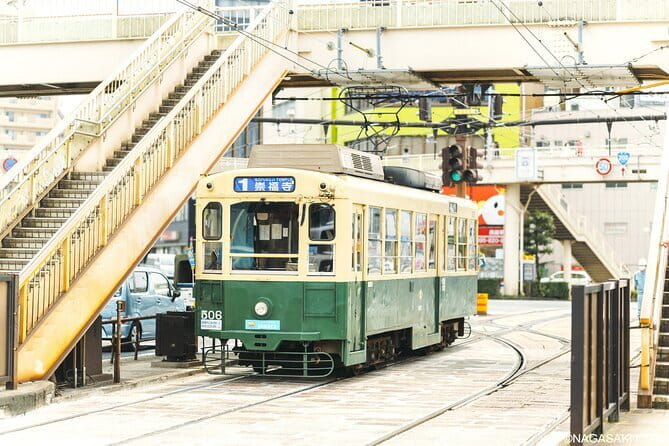
This experience is a private tour for just your group, but you do it the smart way: you use public transport rather than hiring a dedicated driver for the whole day. That matters because it keeps you from getting stuck in traffic and lets you see real neighborhoods at real speed.
Hotel or port pickup means you are not trying to figure out where to meet with local transit while dragging luggage. Once you are out in the city, the guide handles the flow, which is the difference between a frustrating day and a coherent one.
Because it’s a walking day, I’d travel with shoes you trust. Nagasaki’s weather can also change quickly, and the operator notes the itinerary might shift due to weather. So think of this as a planned framework that can flex.
Stop 1 at the center of the story: Nagasaki Atomic Bomb Museum
The day starts with the Atomic Bomb Museum (admission included). This stop is the emotional anchor, and it is designed to show the cityscape before and after the bombing, plus objects left behind.
What I like about having this early is that it gives you context for everything that follows. Later stops like the cathedral, the peace memorial, and the restored western-influenced neighborhoods land differently once you have the hard background first.
That said, this is not a casual museum visit. The tour explicitly allows an accommodation if you expect to feel sick or overwhelmed by shocking war-related images. Tell the guide at reservation or on the day, and they can switch to a less shocking itinerary.
If you want an easy way to prepare, go in with a simple plan: bring water, take breaks when you need them, and don’t rush yourself. This museum can reset how you interpret the rest of the city.
Urakami Cathedral: the brick church that still matters
Next comes Urakami Cathedral for about 1 hour. The standout details are specific and meaningful: it is a brick church building with a statue of Mary, and the sound of the Angelus bell, and it is described as having withstood the atomic bomb blast.
I like this stop because it doesn’t only tell the story, it shows how a place can hold memory. Even if you have read about the bombing before, a surviving physical landmark makes the history feel less abstract.
Admission is free here, so you’re not stacking extra costs on a stop that already does heavy emotional work. The tour includes time for you to take it in properly, not just snap a photo and move on.
A few more Nagasaki days to weigh up
- Taste Local Life: Nagasaki’s Historical Street Walking Tour
★ 5.0 · 27 reviews - Nagasaki WW2 History and Culture Tour
★ 5.0 · 19 reviews - World Heritage Shirakawa-go and Experience Tours from Kanazawa
★ 5.0 · 4,049 reviews - World Heritage Kyoto & Nara Uji Authentic Matcha Experience
★ 5.0 · 1,573 reviews
Peace Park and the Peace Memorial Statue: a promise you can walk through
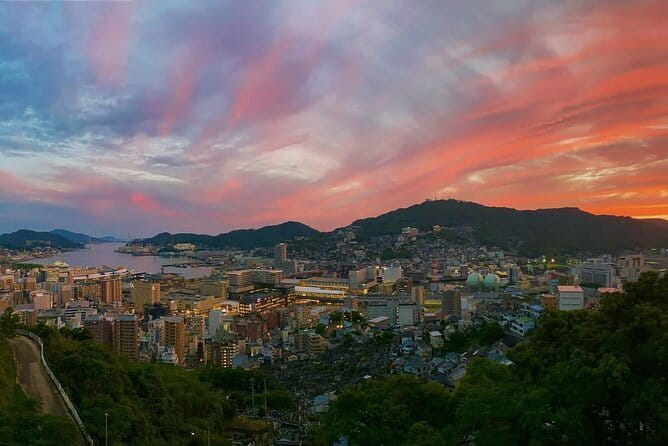
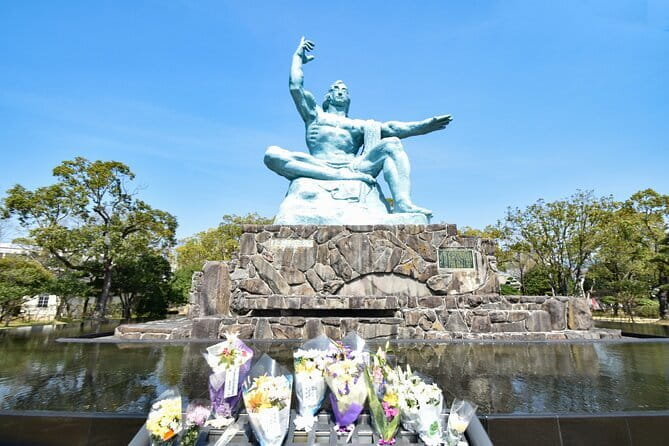
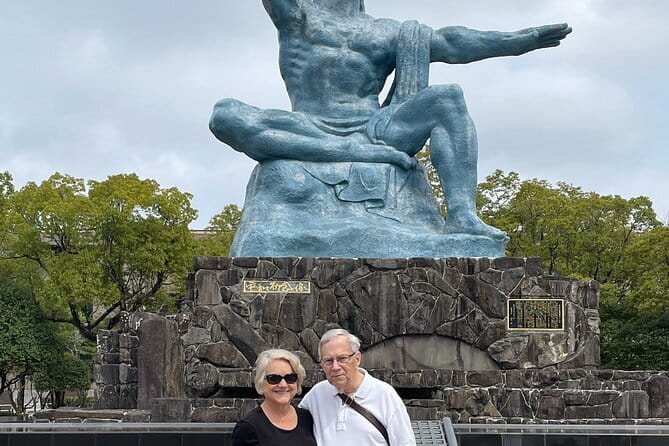
Then you head to the Peace Memorial Statue in Peace Park, about 1 hour. Peace Park sits on a small hill north of the Atomic Bomb Dropping Center Park, and the statue is tied to the pledge of never repeating the tragedy and the wish for lasting world peace.
This is where the tour’s tone shifts from impact to intention. The place is designed for reflection, and your guide’s role becomes important: they can help you understand why these monuments exist and how they fit into Nagasaki’s identity.
Admission is free, so you’re not spending again, but the value is in the guided context. If you want quiet time, build it into your pacing and let your guide know if you’d like fewer photos and more time simply standing and reading.
Spectacles Bridge (Meganebashi) or the Mount Inasa viewpoint choice
This tour includes a route fork that you should treat like an important decision, not a casual add-on.
Classic route: Spectacles Bridge (Meganebashi)
Spectacles Bridge (Meganebashi) is about 30 minutes, and it’s free. The catch: it’s not included if you choose the Mount Inasa option. If you still want it with Mount Inasa, you need to contact in advance to arrange it.
In practice, I like Meganebashi because it’s one of those Nagasaki details you can picture instantly, and it adds variety to the emotional stops earlier in the day. It also gives you a short reset before you move into the western-influenced areas.
Alternative route: Mount Inasa Observation Deck
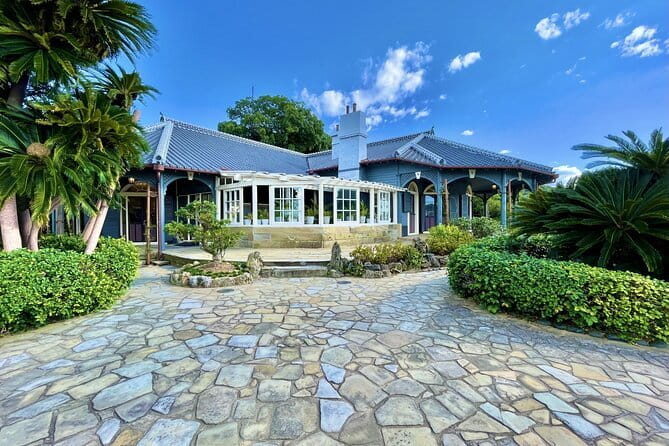
If you pick the Mount Inasa option, then your route uses Inasayama Observation Deck (about 1 hour, admission included). Mount Inasa is described as 333 meters tall, and the payoff is city views.
I prefer this option if you want a visual “wrap-up” feeling to the day. It can help you see the city’s shape and geography after everything else you learned. If you pick it, remember it changes your included stops later: Oura Catholic Church is not included on the Mount Inasa option.
Glover Garden: western buildings you can walk through like a time machine
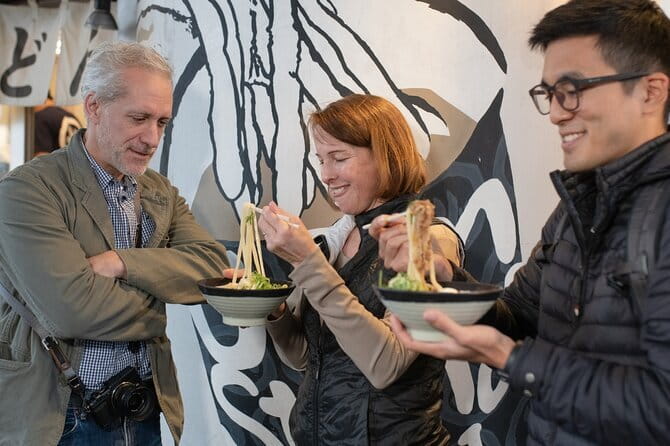
Glover Garden is about 1 hour and includes admission. The key detail here is that you see six Western-style buildings from the Meiji period, restored and relocated around the city.
This stop is a major reason Nagasaki feels different from many other Japanese cities. You’re not just looking at one building, you’re walking through a set of restored structures that connect to Nagasaki’s role in international trade and foreign influence.
If you care about architecture or urban history, this is a strong point in the day. Even if you do not, it still helps you understand why Europeans and Japanese influences overlapped in this city.
A practical tip: take your time at the building interiors and look for interpretive information that your guide points out. A guide can turn “interesting buildings” into a clear story about contact, commerce, and change.
Oura Catholic Church: another landmark, another layer of influence
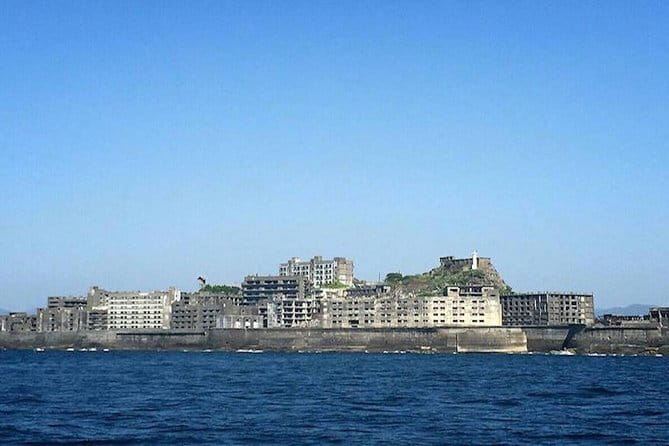
The tour also includes Oura Catholic Church for about 1 hour, with admission included. Like Meganebashi, it depends on your route choice: Oura Catholic Church is not included if you choose Mount Inasa.
If you come through Urakami Cathedral earlier, Oura Catholic Church gives you another angle on Christianity’s physical presence in Nagasaki. The guide’s role matters here because the meaning of these places is tied to more than architecture. It’s tied to what the city was and what it survived.
If you are the type who likes to compare similar sites across different neighborhoods, you’ll feel the logic in having both in a single day (when your chosen route includes them).
The best guides make this tour: names you should recognize
This tour wins on guidance quality, and the reviews are consistent about one thing: the guides know how to explain without making you feel rushed.
I saw names come up like Noriko (Norah) and Ken, and also Nora. The common thread is clear: they blend friendliness with professional command of the material. That matters because this itinerary moves between three emotional zones, wartime memory, peace reflection, and western-influenced city history.
If you get a guide like that, you’ll spend the day thinking in connections. The Atomic Bomb Museum doesn’t sit alone, and the restored buildings don’t feel like separate sightseeing. You leave with a city-level understanding.
Fitness, timing, and the real-world walking factor
This is a moderate physical fitness kind of day. You are walking, riding public transport, and moving between neighborhoods. Even if you don’t mind steps, it’s still easy to underestimate how tiring a full day can be.
The itinerary includes around 1 hour at multiple stops, plus travel time. That means you are not just “touring the highlights.” You’re moving steadily through several chapters of Nagasaki.
So bring:
- comfortable shoes
- a small bottle of water
- a plan to pause if you need it, especially after the Atomic Bomb Museum
If war imagery makes you physically unwell, the tour operator explicitly allows itinerary adjustment. That is a big deal. Use it.
When does this tour feel like the right match?
This experience is a great fit if you want:
- a guided historical day that ties together trade-era influence and World War II events
- a private format so your group can set the pace
- the efficiency of public transport plus pickup, without the hassle of planning connections
It may not be the best match if:
- you hate heavy museum time and cannot handle emotionally intense content
- you strongly prefer flexible wandering with no fixed stops
- walking is a problem for you
If you’re traveling as a couple, a small family group, or solo and you want structure, this is built for you. If you’re traveling with someone who gets overwhelmed quickly, tell the guide up front so they can shift the itinerary.
Should you choose the Mount Inasa route or the classic stops?
Here’s the simple decision rule I’d use.
Choose Mount Inasa if you want:
- more viewpoint time and a big visual payoff
- a route that ends up emphasizing the observation deck
Choose the classic route if you want:
- Spectacles Bridge (Meganebashi)
- Oura Catholic Church included in the day
The important part is that these choices affect what you see. So pick the option that matches how you want your memory of the day to feel, reflective viewpoints or classic landmarks.
Getting authentic value: why the guide + admissions combo matters
A big part of why this tour is worth considering is that it handles the stuff that slows people down: guide expertise, admissions, and the public transport legs between stops.
Admission is included for major stops such as the Atomic Bomb Museum and Glover Garden, and it’s included for Oura Catholic Church and the Inasayama Observation Deck depending on route. When you compare that to doing it all independently, the guide time and transit coordination can quickly outweigh the higher per-person price.
Also, because the guide is nationally licensed and can work in English or Mandarin, you’re not piecing together your understanding from signs alone. In a city with layered history like Nagasaki, that guided context changes the experience from sightseeing to comprehension.
Who I’d recommend this tour for, and who should pass
Book it if:
- you want a one-day framework for understanding Nagasaki’s modern history
- you like walking city neighborhoods with a plan
- you value a licensed guide who can explain the why behind the what
Pass or ask about alternatives if:
- you know you get physically ill from war-related images and you cannot commit to the museum time
- you need a low-walking day
- you want an itinerary with zero emotional intensity
Final call: should you book this Nagasaki private historical tour?
If you’re coming to Nagasaki for meaning, not just photos, I think this tour is a strong pick. The structure keeps you from getting lost in separate facts, and the stop mix covers the city’s trade-era European-Japanese overlap, then brings you into the atomic bombing reality, then back out into peace and preservation.
But be honest about your tolerance for intense content. The good news is that the tour explicitly supports an adjustment if the museum images hit too hard. Use that option if you need it.
My recommendation: if you’re willing to walk, you want a guided narrative, and you can handle the emotional center of the day, book it. It’s one of those experiences where the guide makes the whole day click.
FAQ
How long is the Nagasaki private historical tour?
It’s about 7 hours total, including travel time.
Does the tour include admission fees?
Yes. Admission fees are included for the Atomic Bomb Museum, Glover Garden, and (depending on your route) Oura Catholic Church and Inasayama Observation Deck. Urakami Cathedral, Peace Memorial Statue, and Spectacles Bridge are listed as free.
What is included besides the guide and admissions?
You get public transportation fees and hotel or port pickup, plus the licensed guide in English or Mandarin.
Is lunch included?
No. Lunch is not included, and you should budget about $10 to $20 per person.
Is this a private tour or a group tour?
It’s private, meaning only your group participates.
Can the itinerary be changed if I’m sensitive to war-related images?
Yes. If you may feel sick from shocking images, you can inform the guide at reservation or on the day, and the Atomic Bomb Museum visit can be replaced with a less shocking itinerary option.
What happens if I choose the Mount Inasa option?
If you choose Mount Inasa, then Spectacles Bridge (Meganebashi) and Oura Catholic Church are not included, and you instead go to the Inasayama Observation Deck.
What is the booking and cancellation flexibility?
Free cancellation is available. You can cancel up to 24 hours in advance for a full refund.
Newly listed around Nagasaki
- Nagasaki Full Day Tour with Licensed Guide and Vehicle★ 5.0 · 27 reviews
- Taste Local Life: Nagasaki’s Historical Street Walking Tour★ 5.0 · 27 reviews
- Nagasaki: Half Day Sightseeing Private Tour with 1day Tram Ticket★ 4.5 · 8 reviews
- Nagasaki Private Customizable Full Day Tour★ 5.0 · 7 reviews
- Nagasaki Private Customizable Half Day Tour★ 5.0 · 16 reviews
- Nagasaki WW2 History and Culture Tour★ 5.0 · 19 reviews
- Nagasaki Like a Local: Private & Custom Experience (2-3 hrs)★ 5.0 · 14 reviews
- Gunkanjima Digital Museum Attraction Ticket★ 3.5 · 7 reviews
Licensed Guides & Private Drivers, compared.
Tokyo 6hr Private Tour with Government-Licensed Guide
Read our review →
Kyoto Early Morning Tour with English-Speaking Guide
Read our review →
Tokyo 4hr Private Tour with Government-Licensed Guide
Read our review →
Kyoto 6hr Private Tour with Government-Licensed Guide
Read our review →
Hiroshima / Miyajima Full-day Private Tour with Government Licensed Guide
Read our review →Early Morning Tour with English-Speaking Guide
Read our review →
Tokyo Private Sightseeing Tour by Car- English speaking chauffeur
Read our review →
Mt Fuji Private Tour with English Speaking Driver
Read our review →Browse the lists this tour appears in