
Review · LICENSED GUIDES & PRIVATE DRIVERS
Nagasaki Full Day Tour with Licensed Guide and Vehicle
Nagasaki tells its story best with a local guide. This private, licensed-guided day gives you undivided attention and a custom route so you can focus on what matters most to you, from foreign-trader Nagasaki to the atomic-bomb sites. One thing to plan for: entrance fees and lunch are not included, and you only pick 3 to 4 stops, so you will want to choose wisely.
The payoff is in the details your guide brings, not in rushing from sign to sign. I especially like how guides such as Rikako, Yoshi, Hiromi, and Fumiko tailor the pace, add smart suggestions, and explain why each place fits into Nagasaki’s wider story. If you are not careful about budgeting admissions, you can end up surprised at the counter.
In This Review
- Key points that make this Nagasaki day tour work
- How the private 6-hour format gives you control in Nagasaki
- Inasayama Observation Deck, your quick city overview
- Glover Garden and Oranda-zaka, seeing Nagasaki’s Western connections
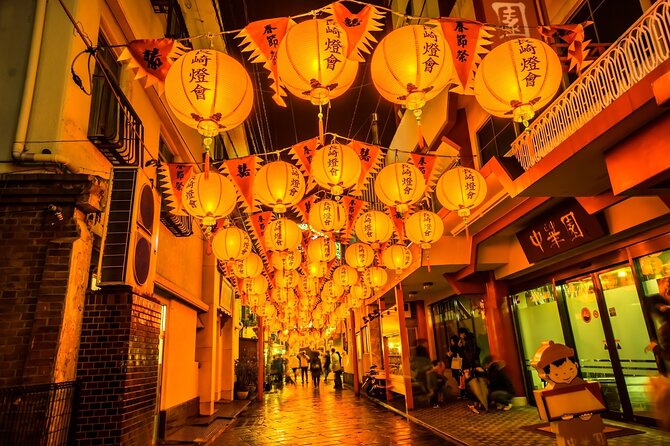
- Sofukuji Temple and Kofukuji Temple, Chinese Zen roots in Nagasaki
- Confucian Temple and the Chinese Museum of Successive Generations
- Dejima, the controlled port that changed everything
- Urakami Cathedral, Oura Church, and the Twenty-Six Martyrs Monument
- Meganebashi and the Nagasaki Prefectural Art Museum, when you want a softer pace
- Nagasaki Peace Park and the Atomic Bomb Museum, plan your headspace
- Why the guides and drivers can make or break your day
- Price and value: $598.53 per group, and the fees you should expect
- Smooth-day logistics, especially for cruise stops and families
- Should you book this Nagasaki full day tour?
- FAQ
- How long is the Nagasaki full day tour?
- Is this a group tour or private?
- What is the maximum group size?
- Can I choose which attractions we visit?
- Does the tour include pickup and transportation?
- Is the guide English speaking?
- Are entrance fees and lunch included?
- Which stops are listed as free admission?
- Are car seats available for children?
- What is the cancellation policy?
Key points that make this Nagasaki day tour work
- Private vehicle, not a cramped shuffle, so you can actually move between neighborhoods without burning time
- Licensed local English guide, with real city know-how, from photo spots to how long places will take
- Choose 3 to 4 sites from a strong lineup, so you can build a theme: Western Nagasaki, Chinese temples, Christianity, or peace memory
- Atomic Bomb Museum time can matter, and your guide will often adjust to your questions and interests
- Local extras show up in the small ways, including thoughtful touches like paper-crane gifts mentioned in multiple guide reviews
How the private 6-hour format gives you control in Nagasaki
This is built for people who want a real day, not a checklist. You have a private vehicle and a licensed local English speaking guide, and it stays focused on just your group, usually up to 2 people.
The schedule is about 6 hours, and that time is best used as a “story run” through Nagasaki’s key districts. Because you choose only 3 to 4 stops, you can keep the day from feeling like you are sprinting. You are also free to customize within the provided set of sights, so you are not forced into anything that does not interest you.
If you are coming in by cruise and only have limited time, this format helps a lot. You get someone who can prioritize and adjust on the fly, based on your preferences and the pace you want.
More Private Guides in Nagasaki:
- Nagasaki Full-Day Private Tour with Government-Licensed Guide
★ 5.0 · 66 reviews - Nagasaki Half-Day Private Tour with Government-Licensed Guide
★ 5.0 · 53 reviews - Nagasaki Private Historical Tour with Licensed Guide
★ 5.0 · 13 reviews
Inasayama Observation Deck, your quick city overview
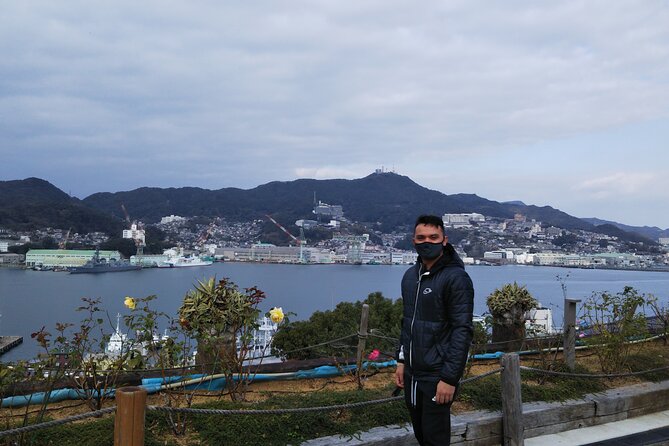
Starting at Inasayama Observation Deck is a smart move because it gives you bearings fast. Mount Inasa is close to the city center, and the view helps you understand why Nagasaki spreads the way it does.
The stop is short, about 20 minutes, and the admission ticket is free based on the info provided. If weather is clear, you will get a strong sense of the bay area and neighborhoods. If it is gray or rainy, you still get an orientation, and your guide can point out what you are likely to be seeing below.
Practical consideration: if you hate viewpoints, you may not love this start. But even then, it can be a useful setup for later stops, especially around the port and the Peace Park area.
Glover Garden and Oranda-zaka, seeing Nagasaki’s Western connections
Glover Garden is an open-air museum on a hill, centered on mansions and related buildings from Nagasaki’s foreign residents. It is the kind of place where you do not just look, you learn how the city’s port history shaped everyday life.
Plan about 1 hour for this stop. Admission is not included, so factor in ticket cost. The “why it matters” angle is what you are paying for here. Your guide can connect the estate vibe to the broader story of foreign settlement and trade.
Then, Oranda-zaka, the Dutch Slope, is a stone-paved street that brings you back to the walking scale. It is tied to the period after the port opened to foreign trade in 1859. This is great if you like photos, and it also helps you shift from museum viewing into street-level atmosphere without changing days or neighborhoods too drastically.
Sofukuji Temple and Kofukuji Temple, Chinese Zen roots in Nagasaki
Nagasaki is home to a lot of Chinese-influenced religious sites, and the Obaku school of Zen shows up clearly here. Sofukuji Temple is part of the Obaku Zen tradition and was originally built in 1629 for Nagasaki’s Chinese residents. Kofukuji Temple is in the Teramachi Temple Town area and is described as one of the oldest Chinese-founded temples in Nagasaki.
Expect short visits, about 20 minutes each. Admissions are not listed as included, so check costs when you finalize your stop list. The benefit is that these places give you a different angle than the port-and-church cluster. Instead of focusing only on European connections, you see how Chinese communities also shaped Nagasaki’s culture.
If you want a day that feels balanced, I like pairing these temples with either Dejima or the Christianity sites. You end up with a fuller map of who influenced the city and how.
A few more Nagasaki days to weigh up
- Nagasaki: Private Walking Tour with a Local
★ 4.7 · 79 reviews - Visit Gunkanjima Island (Battleship Island) in Nagasaki
★ 4.0 · 32 reviews - Taste Local Life: Nagasaki’s Historical Street Walking Tour
★ 5.0 · 27 reviews - Nagasaki Street Food Adventure: Private Walking Tour with a Local
★ 5.0 · 26 reviews
Confucian Temple and the Chinese Museum of Successive Generations
This stop is for people who like history that is not just war or trade. The Confucian Shrine, also called Kōshi-byō, is one of the shrines dedicated to Confucius in Japan, built in 1893 by Nagasaki’s Chinese community.
It is a shorter stop, around 15 minutes. Admission is not included. Even so, this can be a powerful “pause” in the day because it shifts your attention to values, community memory, and the role of Chinese learning in Nagasaki.
If you tend to skip shrines and temples because you think you know what they will be, this one can change your mind. Your guide can help you read the symbolism and historical context instead of just walking through.
Dejima, the controlled port that changed everything
Dejima is a major payoff stop if you want the port story to feel concrete. It was a man-made island built in 1636 to segregate Portuguese residents from Japanese society and to control missionary activity. Later, the island’s role evolved, and it becomes a key piece of understanding how Nagasaki managed foreign presence.
Plan about 50 minutes here. Admission is not included. The site is short enough to fit a 6-hour day, yet long enough to notice how the layout supports the meaning of the place.
If you only have time for one “international trade and policy” stop, this is often the one. It is also a good place for questions, because the whole setup is basically a story about boundaries and control.
Urakami Cathedral, Oura Church, and the Twenty-Six Martyrs Monument
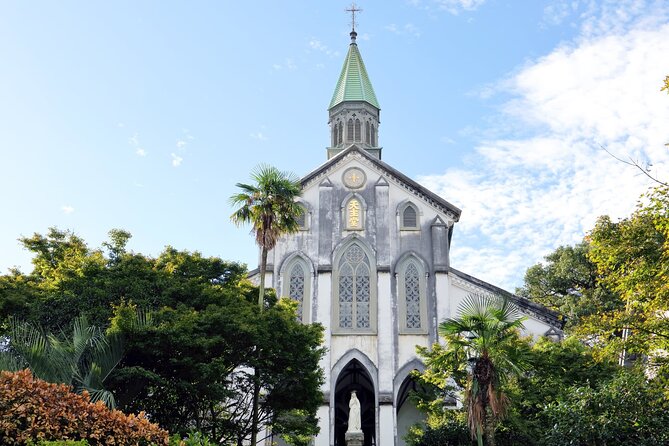
Christian sites in Nagasaki have a different tone than the European-trader mansions. Urakami Cathedral is a working Catholic church today, in a large red brick European-style building. Oura Church, built in 1864 by a French missionary, is tied to the growing foreign merchants community in the city.
These stops are short, around 20 minutes each, and admissions are not included. Then the Twenty-Six Christian Martyrs Monument and adjacent museum mark the execution of Christians here on February 5, 1597.
This area can be emotional, and I appreciate that the tour format gives you a guide to keep the context clear, not sensational. In multiple guide experiences, people valued how the tour went at a respectful pace and answered questions rather than rushing you out.
A practical consideration: because these are separate stops, you may need to choose whether you want the cathedral focus (Urakami), the earlier church history (Oura), or the martyr story (the monument and museum). Many people naturally mix at least two of these.
Meganebashi and the Nagasaki Prefectural Art Museum, when you want a softer pace
After heavier historical stops, Meganebashi is a nice breather. The Spectacles Bridge spans the Nakashima River, and the name comes from the bridge’s resemblance to eyeglasses. This one is free based on the provided info, and it is only about 15 minutes.
From there, the Nagasaki Prefectural Art Museum can fit if you still have energy. The tour lists it as a 20-minute stop, and admission is not included. It is positioned by the port area, so it also works as a visual landing point before you shift toward the Peace Park and atomic bomb sites.
If you prefer fewer museums, you can swap this type of stop for another item on your priority list. The real strength of this day is choice.
Nagasaki Peace Park and the Atomic Bomb Museum, plan your headspace
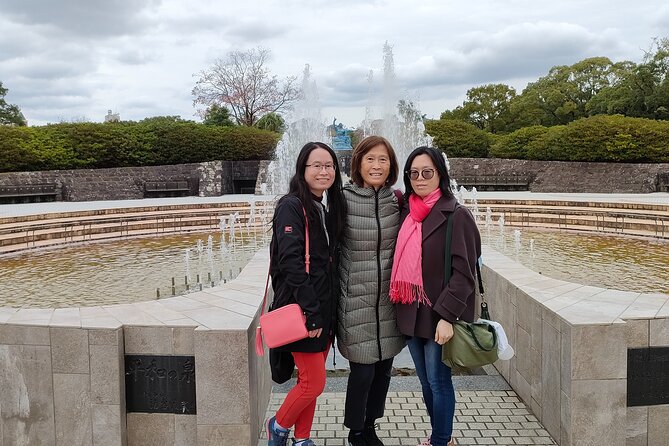
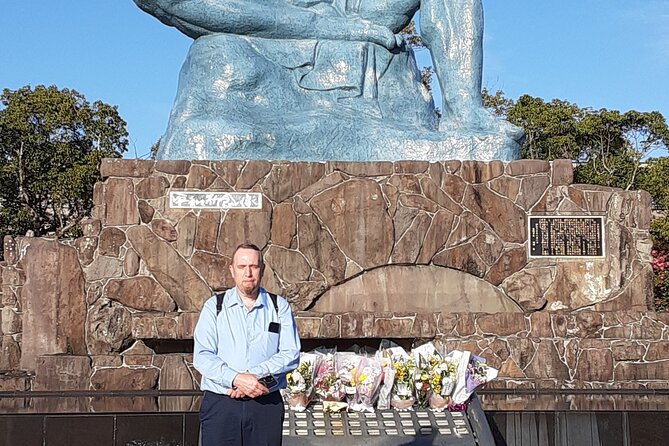
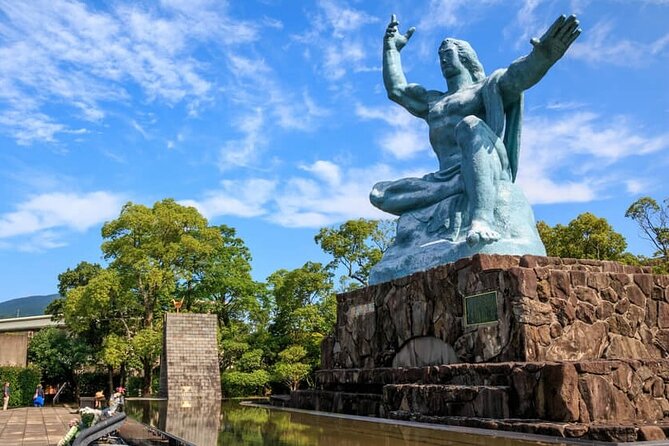
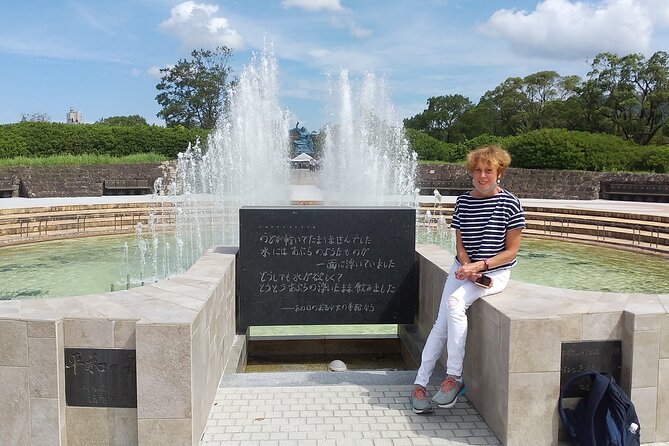
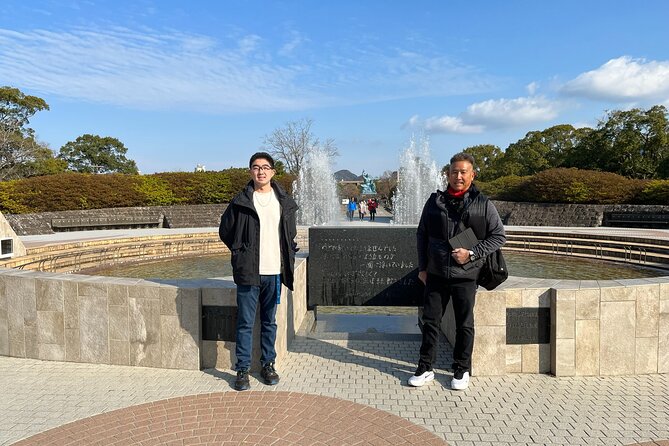
This is the part of Nagasaki that demands seriousness. The Peace Park is built near the atomic bomb hypocenter and commemorates victims of the 1945 bombing, with a central Peace Statue meant to symbolize hope and remembrance. Peace Park admission is listed as free.
Then the Nagasaki Atomic Bomb Museum documents the devastation caused by the atomic bomb and the city’s recovery. The stop is short on paper, about 15 minutes, and admission is not included. But in practice, guides have made time for extra attention in this area when people wanted it.
My advice: if this topic hits close to home, do not feel you must see everything in a set time box. This tour works best when you tell your guide what kind of pace you want here. The best guides help you focus on meaning and let you absorb without feeling rushed.
Why the guides and drivers can make or break your day
I want to be blunt: with a private tour, the guide is the product. Here, the pattern in guide experiences is strong. People repeatedly highlighted how local-born guides like Rikako and Yoshi guided people through history with clarity and flexibility, and how they could adjust the day without derailing the route.
Guides also made small, memorable touches. One guide prepared gift bags that included a hand-made crane, cake, and an eye mask. Others mentioned paper-crane gifts. Those details are not the reason you book, but they add warmth and show pride in hosting you properly.
Then there is the flexibility. Some people asked to add extra stops in the day, such as the Penguin Aquarium, and guides worked it into a workable flow. Another person mentioned getting help securing tickets in advance for a Battleship Island visit, which can be a big deal when you are trying to maximize a short port day.
Even with all the historical stops, people valued that the day did not feel rushed. That matters in Nagasaki, where it is easy to cram too much and then forget most of it.
Price and value: $598.53 per group, and the fees you should expect
At $598.53 per group (up to 2), this is not a cheap excursion. But you are paying for something you cannot fake: a licensed guide, private transportation, and a custom 3 to 4 stop plan with local pacing.
Here is where the value math gets real. You save time versus self-guided travel, especially when switching between neighborhoods that each tell a different part of the Nagasaki story. You also get your questions answered, which makes places like Dejima, the martyr site, and the Atomic Bomb Museum far more meaningful than a quick pass.
The main cost you still own: entrance fees, lunch, and other personal expenses are not included. In addition, guide entry fees are only covered for the sights listed in the What to expect set, so you should confirm what you will personally pay once you lock your 3 to 4 picks.
One important practical lesson from real-day experience: do not assume admissions are handled for you. If your expectation is that someone else buys the tickets, ask directly what is included for your chosen stops. It will save stress later.
To help you plan, the tour info says these are free: Inasayama Observation Deck, Meganebashi, and Nagasaki Peace Park. Everything else is marked as not included, so budget for tickets there.
Smooth-day logistics, especially for cruise stops and families
Pickup is offered, and that is a big deal if you are not staying in the city center. A mobile ticket is provided, which can reduce friction on the day you arrive.
One more logistics note that matters if you travel with kids: car seats and booster seats are limited, and rear-facing car seats are not available. If you need one, contact directly so they can confirm what is possible.
This is also a private tour activity, so only your group participates. And you cannot combine multiple tour groups into one, so plan your party arrangement early.
Service animals are allowed, which helps if you have a companion animal.
Should you book this Nagasaki full day tour?
Book it if you want a guided, private day that focuses on story, not just stamps on a map. It is a great fit when you care about Nagasaki’s foreign trading past, the Chinese temple influence, Christianity’s complex history, and the war memory around Peace Park and the Atomic Bomb Museum.
I would especially consider this if you are short on time, like a cruise port day, because the private vehicle and custom route reduce wasted motion.
Skip or think twice if you want a big quantity of stops, because the tour is intentionally built around choosing 3 to 4 sites. Also, if you hate paying separate admissions, this tour will feel incomplete since only a few stops are listed as free.
If you do book, my best advice is simple: pick a theme for the day. For example, do Western Nagasaki plus a viewpoint, then finish with peace memory. Or do Chinese temples plus Christianity, then add one port-history stop like Dejima. When you build your day around a theme, the guide’s explanations really click.
FAQ
How long is the Nagasaki full day tour?
It runs for about 6 hours.
Is this a group tour or private?
It is a private tour/activity, and only your group participates.
What is the maximum group size?
The price is per group up to 2 people.
Can I choose which attractions we visit?
Yes. You can choose 3 to 4 attractions from the list of sights provided.
Does the tour include pickup and transportation?
Pickup is offered, and you travel in a private vehicle.
Is the guide English speaking?
Yes. The tour includes a licensed local English speaking guide.
Are entrance fees and lunch included?
No. Entrance fees, lunch, and other personal expenses are not included.
Which stops are listed as free admission?
The Inasayama Observation Deck, Meganebashi, and Nagasaki Peace Park are listed as free.
Are car seats available for children?
There are only limited car seats and booster seats. Rear-facing car seats are not available, so you need to contact directly if you require one.
What is the cancellation policy?
You can cancel up to 24 hours in advance for a full refund.
Newly listed around Nagasaki
- Nagasaki Private Historical Tour with Licensed Guide★ 5.0 · 13 reviews
- Taste Local Life: Nagasaki’s Historical Street Walking Tour★ 5.0 · 27 reviews
- Nagasaki: Half Day Sightseeing Private Tour with 1day Tram Ticket★ 4.5 · 8 reviews
- Nagasaki Private Customizable Full Day Tour★ 5.0 · 7 reviews
- Nagasaki Private Customizable Half Day Tour★ 5.0 · 16 reviews
- Nagasaki WW2 History and Culture Tour★ 5.0 · 19 reviews
- Nagasaki Like a Local: Private & Custom Experience (2-3 hrs)★ 5.0 · 14 reviews
- Gunkanjima Digital Museum Attraction Ticket★ 3.5 · 7 reviews
Licensed Guides & Private Drivers, compared.
Tokyo 6hr Private Tour with Government-Licensed Guide
Read our review →
Kyoto Early Morning Tour with English-Speaking Guide
Read our review →
Tokyo 4hr Private Tour with Government-Licensed Guide
Read our review →
Kyoto 6hr Private Tour with Government-Licensed Guide
Read our review →
Hiroshima / Miyajima Full-day Private Tour with Government Licensed Guide
Read our review →Early Morning Tour with English-Speaking Guide
Read our review →
Tokyo Private Sightseeing Tour by Car- English speaking chauffeur
Read our review →
Mt Fuji Private Tour with English Speaking Driver
Read our review →Browse the lists this tour appears in