
Review · LICENSED GUIDES & PRIVATE DRIVERS
Nagasaki Full-Day Private Tour with Government-Licensed Guide
One city, two worlds, one haunting lesson.
This private Nagasaki walking tour is built to mix memorial sites with the places that shaped Nagasaki’s international character, and your guide steers the day toward what you care about most.
I love the flexibility to choose 3-4 stops, so your route can match your pace and interests. I also love the government-licensed English guide approach, which turns quick sightseeing into a guided, understandable story.
One possible drawback: it’s a walking and public-transport plan, so you’ll want comfortable shoes and to budget for entrance fees at many stops.
In This Review
- Key highlights you should know
- How one private walking day turns Nagasaki into a story
- Meeting up in Nagasaki, then moving with trams and on-foot pickup
- Choosing your 3-4 stops: build your day around a theme
- A memorial-focused day
- A foreign-trade Nagasaki day
- A temples and church mix
- Nagasaki Peace Park: the emotional anchor stop
- Atomic Bomb Museum time: when facts hit close to home
- Inasayama Observation Deck: a needed view break
- Foreign settlement landmarks: Glover Garden and the port-city clues
- Temples and Chinese influence: Sofukuji Temple and Kofukuji Temple
- Church landmarks: Urakami Cathedral, Softer brick, and hard history
- The Twenty-Six Christian Martyrs Monument: focus and quiet meaning
- Smaller stops that make Nagasaki feel real: Dutch Slope and Meganebashi
- Lantern festival option: only if timing matches
- Art and modern context: Nagasaki Museum of History and Culture, plus the art museum
- Price and logistics: is $155.22 per person a good deal?
- What to bring and how to get the best out of a walking day
- Should you book this Nagasaki private tour?
- FAQ
- How long is the Nagasaki private tour?
- Is this tour private?
- What does the tour include?
- How do we move around during the tour?
- Are entrance fees included?
- What kinds of sites can I choose from?
- Can I cancel for a full refund?
- Is there an admission-free option on the tour?
- Is the tour friendly for most travelers?
- Are service animals allowed?
Key highlights you should know
- 3-4 stop customization means you get depth at the places you pick, not a long check-list you rush through
- Licensed English guiding keeps the explanations clear, with names and context you can actually use
- Pickup on foot plus trams and buses keeps the day practical without needing a private vehicle
- Peace Park and Atomic Bomb Museum time gives you a meaningful, unhurried look at the day Nagasaki was changed
- Foreign-trade Nagasaki landmarks like Glover Garden and Dejima help explain why the city feels different
- Family-friendly pacing works well, with guides who can shift tone to fit kids and curious adults
How one private walking day turns Nagasaki into a story
Nagasaki can feel like two cities at once: quiet memorial spaces and bustling streets where older trade routes and foreign settlements left their marks. This tour works because it’s private, so the guide can slow down where the story needs a pause and speed up where you just want the sights.
You get a full 6 hours to explore, but you do not drown in stops. Instead, you pick 3-4 sites, and the guide stitches them together into a coherent route so you come away feeling like you understand what you saw, not just that you saw it.
If you like getting orientation fast, this is one of the better ways to do it. Many guides for this experience, including Hiro, Mei (Miyoko T), Yoko, and Yoshi, are praised for building a plan quickly once they understand what you want.
More Private Guides in Nagasaki:
- Nagasaki Half-Day Private Tour with Government-Licensed Guide
★ 5.0 · 53 reviews - Tokyo 6hr Private Tour with Government-Licensed Guide
★ 5.0 · 3,902 reviews - Kyoto Early Morning Tour with English-Speaking Guide
★ 5.0 · 1,427 reviews
Meeting up in Nagasaki, then moving with trams and on-foot pickup
The tour is designed as a walking and public-transport experience. You have pickup offered from your Nagasaki hotel, but the meet-up is on foot within a designated area, which usually works best when you can get to a nearby transit or starting point without stress.
No private vehicle is included. That is a plus for value and an important detail for expectations: the day runs on your feet, plus the local system, not a car that saves energy at every turn.
Practically, you should treat this like a city day out: comfortable walking shoes, water, and a willingness to use trams or buses when it makes sense. One of the big perks of this style is that you see Nagasaki the way locals do, not just as scenery behind a window.
Choosing your 3-4 stops: build your day around a theme
The biggest decision here is not which day you go, it’s which 3-4 places you want to prioritize. The tour is customizable, so you can steer the day toward memorial sites, foreign settlement history, temples and Chinese influence, Roman Catholic landmarks, or a viewpoint moment to break up the walking.
Here are theme ideas you can use to choose fast. You are not locked into one style, but picking a theme helps your guide organize the route.
A memorial-focused day
Pair Nagasaki Peace Park with the Nagasaki Atomic Bomb Museum. Add one more stop that gives contrast, like Inasayama Observation Deck for a view over the city, or Urakami Cathedral to connect faith and history.
Peace Park is free for the short visit on the plan. The museum is not marked as free, so you should expect to pay entrance if you select it.
A few more Nagasaki days to weigh up
- Nagasaki: Private Walking Tour with a Local
★ 4.7 · 79 reviews - Visit Gunkanjima Island (Battleship Island) in Nagasaki
★ 4.0 · 32 reviews - Nagasaki: Private Tour with Local Guide
★ 4.8 · 18 reviews
A foreign-trade Nagasaki day
Choose Glover Garden and Dejima, then add one of the nearby church or Chinese-influenced sites like Oura Church or Sofukuji Temple. If you want a street-level feeling of history, Dutch Slope and Meganebashi fit well as shorter stops.
This mix helps you understand why Nagasaki’s story does not read like a single national narrative. It reads like a port city shaped by interaction, separation, and return.
A temples and church mix
Pick a Zen stop like Sofukuji Temple or Kofukuji Temple. Then balance it with a Catholic landmark such as Oura Church or Urakami Cathedral.
This combination is especially good if you like seeing how different communities left architecture and rituals behind.
Nagasaki Peace Park: the emotional anchor stop
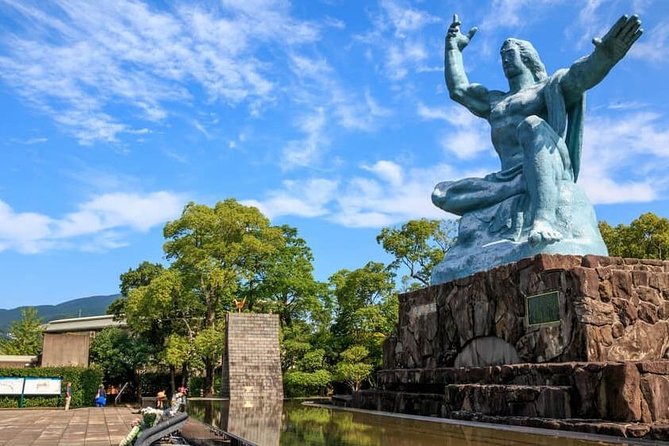
Nagasaki Peace Park is the most direct entry point into the city’s modern meaning. It commemorates the atomic bombing on August 9, 1945, including the immense destruction and the large loss of life that followed.
On this tour plan, it’s a short stop, about 15 minutes, with admission free. That time can still feel long if you slow down and read the key parts your guide points out.
What makes this stop work on a private day is the way your guide frames it alongside the other locations you choose. Instead of treating Peace Park as a standalone moment, the guide ties it to the broader city story, including how Nagasaki rebuilt and how international contact has always been part of the city’s identity.
If you want a calm experience, this is also where you can set your pace. You can linger slightly with the guide’s guidance and then move on without feeling rushed out the door.
Atomic Bomb Museum time: when facts hit close to home
The Nagasaki Atomic Bomb Museum sits near the hypocenter area associated with the August 9, 1945 bombing. The museum documents the devastation caused by the atomic bomb and the city’s recovery.
It’s listed as a 30-minute stop on the plan, and entrance is not included. If you choose it, it’s a strong candidate for your day’s most impactful block.
One reason private guiding matters here is emotional balance. You still get the seriousness, but you also get context that helps you understand what you are looking at. It is not just looking at displays, it is learning what the city went through, then seeing how other parts of Nagasaki coexist with that memory.
For many people, pairing the museum with Peace Park is the clearest route. It gives you both the open memorial space and the documented account in one day.
Inasayama Observation Deck: a needed view break
After memorial sites, your brain often needs a reset. Inasayama Observation Deck, reached via Mount Inasa (333 meters), is built for that moment.
This stop is short, about 15 minutes, and marked free. The real value is the outlook over the city, which helps you visualize Nagasaki not as a set of points on a map, but as a coastal place with hills, harbor angles, and neighborhoods you can recognize later.
You can reach the summit by ropeway, bus, or car, depending on what fits your route. Even in daylight, the view adds perspective, and if you choose your timing well, it can set you up for night views later on your own time.
Foreign settlement landmarks: Glover Garden and the port-city clues
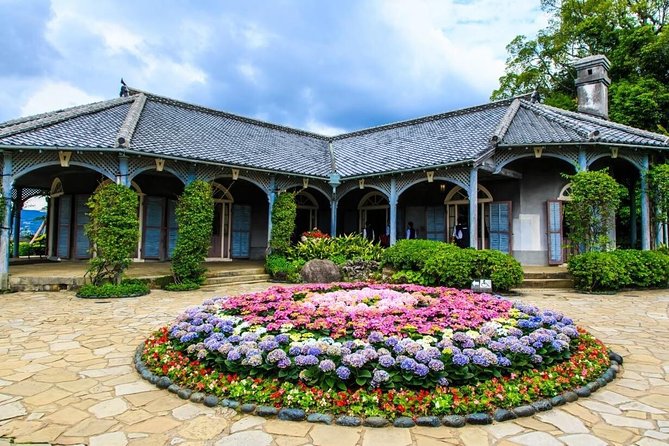
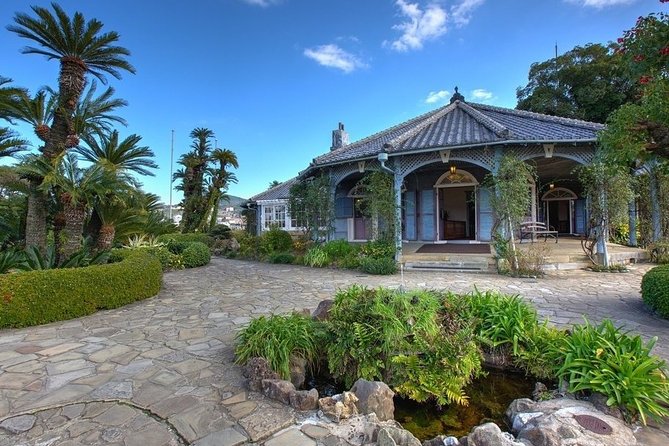
Nagasaki’s foreign settlement story shows up visually and spatially, and the tour gives you a way to connect the dots. Glover Garden is an open-air museum with mansions of former foreign residents and related buildings, located on a hill where Western merchants historically operated.
On this plan, the stop is 15 minutes, and admission is not included. That means you’ll want to decide what matters to you: architecture, trade-era stories, or simply the photo-friendly vantage as you move through the complex.
Then there is Dejima, a man-made island constructed in 1636 to segregate Portuguese residents from the Japanese population and control missionary activities. It is another 15-minute stop with entrance not included.
Dejima matters because it turns an abstract historical idea into a physical place. You see the separation model, then your guide connects it to why Nagasaki kept growing as a port even under restrictions.
If you choose both Glover Garden and Dejima, you get a useful contrast: one spot shows the presence and lifestyle of foreign residents, the other shows the control and limitations.
Temples and Chinese influence: Sofukuji Temple and Kofukuji Temple
If you like history you can touch, Nagasaki’s temples deliver it. Sofukuji Temple belongs to the Obaku school of Zen Buddhism and was originally built in 1629 for Nagasaki’s Chinese residents. The temple is described as having a Chinese arch-style design, which can help you spot what makes it distinct.
Kofukuji Temple is another Chinese-founded temple in the city’s Teramachi area, sometimes called Temple Town. It is described as the birthplace of the Obaku school in Japan, which is a big detail to know before you walk inside.
Both stops are short on the plan, about 15 minutes for Sofukuji and around 30 minutes for Kofukuji. Entrance is not included, so expect to pay if you choose them.
This is one place where a good guide changes the experience. Instead of treating the temple as a quick photo stop, you learn what Obaku means in Nagasaki’s context and how the city’s international relationships shaped its spiritual landscape.
Church landmarks: Urakami Cathedral, Softer brick, and hard history
Nagasaki has Catholic landmarks that are both beautiful and heavy with story. Urakami Cathedral is described as having a tragic yet interesting history, and today it is a working church in a large European-style red brick building.
On the plan it’s about 15 minutes and entrance is not included. Even if you are not religious, it is worth visiting because it shows how faith communities endured major upheaval.
Oura Church is another key stop. It is described as built in 1864 by a French missionary for the growing community of foreign merchants in the city.
The route often feels like a shift from memorial tone to community identity, and the guide helps you understand how those threads tie together in Nagasaki.
If you want a Roman Catholic theme day, combining Urakami Cathedral with Oura Church is a strong choice. Add one temple stop if you want broader perspective on how multiple traditions coexisted in the city.
The Twenty-Six Christian Martyrs Monument: focus and quiet meaning
The Twenty Six Christian Martyrs Monument and adjacent museum commemorate the 26 Christians executed on February 5, 1597. It’s a 30-minute stop, and entrance is not included.
This is one of those stops where your guide’s pacing really matters. If you choose it, treat it as a moment to slow down. It pairs well with Dejima or the church sites because it helps you connect periods of restriction and persecution to later shifts in Nagasaki’s religious landscape.
Smaller stops that make Nagasaki feel real: Dutch Slope and Meganebashi
Two short additions can make your day feel more like a real walk through Nagasaki’s streets.
Dutch Slope is a stone-paved street leading up a hillside where Dutch traders resided after the port opened for foreign trade in 1859. It’s short on the plan, listed without a specific time block in the summary, and entrance is not included.
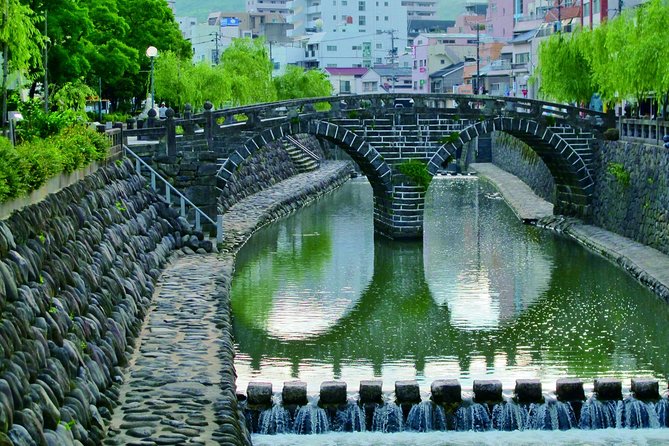
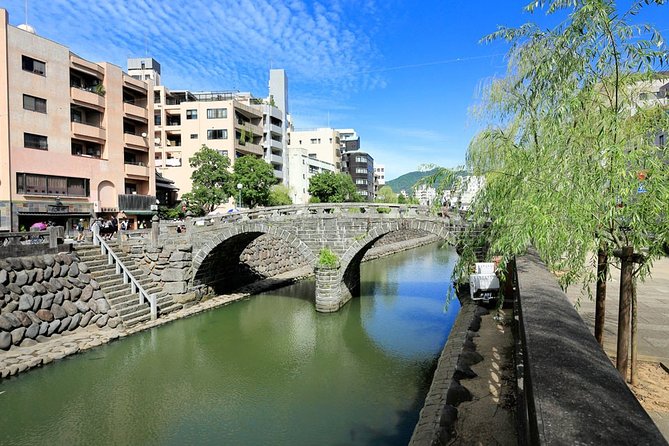
Meganebashi, the Spectacles Bridge, is a stone bridge over the Nakashima River in downtown Nagasaki. The name comes from the bridge shape resembling spectacles.
These are the stops that work best as fillers between bigger sites. They break up the day, give you quick visual wins, and help you remember where you were, not just what you learned.
Lantern festival option: only if timing matches
Nagasaki Lantern Festival on this plan connects to Kunchi, the Suwa Shrine festival held annually October 7-9, celebrated for about 400 years. It includes different aspects of Chinese influences as part of the festival description.
The stop is about 15 minutes, and it’s marked free on the plan. The catch is obvious: this is only meaningful if you happen to be in Nagasaki during the festival dates.
If you are going in October and love local culture, this can be a great contrast to the more solemn stops like Peace Park.
Art and modern context: Nagasaki Museum of History and Culture, plus the art museum
Nagasaki isn’t only old buildings and memorials. The Nagasaki Museum of History and Culture is a modern museum dedicated to Nagasaki as one of Japan’s major international trade ports.
It’s listed as a 15-minute stop, and entrance is not included. If you are the type who likes background before you walk into the next site, this can help you make sense of what you’re seeing.
The Nagasaki Prefectural Art Museum is another modern option by the port. It’s about a 30-minute stop, with entrance not included.
These are good picks if your feet are tired and you want air-conditioned, structured sightseeing. They can also be ideal when you want a break from churches and temples without turning your day into pure shopping.
Price and logistics: is $155.22 per person a good deal?
At $155.22 per person for a roughly 6-hour private tour, the value depends on what you want from the day.
You are paying for three big things: a government-licensed English guide, private pacing for only your party, and customization. Since you choose 3-4 sites, you are not paying for long travel time between random attractions. The route is designed to pack meaningful stops into a walk-and-transit day.
It also helps that pickup is offered, and you get a mobile ticket. If you dislike coordinating multiple tickets and finding the right order on your own, this is the easiest way to get a coherent plan in one day.
Budget reality check: transportation costs, lunch, and entrance fees are not included. Peace Park and the observation deck are free if you choose them, but many of the major museums and temples are not.
What to bring and how to get the best out of a walking day
Plan your day like you will walk. This tour is built as walking and public transport, and pickup is on foot, not a door-to-door car routine.
Wear shoes that handle uneven sidewalks and a bit of climbing, especially if you include hillside areas like those around Glover Garden. Bring a water bottle and something light to snack on, since lunch is not included.
When you meet your guide, come with a short list of priorities. Guides like Hiro and Yoko are praised for quickly asking what you want to focus on, then building a plan to match. If you tell your guide whether you prefer memorial sites, churches, temples, or viewpoints, you’ll get a better route faster.
Should you book this Nagasaki private tour?
I think you should book if you want a day that feels organized, not chaotic, and you care about context. Nagasaki is emotional and layered, and having a licensed English guide makes the difference between sightseeing and understanding.
Skip or rethink if you want a mostly relaxing, minimal-walking experience, because this is designed around foot travel and public transport. Also be ready to pay entrance fees at several stops, especially museums and temple interiors.
If you like shaping your own route, this is one of the better ways to do it in Nagasaki. Pick 3-4 sites that match your mood, then let your guide connect the themes so you leave with a clearer sense of what made this city what it is today.
FAQ
How long is the Nagasaki private tour?
It lasts about 6 hours.
Is this tour private?
Yes. It is private, and only your group participates.
What does the tour include?
You get a licensed local English-speaking guide, customizable selection of 3-4 sites, and meet up with your guide on foot within a designated area of Nagasaki. Pickup from your Nagasaki hotel is offered.
How do we move around during the tour?
The tour is a walking and public transport experience. A private vehicle is not included.
Are entrance fees included?
No. Entrance fees are not included, and lunch is not included either.
What kinds of sites can I choose from?
You can choose from a list that can include Peace Park, Mount Inasa observation deck, Glover Garden, Sofukuji Temple, Dejima, Urakami Cathedral, Nagasaki Museum of History and Culture, Kofukuji Temple, Confucius-related shrine sites, Oura Church, the Twenty-Six Christian Martyrs Monument area, Dutch Slope, Meganebashi, and Nagasaki Atomic Bomb Museum, plus optional art museum stops.
Can I cancel for a full refund?
Yes, with free cancellation up to 24 hours in advance for a full refund.
Is there an admission-free option on the tour?
Some stops on the plan are listed as free, such as Nagasaki Peace Park, Inasayama Observation Deck, and the Lantern Festival stop.
Is the tour friendly for most travelers?
Most travelers can participate.
Are service animals allowed?
Yes, service animals are allowed.
Newly listed around Nagasaki
- Nagasaki: Explore Japanese Teas on a Tea Tour★ 5.0 · 7 reviews
- Nagasaki like a local: Private Guided Walking Tour★ 4.4 · 12 reviews
- Nagasaki: Private Tour with Local Guide★ 4.8 · 18 reviews
- Nagasaki: Private Walking Tour with a Local★ 4.7 · 79 reviews
- Nagasaki Half-Day Private Tour with Government-Licensed Guide★ 5.0 · 53 reviews
- Visit Gunkanjima Island (Battleship Island) in Nagasaki★ 4.0 · 32 reviews
Licensed Guides & Private Drivers, compared.
Tokyo 6hr Private Tour with Government-Licensed Guide
Read our review →
Kyoto Early Morning Tour with English-Speaking Guide
Read our review →
Tokyo 4hr Private Tour with Government-Licensed Guide
Read our review →
Kyoto 6hr Private Tour with Government-Licensed Guide
Read our review →
Hiroshima / Miyajima Full-day Private Tour with Government Licensed Guide
Read our review →Early Morning Tour with English-Speaking Guide
Read our review →
Tokyo Private Sightseeing Tour by Car- English speaking chauffeur
Read our review →
Mt Fuji Private Tour with English Speaking Driver
Read our review →Browse the lists this tour appears in