
Review · NARA DEER PARK TRIPS
Nara: Todai-ji y parque de Nara (Spanish Guide)
First time in Nara can feel like sensory overload, fast. This guided loop is interesting because you hit the big spiritual sights plus the deer moments in one tight 5-hour plan. I especially love seeing the Great Buddha at Todai-ji in person and then getting quiet pauses like Ukimido for breathing room. One drawback: it is entirely on foot, so you need comfy shoes and patience for some walking.
I like that the route is structured but not rushed. You get short stays at the key viewpoints, plus guided time at the places that matter most. Also, the Spanish live guide (people like Alex, Diego, and Federico have been praised) can turn statues, shrines, and forest lanterns into something you actually understand, not just something you photograph.
In This Review
- Key points to know before you go
- A 5-hour Spanish loop built around Todai-ji and deer
- Todai-ji and the Great Buddha: the moment you get why people pause
- Nigatsu-do in Todai-ji: February Hall views and seasonal moments
- Tamukeyama Hachimangu: a shorter shrine stop that keeps the momentum
- Kasuga Taisha: thousands of stone lanterns under a forest canopy
- Nara Park deer: how to enjoy them when they are everywhere
- Ukimido: the calm pond pavilion that resets your senses
- Kofuku-ji and its five-story pagoda: the last big photo payoff
- Price and value: is $85 worth a guided Nara day?
- What to bring, and what to plan for physically
- The best fit: who should book this Nara tour
- Should you book this Nara: my honest call
- FAQ
- Where does the tour start?
- How long is the experience?
- What language is the guide?
- What’s included in the tour price?
- Is the route stroller-friendly?
- Is this tour good if I have mobility issues?
- Can I cancel for a full refund?
- Is there an option to reserve without paying right away?
Key points to know before you go
- Spanish live guide: you’ll get the story in Spanish the whole time
- Todai-ji entrance included: you can focus on the visit, not ticket math
- Nara Park deer, up close: deer are part of the experience, so plan for them
- Forest shrine stop: Kasuga Taisha’s stone lanterns make the walk feel special
- A calm pond pavilion: Ukimido gives you a slower moment mid-tour
- On-foot route: some physical effort, no strollers, not ideal for mobility limits
A 5-hour Spanish loop built around Todai-ji and deer
Nara is famous for two things people can’t stop talking about: the monumental Buddhist sights and the friendly deer. This tour is built so you experience both without spending your whole day guessing routes, buying tickets, and timing your way between temple districts.
The day starts at Kintetsu-Nara Station, exit 5, and the group keeps moving mostly on foot. There are short breaks at a couple of stops, which I appreciate, because Todai-ji and Kasuga Taisha can easily chew up more time than you expect. By the time you circle back, you should feel like you saw the “greatest hits,” but with enough context to make the places stick in your memory.
A few more Nara Deer Park trips around Nara:
- Kyoto/Osaka: Kinkakuji, Bamboo Forest, and Nara Deer Park
★ 4.4 · 265 reviews - E-Bike Nara Highlights – Todaiji, Knives, Deer, Shrine
★ 4.8 · 186 reviews - Nara: Great Buddha, Kasuga Shrine & Deer Park Tour
★ 4.8 · 62 reviews
Todai-ji and the Great Buddha: the moment you get why people pause
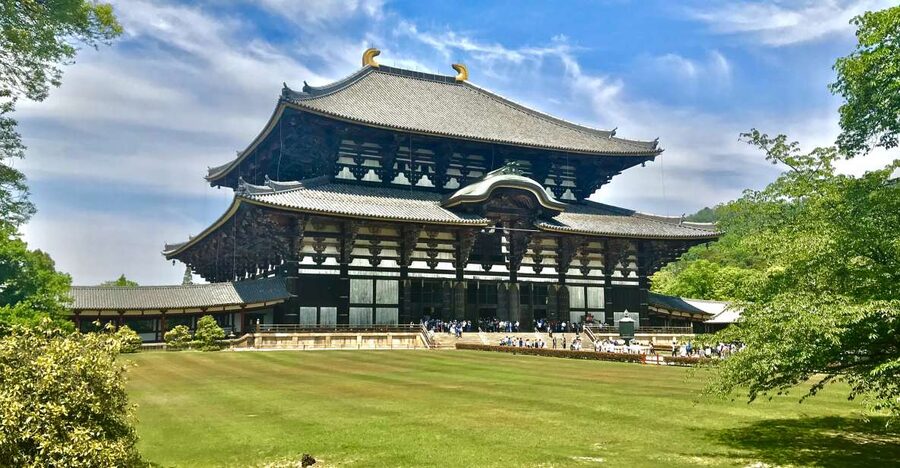
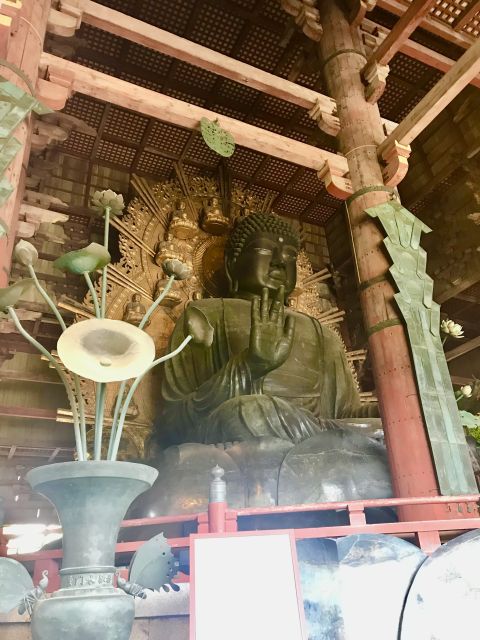
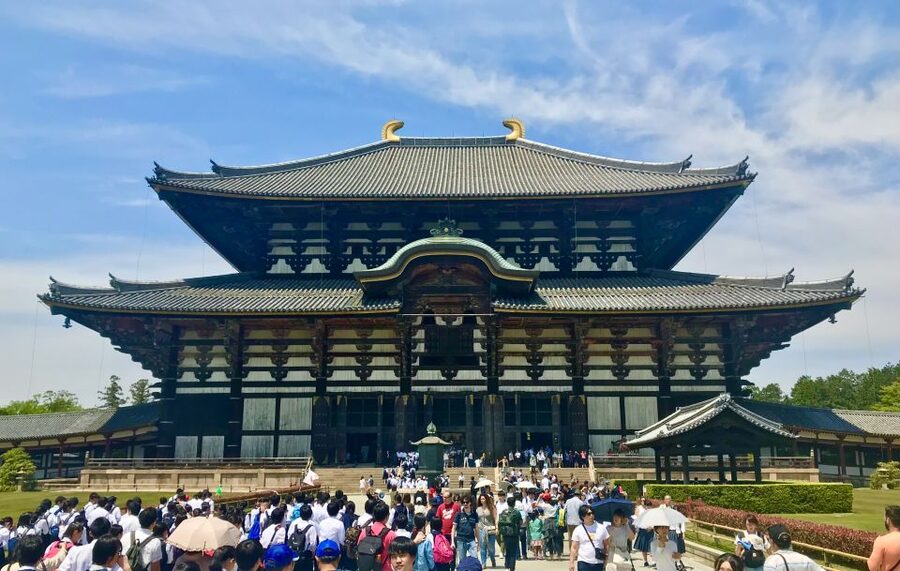
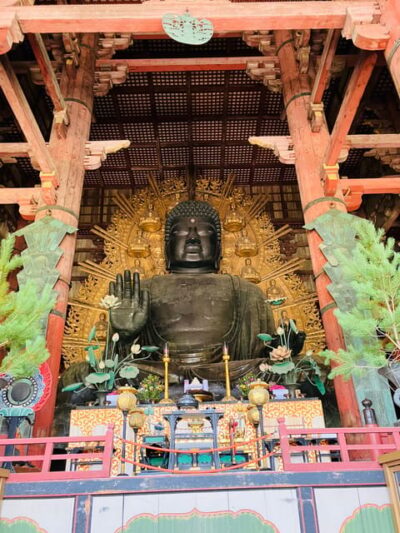
You begin with Tōdai-ji, and yes, the hype is real. This is the temple that houses the Great Buddha, one of the most impressive religious sculptures in the world. Even if you are not a temple expert, you can tell this place was designed to stop you. The scale hits first, then the atmosphere takes over.
In practical terms, you’ll get a photo stop, a guided visit, and time to walk around inside the temple grounds. That guided component matters here. Todai-ji is not just a single statue in a single room. It is a whole setting, with architecture and layout that explain how the site works as a place of worship and reverence.
If you want a tip that makes your photos look less random, do this: take one or two wide shots early, then follow your guide’s direction for your closer views. It saves time when you’re deciding what matters. Also, bring water and keep your energy steady. The tour keeps you moving, but it does build in small pockets of time to look closely.
Nigatsu-do in Todai-ji: February Hall views and seasonal moments
Next comes Todai-ji Nigatsudo, also called February Hall. This is one of those stops that feels like a “breather” inside the larger Todai-ji complex. You get guided sightseeing plus a short break, and you also spend time taking in scenic views.
Why this matters: seeing Nara from higher ground changes how you understand the city. You stop thinking only about temples as objects and start noticing how the city and landscape relate to them. The view is also tied to season, and in spring you can admire cherry blossoms from this area.
You only have about half an hour here, so don’t expect an all-day wander. Use that time to pick your best viewpoint and let your eyes adjust. If you rush, you’ll miss the part that makes Nigatsudo feel different from the main Great Buddha area.
Tamukeyama Hachimangu: a shorter shrine stop that keeps the momentum
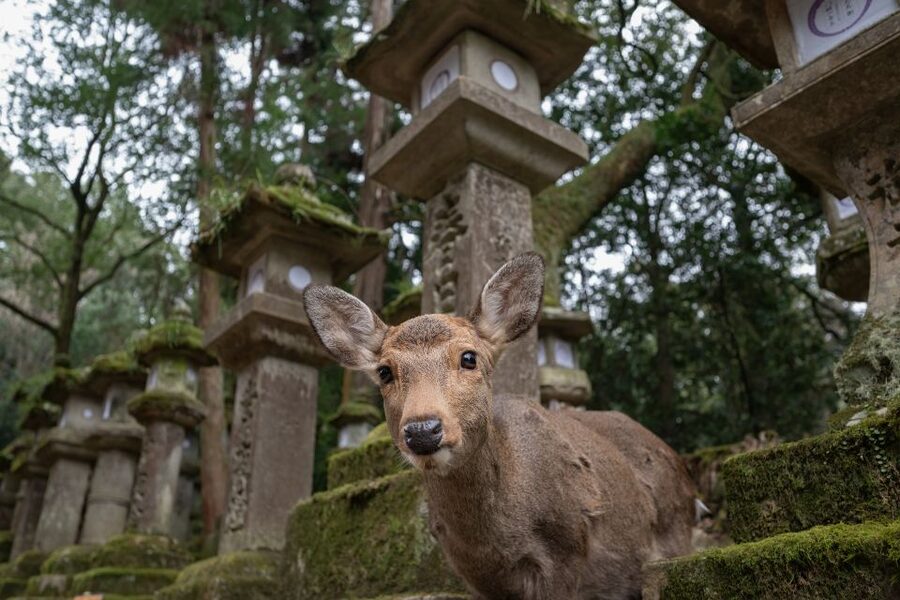
After Todai-ji, you move to Tamukeyama Hachimangu. This stop is shorter, more of a guided introduction with sightseeing and a walk-through, plus a little time for wildlife viewing.
What I like about these mid-route shrines is that they prevent the day from feeling like a straight line of big-name temples. Tamukeyama Hachimangu keeps the rhythm, and it gives you a sense of Nara as a place where religious practice exists beyond a single headline monument.
Even though this part is brief, you’ll still get what you need to connect the shrine with the wider story of the area. If you prefer slow travel, you might wish you had more time here. But if you like an efficient day where you still learn things, the short stop is a good fit.
A few more Nara days to weigh up
- World Heritage Kyoto & Nara Uji Authentic Matcha Experience
★ 5.0 · 1,573 reviews - Nara Half Day Trip Walking Tour (Private Option Available)
★ 5.0 · 937 reviews - Nara Early Morning Tour (Kyoto or Osaka Departure Available)
★ 5.0 · 676 reviews - Nara: Half-Day UNESCO Heritage & Local Culture Walking Tour
★ 4.8 · 250 reviews
Kasuga Taisha: thousands of stone lanterns under a forest canopy
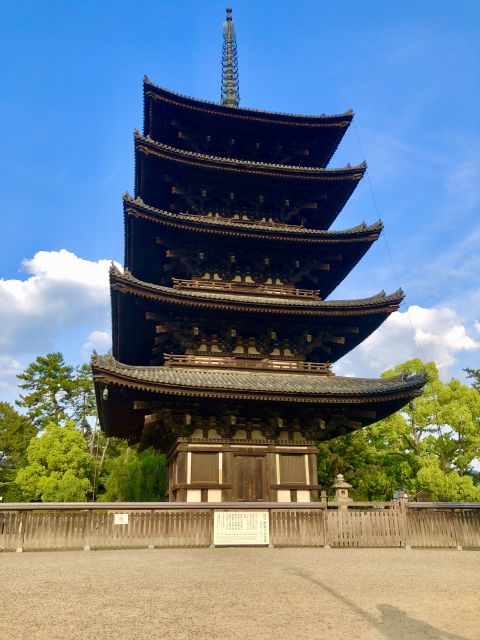
Then comes Kasuga-taisha, and this is the stop where Nara Park and the surrounding nature really start to fuse in your head. Kasuga Taisha is known for its thousands of stone lanterns and its forested surroundings, which create a spiritual, almost storybook mood as you walk among the grounds.
You’ll get guided sightseeing here with time for walking and passing by the key areas. With so many lanterns, the “wow” factor is easy, but the guided explanation is what helps you notice patterns. Instead of treating it like a photo backdrop, you start seeing how the site feels like it belongs to the forest, not like it was dropped into it.
Practical advice: wear shoes you can trust. Kasuga Taisha is a walking experience, and your pace will affect how much you notice. If you move too fast, you’ll miss the lantern density in the deeper areas. Move at a comfortable pace, let the guide lead the timing, and you’ll get both context and atmosphere.
Nara Park deer: how to enjoy them when they are everywhere
After Kasuga Taisha, you step into Nara Park, where the deer are the big recurring character. The tour includes guided time here with walking and passing by the iconic areas, plus wildlife viewing time.
The tour framing is useful: the deer are considered divine messengers in Japanese culture. That doesn’t mean the deer are polite. It means you should treat the whole interaction with a little respect and a little common sense.
How to make deer time enjoyable:
- Keep your eyes up as you walk, not glued to your phone.
- Move slowly when you see deer gather.
- If you have food, follow your guide’s instructions. The data here doesn’t spell out exact rules, so your guide will be the safest source for what is expected.
The best part of this stop is that you see the deer in the context of the park and temples around them. It’s not just “cute animal photos.” It is a cultural moment woven into sacred spaces.
Ukimido: the calm pond pavilion that resets your senses
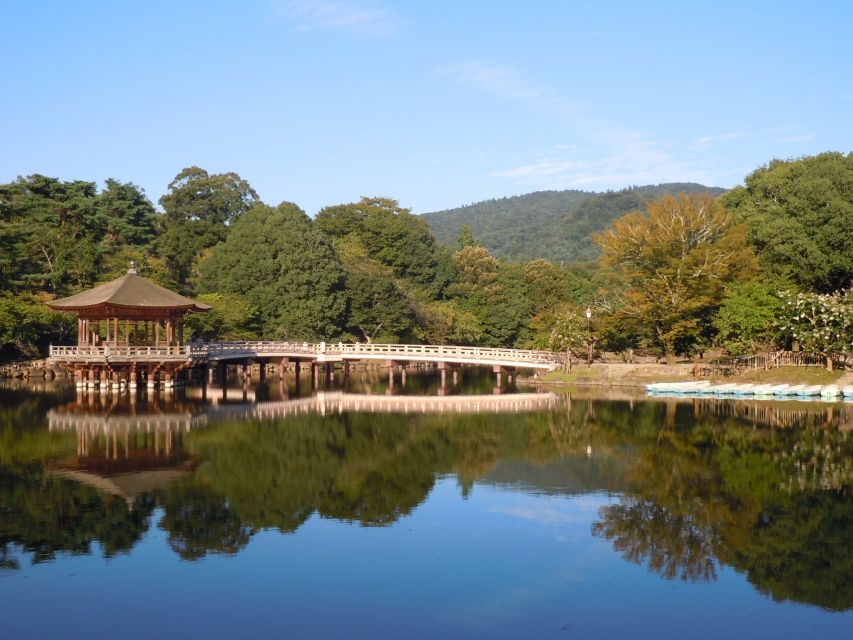
At Ukimido, the tour shifts gears. This is a small pavilion in the middle of a tranquil pond in Nara Deer Park. You’ll get a break time plus photo time, sightseeing, and scenic views on the way.
This stop is powerful because it gives your brain a pause. After walking through shrine areas and deer activity, Ukimido feels like a reset button. You can slow down, look at reflections and water-level calm, and just watch the scene around you.
One practical note: because you only have about half an hour here, treat it like a focused moment. Pick your view, take photos without blocking others, and then spend the rest of the time quietly watching. That’s where Ukimido stops feeling like just another stop and starts feeling like a memory.
Kofuku-ji and its five-story pagoda: the last big photo payoff
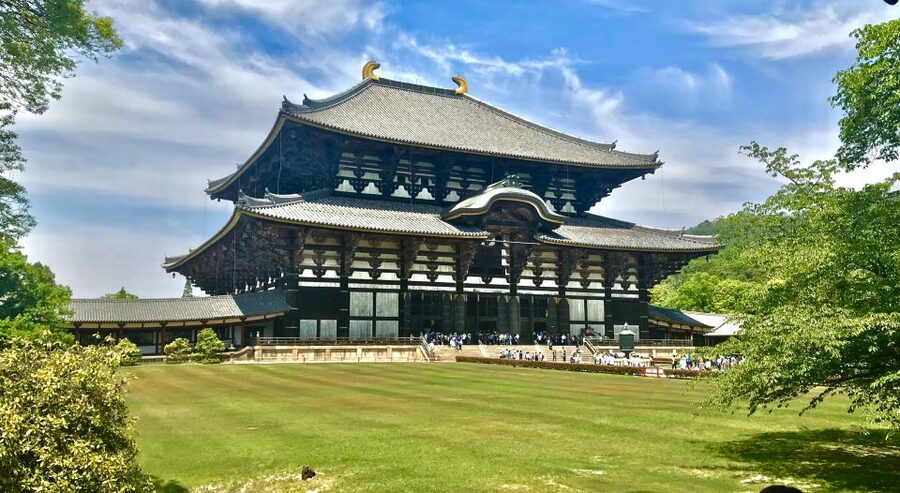
To close the route you visit Kōfuku-ji, where the standout feature is the five-story pagoda. You get a photo stop and guided touring, plus walking time around the gardens and ancient structures.
Why this works as a final stop: it has a visual anchor that reads from far away. Even if you are temple-weary by then, you can still appreciate the pagoda’s shape and scale. And because the route ends after this, you can enjoy it without worrying about missing the next location.
Kofuku-ji also adds variety. Todai-ji is the colossal Great Buddha moment. Kasuga Taisha is lanterns and forest walking. Kofuku-ji balances that with gardens and older structures, which makes the last chapter feel complete.
Price and value: is $85 worth a guided Nara day?
At $85 per person for about 5 hours, this tour is priced like a “you’re paying for guidance and time-saved logistics” kind of day. The value comes from two main things.
First, your Todai-ji entrance ticket is included, which matters. Second, you’re not just bouncing between random spots. You have a live Spanish guide and guided tours at multiple major sites, so you’re buying explanation, not only access.
Is it worth it for every traveler? If you enjoy reading background and self-guiding, you might find cheaper options on your own. But if you want a day where you see the key sites with context, while someone else handles the flow between Todai-ji, Nigatsudo, Kasuga Taisha, and Kofuku-ji, then the price starts to look fair.
Also, a 5-hour structure is a practical value. Nara can be more time-consuming than people expect once you include walking time and deer photo detours. This tour gives you a fixed arc, so you can plan the rest of your day with confidence.
What to bring, and what to plan for physically
This experience is entirely on foot with some physical effort. You’ll want comfortable shoes and comfortable clothes because you’ll be walking between temple areas and park zones. There are also moments that involve waiting around viewpoints and moving with the group.
Two other points to know:
- Baby strollers are not allowed.
- It is not suitable for people with mobility impairments.
If any of that applies, you might prefer a different format that offers less walking or different accessibility support. If it doesn’t, the route is manageable for most people who can walk for a few hours.
The best fit: who should book this Nara tour
I’d point you toward this tour if you want:
- A Spanish live guide to explain the major places
- A tight day that covers Todai-ji, Kasuga Taisha, Nara Park, and Kofuku-ji
- Deer encounters as part of the cultural experience, not a side quest
- Stops that include both loud highlights (Great Buddha, lanterns) and quieter pauses (Nigatsudo views, Ukimido)
I would skip it if you want a no-walking day, need stroller access, or have mobility limitations. The tour is designed for foot traffic, with short photo windows and guided blocks.
One more thing I love: the reviews highlight the guide impact. People have praised Alex for excellent work, Diego for a perfect day, and Federico for being great and genuinely enjoying teaching history. That tells me the guiding style is a big part of the experience, not an afterthought.
Should you book this Nara: my honest call
Book it if you want a structured, Spanish-guided Nara day that hits the big spiritual and cultural landmarks without turning your schedule into a puzzle. The included Todai-ji entrance and the guided time across multiple sites make the $85 feel reasonable, especially if this is your first time in Nara.
Skip it if you hate walking, need stroller access, or prefer fully independent exploring with no guide.
If you fall in the middle and you like learning while you look, this is a smart way to experience Nara in one coherent arc, Great Buddha to lantern forest to deer park to pagoda.
FAQ
Where does the tour start?
You meet at Kintetsu-Nara Station, exit 5.
How long is the experience?
The tour lasts 5 hours.
What language is the guide?
The tour has a Spanish live guide.
What’s included in the tour price?
Guided tours are included for Todai-ji, Nara Park, Nigatsu-do, Tamukeyama Hachimangu, Kasuga-taisha, Ukimido, and Kofuku-ji, plus the Todai-ji entrance ticket.
Is the route stroller-friendly?
No. Baby strollers are not allowed.
Is this tour good if I have mobility issues?
It is not suitable for people with mobility impairments. The route is done on foot and involves some physical effort.
Can I cancel for a full refund?
Yes. You can cancel up to 24 hours in advance for a full refund.
Is there an option to reserve without paying right away?
Yes. You can reserve now & pay later, keeping travel plans flexible.
Newly listed around Nara
- Nara:5 Type of Tea Tasting & Mindful Tea Ceremony★ 5.0 · 28 reviews
- Nara:Authentic Tea Ceremony(Max 5 ppl) -Master Matcha Making★ 5.0 · 119 reviews
- Nara: UNESCO Heritage Sites & Deer Park Tour with Pro guide★ 4.5 · 10 reviews
- Nara: Sake Tasting Tour at the Birthplace of Japanese Sake★ 4.9 · 8 reviews
- Nara: Private City Tour With A Local Guide★ 4.2 · 8 reviews
- Nara: Private Tour with Private Guide★ 4.8 · 66 reviews
- Nara Like a Local: Customized Guided Tour★ 4.2 · 36 reviews
- Nara Early Bird Tour (Kyoto Departure Option Available)★ 4.9 · 142 reviews
Nara Deer Park Trips, compared.
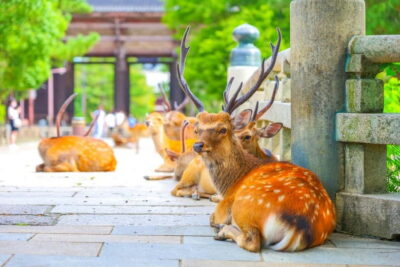
Kyoto/Osaka: Kinkakuji, Bamboo Forest, and Nara Deer Park
Read our review →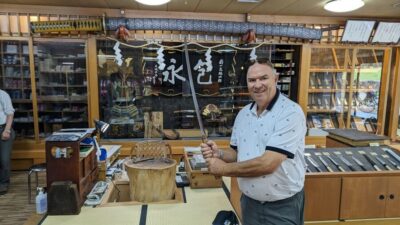
E-Bike Nara Highlights – Todaiji, Knives, Deer, Shrine
Read our review →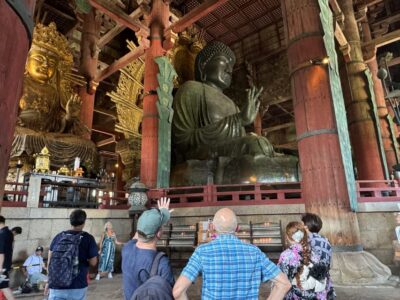
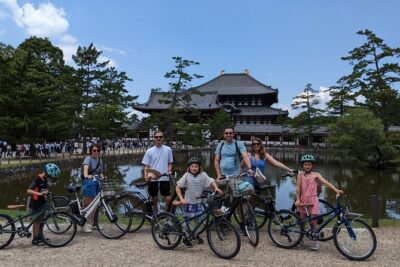
E-Bike Nara Highlights – Todaiji, Knives, Deer, Shrine, and Gems
Read our review →
Essential Private Tour with Deer Park and Temples
Read our review →
Nara Deer Park, Uji Matcha, & Hot Spring Full-Day Tour from Osaka
Read our review →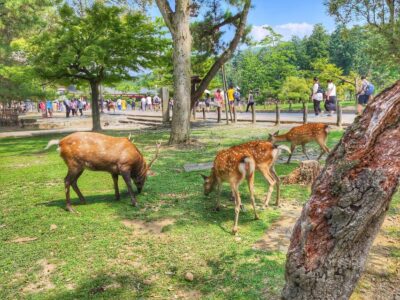
Nara, Todaiji, Kasuga Taisha Shrine Private Full Day
Read our review →Browse the lists this tour appears in