
Review · SAMURAI SWORD & NINJA TRAINING
Okinawa: Kendo Martial Arts Lesson
Steel meets etiquette in Okinawa. This 2-hour kendo lesson pairs full armor practice with the real discipline of the Okinawa Prefectural Budokan, taught in a small group.
I really like the hands-on focus, you learn strikes and sparring basics quickly rather than watching from the sidelines. I also like that kendo etiquette and history are part of the session, so you understand the why behind the movement.
The main thing to consider is time. This is a short class, so the most action-heavy sparring may feel brief if you were hoping for a long fight session.
In This Review
- Key highlights that make this lesson worth your time
- Where you start at Okinawa Prefectural Budokan
- What you wear in kendo, and why the armor is the real teacher
- Learning the three pillars: spirit, manners, and lifelong kendo
- The practice flow: from gear up to controlled sword-fight moments
- The fun part after training: kendo-themed lunch and a take-home towel
- Price and value: is $116 worth a 2-hour kendo taste?
- Who this kendo lesson is best for in Okinawa
- When to skip: safety and suitability notes you should take seriously
- Should you book Okinawa Kendo Martial Arts Lesson?
- FAQ
- Where do I meet for the kendo lesson?
- How long is the kendo lesson?
- Is this a small group?
- What is included in the price?
- Is lunch included?
- What languages does the instructor speak?
- Who is this activity not suitable for?
- What is the cancellation and payment policy?
Key highlights that make this lesson worth your time
- Full kendo armor and equipment provided so you start safely and correctly
- English-supported instruction from a Japanese instructor, with guidance you can follow
- Manners and discipline lessons alongside technique, not just hitting practice
- Small group size (max 4) for more attention and better pacing
- Kendo-themed lunch stop after the class, plus a kendo towel to take home
Where you start at Okinawa Prefectural Budokan
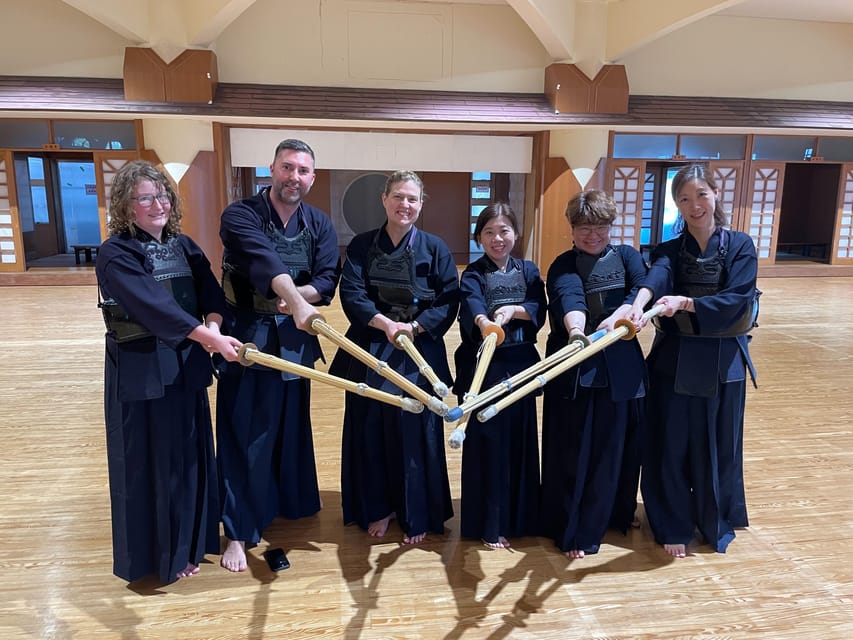
Your lesson begins at the entrance of the Okinawa Prefectural Budokan. That matters more than it sounds. A budokan is built for martial training culture, so the whole experience feels like you are stepping into a real training space, not just a demo.
No hotel pickup is listed, so plan to get yourself there on time. You will want a little buffer because you will be getting fitted into protective gear before the main practice. Showing up rushed usually leads to extra fidgeting, and kendo equipment is not the kind of thing you want to improvise.
Also note this is a small group limited to 4 participants. That is a big deal for learning. In many activities, you get a quick explanation and then you disappear into the crowd. Here, you should expect more coaching, more chances to correct posture, and less waiting around.
More Samurai and Ninja sessions in Okinawa:
- Tokyo: Samurai Restaurant Show Ticket with 2 Drinks
★ 4.5 · 1,307 reviews - Kyoto Samurai Experience
★ 5.0 · 1,294 reviews - Tokyo: Samurai Ninja Museum Guided tour and Experience
★ 4.6 · 1,010 reviews
What you wear in kendo, and why the armor is the real teacher
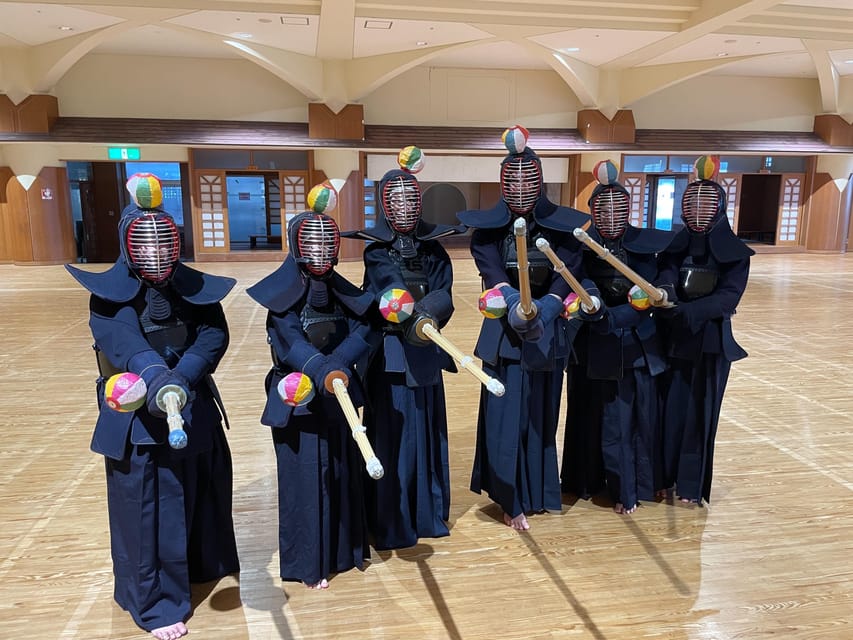
You will receive kendo armor and equipment rental for the session. In practice, that means you are not guessing what to wear, or bringing gear from home. The instructor has you in the right setup so you can focus on movement and etiquette.
Kendo armor is more than costume. It controls the environment. It gives you a safety net while you learn how to apply power without going wild. That is especially useful if you have never trained before. You get to feel the structure of the sport: how you stand, how you raise your stance, how you handle timing when someone else is responding.
You also get a bottle of mineral water included. That sounds basic, but martial arts classes often include hands-on movement where you forget to hydrate. Having water already provided helps you stay in the session instead of hunting for it.
The one practical consideration: kendo requires physical attention to the stance and movement patterns. You will likely be adjusting gear, moving, and following commands. If you have mobility limits, it is worth thinking hard before you book, because you cannot just watch comfortably while others train.
Learning the three pillars: spirit, manners, and lifelong kendo
This class is built around three ideas you practice through kendo: unifying your spirits, manners, and lifelong kendo. You can hear those as philosophical slogans, but the way they are taught tends to show up in your body language and your process.
Here is how it usually translates into what you do during the lesson:
- Unifying your spirits: you practice focus, timing, and controlled intensity. The goal is not chaos. It is alignment, so your effort goes into the strike and the follow-through.
- Manners: kendo is very much a code of respect. That shows up in how you prepare, how you bow, and how you move around the training space.
- Lifelong kendo: you learn enough technique to understand the path. Even if you only train for one session, you should leave with a baseline for what to practice next time.
The instructor role is key here. You are not just being walked through movements. The format includes learning from a teacher and includes cultural context, including history and etiquette. That combo is what makes the experience feel like more than a sports activity.
One of the best signs here is that the instruction is listed as Japanese and English. You should feel guided rather than lost in translation. In at least one recent class, the instructor Taiji is described as teaching both technique and cultural aspects, and that is exactly the mix you want for a first-time kendo lesson.
The practice flow: from gear up to controlled sword-fight moments
Plan for a sequence that starts with donning armor, then warmups and guided technique, and ends with a more sparring-like segment. The goal is to give you real feedback during practice.
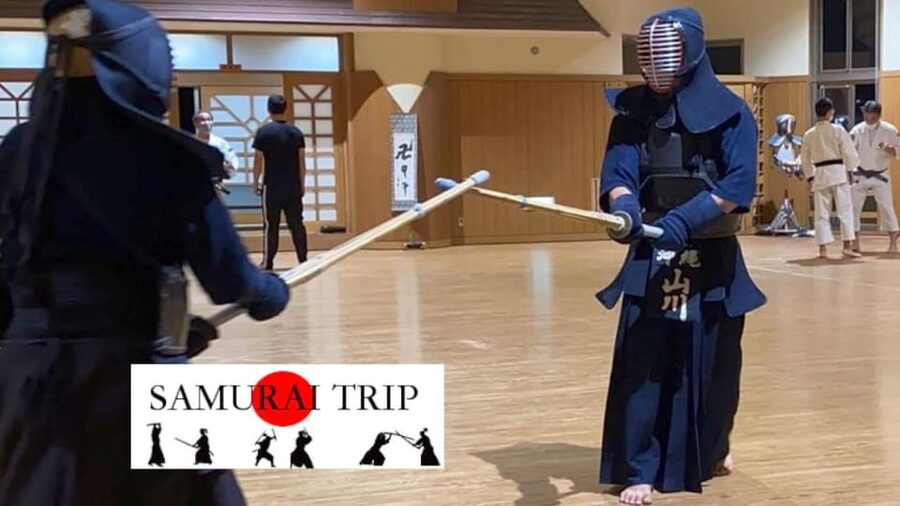
You will first wear traditional kendo armor and learn how to practice from the teacher. That means you get instruction on hitting and competition basics, but it does not stop there. The class includes etiquette and history, so the training does not feel like a generic fitness demo.
Because the group is small, the instructor can likely adjust your stance and your distance more than in larger classes. You can also expect more chances to repeat key steps. Repetition is what turns kendo from a scary-looking sport into something you can actually do safely.
One caution from the scheduling reality: the activity is listed as 2 hours, and one session has run around 1.5 hours. Even if your booking says 2 hours, think of it as training time that can flex based on pacing, questions, and safe transitions between drill and sparring. If you are expecting a long, drawn-out fight segment, calibrate your expectations.
The upside is that you still get that genuine sword-fight feel. It is not just sword lessons on paper. You should leave with the satisfaction of having actually practiced in armor, even if the sparring portion is short.
A few more Okinawa days to weigh up
- Official Street Go-Kart Tour – Okinawa Shop
★ 5.0 · 699 reviews - Naha: North Okinawa Sightseeing Tour & Churaumi Aquarium
★ 4.4 · 472 reviews - Okinawa: From Naha: Kerama Islands 1-day snorkeling tour
★ 4.4 · 423 reviews - From Naha: Tokashiki Island Day Trip by Boat
★ 4.3 · 385 reviews
The fun part after training: kendo-themed lunch and a take-home towel
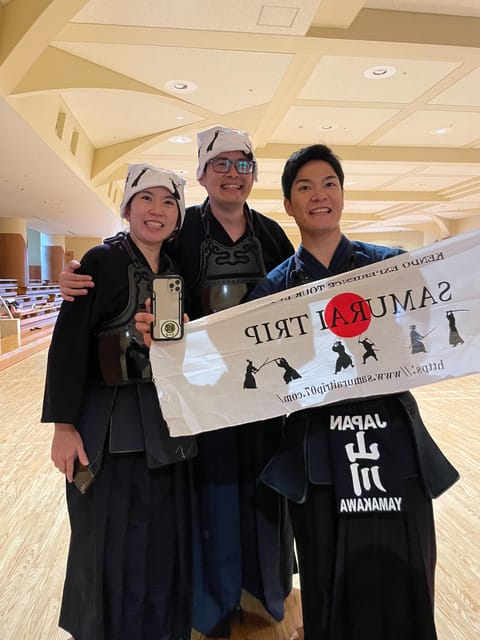
After the practice, you go to lunch at a kendo-themed restaurant. This is where the experience keeps the theme going without turning the day into a rigid tour schedule.
Important: food is listed as not included. So you may be joining the lunch stop, but you should expect to pay for your meal there. If you want to keep costs predictable, you should factor in the extra lunch budget when you plan.
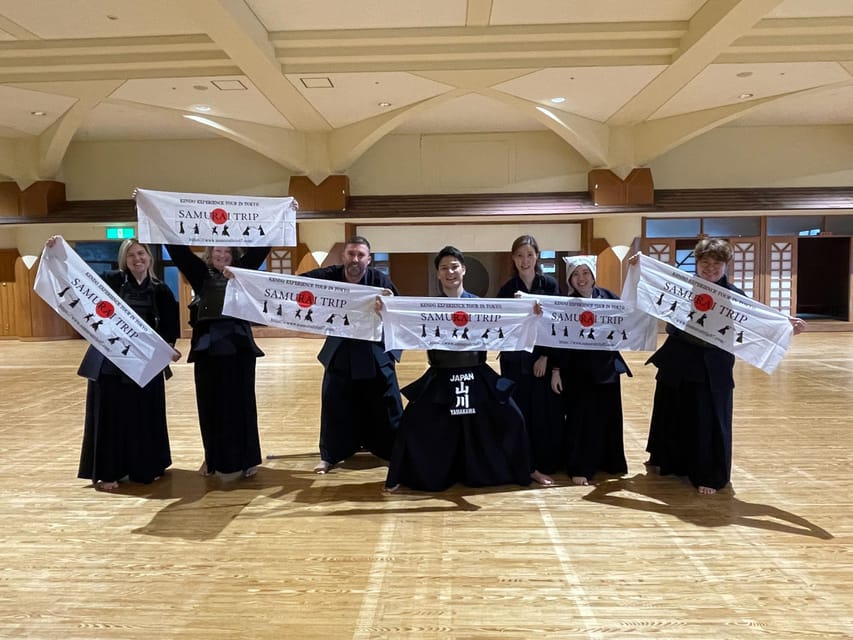
You also take home a kendo towel as a gift. That is a small detail, but it matters. Martial arts experiences often disappear after you return home. A usable towel is a tangible reminder, and it makes the lesson feel more official than a one-off demonstration.
Price and value: is $116 worth a 2-hour kendo taste?
At $116 per person for a 2-hour lesson, you are paying for three things:
- A professional instructor guiding you in armor and technique
- Kendo armor and equipment rental included in the price
- A small-group setting, limited to 4 participants
That combination is the main value argument. If you had to rent full kendo gear elsewhere, or if you were in a larger group where coaching becomes diluted, the experience usually costs more or feels less personal.
There are also built-in supports for comfort and logistics. Mineral water is included, and you get a towel gift. Those are not huge individually, but they reduce friction during the session.
The only value tradeoff is the time commitment. You get a taste, not a long training block. If your priority is maximum sparring time, you might find this brief. If your priority is understanding etiquette, learning the basics with correct equipment, and getting that real kendo moment with coaching, then $116 for a guided introduction can feel very fair.
Who this kendo lesson is best for in Okinawa
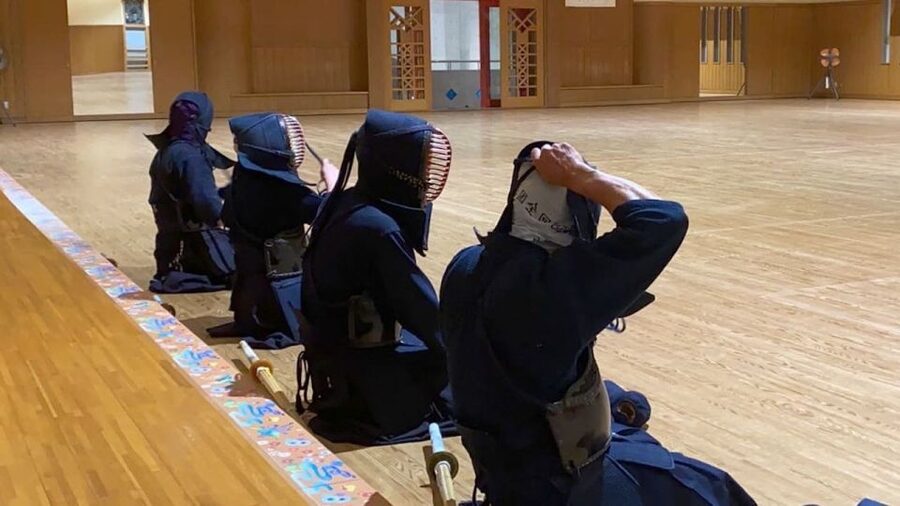
This is best for you if you want an authentic culture-meets-sport activity. Kendo can look intense from the outside. Here, you learn in a structured way with professional guidance and the right protective gear.
You will likely enjoy it most if:
- You like hands-on activities over museum-style sightseeing
- You want a deeper cultural angle than just watching
- You are comfortable following instructions in a small group setting
- You want an experience with enough instruction that you can do more than just swing once
It is also a good fit for first-timers. The class includes etiquette and history along with technique, so you are not expected to already know the rules.
Language support matters too. Instruction is listed as Japanese and English, so it is designed for non-Japanese speakers to participate meaningfully.
When to skip: safety and suitability notes you should take seriously
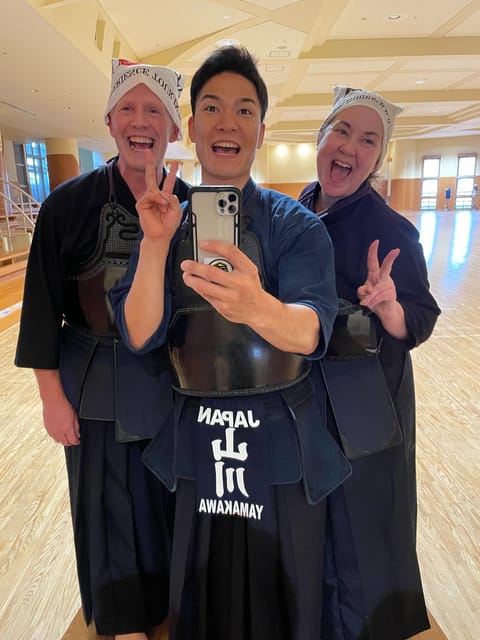
This activity is not suitable for:
- Children under 10
- Pregnant women
- People with back problems
- People with altitude sickness
- People over 95 years
Even if you do not fall into those categories, take the physical nature of kendo seriously. You will be wearing armor, moving in stance, and doing practice drills. If you have conditions that affect balance, mobility, or back comfort, talk to a medical professional first.
Also consider your expectations. One lesson can include a short sparring segment. If you are looking for long continuous physical intensity, you may feel like you ran out of time. If you are looking for a disciplined, coached introduction that respects safety and etiquette, this is the right kind of short format.
Should you book Okinawa Kendo Martial Arts Lesson?
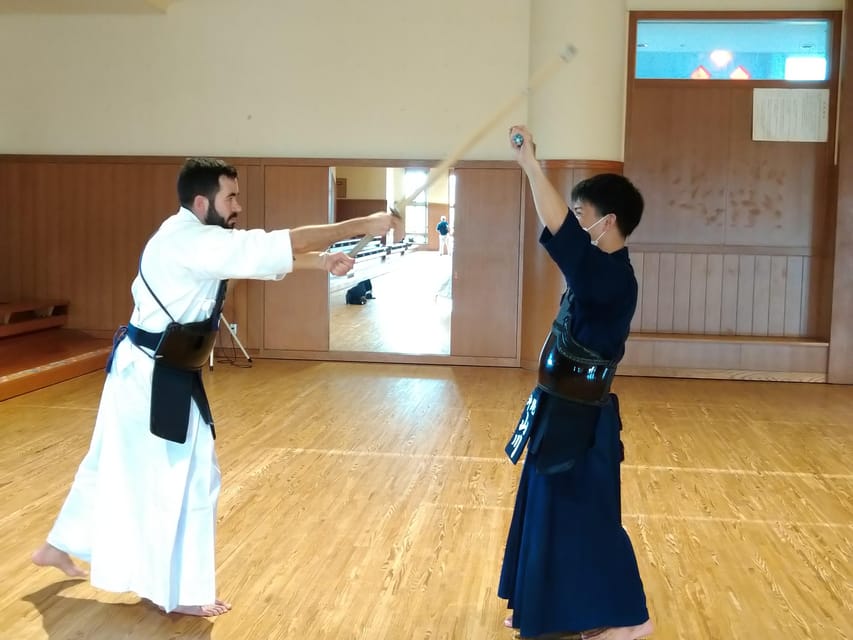
Book this if you want a true kendo experience with the equipment included and instruction that covers both technique and etiquette. The small group size helps, and the inclusion of armor rental makes it approachable even if you have never trained before.
Skip or reconsider if you want hours of sparring, because this is a short 2-hour class that can run a bit shorter depending on pacing. Also skip if the suitability limits apply to you, especially with back issues or pregnancy.
If your Okinawa trip includes beaches and sightseeing, this is a strong contrast day. You get something physical, structured, and distinctly Japanese in a real training space.
FAQ
Where do I meet for the kendo lesson?
Meet your instructor at the entrance of Okinawa Prefectural Budokan.
How long is the kendo lesson?
The activity duration is listed as 2 hours.
Is this a small group?
Yes. It is limited to 4 participants.
What is included in the price?
Kendo armor and equipment rental, mineral water, and a Japanese kendo towel are included.
Is lunch included?
Lunch at a kendo-themed restaurant happens after the activity, but food is listed as not included.
What languages does the instructor speak?
The instructor speaks Japanese and English.
Who is this activity not suitable for?
It is not suitable for children under 10, pregnant women, people with back problems, people with altitude sickness, and people over 95 years.
What is the cancellation and payment policy?
You can cancel up to 24 hours in advance for a full refund. You can also reserve now and pay later.
Newly listed around Okinawa
- Original Street Kart Experience in Naha, Okinawa★ 4.9 · 39 reviews
- Okinawa Private Custom Tour with Local Guide★ 5.0 · 7 reviews
- Okinawa: Tropical Dream , Ryukyu Mura, Banta Cafe Bus Tour★ 4.3 · 19 reviews
- Okinawa:Naha:Kerama Island Experience 1Dive and Snorkeling★ 4.4 · 99 reviews
- Okinawa : Kerama Whole Day Snorkeling Tour From Chatan/Naha★ 4.5 · 93 reviews
- Okinawa: Naha: 1 day Kerama Islands diving‣ license required★ 3.9 · 20 reviews
- Okinawa: Bus Tour to Churaumi Aquarium with Sightseeing★ 4.3 · 20 reviews
- Okinawa Ishigaki Island Private Tour★ 4.8 · 15 reviews
Samurai Sword & Ninja Training, compared.

Samurai Ninja Museum Guided tour and Experience
Read our review →
Kendo and Samurai Experience with Uniform and Gear
Read our review →
Samurai Sword Class by Experts in Traditional Arts
Read our review →
Skip the lines Basic Ticket at SAMURAI NINJA MUSEUM KYOTO
Read our review →
Samurai Sword & Archery Class from Samurai Descendant
Read our review →
Browse the lists this tour appears in