
Review · MATCHA & TEA CEREMONY SESSIONS
Tea ceremony experience with simple kimono in Okinawa
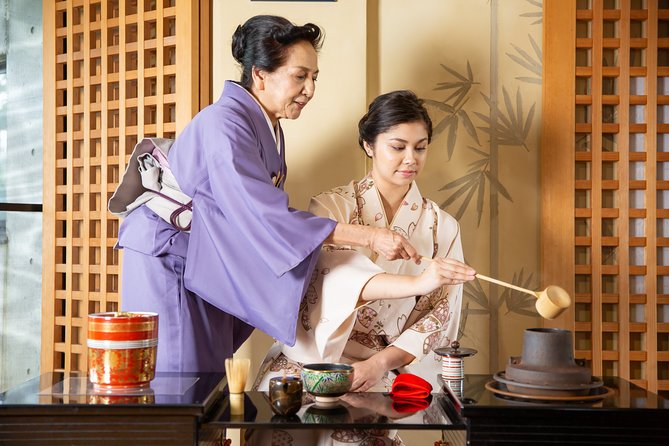
A tea door so small you notice it. At Sasagirian in Onna-son, Okinawa, you get to wear a simple kimono and learn the flow of a traditional tea room, not a watered-down demo. I especially like how the session covers manners, tools, and even how to handle them, so it feels practical. The one thing to keep in mind is space and seating, since the tea room uses traditional setup, though the experience notes you can still participate if you cannot sit up.
You’ll spend about 1 hour 15 minutes in a small class where you taste Okinawan and Japanese sweets before you drink the bitter tea, then you make your own green tea. The group stays intimate, with a maximum of 6 participants, and you can take photos in front of a gold folding screen. If you’re planning your day, aim for calm, on-time arrival since the activity runs on a set schedule and good weather is required.
In This Review
- Key highlights to look for before you book
- Okinawa tea ceremony at Sasagirian: what makes it feel different
- Where the class starts in Onna-son, and how to plan your timing
- Kimono change and the first steps: cleanser hands, then tea-room entry
- Inside the tea room: scroll, flowers, and utensil etiquette
- The Ryurei-style seating room: chairs and tables for comfort
- Sweets, then bitter tea: taste the rhythm of the ceremony
- Handling tea tools with care: silk cloth and clean tools
- Making your own matcha: adding matcha and hot water
- Photos at the gold folding screen, then changing back
- Price and value: what $85.39 really buys you
- Who should book this Okinawa tea ceremony, and who might skip
- Quick practical tips before you go
- Should you book Sasagirian’s tea ceremony in Onna-son?
- FAQ
- How long is the tea ceremony experience?
- Where do I meet for the activity?
- What is the group size?
- Can I participate if I cannot sit up?
- What is the age requirement for children?
- What happens during the class?
- Is there any weather requirement or cancellation option?
Key highlights to look for before you book
- Simple kimono included, so you get the full visual and cultural effect without shopping or renting gear elsewhere.
- Tea room manners, not just tasting, including learning how to enter, what to observe, and how tools are treated.
- Ryu-Rei-style seating with chairs and tables, which helps a lot if you do not want to kneel.
- You taste Okinawan and Japanese sweets, then experience the bitter tea that anchors the ceremony.
- Hands-on matcha making, where you add matcha and hot water and taste your own cup.
- Photo moment at a gold folding screen, an easy way to capture the moment neatly.
Okinawa tea ceremony at Sasagirian: what makes it feel different
Okinawa gets lots of attention for beaches and castles, but tea culture has its own quieter draw. What I like about this experience at SASAGIRIAN / 笹桐庵 is how the focus stays on the tea ritual itself, in a traditional tea-room setting you probably will not find anywhere else in Okinawa. It is not just an activity you do, it is a small lesson in how Japanese tea etiquette is practiced.
The setting matters. You start with the details that guide your behavior in the tea room, like entering through a small entrance and noticing what is displayed. Those parts are easy to skip in many casual workshops, but they are exactly what make the ceremony feel real.
More Tea ceremonies in Okinawa:
- Tea Ceremony experience with simple kimono in Okinawa
★ 4.7 · 7 reviews - Kyoto: Tea Ceremony in a Traditional Tea House in Kiyomizu
★ 4.9 · 3,519 reviews - Kyoto: Tea Ceremony Ju-An at Jotokuji Temple
★ 4.9 · 3,207 reviews
Where the class starts in Onna-son, and how to plan your timing
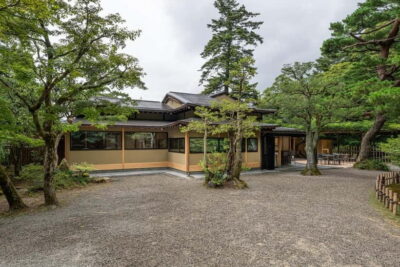
Your meeting point is the Japanese Cultural Experience Facility Sasagirian, 笹桐庵, located at 1765-8 Nakama, Onna, Kunigami District, Okinawa 904-0401. The location is noted as being near public transportation, which helps if you are not driving that day.
You should plan to arrive a little early, because the process starts with changing into a kimono and settling in. The experience runs about 1 hour 15 minutes, so tight connections on the same day can feel rushed. Also, this is a popular choice, since it is often booked around 22 days in advance on average, so booking early is a smart move.
Kimono change and the first steps: cleanser hands, then tea-room entry
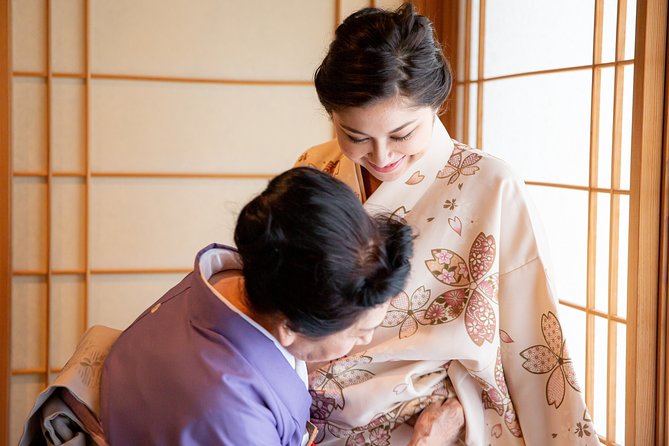
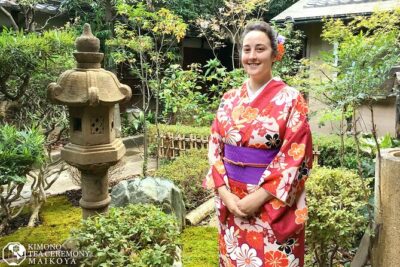
The ceremony starts with basics that set the tone. First, you change into a simple kimono. That alone changes your posture and your mindset, and it also removes the guesswork of what to wear. If you are worried about dressing complexity, the good news is the class is structured as a guided sequence, not a do-it-yourself cosplay.
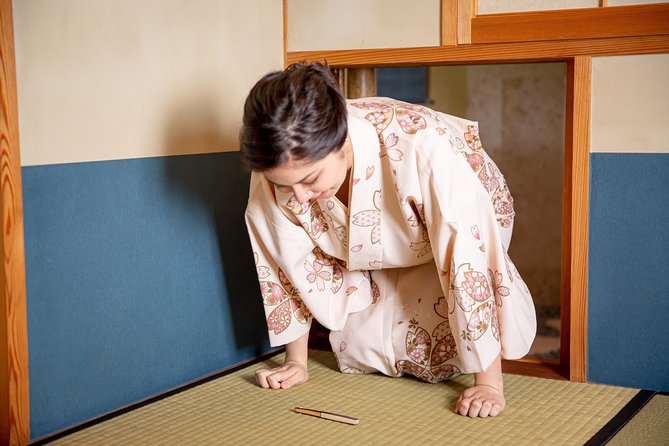
Next you cleanse your hands, then you enter the tea room. One detail that stands out is that you learn how to enter through a small entrance. It sounds almost silly until you actually do it, then you realize why it matters. In a small space, the ritual is less about performance and more about moving carefully, respectfully, and on purpose.
Inside the tea room: scroll, flowers, and utensil etiquette
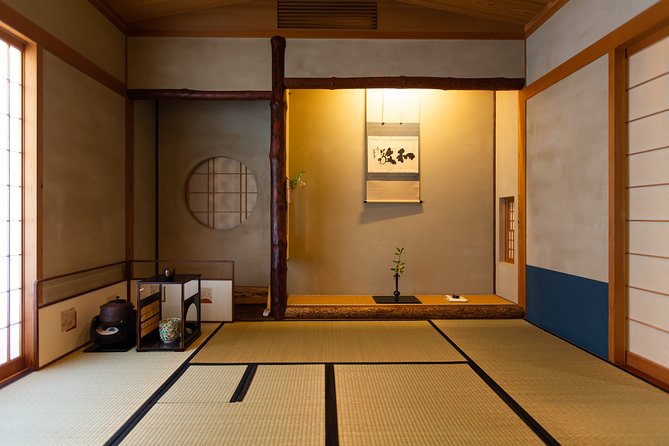
Once you are in, you learn manners and how to appreciate what is set out. The tea room includes items like a hanging scroll, flowers, and the tea tools. You are not expected to memorize names like a test, but you are guided on what to notice and why.
I like that the session treats the tea room as a full environment, not a stage. The hanging scroll and flower arrangement help set the seasonal and respectful mood, so it feels calmer than a typical tasting class where you only focus on the cup.
You also get introduced to the tea utensils. This is the difference between a ceremony and a drink lesson. When you understand what you are handling, you handle it better, and you also feel less like you are just following motions.
More Kimono rentals in Okinawa:
- Traditional Japanese Costumes “Kimono”, “Yukata”, “Ryuso”, “Photograph Course “Hair Set & Lipstick & Kimono & Photography”
★ 5.0 · 17 reviews - Walking around town in a kimono, you can choose your favorite kimono from the traditional Okinawan costumes “Ryuso”, “Kimono”, “Yukata” 《Hairset & Lipstick & Kimono & Rental Fee》All Comic Book
★ 4.5 · 14 reviews - Kimono Tea Ceremony at Kyoto Maikoya, NISHIKI
★ 5.0 · 911 reviews - Kyoto: Kimono Rental with Hairstyling and Accessories
★ 4.8 · 653 reviews
The Ryurei-style seating room: chairs and tables for comfort
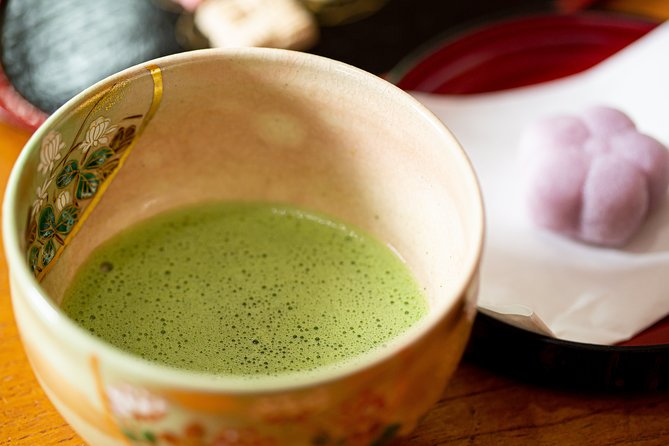
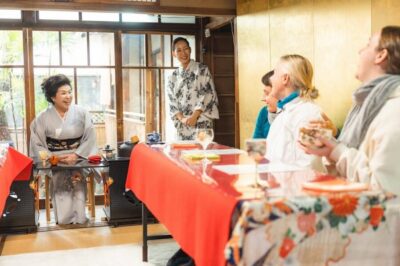
After the first part of the ritual, you move to the Ryurei-style room where tables and chairs are set up for the ceremony. This is a practical win for many people in Okinawa who want a traditional experience but do not want to commit to floor sitting for the whole class.
The experience notes that most people can participate, and it also explicitly says you can join even if you cannot sit up. So if you have knee, hip, or mobility concerns, this format is worth serious consideration. Still, you should expect that you will be in a seated ritual setup for parts of the time, and you may want to wear something comfortable to begin with before the kimono change.
Sweets, then bitter tea: taste the rhythm of the ceremony
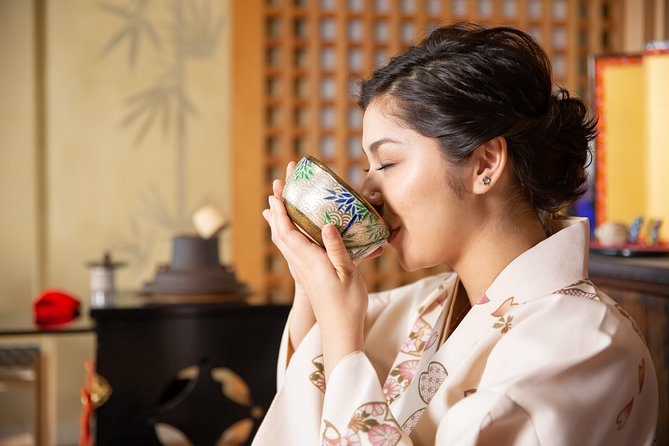
At the tables, you enjoy sweets before the tea. The class includes both Japanese and Okinawan sweets, which is a fun way to connect the ritual to local flavor. The idea is a planned order: sweet first, then the bitter tea that resets your palate and attention.
This is one reason I think the experience is good value. You are not just paying for the moment of matcha-making, you are following a full tasting flow. That flow gives you context for why the ceremony includes multiple steps, not just one.
When you drink the bitter tea, it can be an acquired taste if you are used to sweet drinks. The ceremony is not trying to please your preferences at all costs. It is trying to teach how the ritual is meant to be experienced, step by step.
Handling tea tools with care: silk cloth and clean tools
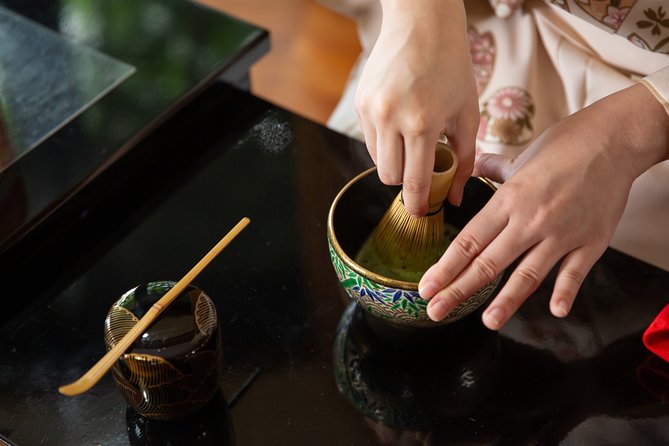
One of the more teachable parts is learning how to treat the tea tools properly. You are guided on how to handle the silk cloth used in the ritual, and you learn how to cleanse the tea tools. This is the part that tends to separate real ceremony training from simple matcha demos.
I like how these steps turn the room into a lesson in care and attention. You are not just getting a food experience, you are learning a method. And if you ever want to recreate the ritual at home, clean tool handling and correct care are the parts that actually matter.
You do not need to be a perfectionist. The class is structured so you follow along and learn the logic. That makes it easier to feel confident even if you are new to all of this.
Making your own matcha: adding matcha and hot water
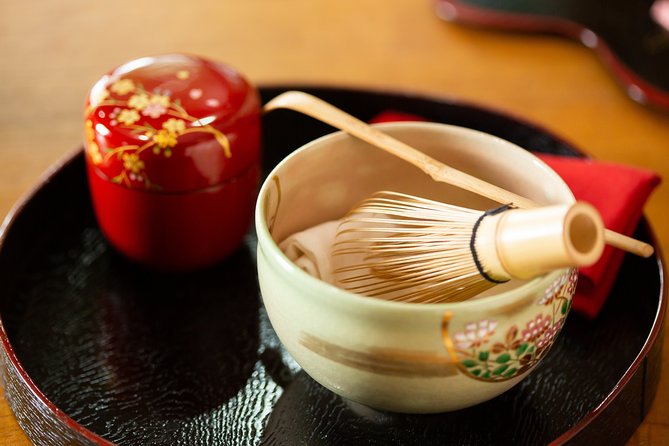
Then comes the hands-on moment. You add matcha green tea and hot water in the tea bowl and make your own tea. You get to taste what you made, which is the part most people remember, because it is personal.
What I find smart about this is that the ceremony does not treat the participant like a spectator. You get to do something real, not just watch someone else perform. Even if your first cup is not perfect, you still learn the process.
If you are sensitive to bitterness, take your time. The taste is part of the ceremony. Also, the sweets you had earlier are there to support the transition, so do not ignore that first tasting step.
Photos at the gold folding screen, then changing back
After the tea making and tasting, you take photos in front of a gold folding screen. It is a clear, photogenic moment, and it gives you a clean backdrop without you having to search for angles in a crowded place.
Finally, you change cloths. Practically, this means you get back out of the kimono and return to your regular clothes. It is a simple wrap-up, but it helps you end without worrying about what to do with garments.
Price and value: what $85.39 really buys you
The price is listed as $85.39 per person for about 1 hour 15 minutes. That may sound steep if you compare it to a casual cafe experience, but tea ceremony instruction is labor-intensive and equipment-focused. Here, you are paying for guided manners, utensil handling, a kimono experience, sweets tasting, and your own tea making.
The small group size also affects value. With a maximum group size of 6 participants, you have a better chance of getting personal attention and not feeling like you are part of a fast conveyor belt. In a traditional culture class, that kind of attention matters.
Also, if you are traveling with relatives and want one activity that feels special without requiring advanced language skills, this sort of structured ceremony usually works well because the steps are clear and repeatable. A translator support is mentioned in the experience feedback you provided, which is exactly the kind of help that keeps the class enjoyable even if you do not speak Japanese.
Who should book this Okinawa tea ceremony, and who might skip
This works well for:
- People who want a cultural experience that feels real, not generic.
- Families with kids over 4 years old, since children under 3 cannot participate.
- Adults who want traditional elements but need a setup that does not force floor sitting, since participation is possible if you cannot sit up.
- Anyone who enjoys careful rituals, arts, and small details like utensils, flowers, and seasonal touches.
You might skip it if:
- You want something fast and purely casual, because the ceremony is paced and structured.
- You are not interested in manners or tool handling, since you will spend time learning those parts, not only drinking matcha.
- You cannot be flexible about weather, because the experience requires good weather and may switch to a different date or be refunded if cancelled.
Quick practical tips before you go
A few details can make your visit smoother:
- Wear easy, comfortable clothing for the start, since you will change into a kimono first.
- Plan your day with buffer time around the 1 hour 15 minutes schedule.
- If you are worried about seating, remember the class states you can participate even if you cannot sit up, and the format uses tables and chairs in the main tea area.
- Take a moment before the gold screen photos so you do not rush, because the kimono wrap-up is part of the experience.
Should you book Sasagirian’s tea ceremony in Onna-son?
I think you should book it if you want an Okinawa activity that feels calm, traditional, and hands-on, with a structured lesson you can actually remember. The combination of kimono, etiquette instruction, sweet tasting, and making your own matcha gives you enough variety for the price.
If you are on the fence, ask yourself one question: do you enjoy learning how something is done, not just eating or photographing it? If yes, this tea ceremony fits. If your travel style is purely thrill-based or you hate structured calm, you might feel impatient here.
In short, this is a small, respectful ritual you can experience in a short time, with just enough hands-on work to make it feel yours.
FAQ
How long is the tea ceremony experience?
The experience lasts about 1 hour 15 minutes.
Where do I meet for the activity?
You meet at the Japanese Cultural Experience Facility Sasagirian, 笹桐庵, 1765-8 Nakama, Onna, Kunigami District, Okinawa 904-0401, Japan.
What is the group size?
The experience has a minimum of 2 people and a maximum of 6 travelers.
Can I participate if I cannot sit up?
Yes. The experience states you can participate even if you cannot sit up.
What is the age requirement for children?
Children over 4 years old can participate. Children under 3 cannot participate.
What happens during the class?
You change into a simple kimono, cleanse your hands, enter the tea room, learn manners and about the scroll, flowers, and tea tools, taste Okinawan and Japanese sweets before drinking bitter tea, learn how to handle the silk cloth and cleanse tea tools, make matcha by adding matcha and hot water, taste your tea, take photos in front of the gold folding screen, then change cloths.
Is there any weather requirement or cancellation option?
The experience requires good weather. If it is cancelled due to poor weather, you will be offered a different date or a full refund. There is free cancellation, and you can cancel up to 24 hours in advance for a full refund.
Newly listed around Okinawa
- Okinawa: Kayak Mangroves & Ocean Native-English Private Tour★ 5.0 · 66 reviews
- Blue Cave Introductory Dive–Private Guide, Boat Tour&Free Photos★ 5.0 · 34 reviews
- [Okinawa Blue Cave] Snorkeling with Private Guide+ Free Photos★ 5.0 · 127 reviews
- Okinawa Jungle Trails & Waterfalls – Private Yanbaru Tour★ 5.0 · 43 reviews
- Okinawa: Kayak & Snorkel, Private Tour in Yanbaru★ 5.0 · 18 reviews
- Port Pick-Up: Naha Private Tour Licensed Guide& Vehicle★ 4.5 · 16 reviews
- Zodiac Shrines and Naha Backstreets Cycling Tour★ 5.0 · 29 reviews
- E-Bike Nature Tour in Shuri★ 5.0 · 25 reviews
Matcha & Tea Ceremony Sessions, compared.
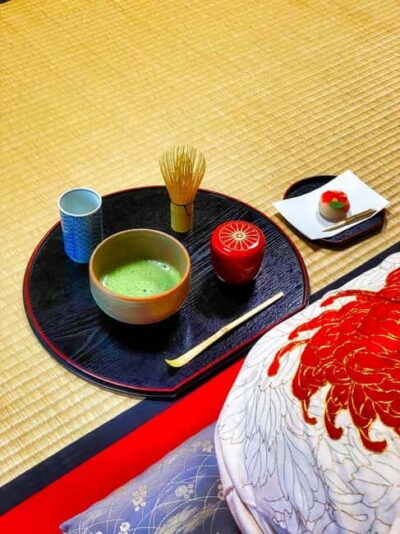
Tea Ceremony in a Traditional Tea House in Kiyomizu
Read our review →
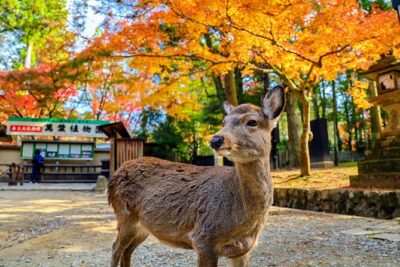
World Heritage Kyoto & Nara Uji Authentic Matcha Experience
Read our review →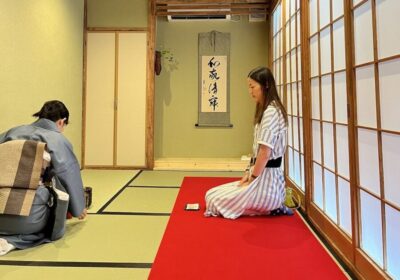
Browse the lists this tour appears in