
Review · JAPANESE CRAFT WORKSHOPS
Origami Fun for Families and Beginners in Asakusa
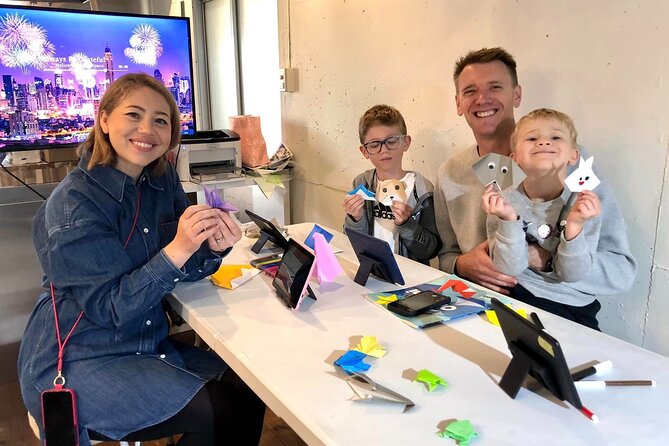
Origami is a quiet skill with instant results. In Asakusa, you fold animals, flowers, and vehicles with help from tablet-guided steps plus real instructors you can ask, including David and Yuzu. I like that you get over 40 beginner to intermediate models to choose from, so kids and adults can each find something that feels doable. One thing to consider: this is not a full, teacher-led class start to finish, so if you want constant one-on-one coaching, you should plan to ask questions as you go.
If you are visiting Asakusa for temples and street snacks, this is a nice break with a calmer pace. The studio setup is small and peaceful, with origami displays to look at and a selection of paper and supplies to buy, so the whole session feels like a creative workshop. The main drawback is the distance from the most crowded temple area, so you may want to give yourself a little extra walking time.
In This Review
- Key things to know before you go
- Where you start in Asakusa and what the walk feels like
- The 45-minute flow: how your origami session actually works
- Step 1: Pick your design and paper colors
- Step 2: Fold with tablet steps you can replay
- Step 3: Instructor support, when you want it
- Step 4: Photos, displays, and take-home paper souvenirs
- What you will make: animals, flowers, vehicles, and the “right difficulty” problem
- The studio vibe: quiet craft time in the middle of Tokyo
- Value for $56: what you get, and what it means for your time
- Who this is best for in your travel group
- One practical catch: socks in the studio
- How to get the most out of tablet-guided origami
- Should you book this origami experience in Asakusa?
- FAQ
- What is the duration of the origami experience?
- How much does it cost?
- Is the class private?
- What ages is it suitable for?
- Do I need to bring anything?
- What is included in the price?
- How many people are in a group?
Key things to know before you go
- Tablet guidance with instructor help: you follow the screens, then staff step in when you need clarification.
- Choose from 40+ designs: you are not stuck doing one thing the whole time.
- You get paper included: you can focus on folding, not shopping for supplies.
- Take photos and shop: there are displays, and you can also purchase original origami materials.
- Socks are required: bring them, or buy a pair on site.
- Small group size: the maximum group size is 6, which helps keep the room friendly.
Where you start in Asakusa and what the walk feels like
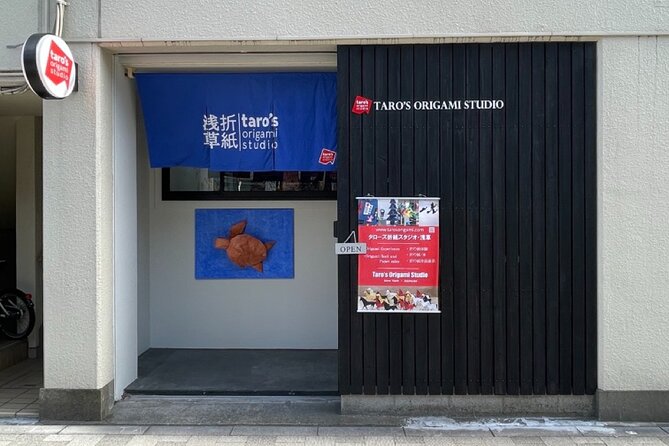
Your experience begins at Japan, Taito City, Asakusa, 7-chōme, at Green Park Yanmon (グリーンパーク言問). The timing is short, about 45 minutes, so getting to the studio with a little buffer helps your brain stay in “fun mode,” not “where is it” mode.
Asakusa has two speeds. The first is the temple area, where crowds and snack stops can pull you in every direction. The second is the surrounding streets, where the pace is slower but you may walk farther than you expect. One person noted the studio was farther from Sensoji than they realized, and another said it was a walking distance from the temple area, with views of Tokyo Skytree and the Sumida river on the way. My practical advice: don’t plan to do this as a last-minute add-on between temple snapshots. Give it a dedicated block so you arrive settled.
More Craft Workshops in Tokyo
- Chopstick Making Workshop in Ginza
★ 4.8 · 1,366 reviews - Tokyo: Samurai Sword & Archery Class from Samurai Descendant
★ 5.0 · 603 reviews - Tokyo: Shinjuku Chopstick Making Class
★ 4.9 · 440 reviews
The 45-minute flow: how your origami session actually works
This is a simple set-up that works for families and first-timers. You show up with your mobile ticket, go into the studio, and then you fold at your own pace using tablet software that guides the steps. You also have access to instructors to ask questions and get support when something is unclear.
Step 1: Pick your design and paper colors
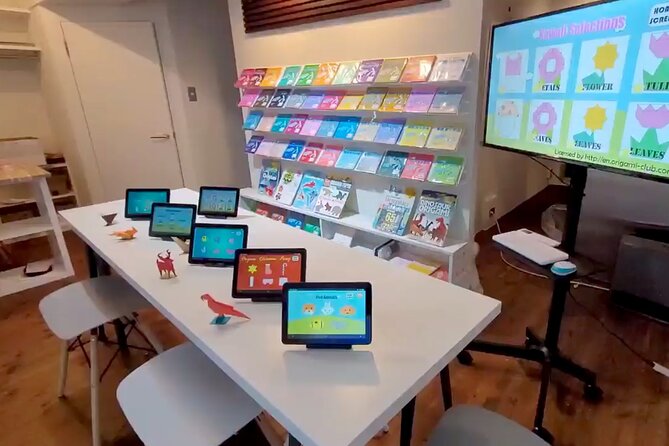
Once you are inside, you choose from lots of options. The experience offers over 40 beginner to intermediate models, and you can also pick from different colors of paper. That matters more than it sounds. Kids often pick based on color, adults often pick based on what they find charming, and the wide choice lets each person make something that feels personal.
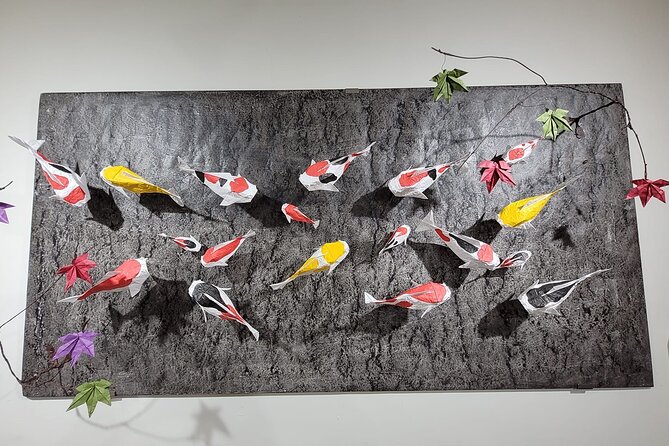
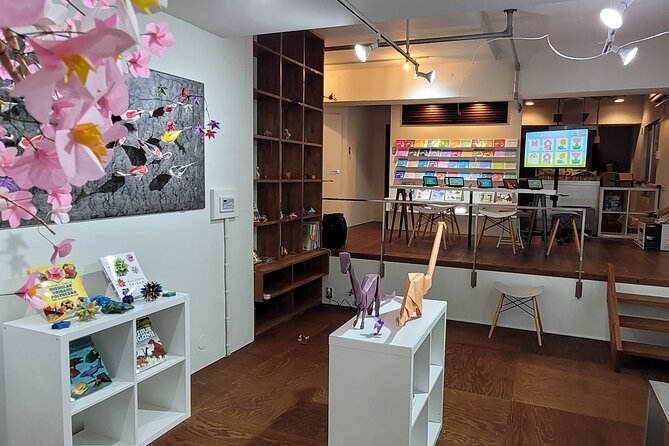
You will also find a wall or display area where you can browse, plus the studio has origami artwork up on the walls to set the tone. It is a good reminder that you are not just following instructions, you are joining a real craft space.
Step 2: Fold with tablet steps you can replay
The tablet software gives you step-by-step instructions. A big plus from the way it’s described is that you can replay the steps, which is great when you pause, mess up, and want to recover without feeling flustered. In one example, someone made multiple pieces and liked having a small pad showing the steps they could replay.
This structure is also why the activity works in the real world. You are not dependent on one person explaining everything in real time. You can slow down for tricky creases, speed up for the easy parts, and adapt if you are folding with a child who needs more breaks.
More Craft workshops in Asakusa:
- Japanesel Archery Experience HIROSHIMA CASTLE SHARAKU
★ 5.0 · 387 reviews - Hiroshima: Traditional Japanese Archery Experience
★ 4.8 · 351 reviews - Authentic knife making experience at a blacksmith in Kyoto
★ 4.8 · 350 reviews - Tokyo: Calligraphy on Kanji Fan & Scroll with Drink
★ 5.0 · 210 reviews
Step 3: Instructor support, when you want it
This experience is not a private lesson. Still, staff will help. In practice, you can expect support with making the model look right, especially with those “wait, which side now?” moments.
David is specifically mentioned as a patient teacher in multiple experiences. One review described how David helped with an extra detail on a folded item, like adding a belt to a dress. Another praised how friendly instructors were and how easily they communicated in English and Japanese. So if you do get stuck, you are not on your own.
Also, if you care about the meaning of origami, the staff can share historical context when requested. Just know that the core format is still tablet-guided folding, not a lecture.
Step 4: Photos, displays, and take-home paper souvenirs
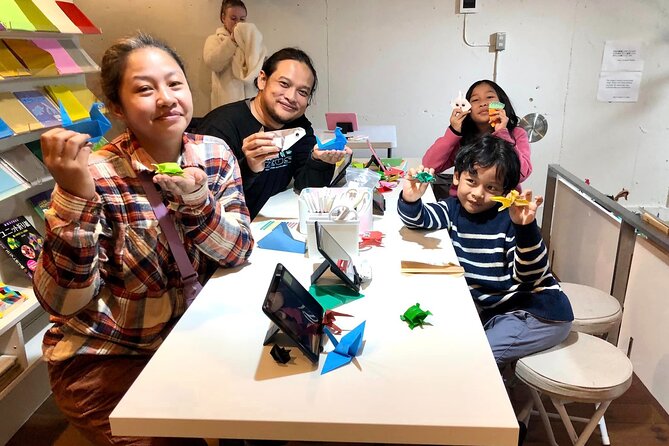
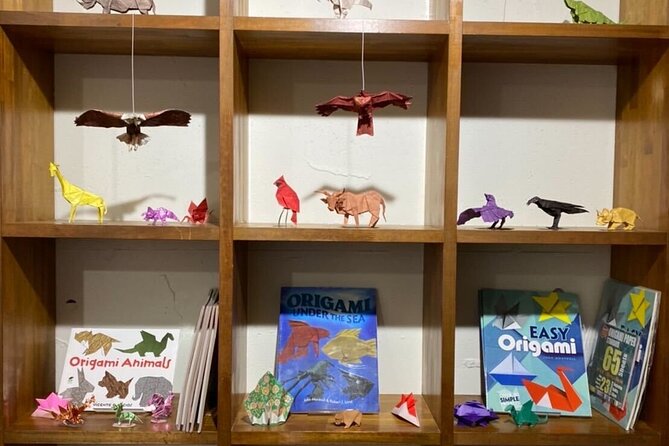
While you fold, you can take photos. The studio has displays of finished works, which helps you see where your folds are headed. When you finish, you take home your creations as souvenirs.
One nice detail: some people mention the studio sold small items like origami jewelry. If you enjoy turning paper into objects, you might want to set aside a little time to browse what they make and sell.
What you will make: animals, flowers, vehicles, and the “right difficulty” problem
The best part of having a huge model menu is that you can match difficulty to the person holding the paper. The session covers beginner through intermediate designs, so you can aim for easy wins or choose a slightly more complex model for a satisfying challenge.
In real family use, this matters. A parent with kids aged 10, 9, and 6 had fun because the activity offered options that did not feel too hard or too babyish. Another person said they learned how to create several animals in about 45 minutes, and it worked well for children.
My suggestion: when you arrive, quickly decide who is doing what level. If everyone tries to do the same design, the timing can get awkward. Let the kid pick the fun color or character, and let the adult pick the level they enjoy.
The studio vibe: quiet craft time in the middle of Tokyo
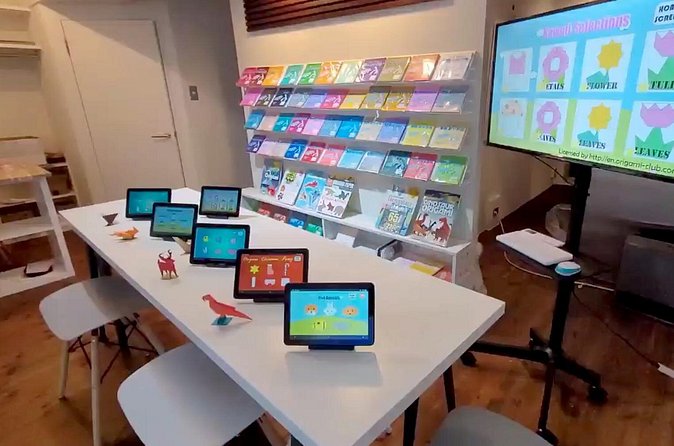
Asakusa can be busy. This activity is intentionally a calmer counterpoint. Reviews point out a peaceful atmosphere and a studio that feels small and curated, with inspiring origami artwork. You are basically trading walking crowds for close-up paper work and slow hand movements.
I like this for jet lag days and rainy weather days because it gives you a predictable indoor routine. Even when Tokyo weather turns, you are not scrambling for a new plan. This is a rain or shine activity.
Value for $56: what you get, and what it means for your time
At about $56 for roughly 45 minutes, the price is not “cheap lunch money,” but it also isn’t a full private lesson price. So you should judge it on what you are really buying:
You are paying for:
- Tablet-guided step-by-step instructions
- Origami paper included
- Staff help when you need it
- A studio setting with displays and the option to buy extra materials
- A structured session length that keeps things manageable with kids
What you are not paying for:
- A fully teacher-led, moment-by-moment class
- A private one-on-one history and technique lesson (it’s not private)
That last point is important. If you expect a teacher to demonstrate everything from start to finish while you mirror them, you may feel under-served. One person felt the experience could be more interactive because the main component was the tablet. Another response clarified that the studio is designed as a tablet-guided activity, with staff available to assist.
So, is it good value? Yes, if your goal is a fun, low-stress craft you can finish and take home. If your goal is advanced technique coaching, you might want to look for a private lesson instead.
Who this is best for in your travel group
This works especially well for:
- Families with kids age 4 and up: lots of options, short session, and manageable structure
- Beginners: the tablet steps reduce intimidation
- Multi-skill groups: different people can choose different models and still share the same room and experience
- Solo travelers who want something low-pressure and relaxing
It’s also a solid pick for grandparents, because the pace is flexible. If someone needs a slower start, you can follow the screen and pause.
One practical catch: socks in the studio
You need to wear socks inside the studio during the activity. The instructions say to bring socks, or you can purchase a pair beforehand. This is one of those small details that can ruin your day if you forget. Put it in your mental checklist right after you plan your outfit.
How to get the most out of tablet-guided origami
To make the most of this format, I’d do three things:
1) Start with a model that matches the calmest folder in your group.
If you begin too hard, you will spend the whole session correcting mistakes.
2) Ask staff early, not late.
If you are unsure about a crease, it is easier to fix at the beginning than after you have already folded several steps.
3) Use the replay option.
If the tablet shows step-by-step screens you can replay, take advantage of it. That turns a mistake into a quick reset.
And if you care about culture, ask about the history or the evolution of origami in Japanese culture. The staff can provide historical context when requested, but it is not guaranteed to be part of every session unless you bring it up.
Should you book this origami experience in Asakusa?
Book it if you want a hands-on break that is:
- Family-friendly, with options for different ages and skill levels
- Structured enough to work smoothly in 45 minutes
- Calm, creative, and productive, with take-home results
- Supported by instructors like David and Yuzu, even if the main teaching tool is the tablet
Skip it or consider a different format if you:
- Want a fully guided, private lesson with constant instructor demonstration
- Expect a heavy history lecture during the session
- Dislike any activity where you are mostly following a screen
If you are doing temple sightseeing, pick a time when you won’t be rushing. Then go in ready to fold, ask questions as needed, and leave with a few paper creations that you actually finished yourself. That is the kind of souvenir that makes Asakusa feel personal, not just photographed.
FAQ
What is the duration of the origami experience?
It runs for about 45 minutes.
How much does it cost?
The price is $56.
Is the class private?
No. This experience is not a private lesson. It is tablet-guided, with staff available to assist.
What ages is it suitable for?
It is suitable for participants ages four and above.
Do I need to bring anything?
You should bring socks for the studio, or you can purchase a pair beforehand.
What is included in the price?
The experience includes all fees and taxes, and origami paper.
How many people are in a group?
The maximum group size is 6 travelers.
Newly listed around Asakusa
- Tokyo : Asakusa Food Tour – 12 Dishes & 3 Drinks★ 5.0 · 44 reviews
- Tokyo: Customized Private Tour with a Local Guide★ 5.0 · 16 reviews
- 【Tokyo/Asakusa】Traditional Japanese Washi Papermaking experience★ 5.0 · 146 reviews
- Tokyo Japanese Dance Cabaret Theater Asakusa-Kaguwa★ 5.0 · 170 reviews
- Asakusa Kimono Photography Tour (Private Option Available)★ 5.0 · 20 reviews
- Asakusa Rental Kimono in Tokyo★ 5.0 · 11 reviews
- Asakusa:Family-Friendly Kimono & Yukata Experience at WARGO★ 5.0 · 30 reviews
- Tokyo: Asakusa & Sensoji ー Oldest Temple Walking Tour (2hrs)★ 5.0 · 213 reviews
Japanese Craft Workshops, compared.
Samurai Sword & Archery Class from Samurai Descendant
Read our review →
Japanesel Archery Experience HIROSHIMA CASTLE SHARAKU
Read our review →
Authentic knife making experience at a blacksmith in Kyoto
Read our review →
Browse the lists this tour appears in