
Review · JAPANESE CRAFT WORKSHOPS
Japanesel Archery Experience HIROSHIMA CASTLE SHARAKU
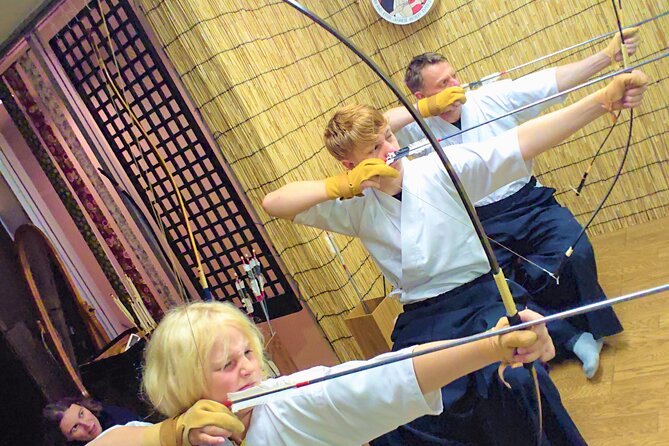
Kyudo in Hiroshima is calm, focused, and surprisingly physical. This one hour session at Hiroshima Castle Sannomaru Ruins turns archery into a structured ritual, with hands-on shooting and a mini game. I love the traditional outfit part, and I love that the instructors keep you moving through real steps instead of a long lecture. The main thing to consider is that your arm and hand may get sore if you have never shot a bow before.
You will also like the small group feel, with a maximum of 4 people, plus plenty of coaching. Expect clear instruction, a mix of practice rounds and competition, and lots of chances to hit the target. One possible drawback: if you are very sensitive about handling equipment or you need extra patience with language barriers, know that some guides keep a strict, safety-first tone.
In This Review
- Key Points at a Glance
- Hiroshima Castle Area: Where Kyudo Practice Begins
- What Kyudo Feels Like: Uniform, Bow Style, and Ritual Pace
- Your First Shots: From Basics to Clean Form
- Shooting Rounds and the Score Game (8 Arrows, Competition Mode)
- Instructors, Language Help, and How to Get the Most Out of It
- Timing, Wear and Tear, and Who Should Think Twice
- Value for the Price: A Full Hour of Hands-On Culture
- Should You Book This Hiroshima Kyudo Session?
Key Points at a Glance
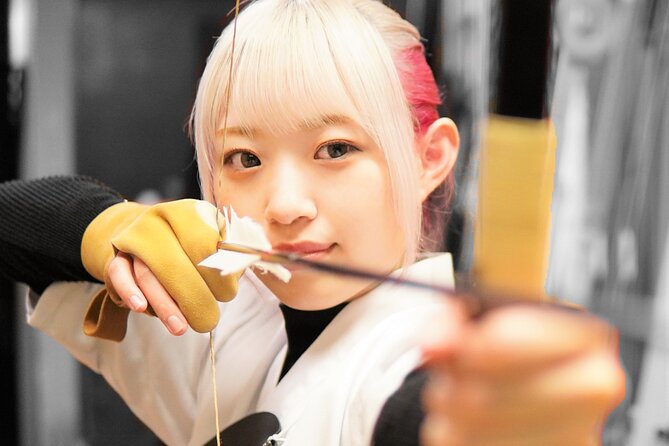
- Authentic kyudo uniform (dogi and hakama) plus armor elements for a real feel
- Small group size (up to 4 travelers) so you get attention
- You shoot multiple rounds with a full practice flow, not just one try
- 8-arrow structure per round, often split into two halves of 4 shots
- Tablet and app support is used when language gets in the way
- Near Hiroshima Castle area, easy to combine with sightseeing before or after
Hiroshima Castle Area: Where Kyudo Practice Begins
Your session starts at the Japanese Archery Experience HIROSHIMA CASTLE SHARAKU meeting point near Hiroshima Castle Sannomaru Ruins. The location is convenient, especially if you like walking between stops. You are also close enough to major sights that this feels less like an all-day commitment and more like a smart side quest.
The experience is about 1 hour, so timing is your friend. If you are pairing it with castle time, I suggest scheduling it when you are not rushing from one landmark to the next. You want a little buffer to settle in, get your kit, and let the routine take over.
You also get a mobile ticket, and you should have confirmation at booking. That keeps things simple once you arrive. In practice, the biggest “logistics” issue is the meeting point area, so give yourself time to orient yourself before your start.
More Craft Workshops in Hiroshima
- Hiroshima: Traditional Japanese Archery Experience
★ 4.8 · 351 reviews - An Amazing set of Cultural experience: Kimono, Tea Ceremony and Calligraphy
★ 5.0 · 69 reviews - Cultural Activities :Kimono, tea ceremony, Calligraphy and Amulet
★ 5.0 · 44 reviews
What Kyudo Feels Like: Uniform, Bow Style, and Ritual Pace
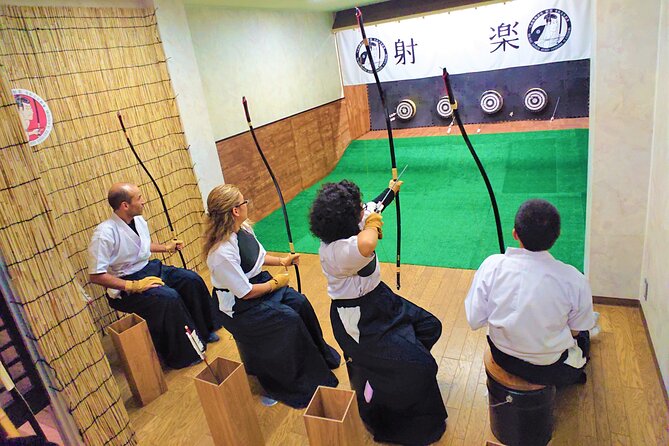
Kyudo is Japanese archery shaped by discipline and routine. It is not just a sport where you fling arrows at a target. In kyudo, you follow a set sequence that treats the bow, arrow, and target with respect, and that mindset affects how you move.
The first big win is dressing the part. You will wear a kyudo uniform, including dogi for the upper wear and hakama for the lower wear, and you may also wear armor elements for the experience. People consistently highlight how fun this is, and I get it. The outfit does more than look good in photos. It nudges you into the right posture and flow, so you feel less like a tourist trying an activity and more like a student learning form.
Compared to Western archery, kyudo has its own bow and technique rhythm. Even if you have shot before with a traditional recurve or compound, the movements and the steps can feel different. The good news is you are not thrown into chaos. Instruction begins with fundamentals and demonstrations, then you practice under guidance.
One important detail: kyudo emphasizes correct steps and safe control. You might hear that in many kyudo settings you cannot pull the arrow until you master basics. For this lesson, the structure is designed so complete beginners can still enjoy a genuine experience. You will still learn the fundamentals, then shoot at the target during the session.
Your First Shots: From Basics to Clean Form
The lesson starts with an explanation of kyudo and what the motions are trying to accomplish. The goal is focus of mind and body. Translation apps may be used, and in reality that matters because technique is hard to learn from vague directions. You want specifics, like how to grip, how to set your stance, and what step comes next.
You also learn how to handle and prepare the arrows. That part can surprise you if you expect archery to be simple. Several people found the steps around notching the arrow a little overwhelming at the beginning, then manageable once they got the hang of it. That is a normal learning curve here. If you feel slow at first, you are not failing. You are just going through the program.
The instructors typically demonstrate, then guide you through your own shots. You practice, get technique tips during shooting, and adjust. This is why the session works well in a short time. Instead of “try your best,” you get fast corrections.
One practical warning: the bow requires specific effort from your arm and hand. Reviews mention that you should be prepared for possible soreness if you have never done this. If you have any arm, hand, or shoulder injuries, the activity is not recommended, so skip it and choose a calmer experience instead.
Shooting Rounds and the Score Game (8 Arrows, Competition Mode)
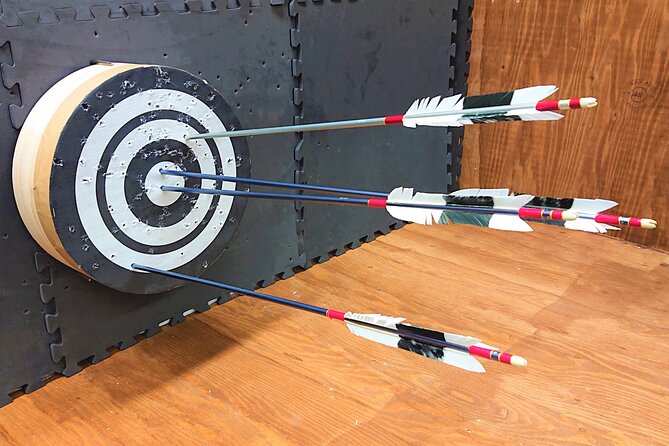
After basics, you move into real shooting rounds. A consistent rhythm shows up: each person shoots 8 arrows per round, and that round is broken into two halves of 4 arrows each. So you get short bursts where you can focus, reset, and keep improving instead of one long stretch of guessing.
Usually you start with instruction and then a practice round. From there, the session can transition into friendly competition between participants. People describe it as fun, structured, and fair. You are not just trying to hit once. You are working on consistency.
If you score well, you may receive a high score card. One review also mentions that if you score all 8, you can get a special spot on the wall. That is the kind of small incentive that makes people try harder without feeling pressured.
Here is what I think is clever about this setup. Kyudo is technical, and it can feel abstract. The scoring game gives your brain something concrete to chase. Even if you do not become a kyudo expert in an hour, you walk away with the satisfaction of progress, plus proof you can hit.
Also, do not overthink the arrow behavior. Some people noticed that arrows curve when shot, which is an interesting part of the experience. That means your technique and your aiming point matter. It is not “point and pray.” It is controlled shooting, and your results improve as your form settles.
More Castle visits in Hiroshima:
- Hiroshima; Hiroshima Peace Memorial Museum and Castle Tour
★ 5.0 · 89 reviews - Hiroshima: Peace Park, Castle, and Mitaki Temple E-Bike Tour
★ 4.8 · 11 reviews - Hiroshima Castle 1h guide tour
★ 4.2 · 8 reviews - Peace Memorial Park, Hiroshima Castle, & Garden Private Tour
★ 4.8 · 7 reviews
Instructors, Language Help, and How to Get the Most Out of It
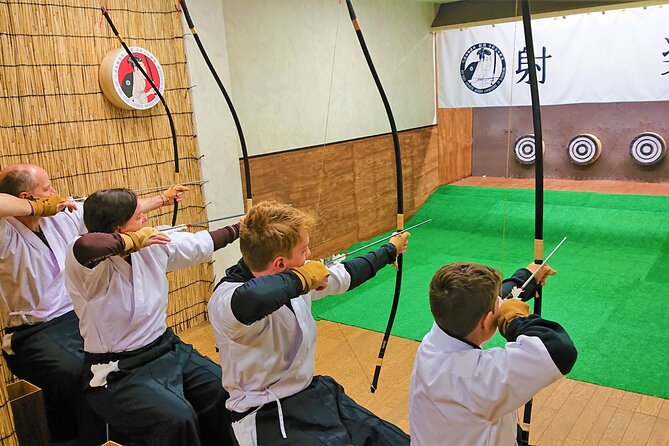
The biggest theme in the feedback is instructors who teach clearly and stay supportive. People call out wonderful instructors, great patience, and helpful guidance. The coaching approach seems to be: demonstrate, watch you shoot, then give targeted adjustments while you are mid-session.
Language is part of the reality. Some instructors have limited English, but the experience is built to handle that with support like tablet or translation apps. Reviews specifically mention tablets being used so the process feels seamless even when you do not speak Japanese.
Still, there is a balance. One person reported an impatient host who was stressed about touching expensive, authentic equipment, and another noted meeting instructions could be clearer. So if you are traveling with kids or you need a very relaxed, go-with-the-flow teaching style, you should know that a strict safety and respect for gear vibe can happen.
How do you get the best experience in either case?
- Listen carefully at the start, then ask for one clarification if something feels unclear.
- Treat equipment gently and wait for the instructor’s go-ahead, especially with anything that looks delicate.
- If you are with kids, you can still have fun, but you may need to help keep everyone aligned with the routine.
A helpful extra: instructors often take pictures and videos during the session. That is great because you are too busy learning to remember to document everything. If you care about photos, wait until the end when they capture your best moments.
Timing, Wear and Tear, and Who Should Think Twice
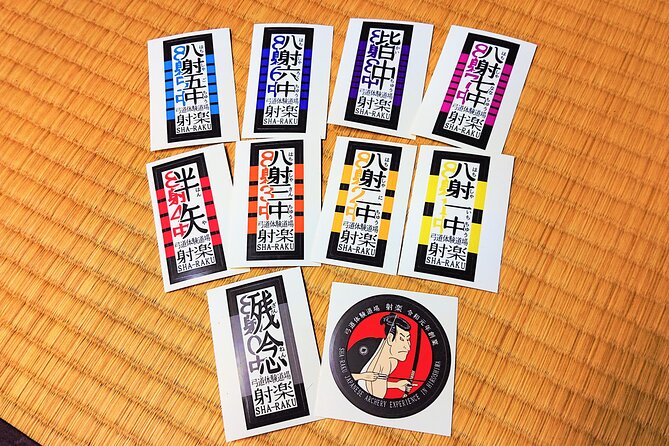
The session lasts about 1 hour, so it is a focused block. You will not get lost in a long itinerary. But you should still plan for the body part of archery.
Plan to feel some effort in your shooting arm and hand. If you do not use those muscles much, you might feel it more than expected. That is part of why this is not only cultural, it is also physical.
Health-wise, the experience is marked as not recommended for anyone with arm, hand, or shoulder injuries or disabilities. If that includes you, do not take a chance. Choose something else that respects your limits.
Who it suits best:
- Beginners who want structured, step-by-step coaching
- Families with kids old enough to follow instructions and stay patient
- People who want something hands-on beyond sightseeing photos
- Anyone interested in how Japanese martial arts connect movement, focus, and tradition
Who may want to reconsider:
- If you are very anxious about strict rules around equipment handling
- If you need very detailed English explanations with no translation support
Even with those caveats, the overall rating is extremely high, and most people say the hour is well organized and worth it.
Value for the Price: A Full Hour of Hands-On Culture
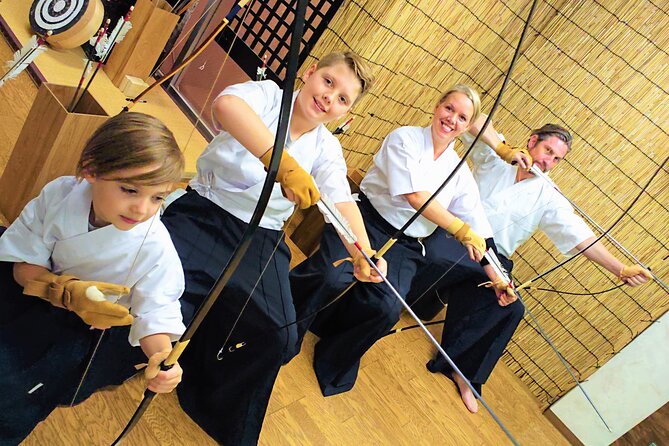
At about $43.11 per person, this is not a budget activity, but it is also not a high-cost luxury class. For your money, you get:
- A full hour of instruction and practice
- Traditional uniform dressing (dogi and hakama)
- Multiple shooting rounds, typically including practice and competition
- A small group format that keeps attention on you
- Equipment quality and coaching during actual shots
When you compare it to typical paid “try one thing” tours, what makes this feel like good value is repetition with feedback. You are not just paying for access to a bow. You are paying for guided progress.
And because the session is near Hiroshima Castle, it stacks well with other plans. That makes the time cost lower than if you had to travel far for a stand-alone activity.
Yes, some people mentioned the learning curve at the beginning and that meeting point instructions could be clearer. But once you are rolling, the experience is built to keep you engaged. You dress, learn, shoot, and leave with something you can talk about for a long time.
Should You Book This Hiroshima Kyudo Session?
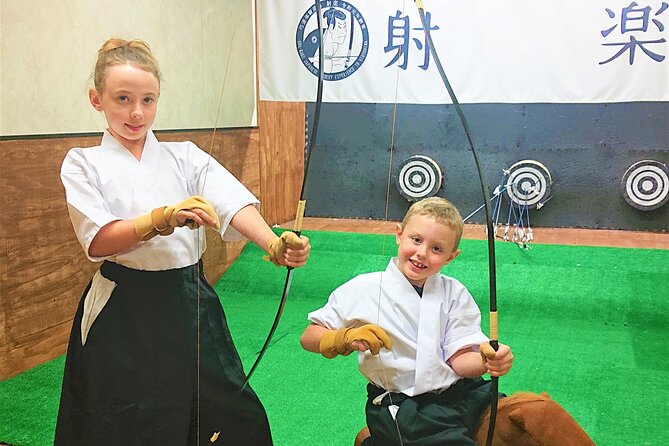
If you want a uniquely Japanese activity in Hiroshima that is active, structured, and actually teaches you something, I would book it. The combination of traditional outfit, small group coaching, and a real shooting routine makes this more memorable than most short classes.
Do it especially if you:
- Like hands-on experiences
- Want culture that shows up in your body, not just in exhibits
- Are happy to follow a step-by-step routine and improve during the hour
I would skip it if you have arm or shoulder issues, or if you strongly dislike strict rule-following around equipment. Otherwise, this is one of those rare activities where the format nudges you into focus, and the results, even for beginners, tend to feel rewarding.
If you are in Hiroshima and you want more than the usual sightseeing loop, this kyudo session near the castle ruins is a smart, genuinely fun choice.
Newly listed around Hiroshima
- Hiroshima and Miyajima 1 Day Walking Tour★ 5.0 · 43 reviews
- Hiroshima and Miyajima 1 Day Cruise Tour★ 5.0 · 24 reviews
- Hiroshima & Miyajima: UNESCO A-Bomb Dome & Itsukushima with Local★ 5.0 · 25 reviews
- Hiroshima & Miyajima: Private Full-Day Tour with a Local Guide★ 5.0 · 39 reviews
- Hiroshima 5k Running Tour of Hijiyama Park★ 5.0 · 7 reviews
- Hiroshima and Miyajima Bus Tour with Indian Lunch★ 5.0 · 10 reviews
- Hiroshima and Miyajima 1 Day Bus Tour★ 4.5 · 145 reviews
- Hiroshima Peace Memorial and Atomic Bomb Dome Private Tour★ 5.0 · 37 reviews
Japanese Craft Workshops, compared.
Samurai Sword & Archery Class from Samurai Descendant
Read our review →
Authentic knife making experience at a blacksmith in Kyoto
Read our review →
Calligraphy class at Buddhist temple in city center
Read our review →Browse the lists this tour appears in