
Review · JAPANESE COOKING WORKSHOPS
Osaka Okonomiyaki Cooking Class “Learn here and make it at home”
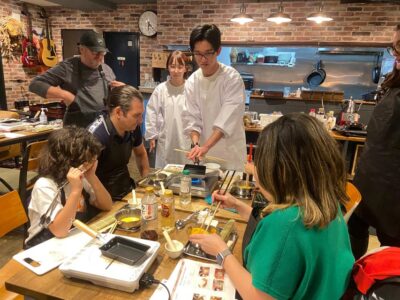
Okonomiyaki turns Osaka sightseeing into dinner. This hands-on cooking class in the city teaches you to make both okonomiyaki and tako-yaki, with step-by-step help from multilingual instructors.
I especially like that the class ends with a relaxed meal, so you do not just cook and rush out. You get a 1-hour tasting of what you made, paired with drinks like sake, beer, and soft drinks for those 20 and older, and non-alcoholic options for younger guests. One consideration, if you have a vegetarian diet or food allergies, is you should message the provider after booking, since the class includes standard ingredients like pork and seafood.
In This Review
- Key Highlights You’ll Care About
- Why This Osaka Okonomiyaki and Takoyaki Class Works
- Getting to the Kitchen, Without the Osaka Stress
- The 30 Minutes of Orientation and Prep
- Cooking 90 Minutes: Making Okonomiyaki Like Osaka Does
- Okonomiyaki pancakes: batter, cabbage, fillings, and toppings
- Takoyaki: the round shape and the octopus filling
- How the Multi-Language Coaching Helps You Cook, Not Just Eat
- The 60 Minutes of Tasting and Drinks
- Price and Value for a 3-Hour Osaka Evening
- Who This Class Fits Best
- Book It or Skip It: My Decision Guide
- FAQ
- What dishes will I make in this class?
- How long is the cooking class?
- Are drinks included?
- Is there a limit on group size?
- What language will the instructors speak?
- What should I bring?
- Can the class accommodate vegetarian diets or food allergies?
- Where is the meeting point?
- What is the cancellation policy?
Key Highlights You’ll Care About
- Small group size (up to 8) means you get hands-on attention, not just a lesson you watch.
- English speaking instruction helps you follow the steps without guessing.
- You cook two iconic foods in one session: okonomiyaki pancakes and takoyaki octopus balls.
- Ingredient tips that translate to home cooking, including practical help finding items later.
- A full tasting with drinks makes it feel like dinner, not a workshop.
- Kitchen tools, aprons, and gloves provided, so you can show up and start cooking right away.
Why This Osaka Okonomiyaki and Takoyaki Class Works
Osaka food classes can be hit-or-miss. This one is built around doing the work yourself, then eating the results, so the whole experience feels useful instead of performative.
You will be guided through both dishes, which is the big win here. Okonomiyaki is all about the pancake method, cabbage, batter, and layering fillings. Takoyaki is the quick-heat, turn-and-fill style that takes timing, not just ingredients.
The class also runs at a pace that makes sense for real life. You start with a short orientation and prep, then you cook for about 1.5 hours, then you sit down and enjoy what you made. That structure keeps you from feeling lost, or stuck doing one long task.
More Cooking Classes in Osaka
- Osaka: Ramen and Gyoza Cooking Class in Dotonbori
★ 5.0 · 378 reviews - Osaka Cooking Class: Okonomiyaki &Japanese cuisines experience
★ 5.0 · 261 reviews - Ramen and Gyoza Cooking Class in Osaka
★ 5.0 · 202 reviews
Getting to the Kitchen, Without the Osaka Stress
The meeting point is in central Osaka, with the kitchen located about a 5-minute walk from both Shinsaibashi and Honmachi stations on the Osaka Metro. That matters because you can pair this with an evening out without spending your whole night on trains or long taxi rides.
What I like is the contrast between location and atmosphere. You are in the heart of the action, but the kitchen is described as quiet and peaceful, which helps when you are learning something hands-on. If you have ever tried to learn cooking while surrounded by chaos, you know why this matters.
You can also plan around the route. Since the class starts and ends back at the meeting point, you do not have to figure out an awkward second location to catch your next train.
The 30 Minutes of Orientation and Prep
The first stretch is about 30 minutes of orientation and preparation. This is where you set yourself up for success, because Japanese cooking classes are often about technique as much as ingredients.
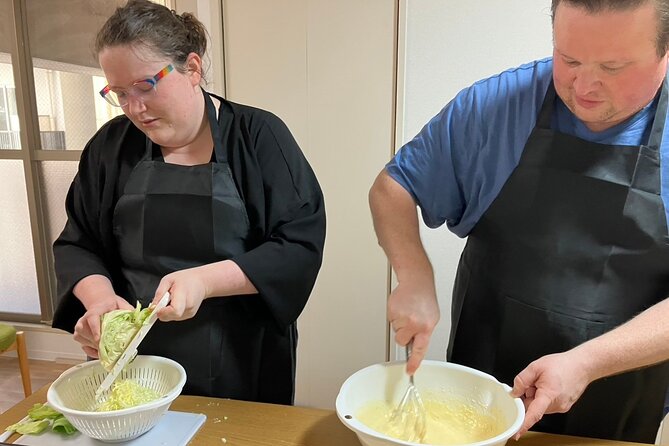
You will go over how the setup works and what you will be making. You also get the kitchen tools you need and start prepping with support from the instructors. Aprons and disposable plastic gloves are provided, so you can focus on the steps instead of worrying about what to wear.
This is also when you see the ingredient approach. Okonomiyaki is not just batter and flipping. It depends on the balance of batter, shredded cabbage, and your chosen fillings, and then the toppings that give it its signature look. Takoyaki depends on a dough batter that you portion and cook into round shapes, then fill and finish with sauce, bonito flakes, and seaweed powder.
One small but practical bonus is that this type of prep time helps you understand what will happen during cooking. When you know why a step exists, it becomes easier to replicate later at home.
Cooking 90 Minutes: Making Okonomiyaki Like Osaka Does
Your cooking time is about 1 hour 30 minutes, and the class focuses on both dishes. Okonomiyaki gets you started on the pancake side, then you transition into takoyaki.
More Cooking Workshops in Osaka
- Osaka: Sumo Stage Show with Bento or Snack + Fight & Photo
★ 4.3 · 364 reviews - Osaka: Cooking Class Ramen & Gyoza Course in Nanba
★ 4.9 · 86 reviews - Osaka: Gluten-Free Ramen and Gyoza Cooking Class
★ 5.0 · 42 reviews - Osaka: Cooking Class & Sake Tasting with Local Market Visit
★ 4.8 · 31 reviews
Okonomiyaki pancakes: batter, cabbage, fillings, and toppings
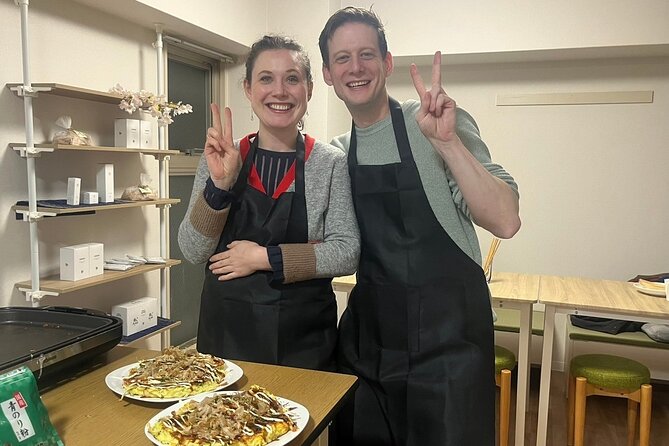
Okonomiyaki here is described as a savory pancake made with batter, cabbage, and various fillings, with toppings like sauce and bonito flakes. The key is that it is not one single flavor. It is multiple parts working together, and toppings are not an afterthought.
What makes this useful for home cooking is that you learn the idea of building texture. Cabbage helps the pancake stay tender and provides bite. The batter holds it together and gives you the right mouthfeel when it hits heat.
As you cook, you will also learn how the instructors shape the process. Even if you have cooked pancakes before, Japanese okonomiyaki is its own game because it is savory and layered, not sweet and simple.
Takoyaki: the round shape and the octopus filling
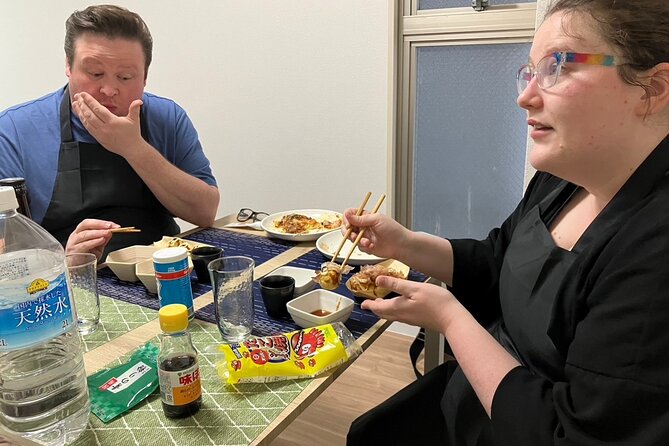
Then you move to takoyaki, fried savory dough balls filled with octopus. You top them with sauce, bonito flakes, and seaweed powder.
Takoyaki is where timing and technique show up fast. Getting them round usually means working the batter into the right portion and then turning at the right moment. Once you have the turning down, the rest becomes repeatable, which is why a guided class is so valuable compared to guessing from videos later.
The instructors also help you understand how the toppings behave. Sauce, bonito flakes, and seaweed powder are part of the final flavor experience, and you will see how they come together over hot food.
How the Multi-Language Coaching Helps You Cook, Not Just Eat
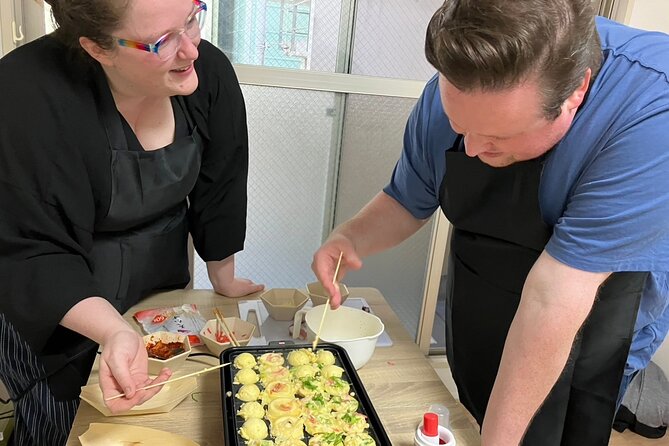
The instructors are fluent in English, Japanese, and Spanish. That is more than a convenience. It means the class can slow down when needed, clarify technique, and translate the little details that matter.
In a hands-on cooking class, small instructions make a big difference. When an instructor explains what you are aiming for, like how the batter should look as it cooks or when to adjust your technique, you can correct quickly instead of waiting until the pancake or takoyaki is already done.
This is also why this class tends to feel welcoming for different ages and comfort levels. One of the strengths you can infer from the way the class is described is that it is designed to work with different group needs, including families with kids, since the format is interactive and tools and gloves are provided.
The 60 Minutes of Tasting and Drinks
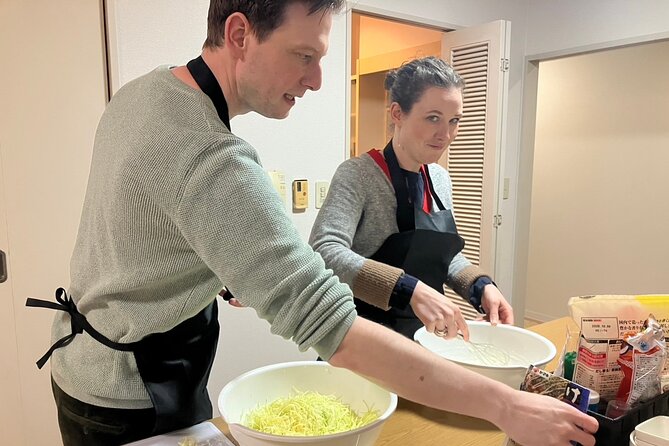
After cooking, you get a 1-hour tasting session. This is where the class turns into a proper meal experience instead of a quick bite.
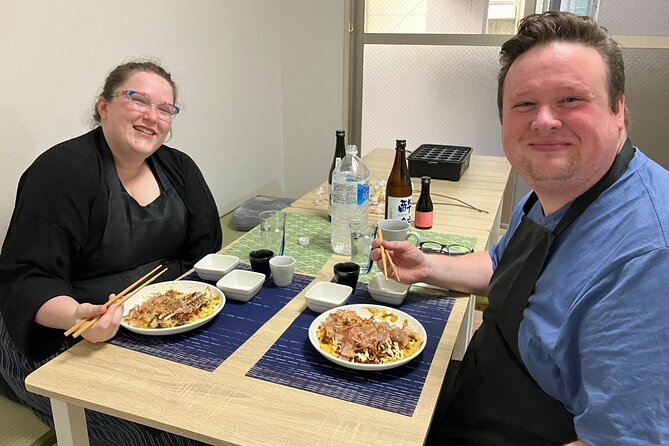
You will eat the okonomiyaki and takoyaki you made, and the meal includes drinks. The drinks listed are sake and beer, plus soft drinks. Alcohol is served only to travelers 20 years old and above, and minors get non-alcoholic drinks.
I like this format because it removes a common cooking-class problem. If you are only focused on making the food, you can lose the sense of why you are doing it. Eating what you cooked helps you notice the difference between a step done right and one that needs adjustment.
A detail that is especially practical for future shopping and home cooking is that you get written recipes and even help seeing packaging for ingredients. That is a big deal in Japan, where you might find the ingredients but not recognize the exact names or forms. Seeing the packaging and having written guidance makes it easier to recreate the dishes later.
Price and Value for a 3-Hour Osaka Evening
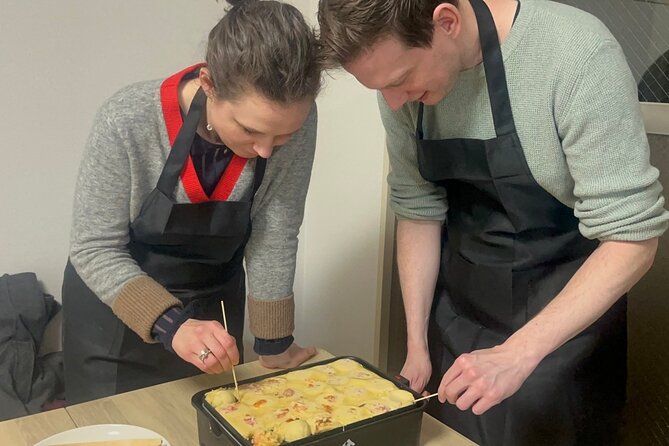
At $70 per person for about 3 hours, this class is priced like a real experience, not a cheap snack-and-tour. The value comes from what is included.
You get:
- all ingredients for okonomiyaki and takoyaki
- kitchen tools for the class
- aprons and disposable plastic gloves
- instruction in English, plus additional language support by request
- a tasting meal of what you cook
- drinks including sake and beer for adults, plus soda for everyone
When you compare that to buying ingredients on your own, the lesson becomes the point. You are not just paying for food, you are paying to learn technique and toppings and get a recipe you can follow later.
The small group size helps justify the price too. Up to 8 travelers means there is enough room for you to cook, ask, and get corrected while you are still in the process, not after the food is done.
Also note the convenience: you receive a mobile ticket, and the class runs in a central area where you can easily combine it with other Osaka plans.
Who This Class Fits Best
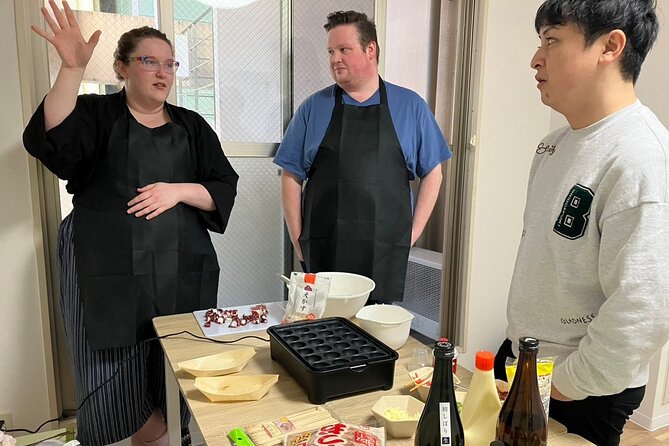
This class is a good fit if you want Osaka food knowledge you can take home. It is especially appealing if you like learning by doing, because the whole point is mixing, cooking, and finishing with toppings, then eating the results.
It also works well if you want an evening activity that feels social without being huge. The class maxes at 8, and that intimacy is part of the experience, since you are not competing for attention.
If you are traveling with kids, this is one of those rare cooking experiences that can be both structured and flexible. The format provides gloves, tools, and step-by-step guidance, which can make the experience manageable even when attention spans are shorter.
If you have dietary restrictions, you can still consider it, but plan ahead. Vegetarian or allergy options require you to contact after booking, so do that early.
Book It or Skip It: My Decision Guide
I would book this class if you want a practical Osaka food skill, not just a meal. The combination of hands-on cooking, written help, and eating your own okonomiyaki and takoyaki makes it one of the more useful experiences in the city.
Skip it if you only want a quick cultural stop and do not care about technique. A cooking class takes your time and your hands, so it is best when you are ready to focus for a couple of hours.
Also think about drinks. If you do not want alcohol and you are under 20, the class notes non-alcoholic options, but if alcohol is a key part of your evening plan, you should check your own age eligibility before committing.
If you want something central, interactive, and genuinely tied to two Osaka staples, this is a strong choice.
FAQ
What dishes will I make in this class?
You will learn to make okonomiyaki (savory Japanese pancakes) and takoyaki (savory dough balls filled with octopus). Both are finished with typical toppings.
How long is the cooking class?
The class runs for about 3 hours, including orientation and prep, cooking time, and a tasting session.
Are drinks included?
Yes. The tasting includes drinks like sake and beer, plus soft drinks. Alcohol is served only to travelers 20 years old and above.
Is there a limit on group size?
Yes. The class has a maximum of 8 travelers.
What language will the instructors speak?
The instructors provide English speaking guidance, and they are also fluent in Japanese and Spanish. Additional language support is available upon request.
What should I bring?
You do not need to bring ingredients or tools. The class provides everything you need, including aprons and disposable plastic gloves.
Can the class accommodate vegetarian diets or food allergies?
You can request vegetarian options or allergy adjustments, but you need to contact the provider after booking.
Where is the meeting point?
The meeting point is in Namba Semba area, at 南船場コレット9044-chōme-3-1, Chuo Ward, Osaka, 541-0059, Japan. The kitchen is about a 5-minute walk from Shinsaibashi and Honmachi stations.
What is the cancellation policy?
You can cancel for free up to 24 hours before the experience starts for a full refund. If canceled due to poor weather, you will be offered a different date or a full refund.
Newly listed around Osaka
- Hiroshima and Miyajima Private Tour with English Speaking Driver★ 3.5 · 9 reviews
- Kyoto Top Four Highlights Day Trip from Osaka or Kyoto★ 5.0 · 18 reviews
- Kyoto & Nara Private Day Tour★ 4.5 · 45 reviews
- From Osaka: 10-hour Private Customizable Tour to Kyoto★ 4.5 · 8 reviews
- 【Family Friendly】Traditional Mochi Pounding Experience★ 5.0 · 26 reviews
- Osaka Highlights Walking Tour: Castle, Dotonbori & Hidden Gems★ 5.0 · 9 reviews
- Osaka Highlights: 4Hrs Guided Walking Tour with a Native Expert★ 5.0 · 12 reviews
- Honor – Experience Samurai & traditional Culture to the fullest★ 5.0 · 32 reviews
Japanese Cooking Workshops, compared.
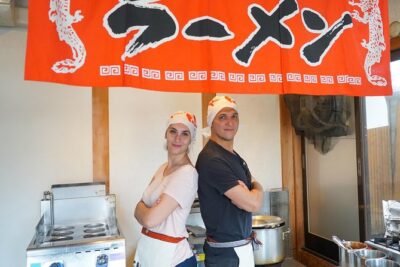
Ramen Cooking Class at Ramen Factory in Kyoto
Read our review →
Ramen & Gyoza Cooking Class in Tokyo with Local Supermarket Visit
Read our review →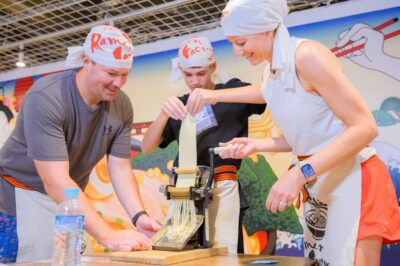
Ramen Cooking Class at a Ramen Factory with Souvenir
Read our review →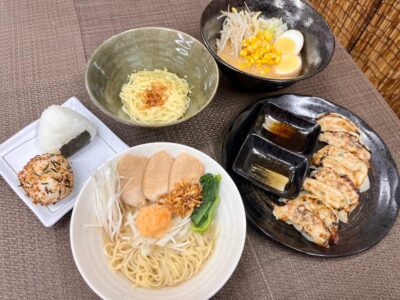
Japanese Washoku Bento Small Group Cooking Class
Read our review →
Sumo Stage Show with Bento or Snack + Fight & Photo
Read our review →
Ramen and Sushi Cooking Class with Sake Pairing Set in Tokyo
Read our review →Browse the lists this tour appears in